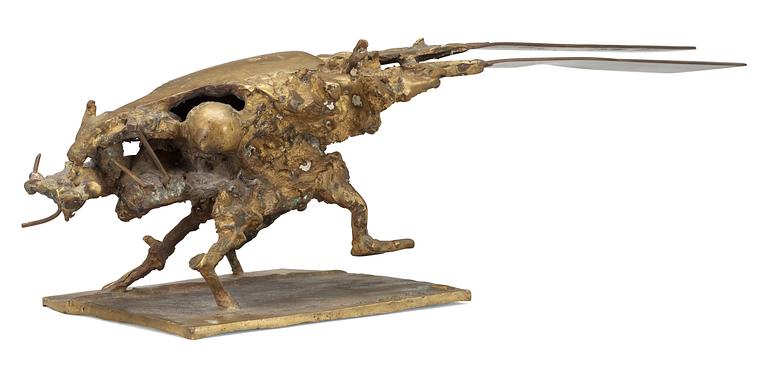
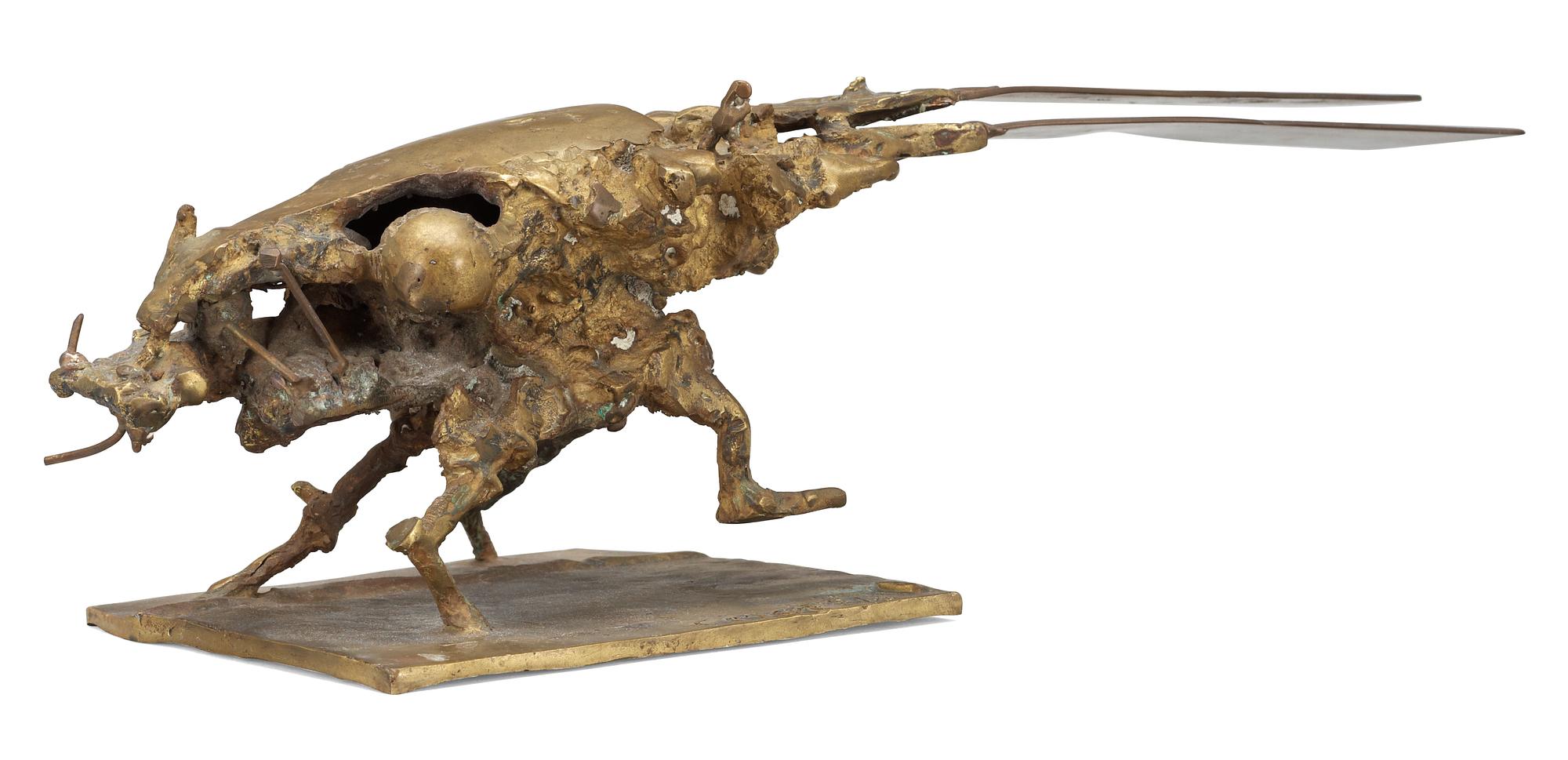
"Insecte"
Signed Cesar and numbered 8/8. Bronze. Height 12, length 37, width 13 cm.
Saleroom notice
Correct estimate; 75-80.000.
More about César Baldaccini
César Baldaccini was a French sculptor. After training at numerous art schools in Marseille and Paris, the artist began his career in the beginning of the 1950s by welding together scrap metal. The sculptures were solid forms depicting insects, different types of animals and nude figures. Baldaccini discovered the possibility of incorporating a hydraulic press into his art when he one day witnessed one at work at a scrapyard. In 1960 Baldaccini became a sensation when he presented his compressed cars in Paris. He became a member of the Nouveaux Réalistes group along with artists such as Arman, Yves Klein, and Jean Tinguely. Throughout his life, César continued to work with accumulations, constantly finding new materials like plastic, polyurethane, and molten crystal. César was early on regarded as one of France's leading sculptors.
Read moreCovered by droit de suite
Image rights
The artworks in this database are protected by copyright and may not be reproduced without the permission of the rights holders. The artworks are reproduced in this database with a license from Bildupphovsrätt.