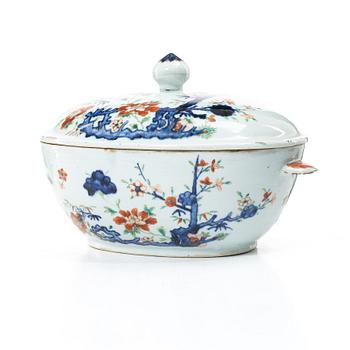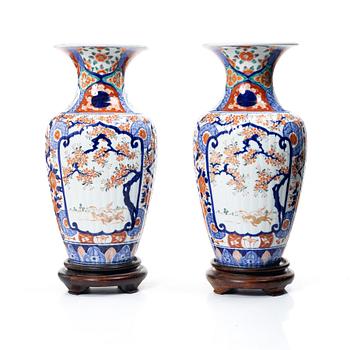
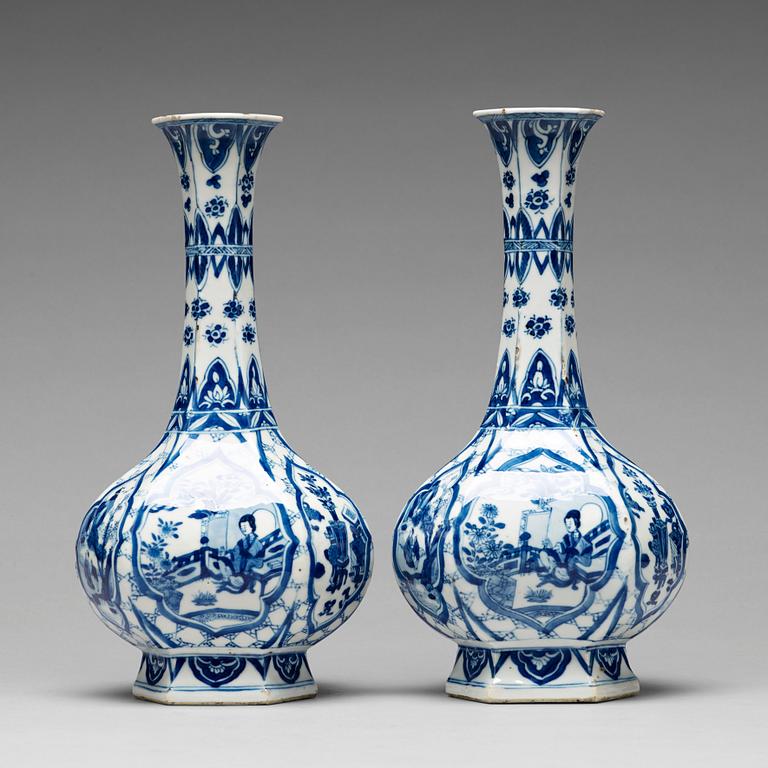
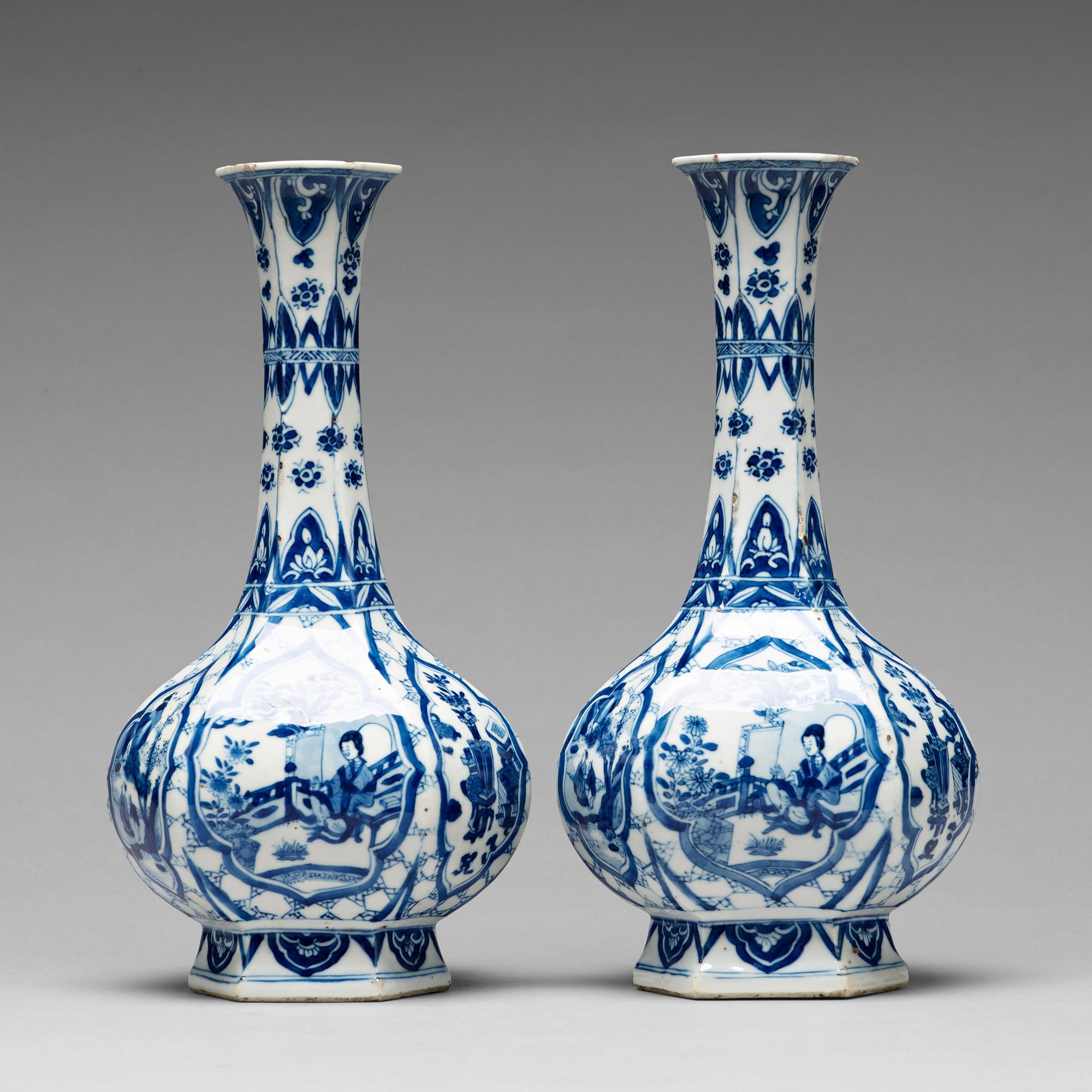
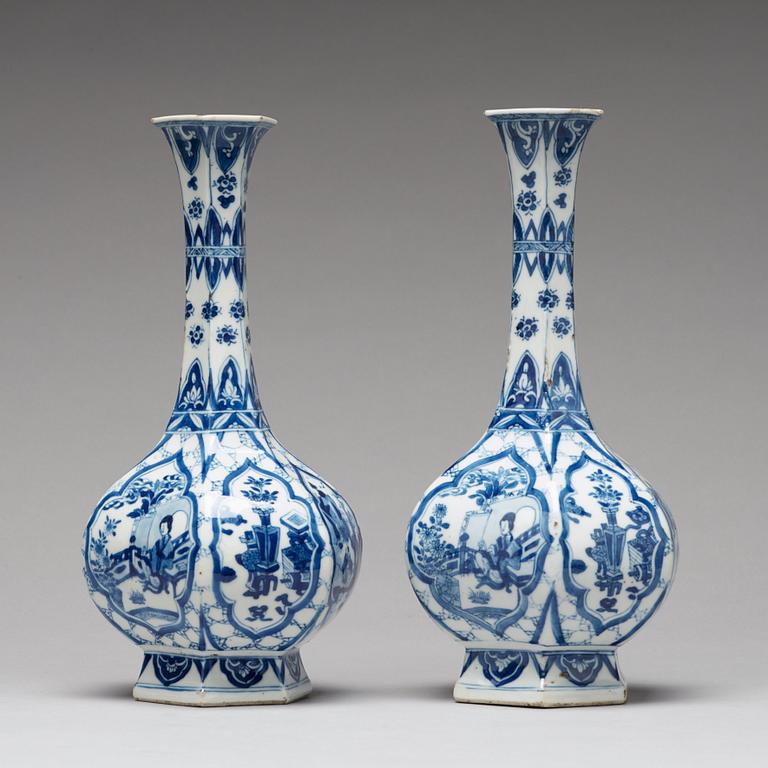
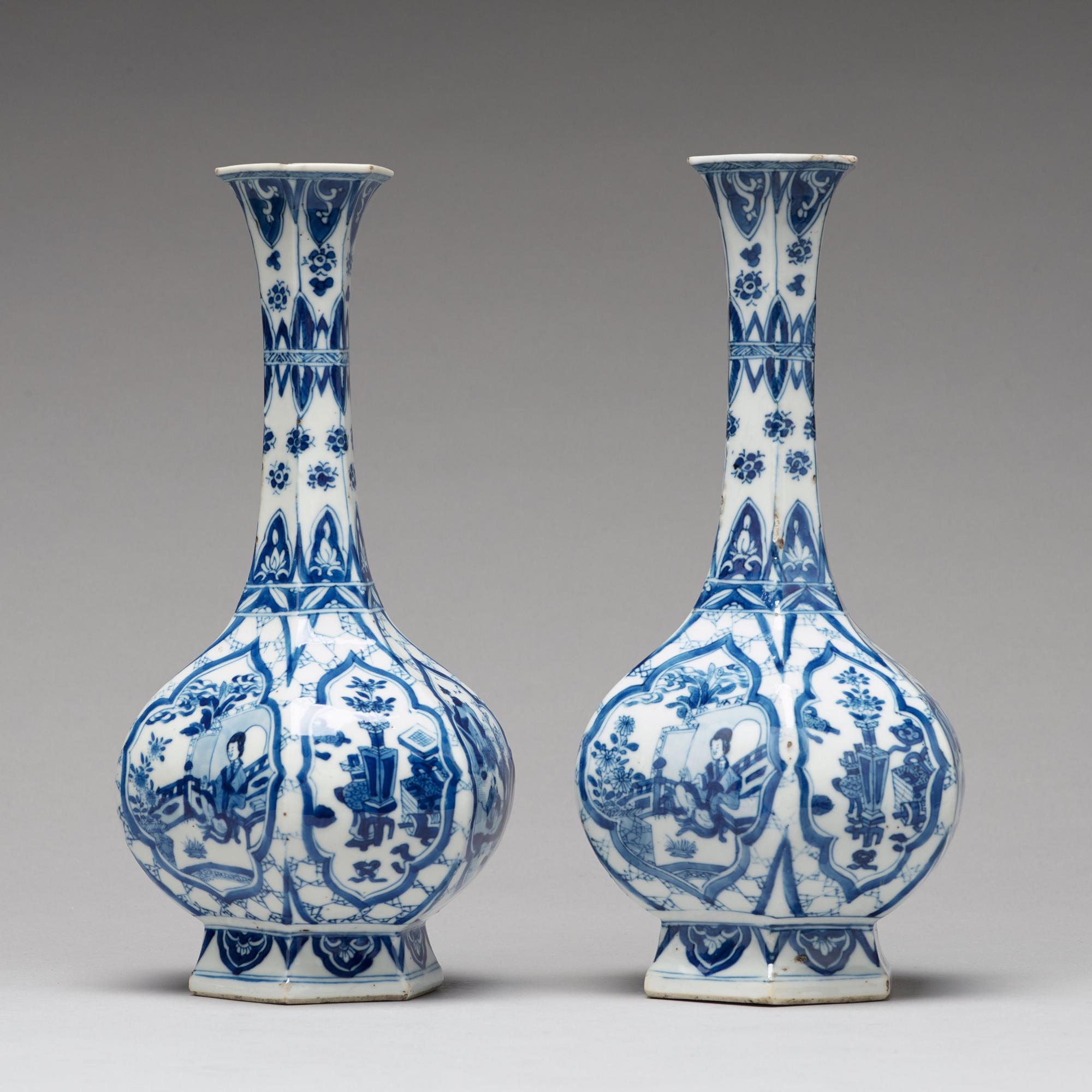
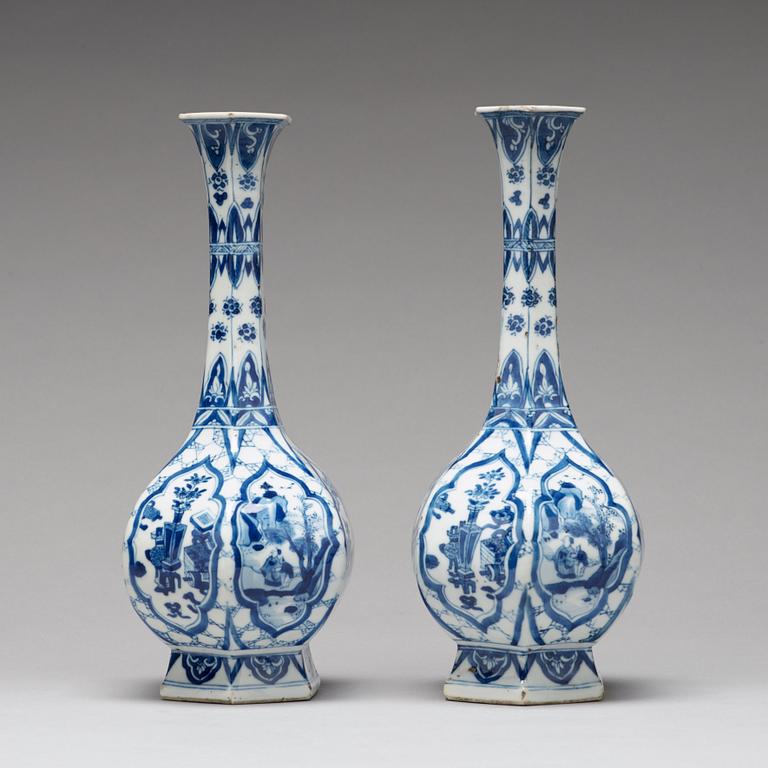
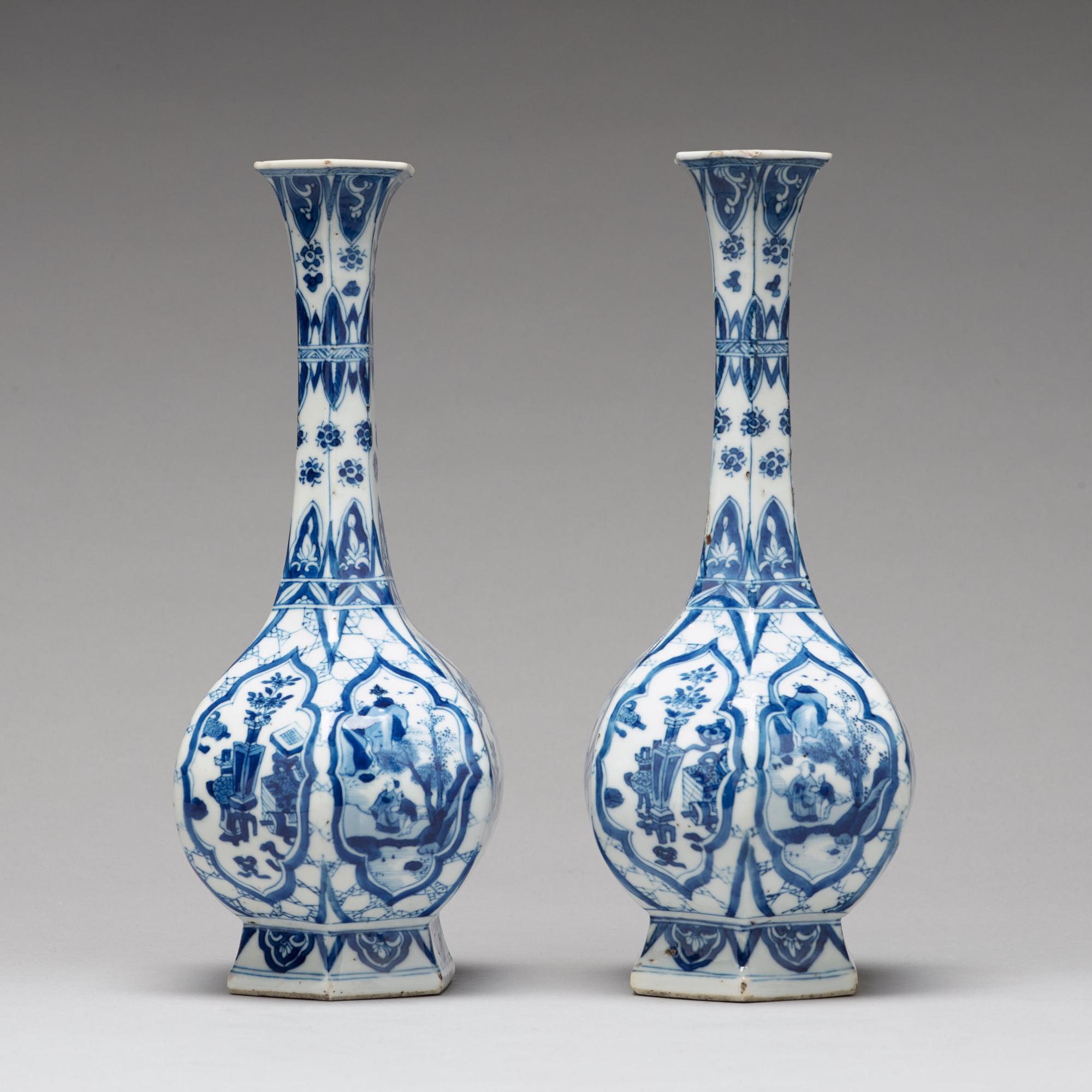
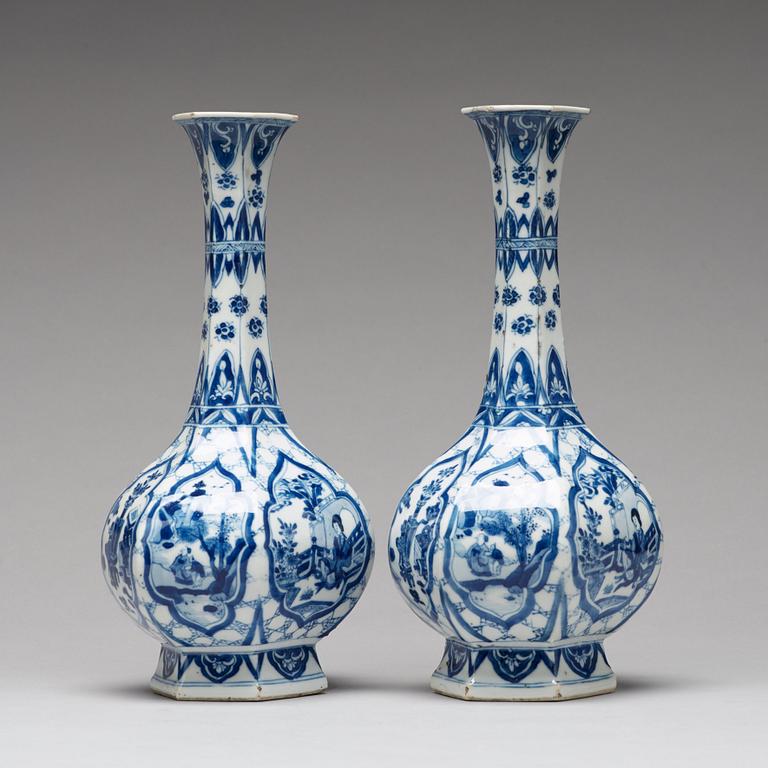
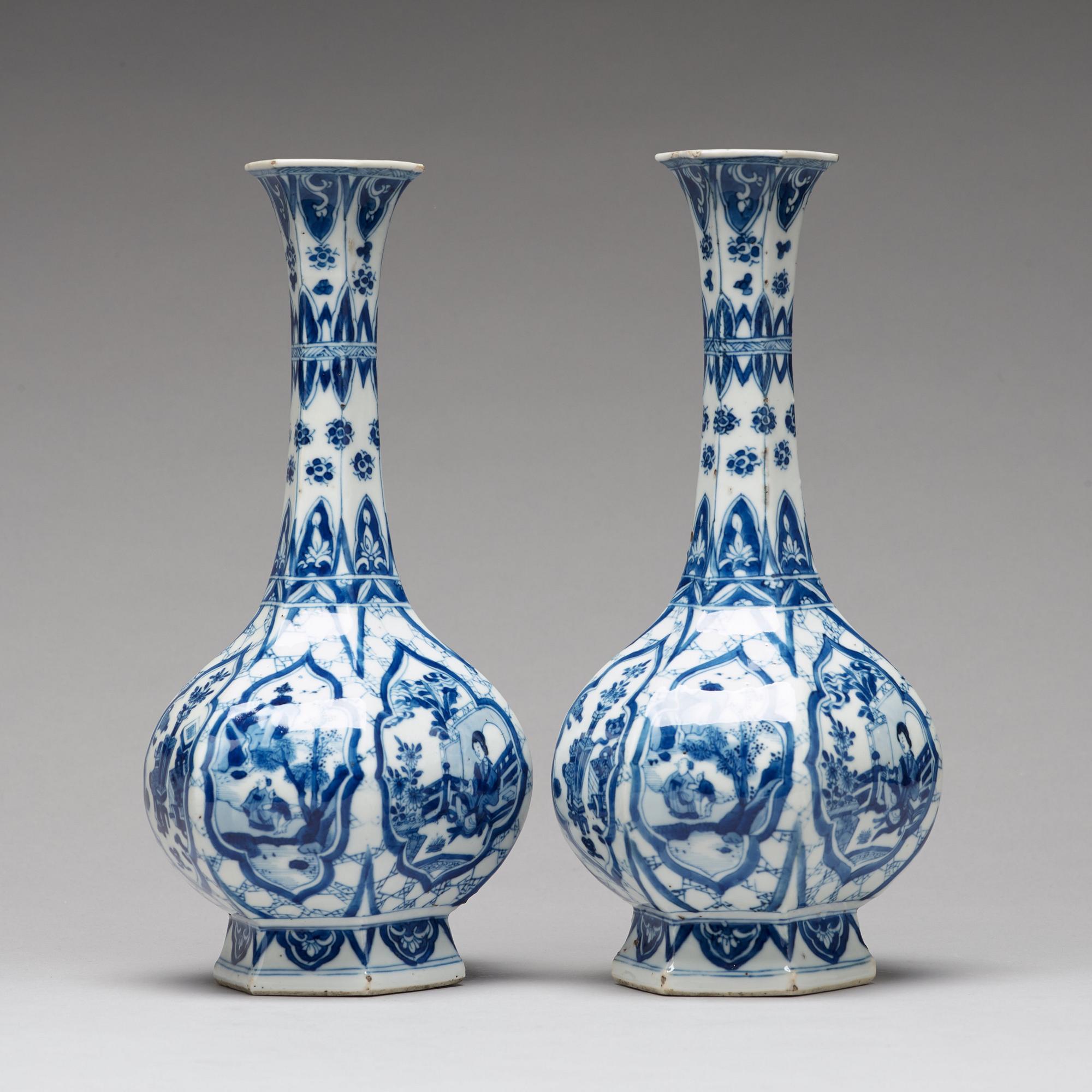
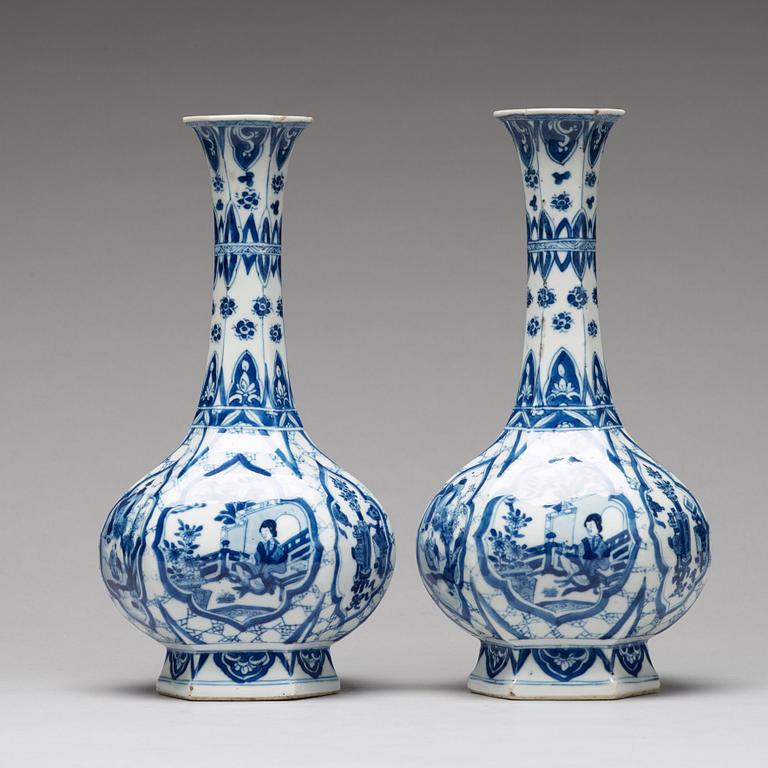
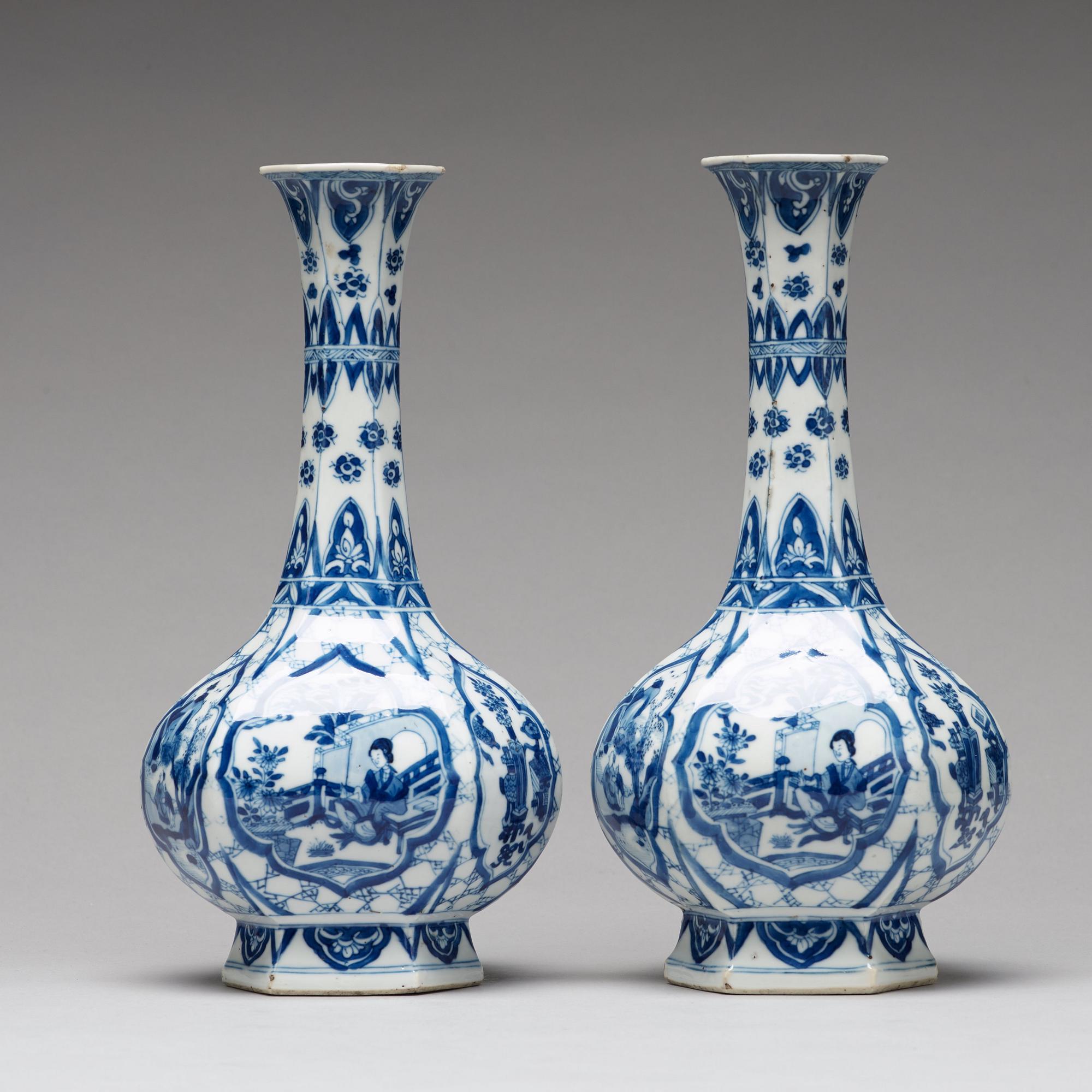
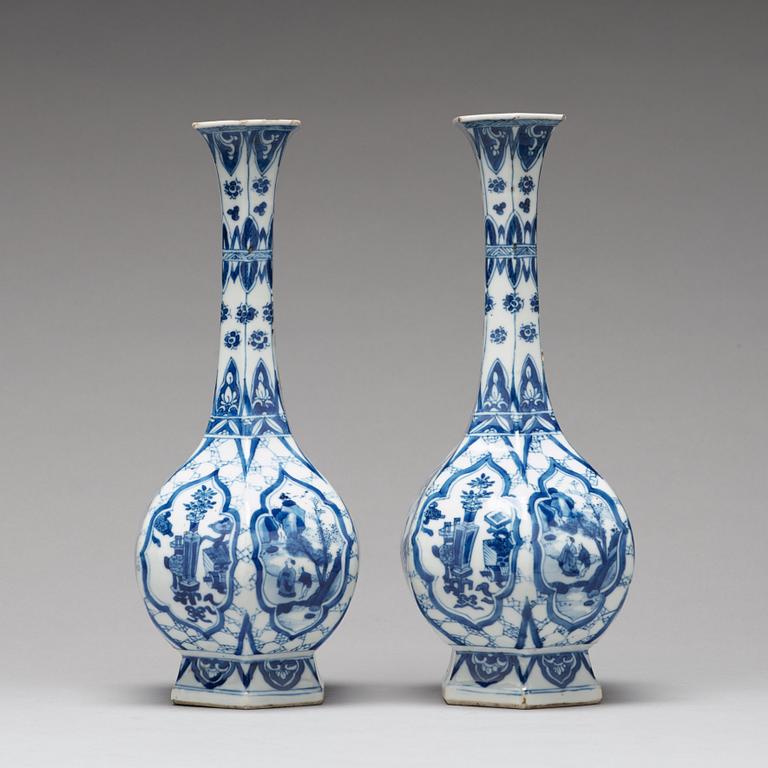
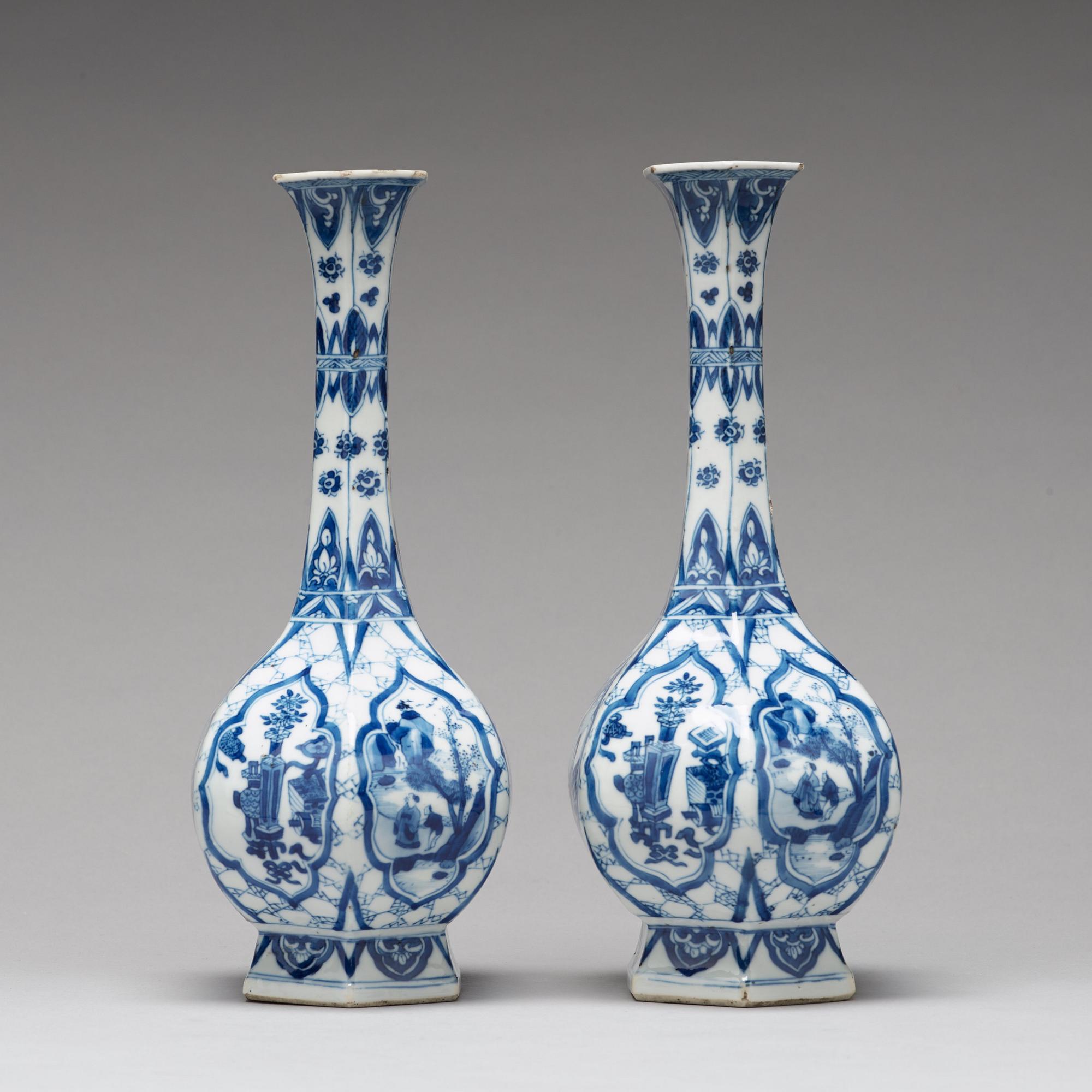
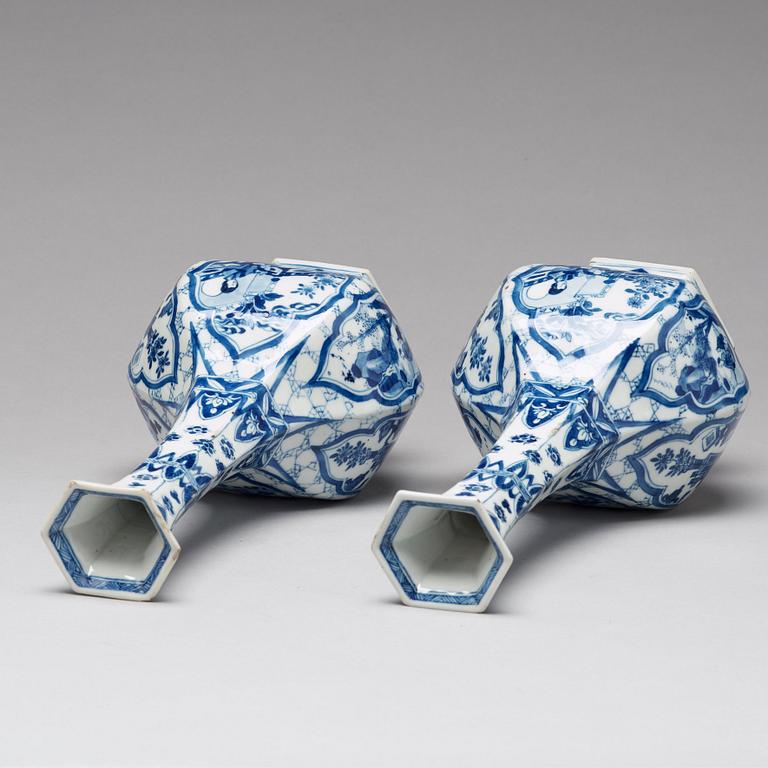
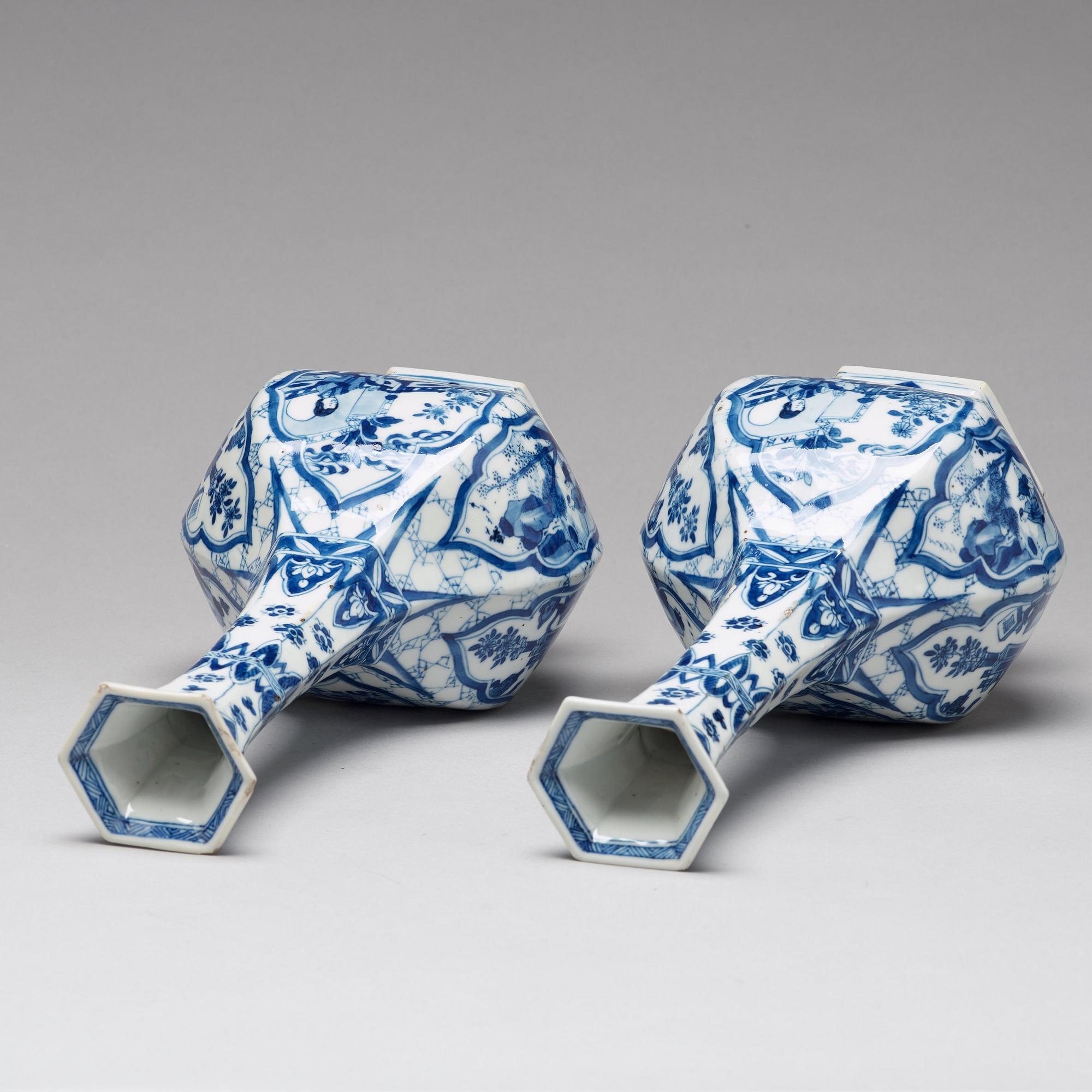
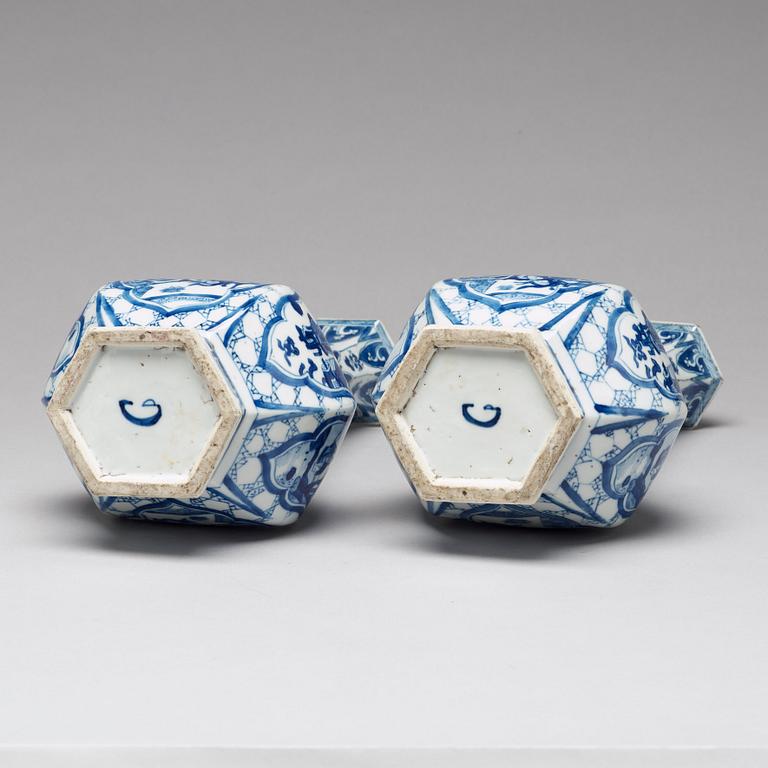
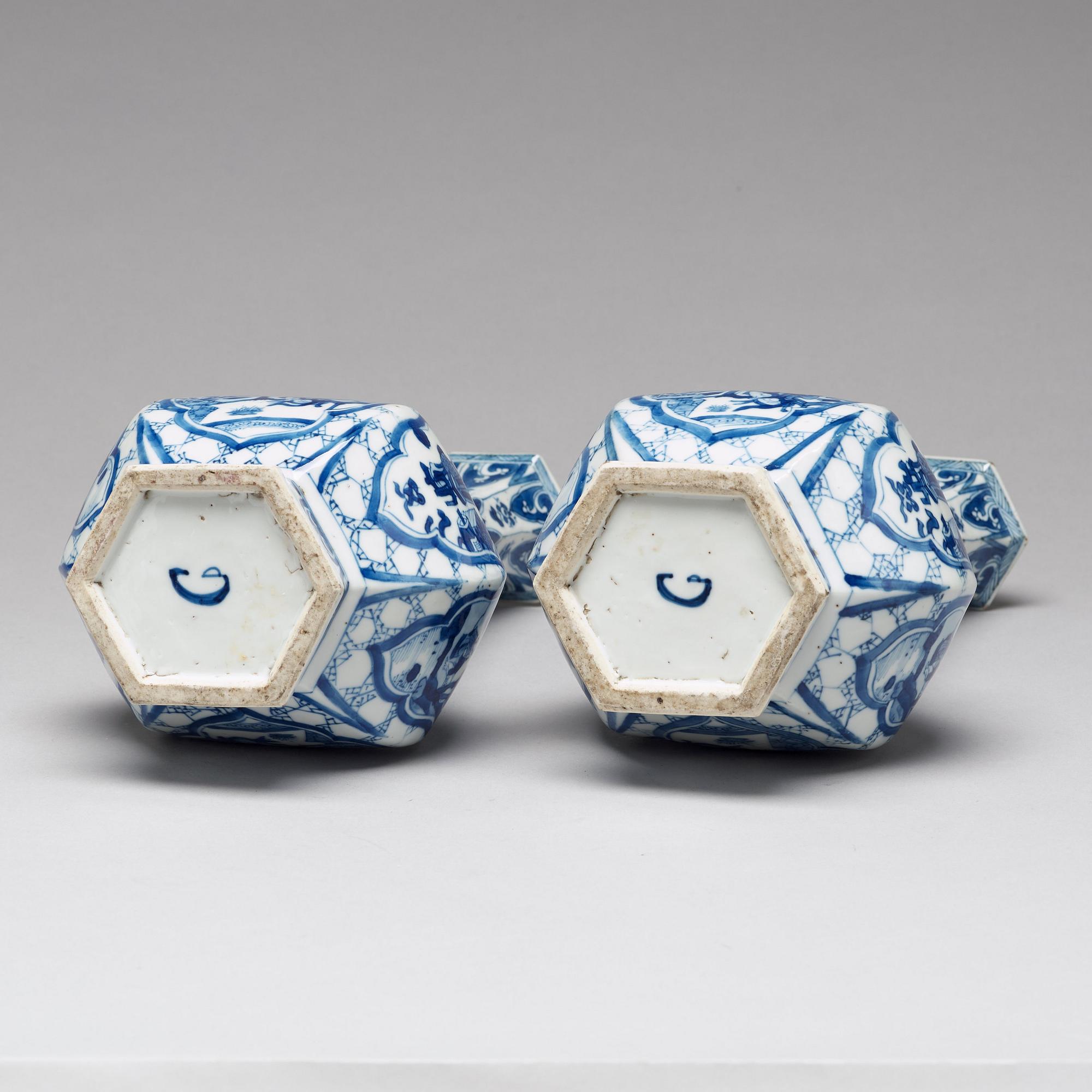
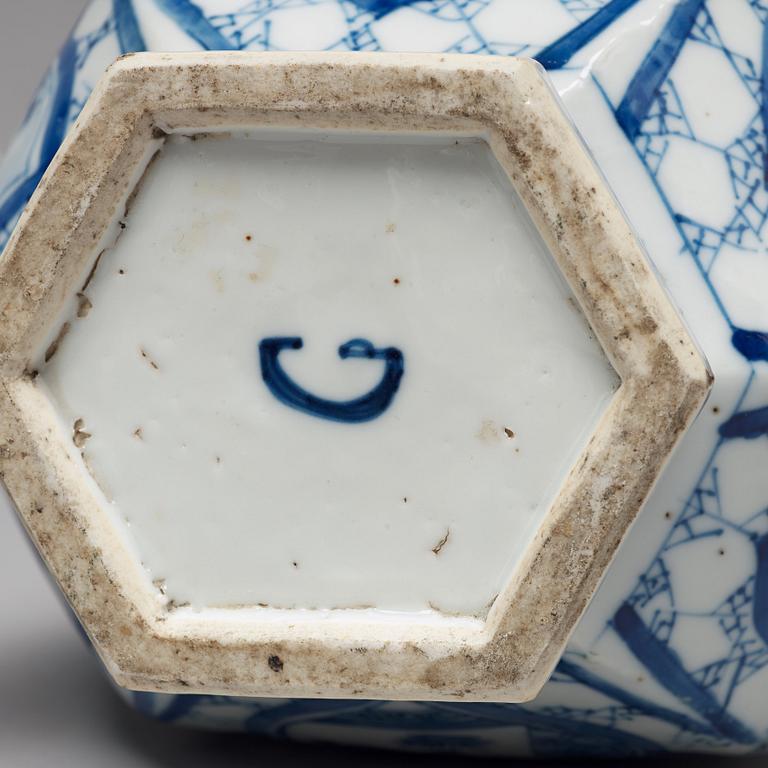
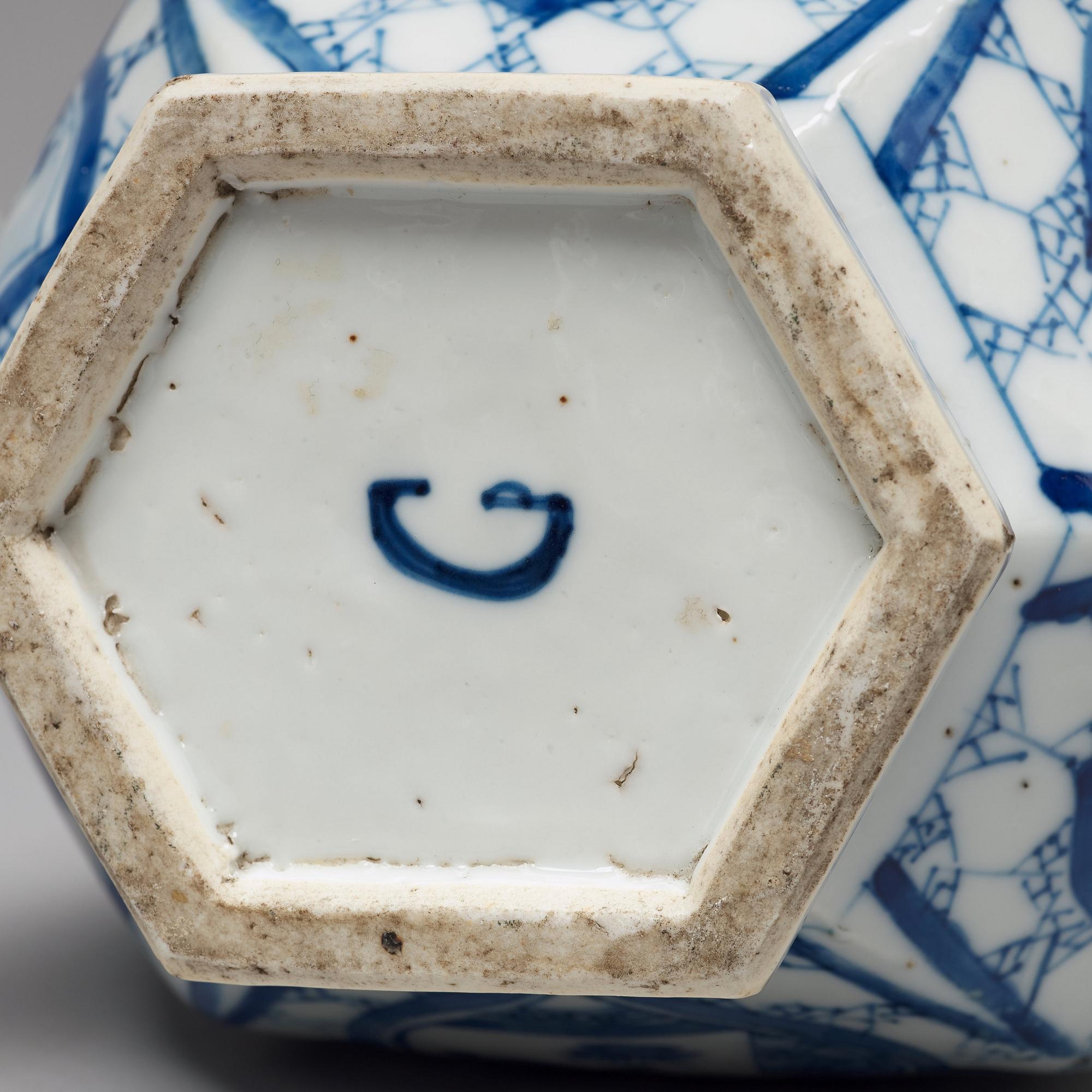
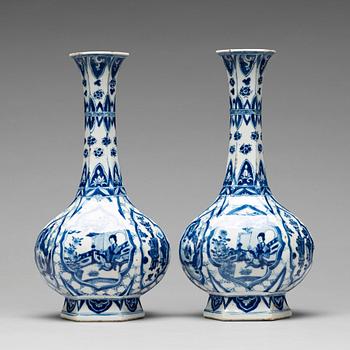
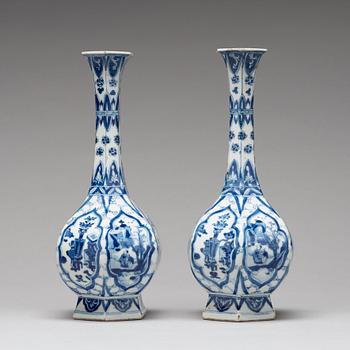
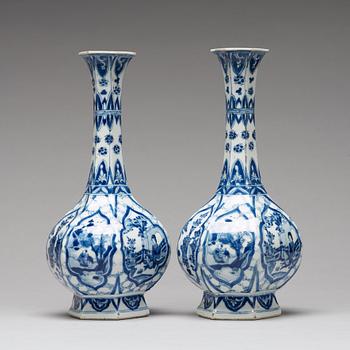
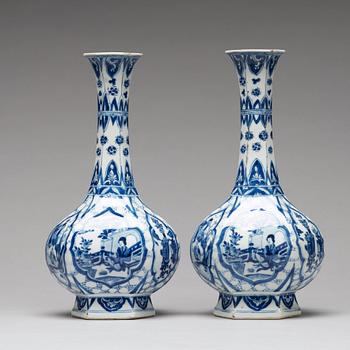
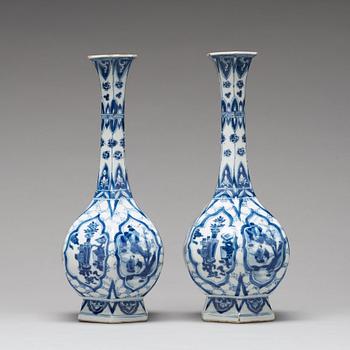
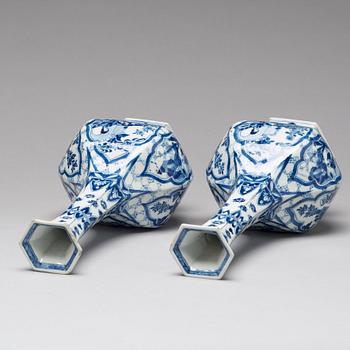
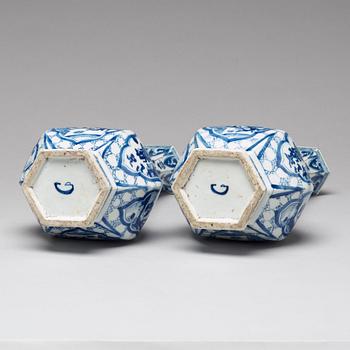
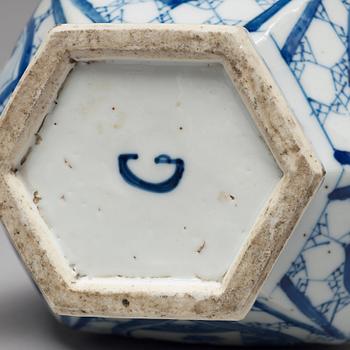
A pair of hexagonal vases decorated in under glaze blue - with a high splayed foot and a faceted pear-shaped body. Each of the six facets are painted with a scallop-shaped cartouche containing scenes depicting either a landscape, antiquities or a “Long Eliza” enclosed within a fenced garden – all of which are against a cracked-ice background. The necks of each vase are decorated with lappet borders, between which are two ruyi bands enclosing a selection of abstract leaf and floral patterns. The inside and outside of the rim are both decorated with a zigzag border and the glazed recessed base of each bears a European G mark in blue. Height 30 cm.
Fritting.
Provenance
Purchased from Sworders Fine Art Auctions, England, April 2009.
The Avalon Collection Part II.
This collection, which in the main focuses on the Interregnum and Kangxi periods has been both carefully and sensitively formed over the last twenty-five years. The collector, a member of the English Oriental Ceramic Society, has assembled the collection with an eye for provenance whilst purchasing from old European collections, well-established antique dealers and at auction.
Academically, the pieces have been well researched both in terms of their symbolism and narrative themes. In many instances the imagery on the pieces has been referenced to episodes in the romantic and historic novels of Chinese mythology, which were used extensively in the decoration of seventeenth century Chinese porcelain.
Exhibitions
Other examples of porcelain with a G-mark to the base are usually of the same high quality - suggesting that this type of mark was indicative of a superior group, custom made perhaps for a discriminating member of the East India Company or a private merchant.
For condition report contact specialist

Others have also viewed