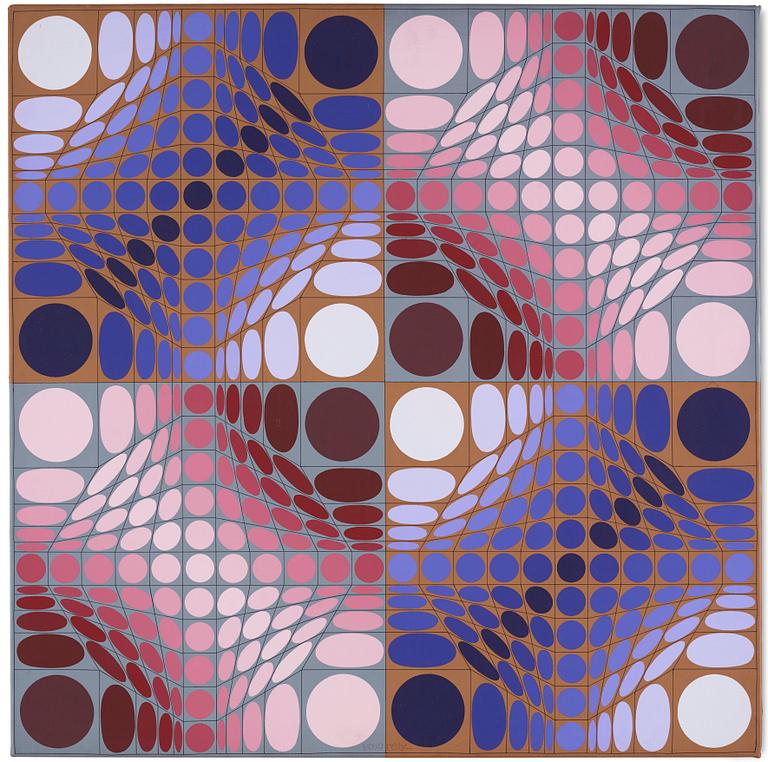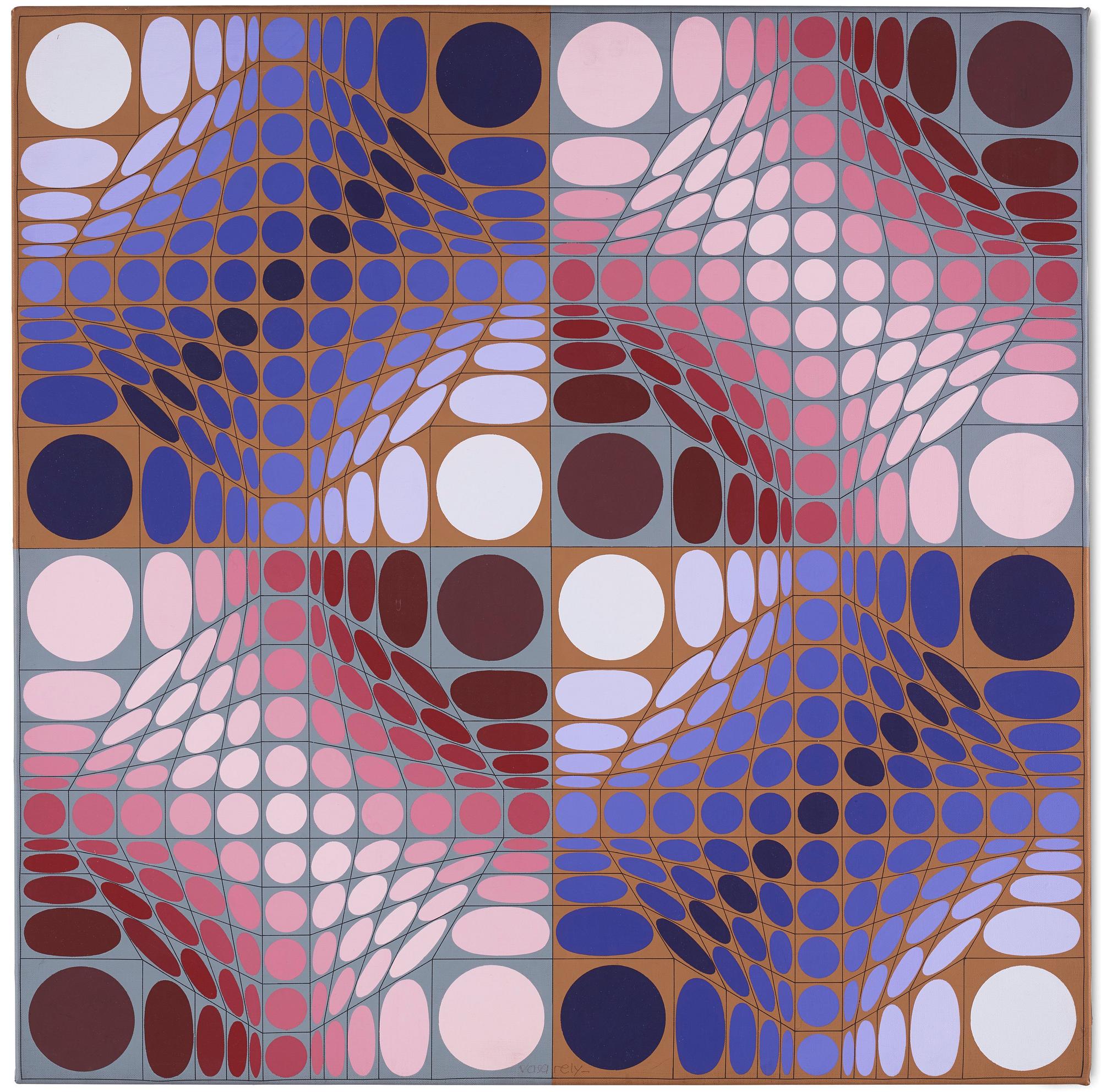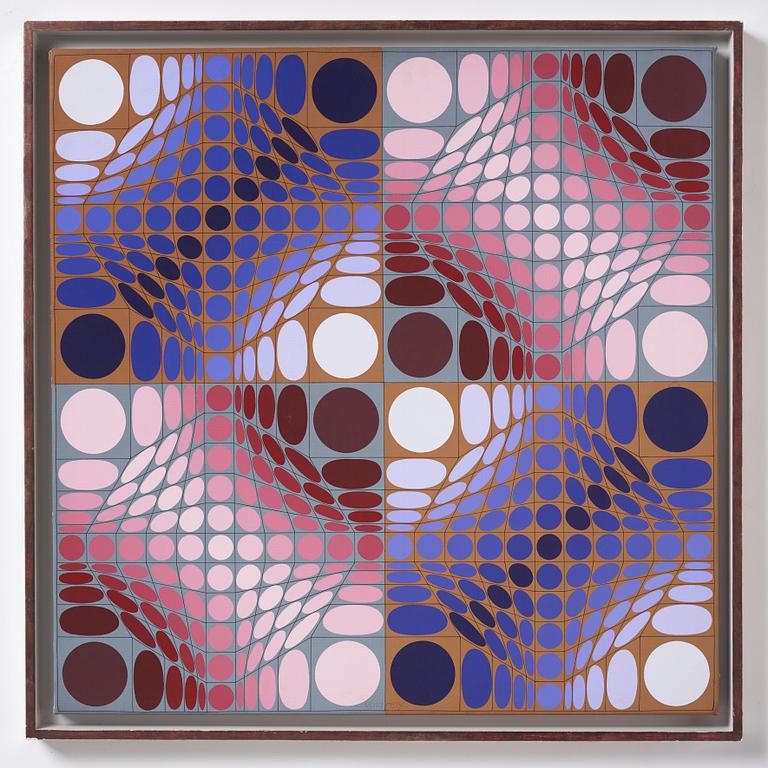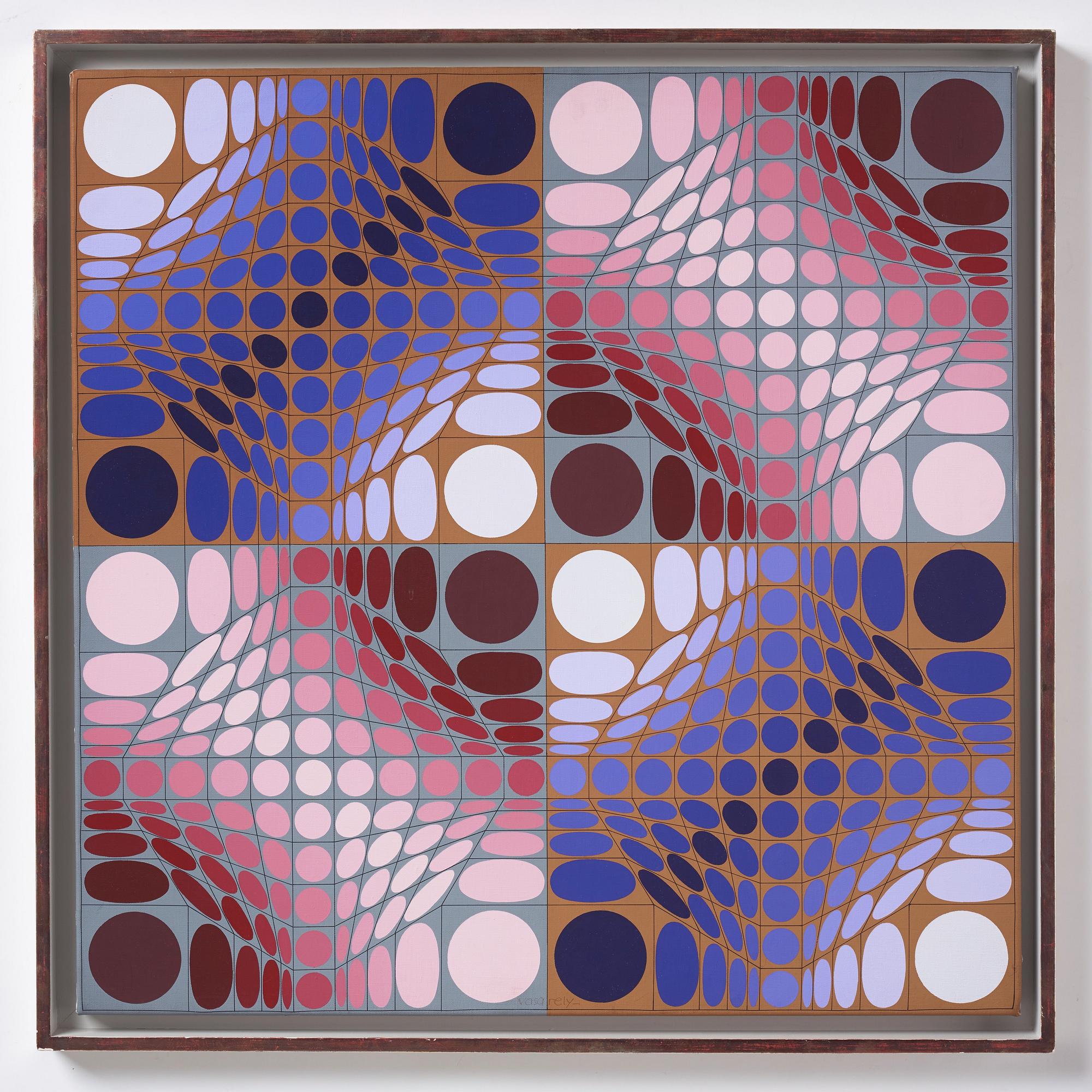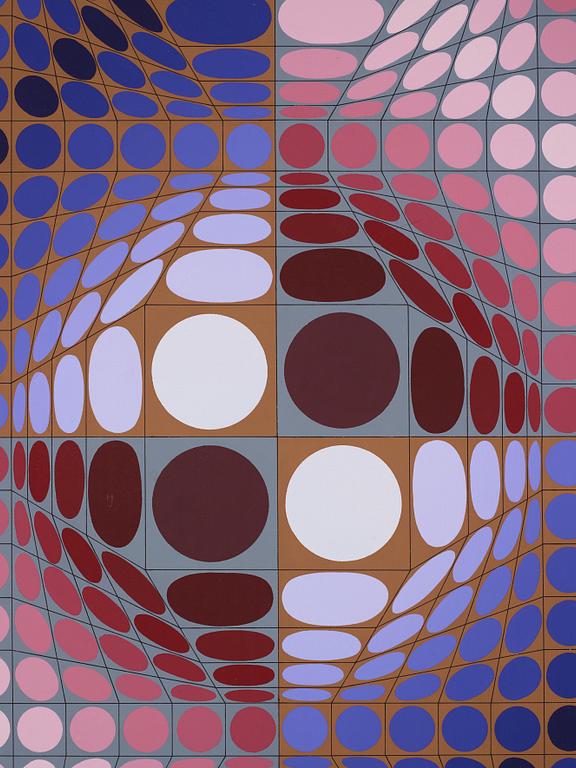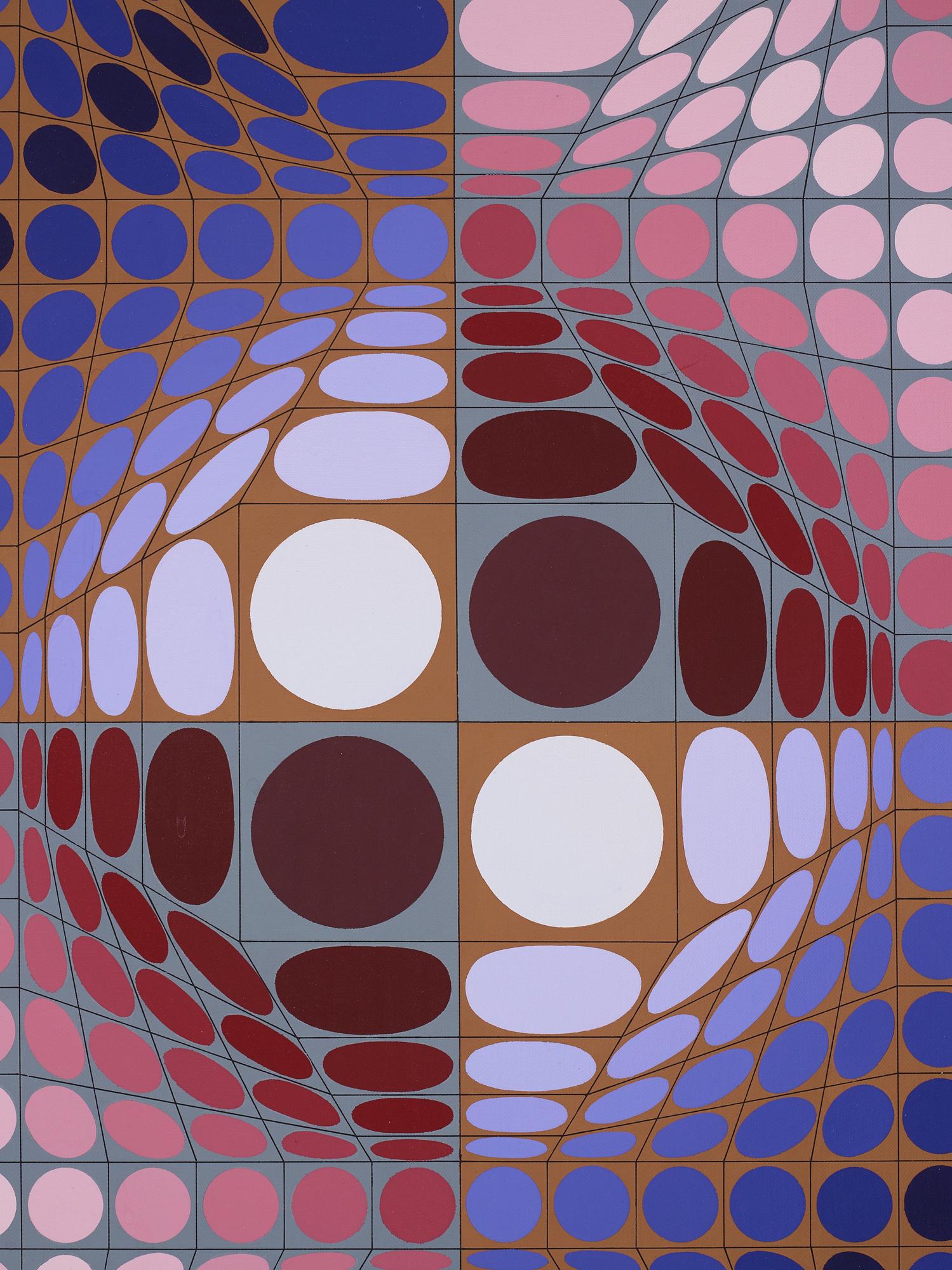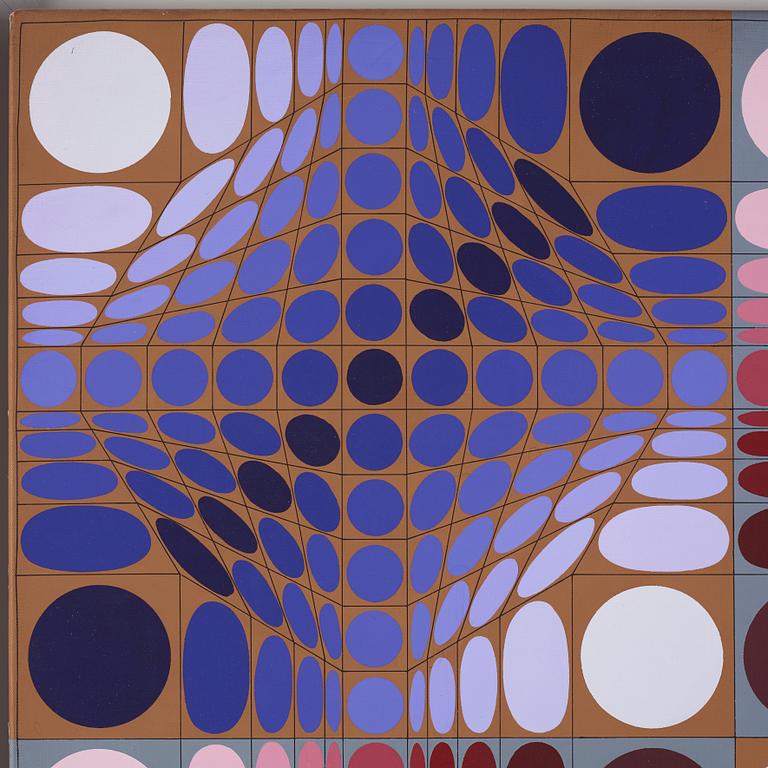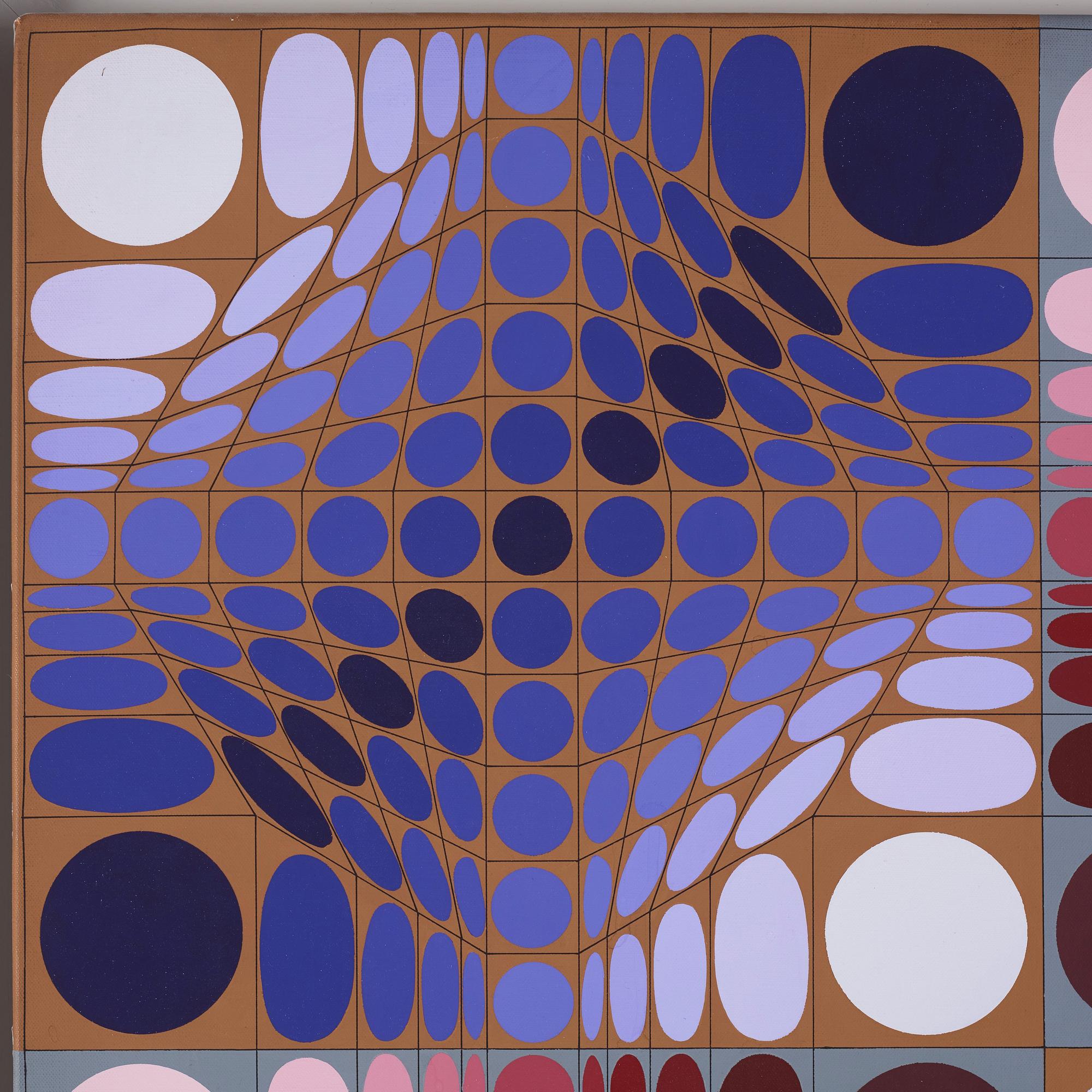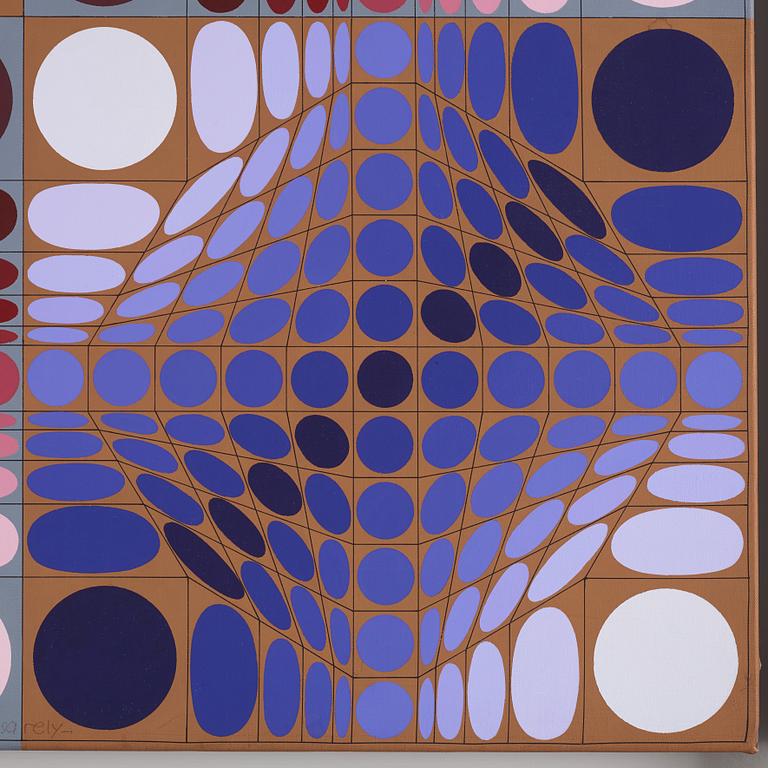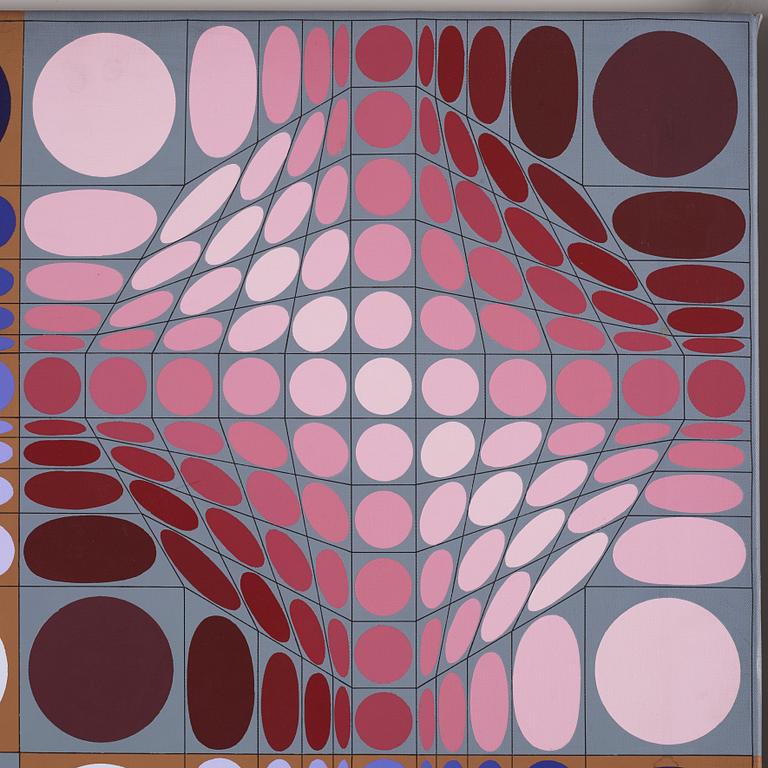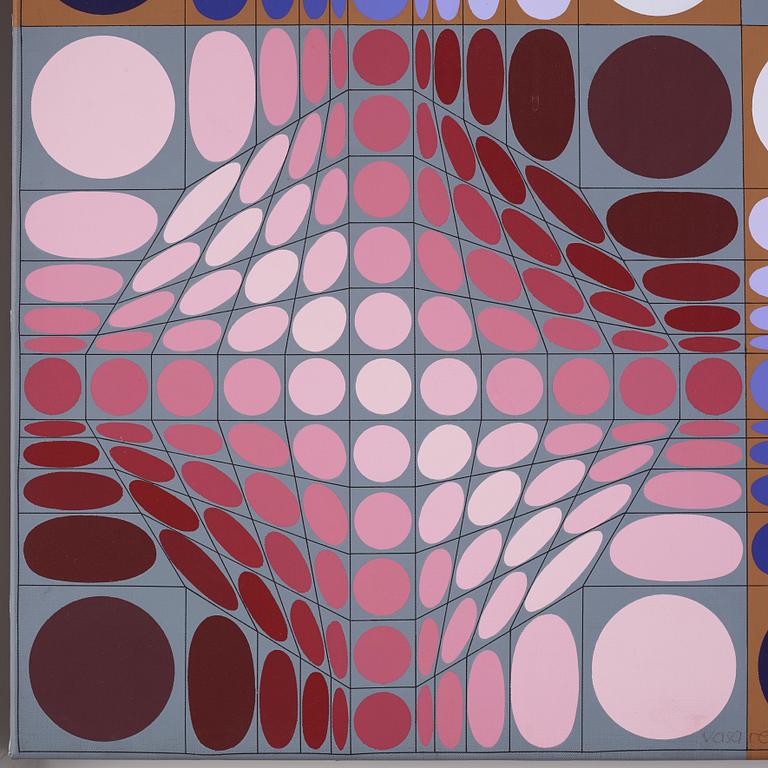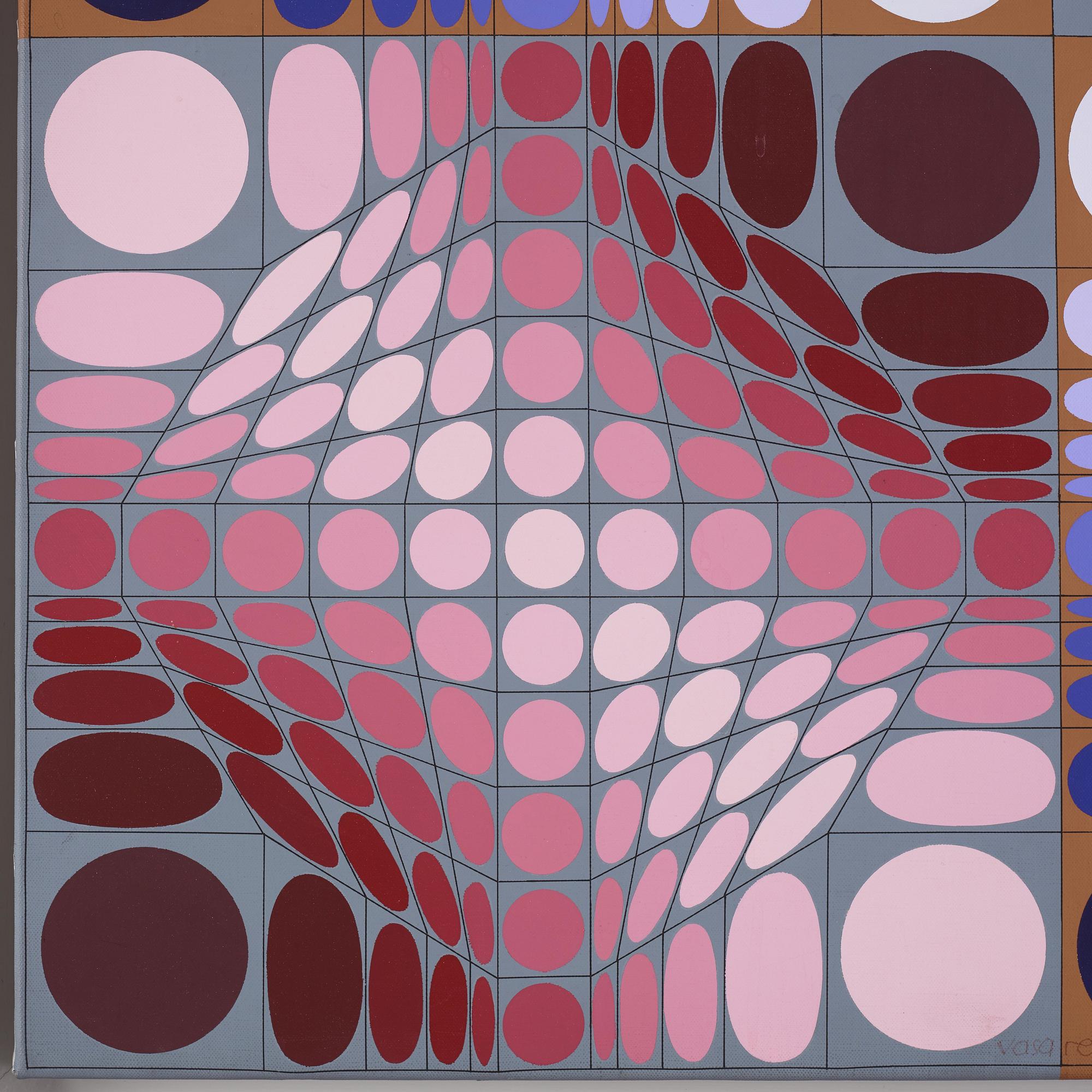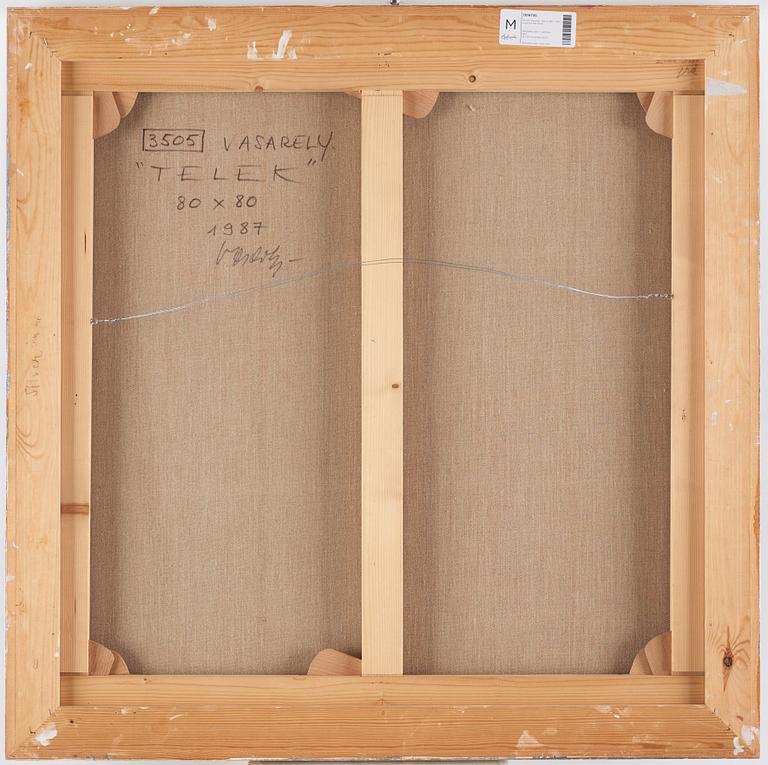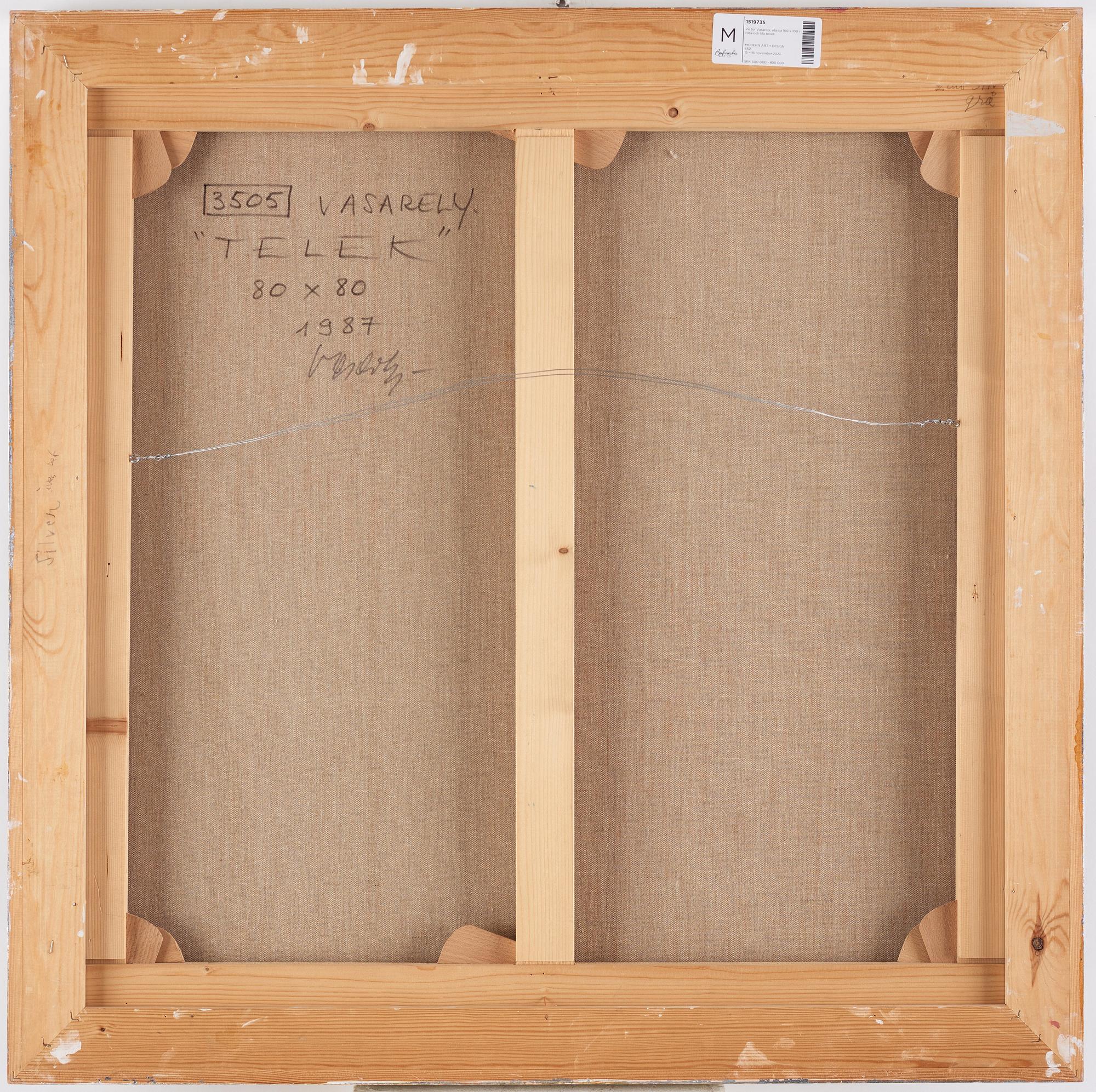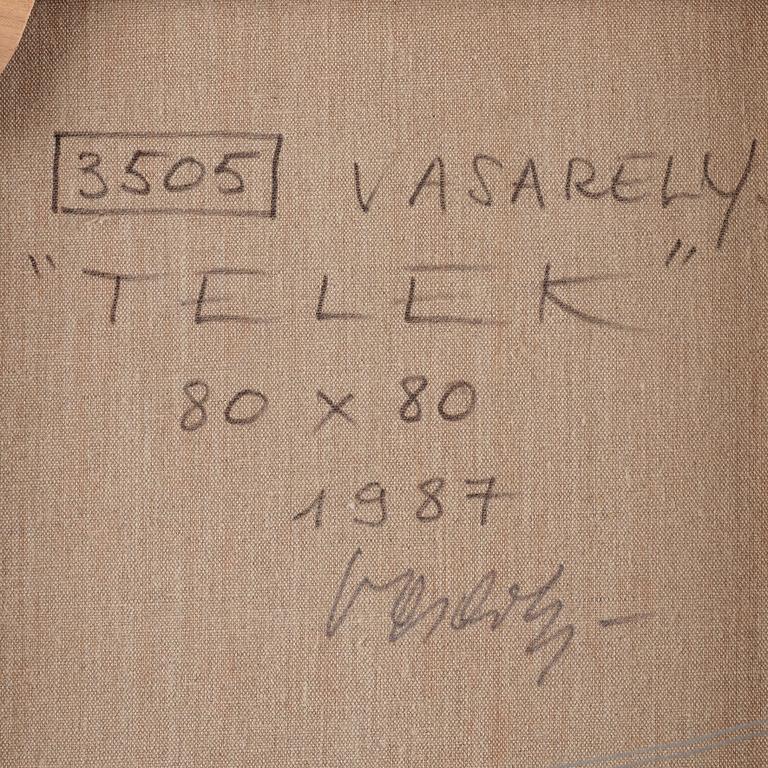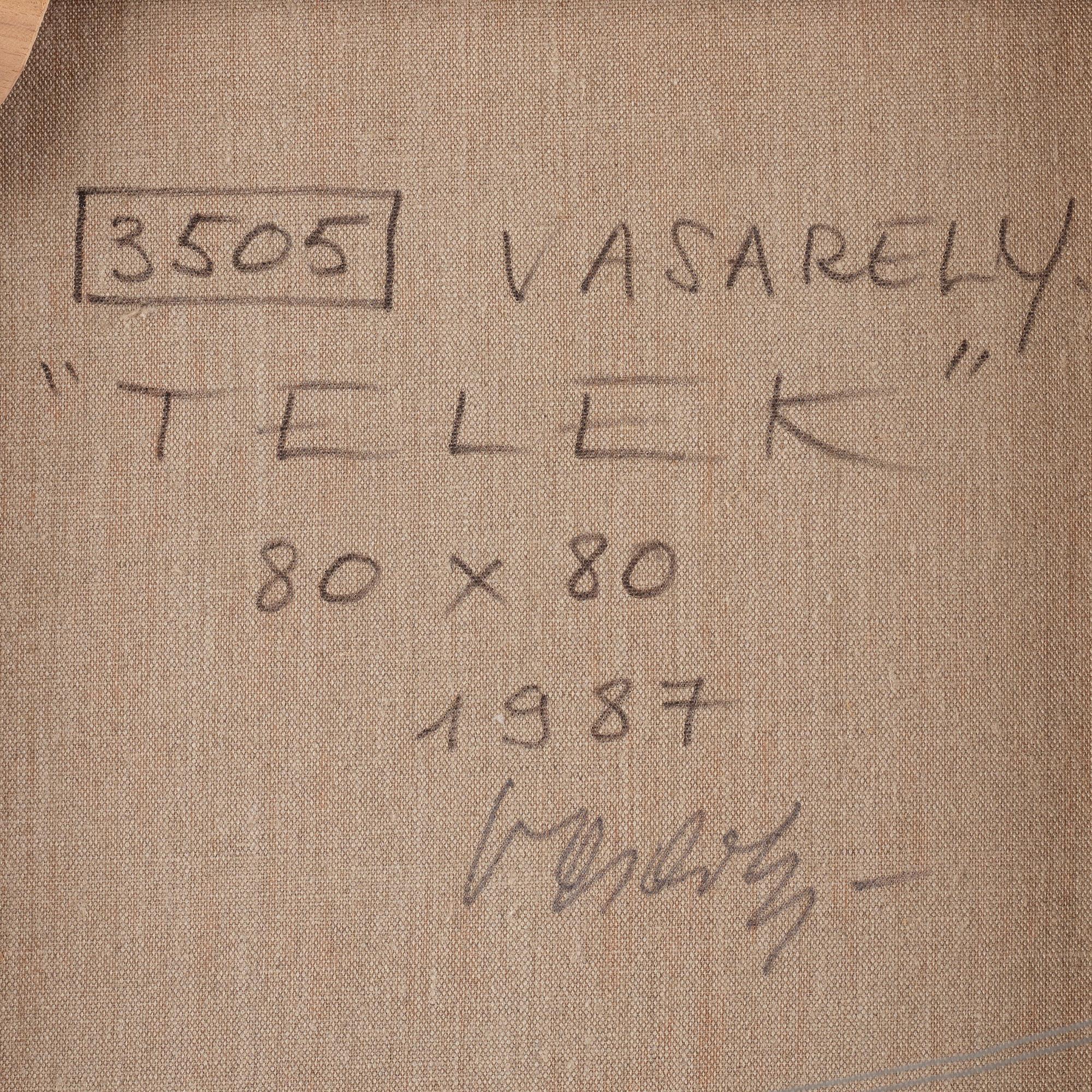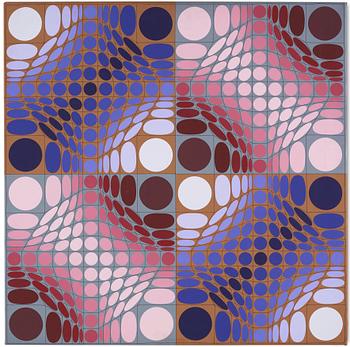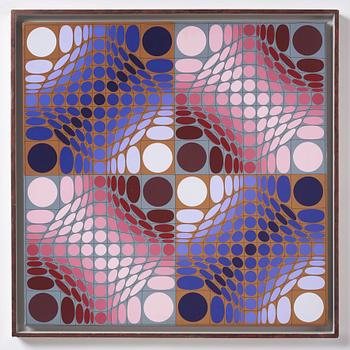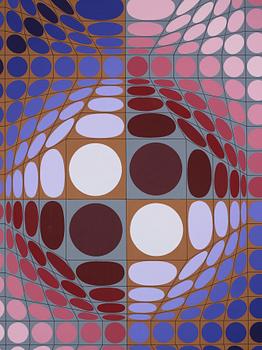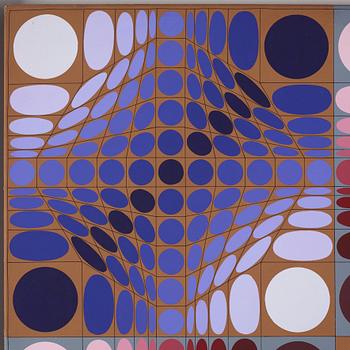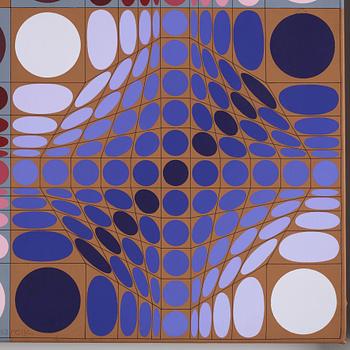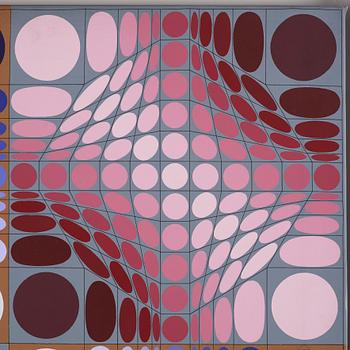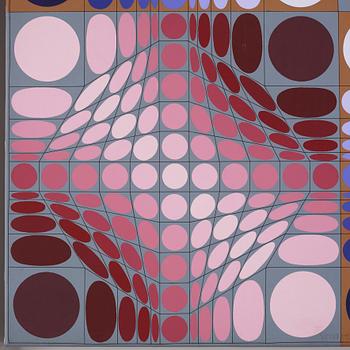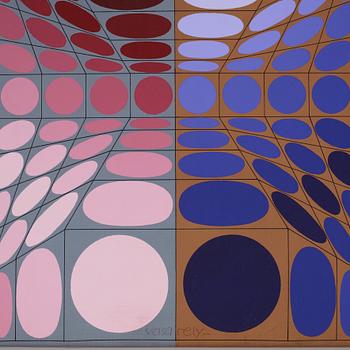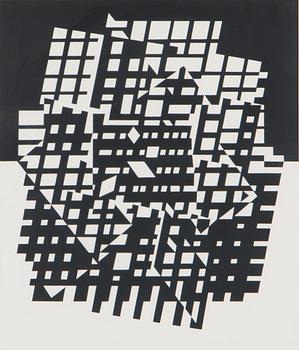
"TELEK"
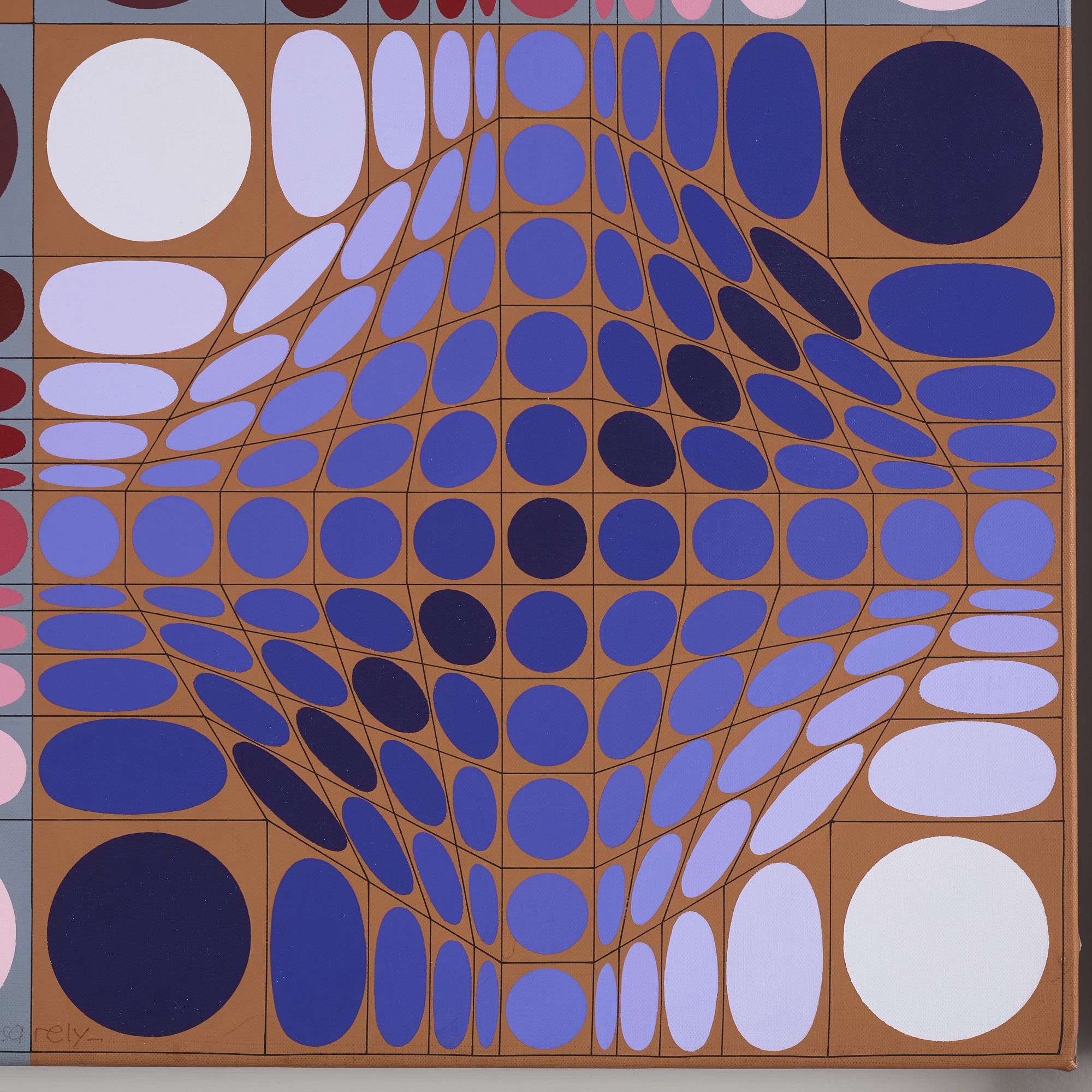
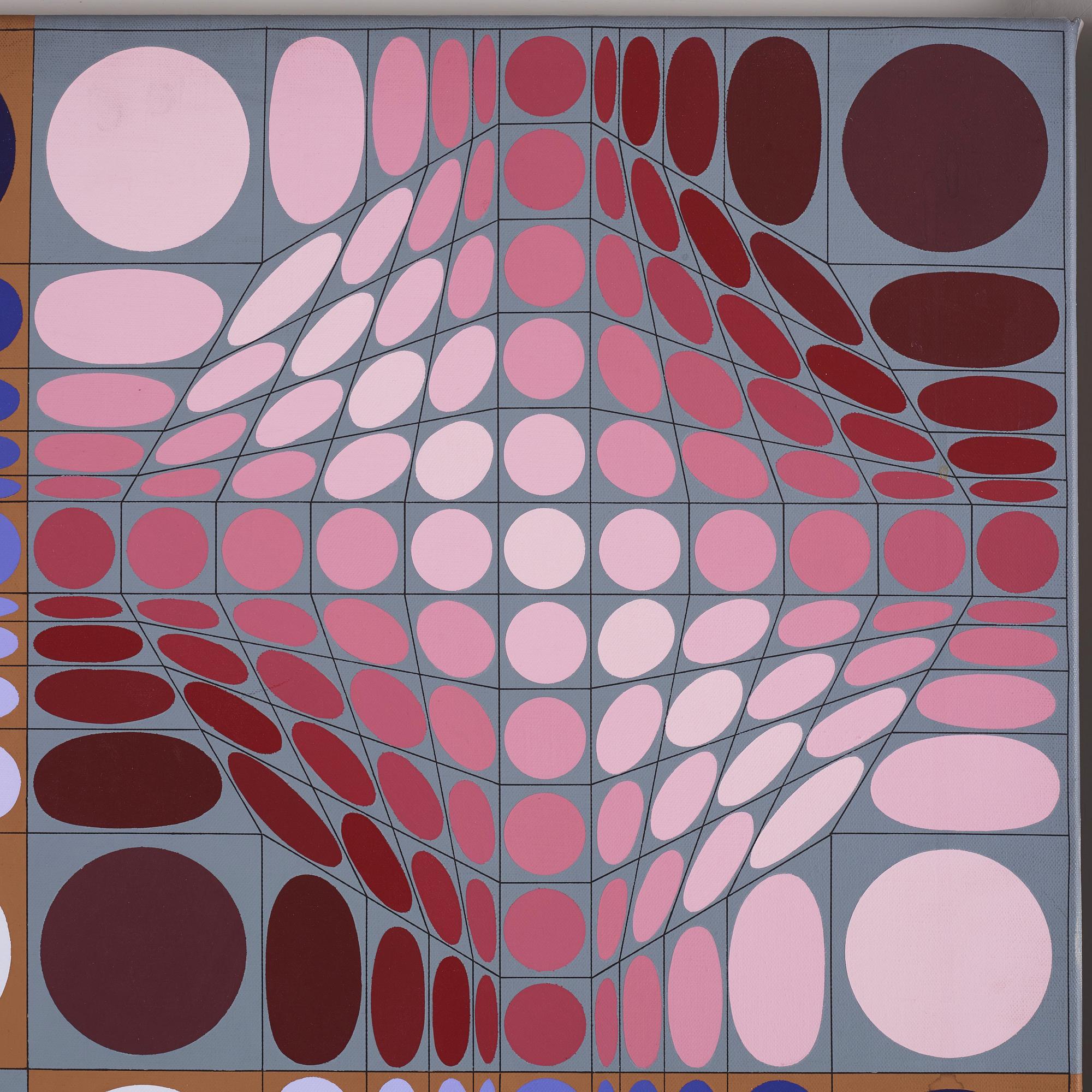
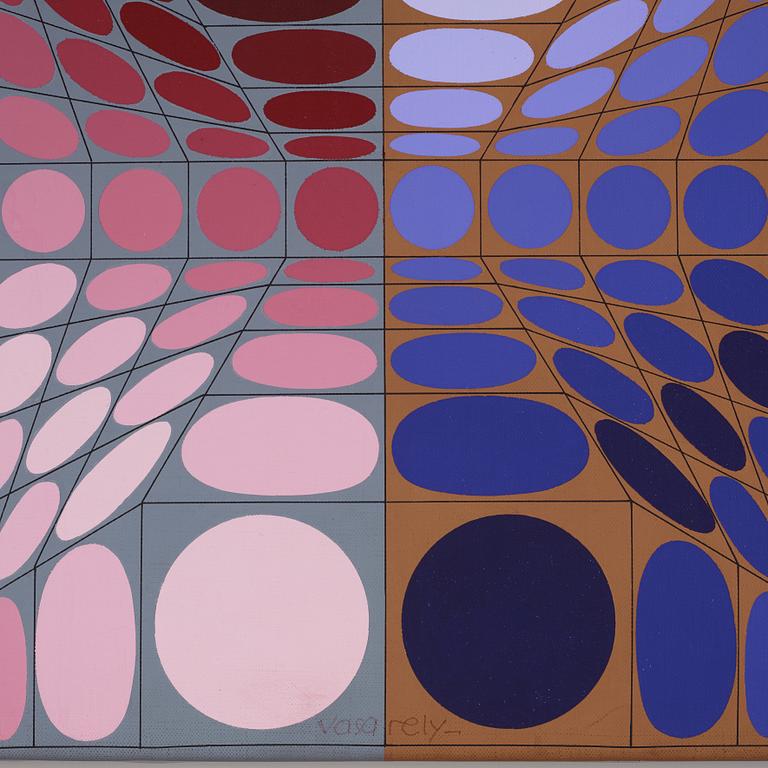
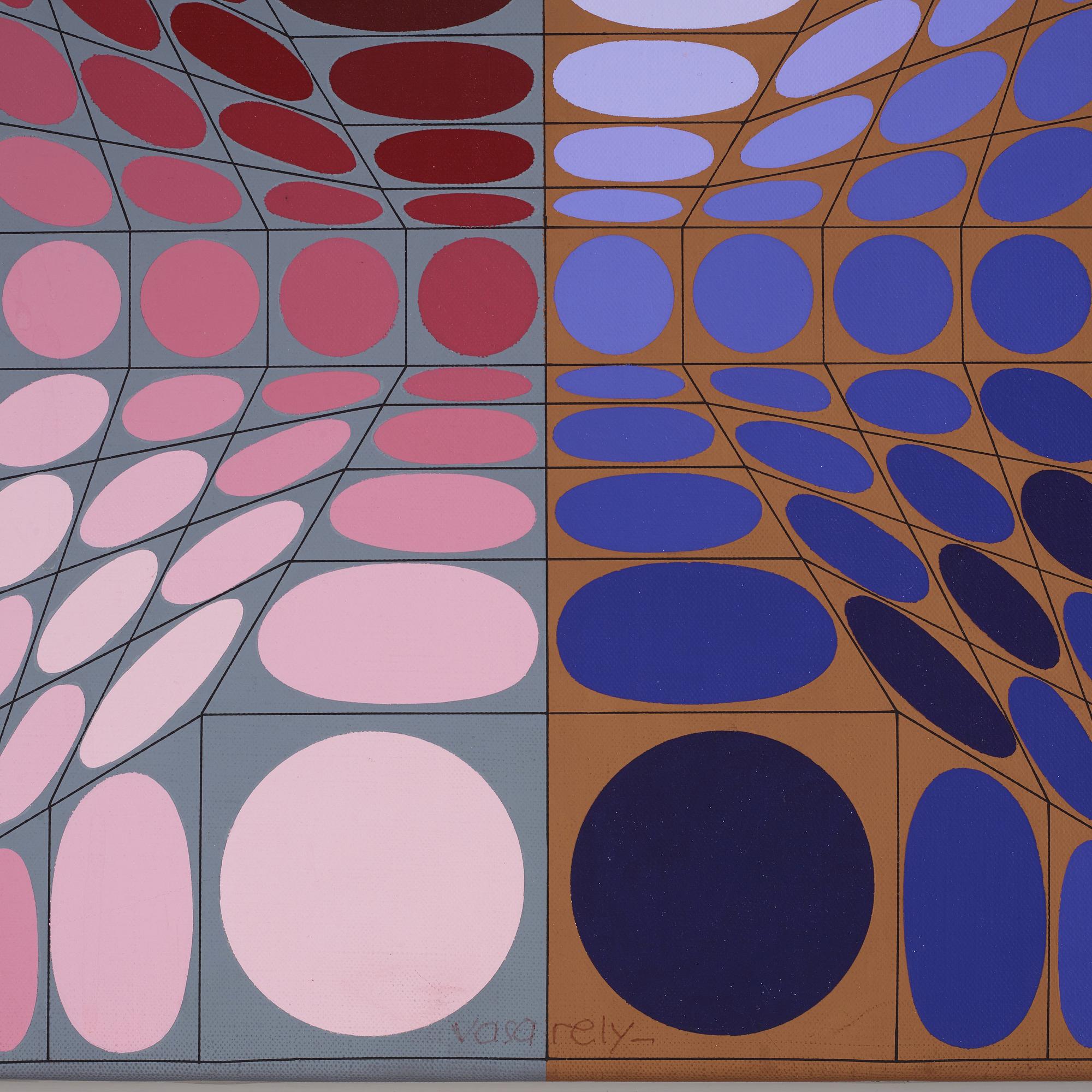
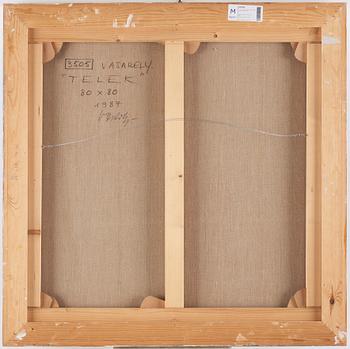
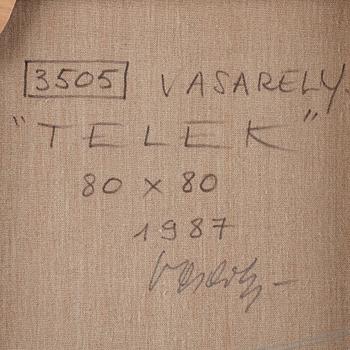
Signed Vasarely. Also signed and dated 1987 verso. Numbered 3505. Canvas 80 x 80 cm.
Provenance
Art & Form, Sveavägen 77, Stockholm.
Private collection, Stockholm, purchased from the above in 1989.
More information
Victor Vasarely, born in 1906 in Hungary, is considered one of the leading figures behind the Op Art movement with his innovative art focusing on contrasting colors and optical illusions. Taught by Láslo Moholy-Nagy, he came into contact with the works of Kandinsky, Gropius, Le Corbusier, and Mondrian, as well as the functionalism at Bauhaus, which also strongly influenced him. In 1930, Vasarely moved to Paris, where he worked successfully as a graphic designer, systematically exploring the optical and emotional aspects of various graphic techniques. This led to an increased understanding of geometric form and its ability to evoke a sensory perception of space, material, and energy. Vasarely developed his own form of geometric abstraction, which he varied endlessly, thus creating various optical patterns with a kinetic effect. He believed that color and form were inseparable, and geometric shapes were arranged in fluorescent colors in such a way that the eye perceived a fluctuating movement. Vasarely summarized this approach with the words: "Each form is the basis for a color, each color is an attribute of a form." In this way, shapes from nature were transferred to purely abstract elements in his paintings.
For condition report contact specialist

Covered by droit de suite
Image rights
The artworks in this database are protected by copyright and may not be reproduced without the permission of the rights holders. The artworks are reproduced in this database with a license from Bildupphovsrätt.