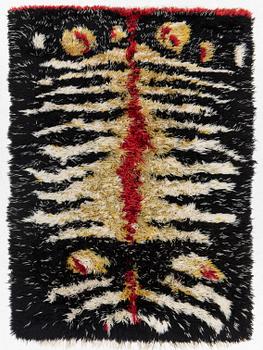
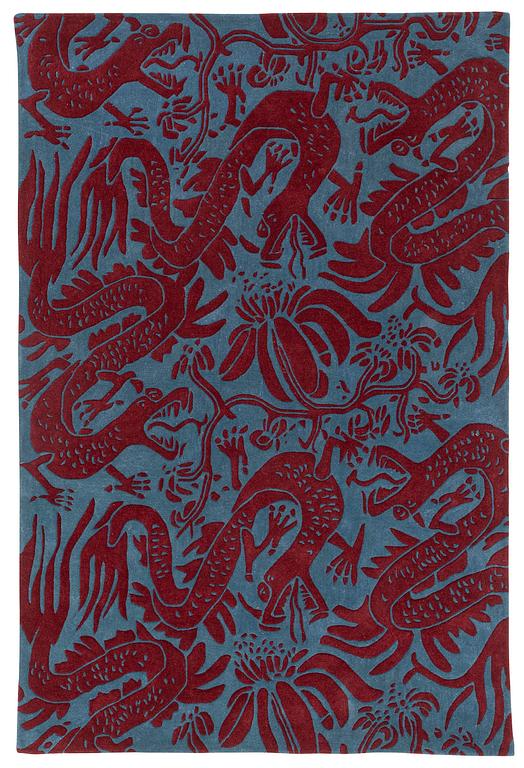
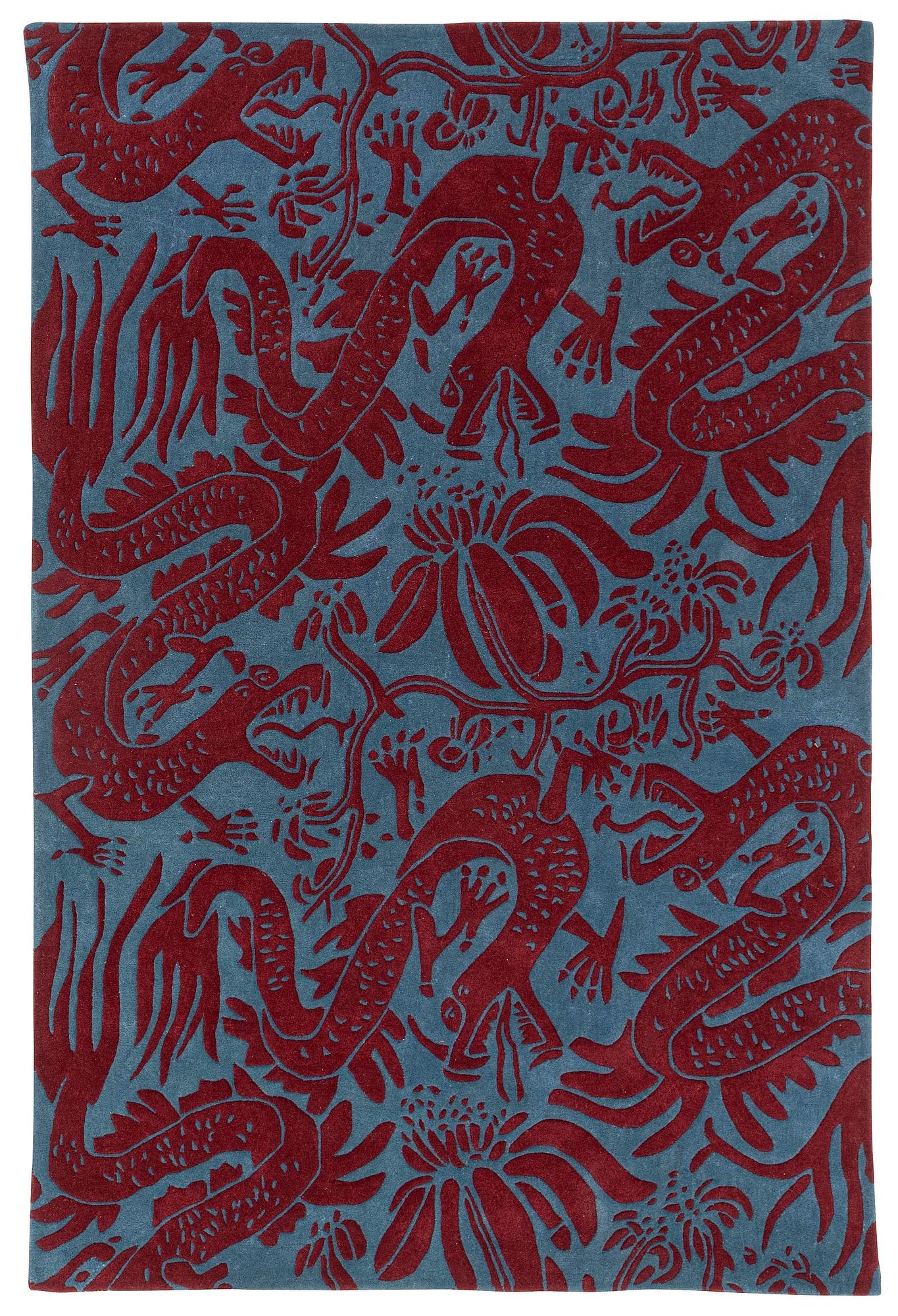
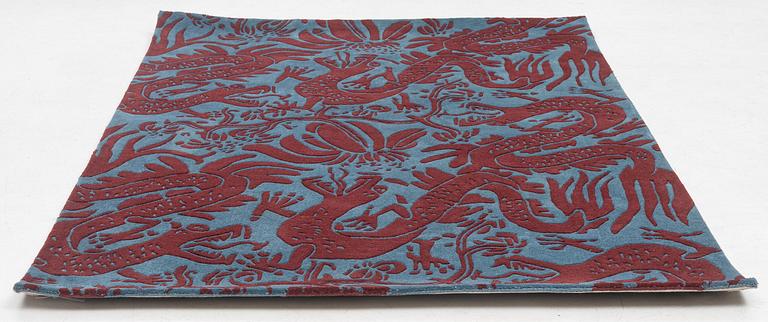
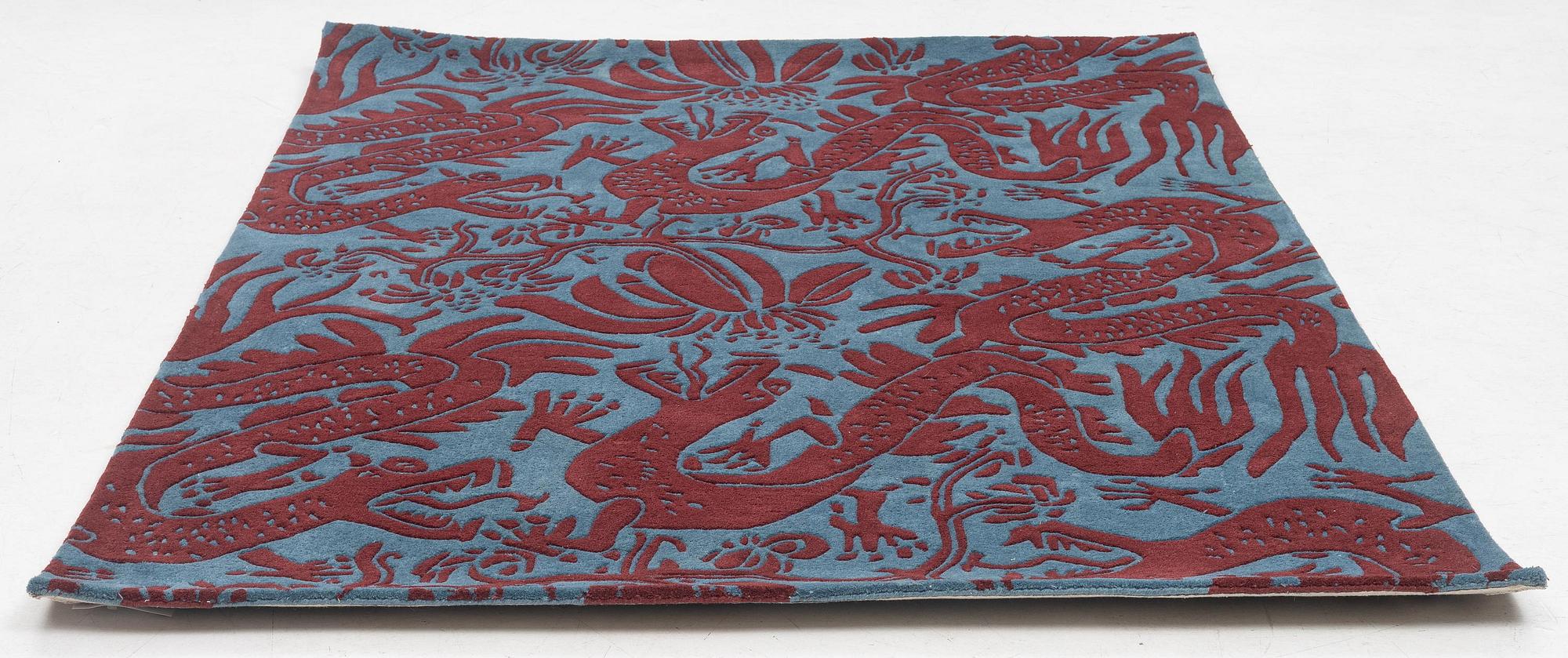
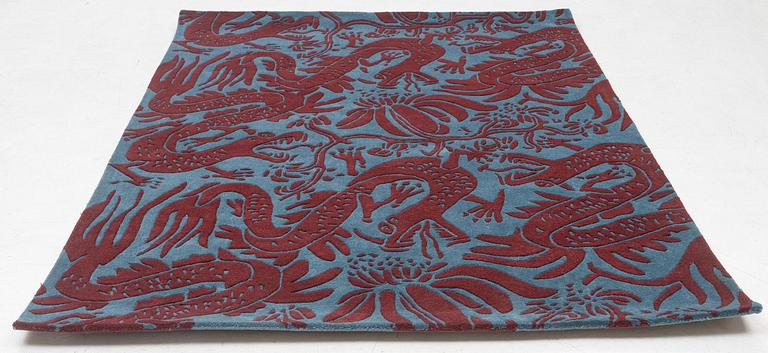
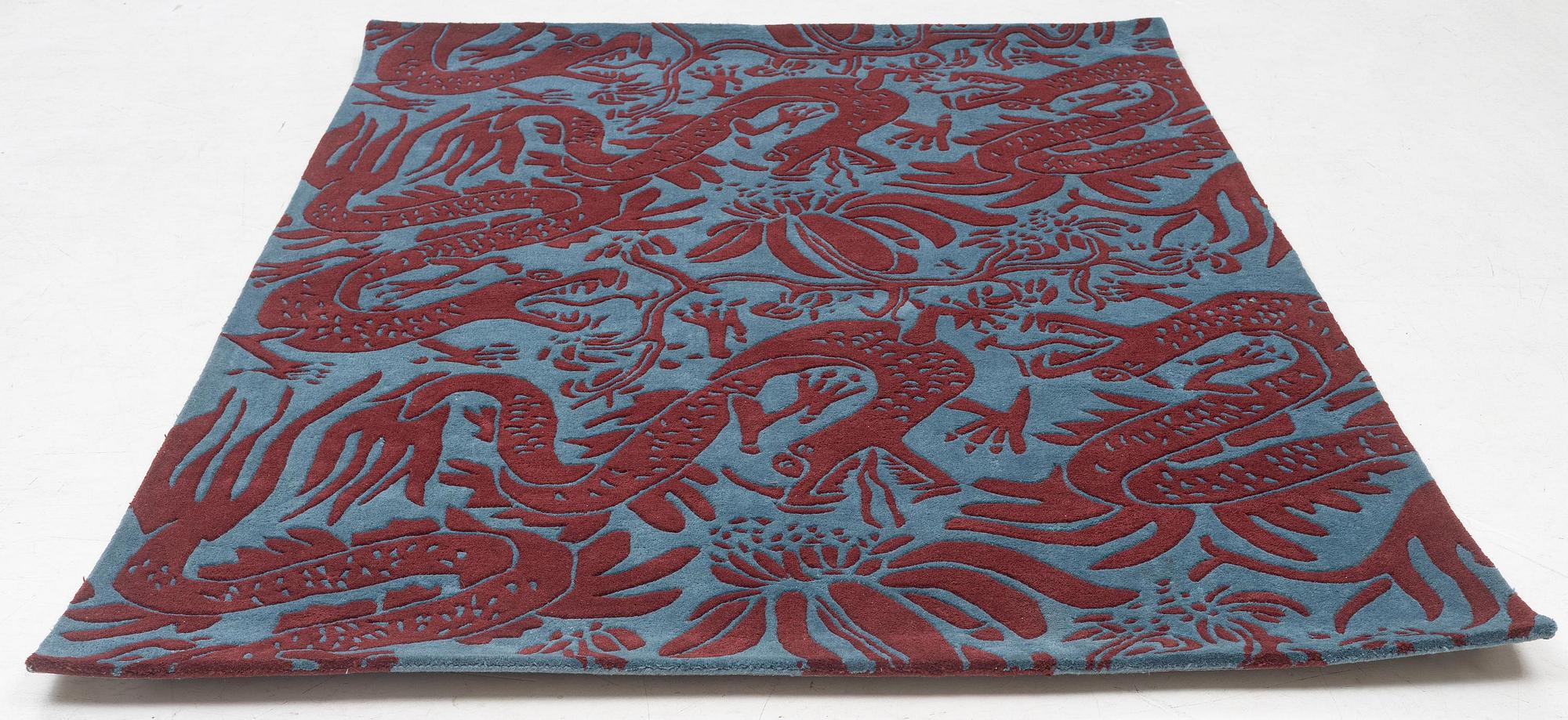
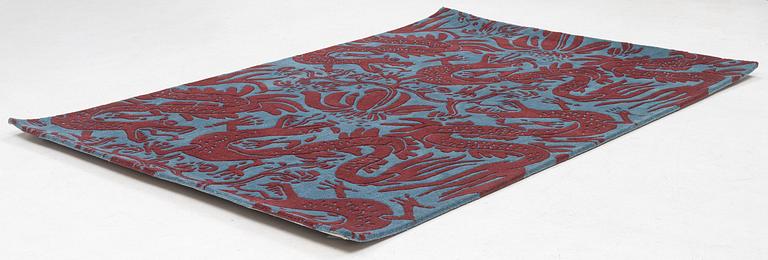
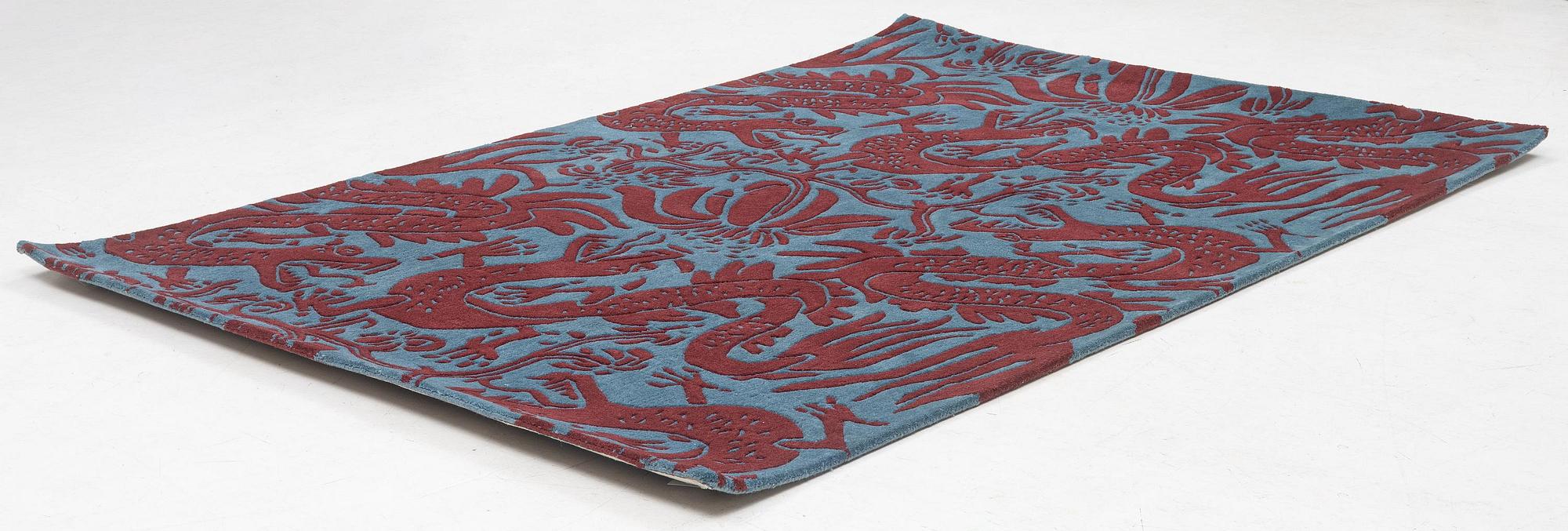
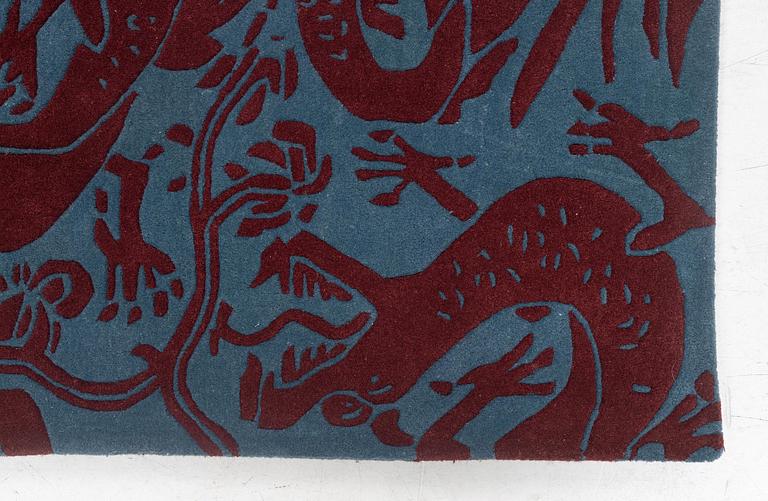
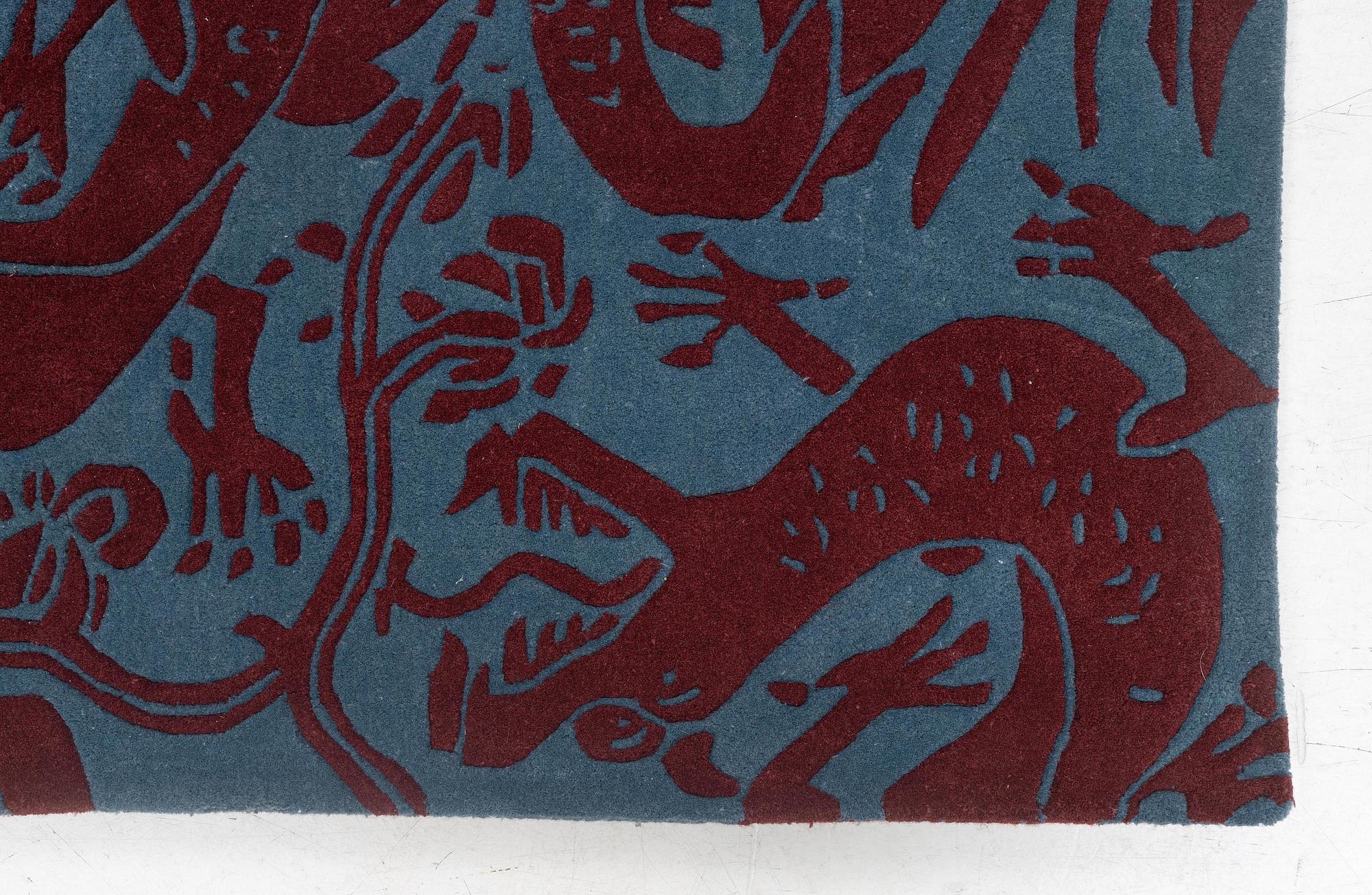
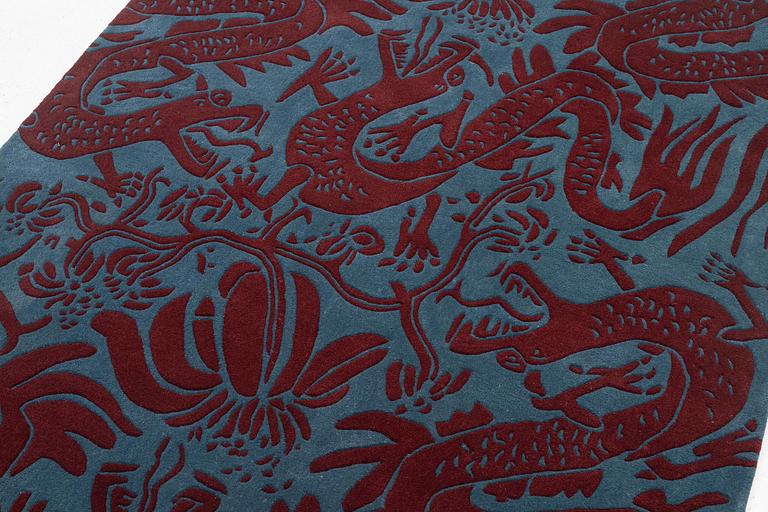
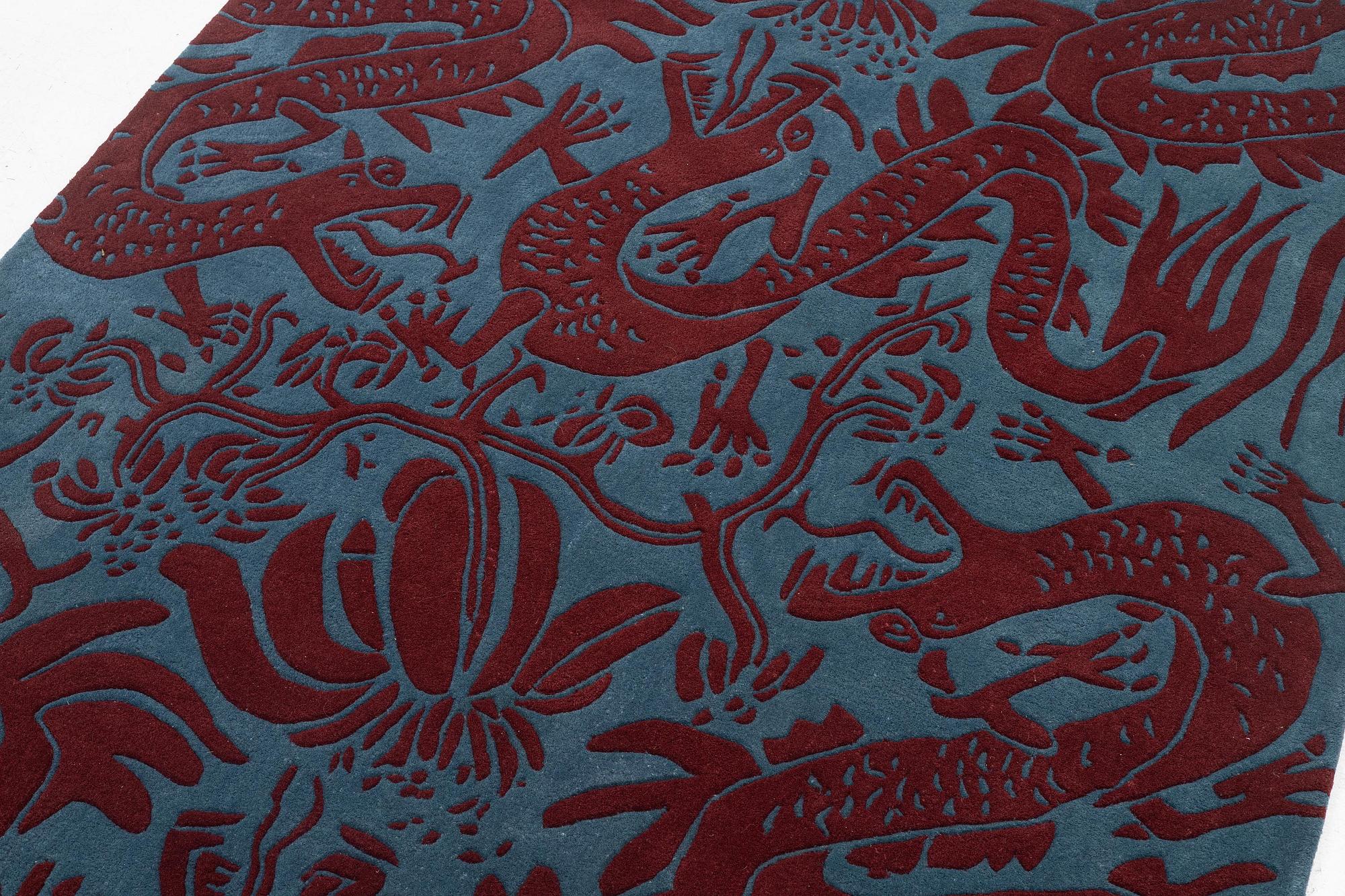
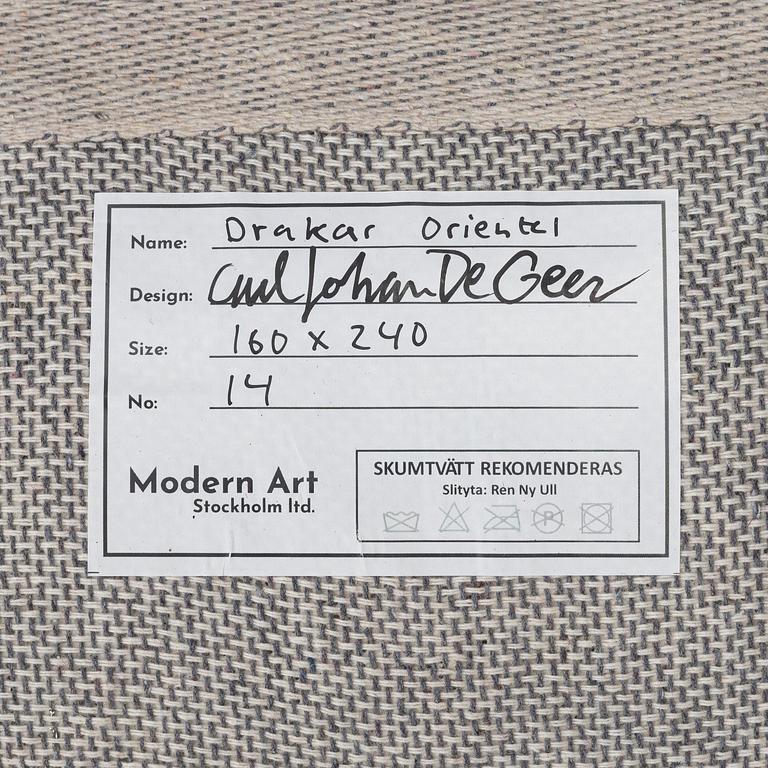
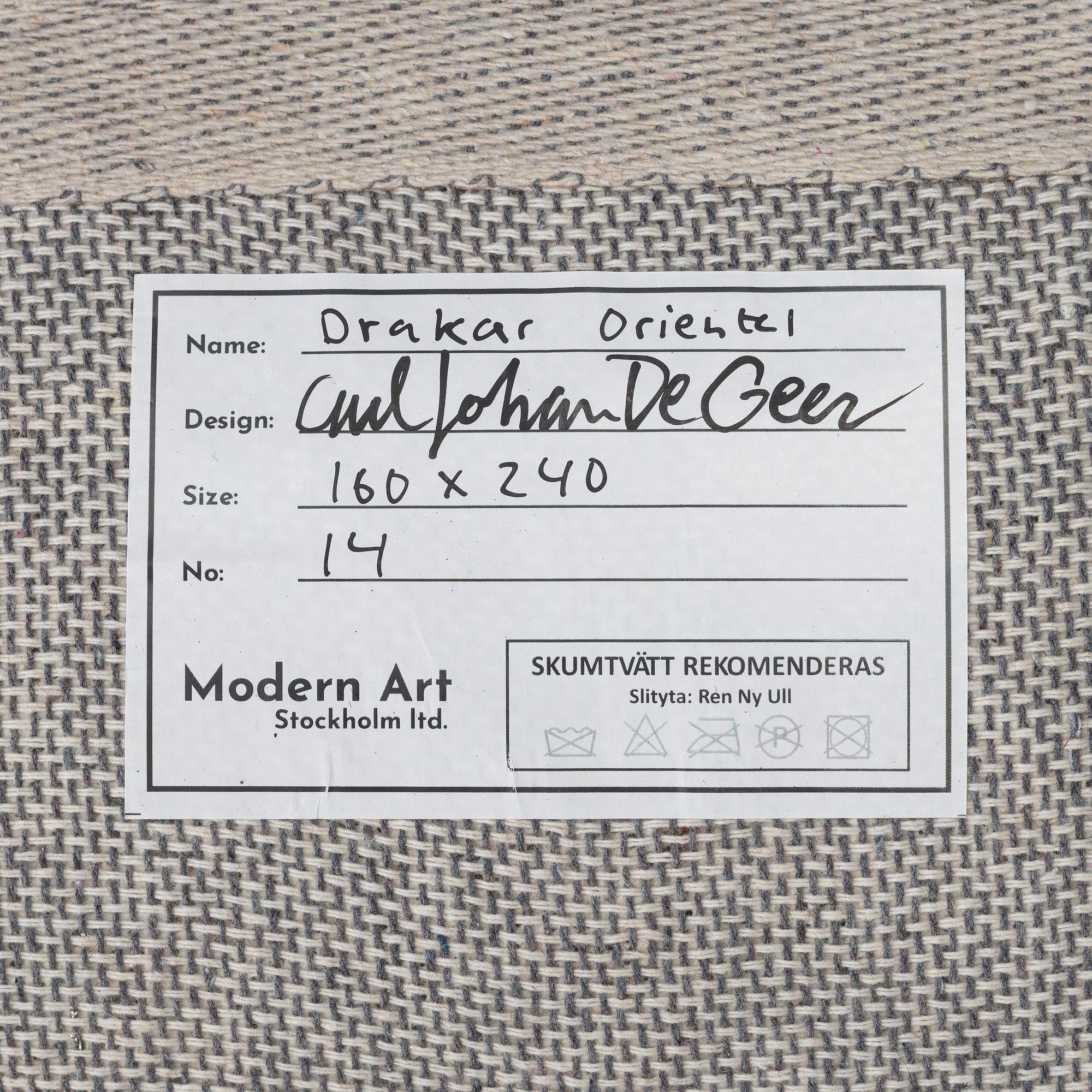
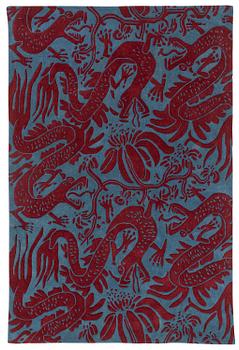
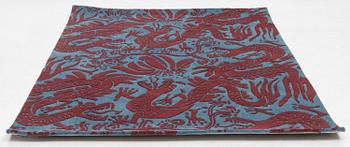
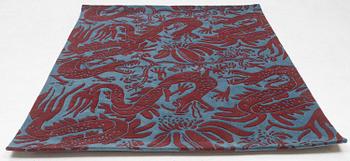
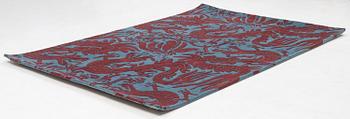
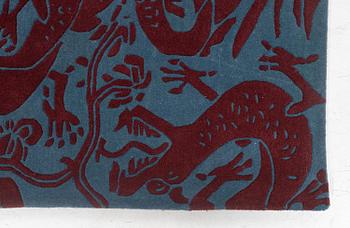
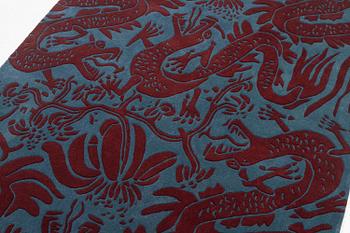
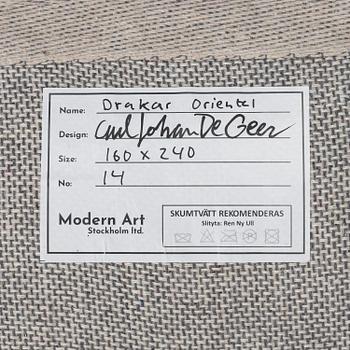
A carpet, 'Drakar, Oriental', hand tufted, c 240 x 160 cm, signed and numbered 14.
In New Zealand wool.
The original pattern was designed by Carl Johan De Geer in 1965. In Hergé's Adventures of Tintin in the book "The Blue Lotus," the dragons are used as a metaphor for Chinese culture. The struggle of the older generations against the malevolent forces in society and the challenges that society faced during the 1930s are also depicted in the pattern.
More about Carl Johan De Geer
Carl Johan De Geer was a Swedish painter, designer, photographer, and author. He studied from 1959-62 at Konstfack. He is one of the leading representatives of the boundary-crossing artists of the 1960s. Utilising the magazine “Puss” as his platform, De Geer and others satirically critiqued society and its representatives in a provocative style. In their exhibitions, which often take the form of entire scenographies, he works with all art forms. He has designed textile patterns, created paintings featuring kitsch and memories, made films, and written novels that blend modernism with pop culture.
Read moreFor condition report contact specialist

Covered by droit de suite
Image rights
The artworks in this database are protected by copyright and may not be reproduced without the permission of the rights holders. The artworks are reproduced in this database with a license from Bildupphovsrätt.
Others have also viewed