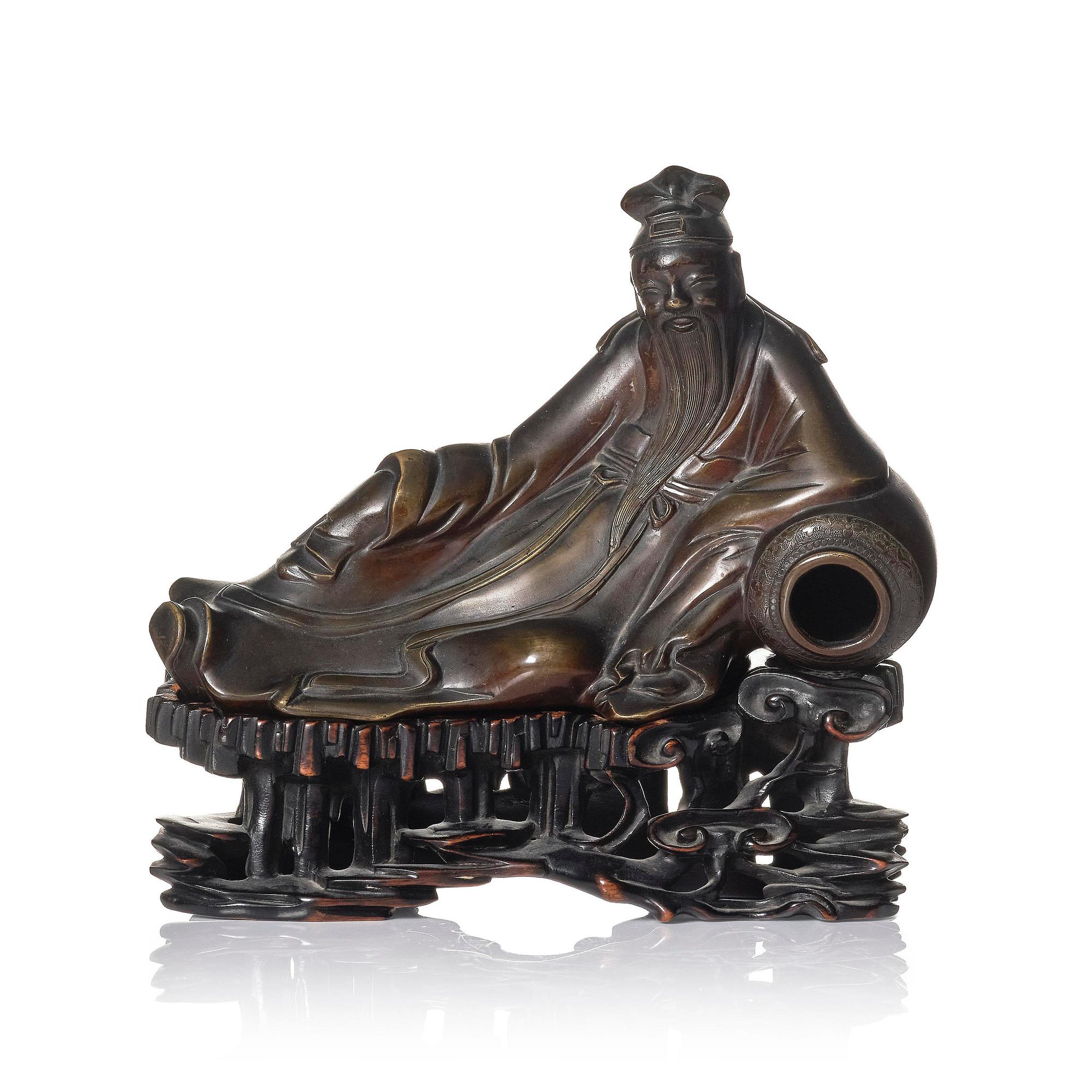
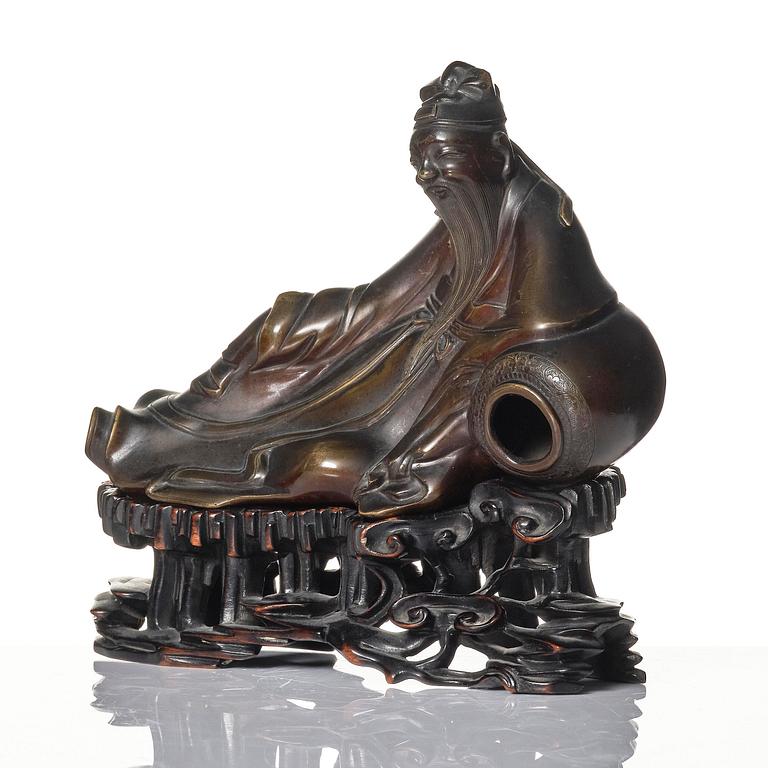
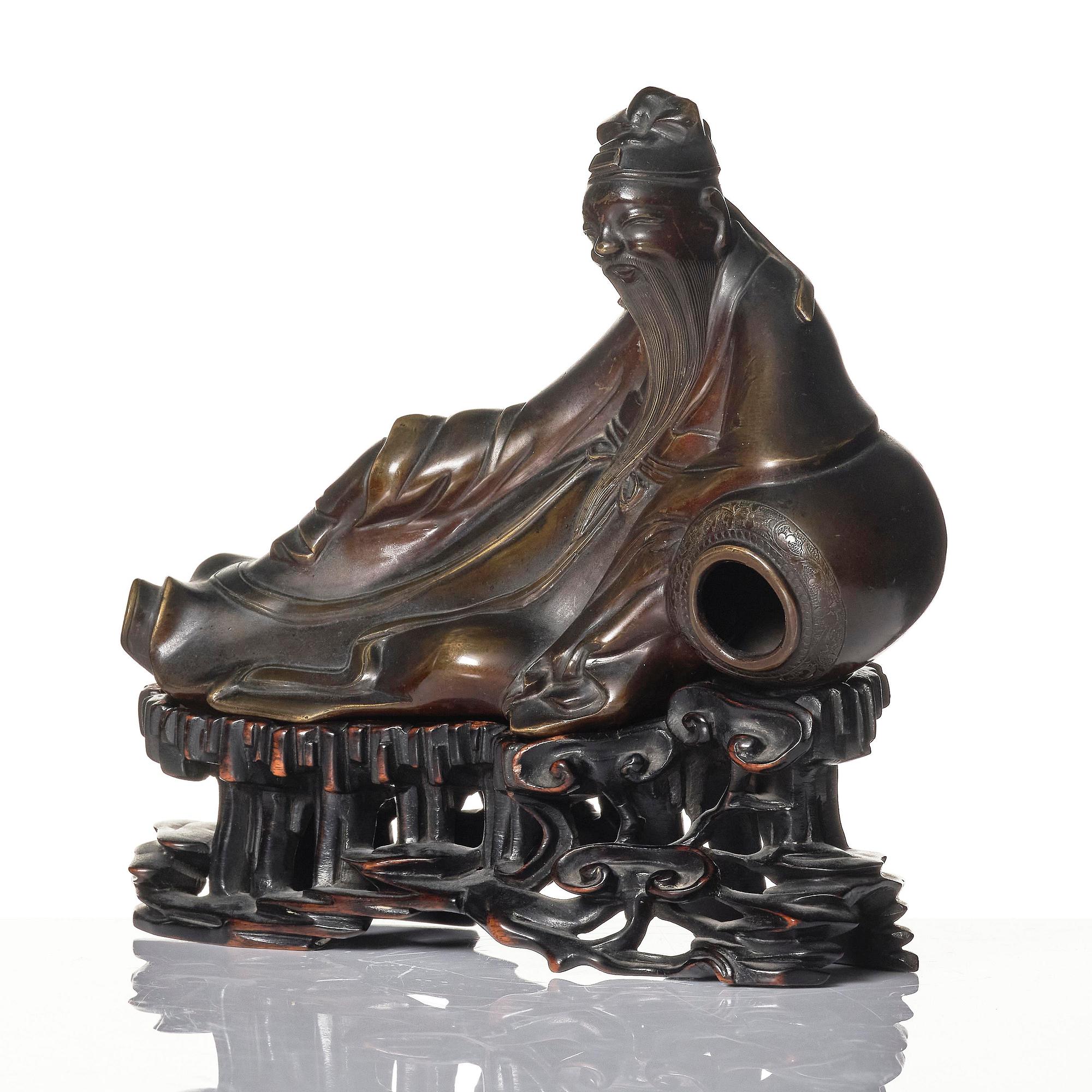
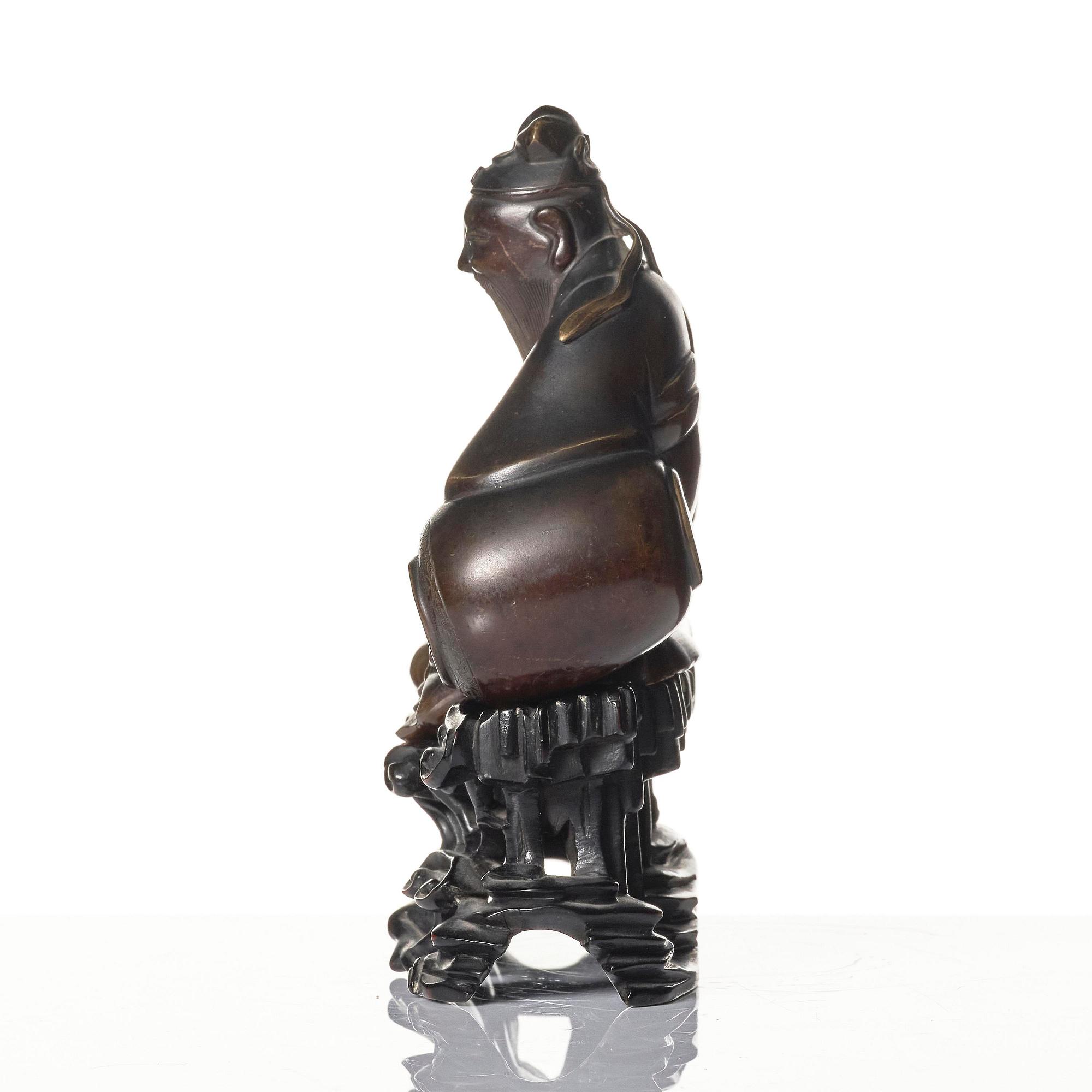
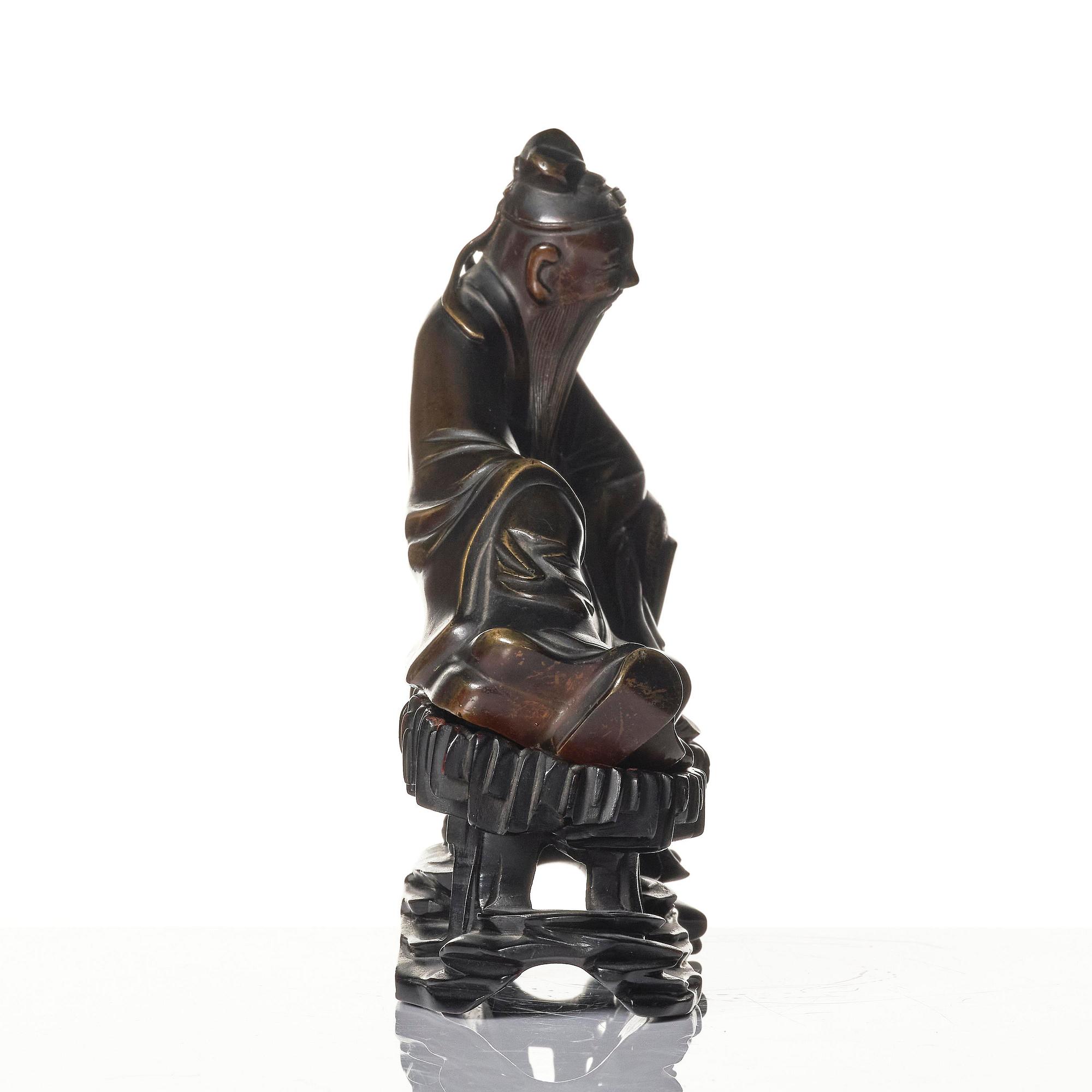
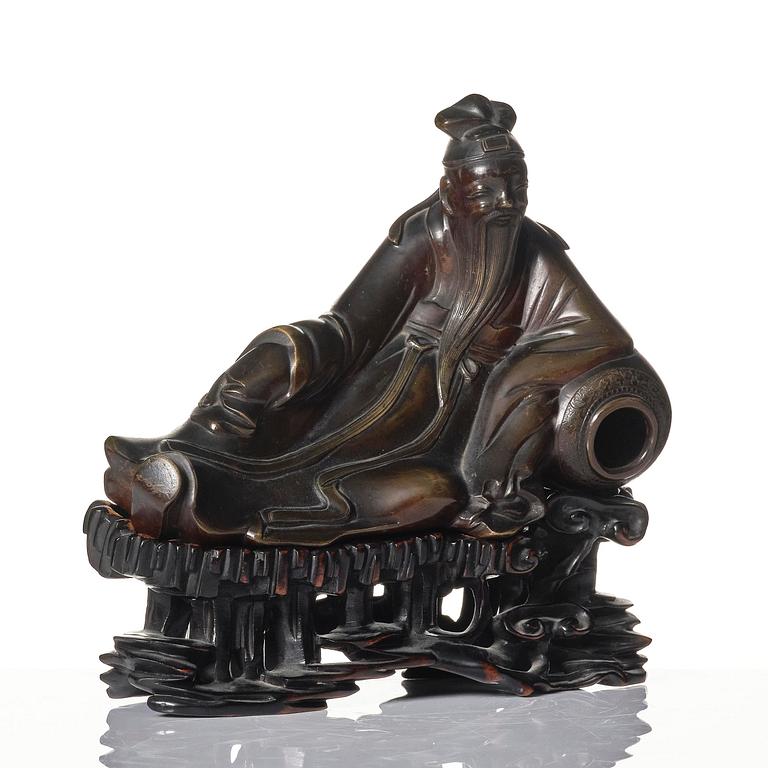
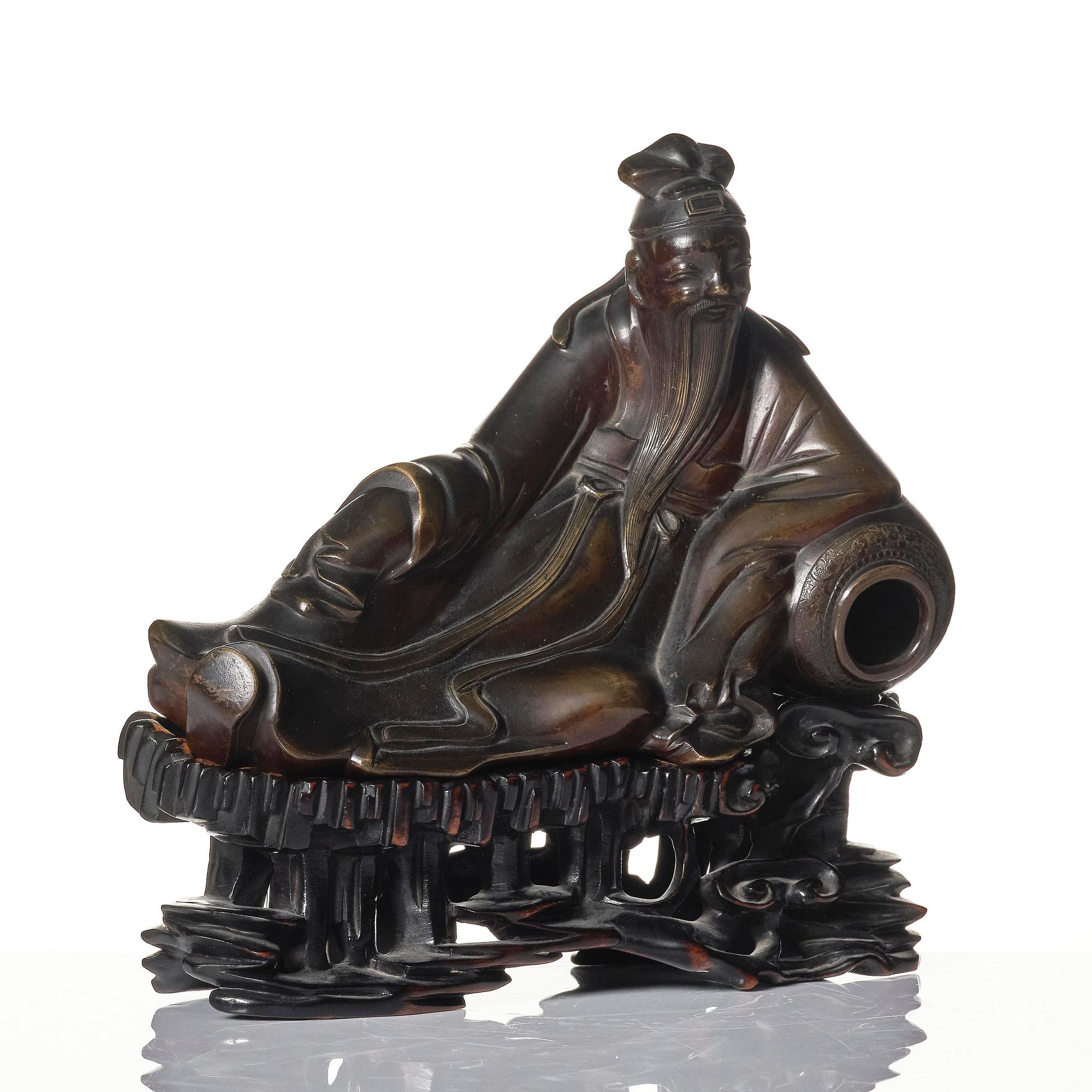
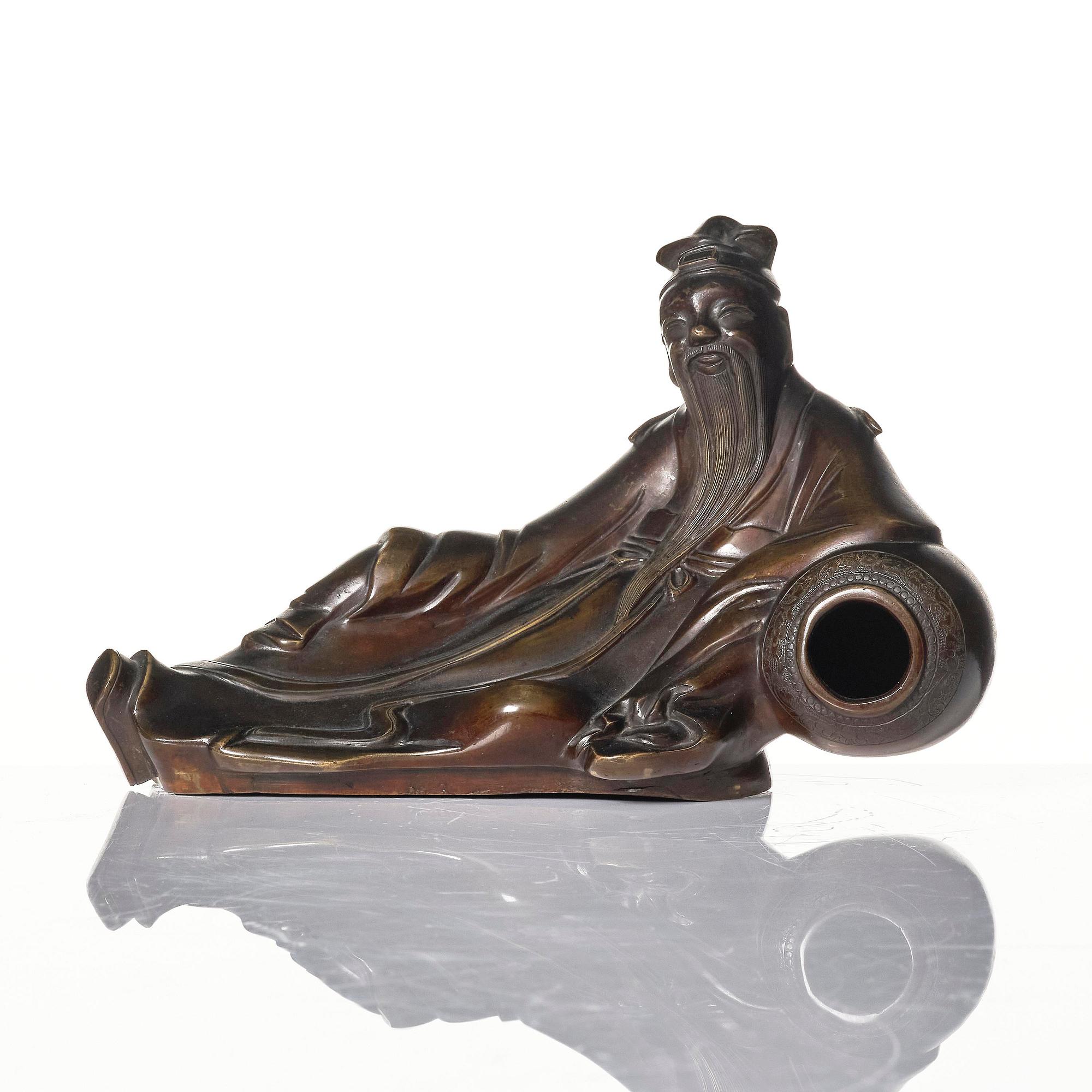
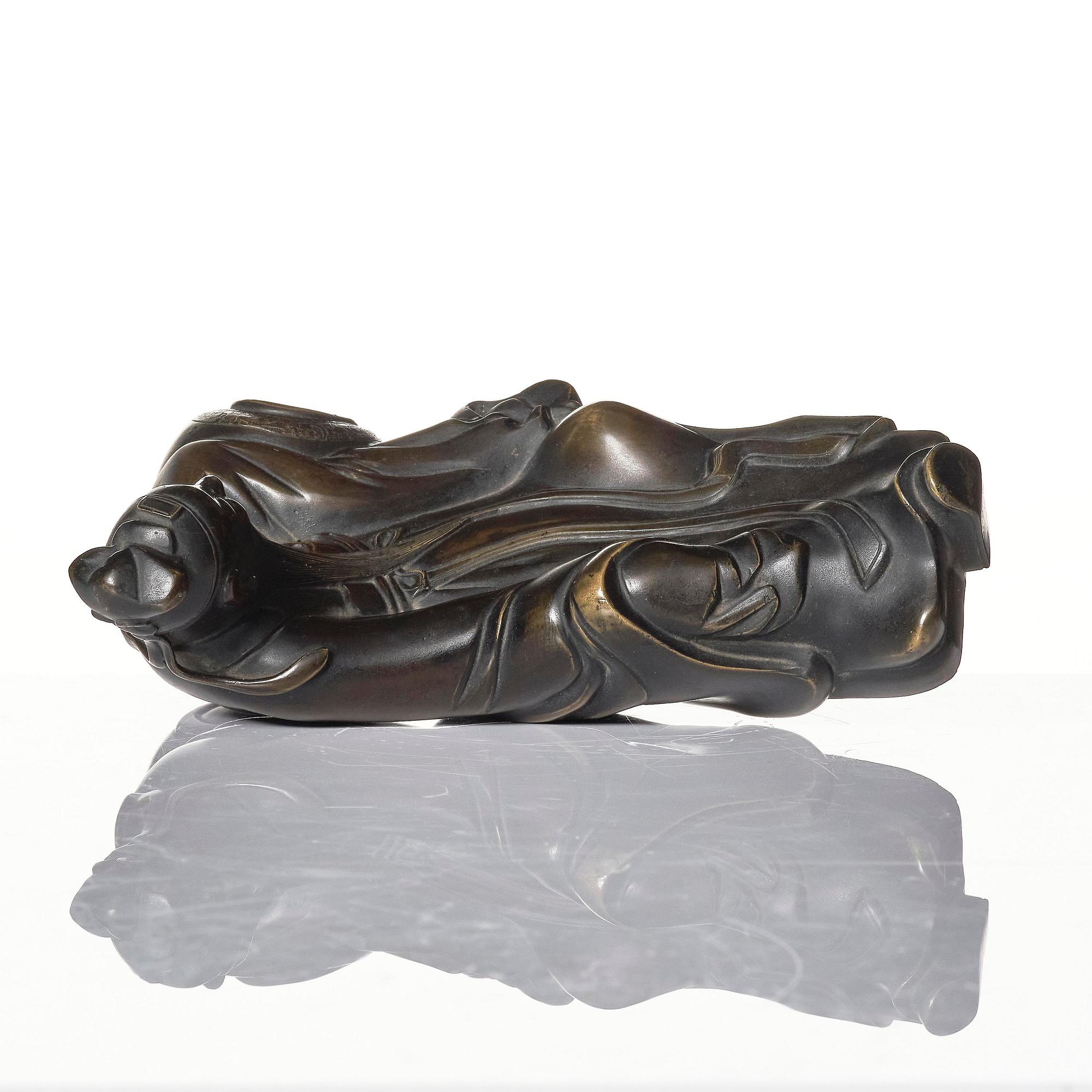
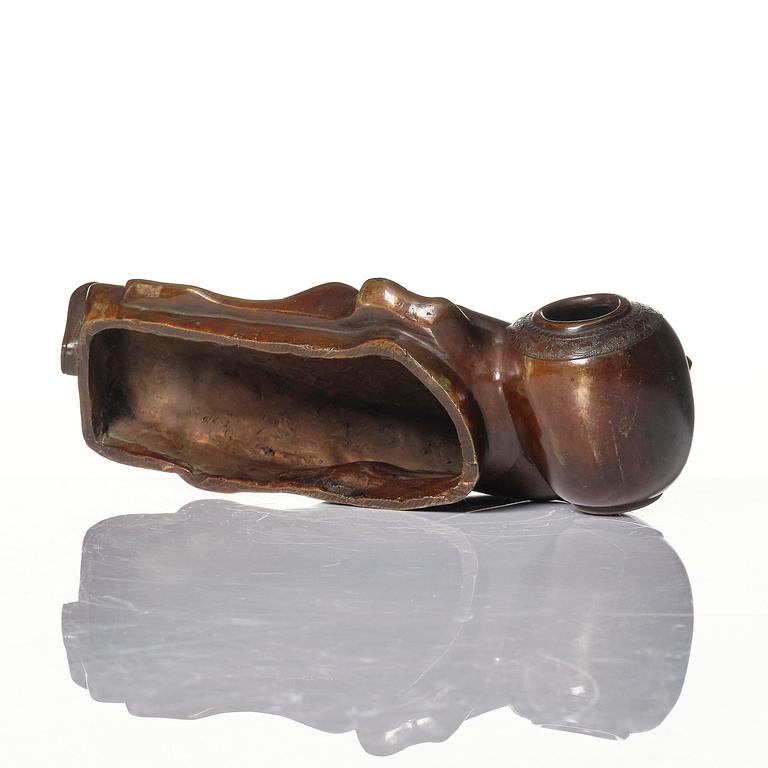
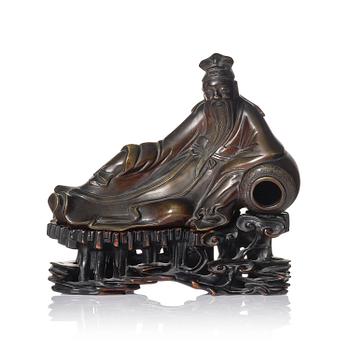
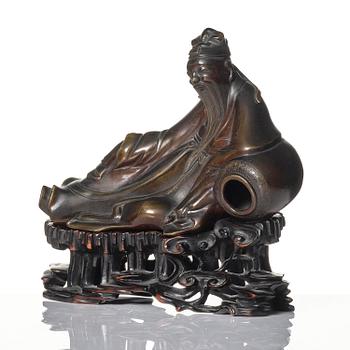
The drunken poet relaxed resting against an over-turned wine jar under his left side which raises his upper torso, the languid pose is mirrored in the sinuous folds of his elongated flowing sleeves, his out-stretched form, long moustache and his half closed eyes. Wooden stand beautifully carved with lingzhi fungus and reticulated formations. Length 21, height 13 cm. Height including the stand 20 cm.
More information
Li Bai (Chinese: 李白 701–762), also known as Li Bo, Taibai (太白), was a Chinese poet who is considered one of the greatest and most influential poets of the Tang dynasty – and in the entire history of Chinese literature. Along with his friend Du Fu (712–770), he was one of the most prominent figures during the Tang Dynasty, the golden age of Chinese poetry. The expression "The Three Wonders" refers to Li Bai's poetry, Pei Min's swordsmanship, and Zhang Xu's calligraphy. Li Bai's poems became models for celebrating the joy of friendship, the depth of nature, solitude, and the pleasure of drinking. Some of his most famous works are "Waking from Drunkenness on a Spring Day" ( 春日醉起言志), "The Hard Road to Shu" ( 蜀道难), "Bring in the Wine" (将进酒), and "Quiet Night Thought" ( 静夜思), which are still taught in schools in China. In the West, multilingual translations of Li Bai's poems continue to be made. His life has taken on an almost legendary character, with tales of drunkenness and chivalry, as well as the well-known story of Li drowning while reaching from his boat to catch the reflection of the moon in the river while drunk.
For condition report contact specialist











Others have also viewed