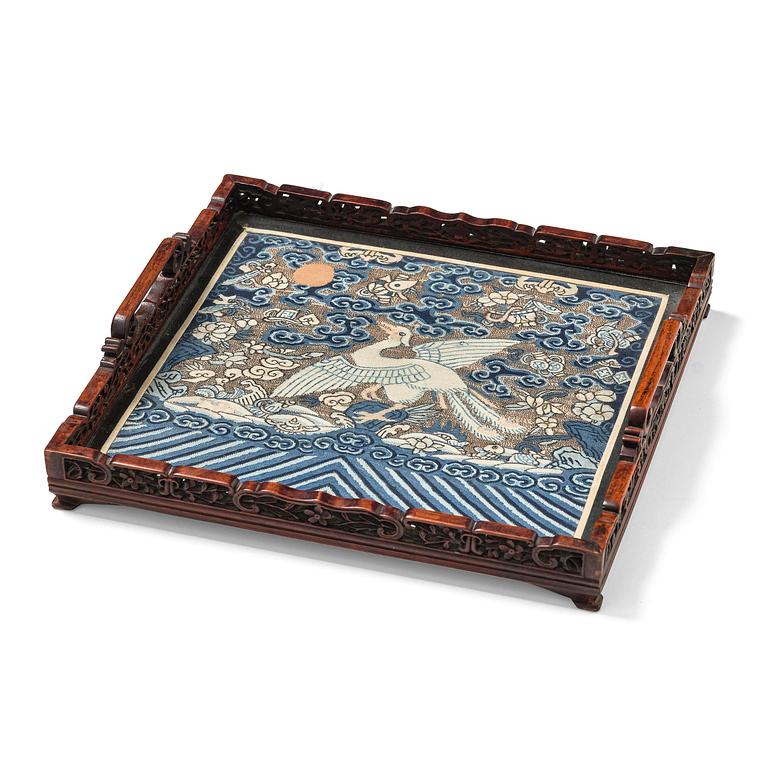
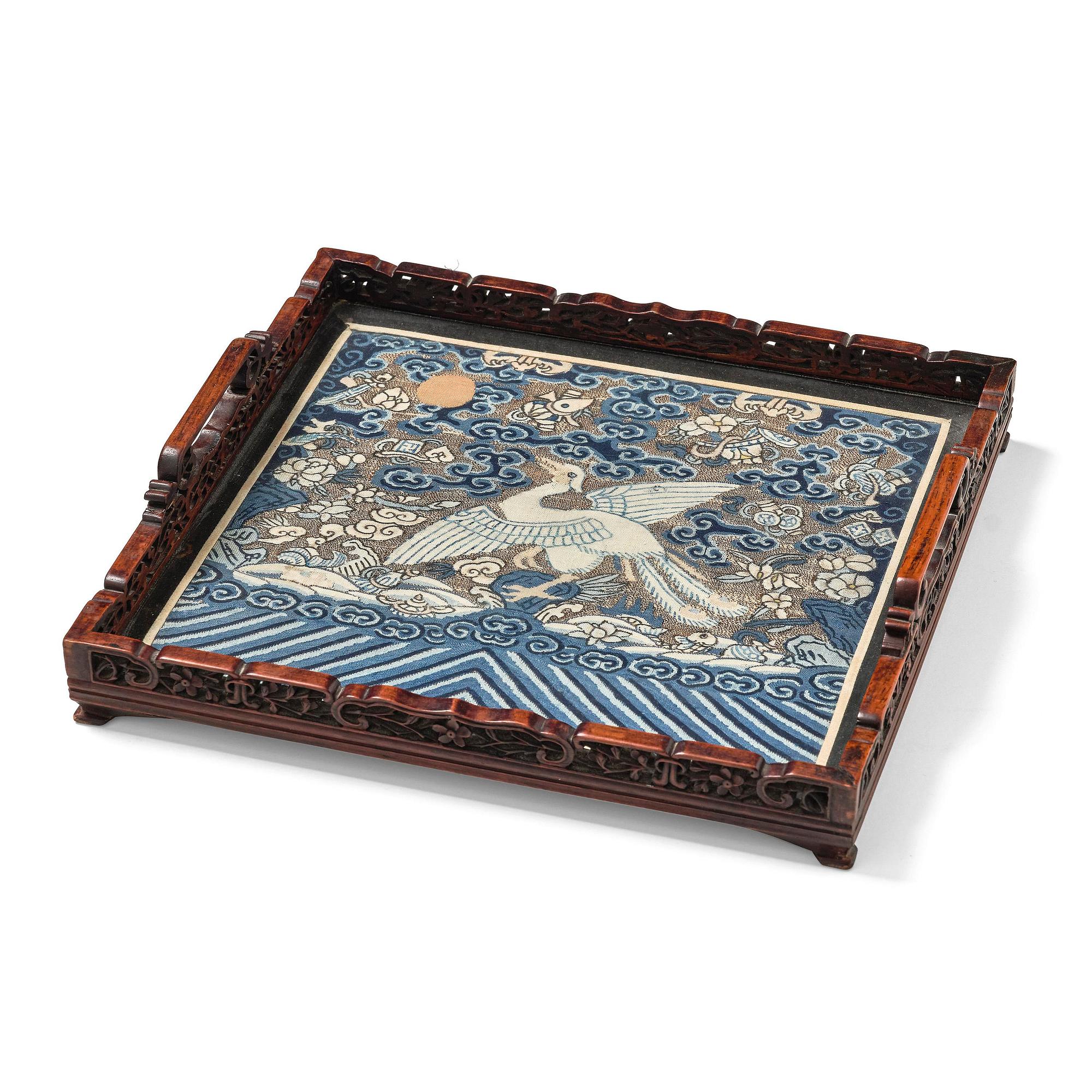
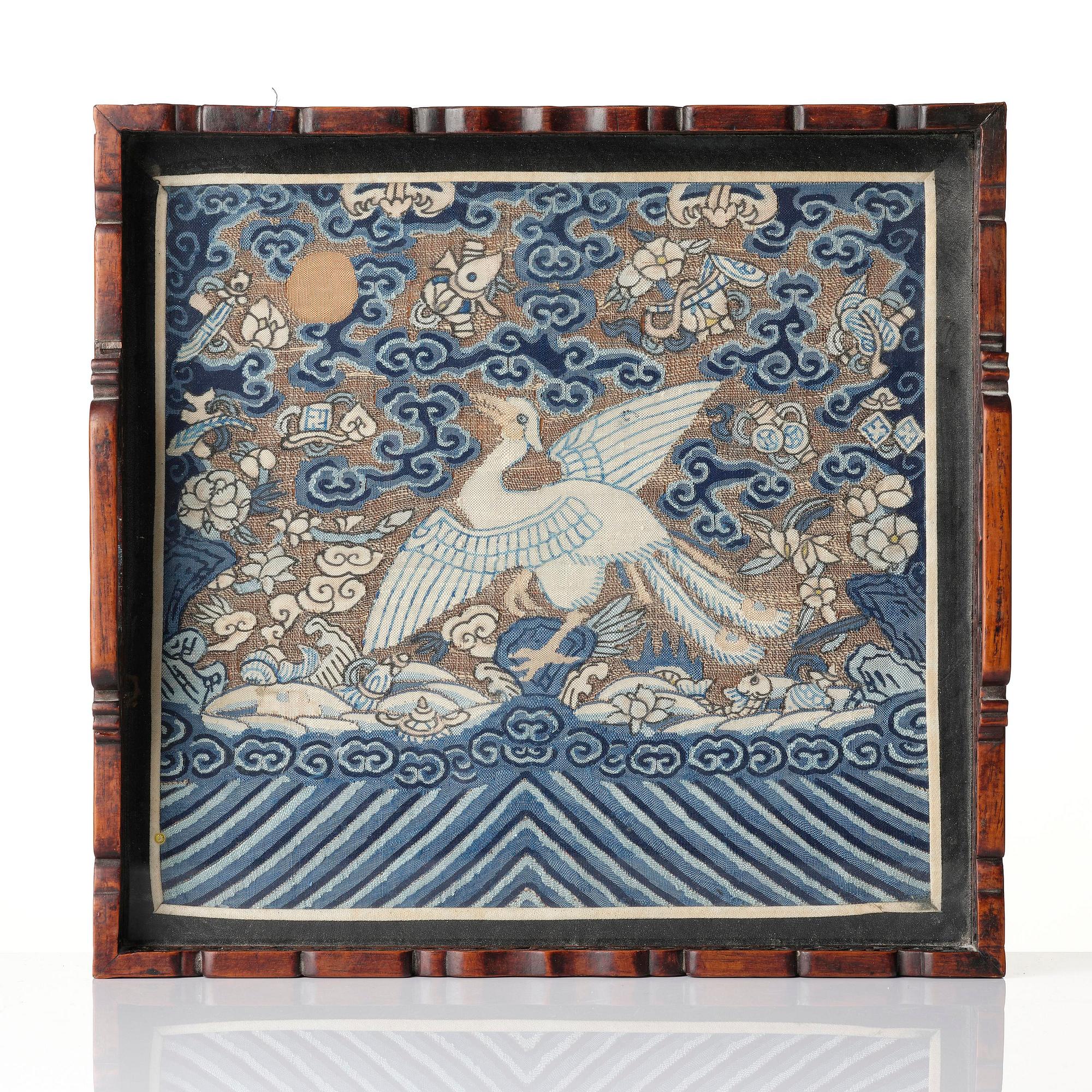
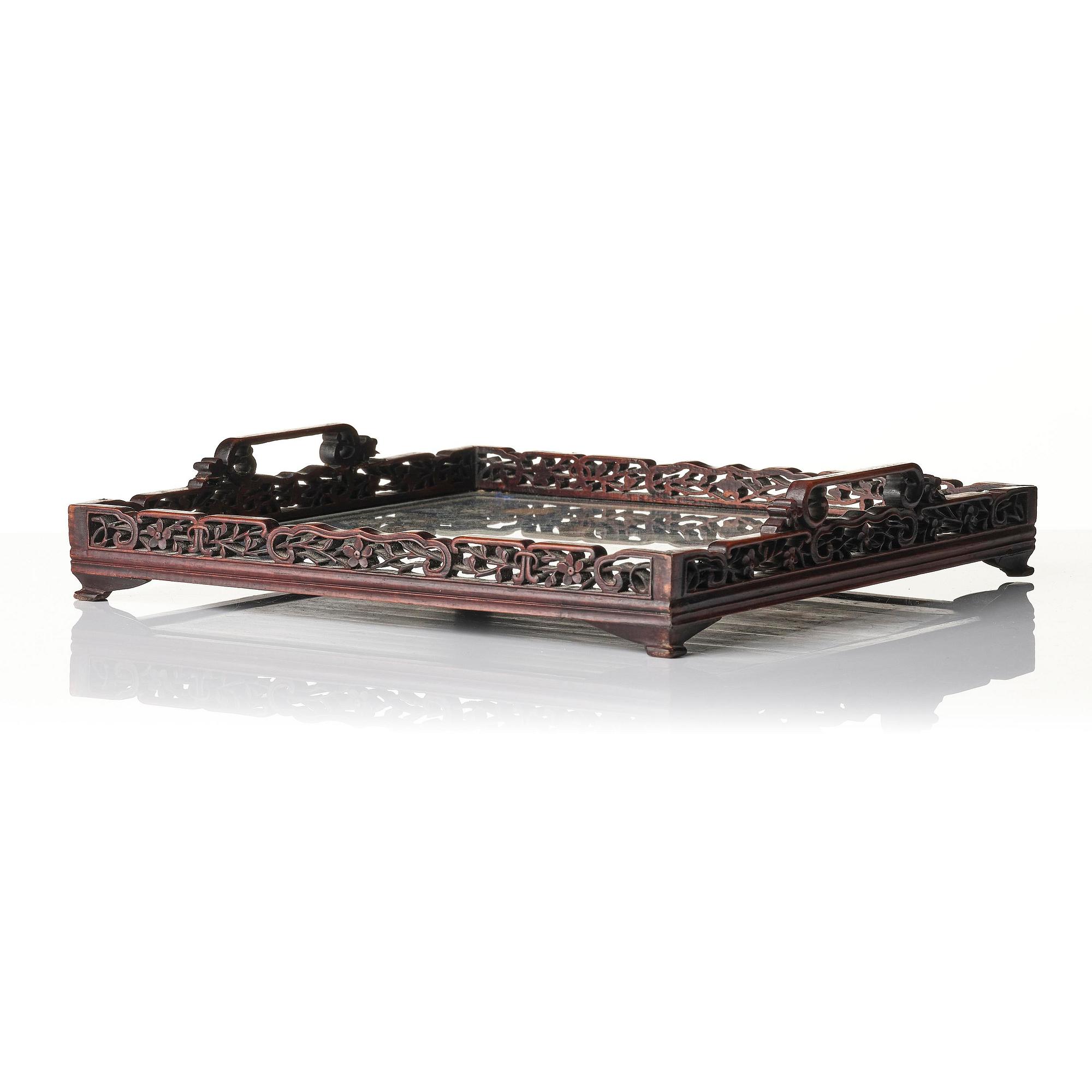
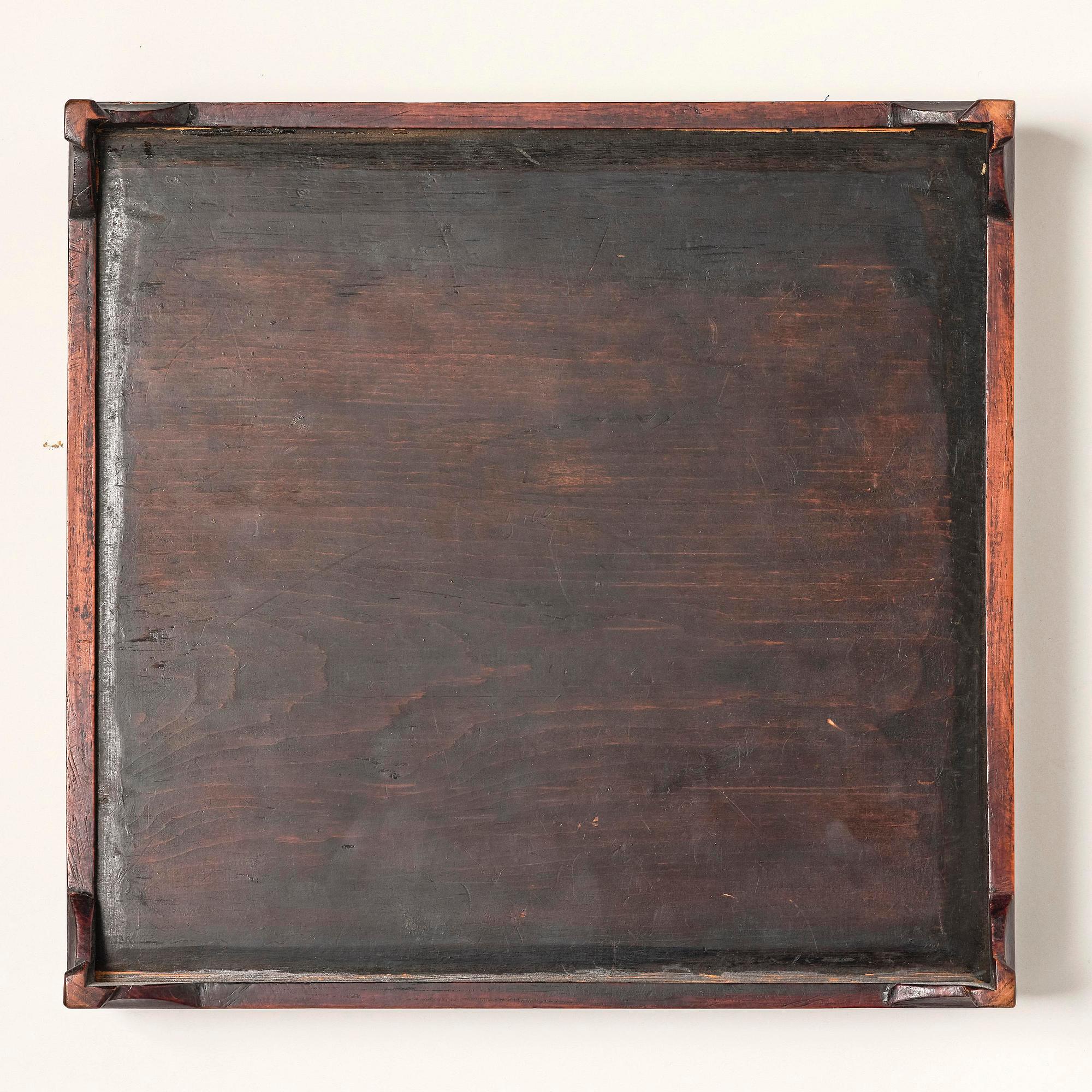
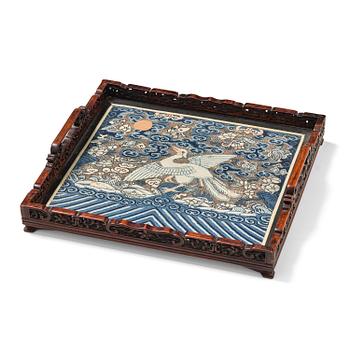
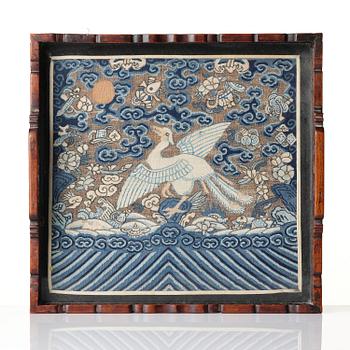
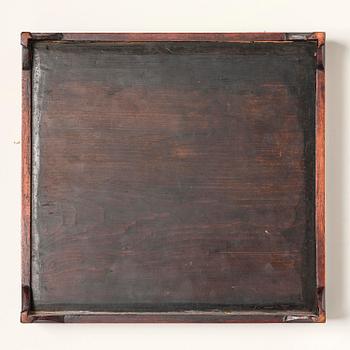
Of kesi technique depicting a white bird amidst ruyi shaped clouds beneath a golden sun, all above wave formations. The white bird is rank level nine of a civil cervant within the court. Measure tray 29x30.5 cm.
Provenance
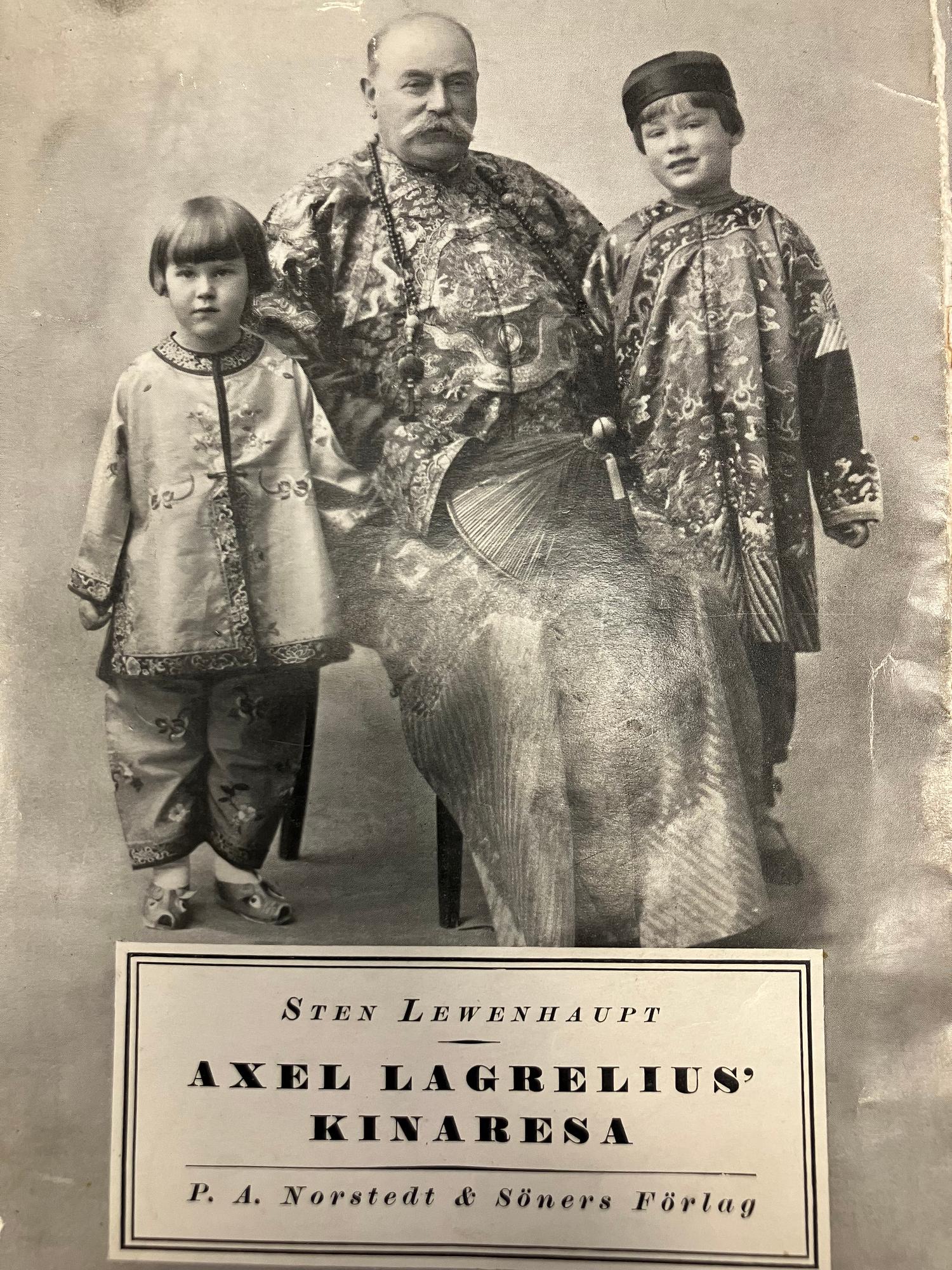
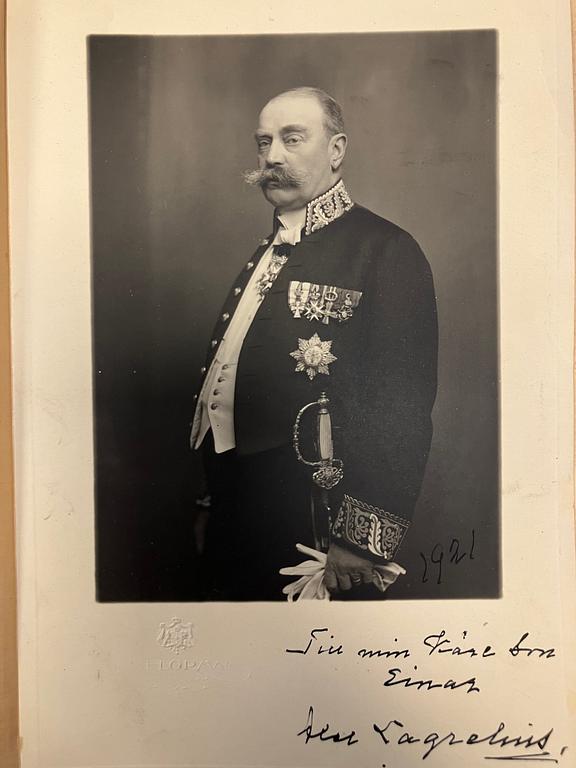
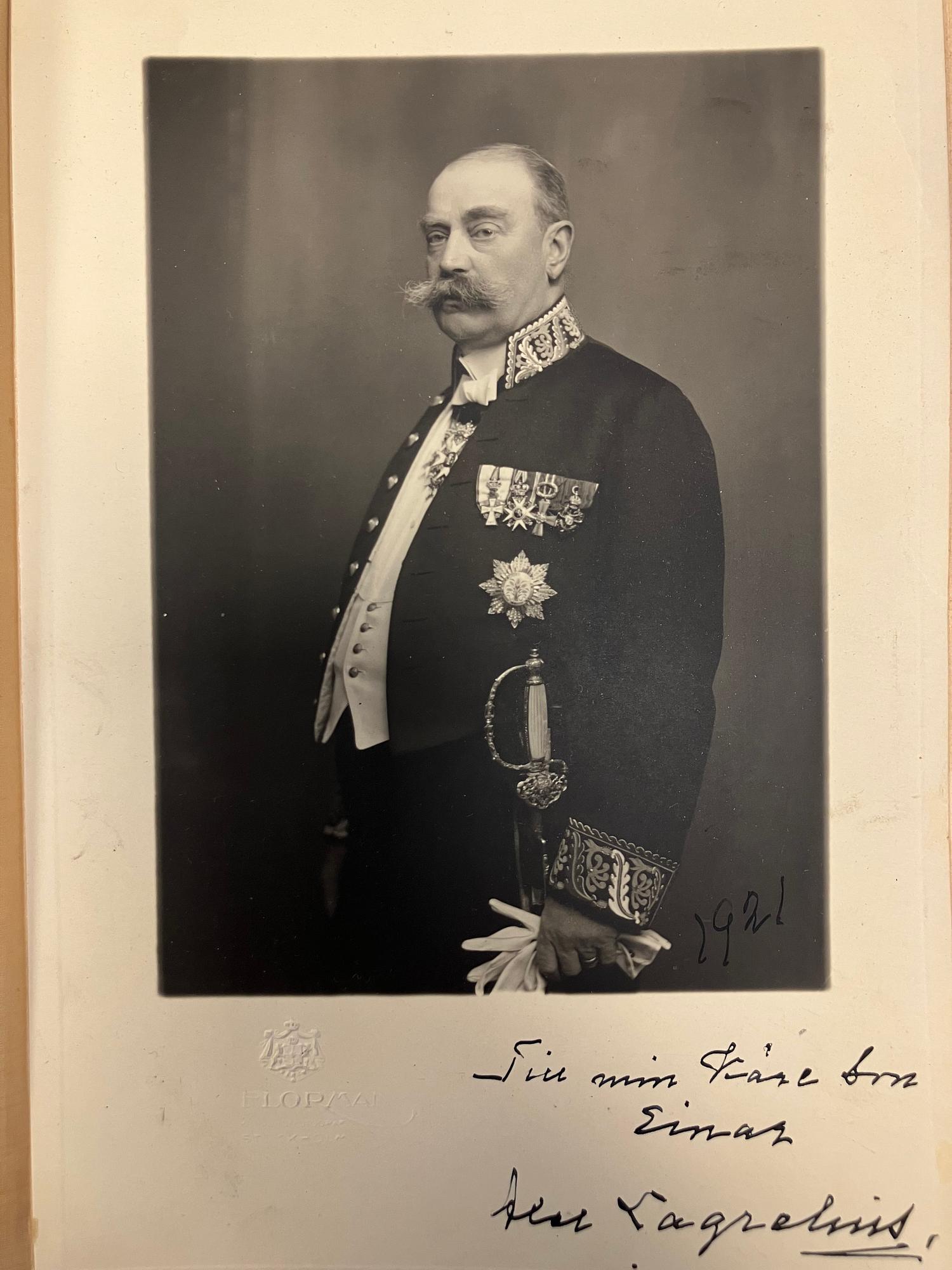
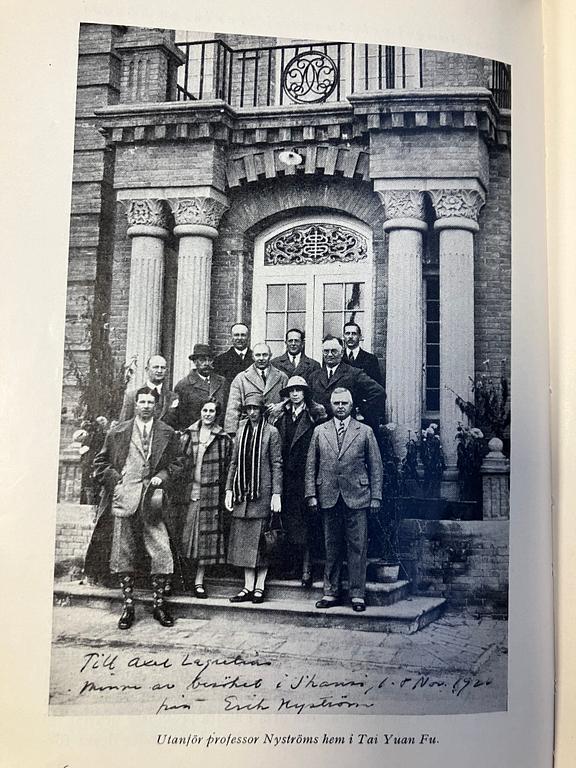
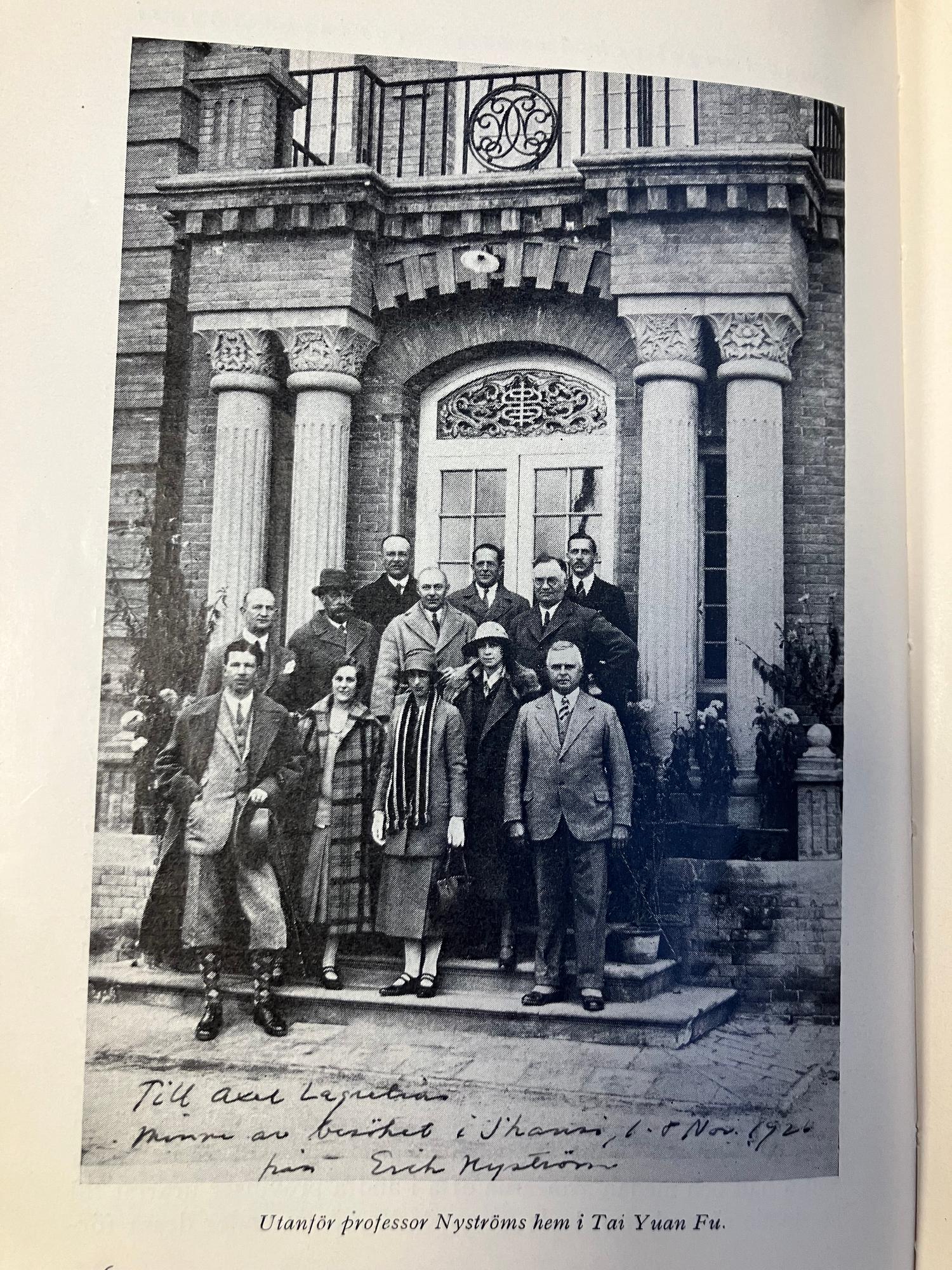
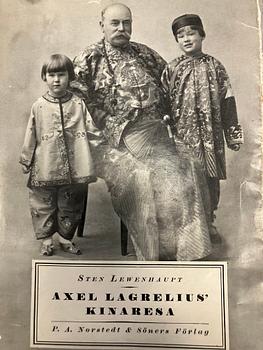
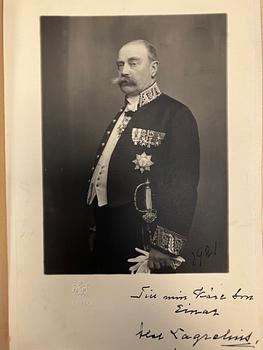
From the Collection of Axel Lagrelius (1863-1944). Thence by descent within the family. Axel was a Swedish chemical engineer, business leader and art collector.
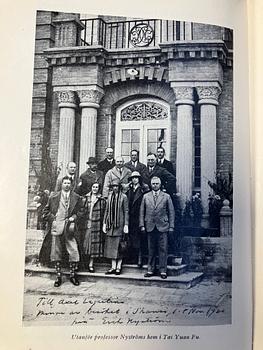
Lagrelius sponsored several scientific expeditions, such as Alfred Nathorst to Spitsbergen in 1898, Greenland 1899, and Otto Nordenskjold expedition to the South Pole 1902-1904, continuously Johan Gunnar Anderssons Expeditions in China from 1916, onwards. He held several honorary titles and was from 1907 In 1907 appointed superintendent of the court.
In 1926 he accompanied the crown prince of Sweden on his journey to China, where he got the honorary title of a mandarin of the court. He was one of the founding members of the China Committee and one of the investors in the Karlbeck syndicate that purchased Chinese Works of Art in China through Orvar Karlbeck 1928-1932.
Literature
Illustrated Precedents for the Ritual Paraphernalia of the Imperial Court, published in 1759, tells us much about how Court attire was regulated by imperial decrees. The Chinese tradition of wearing rank badges (buzi), also known as Mandarin squares, to demonstrate civil, military or imperial rank began in 1391 during the Ming dynasty (1368-1644), and continued throughout the Qing dynasty (1644-1911).
These insignia were sewn onto or woven into the wearer’s garments to indicate their rank. Civil officials wore insignia with different bird species corresponding to their rank, while animals denoted military officers.
The fall of the Qing dynasty in 1911 brought an end to rank insignia.
For condition report contact specialist






Others have also viewed