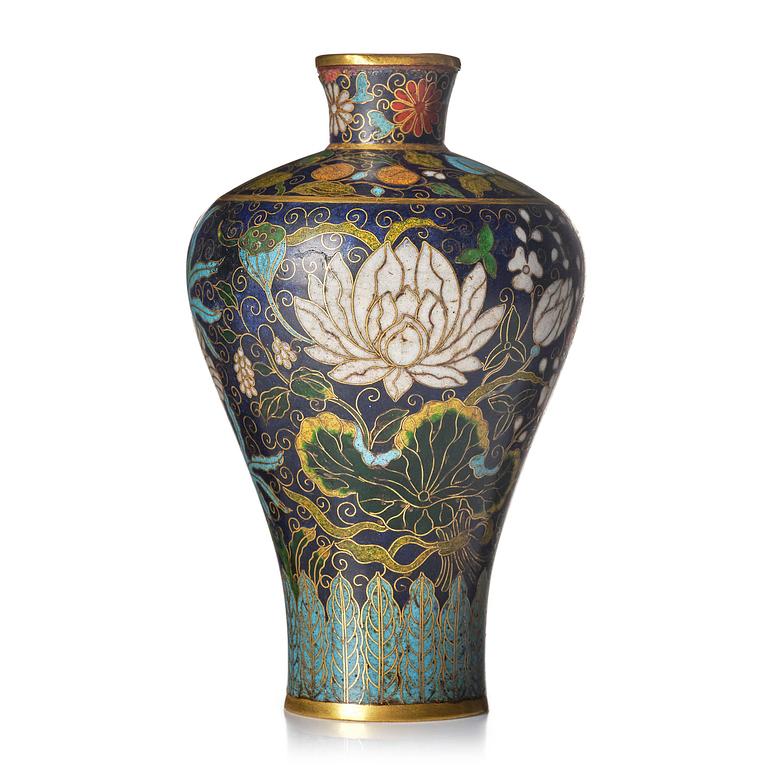
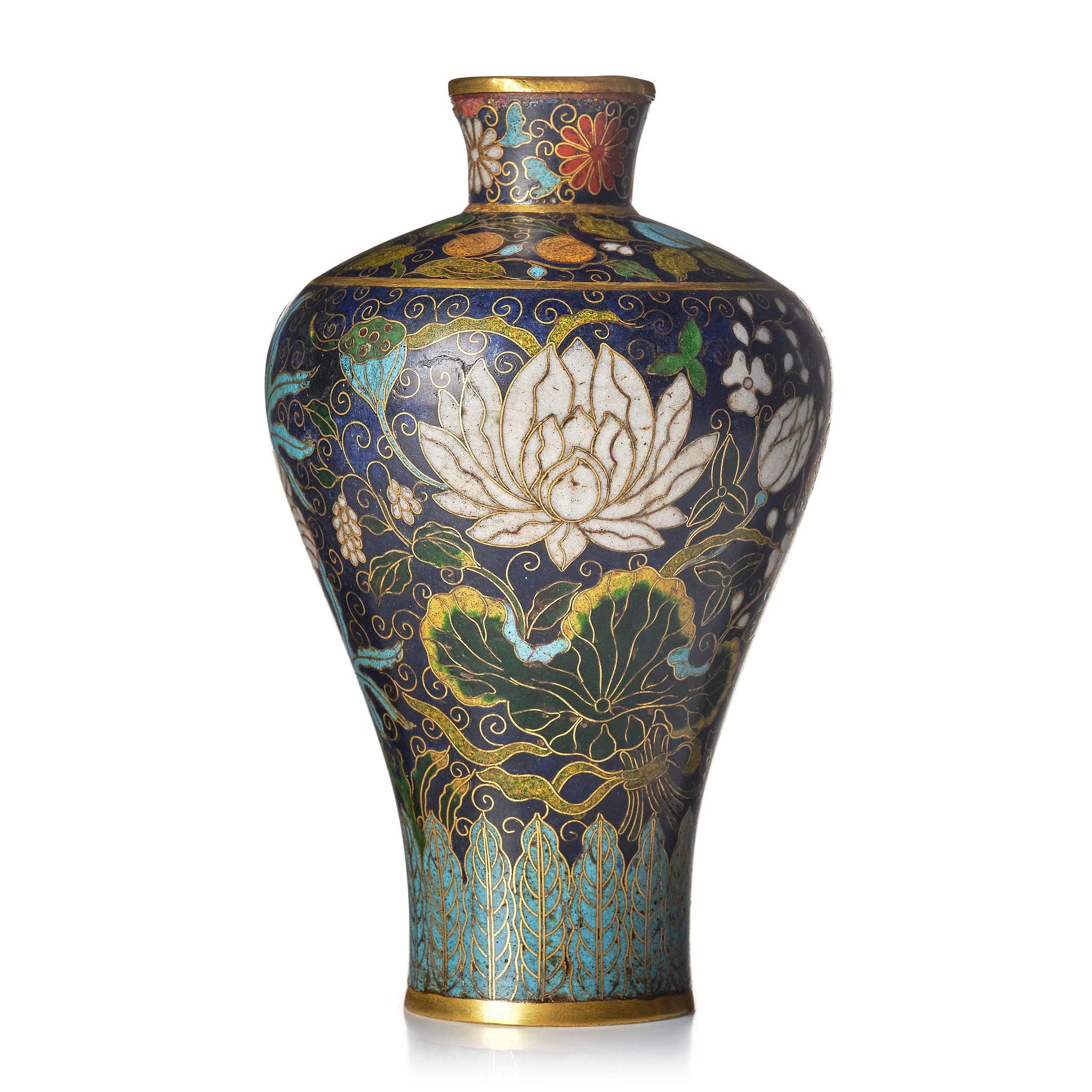
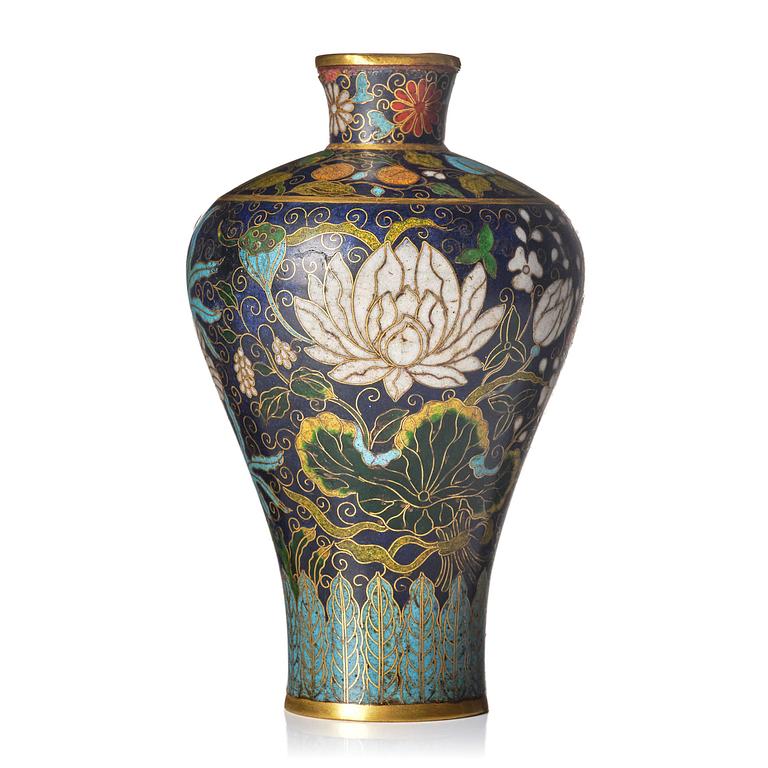
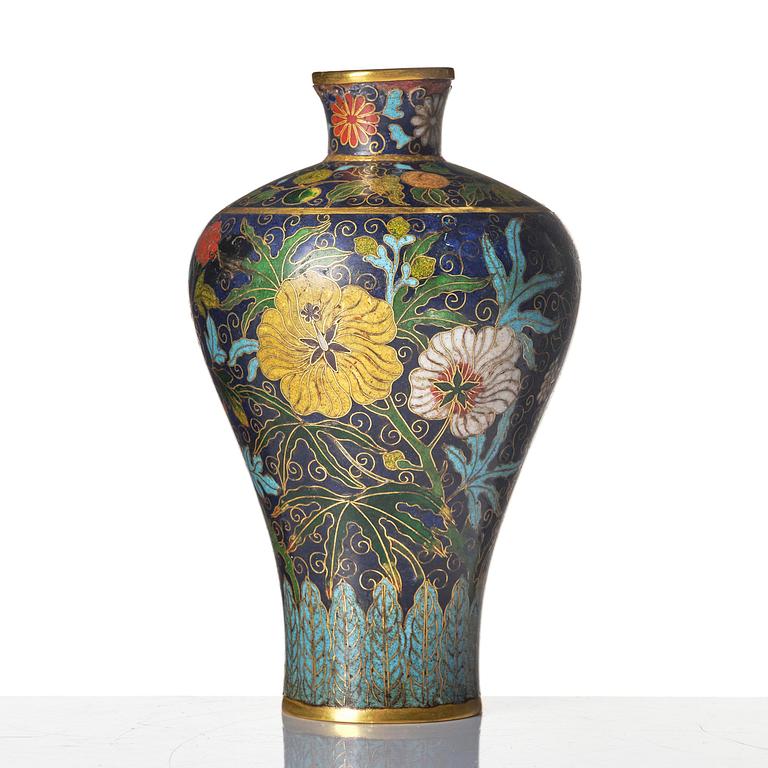
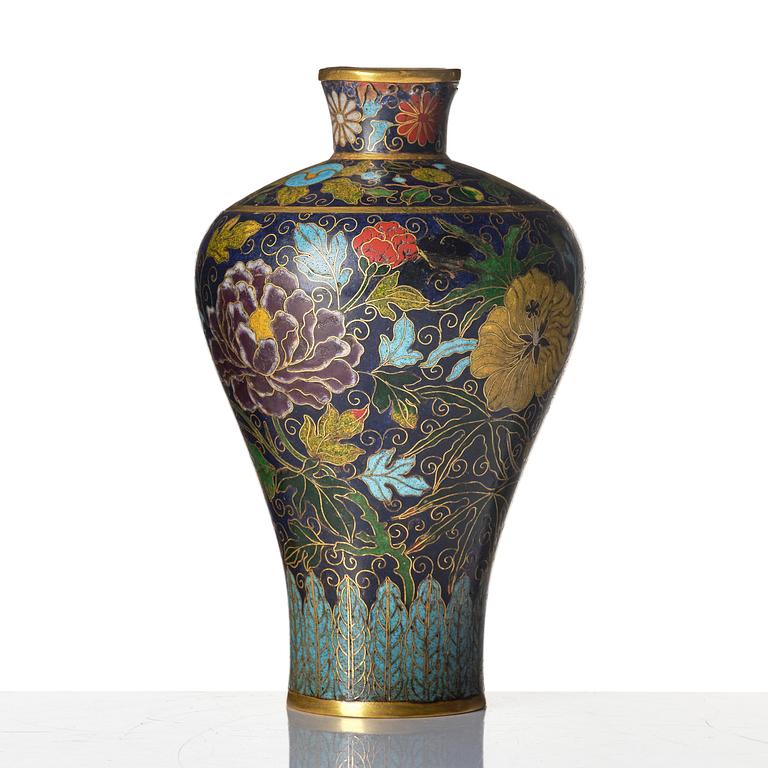
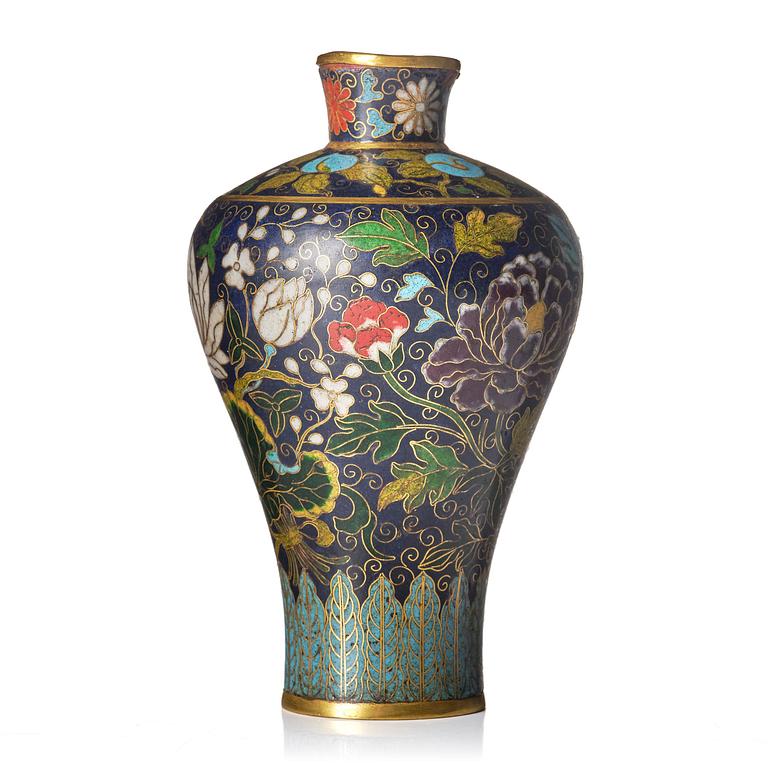
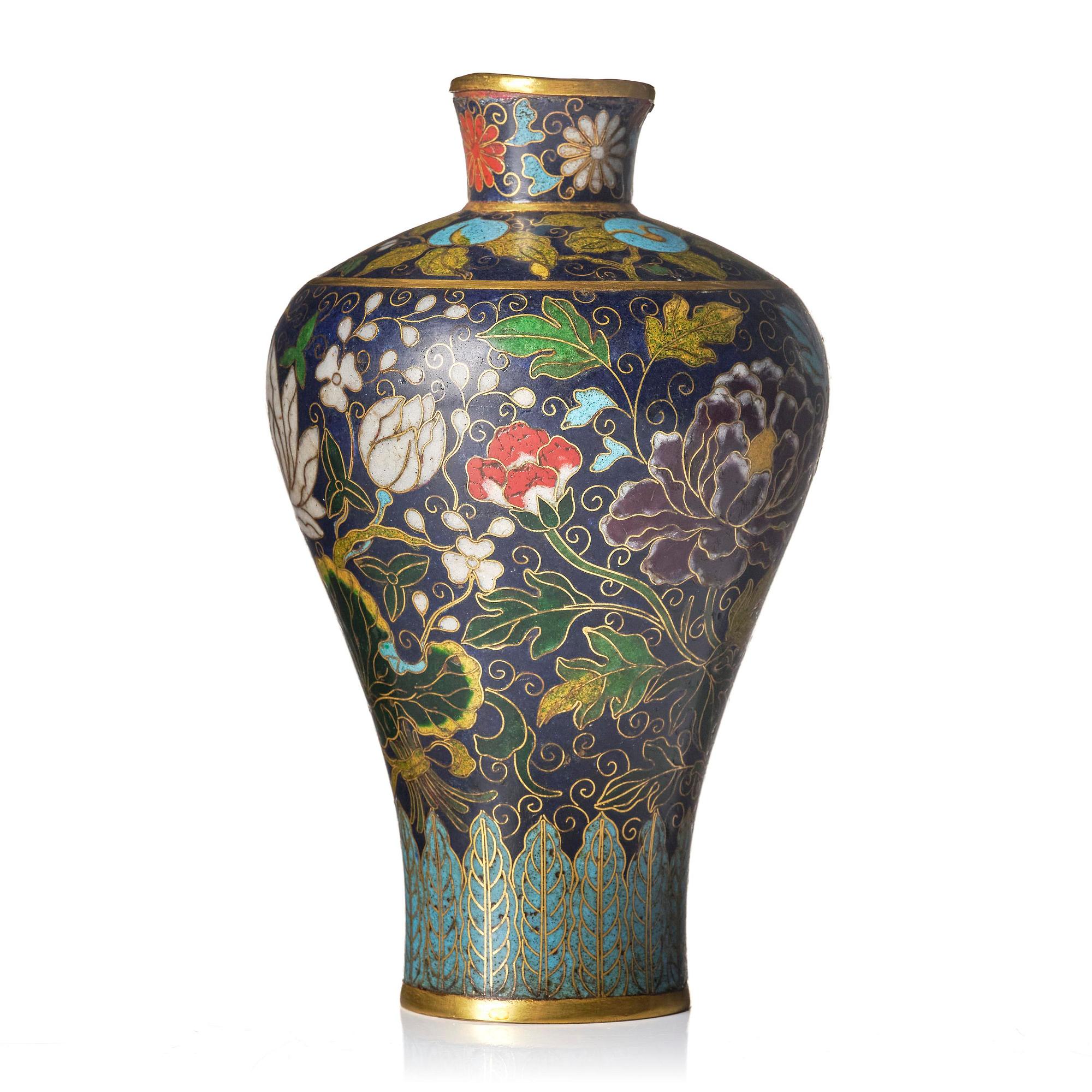
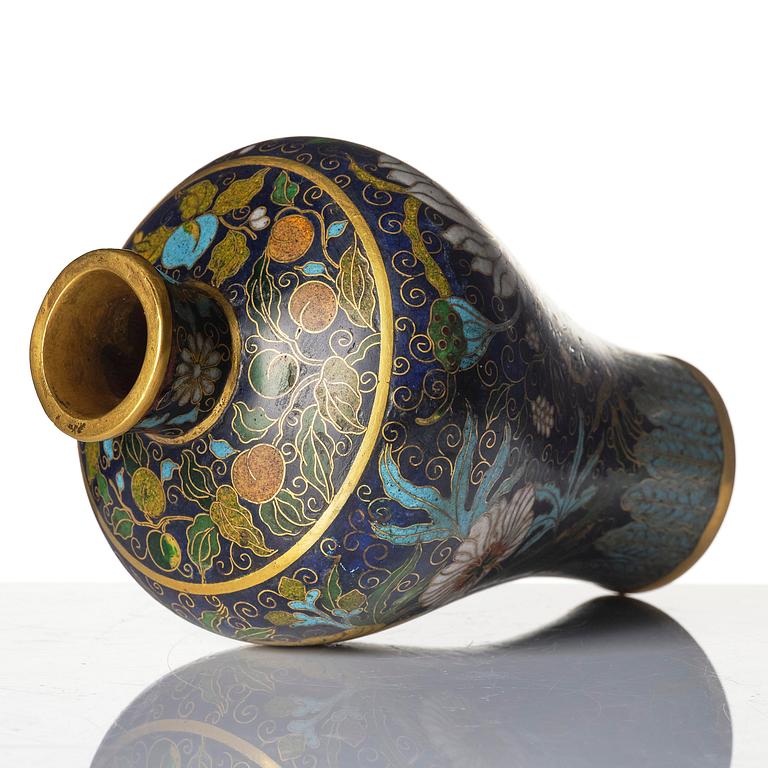
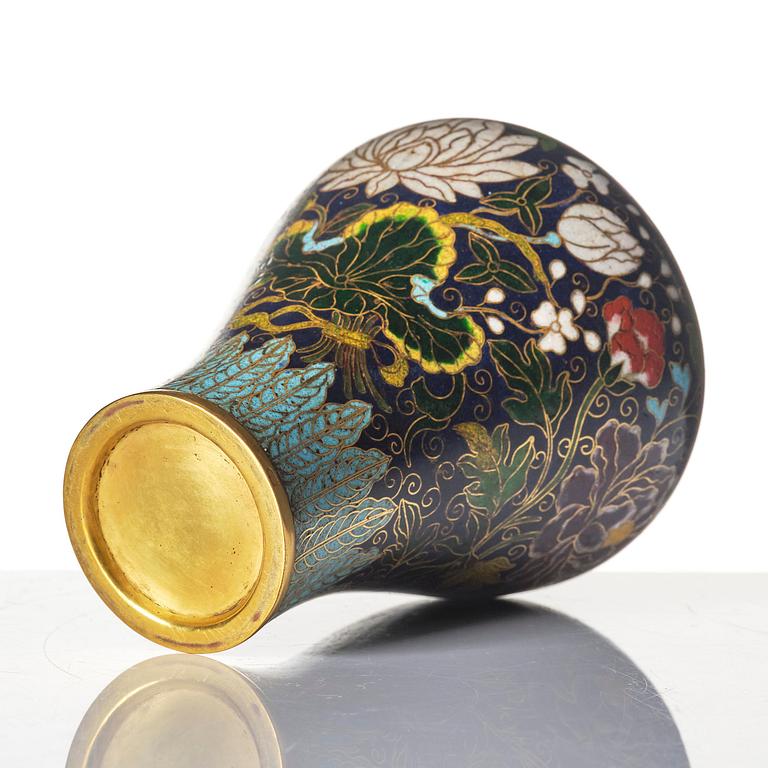
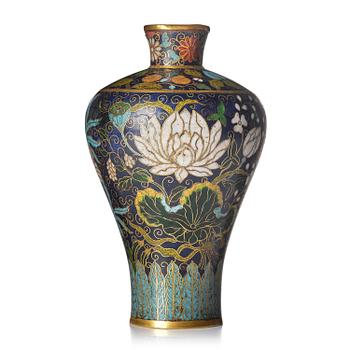
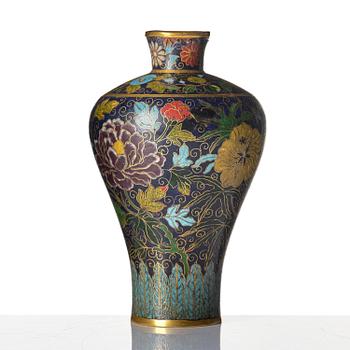
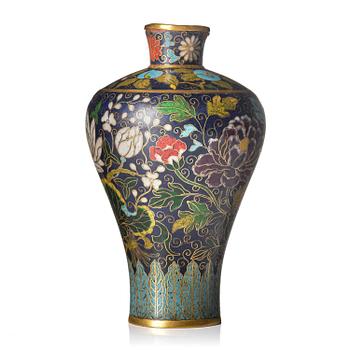
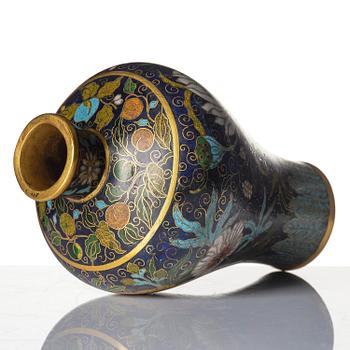
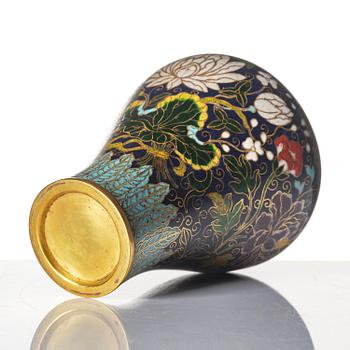
Decorated with flowering lotus issuing from a pond with aquatic plants above a serrated petal band, below bands of chrysanthemum flowerheads and trailing leaves and scrolling fruiting vine within gilt bands on a purple ground. Height 20.3 cm.
Dents. Loss of enamel, retouches.
Provenance
From the collection of Fritz Wasston, who passed away in the early 1970's, thence by descent within the family.
Exhibitions
Compare with a vase in the Collection of Les Arts Decoratifs-musee des arts descoratifs, Paris, France, Donated by David Davis-Weill, inv no, 23.608. Dated as early Ming dynasty.
The David Weill Piece is depicted in, Cloisonne, Chinese Enamels from the Yuan, Ming and Qing dynasties, Edited by Beatrice Quette, page 36.
Compare with a simlar vase sold at Christies. Lot 497, 12 Nov 2004 | Live auction 9963. Chinese Ceramics and Works of Art.
Literature
Chinese Cloisonne in the Pierre Uldry Collection, compare with item no 41, a meiping vase of this type dated as from the first half of the 16th century. Full page image on Pl. 41.
Sir Harry Garner, Chinese & Japanese Cloisonne enamels; Compare with one depicted on pl. 44B.
More information
It is interesting to parallel the beautiful dark blue ground on the vase with the fahua, 15th century Meiping vases. The large petaled flowers are also a reminiscent of flowers that can be found on the fahua ceramics around 1500. Fahua ceramics share technical parallels with cloisonné enamels, as both media feature enclosures filled in with a coloured glaze or enamel.
For condition report contact specialist








Others have also viewed