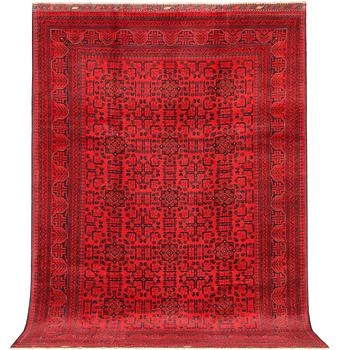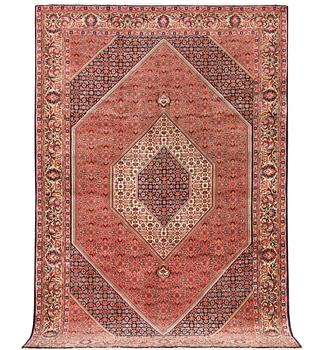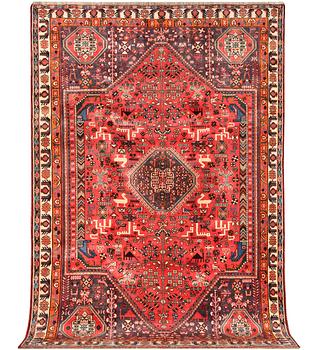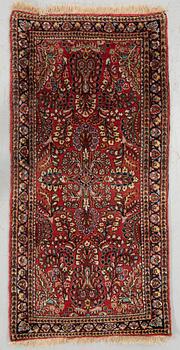
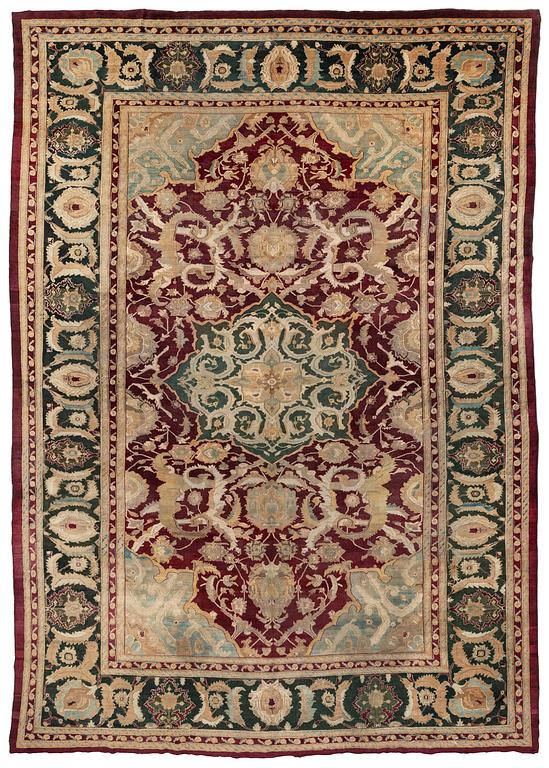
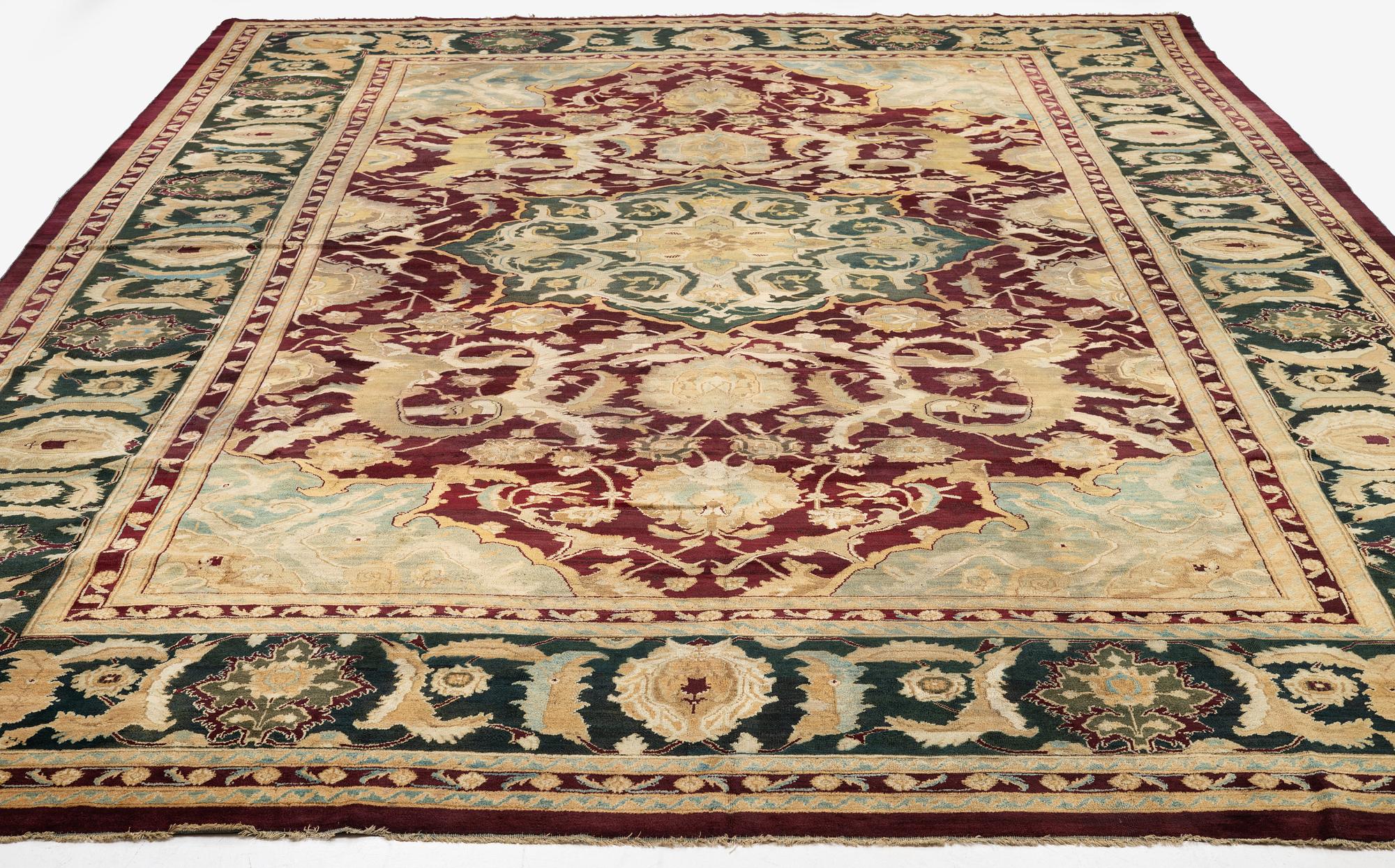
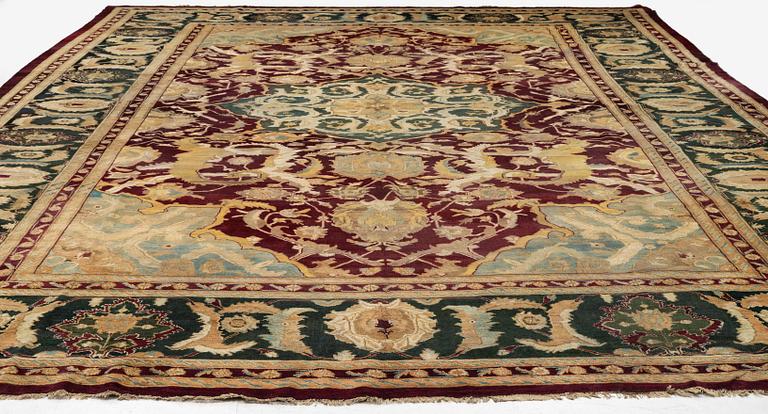
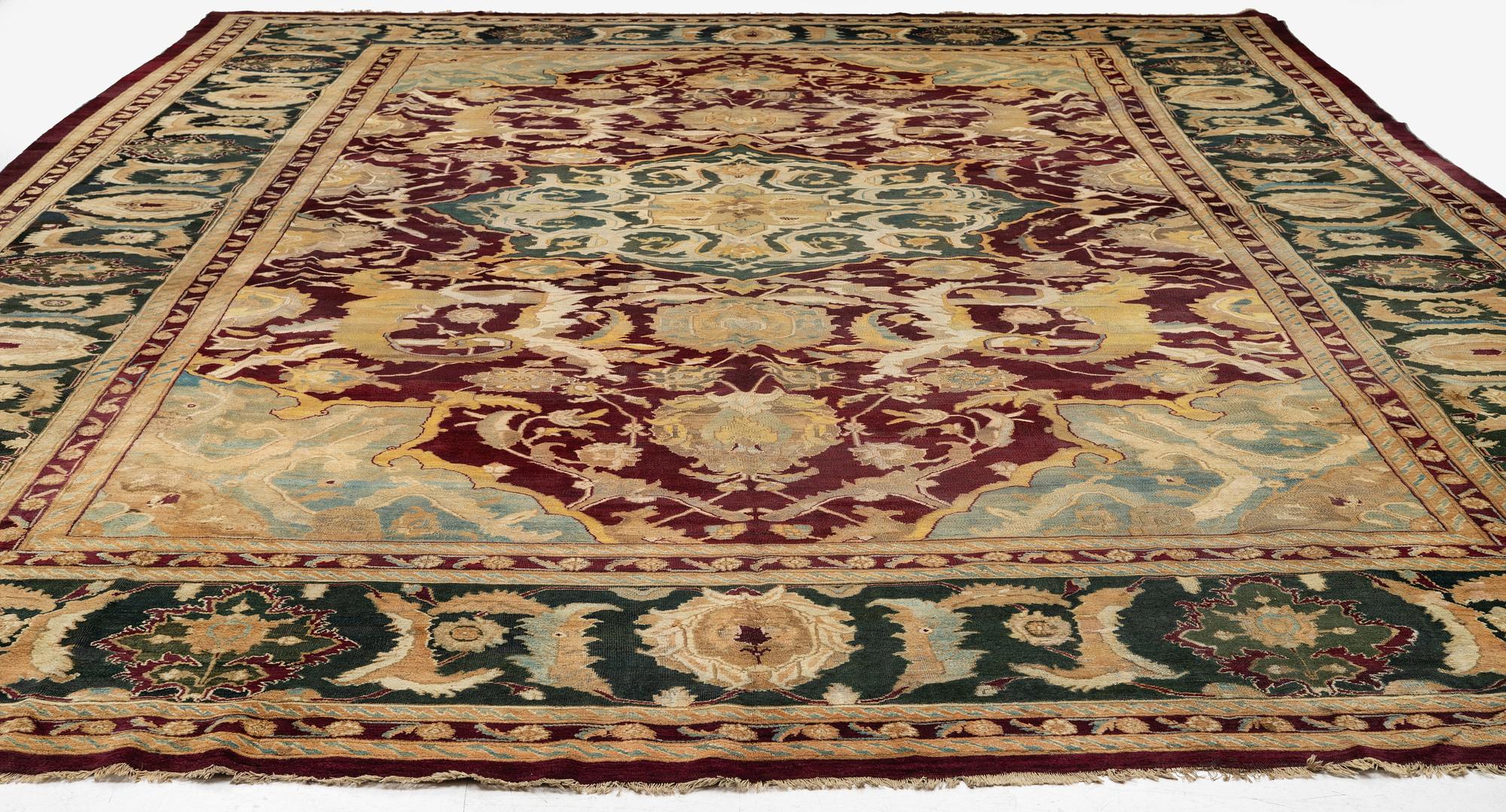
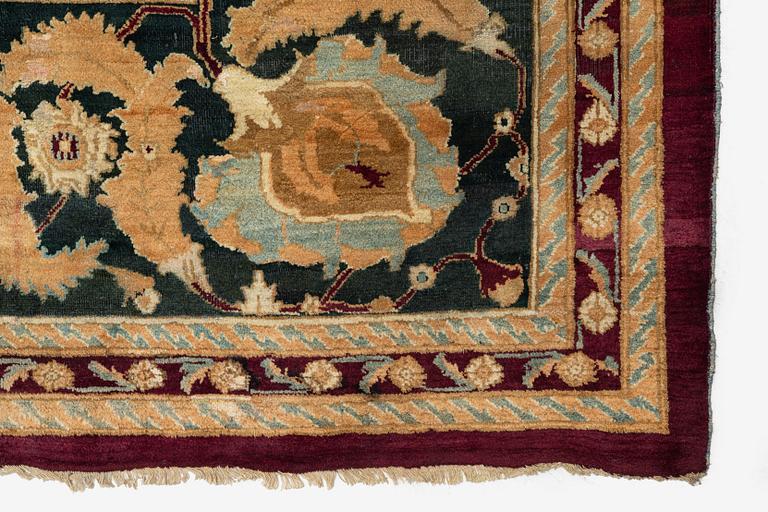
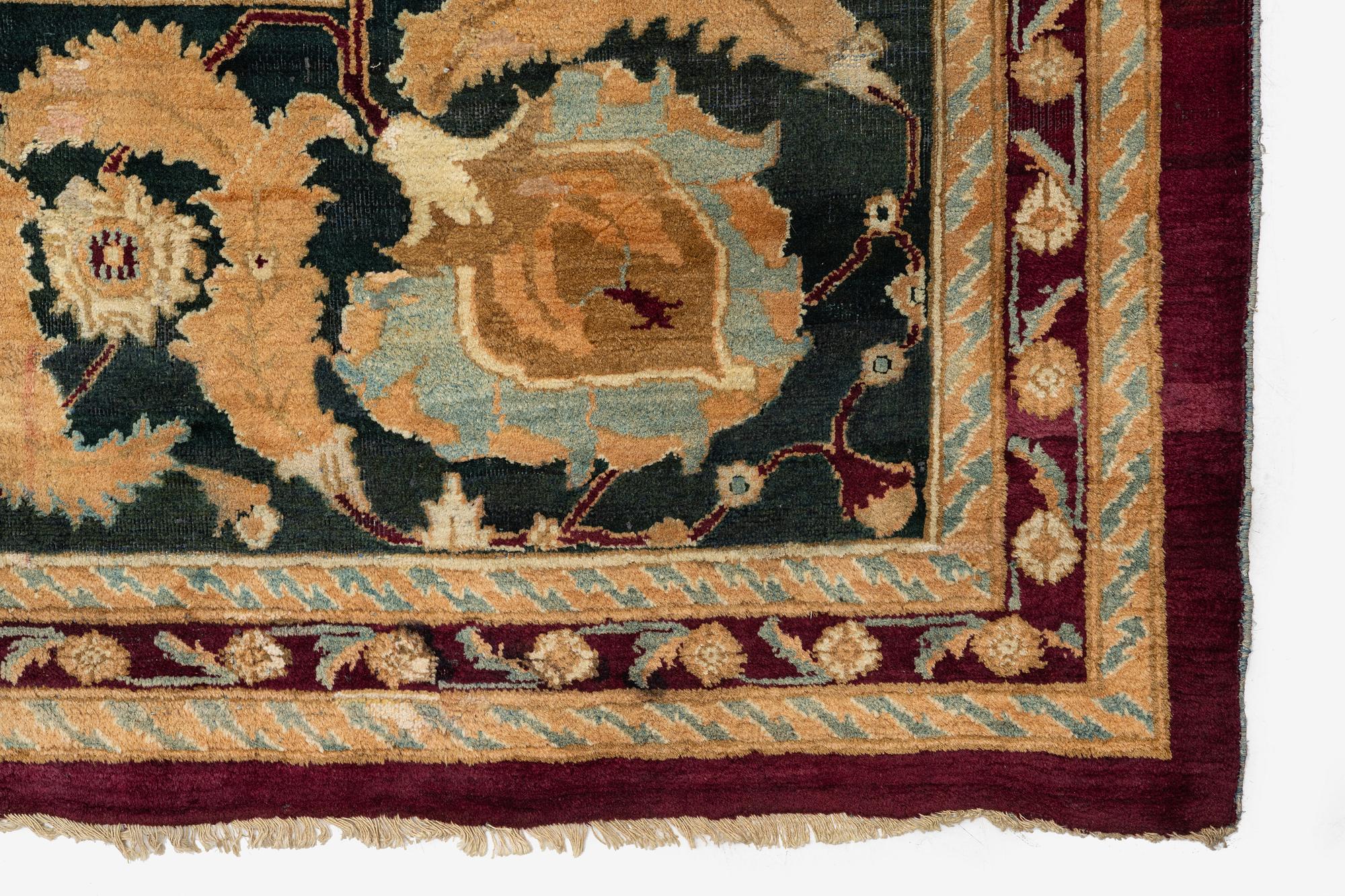
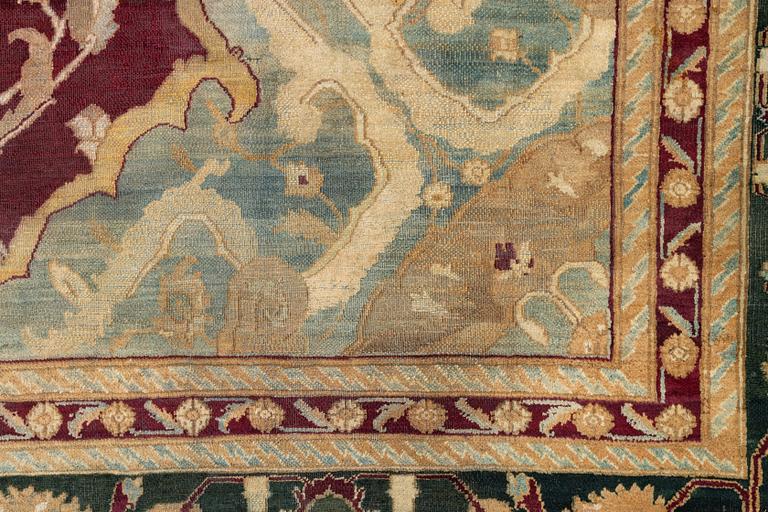
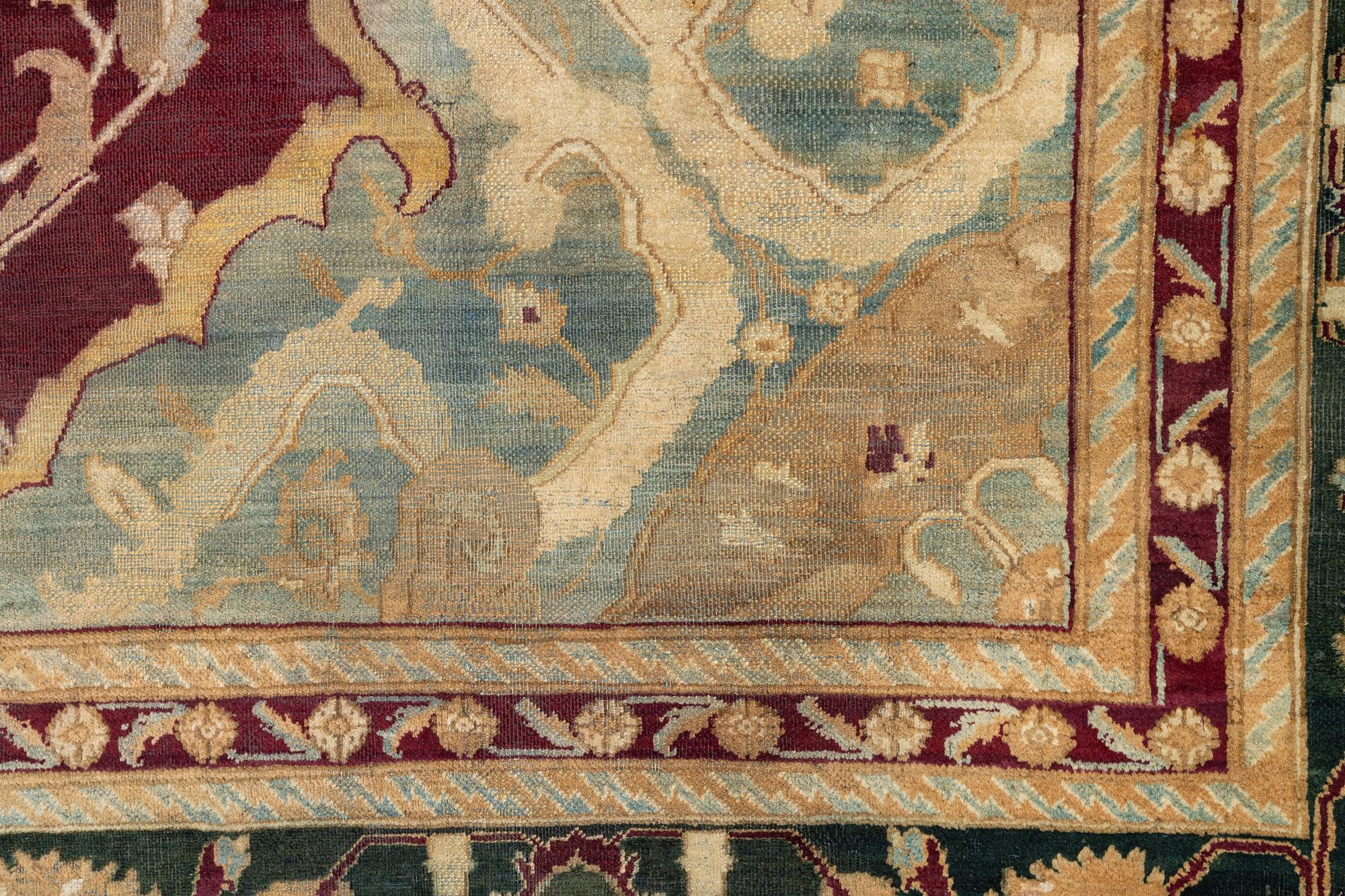
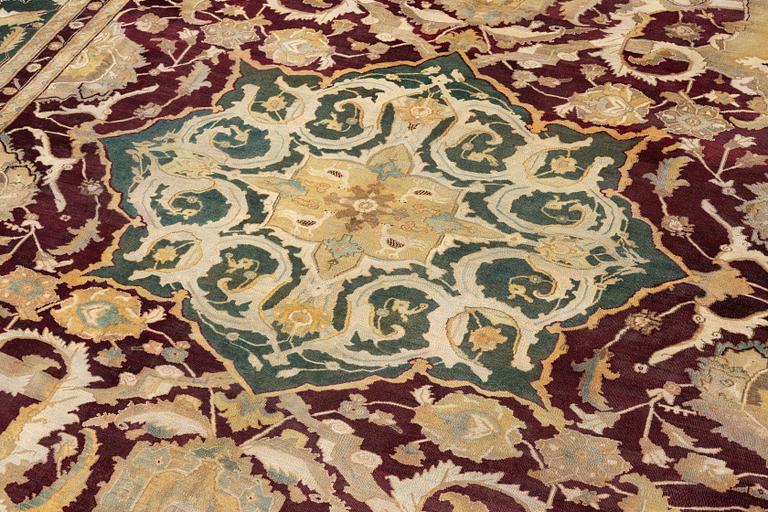
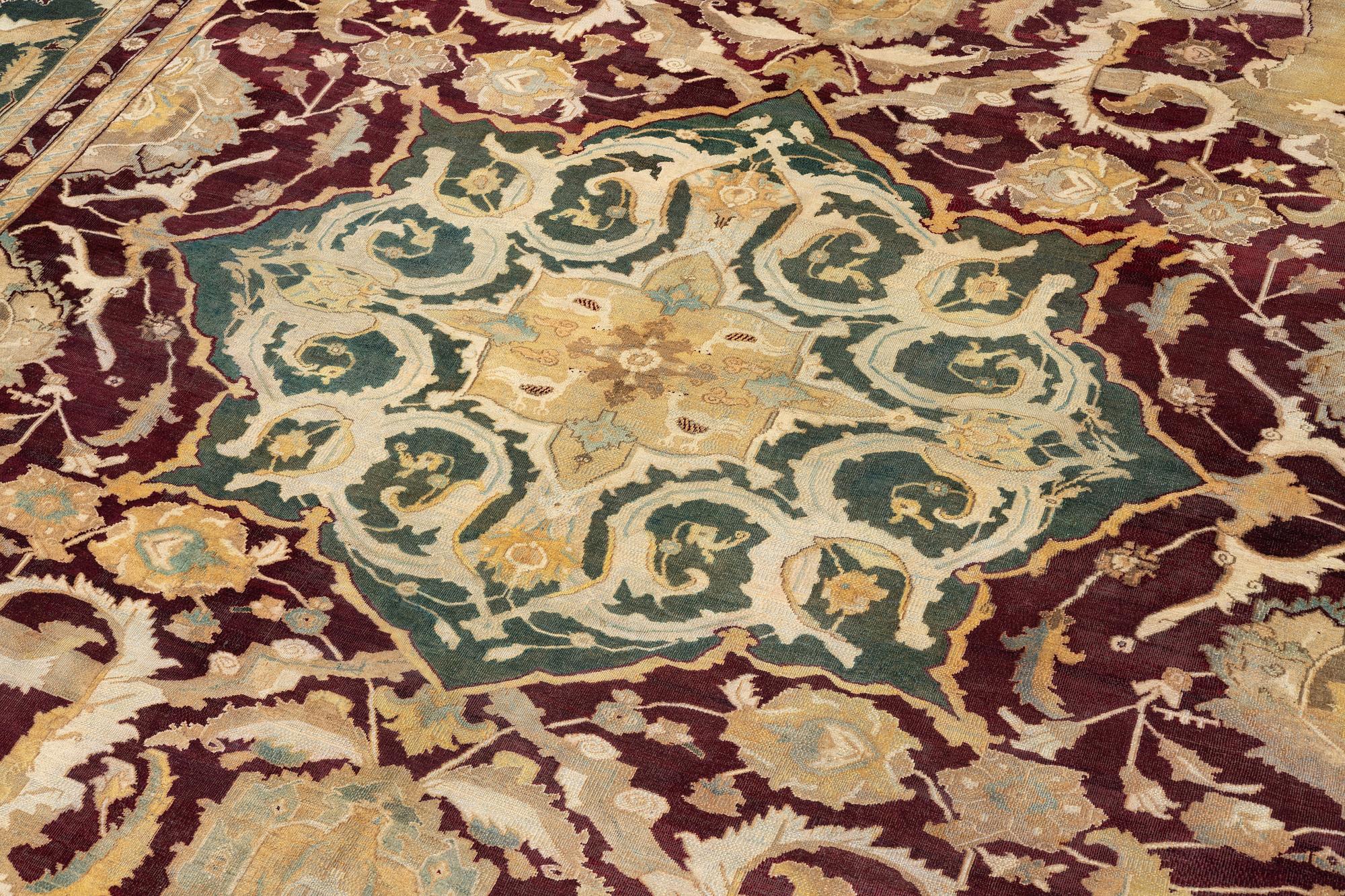
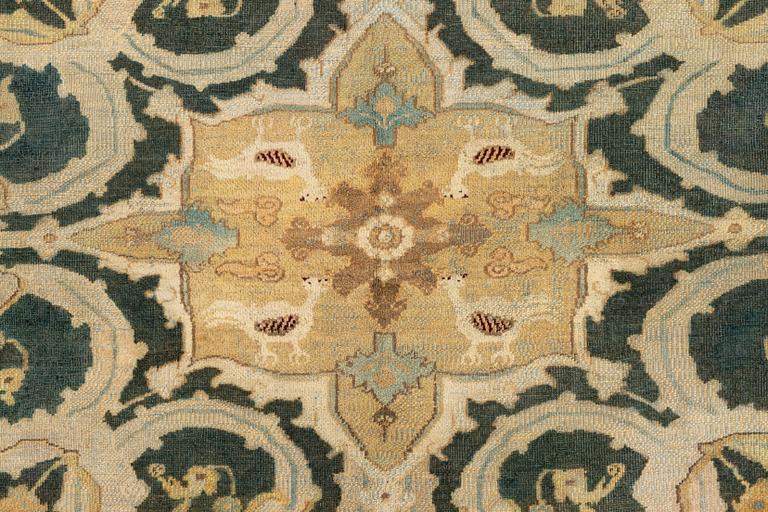
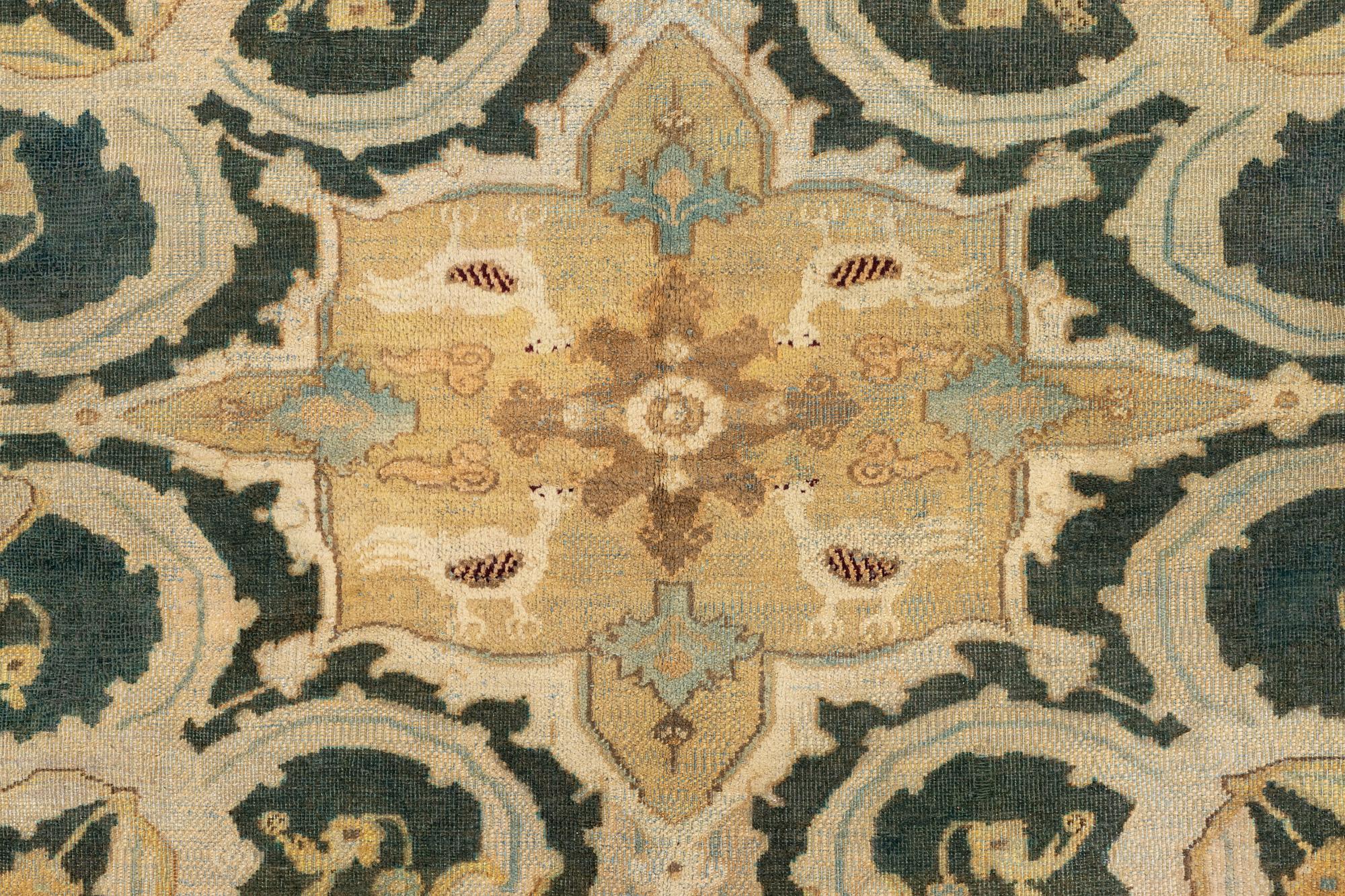
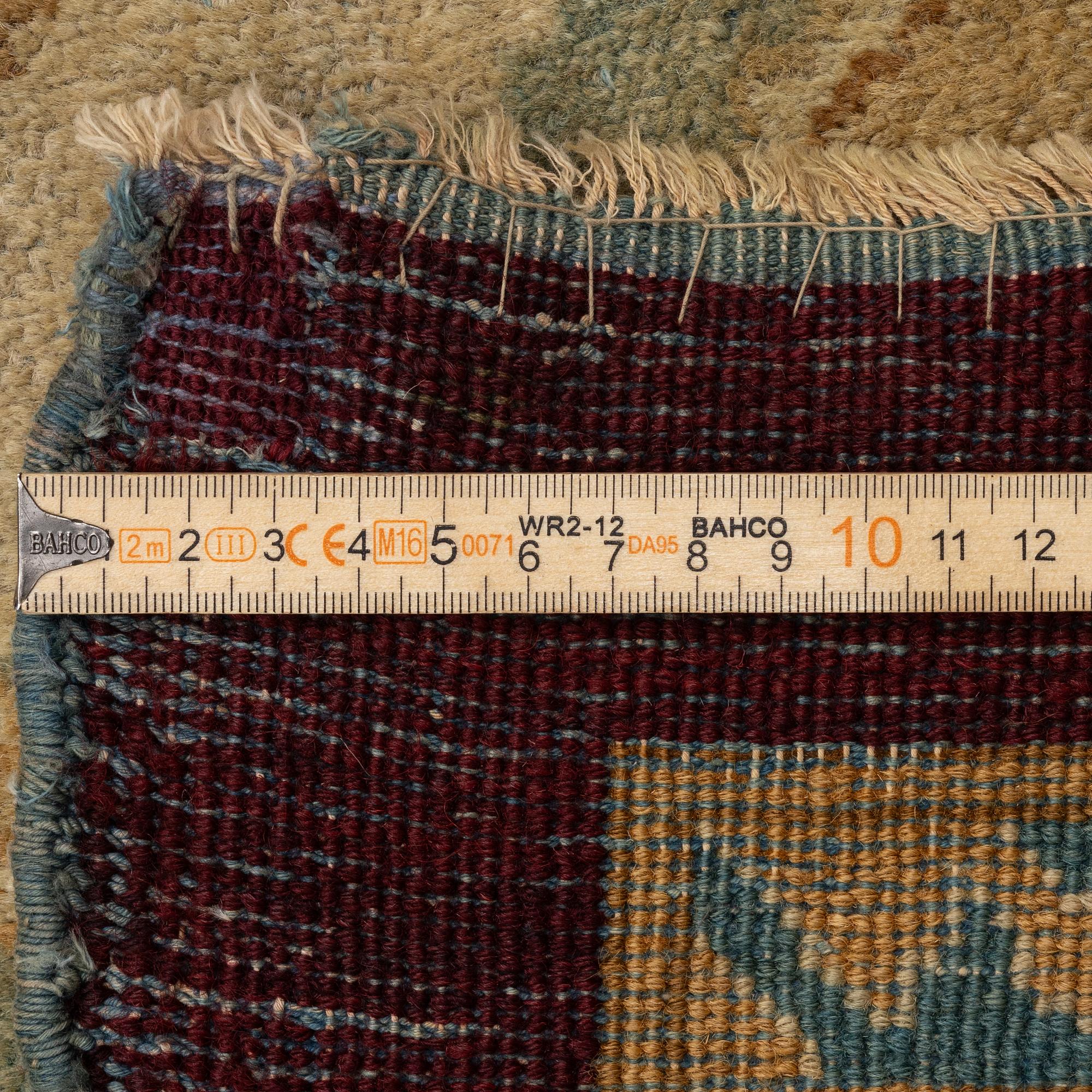
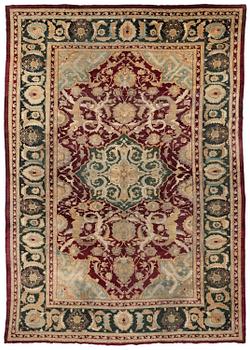
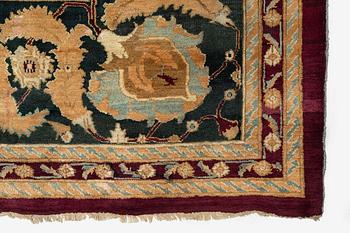
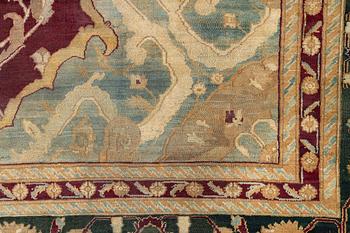
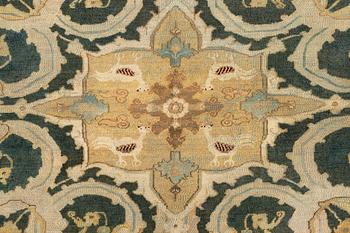
Around 1890. A burgundy ground with large light arabesques as well as palmette and floral scrolls and corner ornaments, along with a wide green main border featuring floral, palmette, and arabesque motifs.
Import VAT
Import VAT (12%) will be charged on the hammer price on this lot. For further details please contact customer service +46 8-614 08 00.
Provenance
Christie's London 'Oriental and European Rugs & Carpets', lot 141.
Acquired at the above auction by the current owner with the stated provenance: 'From a Royal House'
More information
During the 19th century, the British Empire grew into one of the largest in history. The 1851 London exhibition (The great exhibition) showed the waste areas of the new empire and several carpets from India was on display. This resulted in a great demand for carpets from Agra.
In 1862 several prison manufactories were established. Weaving studios were established in the Indian prisons where the prisoners were forced to weave carpets as part of their punishment. The prisoners were always instructed by a master weaver. The quality of these carpets is very high. Inspiration was drawn from ancient Anatolian carpets (just like the present carpet) as well as the classic Persian and Mughal carpets from the 16th and 17th centuries.
The most famous of these weaving studios was Agra Jail, near the Taj Mahal, where a huge carpet was woven and placed in the Waterloo Chamber of Windsor Castle. It was presented as a gift to Queen Victoria in 1877 on the occasion of her Imperial Durbar.
For condition report contact specialist


Others have also viewed