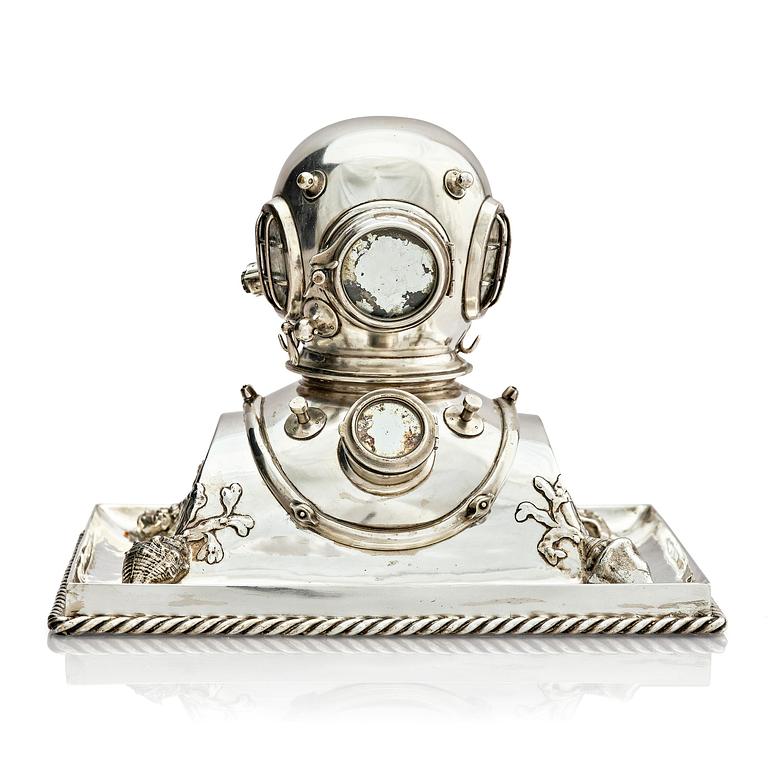
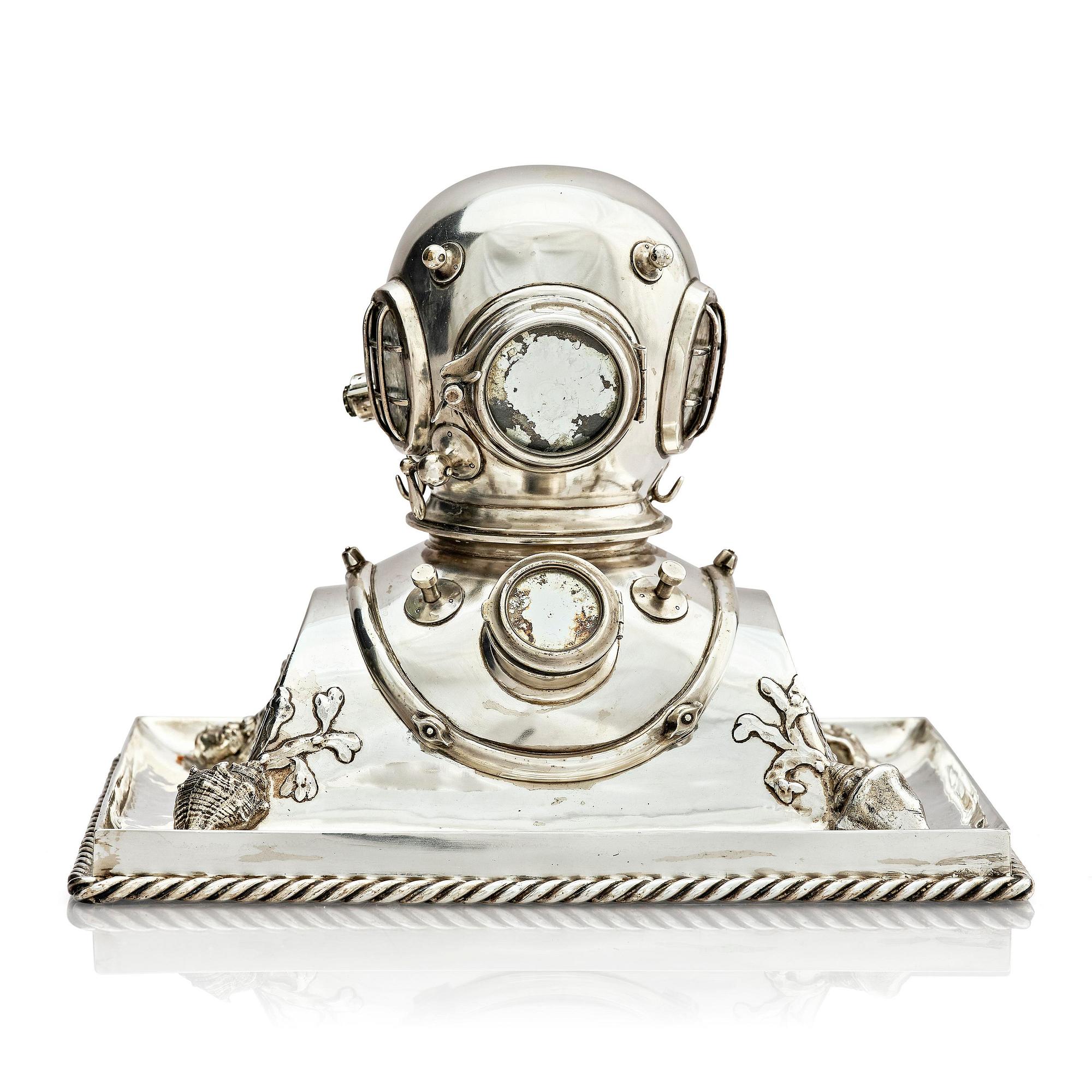
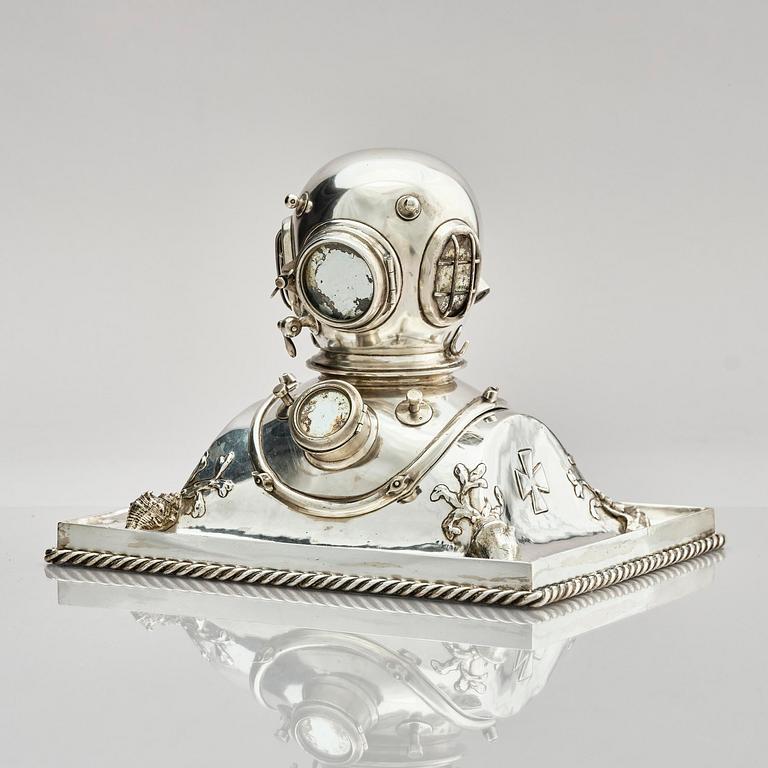
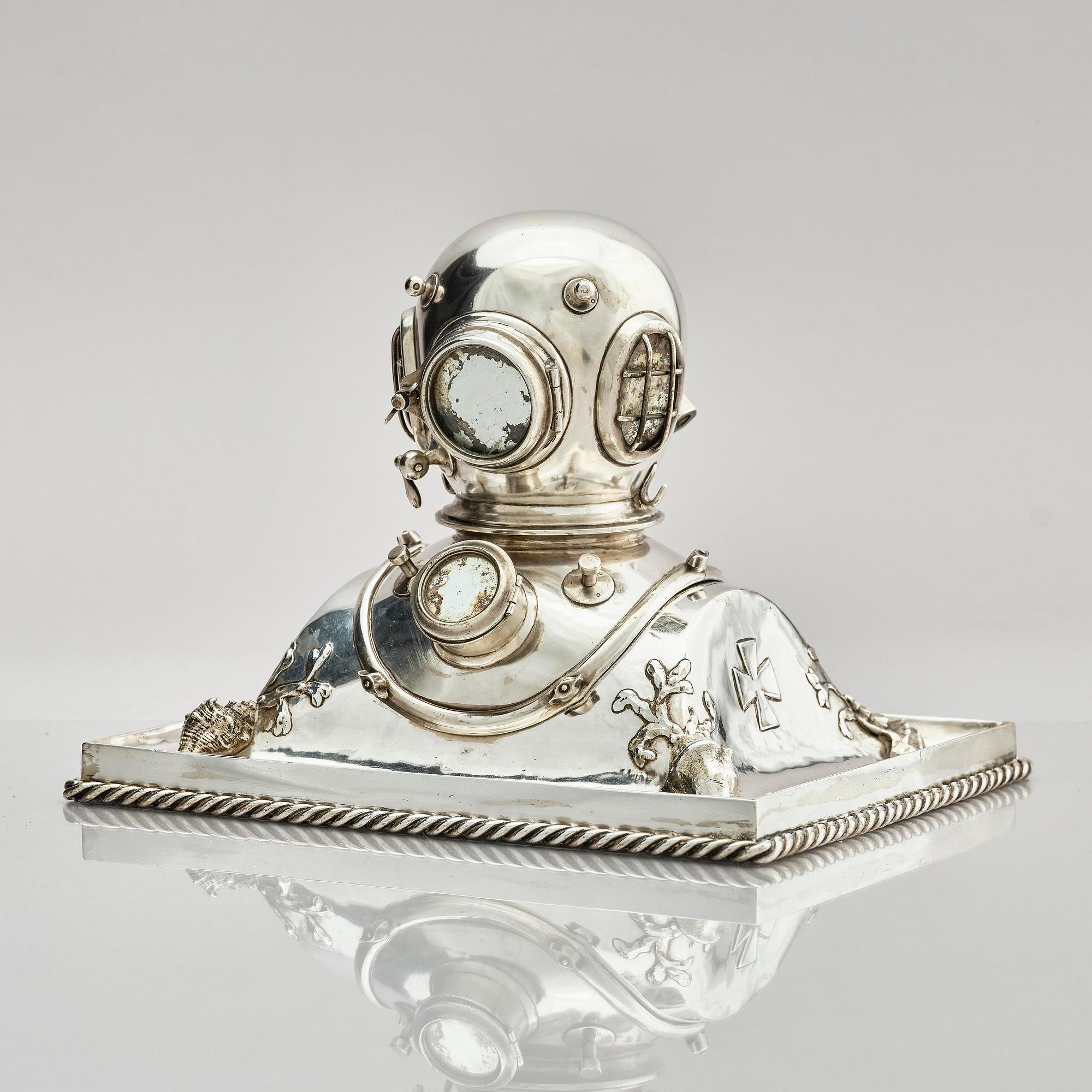
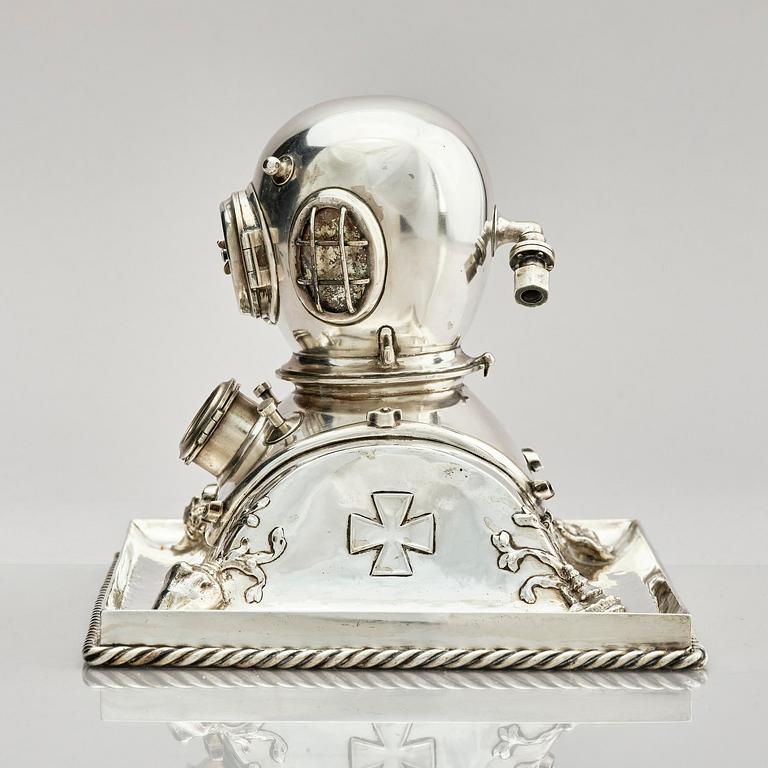
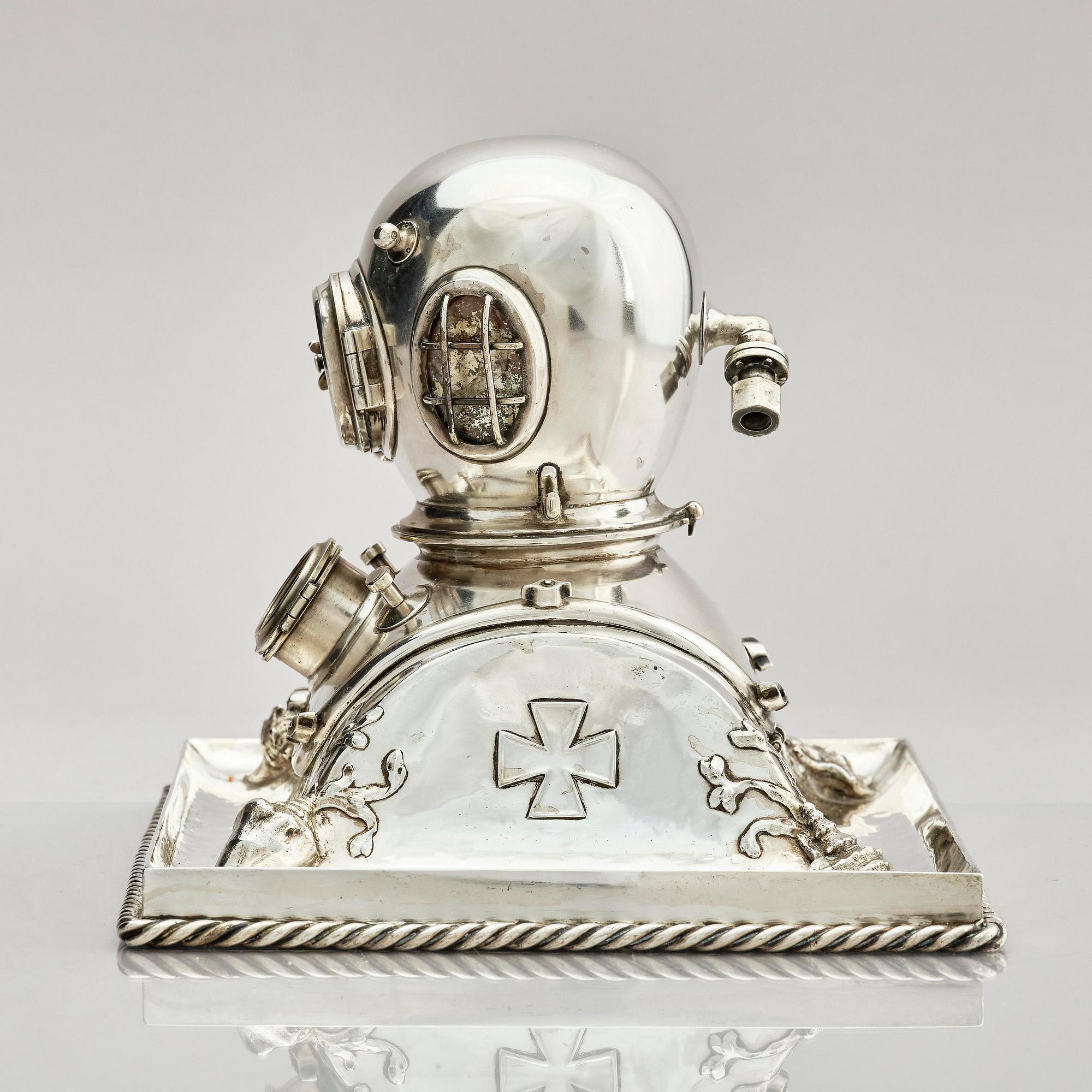
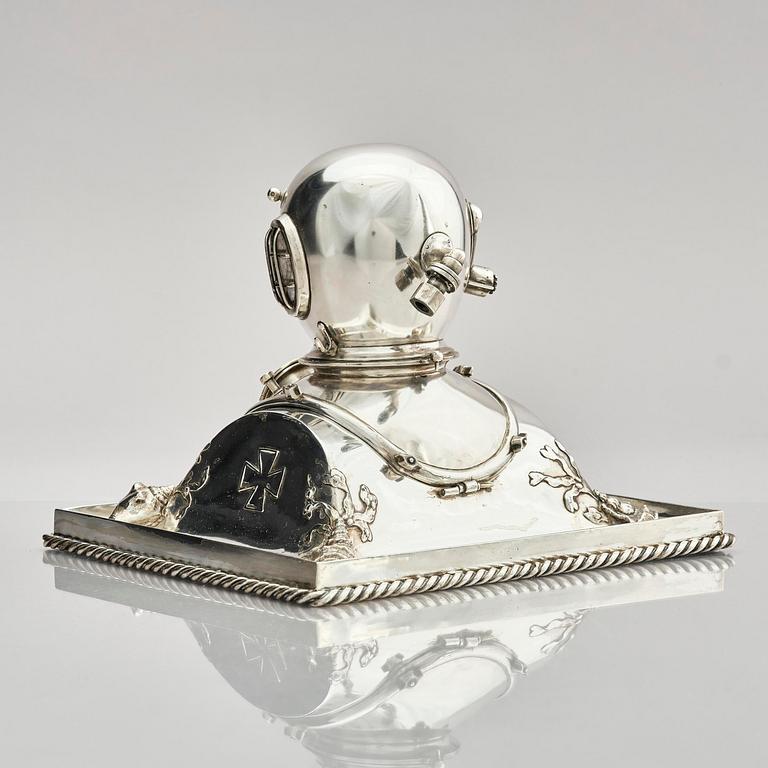
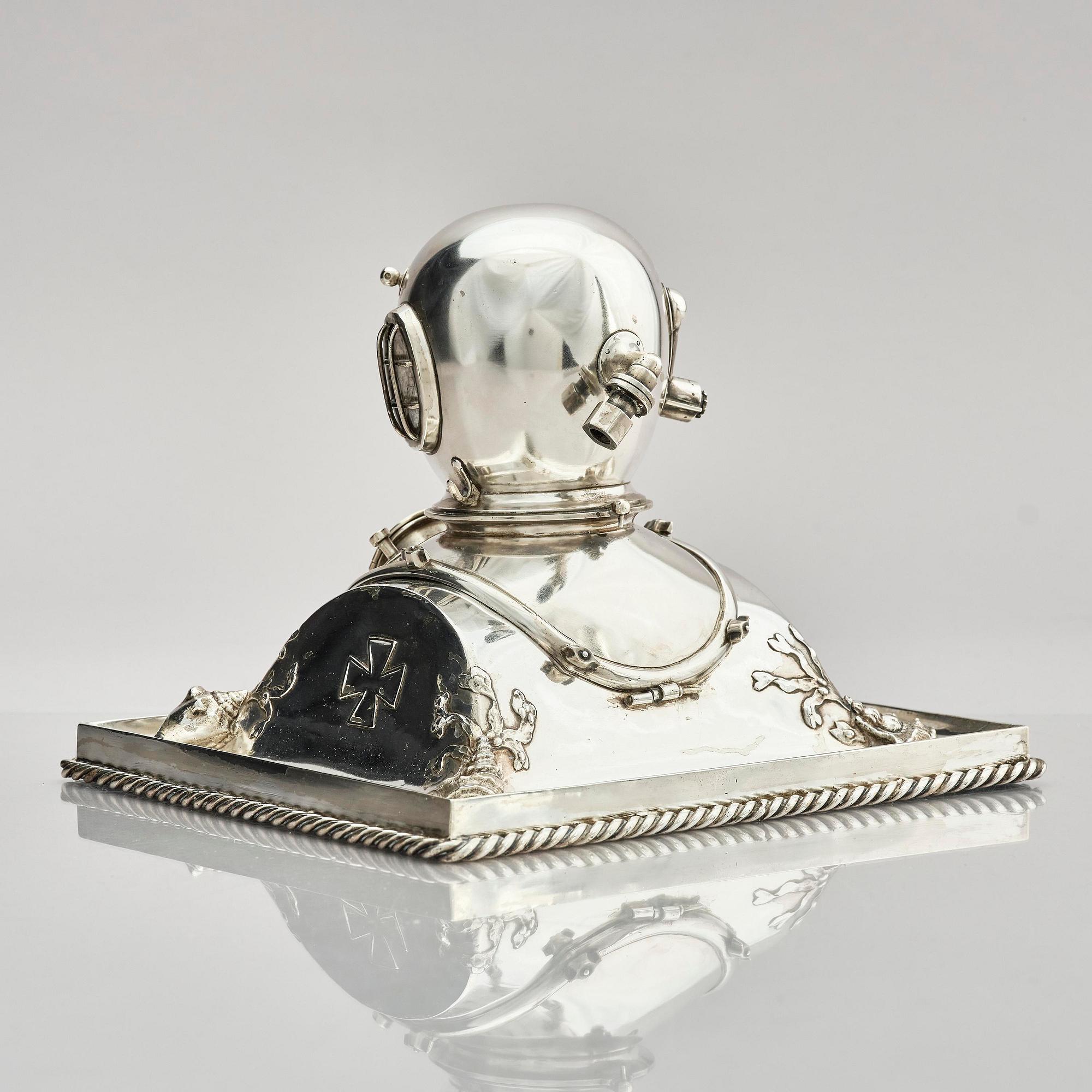
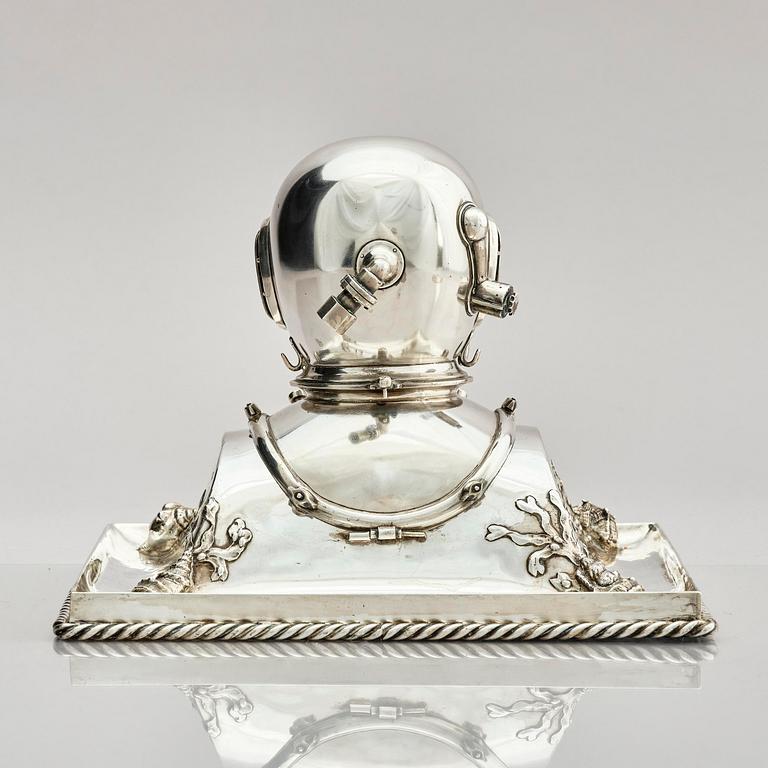
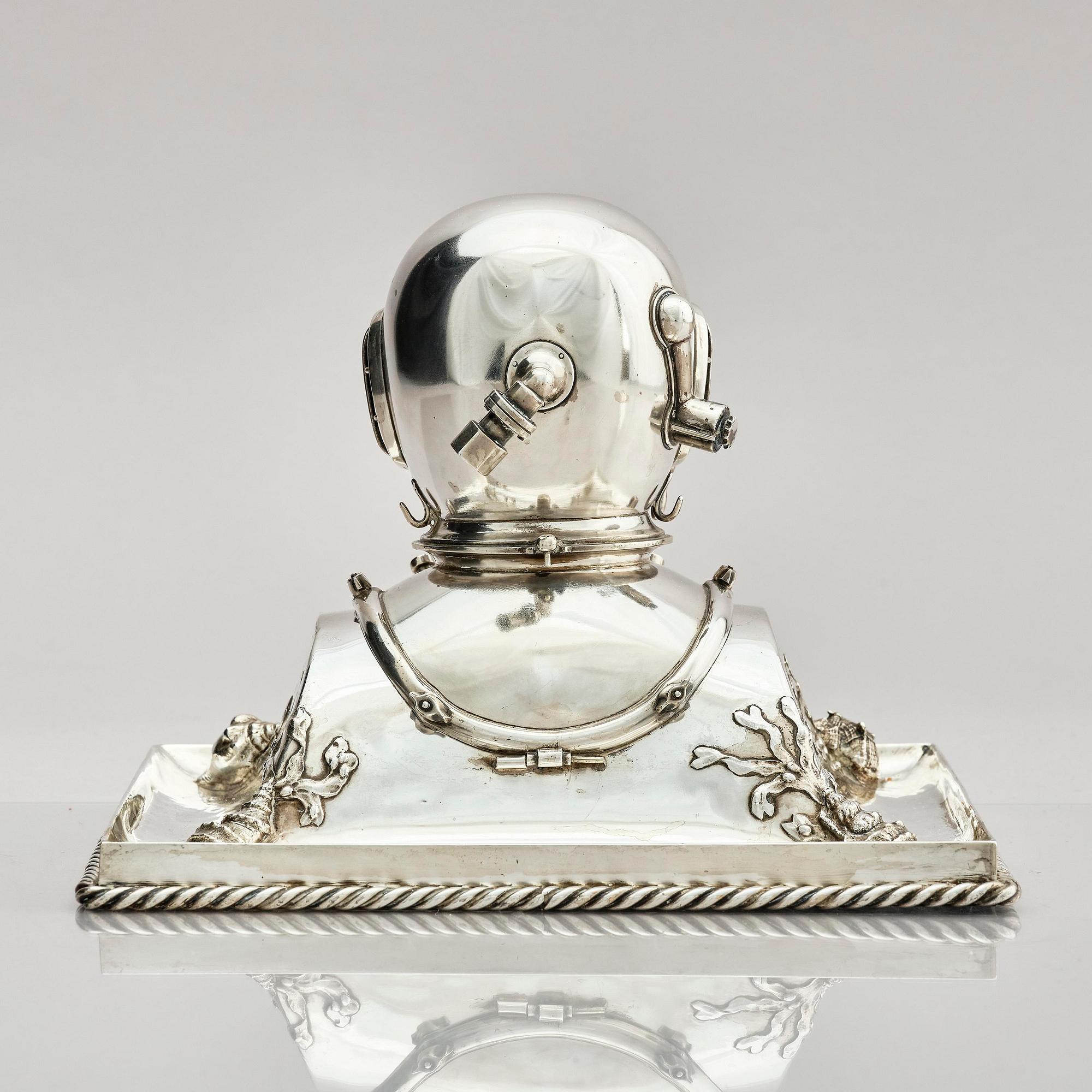
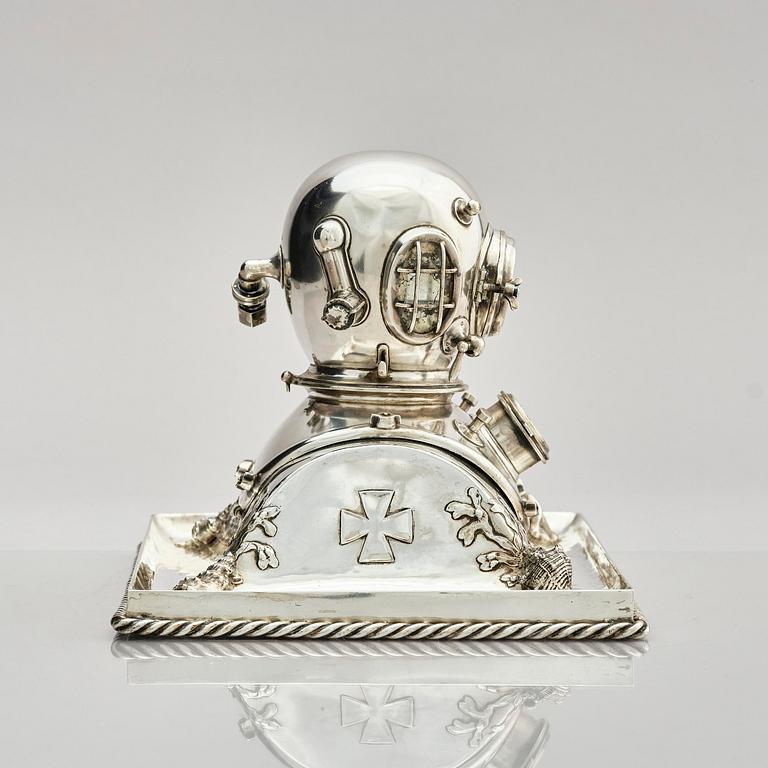
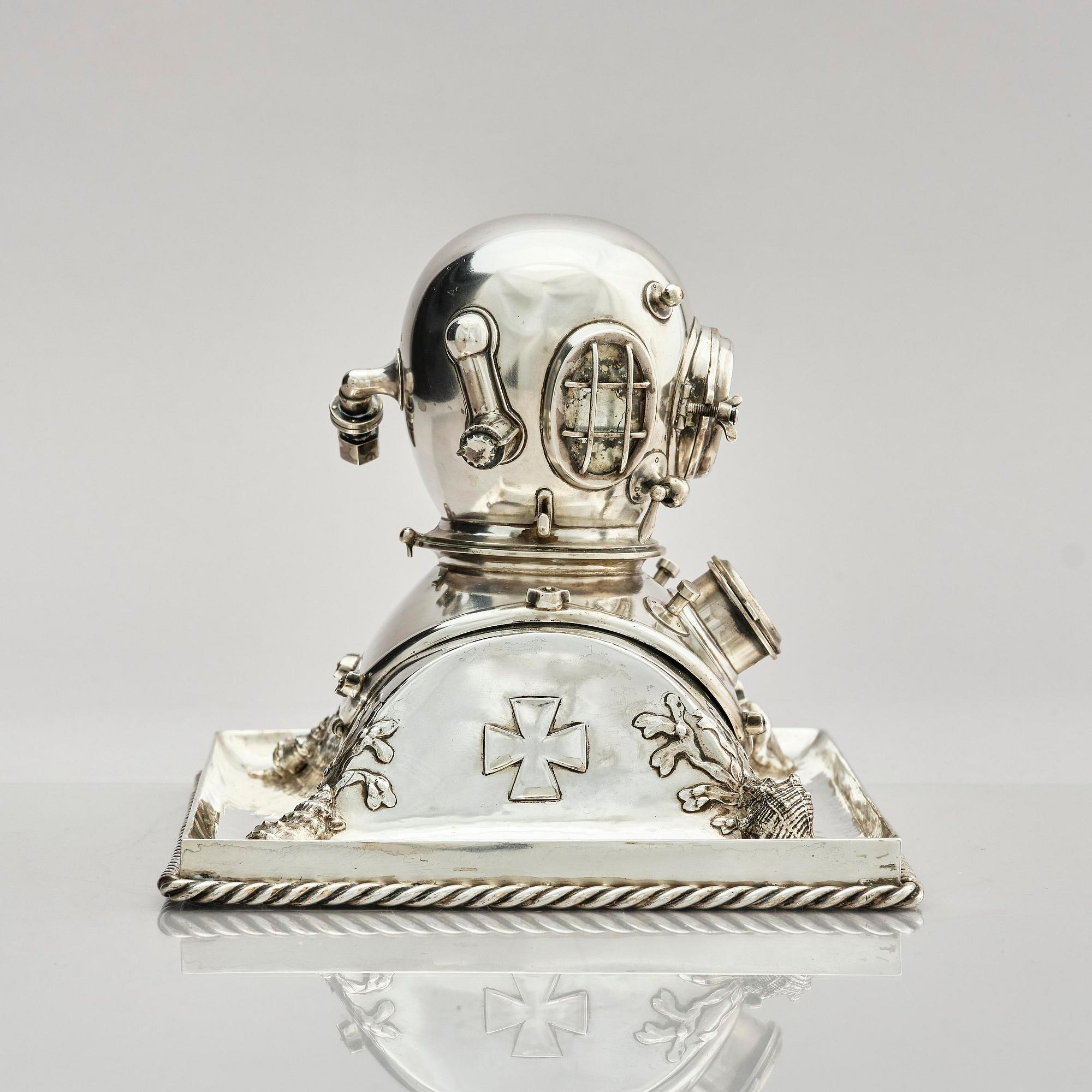
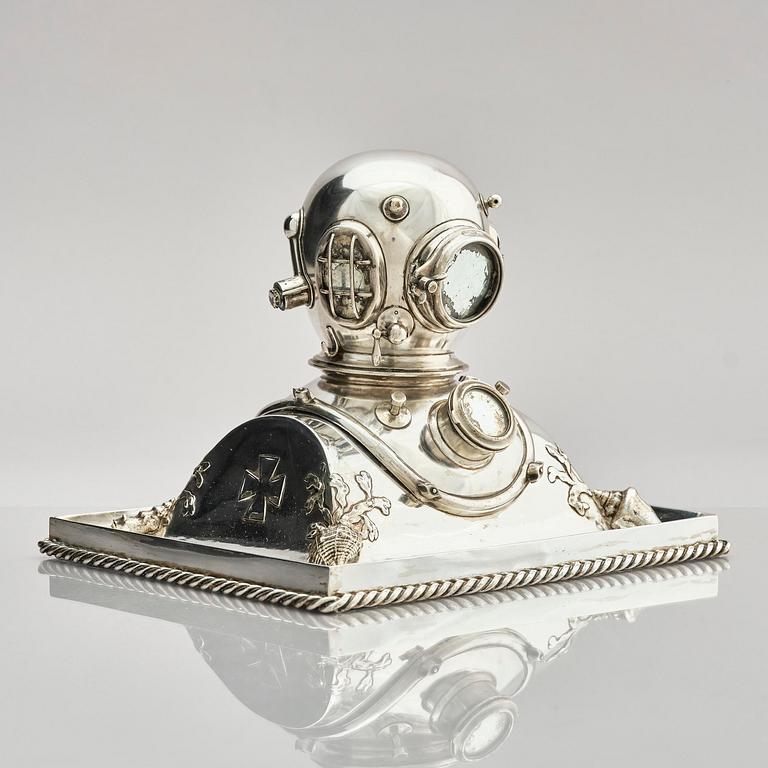
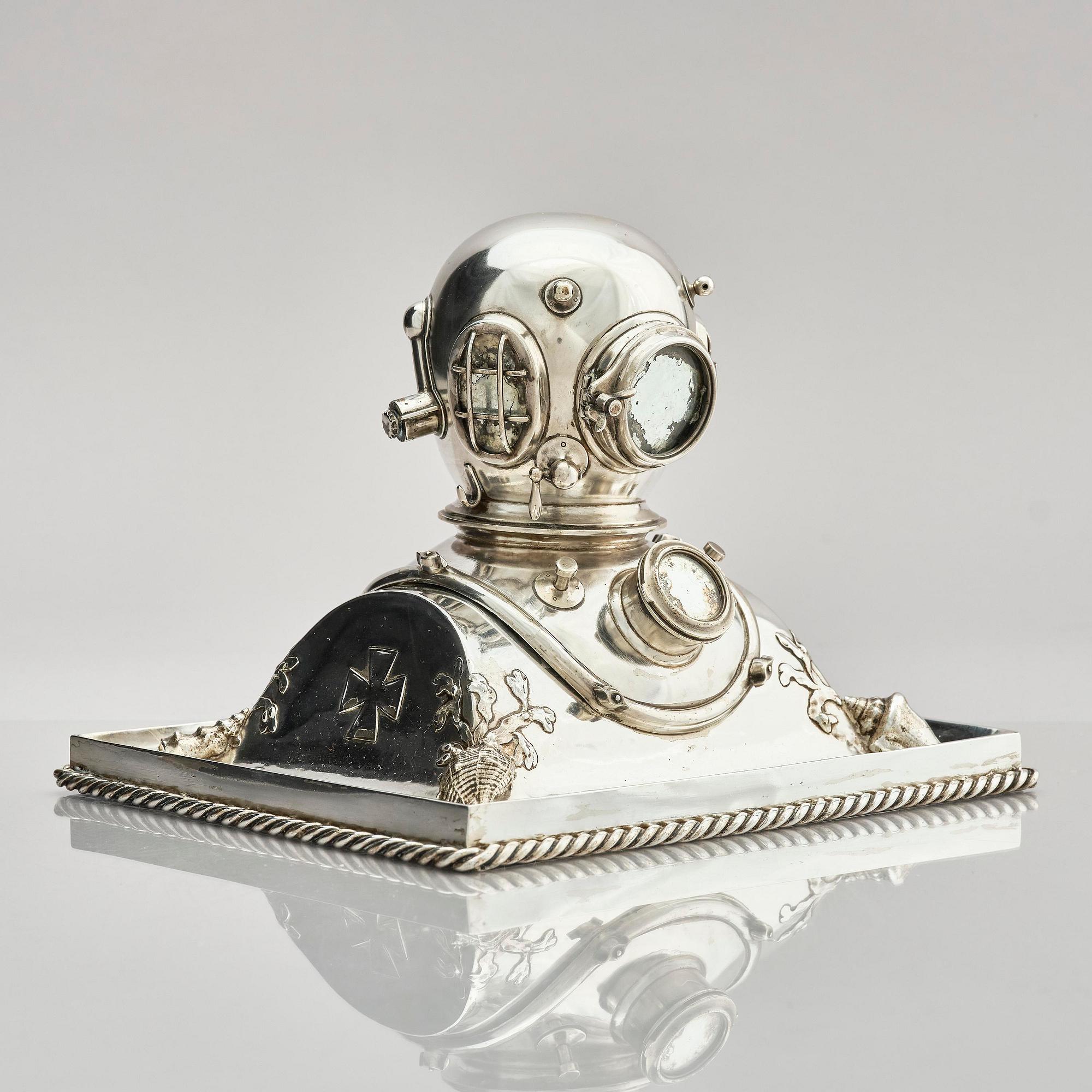
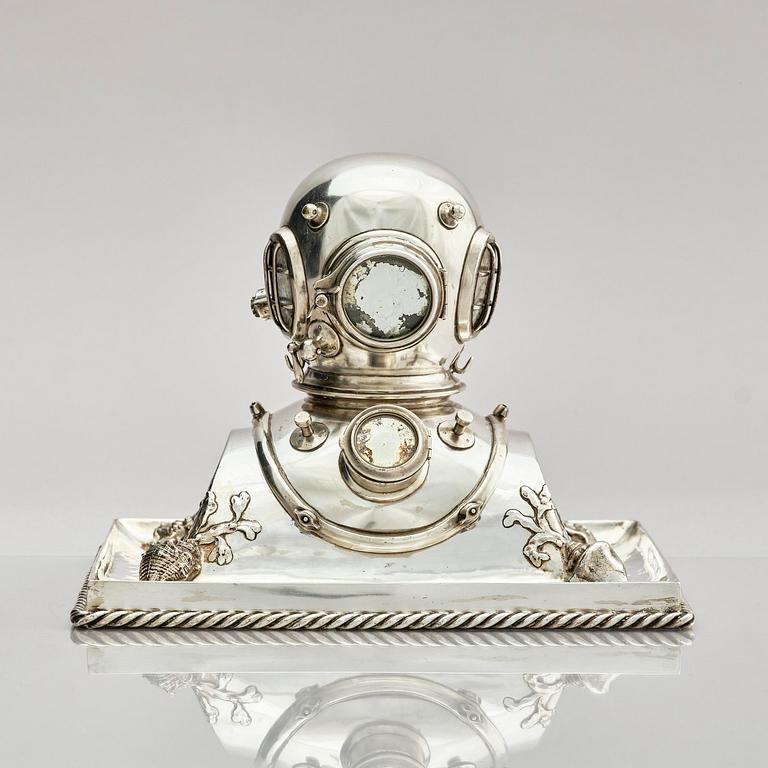
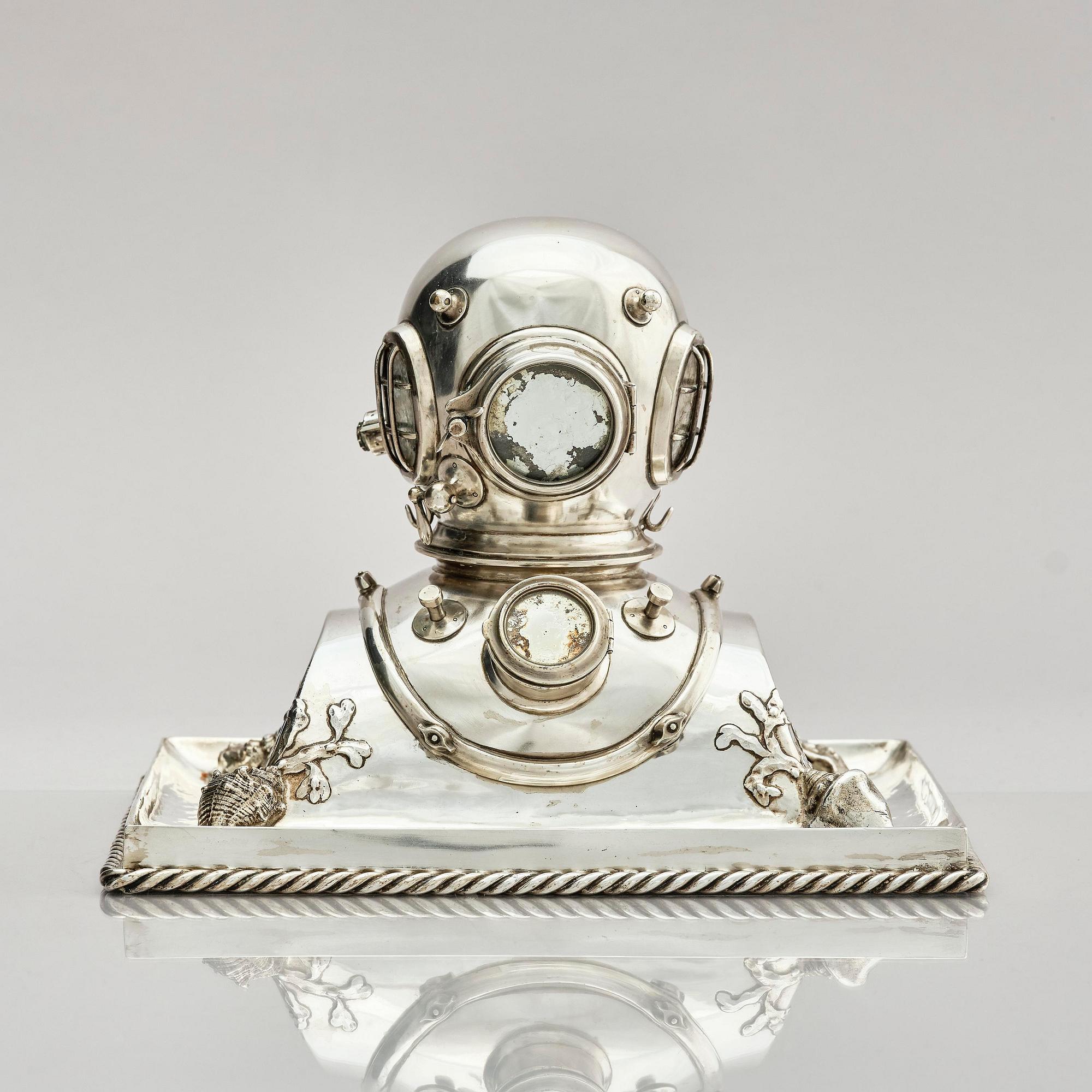
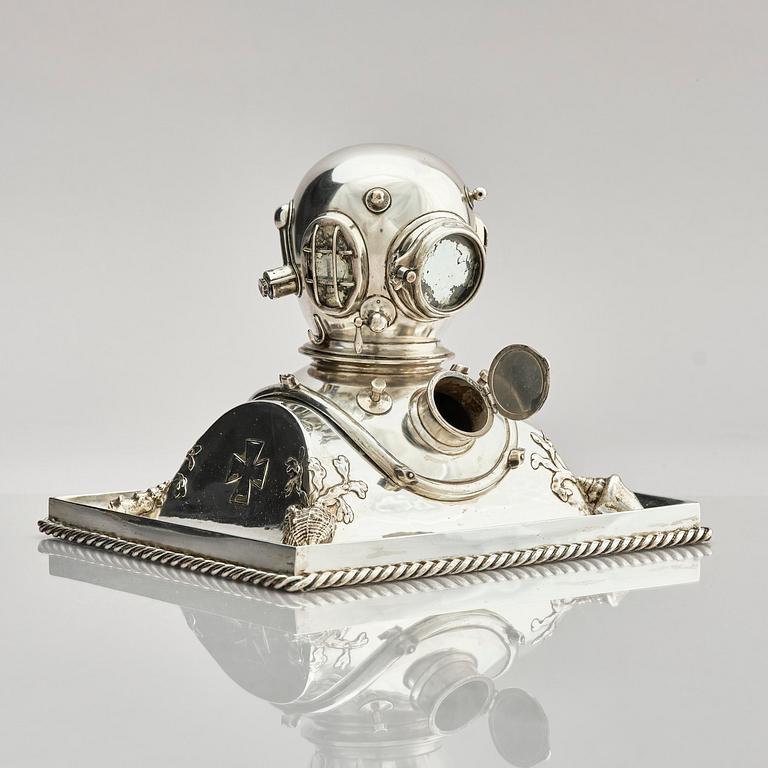
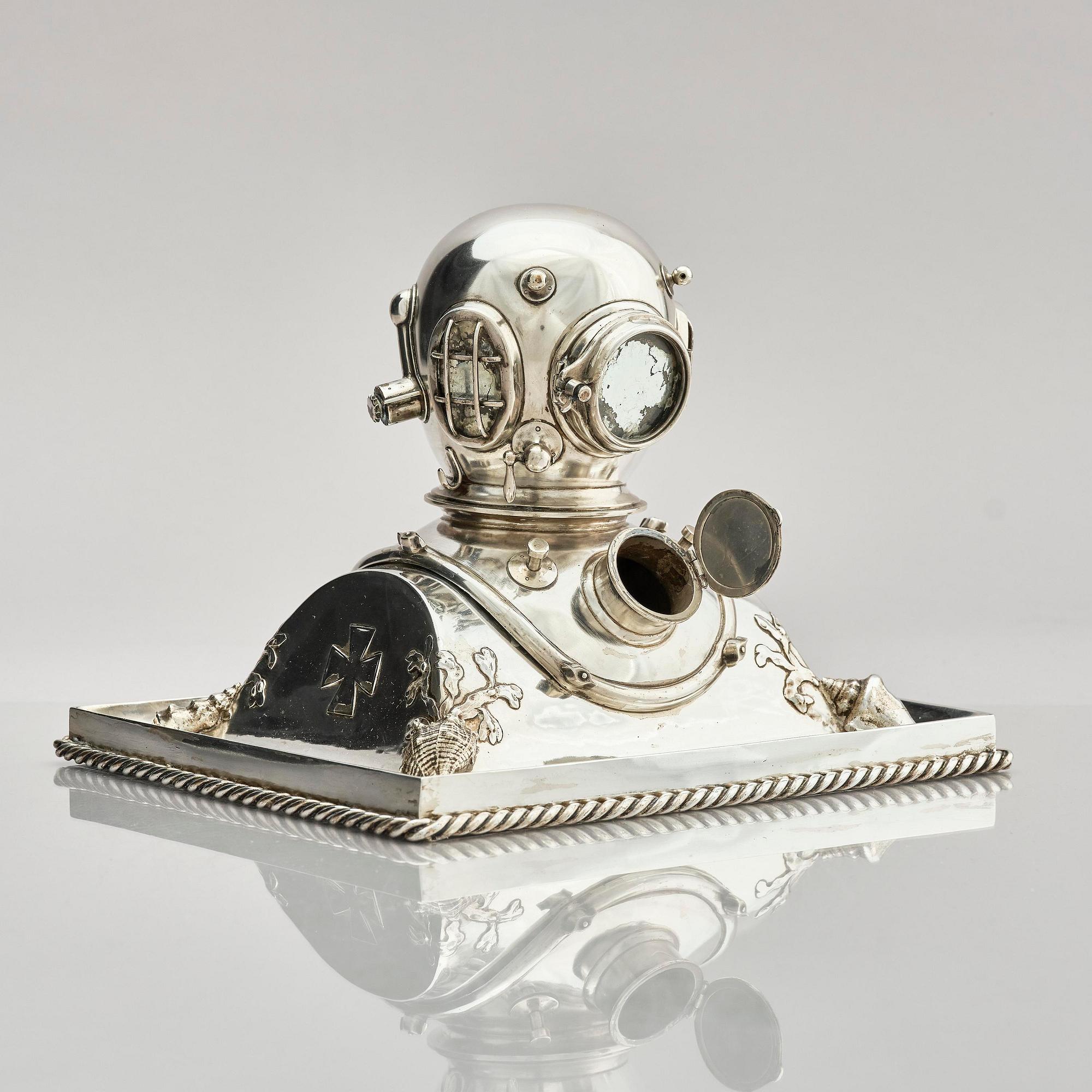
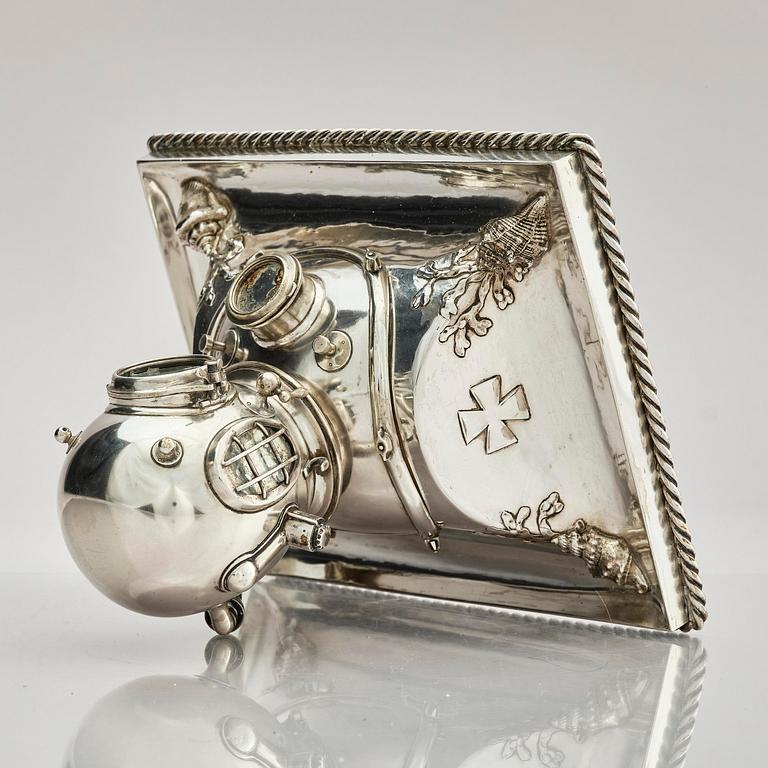
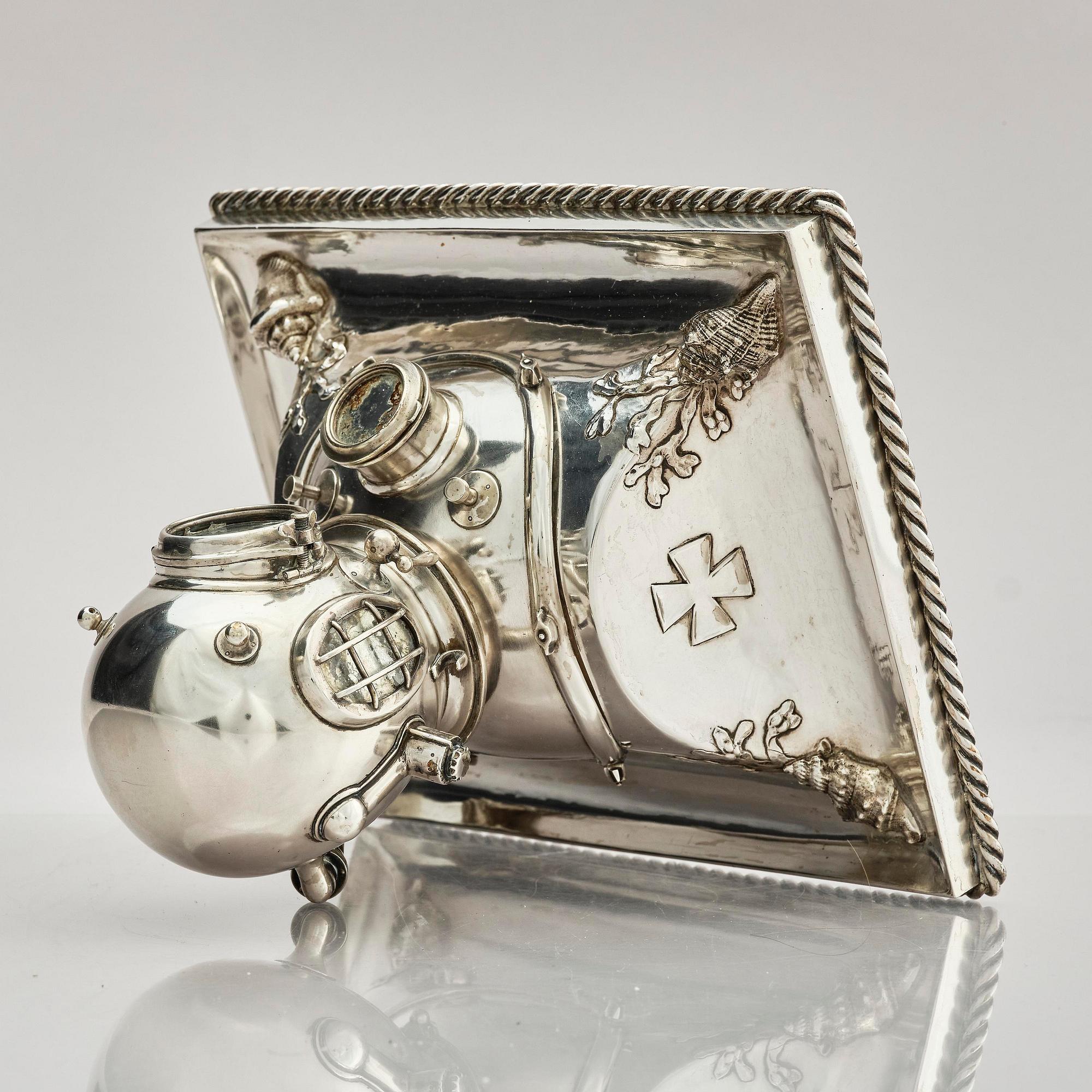
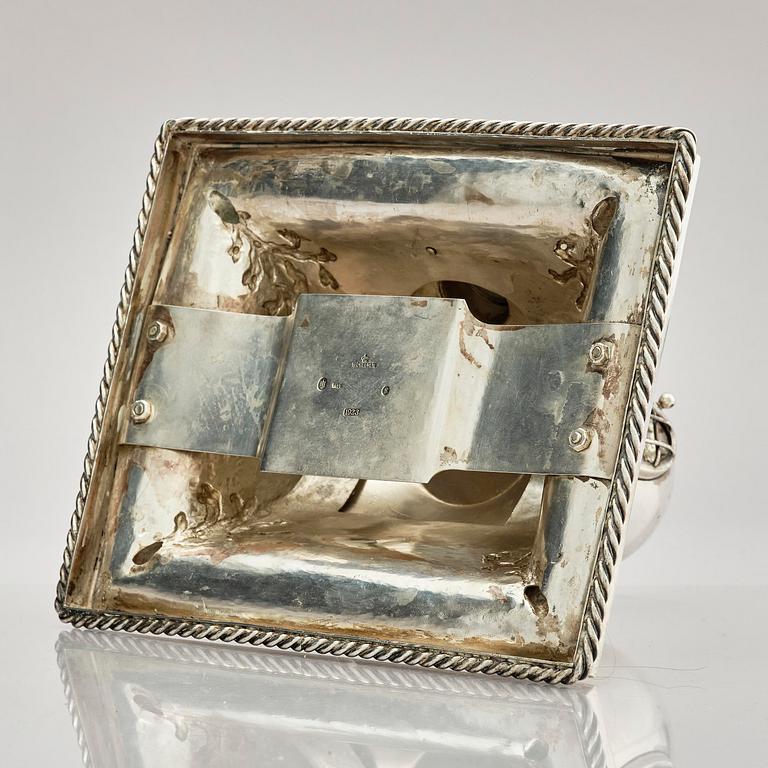
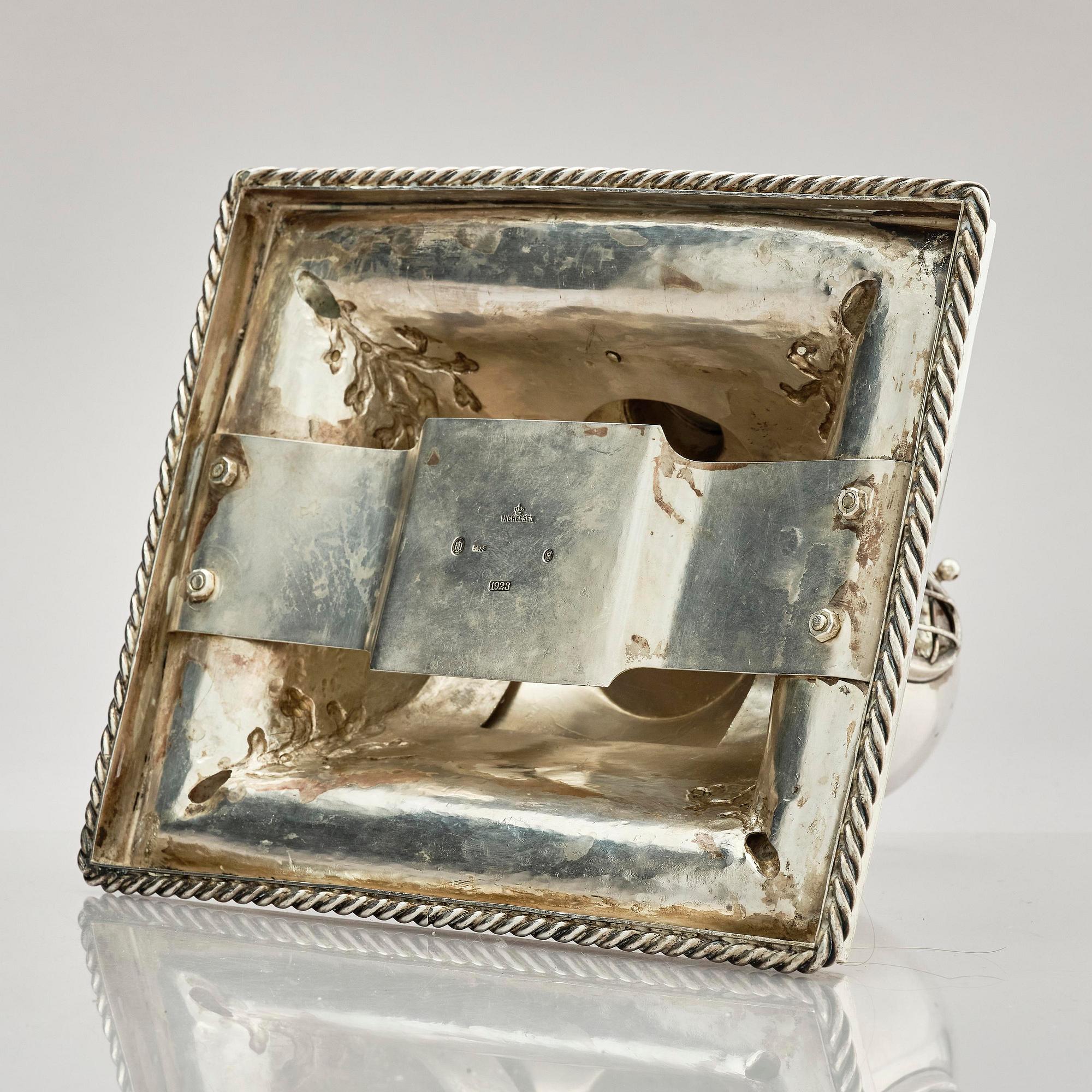
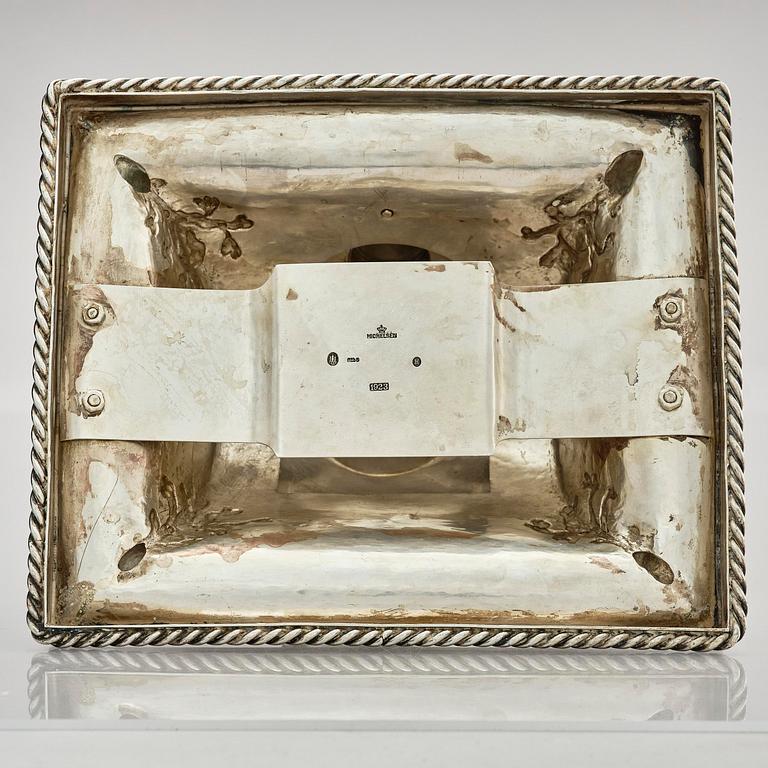
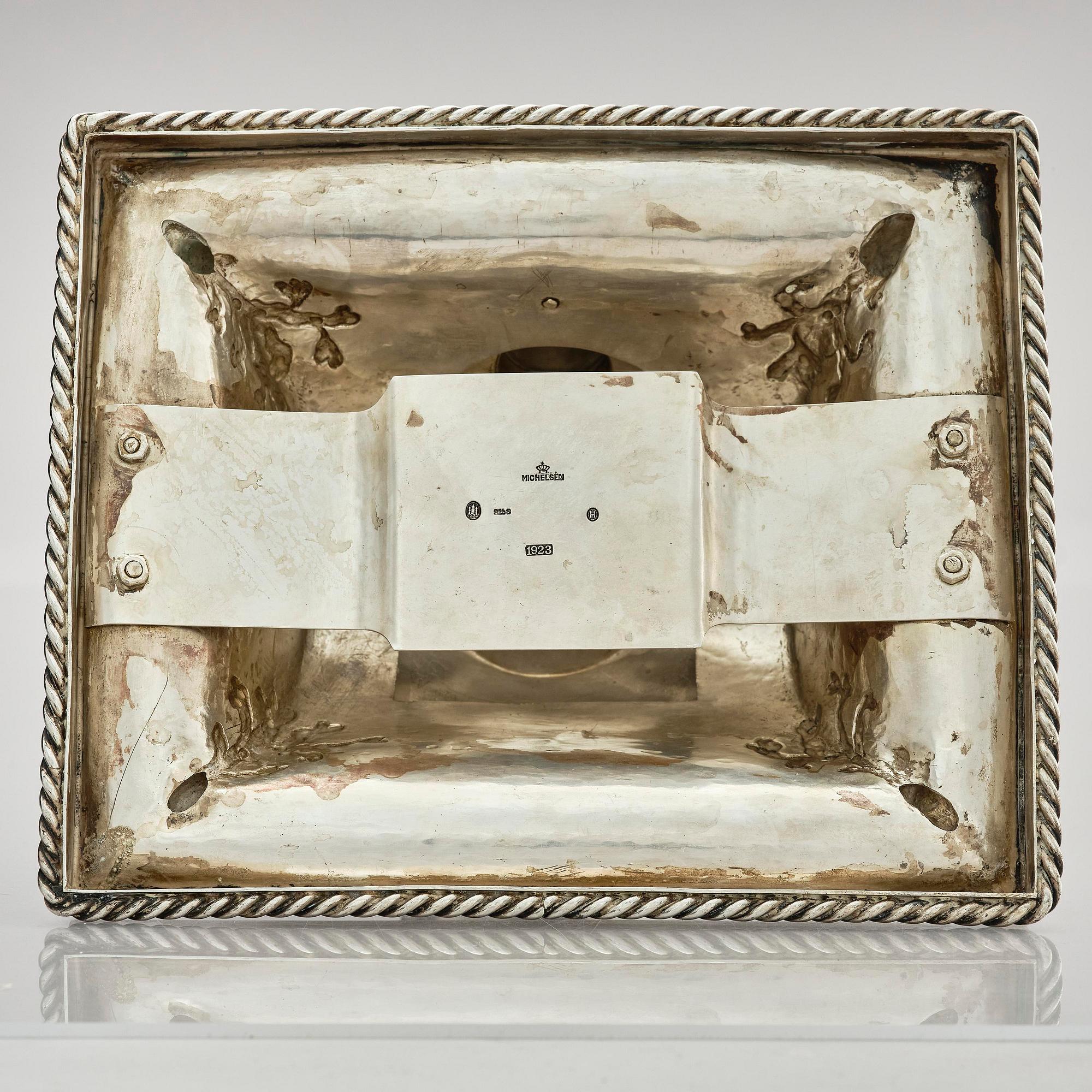
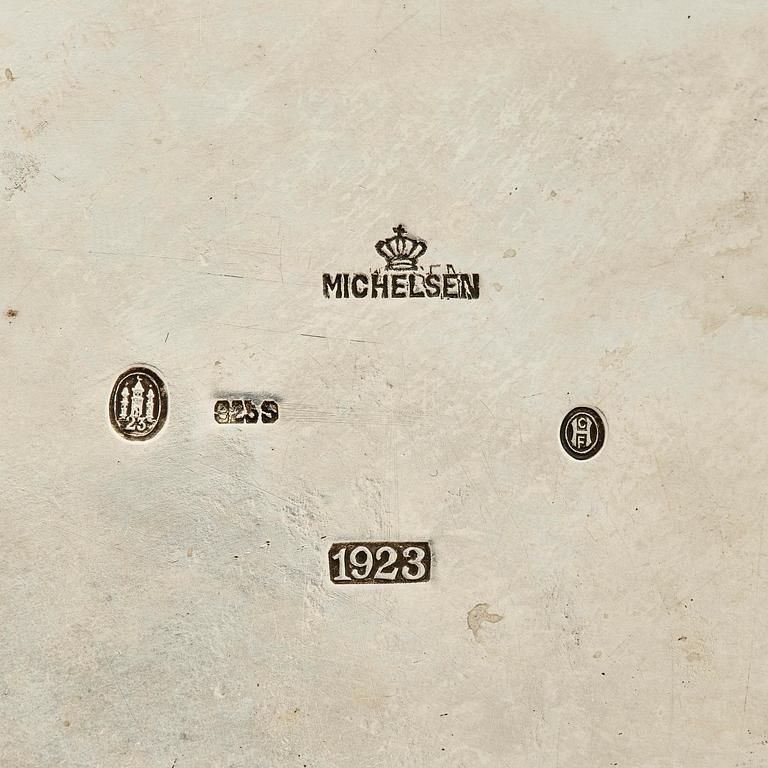
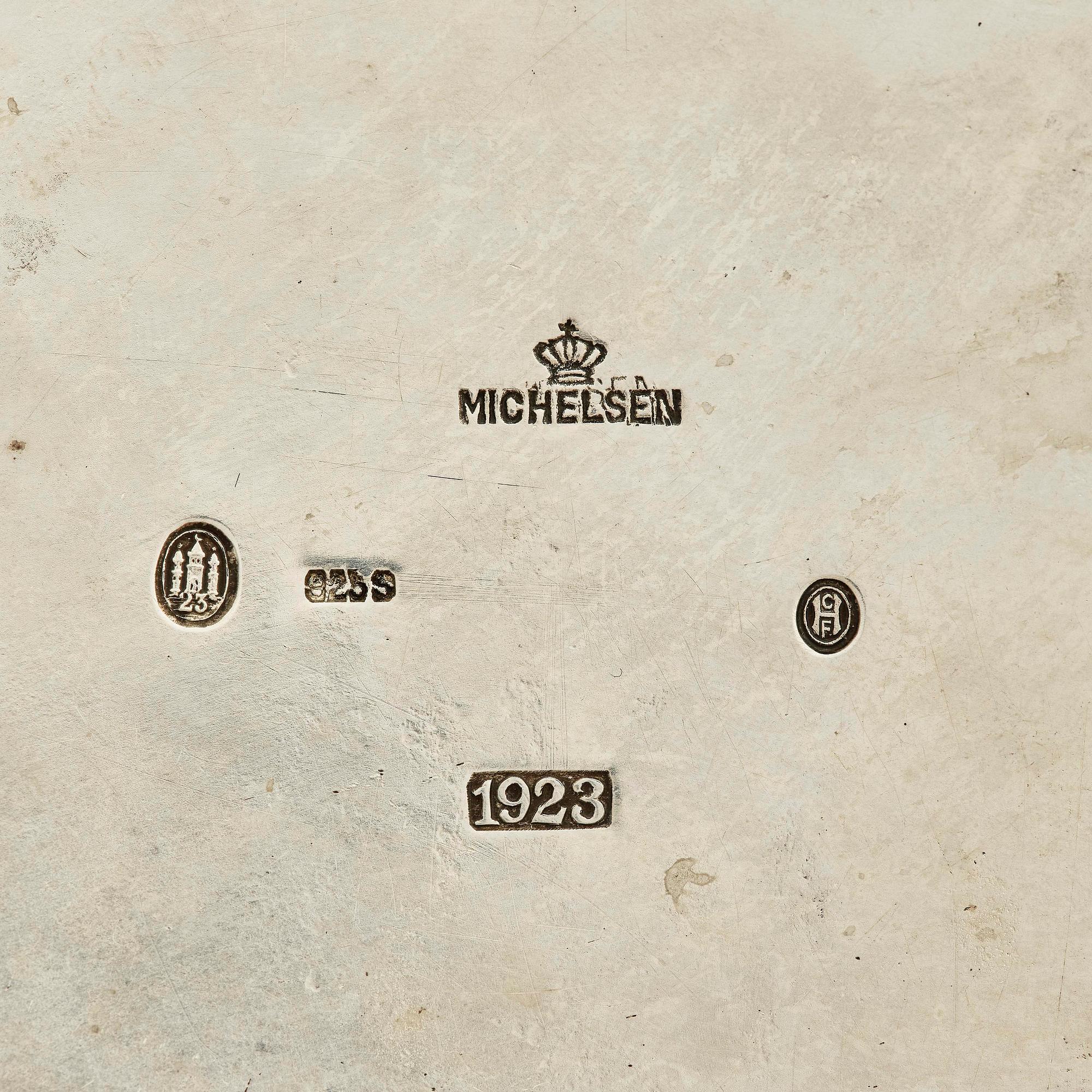
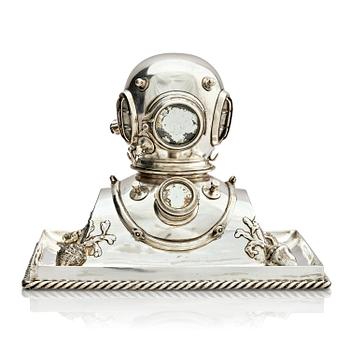
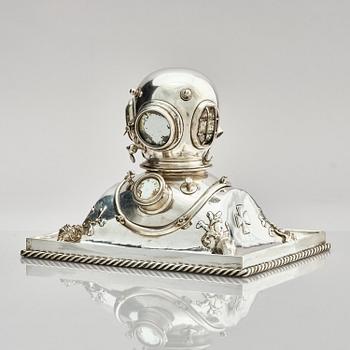
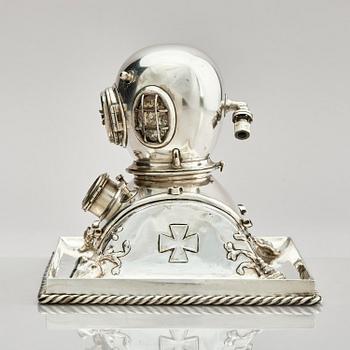
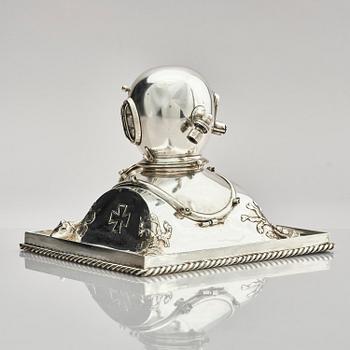
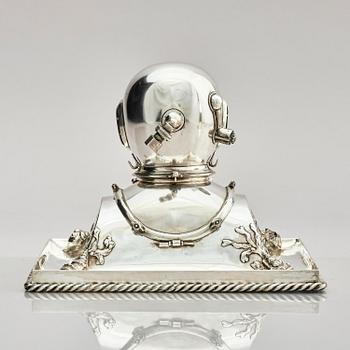
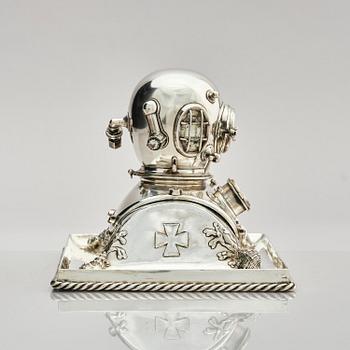
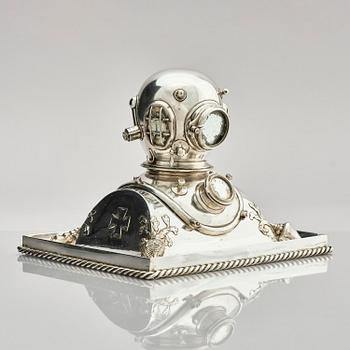
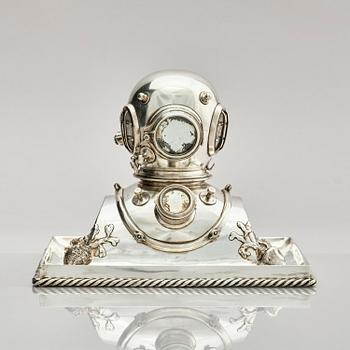
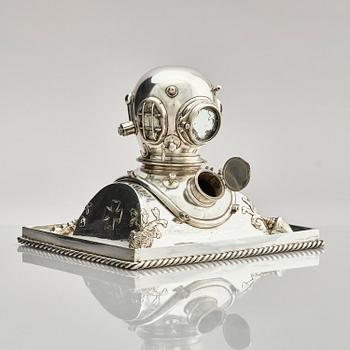
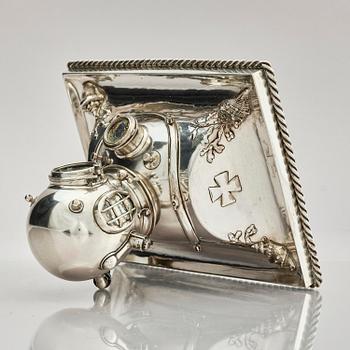
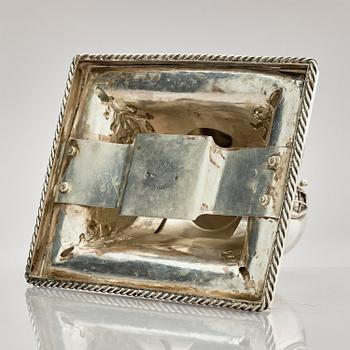
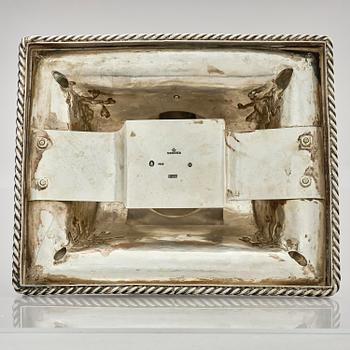
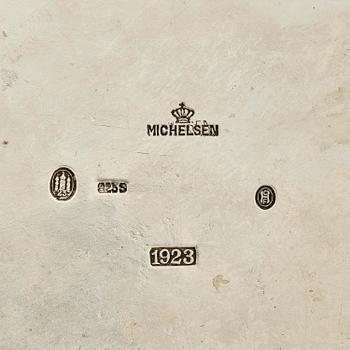
Sculpture in the form of a diver's helmet on a rectangular base decorated with shells in the corners. The helmet with hinges and the faceplate can be opened. Assay master CF Heise. Dimensions 17.5 x 22.5 x 19 cm. Weight approx. 1290 g
More information
Anton Michelsen was one of Denmark’s most prominent silversmiths and jewelers, with roots in Copenhagen dating back to the 19th century. Michelsen founded his company in 1841 and became widely known for the high quality of both hollowware and jewelry, which led to his appointment as Royal Court Jeweler. The firm A. Michelsen was passed down from father to son, continuously evolving in style and expanding in scope. Participation in the 1900 World Exhibition helped spread the company’s strong reputation. Later, the business was taken over by his grandson Poul Ulrich Michelsen in 1921, marking the beginning of yet another innovative phase.
During the 1920s, the firm experienced a period that balanced tradition and renewal, where classical craftsmanship met the stylistic ideals of the time. The company had previously been successful within the Art Nouveau movement and now embraced Art Deco. Collaborations with several architects and artists resulted in objects that combined technical skill with artistic imagination.
Among the fascinating objects from the 1910s and 1920s are a small number of silver sculptures, such as an equestrian sculpture depicting King Christian IX from 1906. A particularly rare yet expressive example is this silver sculpture depicting a diving helmet. The figure stands on a seabed, with corners decorated with shells and seaweed.
Today, silver sculptures from Anton Michelsen’s production in the 1920s are highly valued by collectors and museums. They are appreciated not only for their material worth but also for their historical and artistic significance. These works represent a period when Scandinavian design began to gain global recognition and continue to exemplify the timeless appeal of fine silver craftsmanship.
For condition report contact specialist

Others have also viewed