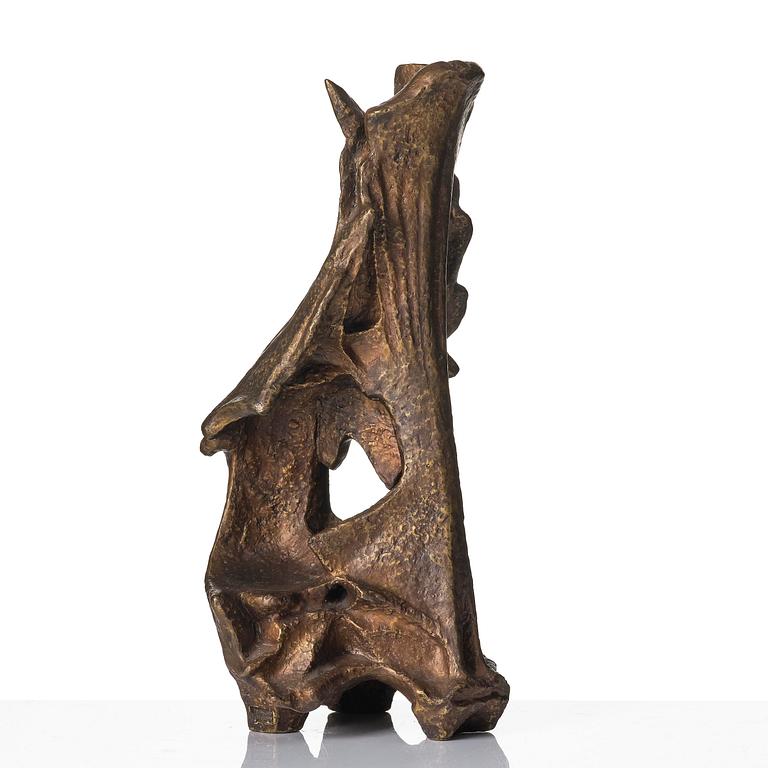
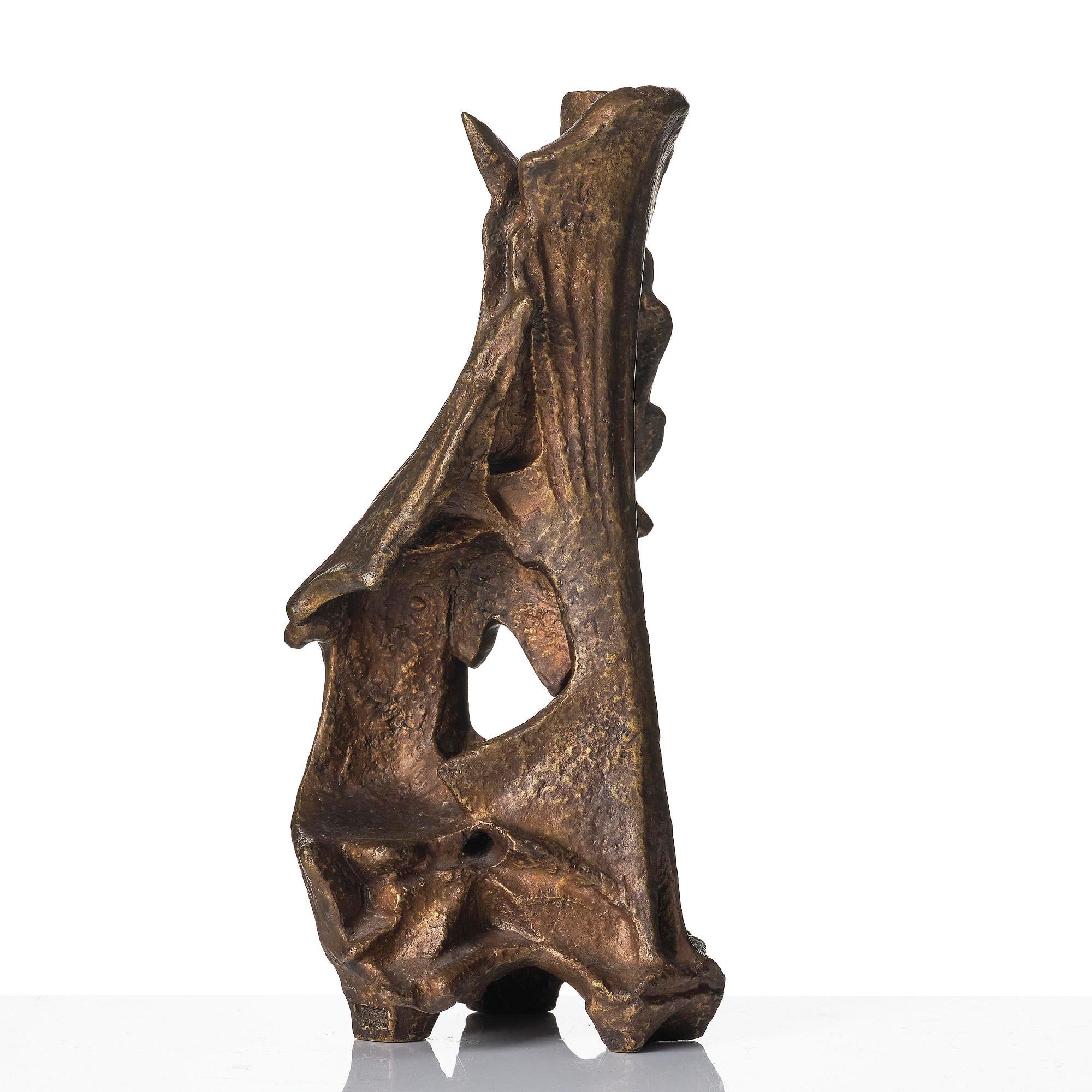
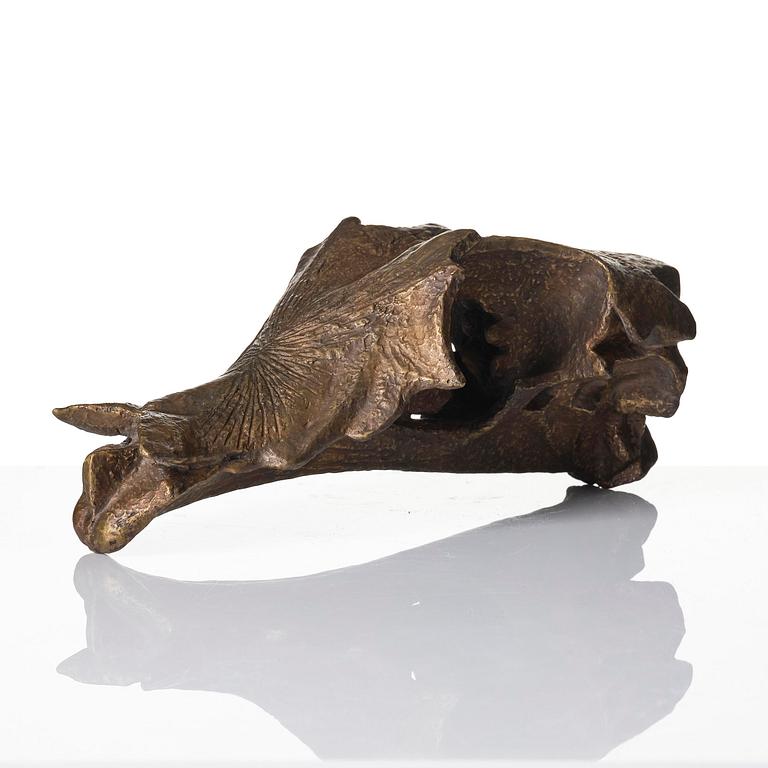
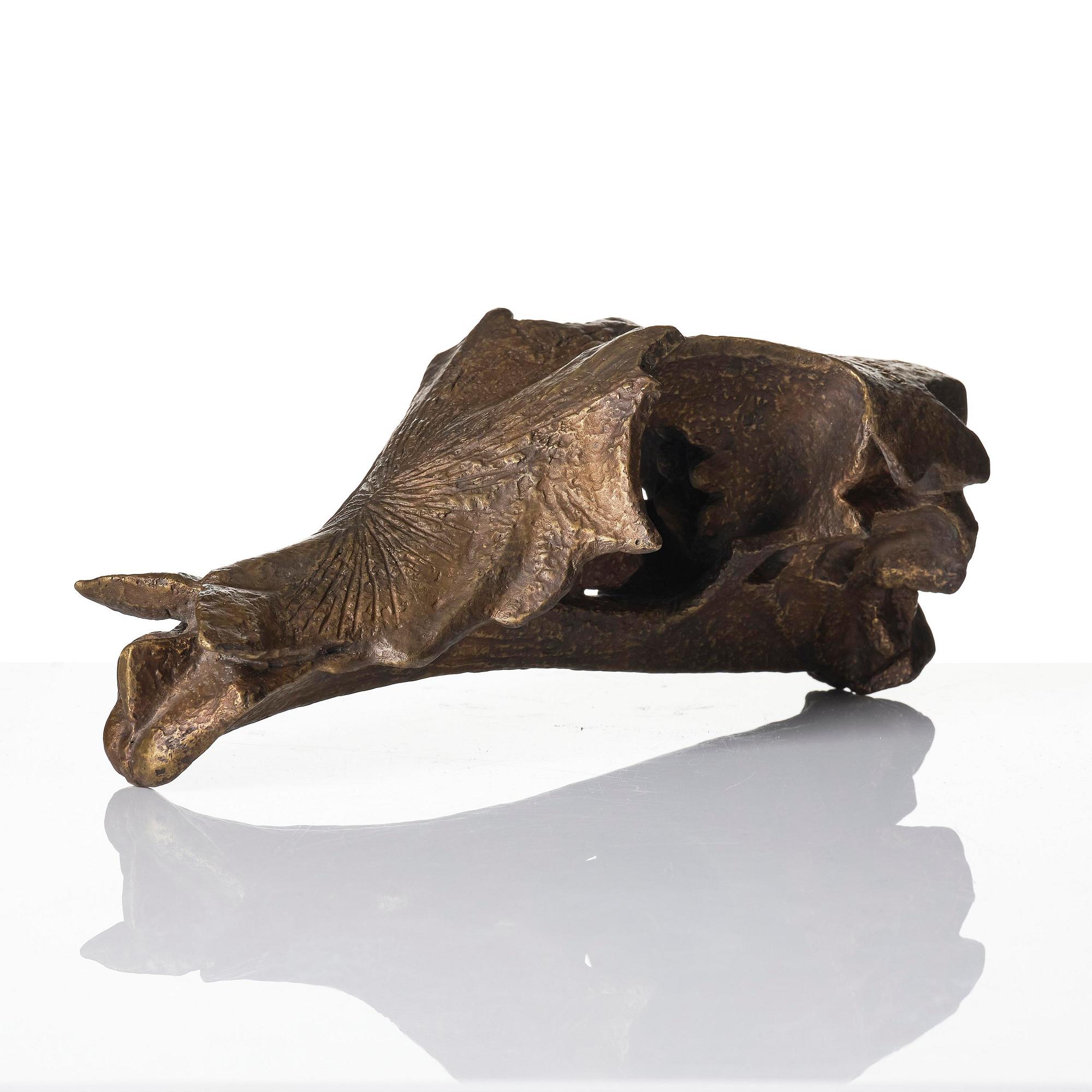
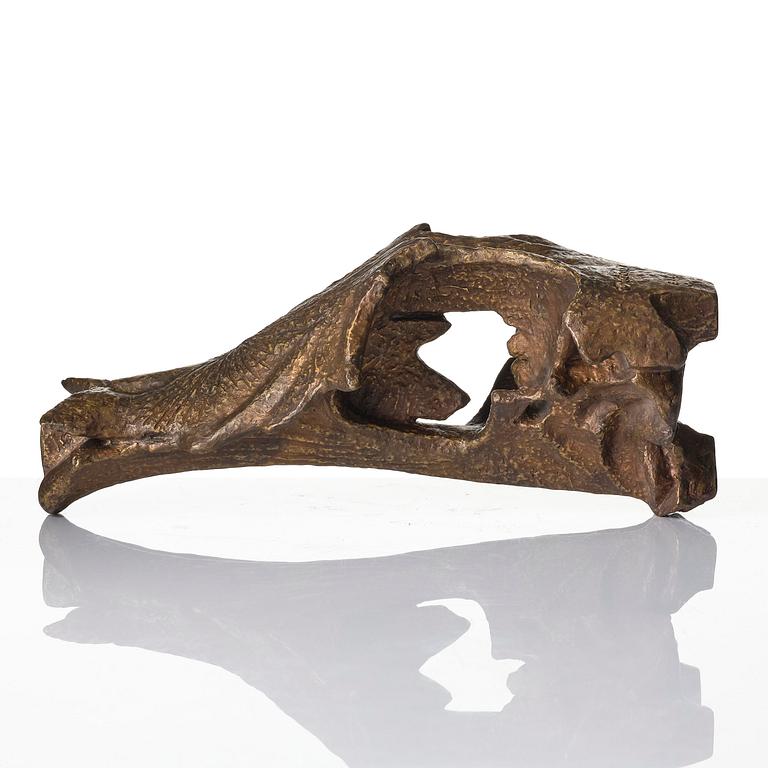
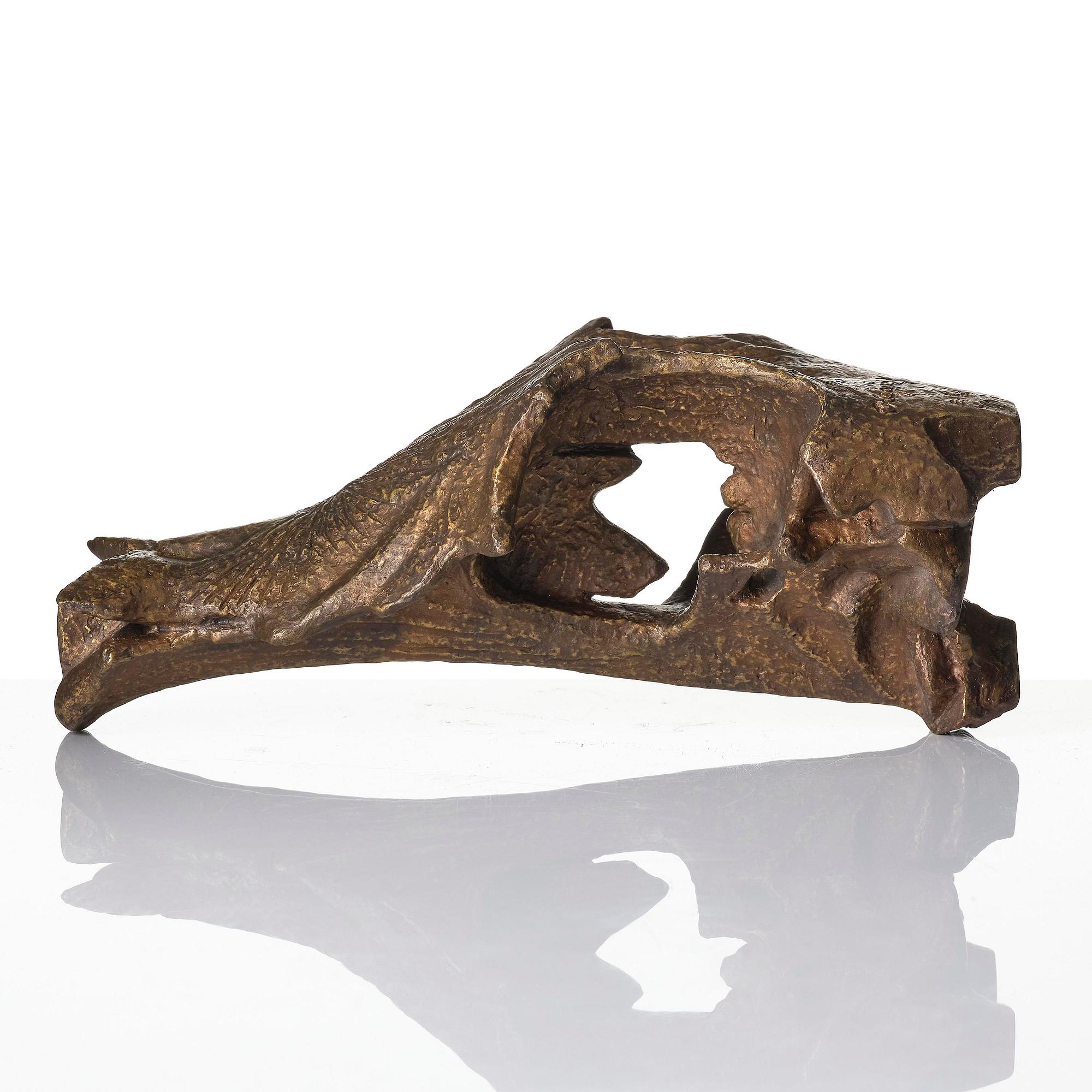
"Esox Rex"
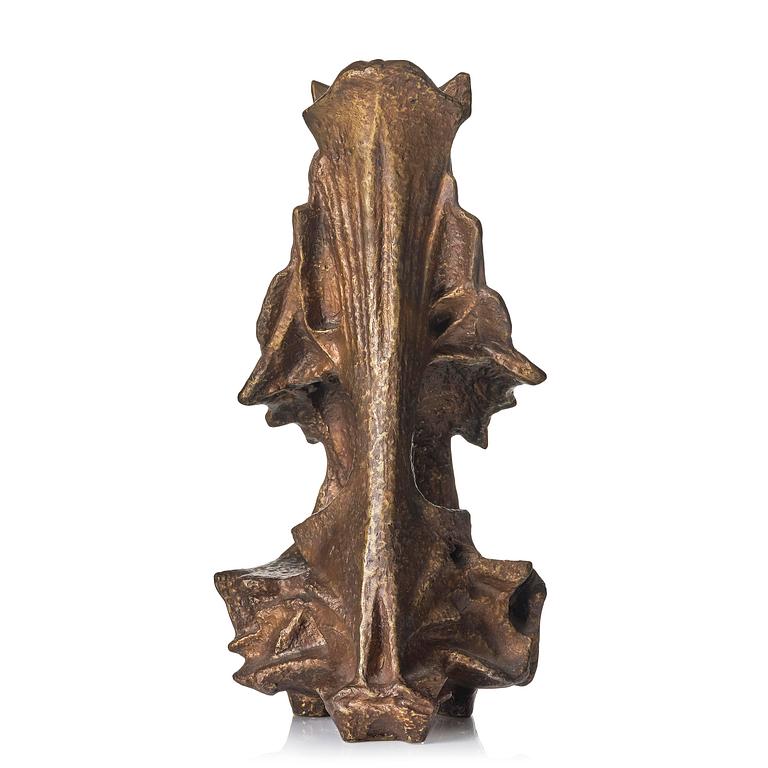
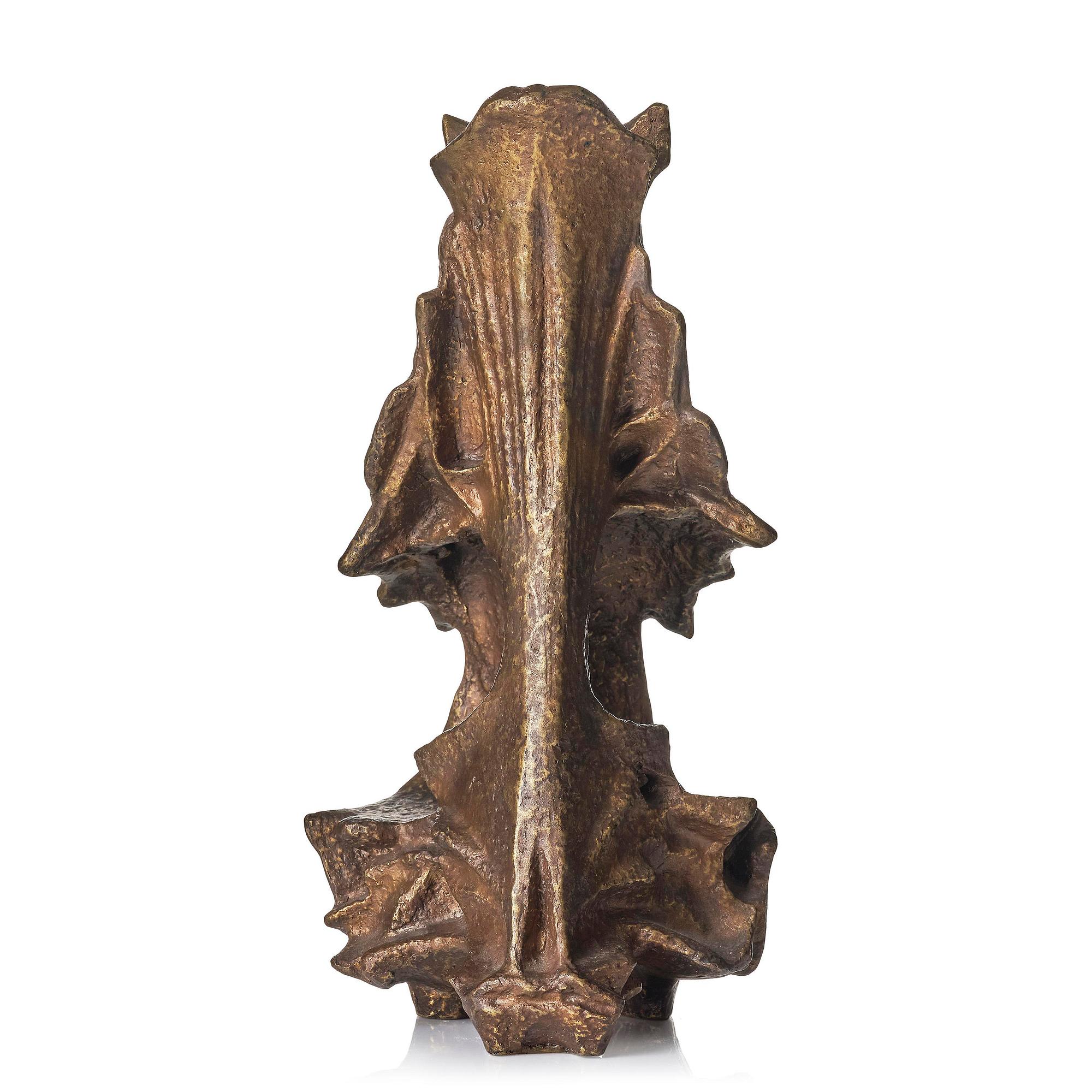
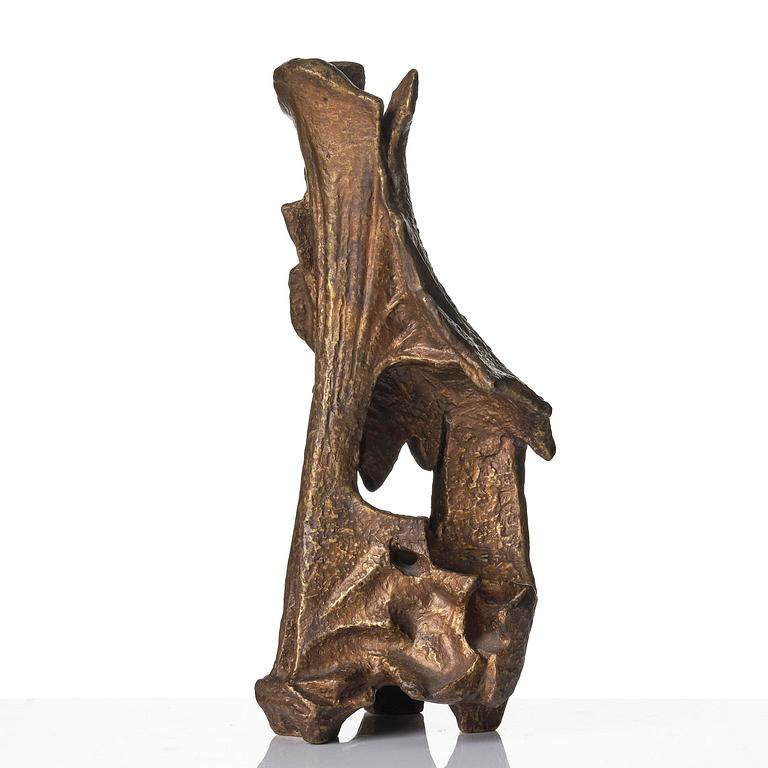
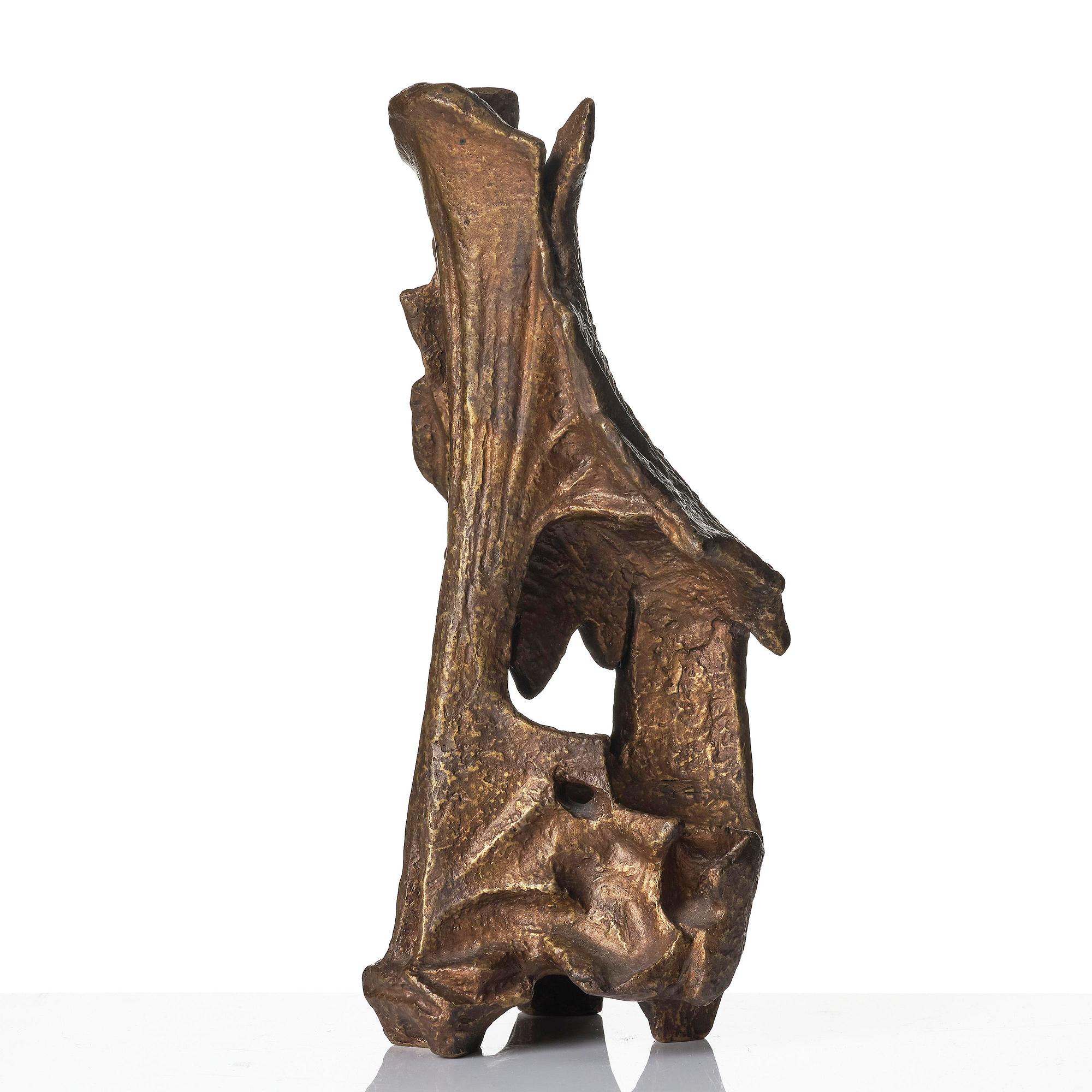
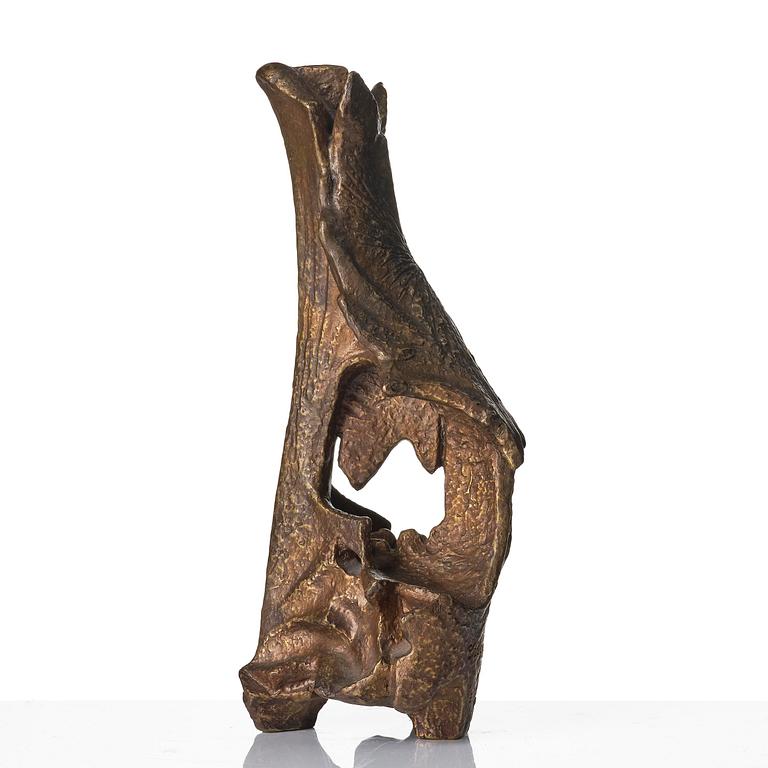
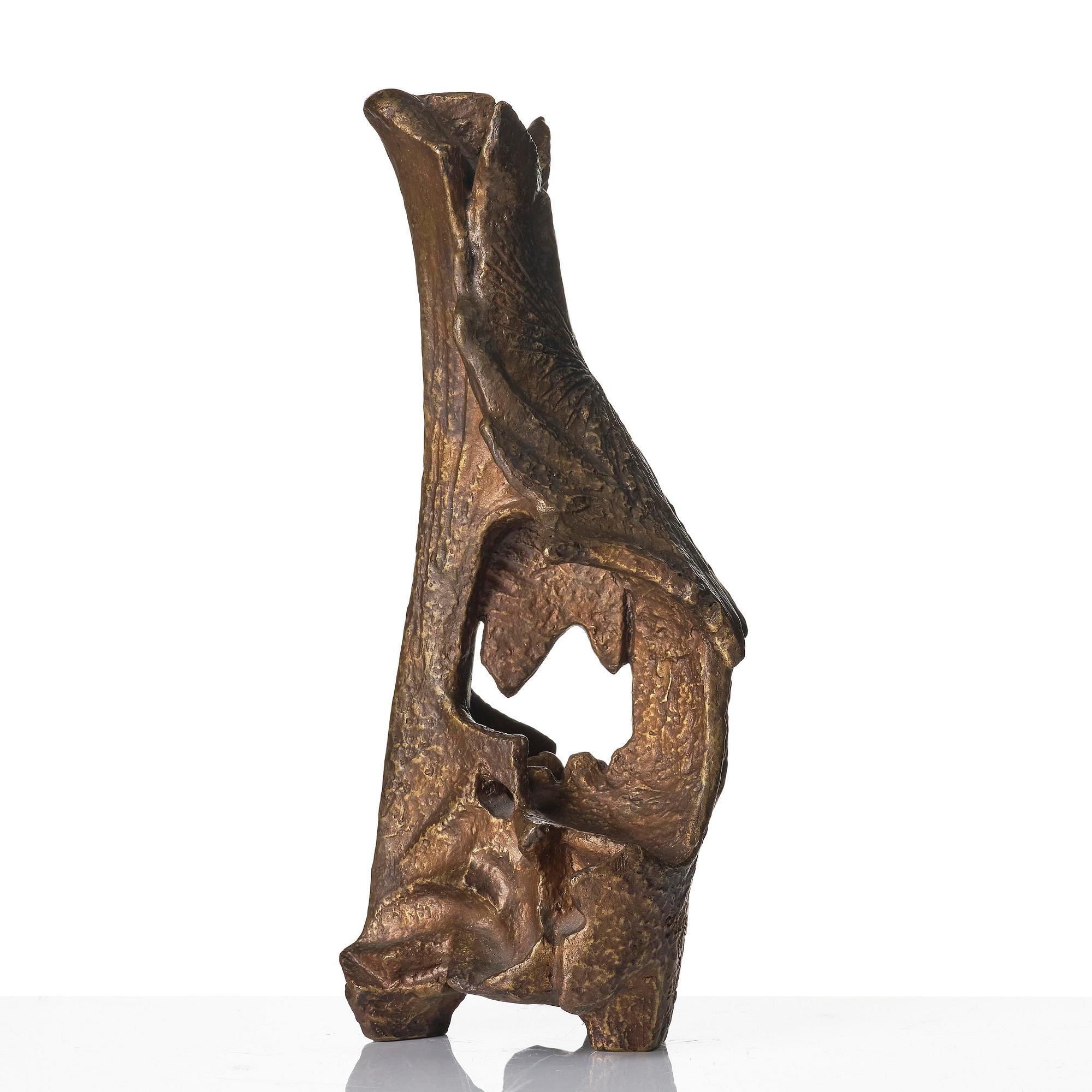
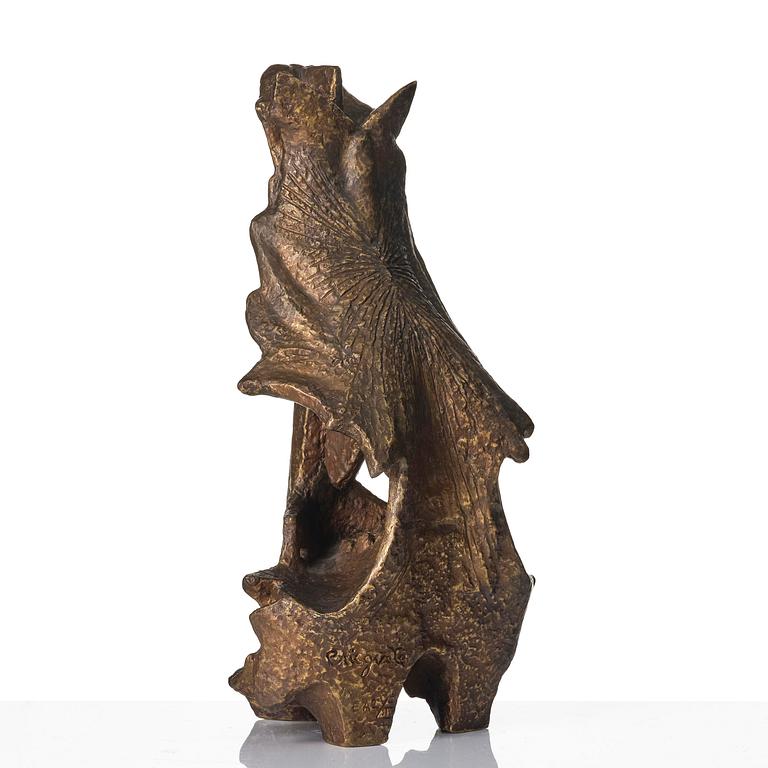
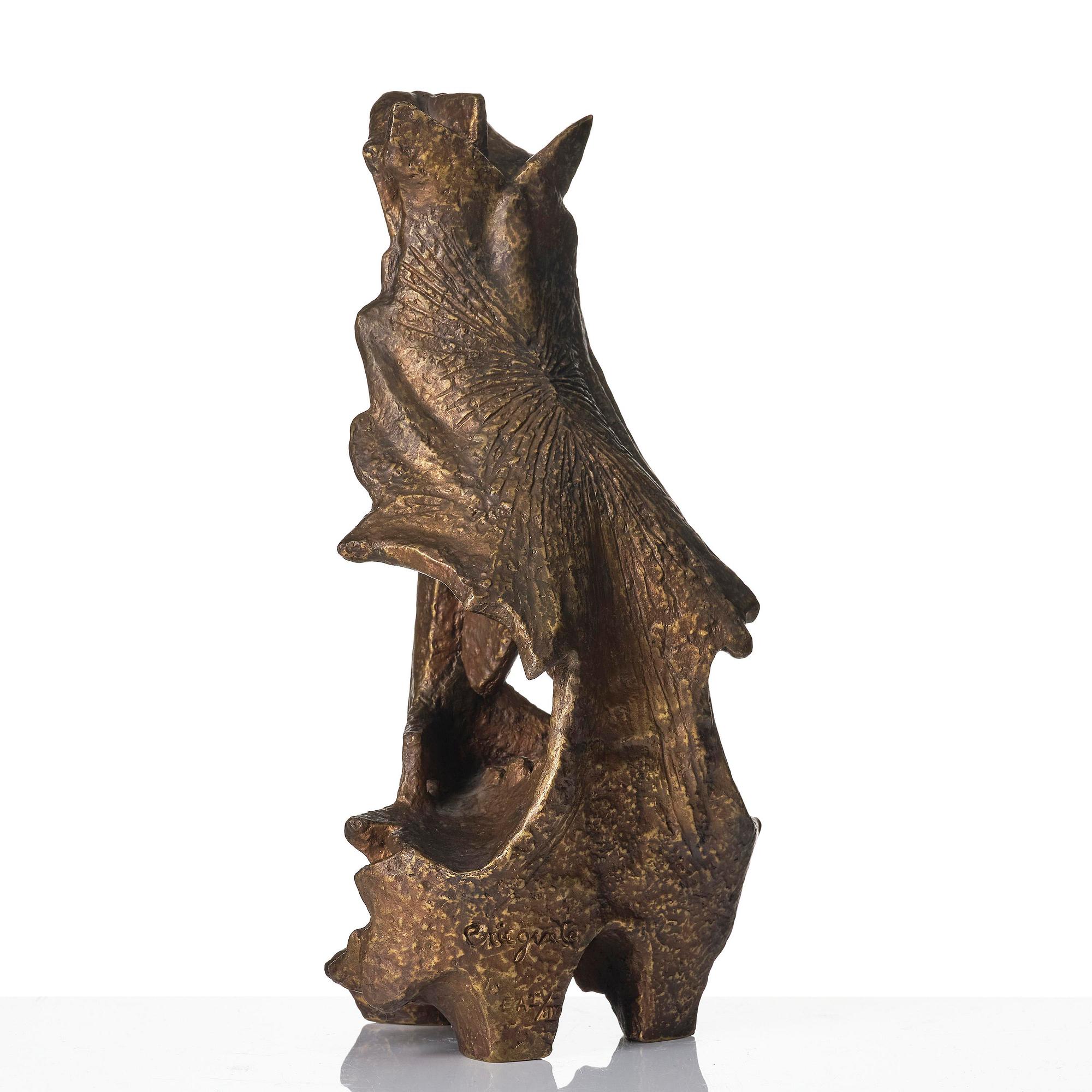
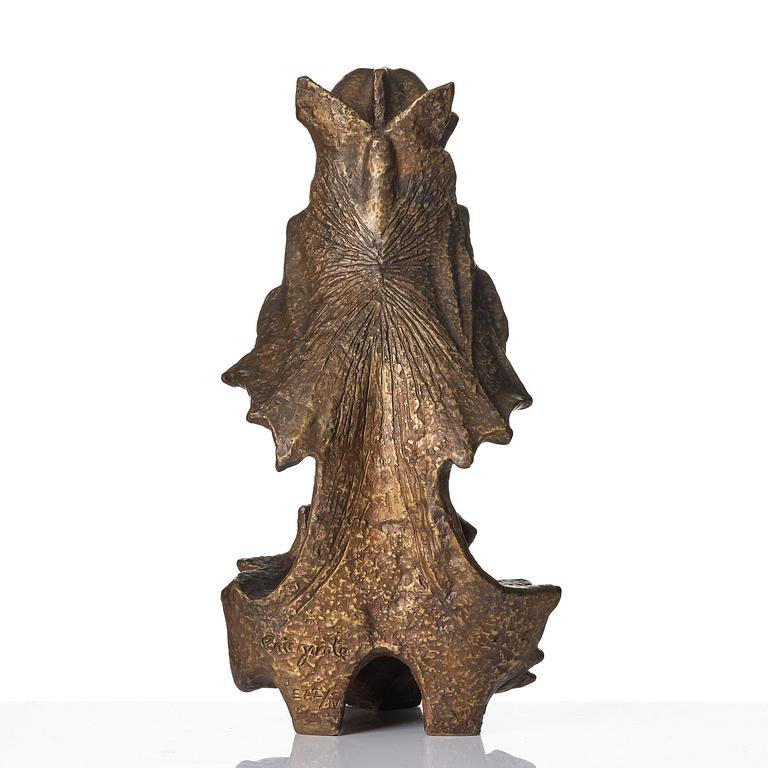
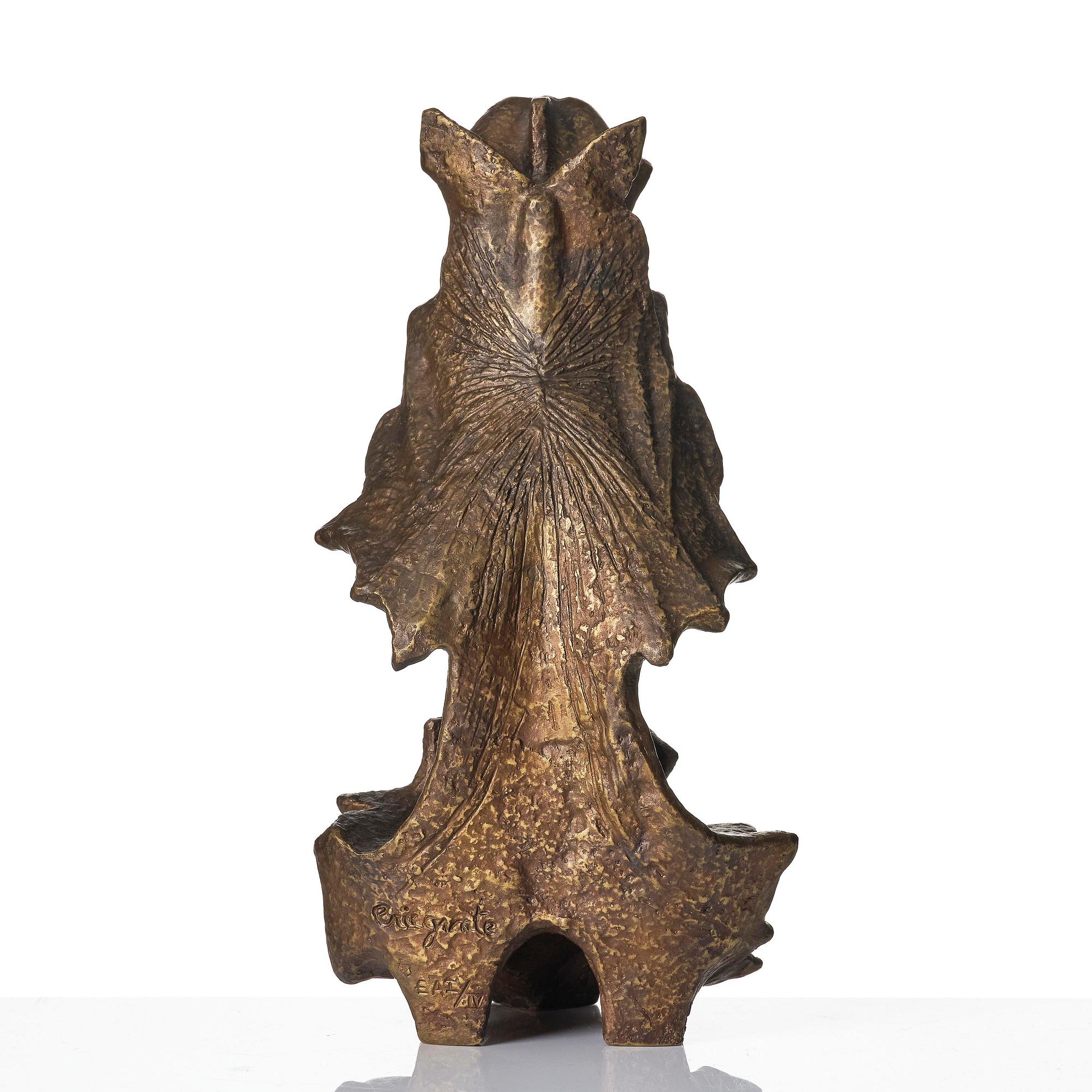
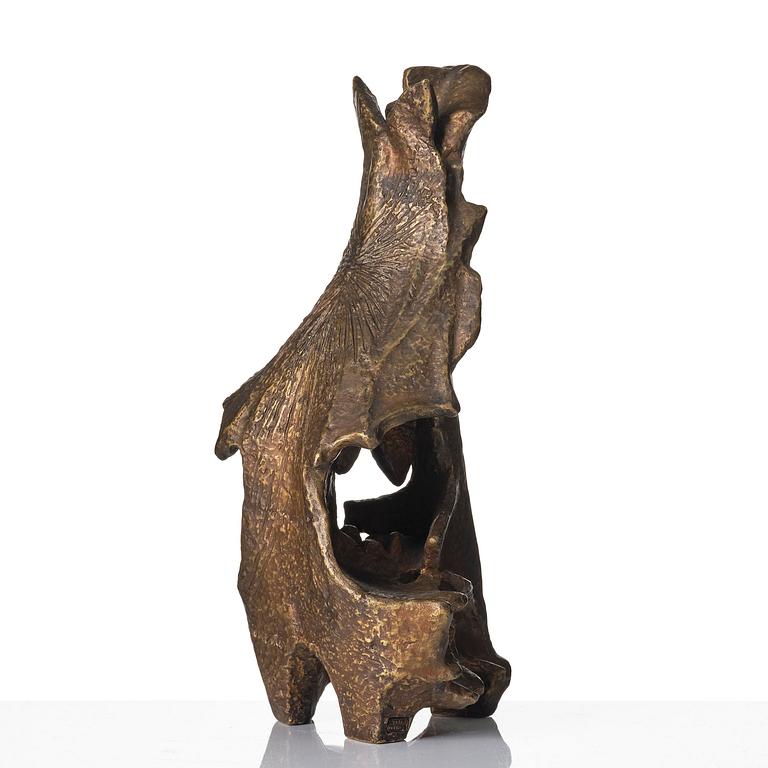
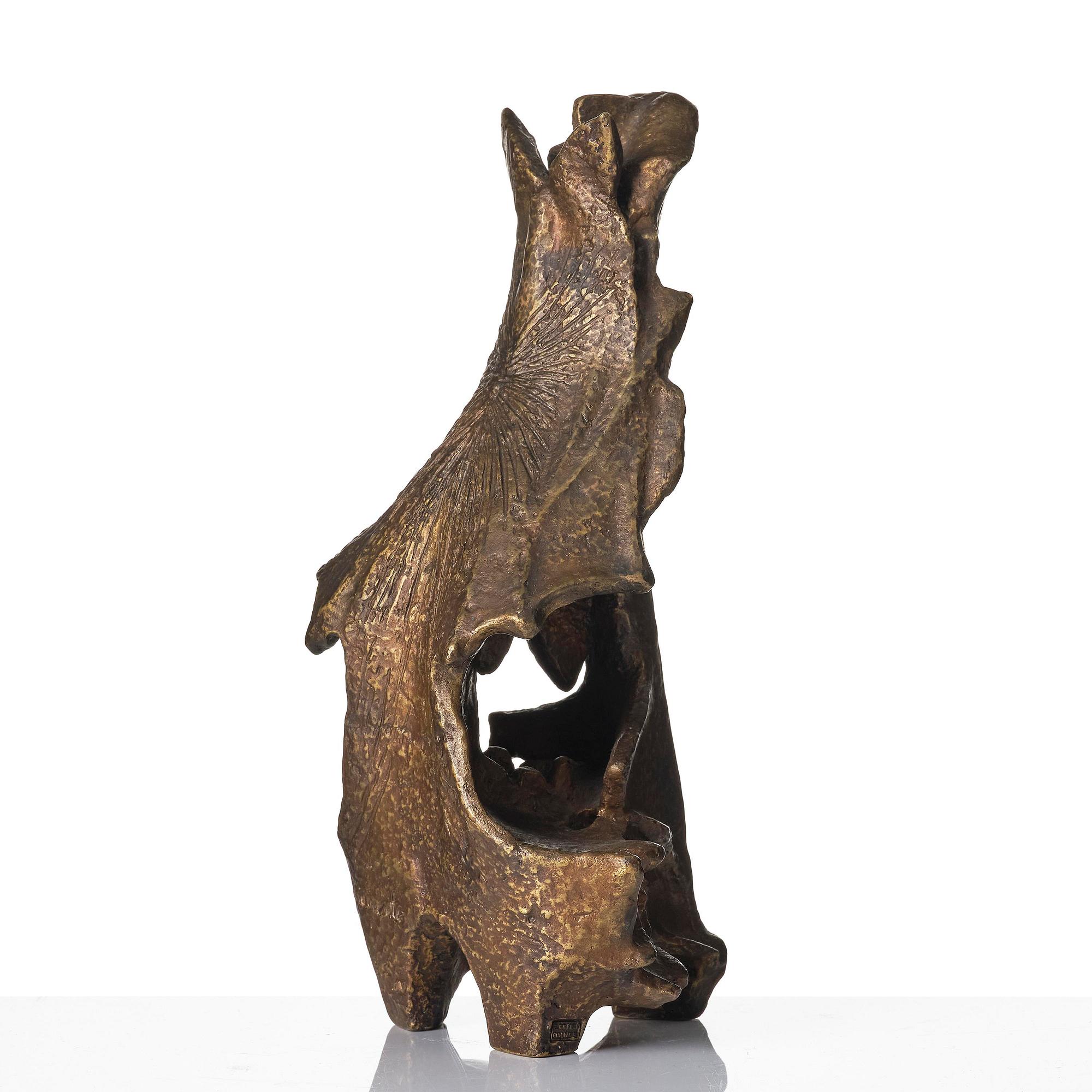
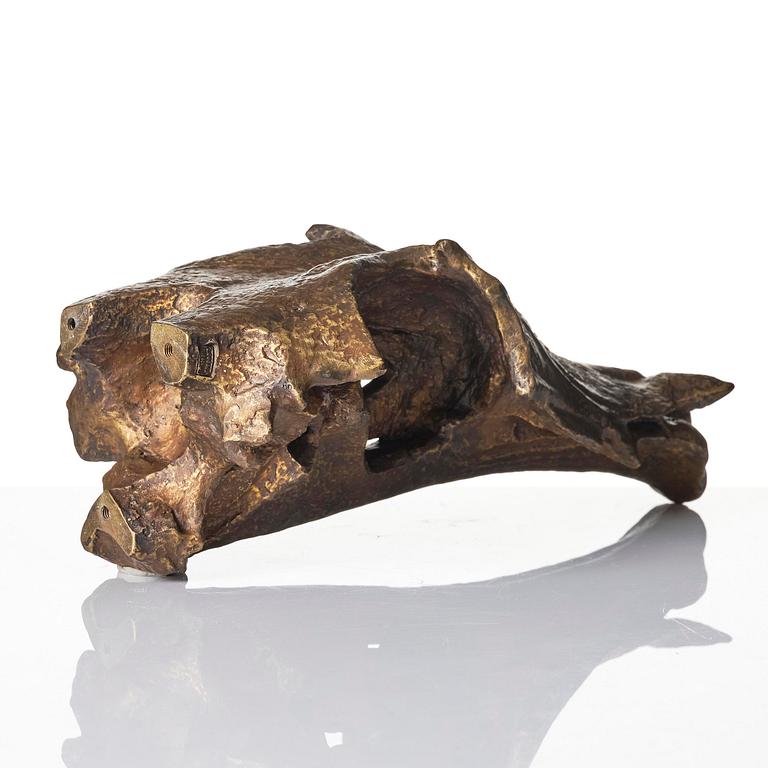
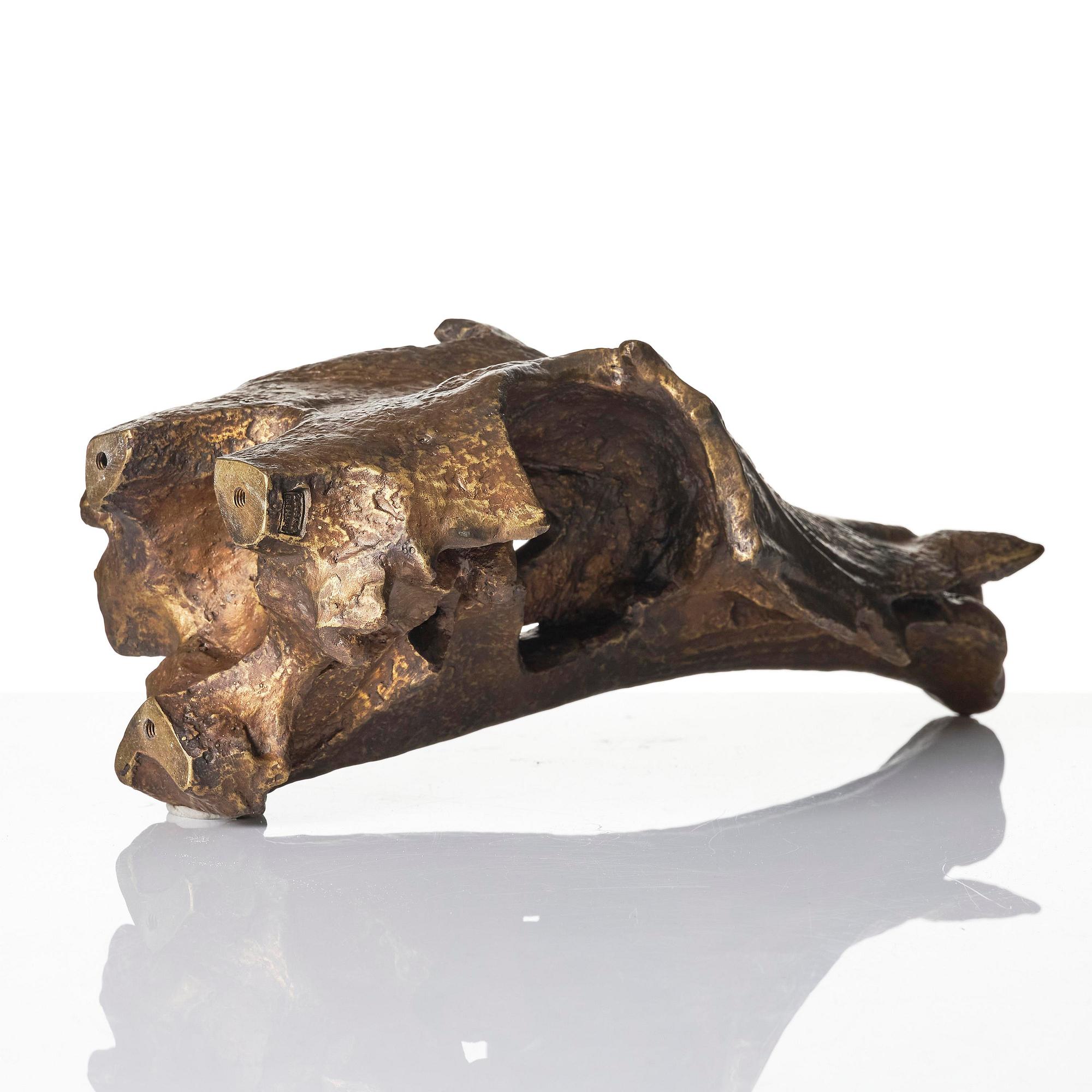
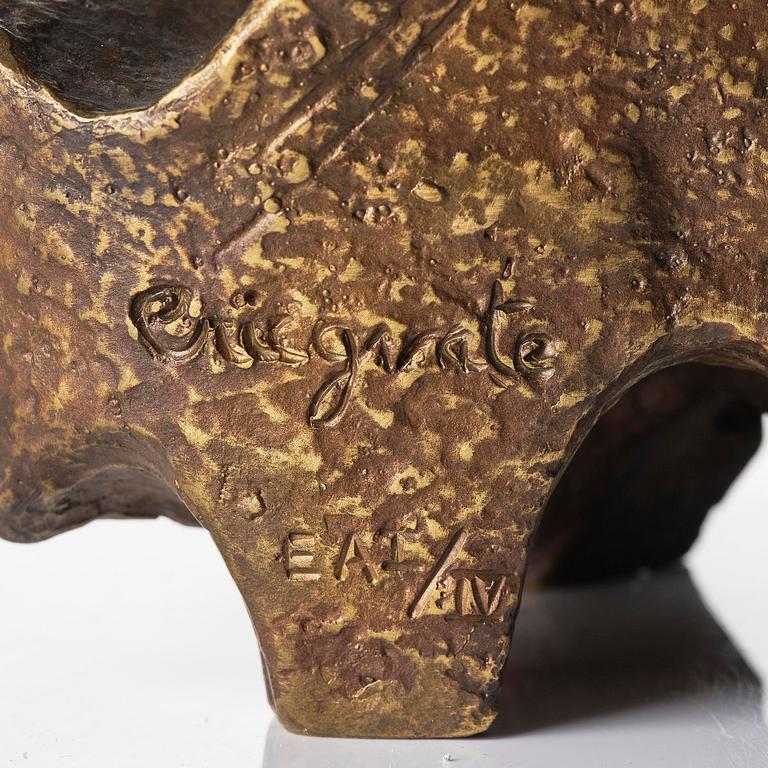
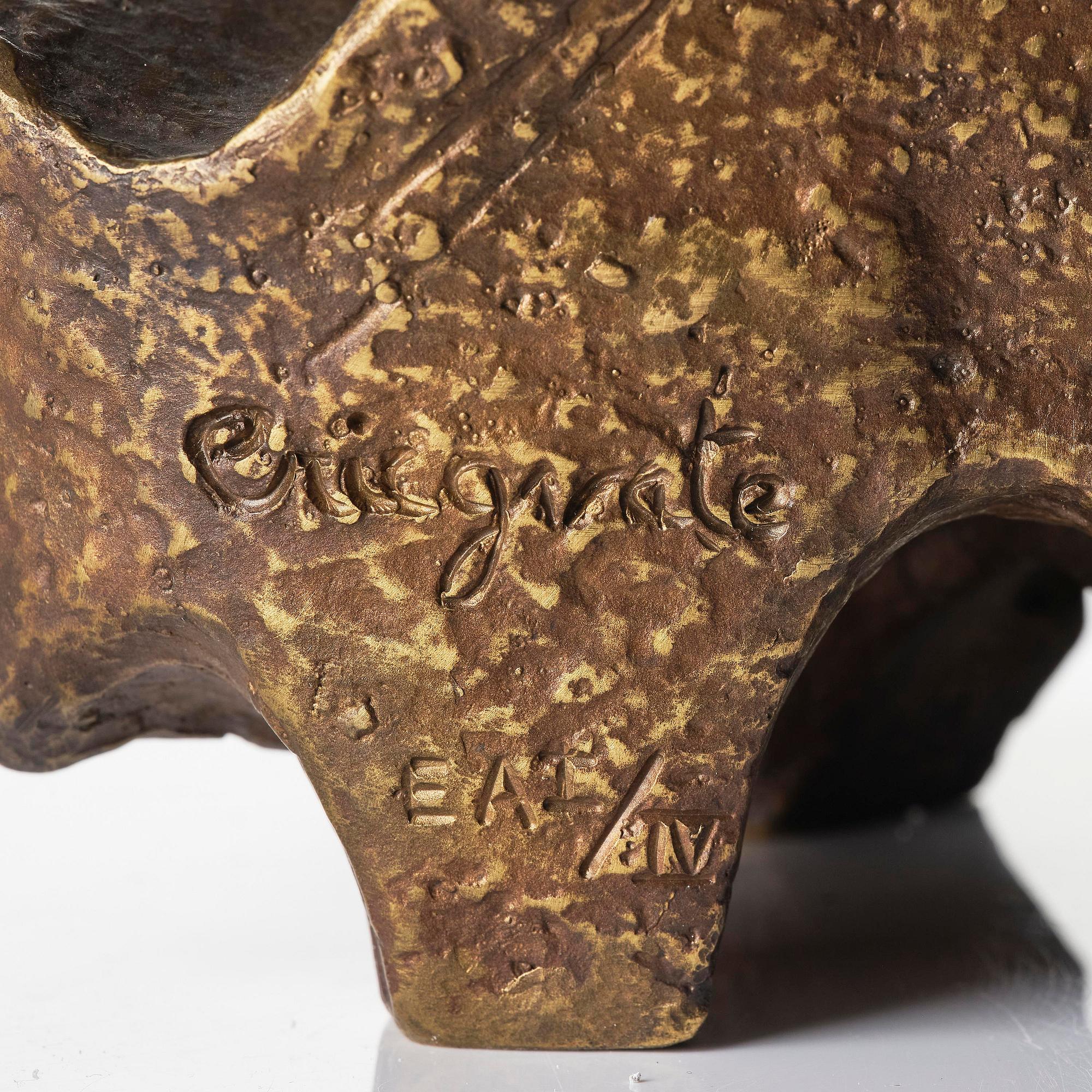
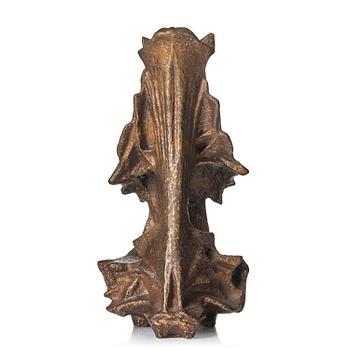
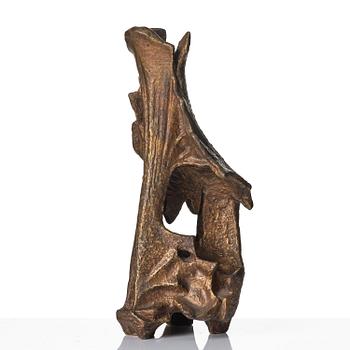
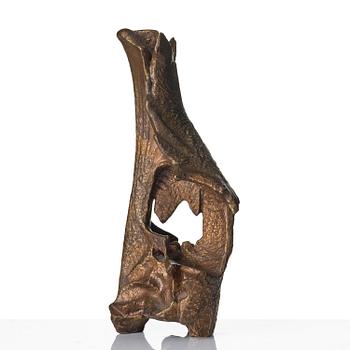
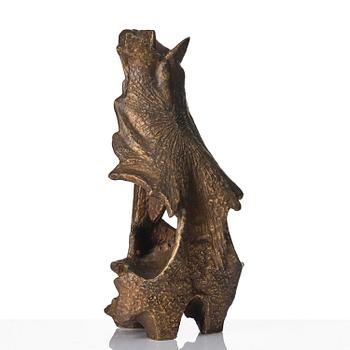
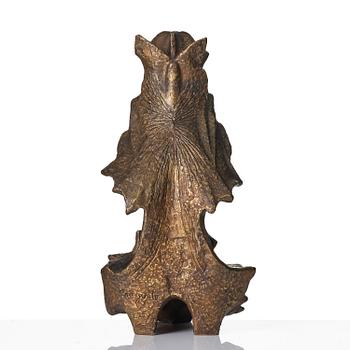
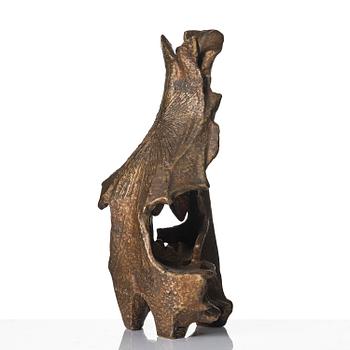
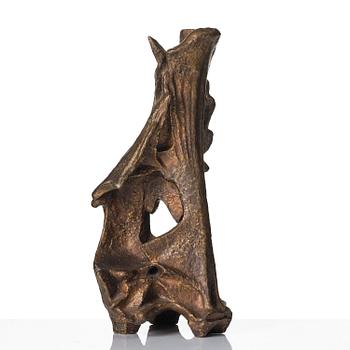
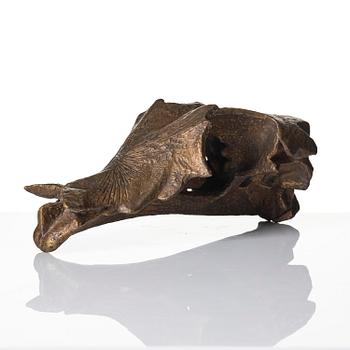
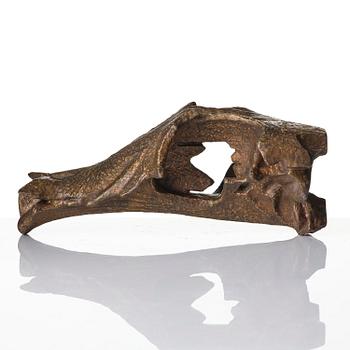
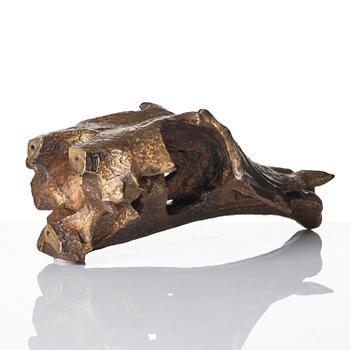
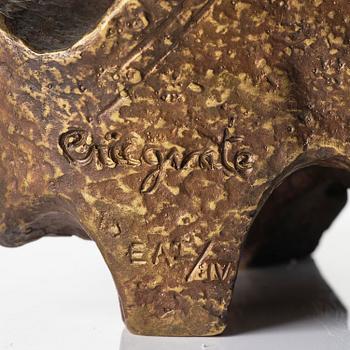
Signed Eric Grate and numbered EA I/IV. Executed in 1967. Foundry mark E. Godard Cire Perdue. Bronze, gold patina, height 35 cm.
Literature
Pontus Grate, Ragnar von Holten, "Eric Grate", SAK, 1978, rewritten p. 132 ff, compare with illustration p. 137.
More information
"The idea of an intimate connection between food and artists (and their art) is not new: magnificent are the analyses that the author Gertrude Stein—sometimes with the help of her cook Hélène, sometimes with her friend Alice B. Toklas—arrives at in characterising, for example, the personalities of Picasso and Matisse through their eating habits. In Grate's case, however, the relationship is somewhat more complicated.
Just as he has been collecting shards of pottery, roots, stones, and other objets trouvés since the 1920s, sometimes to assemble them into a kind of sculptural collage, sometimes to find starting points for sculpture in this 'ancient world of forms' (to speak with him), so too has Eric Grate been stimulated by the skeletal remains of fish from a Parisian market (primarily bones from the head of a pike!) to create a forms that are both architecturally and humanly associative, populated by grim sculptural figures akin to fetishes and idols, and like these, created directly from nature itself.
Nature is an important incentive for this motif, which the artist has called the Esox's gardens: here are the stones and roots, of course, but also the tops of birch and spruce trees that, when one lies on their back and gazes up at them, can easily take the shape of shadowy knights and riders. And with the treetops, the clouds, which at least for a brief moment of their short existence take on individual characteristics, but which otherwise, in their soft merging into themselves and into one another, can be seen as a timeless and general expression of the need for tenderness, contact, and fusion.
The Dada-surrealist Arp once said: 'Art should lose itself in nature. It should even be confused with nature.'
It is this world, sketched above, that forms the background to Eric Grate's sculptures from his second, longer sejour in Paris." (Pontus Grate, Ragnar von Holten, from "Eric Grate", SAK, 1978)
More about Eric Grate
Eric Grates idiosyncratic world of images always invites exploration and wandering within the imagination. While he respects the the earths natural forms, he sometimes "plays with god", manipulating and playing with nature to create new surprising objects which we recognise but simultaneously dont recall. He borrows fragments from nature and uses his endless imagination to create art in his unique way. His visual language emualtes an aura of abstract surrealism derived from "object trouvés". Grate was inspired by natures radiance and its different forms. Stones, roots, insects, bones, all were transformed into sculptures, particularly the insect world was a source of great inspiration for Grates. During the 1960s, beach, hull, and bones were particularly the starting points for his sculptures. He created numerous official artworks.
Grate began his academic trips after finishing his studies at Royal Swedish Academy of Fine Arts from 1979-20, where he travelled to Italy and Greece, filling his sketchbooks with studies of insects, plants, unique architecture, sculpture, and ceramics. He spent a longer period between 1924 and 1933 in Paris, a formative period where he was one of the few Swedish artists who was associated with the avante garde; we got in contact with none other than the surrealists Jean Arp, Paul Eluard, and Tristan Tzara. Grate is seen by many as one of Sweden's most influential sculptors during the 1900s.
Read moreFor condition report contact specialist

Covered by droit de suite
Image rights
The artworks in this database are protected by copyright and may not be reproduced without the permission of the rights holders. The artworks are reproduced in this database with a license from Bildupphovsrätt.
Others have also viewed