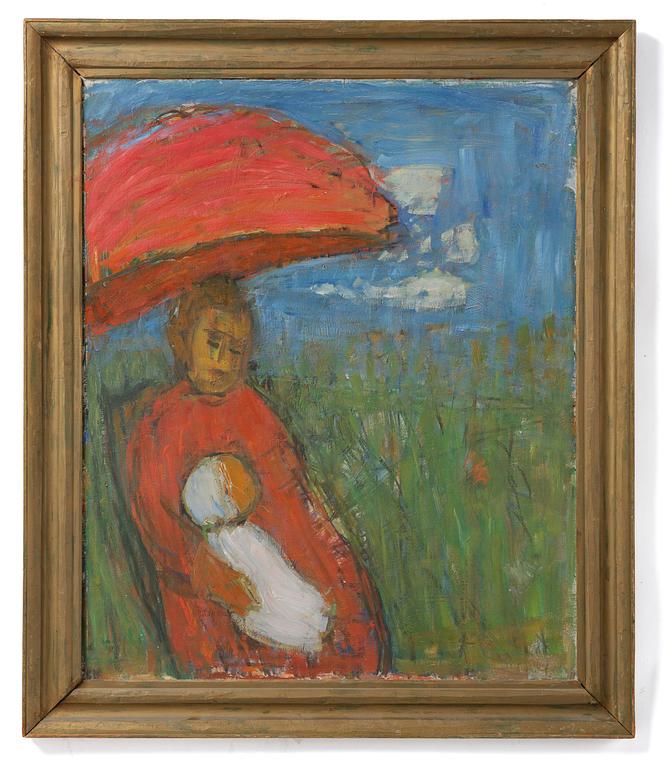
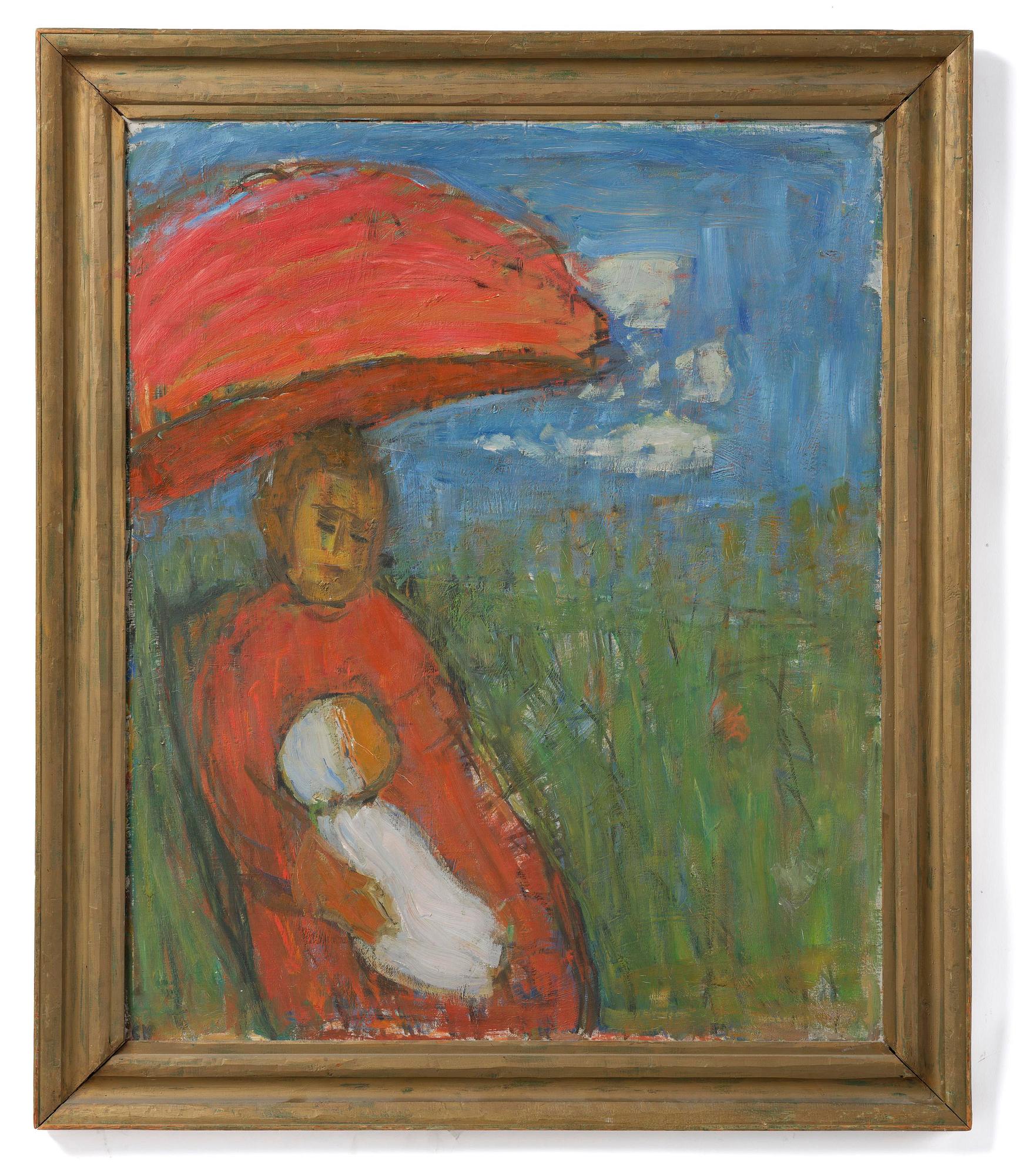
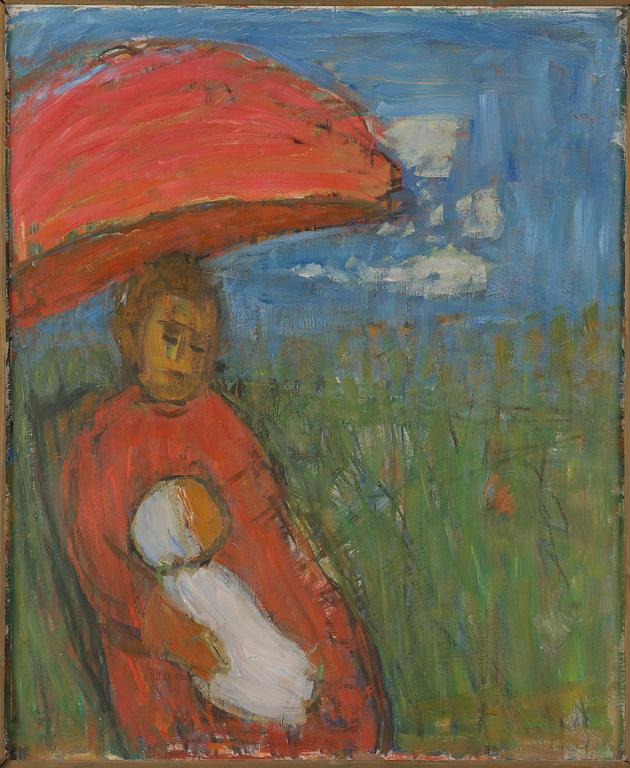
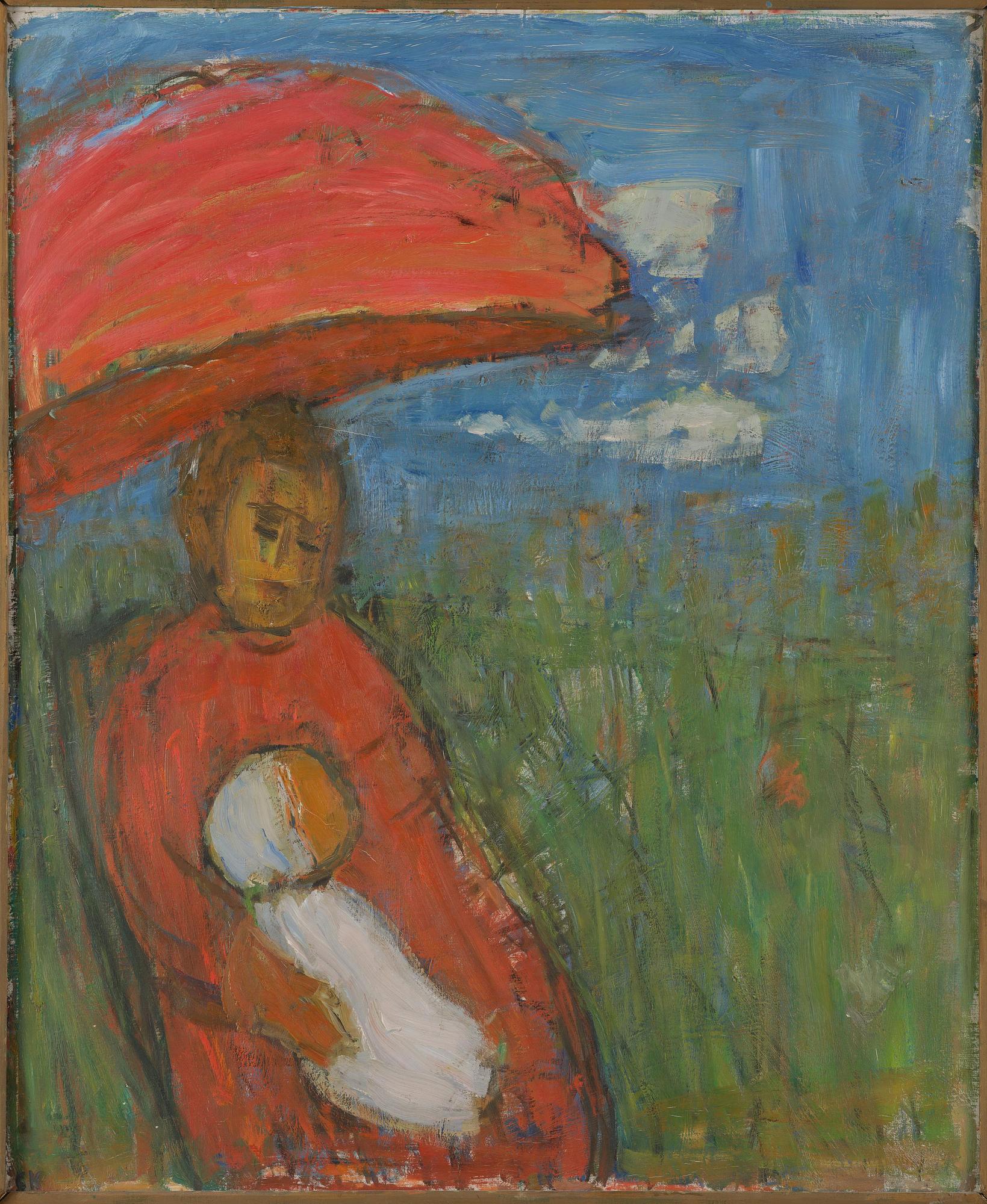
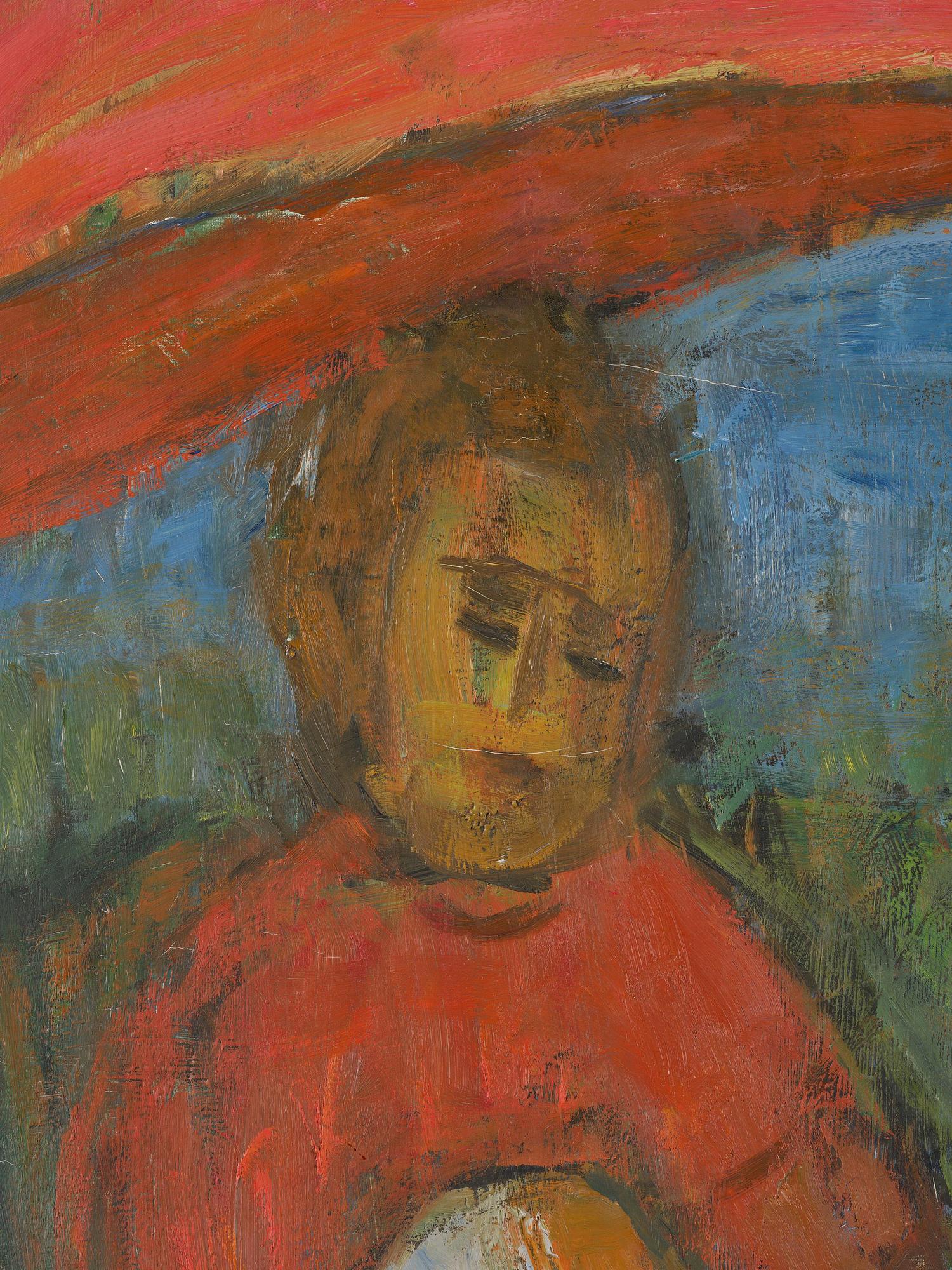
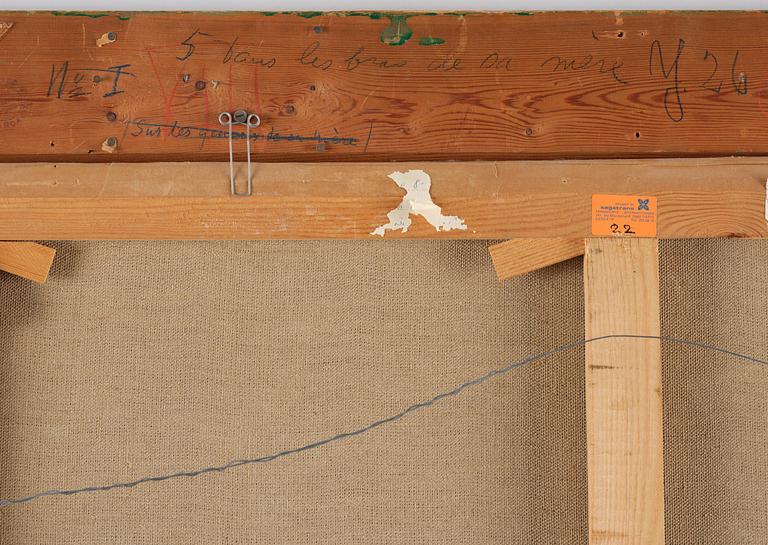
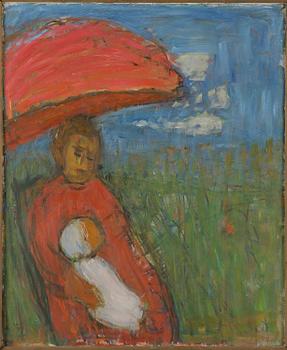
"Sitta i sin mammas knä"
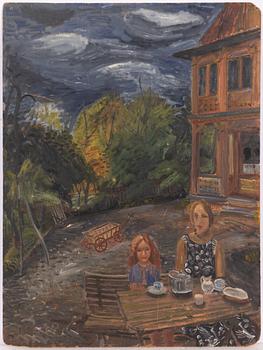
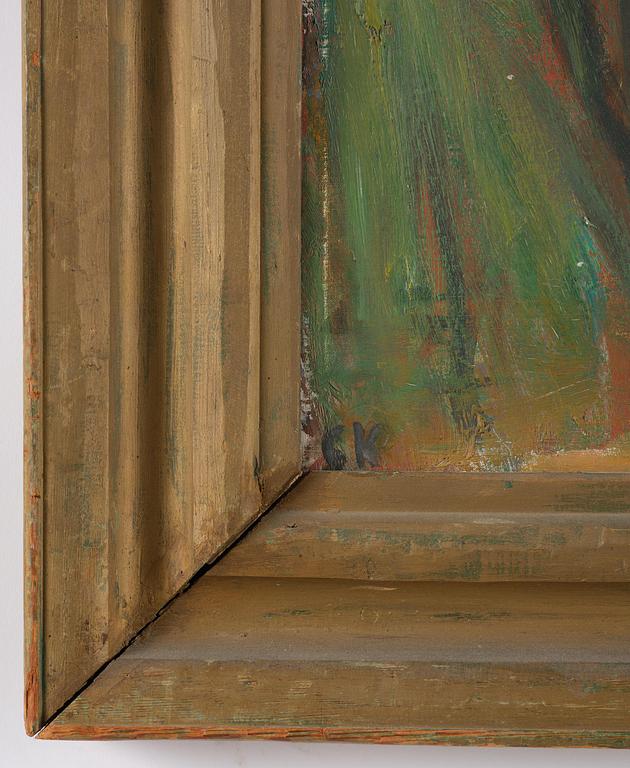
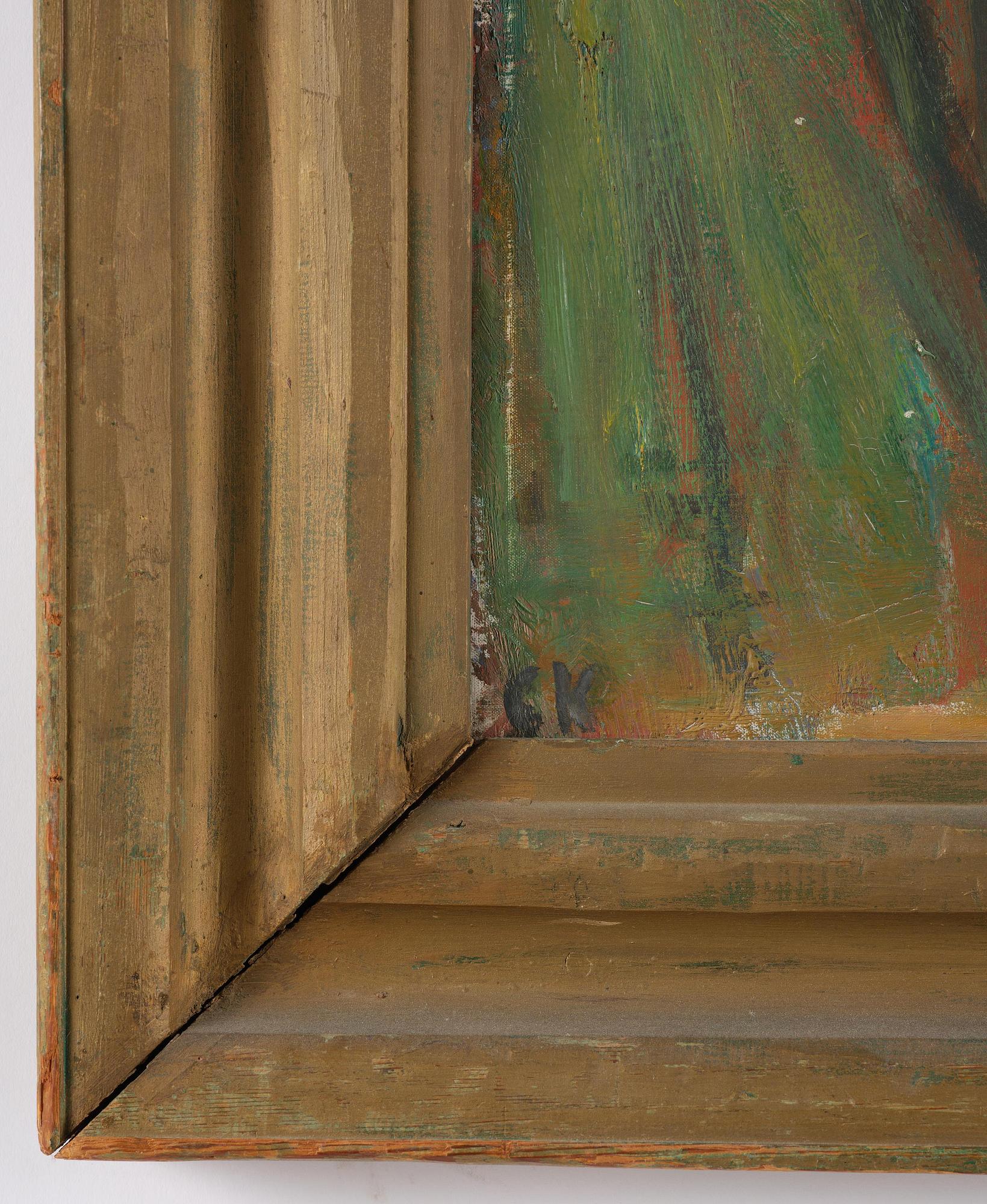
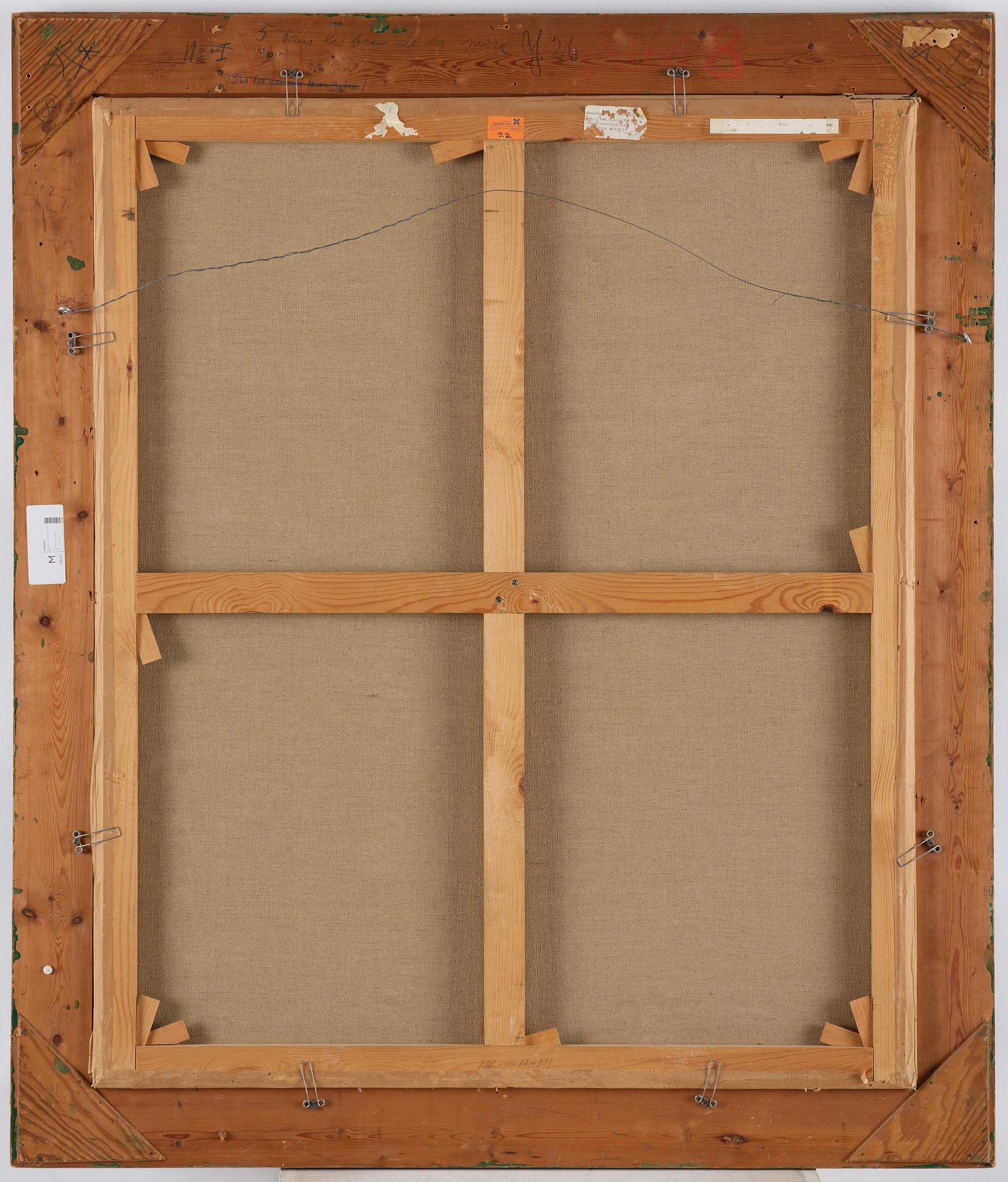
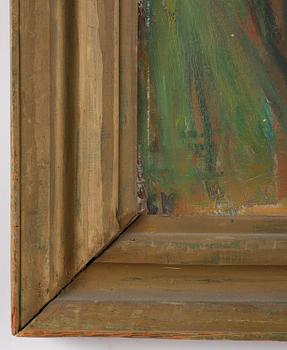
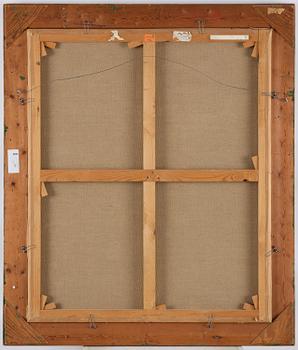
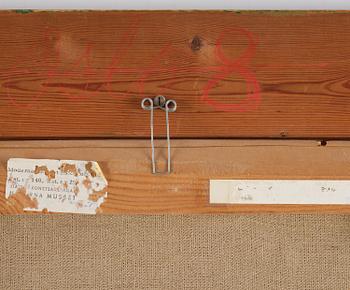
Signed with monogram CK. Painted in 1934. Oil on canvas 110 x 92 cm. The frame made by the artist's wife Ruth Kylberg.
Provenance
Previously in the collection of the artist's wife Ruth Kylberg.
Exhibitions
Galerie Billiet, Paris 1935, cat. no 5.
Liljevalchs konsthall, Stockholm, "Carl Kylberg", 20 April - 11 May 1946, cat. no 29.
Liljevalchs konsthall, Stockholm, "Carl Kylberg - Minnesutställning", 1954, cat. no 85.
SAK, Konstakademien, Stockholm, "Carl Kylberg", 2 - 25 November 1962, cat. no 59.
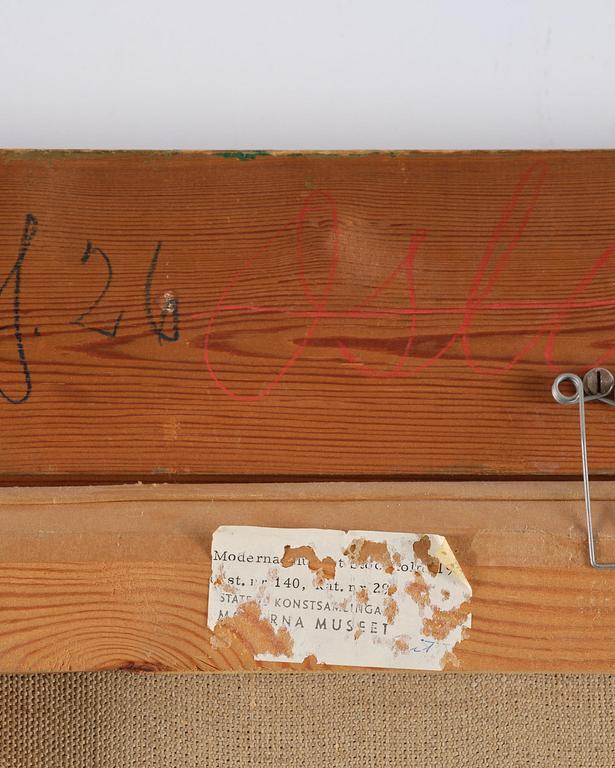
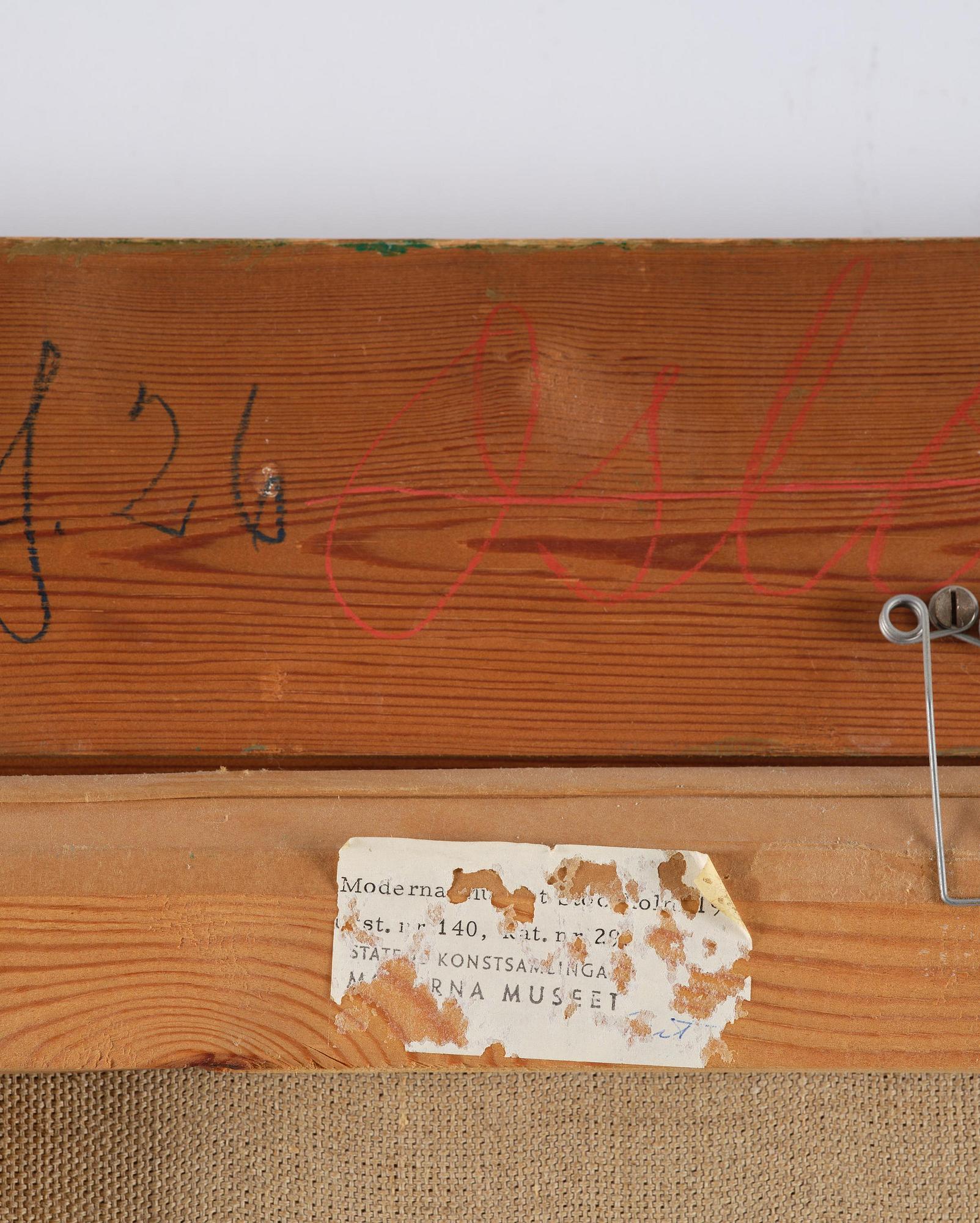
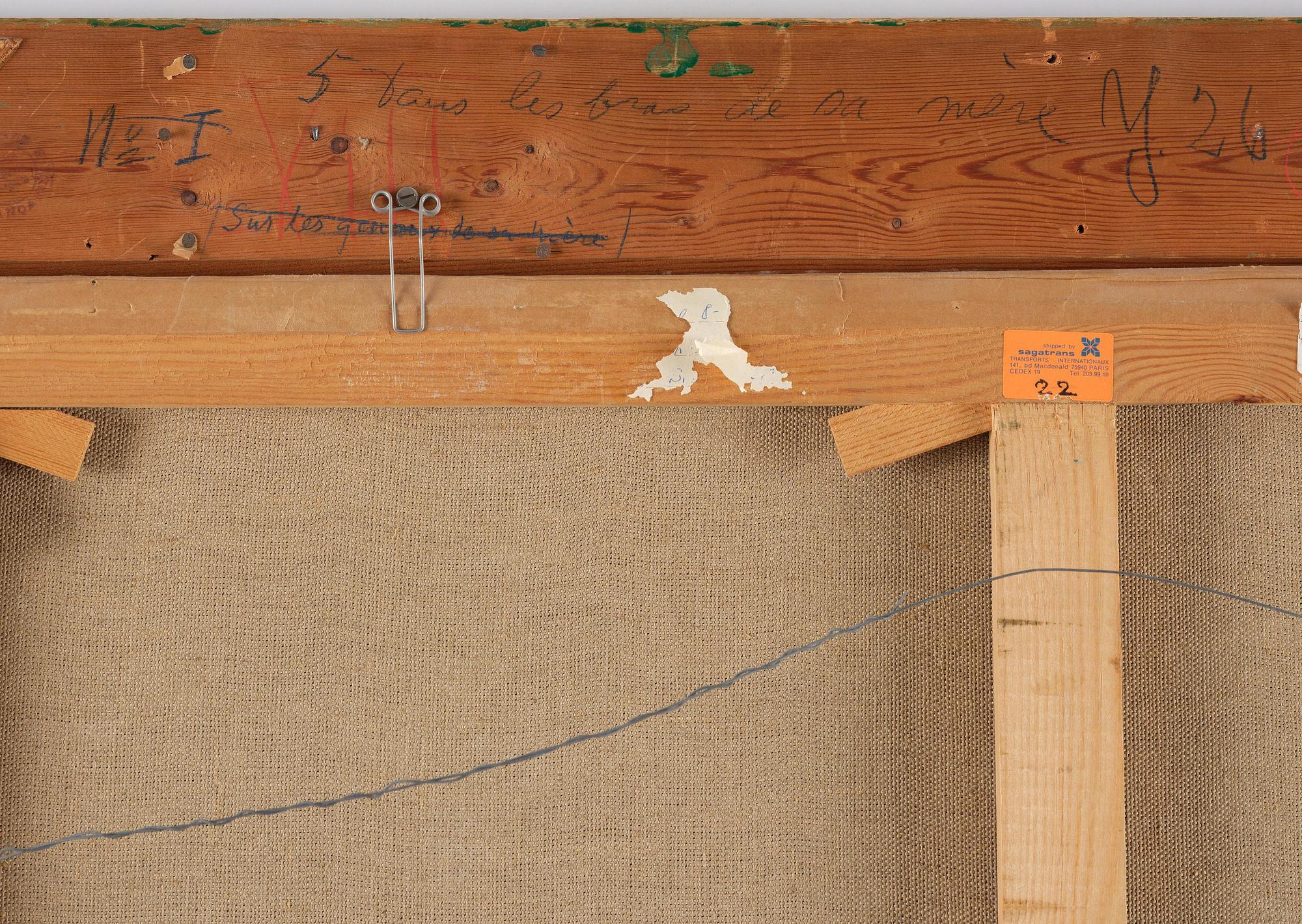
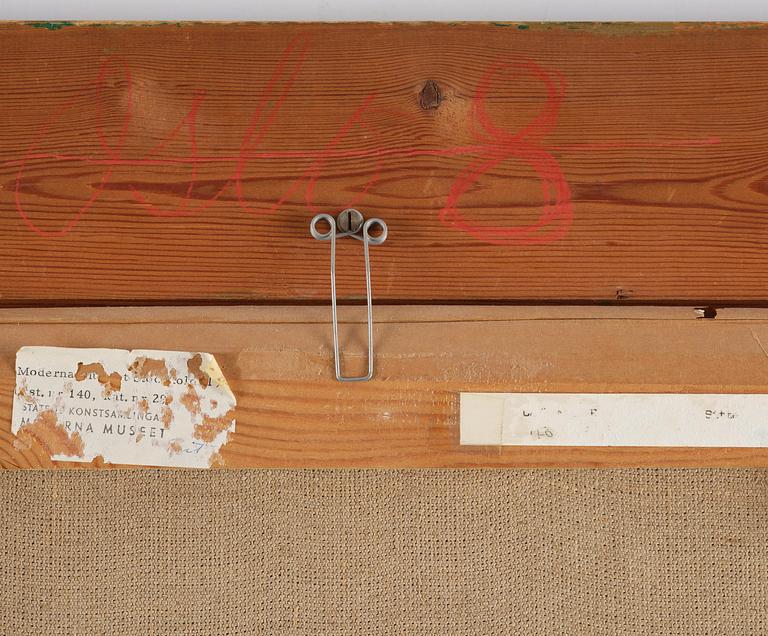
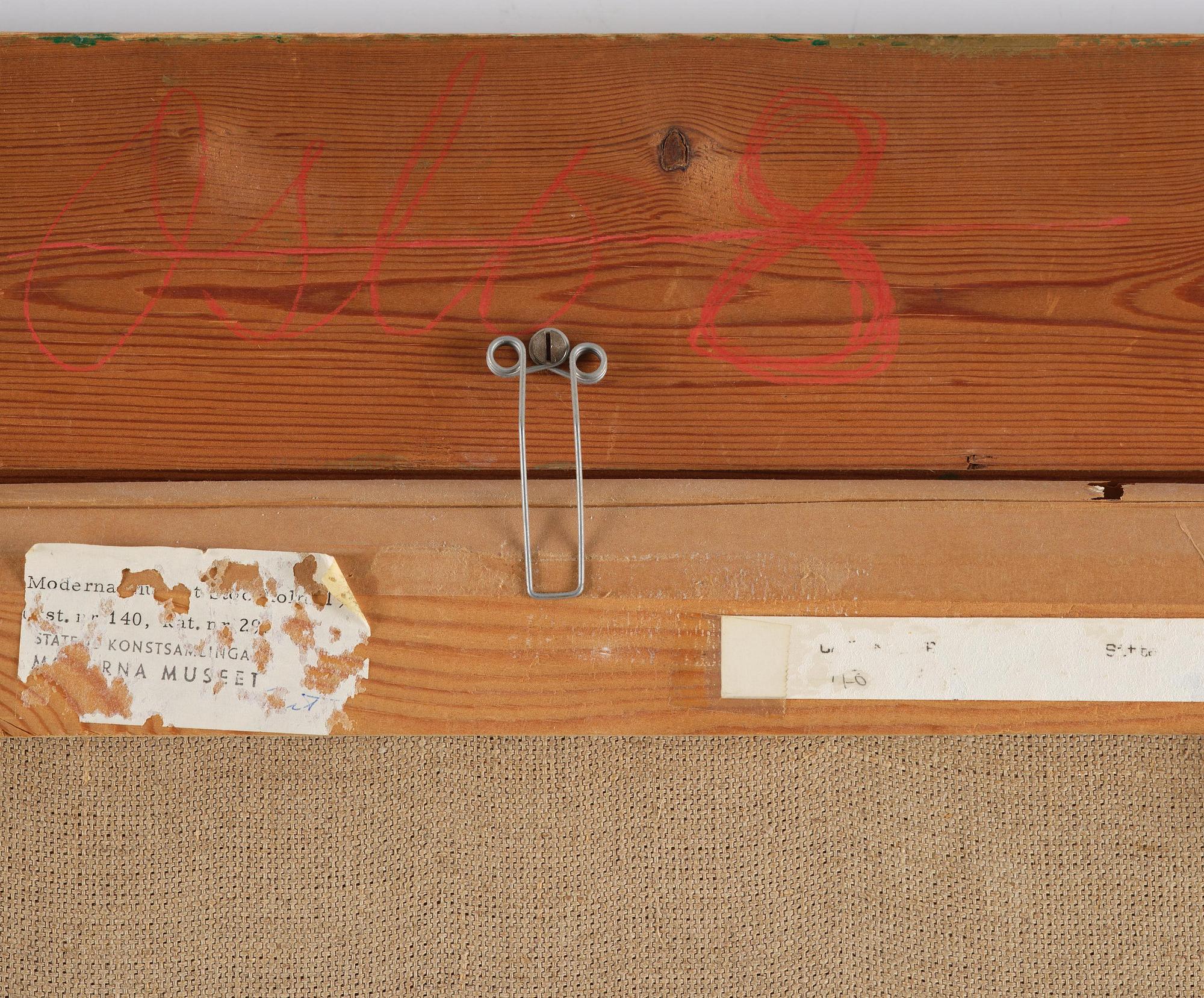
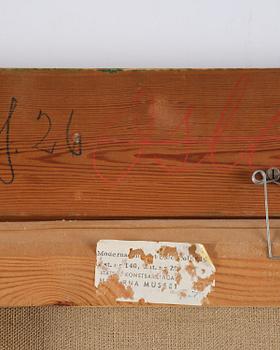
Moderna Museet, Stockholm, 1976, exhibition no 140, cat. no 29.
Malmö Konsthall, 17 December 1977 - 26 February 1978, cat. no 62.
Nordjyllands Kunstmuseum, Denmark, 1978, cat. no 14.
Galerie Bleue, Stockholm, "Från hällristningar till Bror Hjorth", 8 - 30 September 1979.
Literature
Brita Knyphausen, "Carl Kylberg", Malmö, 1965, illustrated p. 104, listed in the catalogue section as no. 173.
Gustav Näsström, "Carl Kylberg", Stockholm, 1952, illustrated p. 59.
Carl Kylberg, Malmö Konsthall, exhibition catalogue, Malmö, 1977, illustrated in full page colour p. 36.
Carl Kylberg, Nordjyllands Kunstmuseum, exhibition catalogue, 1978, illustrated p. 7.
More information
Carl Kylberg is regarded as one of the most prominent Swedish artists of the early 20th century, known for his shimmering painting and expressive colour compositions. When his intense and vibrant works were exhibited publicly in the mid-1930s, they attracted considerable attention and helped pave the way for the group of artists who would later be known as the "Göteborgskolorister". His paintings are characterised by a strong presence and a colour palette often dominated by deep shades of yellow, red, green, and blue. The subjects hover close to the abstract, and the free, energetic brushstrokes were well ahead of their time, making a strong impression on the audience. Encouraged by positive reviews, Kylberg continued to work intensively and created several significant colourist works in the following years. In the magazine Konstrevy, the artist Henri Héraut wrote in 1936: “He conjures with the material and subtly brings forth the inherent realities. But to paint without the aid of visible and tangible masses, to refrain from the round form of objects, to abstain from the effect of shadow that surrounds the volumes, to categorically deny the clearest (or the darkest) of what one learns in all the official art academies around the world – what courage.”
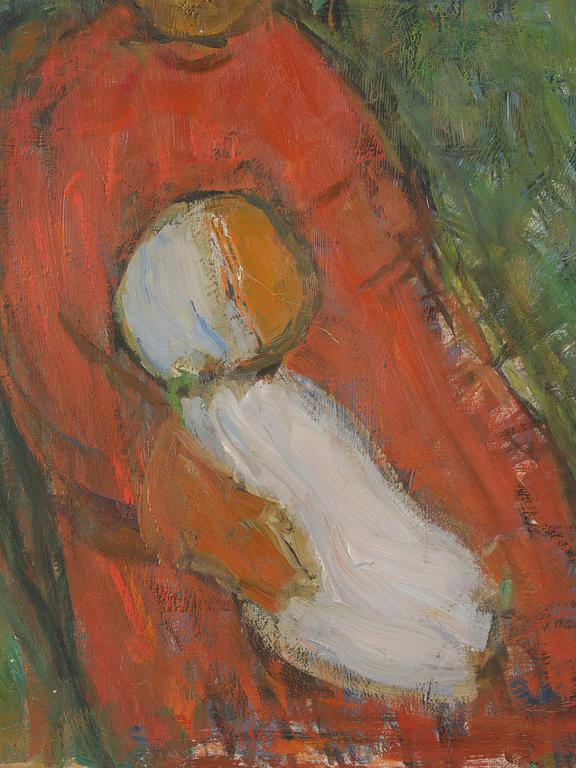
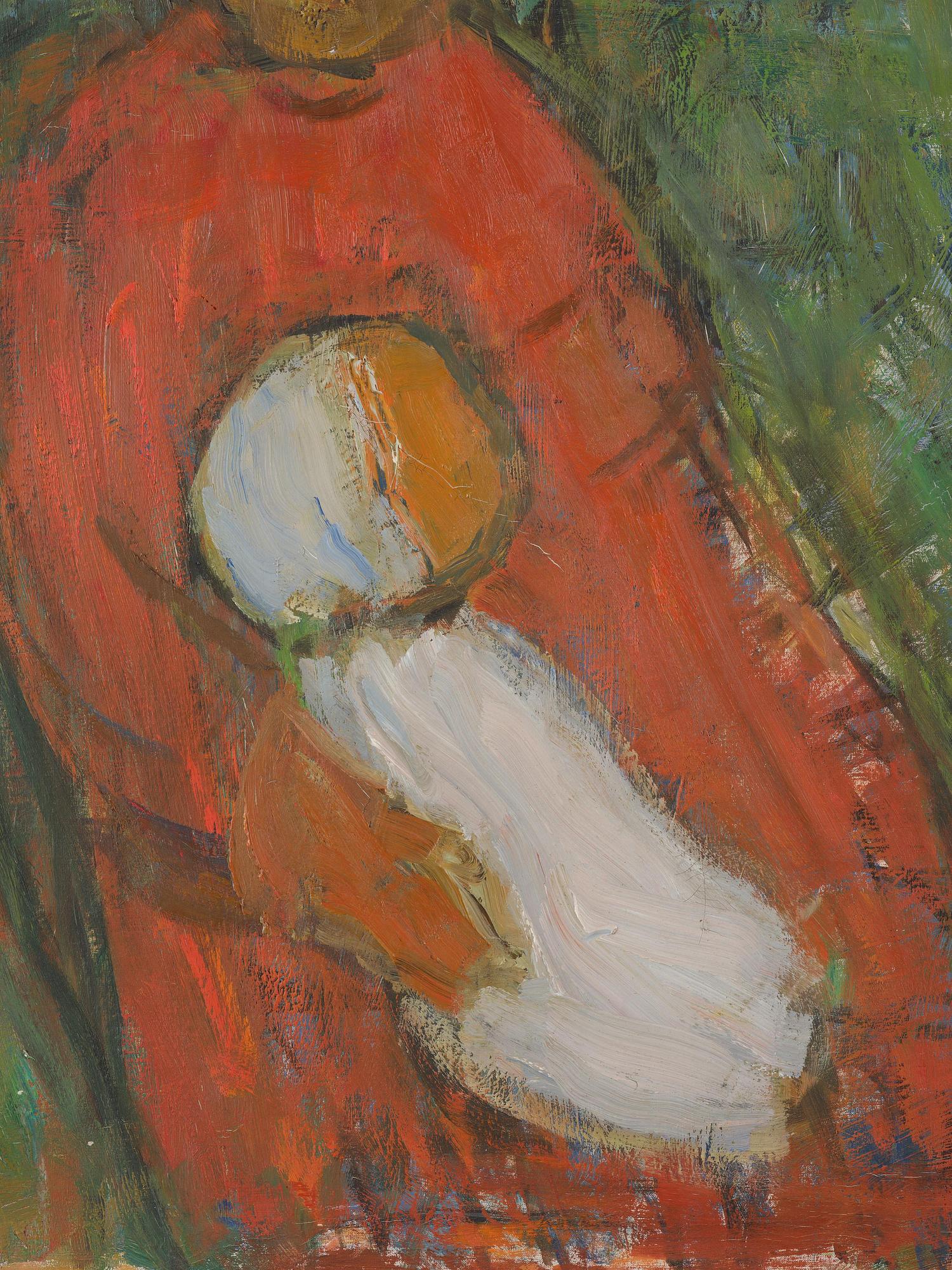
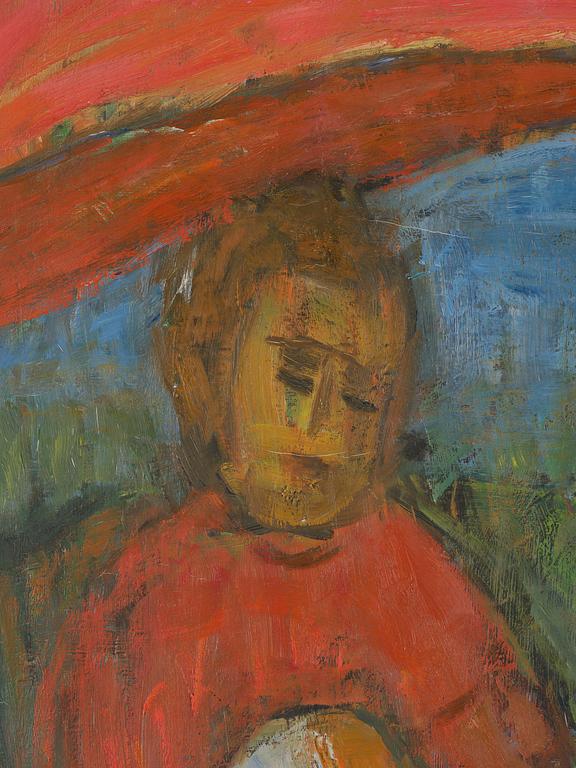
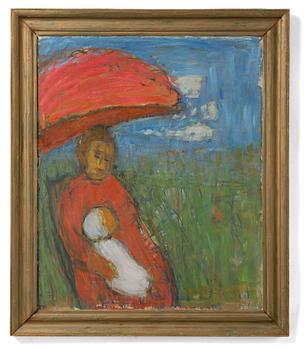
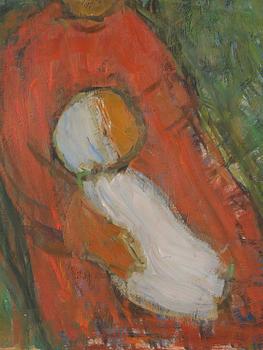
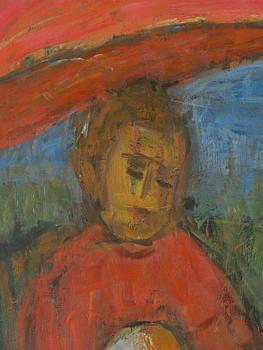
The portrait of mother and child, presented here, is a clear example of Kylberg's unique ability to unite warm and cool colour tones into a harmonious whole. The subject depicts his wife Ruth, who became one of his most recurring and cherished motifs, sitting with the couple's daughter in her lap. Their relationship began in Gothenburg in 1919, where they first became close friends – a friendship that eventually deepened into a lifelong love. They married in 1921, and ten years later their daughter Lisbeth was born. Through the loving brush of a husband and father, Carl Kylberg has portrayed the two who were closest to him in life in the auction's painting. Ruth Kylberg played a central role in the artist's life, both as a constant support and a source of inspiration for several of his most significant paintings. She also contributed practically to his artistry by creating carved frames for several of his works, including the frame for the current painting..
Nature and landscape are recurring themes in Kylberg's art. His works often draw motifs from the Swedish countryside, but also from Denmark, where he and Ruth spent many summers. The depictions are marked by intensity and a colour palette dominated by deep shades of yellow, red, green, and blue. In this painting, Kylberg conveys a sense of tranquil summer days and expresses a warm and enduring love for both nature and humanity.
In the painting "Sitta i sin mammas knä" (Seated in her mother's lap), the colours shine in a typically Kylbergian expression. He had a particular ability to construct compositions that feel both concrete and dissolved at the same time. Often, he started from the colours of reality but intensified them and pushed them towards a more vibrant scale. Changes in light and seasons fascinated him, and through his painting, he managed to convey the emotions these evoked.
More about Carl Kylberg
Carl Kylberg, 1878-1952, is considered a seminal figure in the Swedish 1900-century art. He was a student at the architecture department at Berlin University and then a student of Carl Wilhelmson at Valand art school in Gothenburg.
Kylberg broke through late, made his debut as a painter in 1919 with the February group at Liljevalchs. He became known to a wider public by the age of 50, but continued to be controversial as an artist. He had a permanent artistic antagonist of Isaac Grünewald and the same year as the Nazis in Germany set up the decisive blow against Entartete Kunst and practically the whole of modernism, Swedish government stopped the purchase of the painting "Uppbrottet" of the National Museum in Stockholm.
Read moreFor condition report contact specialist




Others have also viewed