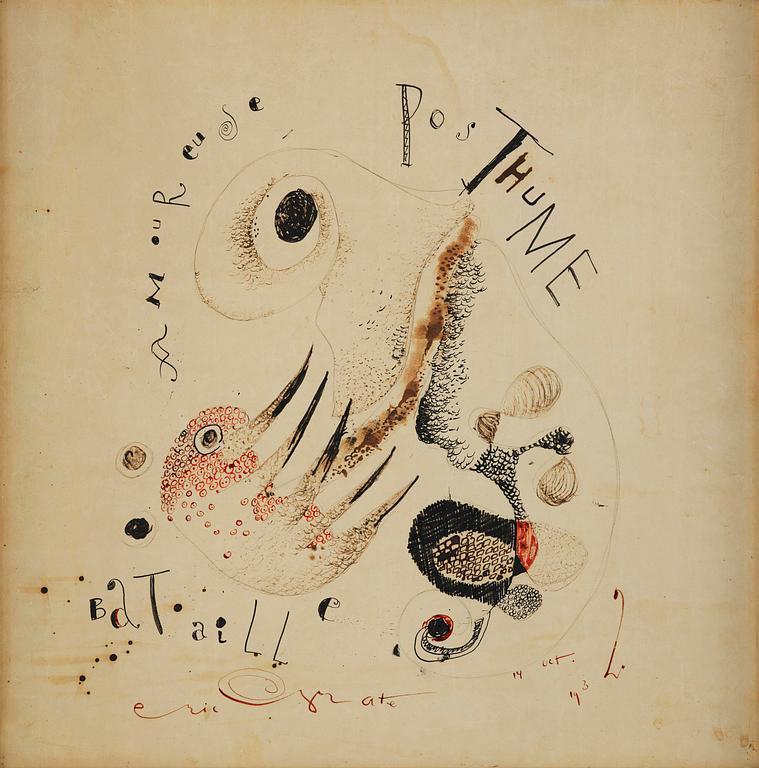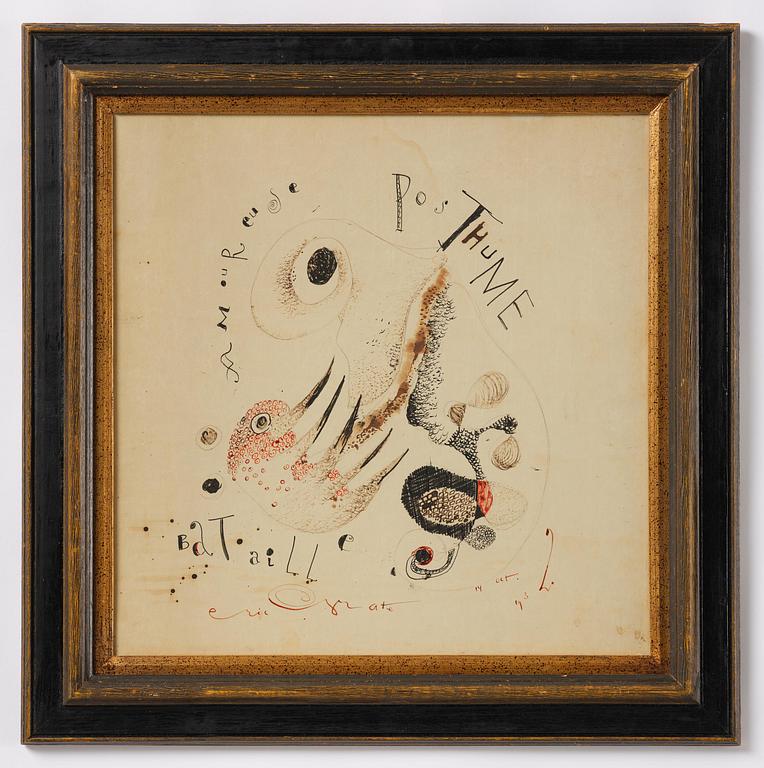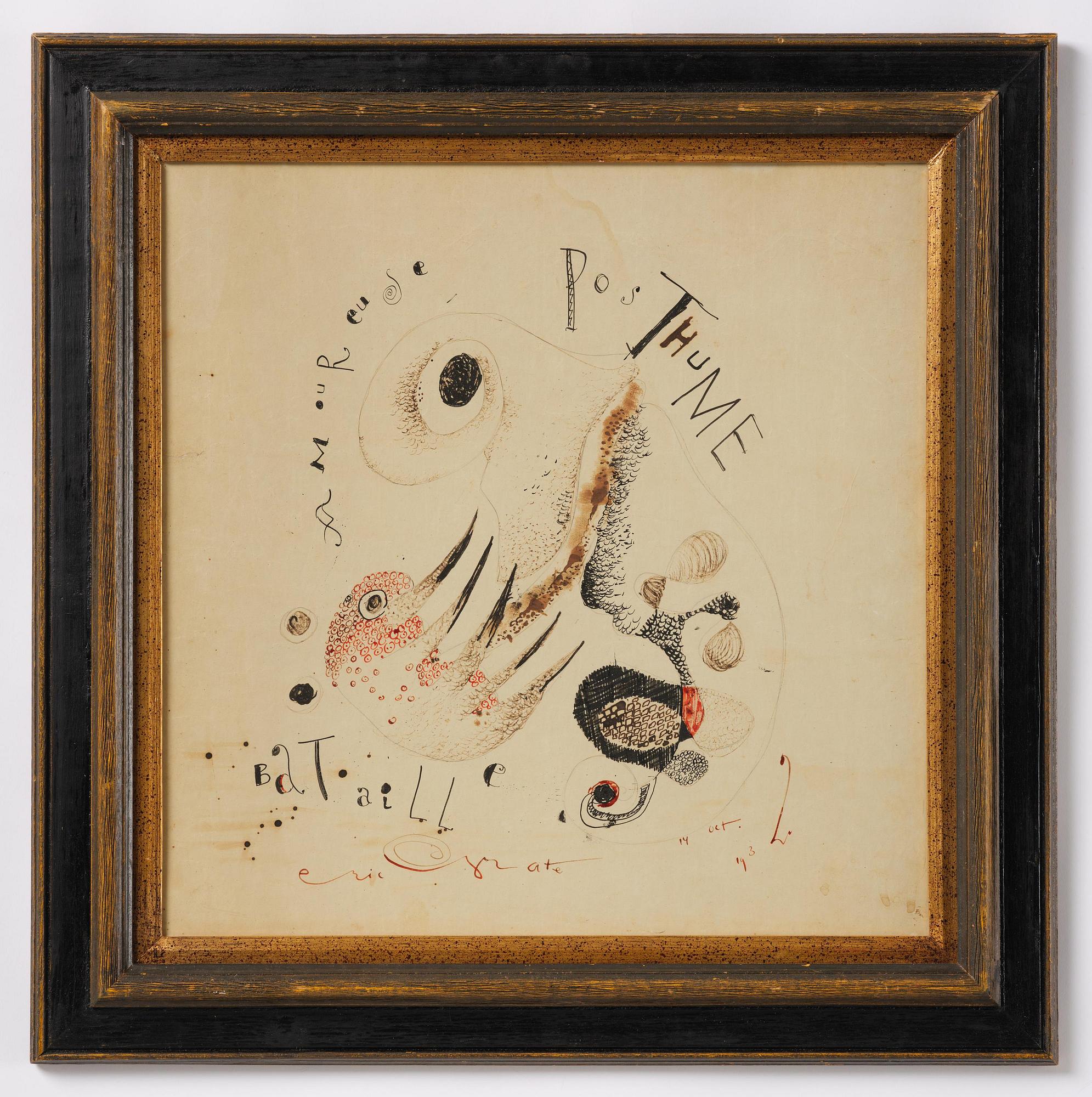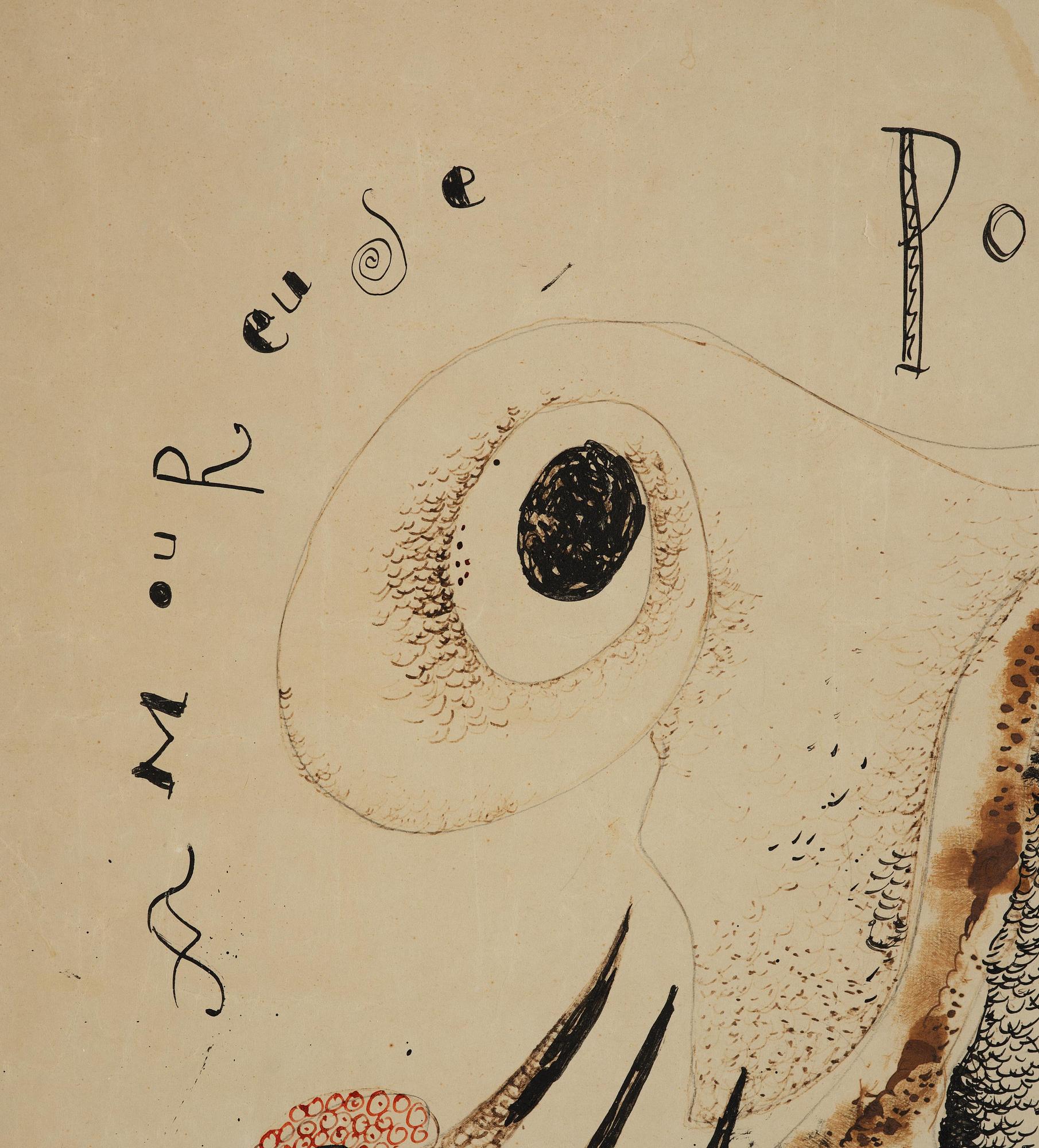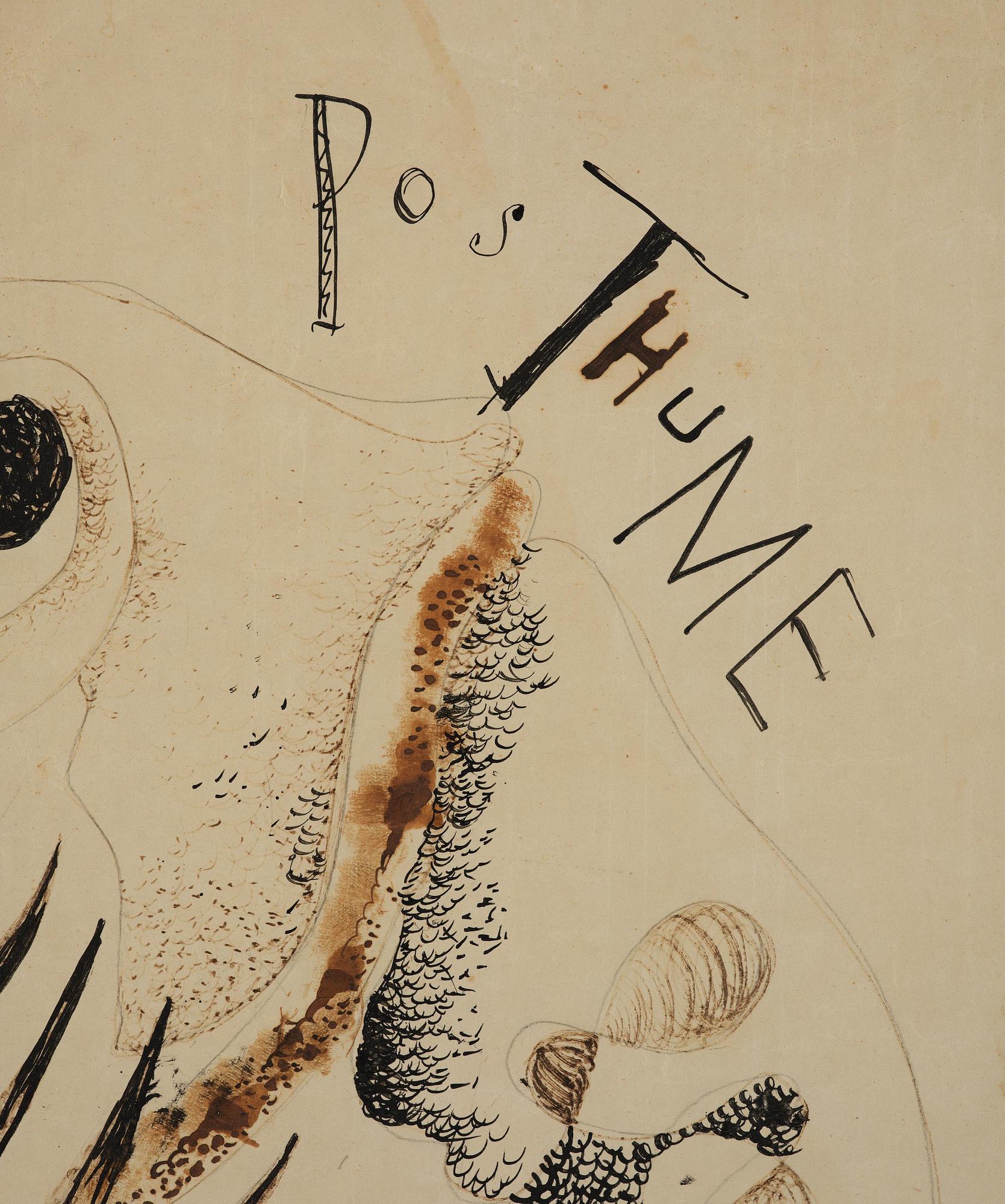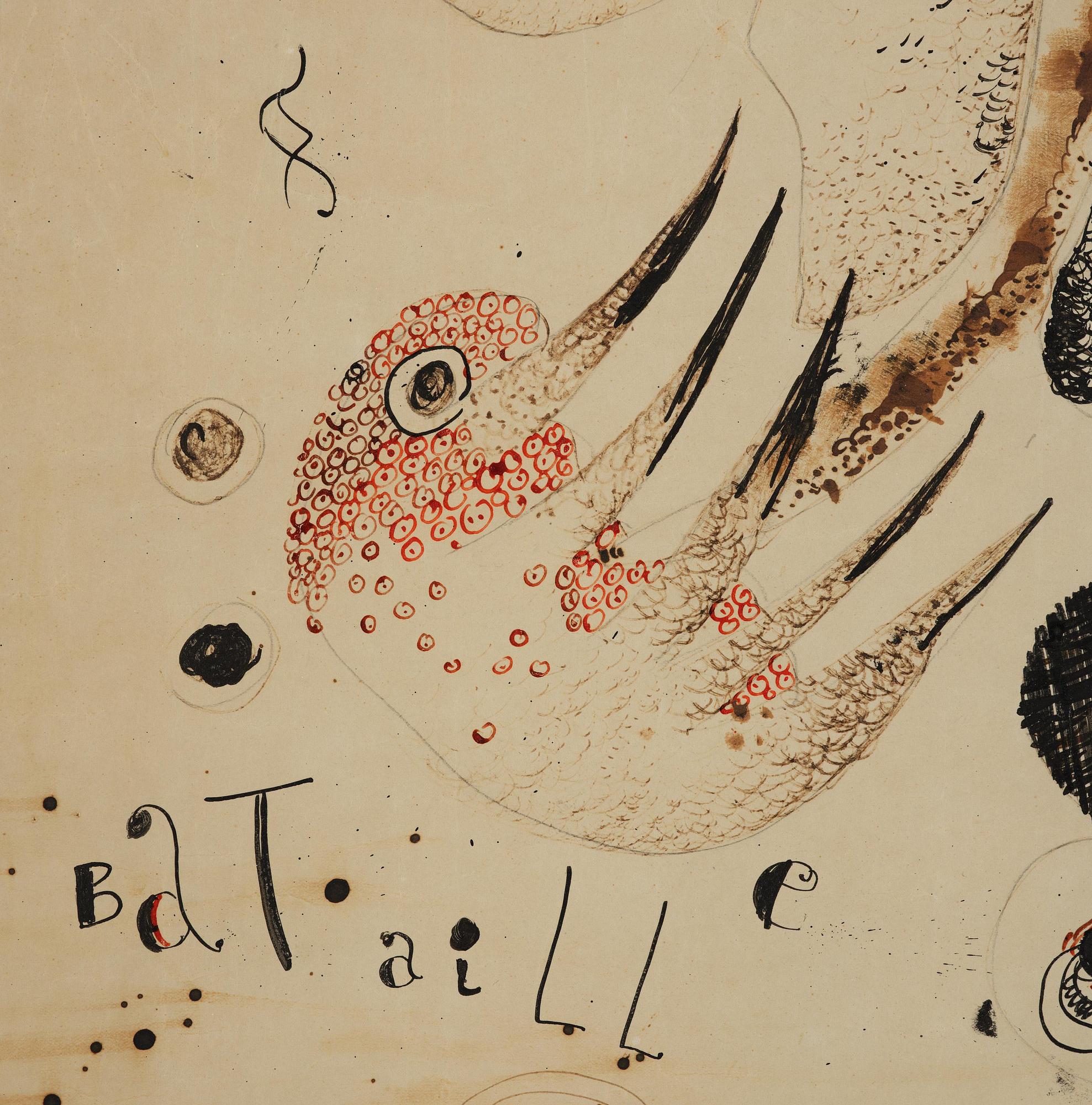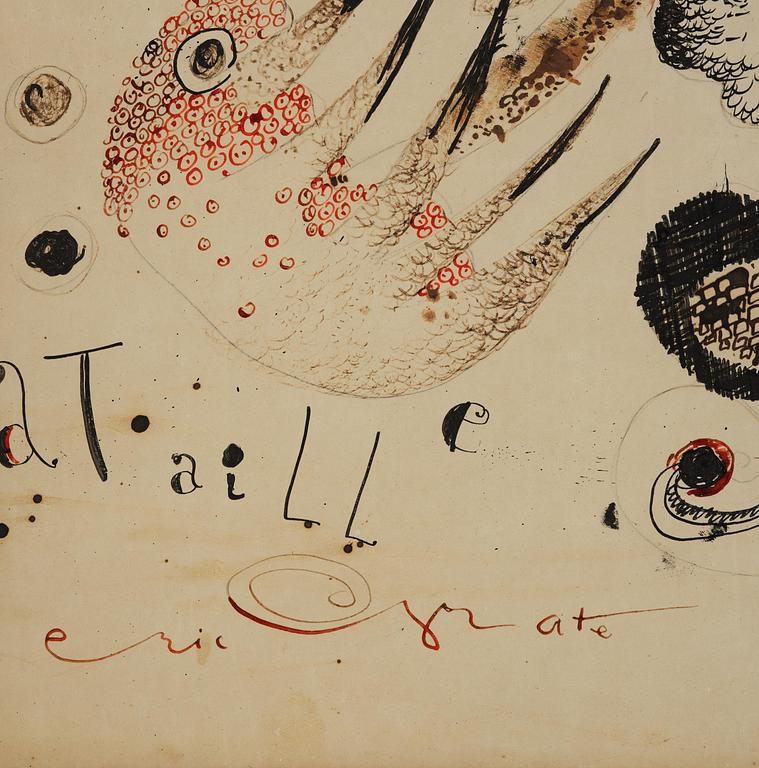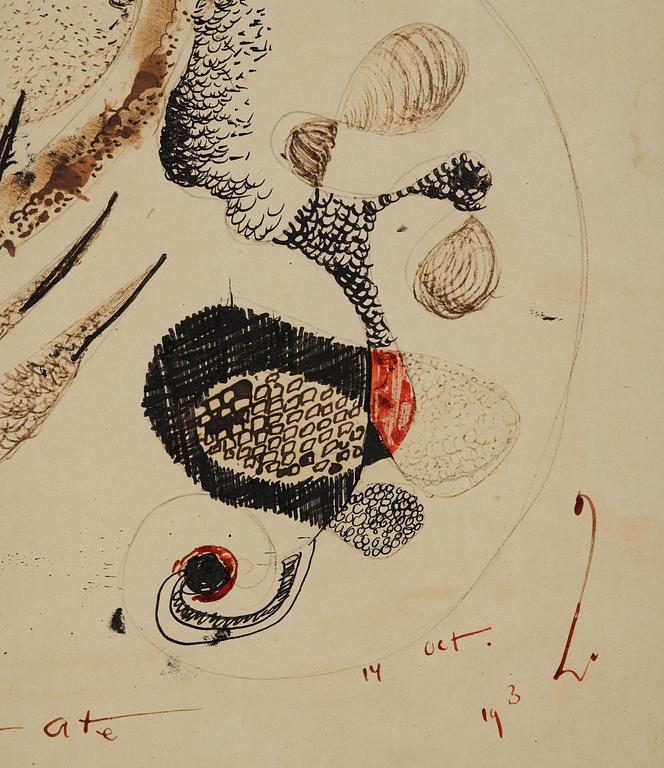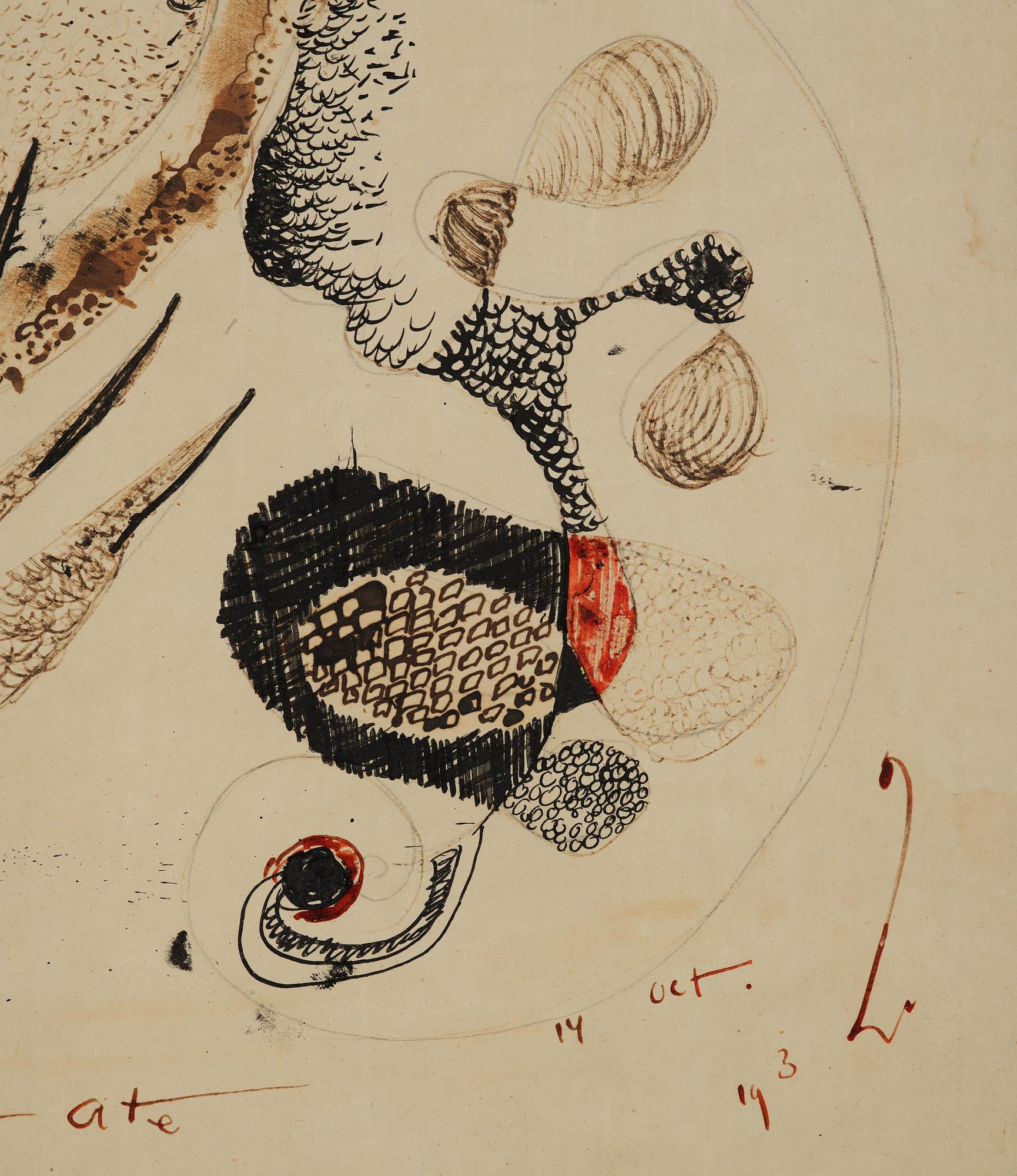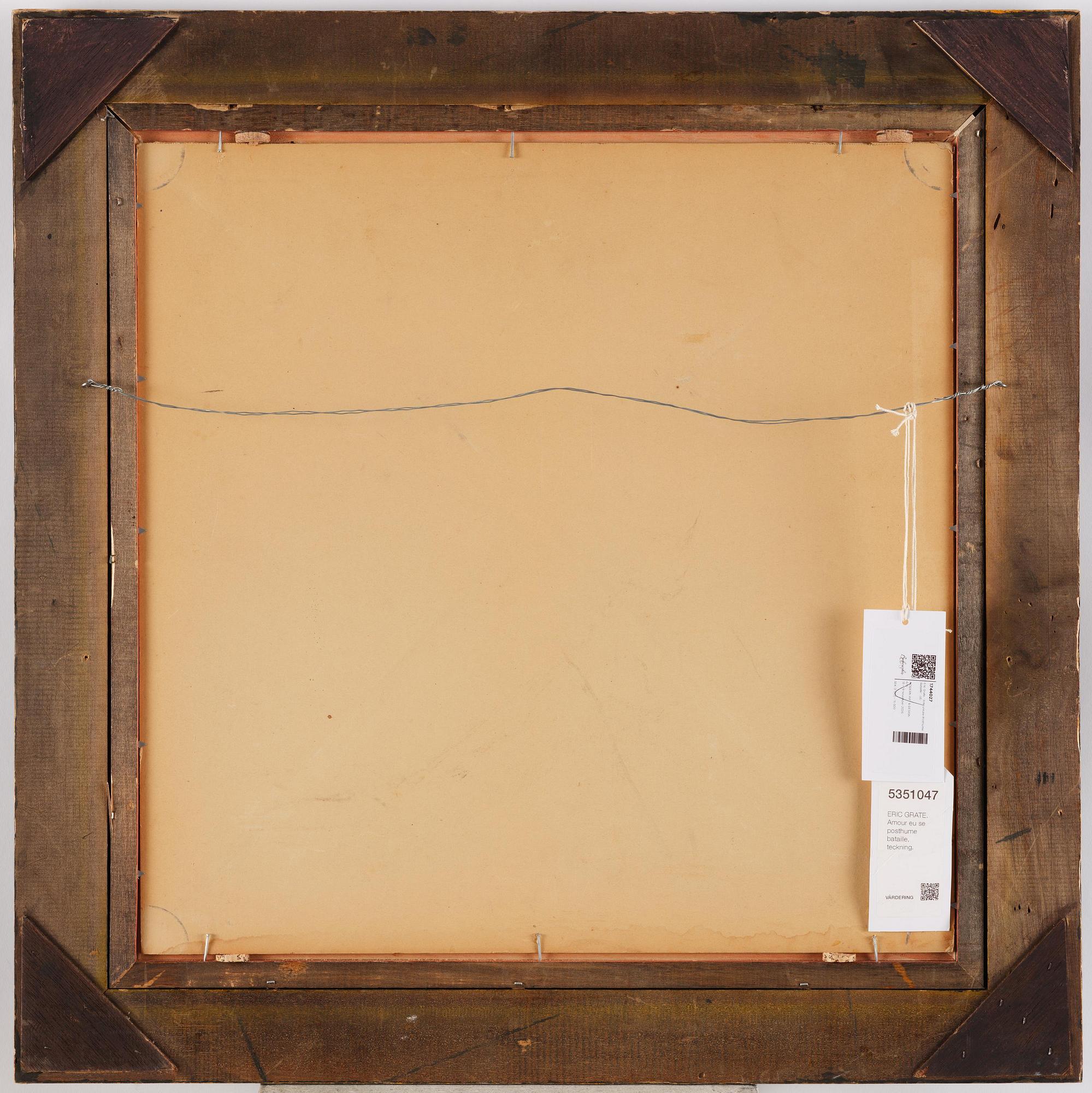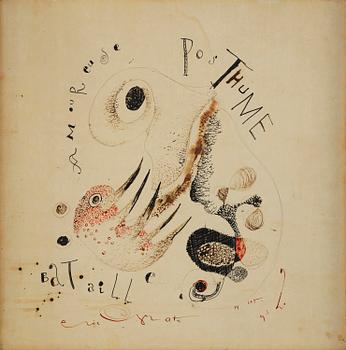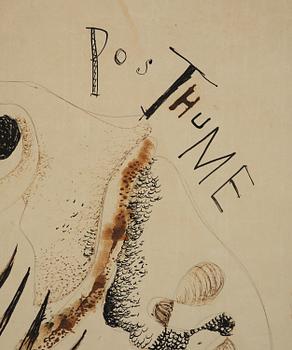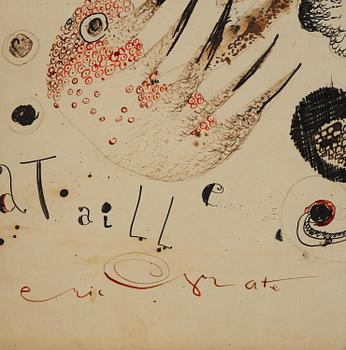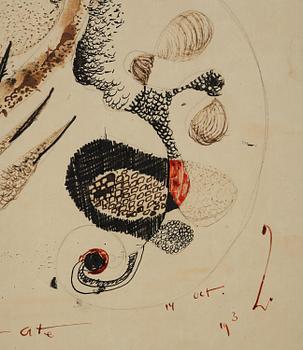
"Amoureuse Posthume Bataille"
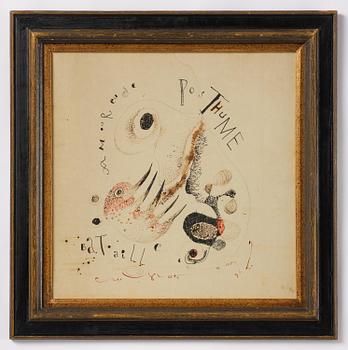
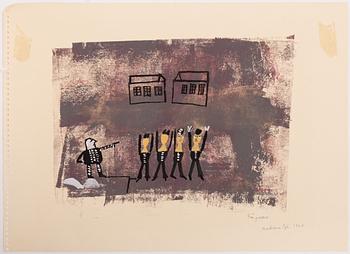
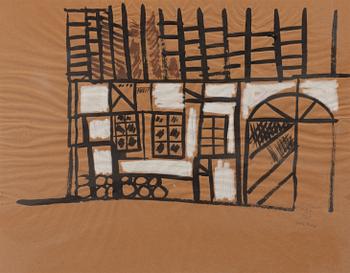
Signed Eric Grate and dated 14 Oct. 1942. Mixed media on paper, 50 x 50 cm.
More information
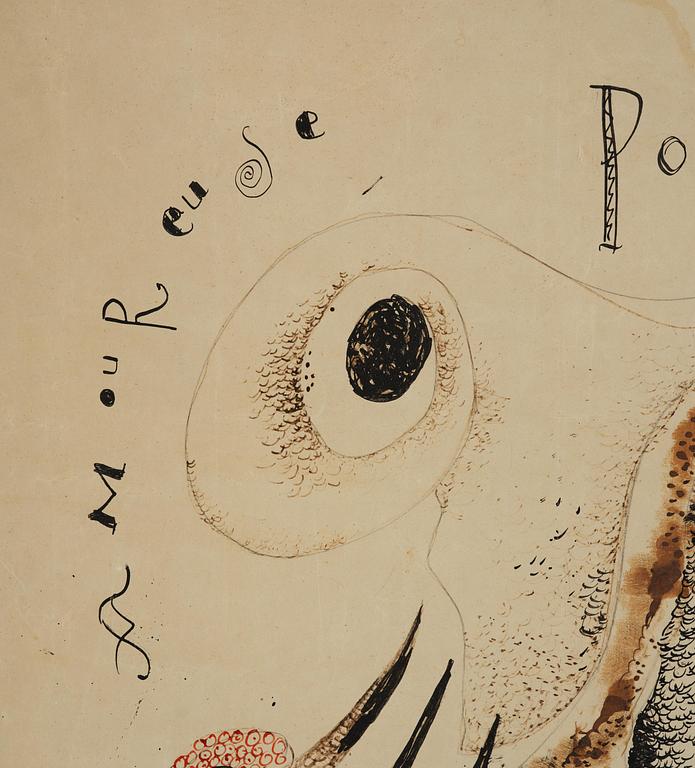
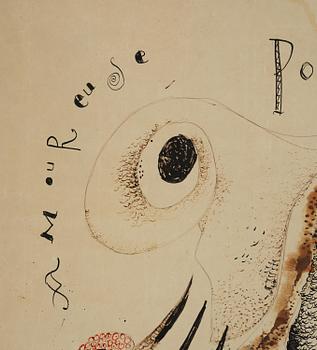
The work in the auction bears the somewhat mysterious title "Amoureuse Posthume Bataille" and belongs to the body of Surrealist works Grate produced in the early 1930s.
After travelling in Greece, Italy and Germany, Grate settled in Paris in 1924, remaining there until 1933 apart from a few periods in Stockholm. During his time in Paris, he came into contact with several of the leading writers and artists of the Surrealist movement, including André Breton, Max Ernst, Miró, Arp, Yves Tanguy and Tristan Tzara, among others. Their work had a strong influence on Grate, which is clearly evident in the present work. Yet, perhaps to an even greater extent than these artists, he drew forms and expressions from nature. Close studies of seeds, bone fragments, insects and marine animals—not least their more sensual forms—became recurring elements in both his sculpture and works on paper.
In 1932, at the suggestion of Ragnar Hoppe, Eric Grate organised an exhibition at Nationalmuseum in Stockholm featuring the Surrealist and post-Cubist artists in Paris with whom he was well acquainted. He selected 24 artists, who together presented more than 150 works. The exhibitors included Arp, Braque, Ernst, Klee, Miro, Di Chirico, Kandinsky, Chagall, Picasso and Grate himself, who contributed no fewer than 15 works. The exhibition was entitled “PARIS 1932 – 10 NATIONS 24 ARTISTS” and opened on 14 October 1932—the same date as that given on the present work.
More about Eric Grate
Eric Grates idiosyncratic world of images always invites exploration and wandering within the imagination. While he respects the the earths natural forms, he sometimes "plays with god", manipulating and playing with nature to create new surprising objects which we recognise but simultaneously dont recall. He borrows fragments from nature and uses his endless imagination to create art in his unique way. His visual language emualtes an aura of abstract surrealism derived from "object trouvés". Grate was inspired by natures radiance and its different forms. Stones, roots, insects, bones, all were transformed into sculptures, particularly the insect world was a source of great inspiration for Grates. During the 1960s, beach, hull, and bones were particularly the starting points for his sculptures. He created numerous official artworks.
Grate began his academic trips after finishing his studies at Royal Swedish Academy of Fine Arts from 1979-20, where he travelled to Italy and Greece, filling his sketchbooks with studies of insects, plants, unique architecture, sculpture, and ceramics. He spent a longer period between 1924 and 1933 in Paris, a formative period where he was one of the few Swedish artists who was associated with the avante garde; we got in contact with none other than the surrealists Jean Arp, Paul Eluard, and Tristan Tzara. Grate is seen by many as one of Sweden's most influential sculptors during the 1900s.
Read moreFor condition report contact specialist

What will the transport cost?
Covered by droit de suite
Image rights
The artworks in this database are protected by copyright and may not be reproduced without the permission of the rights holders. The artworks are reproduced in this database with a license from Bildupphovsrätt.