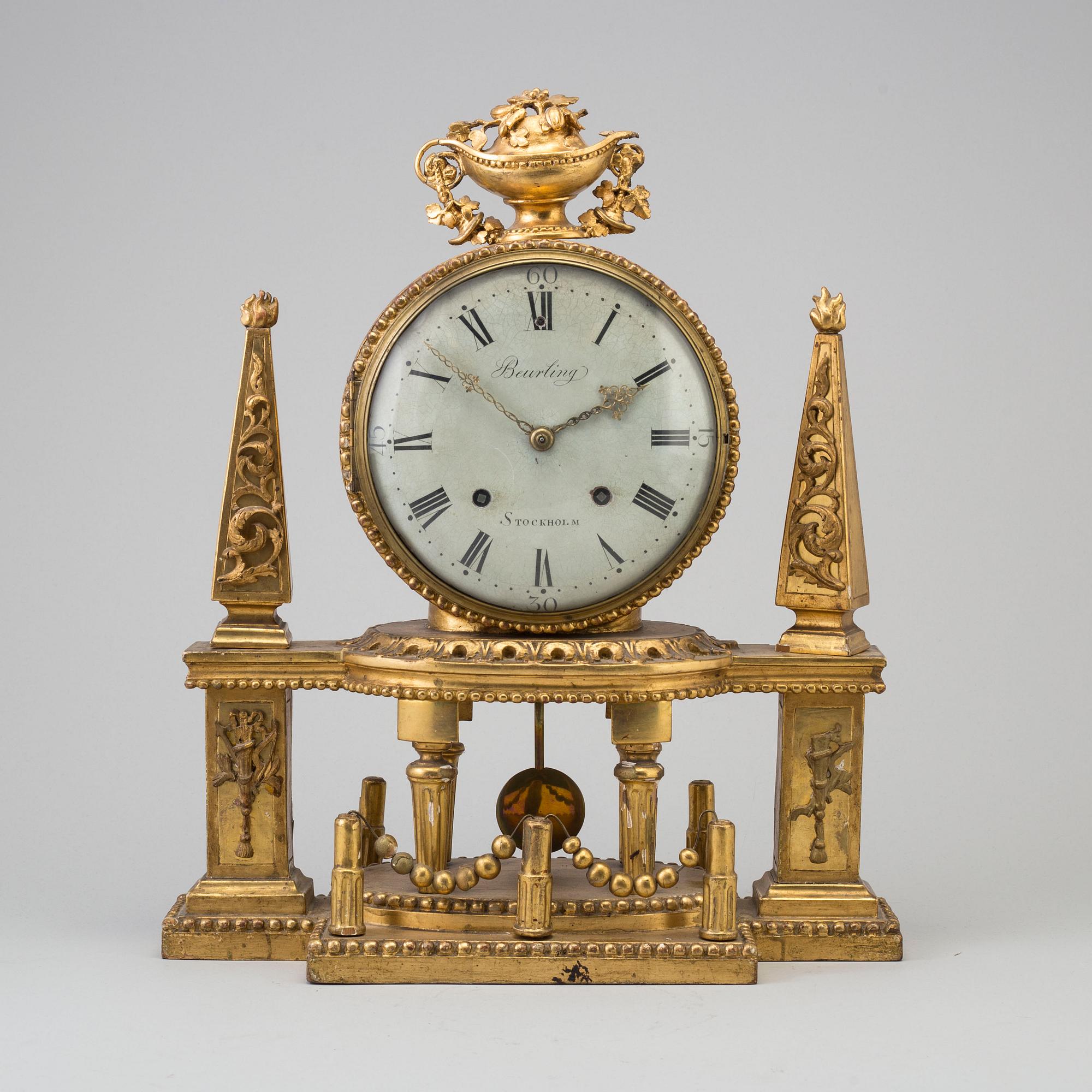
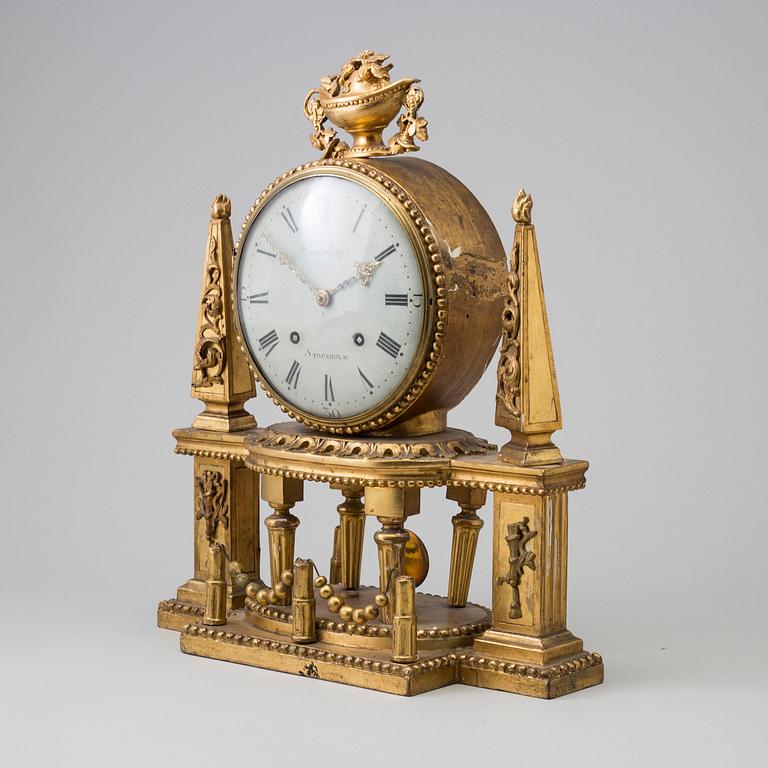
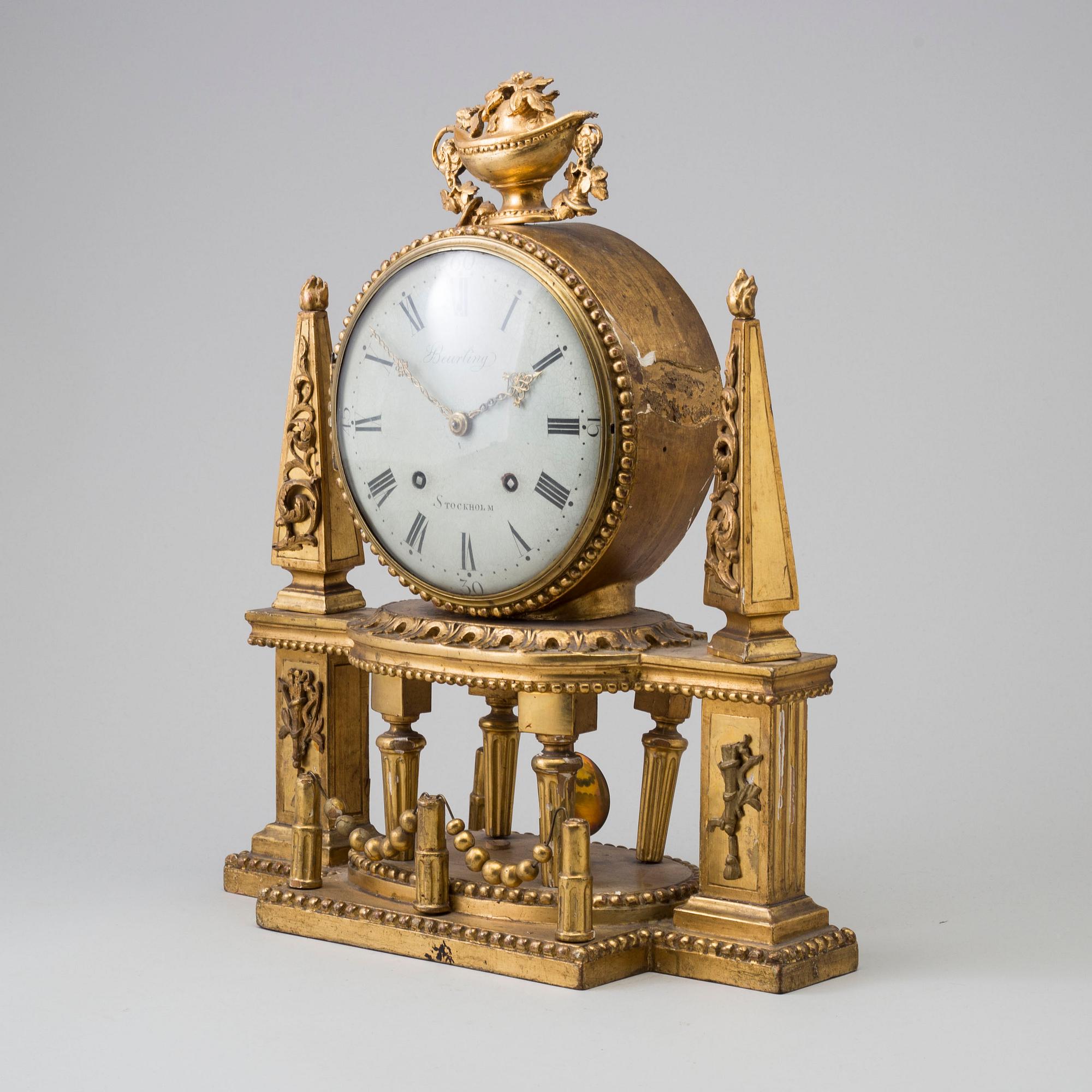
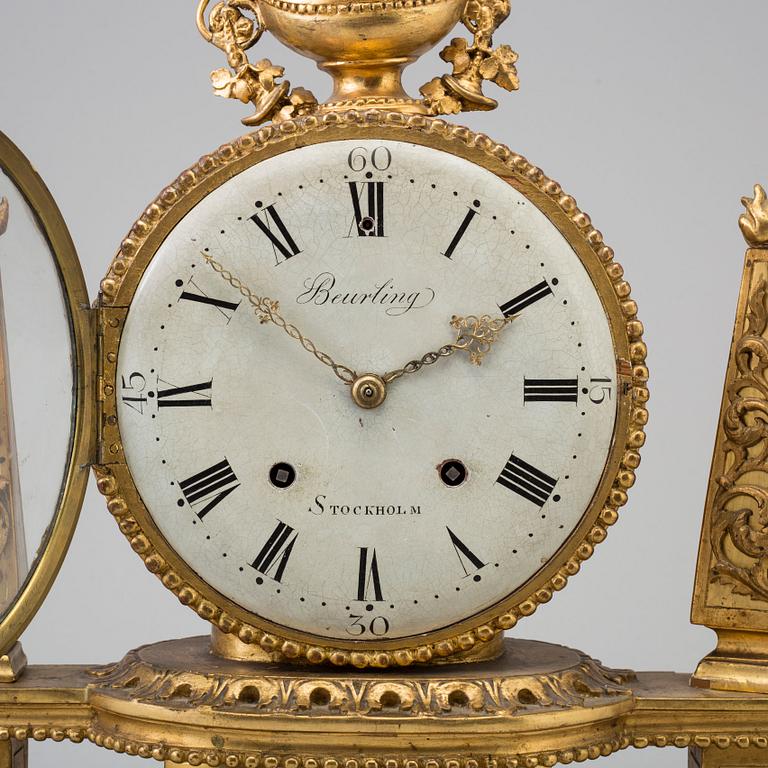
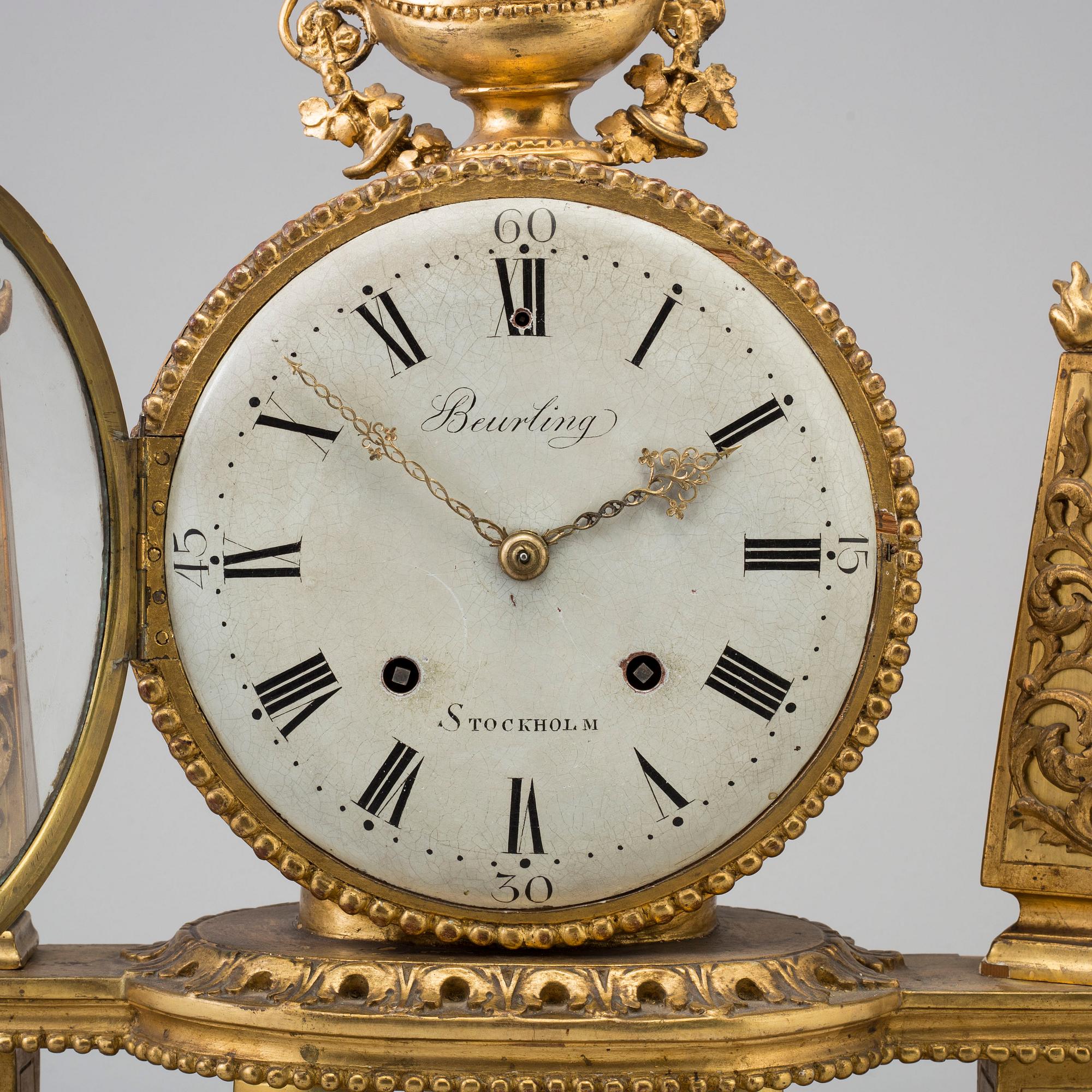
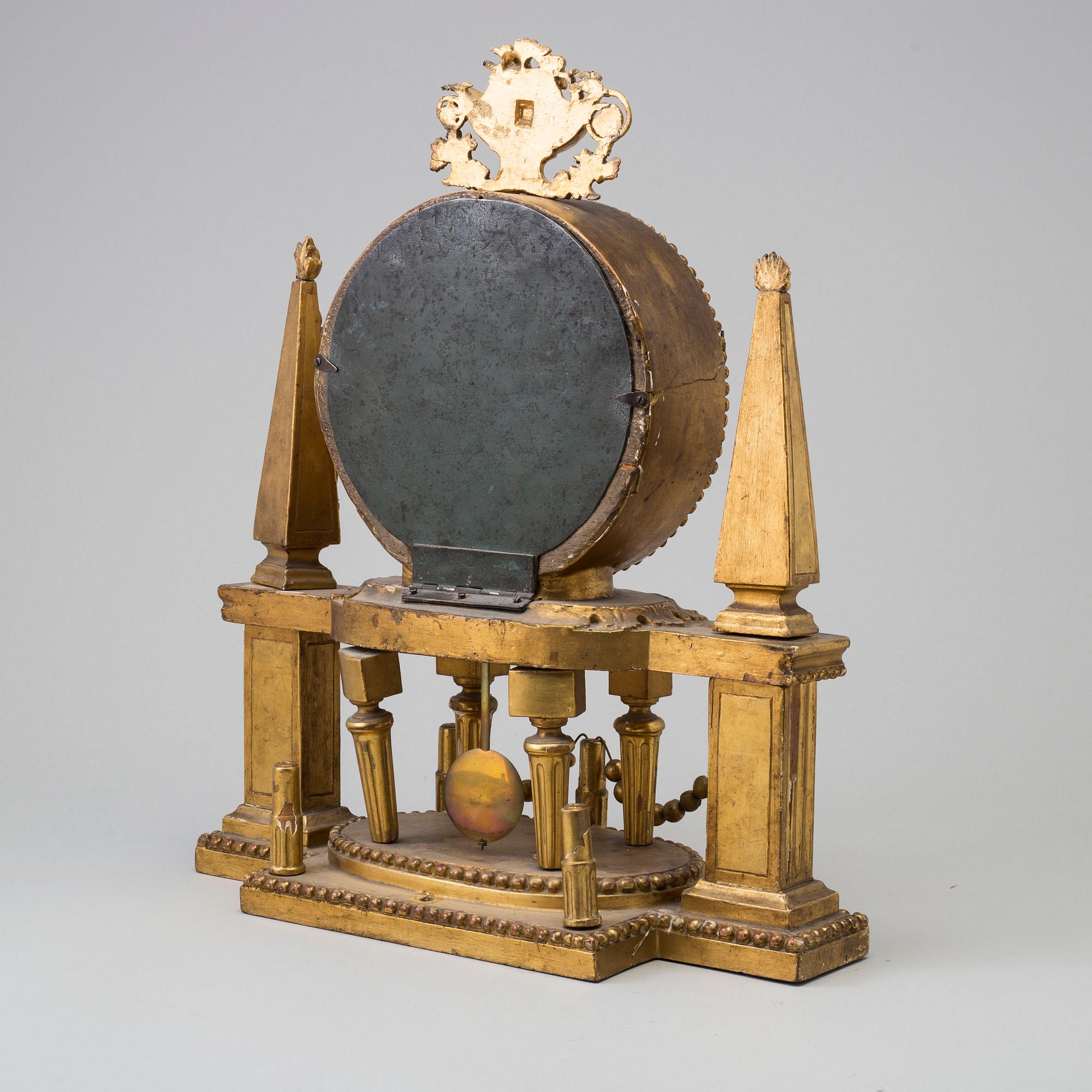
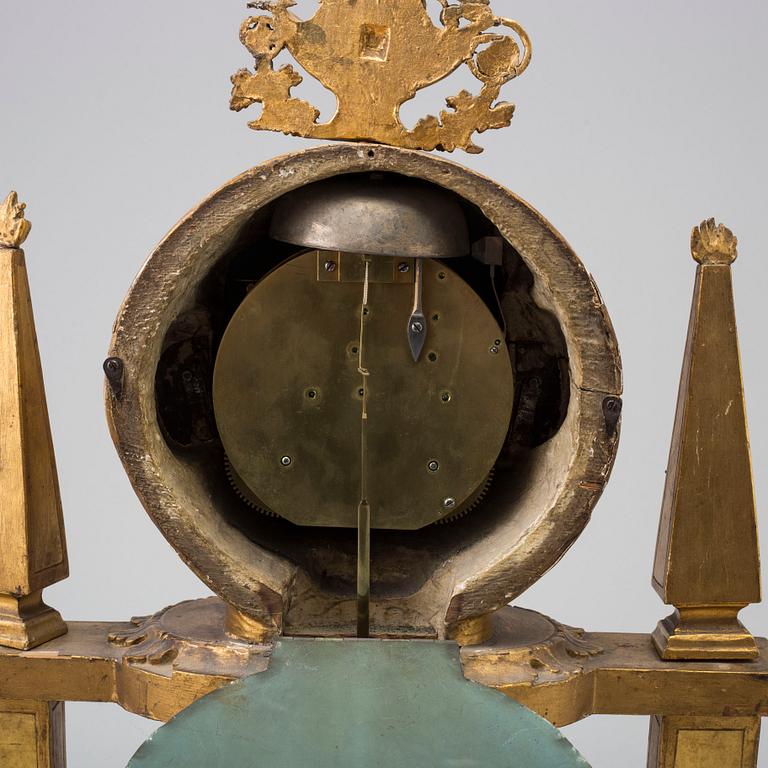
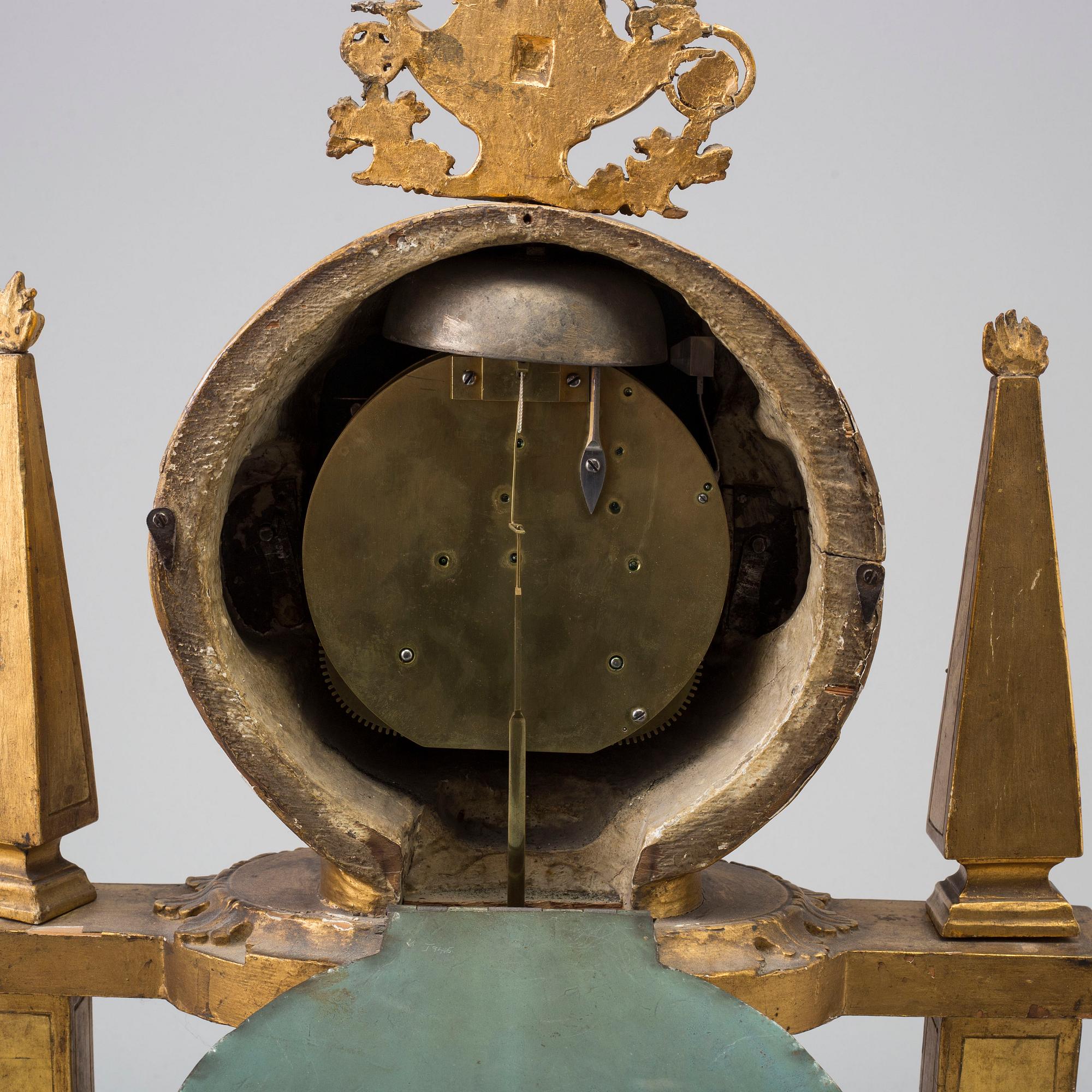
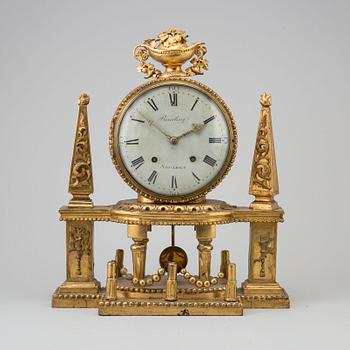
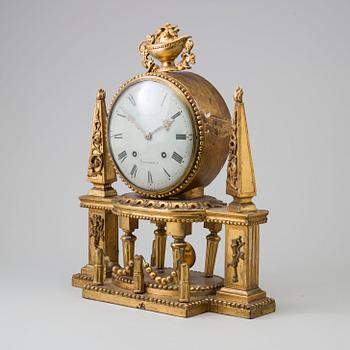
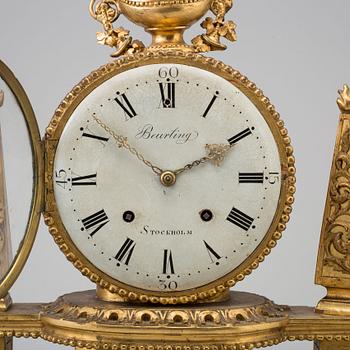
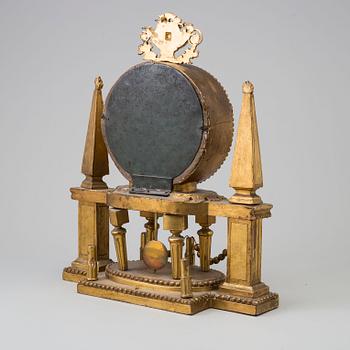
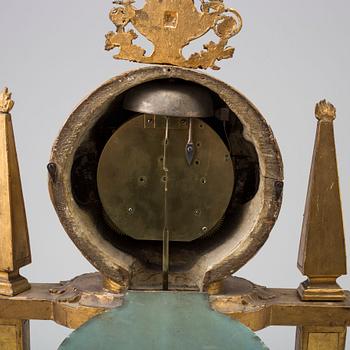
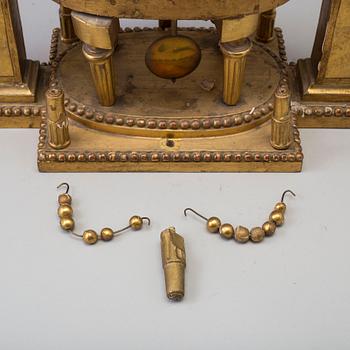
A late gustavian table clock, signed Beurling, Stockholm. Late 18th / early 19th century.
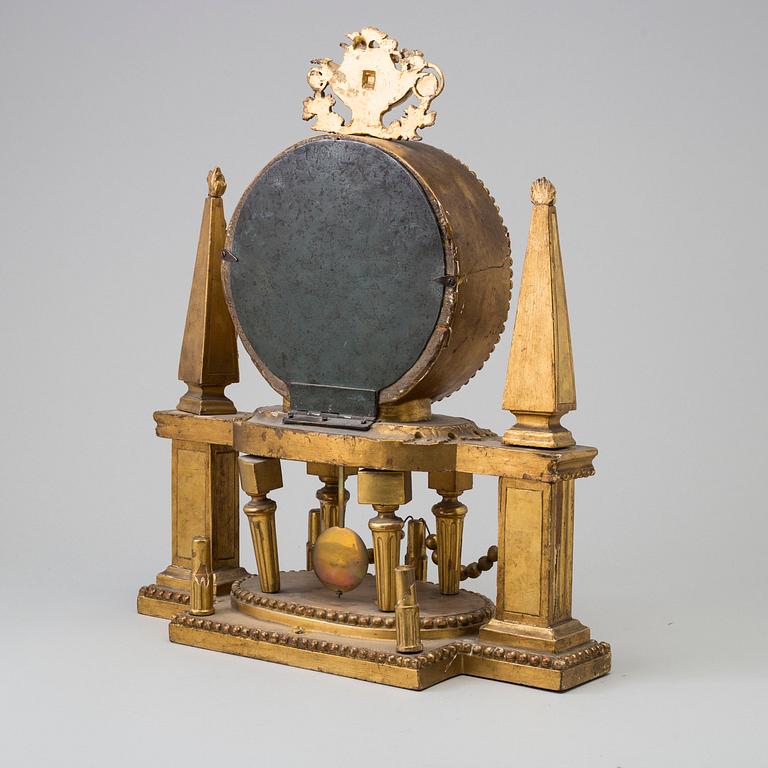
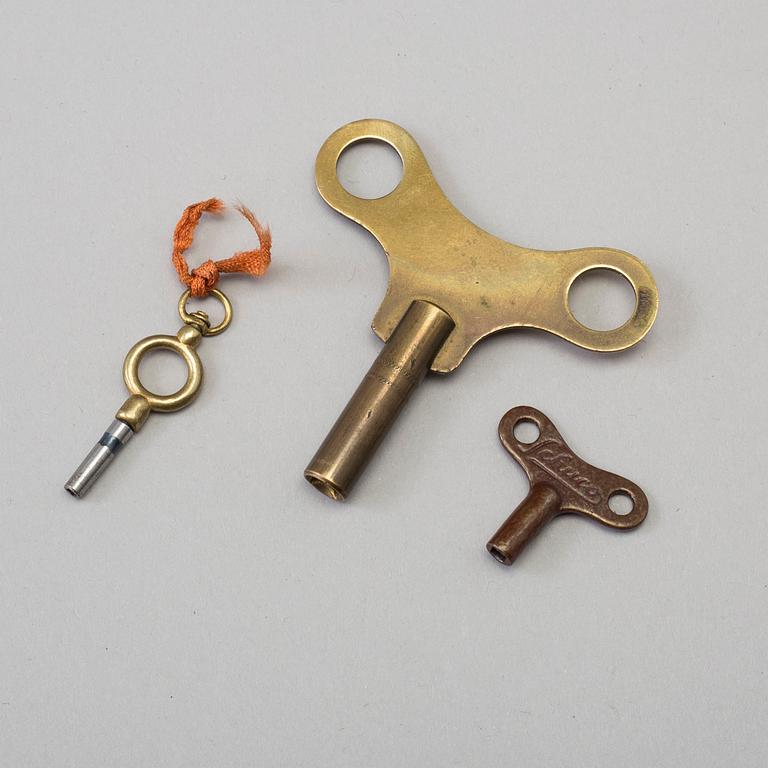
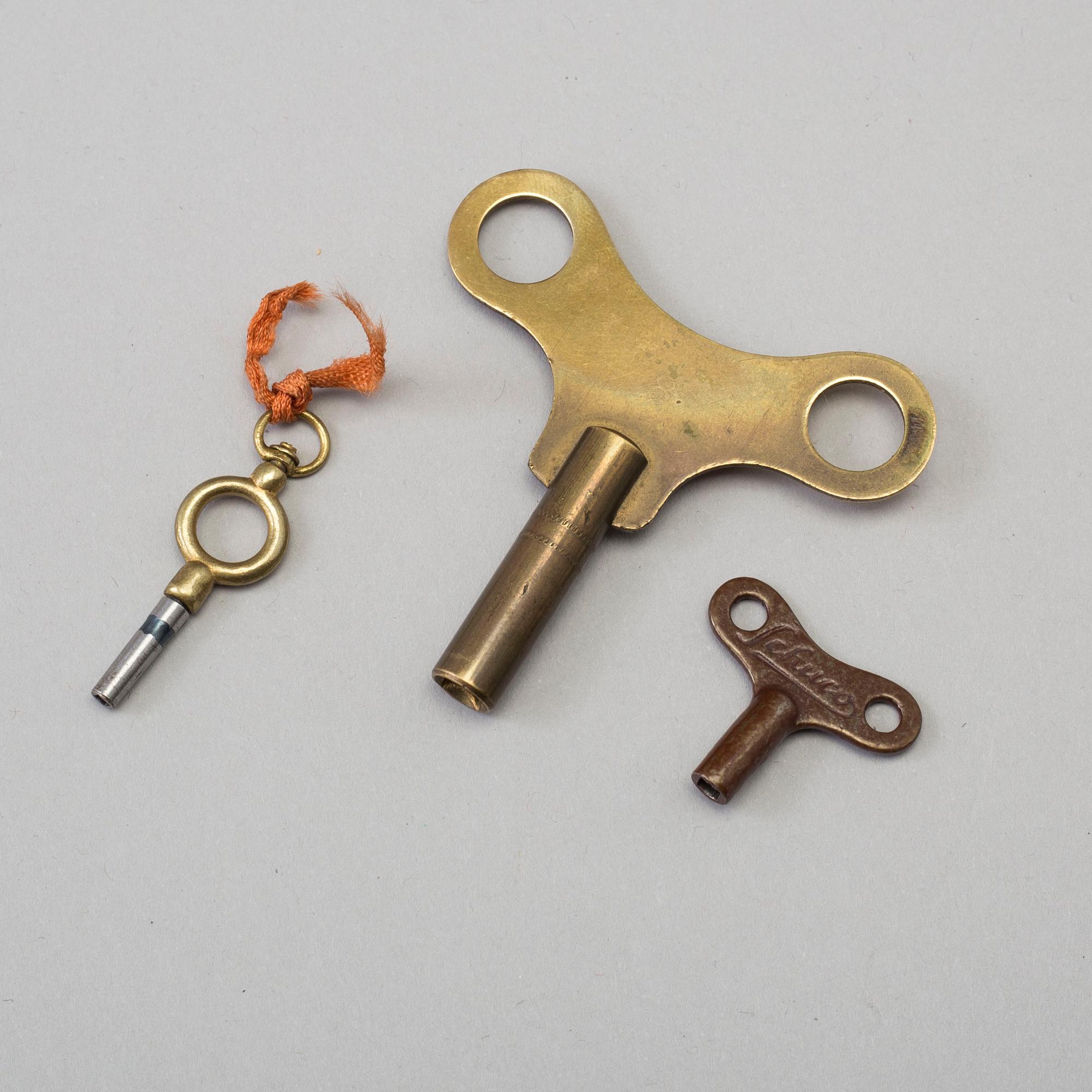
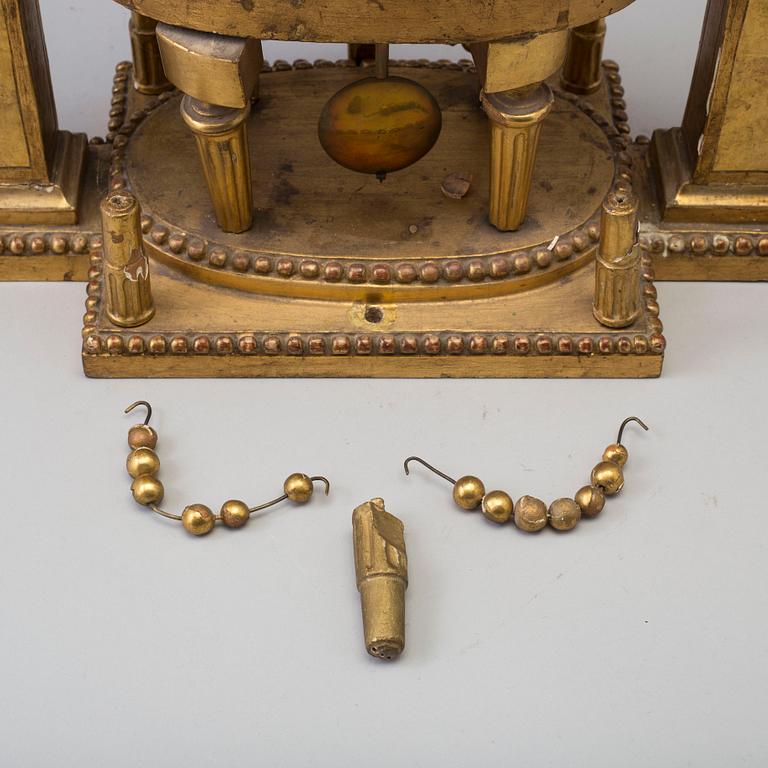
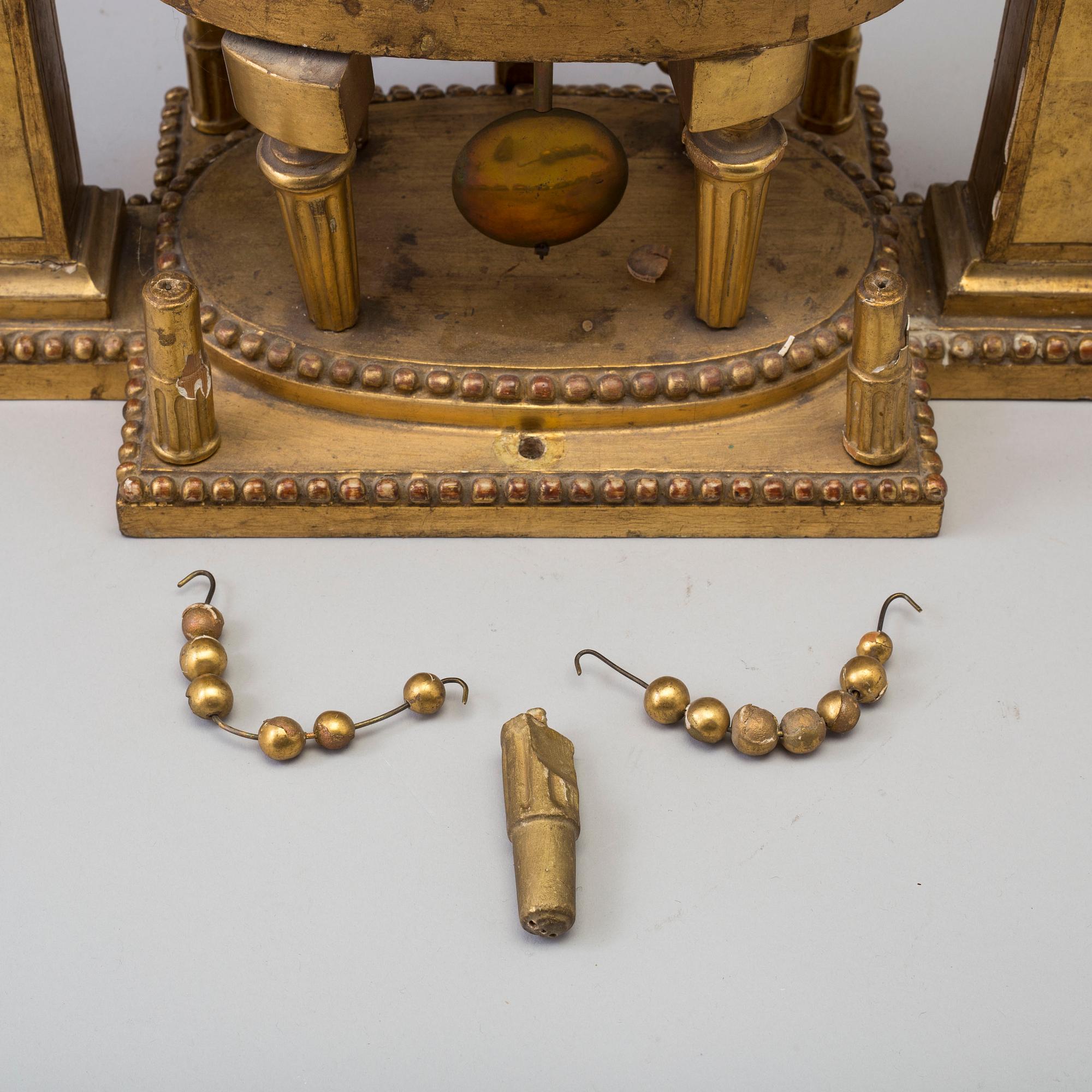
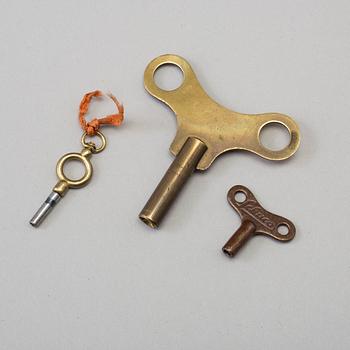
Key and pendulum included. Width 40, depth 18, height 45,5 cm. Key included.
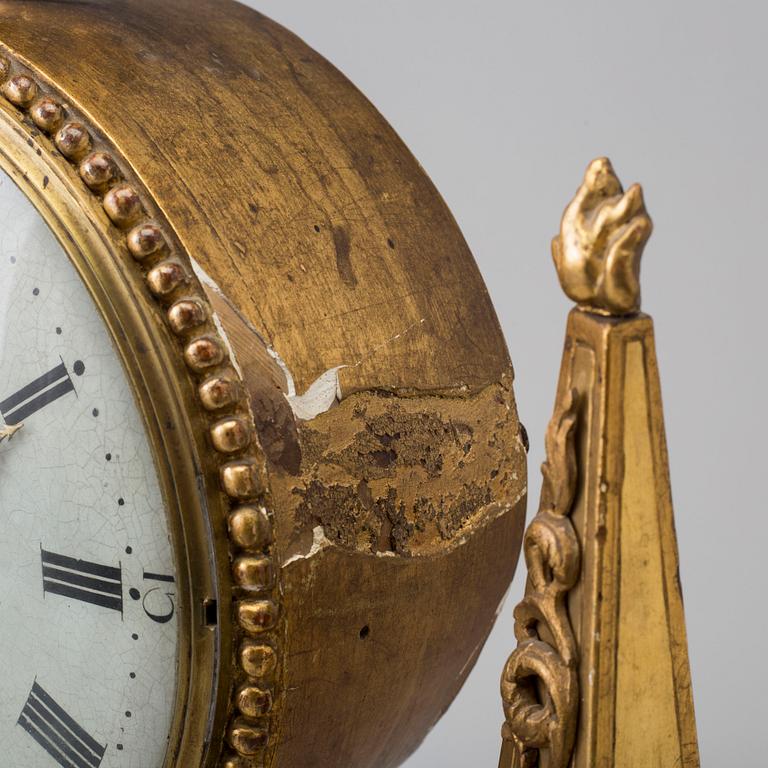
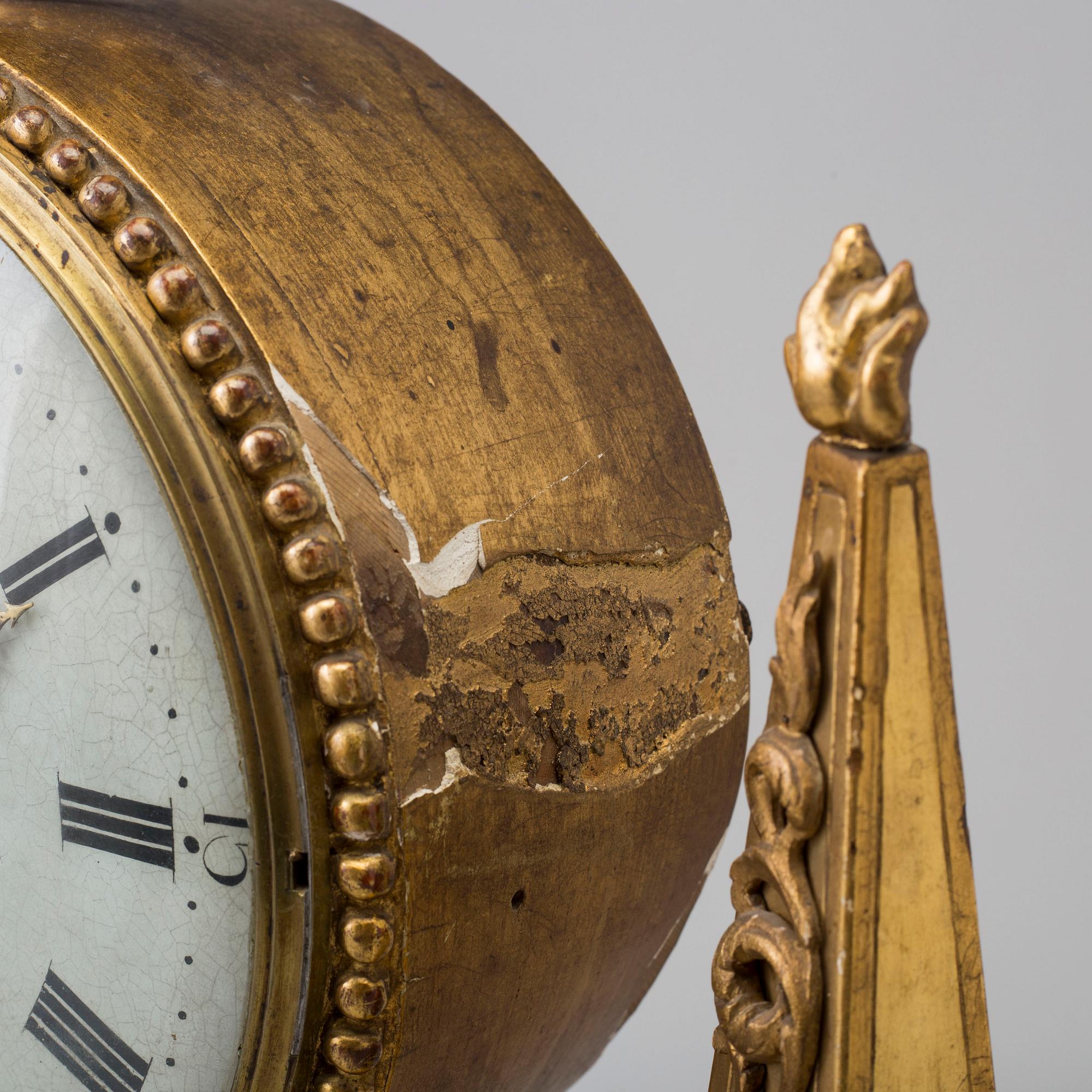
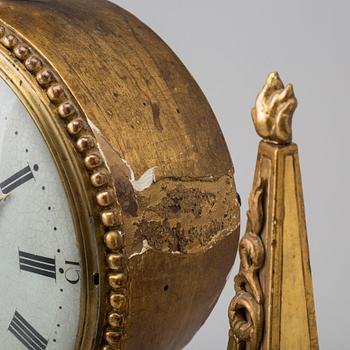
Damages, wear, repairs and additions. Loose parts included. Function not tested. Keys included.
More about Gustaviansk
The Gustavian era fell between 1775 and 1810. The furniture then takes on, in contrast to Rococo, a more restrained contour. The legs become straighter and tapered, the colours become softer in mostly grey-green and grey-blue tones. Typical to the Gustavian time is intarsia, inlays with medallions and classical borders. The chairs backrests are often straight spindles or a curved bundle of spindles, with the finer chairs have a padded back with a rosebud decoration at the top. A significant detail is the flower, "fleuron", which is often found in corner ornaments, leaf scroll decoration, and festoons of leaves, flowers, or fruits. Between the years of 1785-1810 is commonly known as the late-gustavian era and is known for its rigid clacissism. Rich intarsia decoration was replaced by smooth, dark mahogany with elegant brass fittings and moldings.
Read more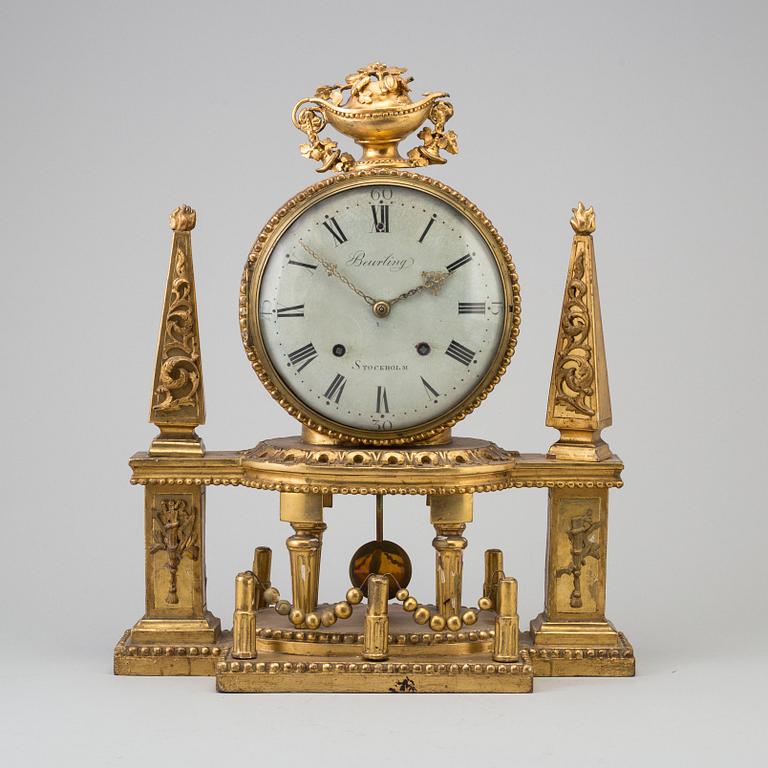
Others have also viewed