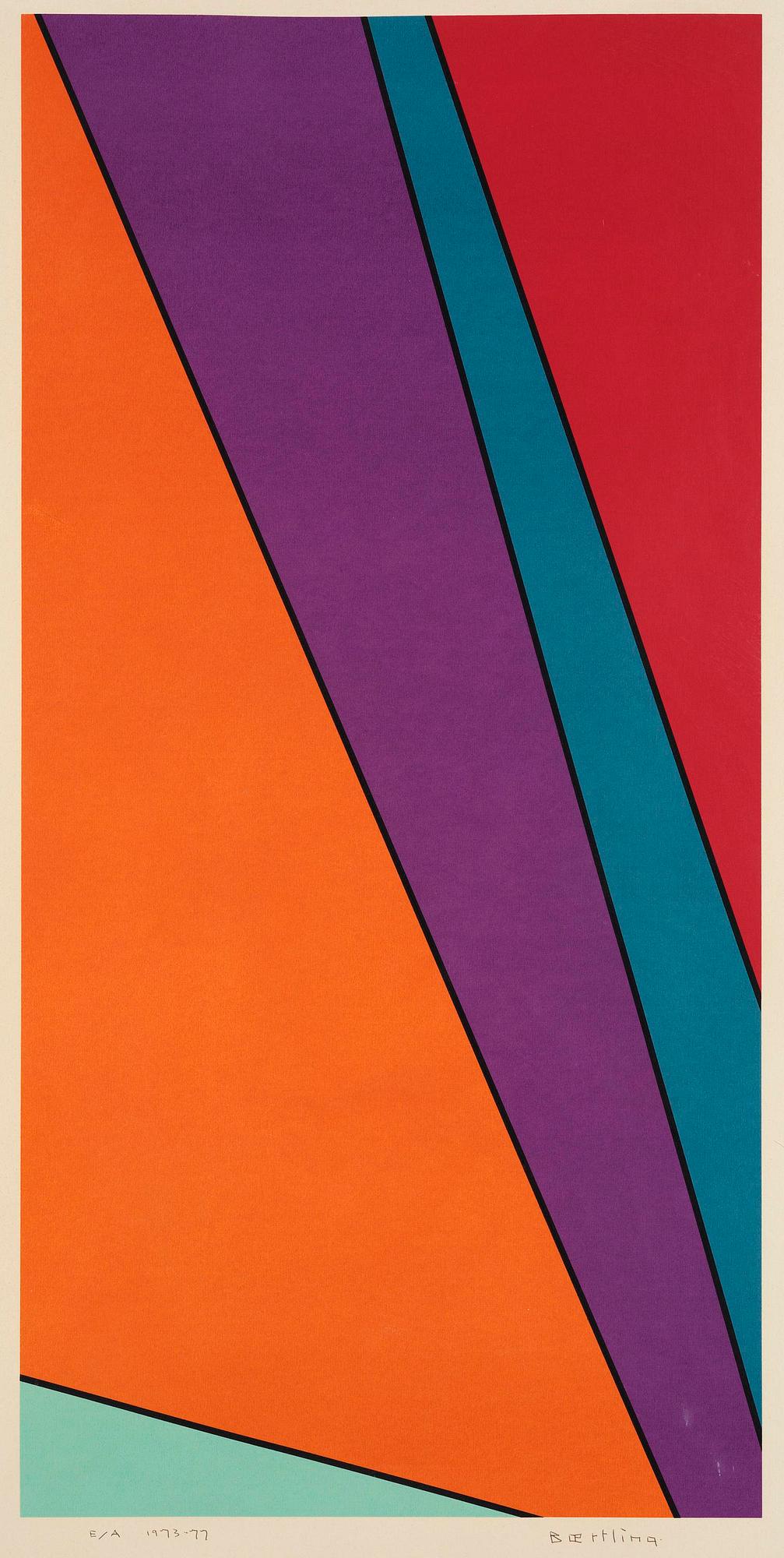
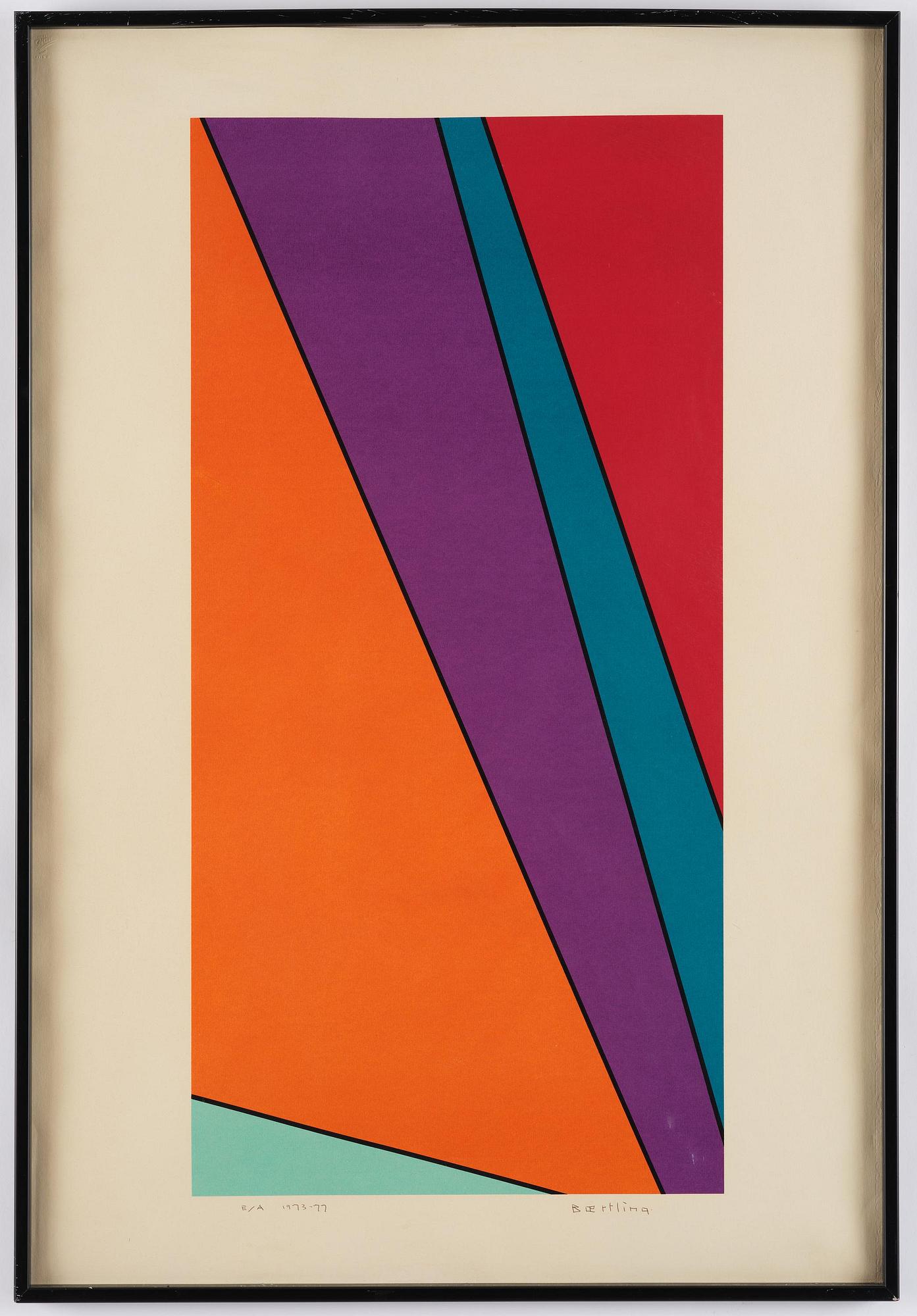
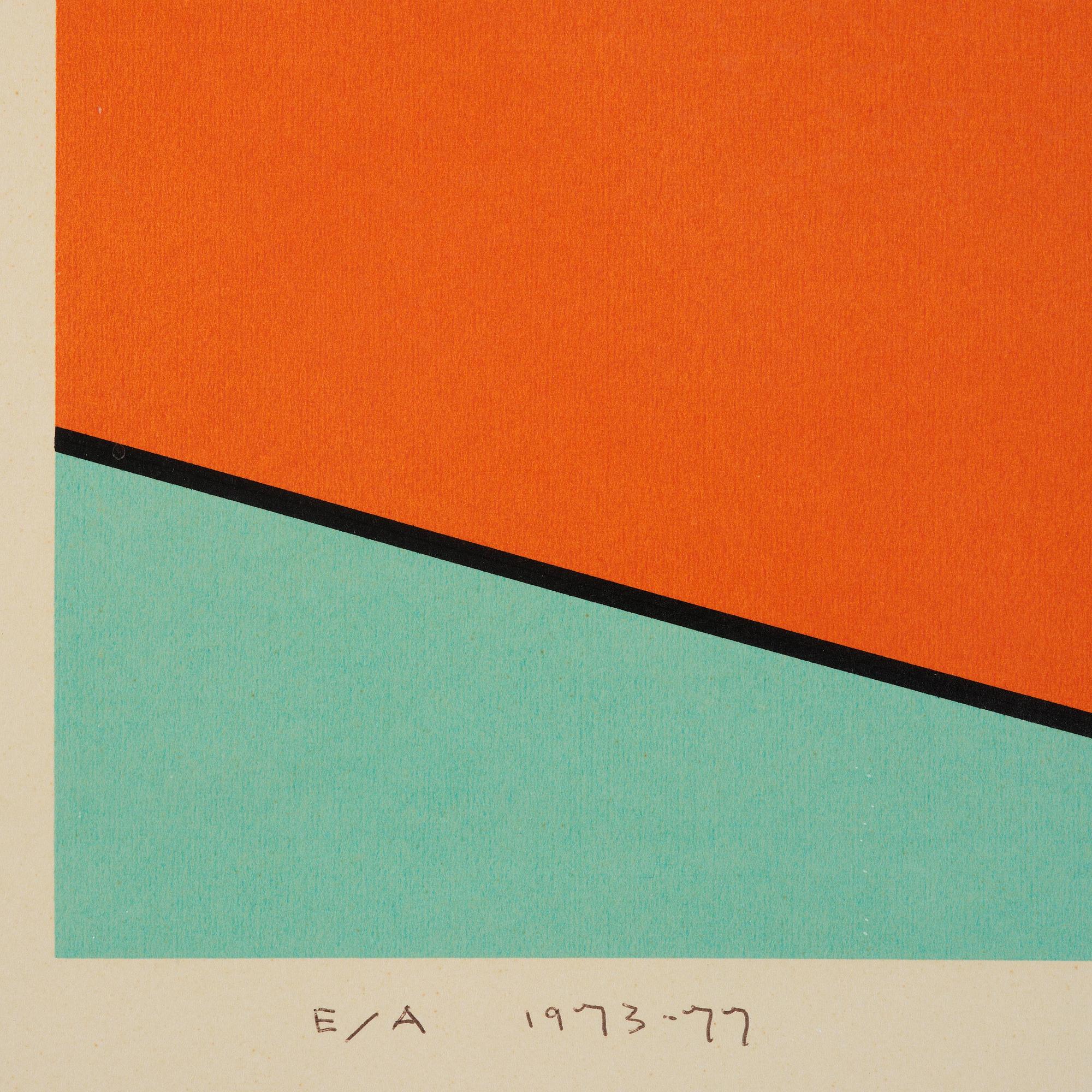
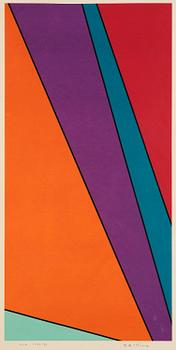
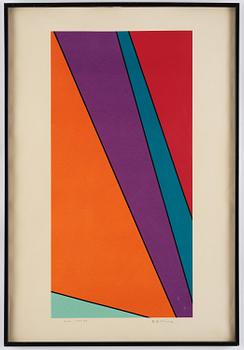
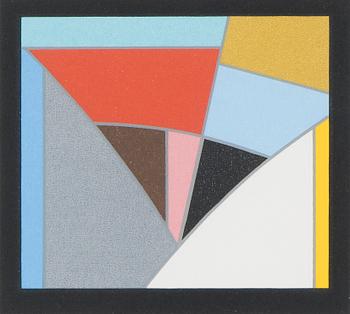
"XREK"
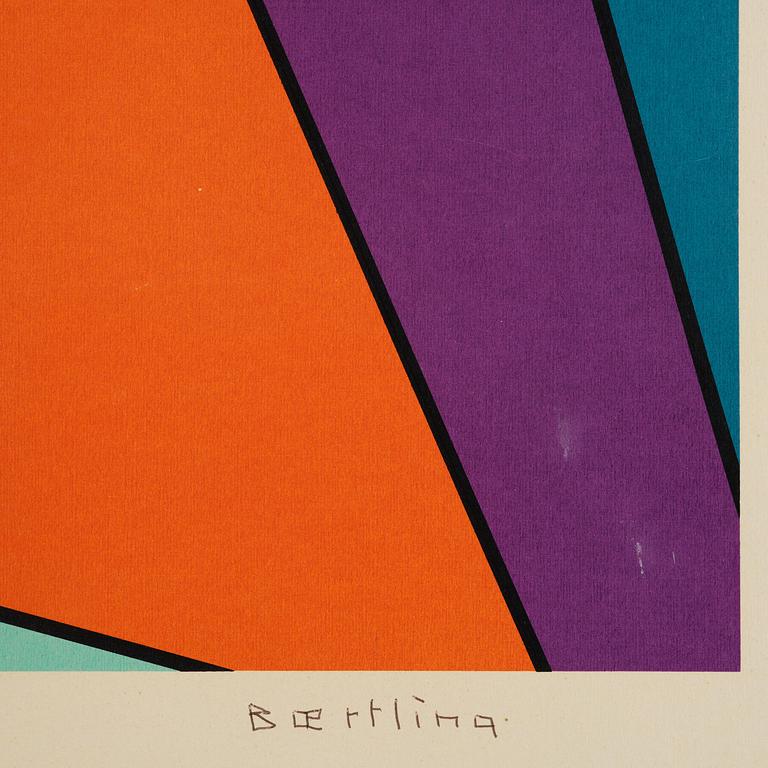
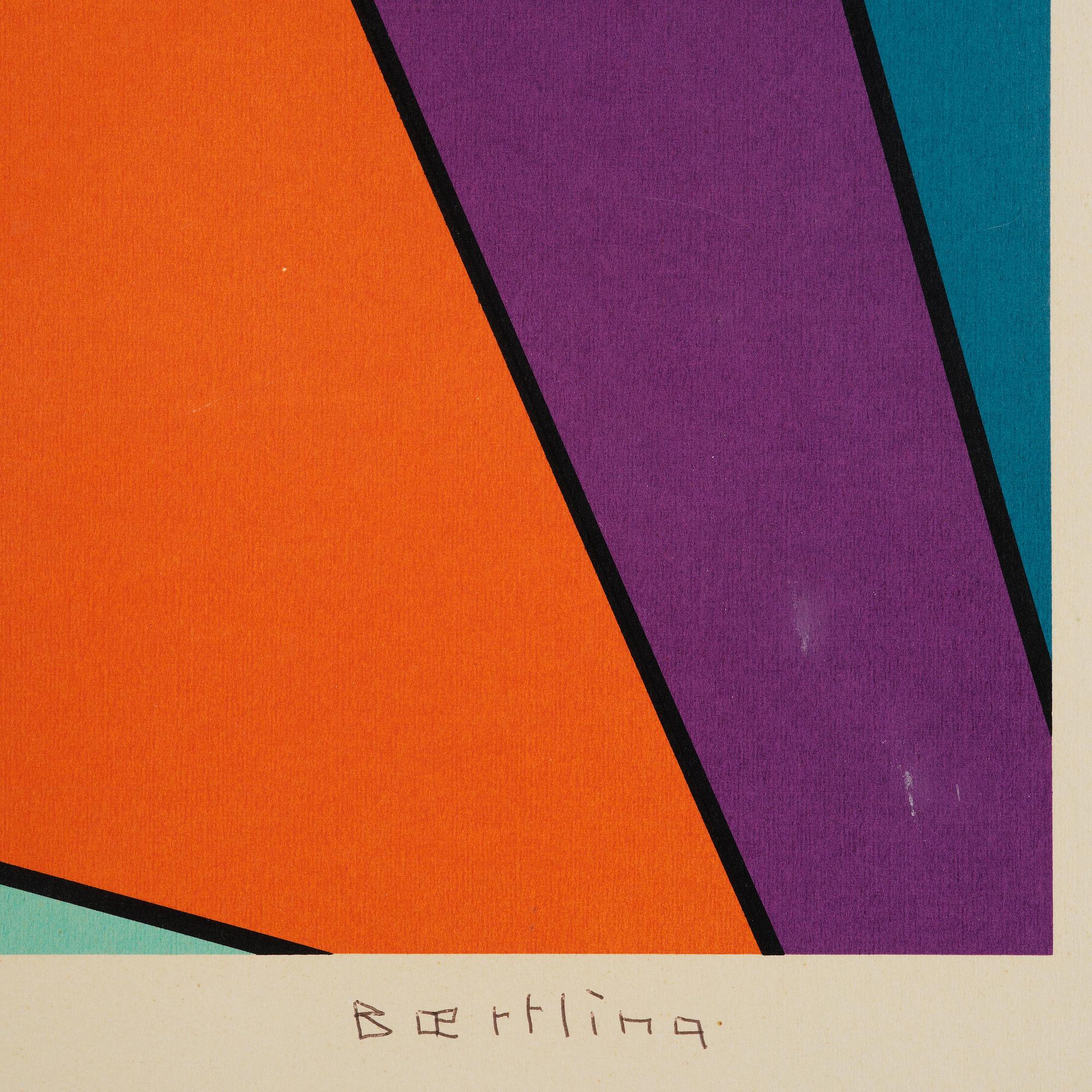
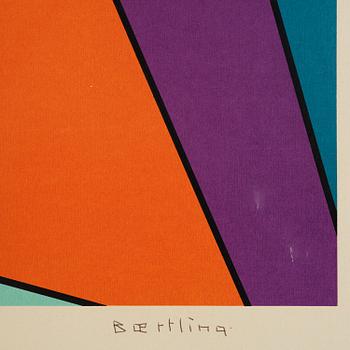
Colour serigraph, 1973-77, signed Baertling and numbered EA. 93 x 46 cm, sheet size 109 x 74 cm.
Not examined out of the frame. Minor stains. Yellowed.
More information
It has always been difficult to simply place Olle Baertling's artistic career within a specific -ism or artist grouping in Swedish art history. He was an independent artist who charted his own course both in life and in art. Olle Baertling long felt that there was a resistance to his art; he was "the constantly controversial banker who tried to paint" in Sweden. Many artists have, of course, experienced resistance when they innovatively and creatively presented something new to the public, but in Baertling's case, one might feel that it was unfair and petty, as he, unlike many of his contemporaries, reached far beyond his homeland's borders even during his lifetime.
The 1950s were Olle Baertling's most important decade. During the early years of the 50s, he took longer and longer leaves from his banking job at Skandinaviska Banken and travelled to Paris. There, in the Mecca of art, he came into contact with the new at the Salon des Réalités Nouvelles and sought out artists such as André Lhote, Fernand Léger, Victor Vasarely, Richard Mortensen, and Auguste Herbin. The latter became crucial for his continued development as an artist. Herbin introduced Baertling to the forward-thinking gallerist Denise René, who immediately included Baertling in her "stable" of constructivists. Baertling abandoned the OP art that had inspired him for a time and began to create a style of his own, where triangles and diagonals became the main theme. Once Baertling had committed himself to the non-figurative, he began to "construct" paintings. From geometric basic elements, he built a new pictorial world of proportions, relationships, and synthetic, programmed colour harmonies. Everything was methodically executed; the geometric instinct took over, and "the open form" was born. In the concept of "the open form," Baertling sought to depict space and movement through his geometric shapes that continued beyond the surface of the canvas, everything that existed within the picture plane was pushed out to the edge of the frame and beyond.
More about Olle Bærtling
Olle Bærtling was born in Halmstad in Sweden and is most notable for his painting and sculpture. Bærtling studied like Bengt Lindström in Paris for André Lhote and Fernand Léger. His first exhibition took place in Stockholm in 1949. Bærtling works foremost in a geometric, non-figurative style, approaching his art as a scientist would his research. In 1956 Bærtling discovered his open form, the open trangle with sharp angles which express speed. When in 1956 he positioned the apex of the triangle beyond the boundaries of the frame, the canvas became merely a segment of an event occurring beyond our visual field. The sense of speed is emphasized by the colour, which gives the impression of higher velocities the closer to the triangle’s apex. Black outlines are strong characteristics of Bærtling’s art, while they may seem straight, they actually bend inwards towards the large fields, counteracting their outward pressure. Colour was also essential to Bærtling’s work, whereby it was imperative that they could not be found in nature and were not associated to any form or object. Thus Bærtling only utilised secondary colours: violet, orange, green, and Bærtling-white (a week green-tinted colour). His open form is most evident in the sculptures he made from 1958 onwards. Bærtling consistently delved into the interplay between colors and shapes, remaining unaffected by external artistic trends throughout his life. Today, we can see how artists such as Ann Edholm have been inspired by Bærtling's creations.
Read moreFor condition report contact specialist
Covered by droit de suite
Image rights
The artworks in this database are protected by copyright and may not be reproduced without the permission of the rights holders. The artworks are reproduced in this database with a license from Bildupphovsrätt.