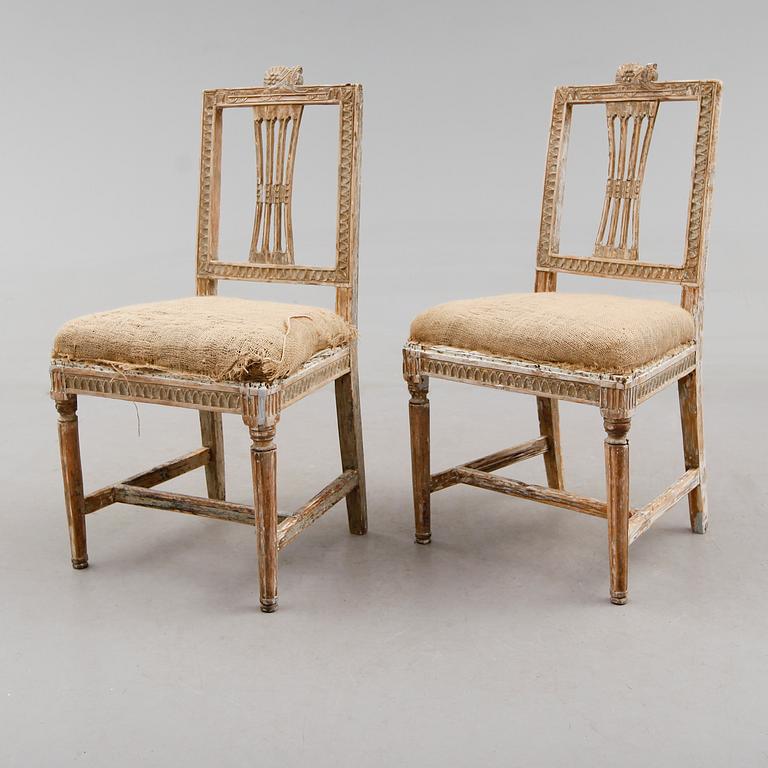
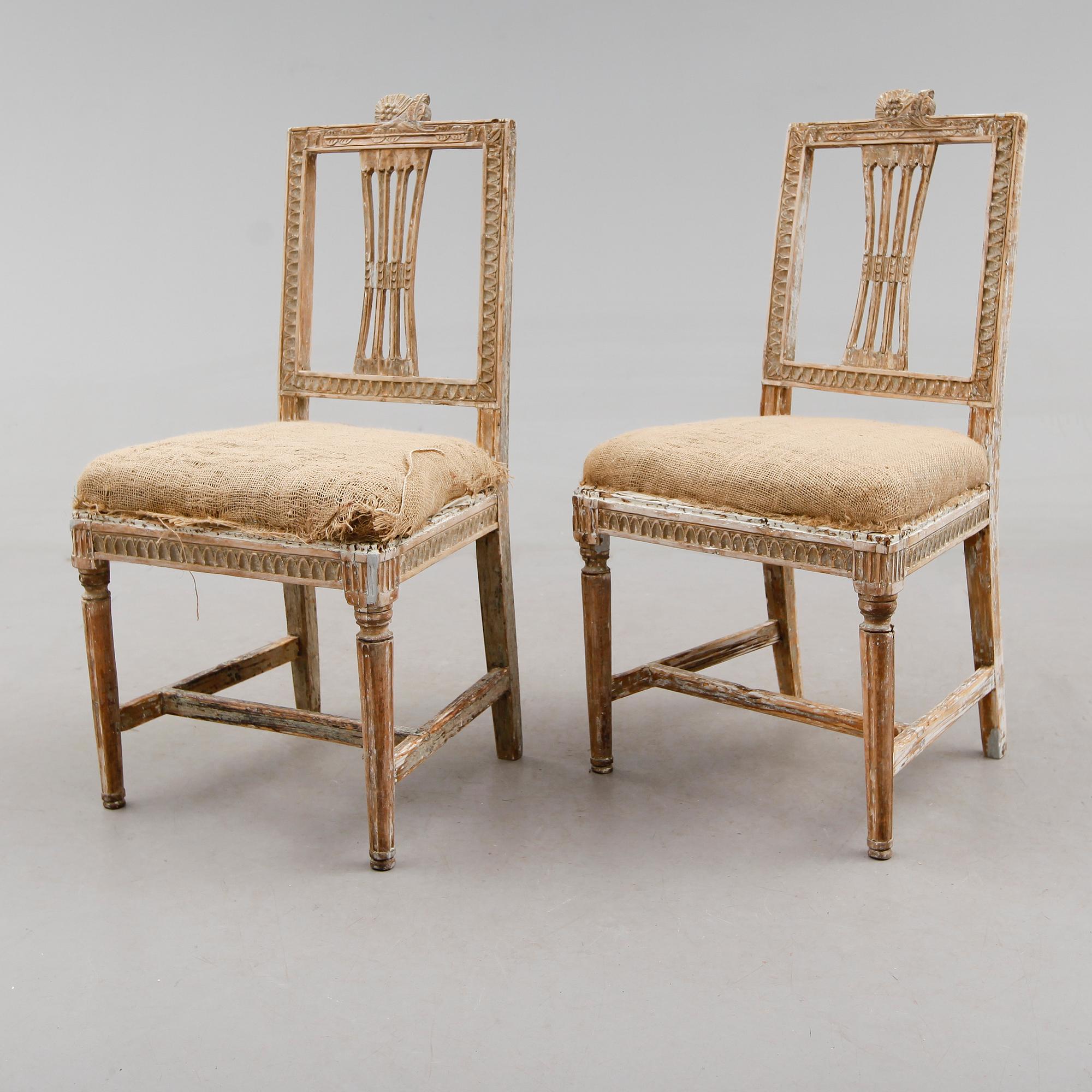
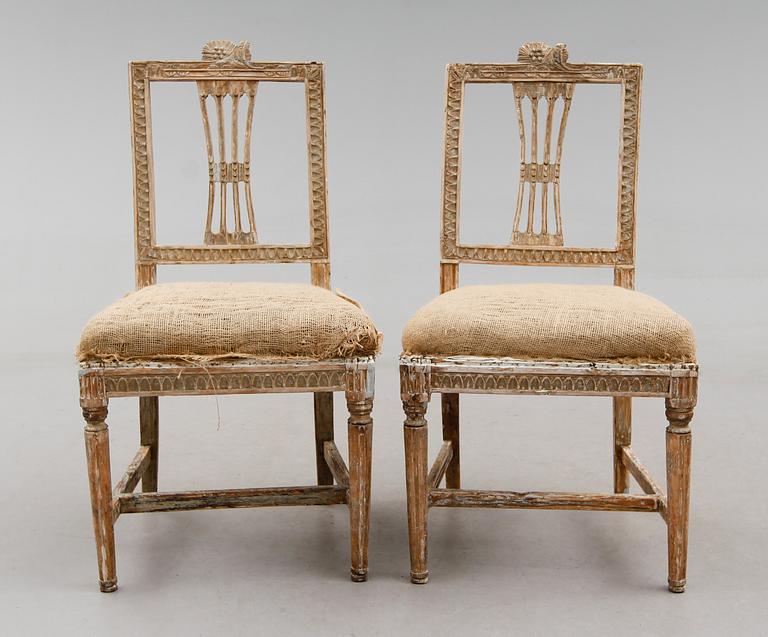
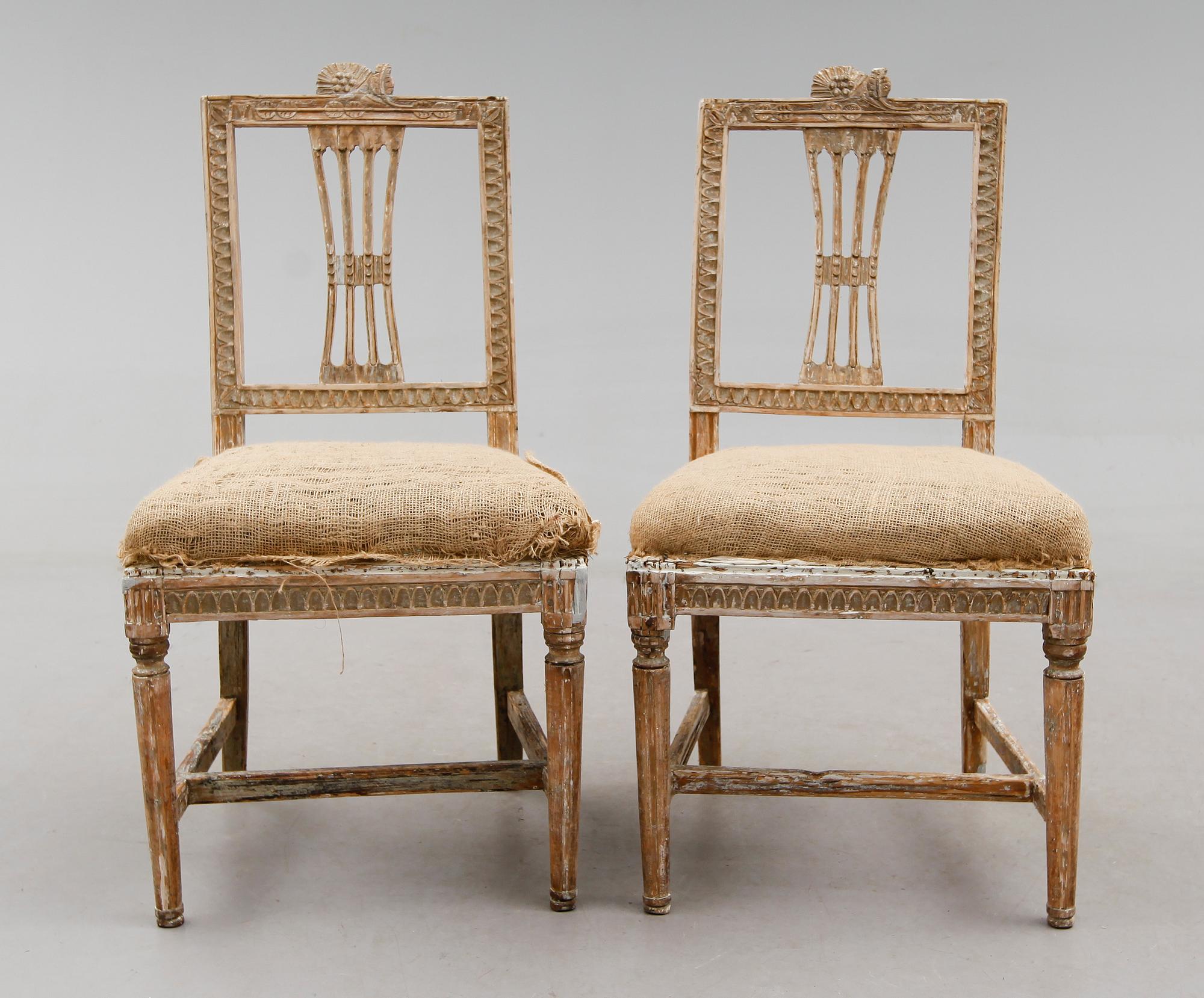
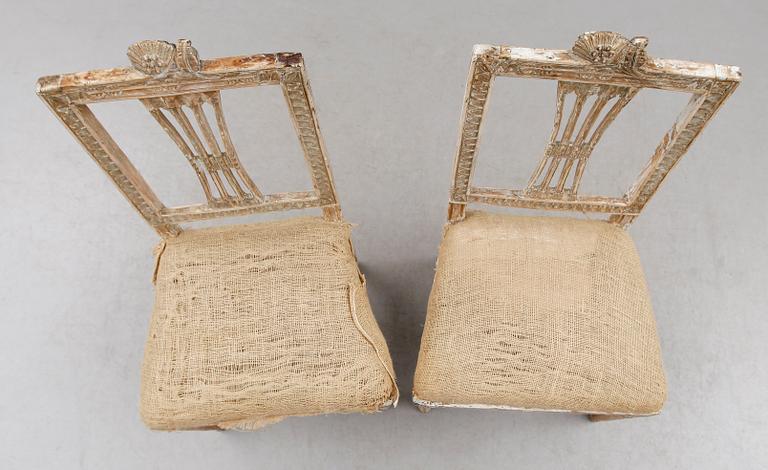
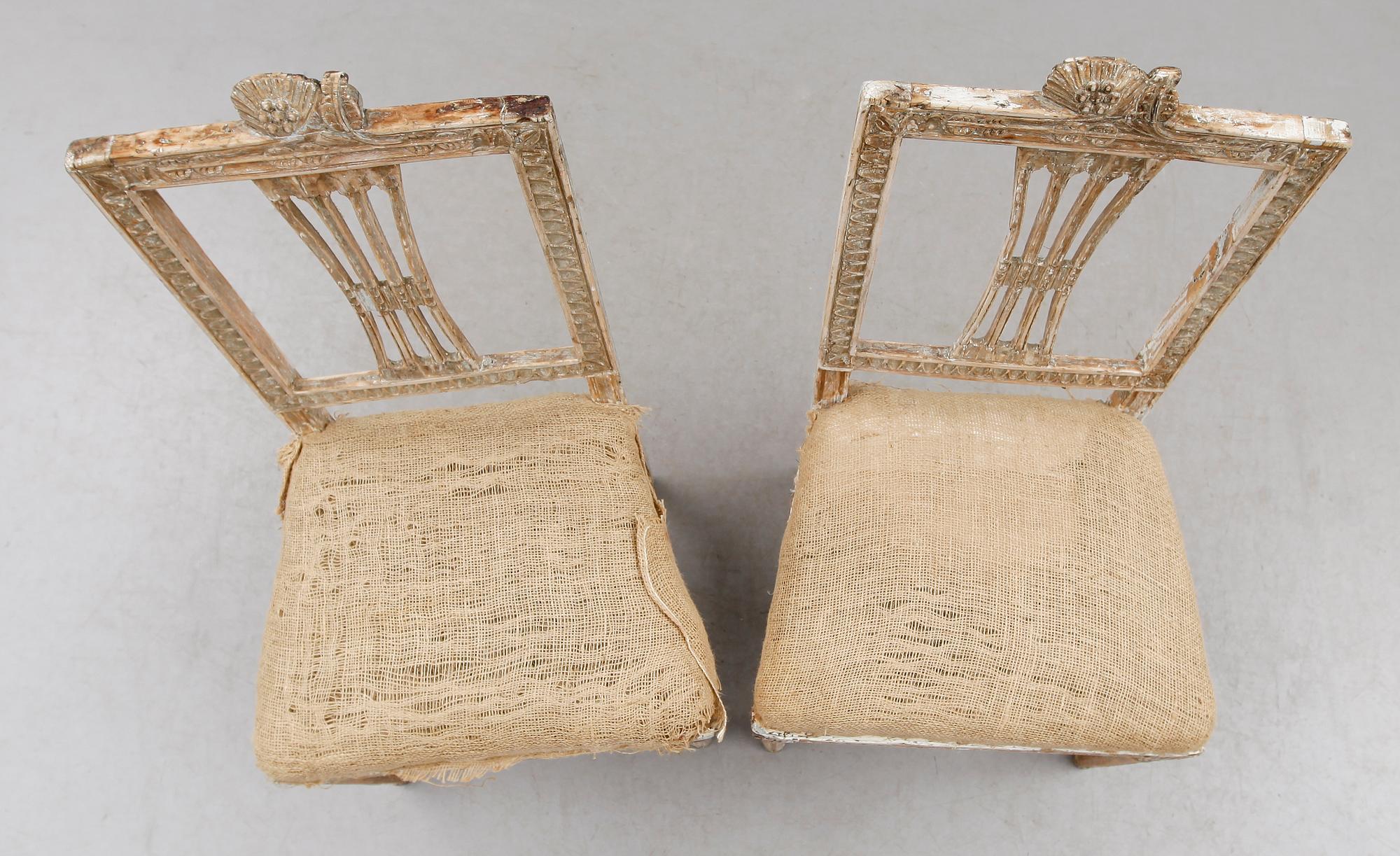
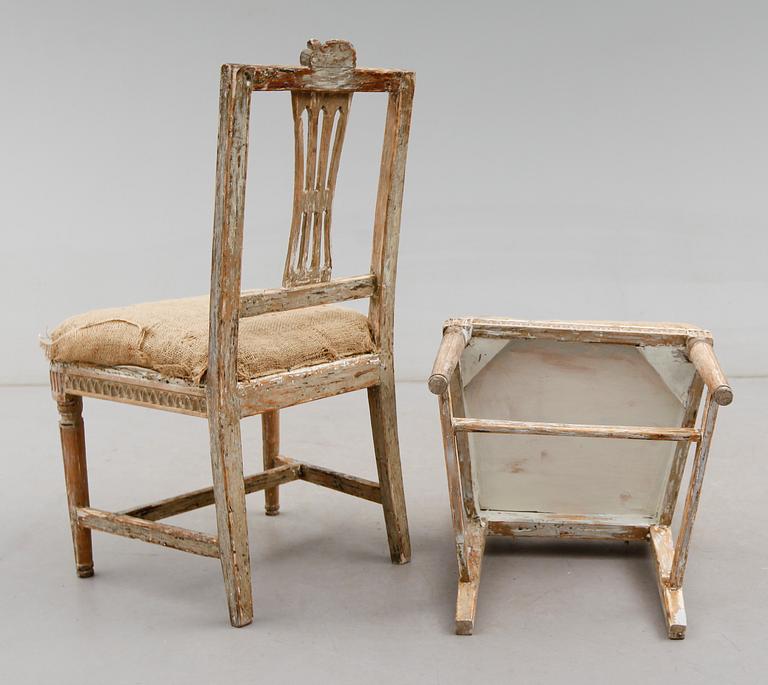
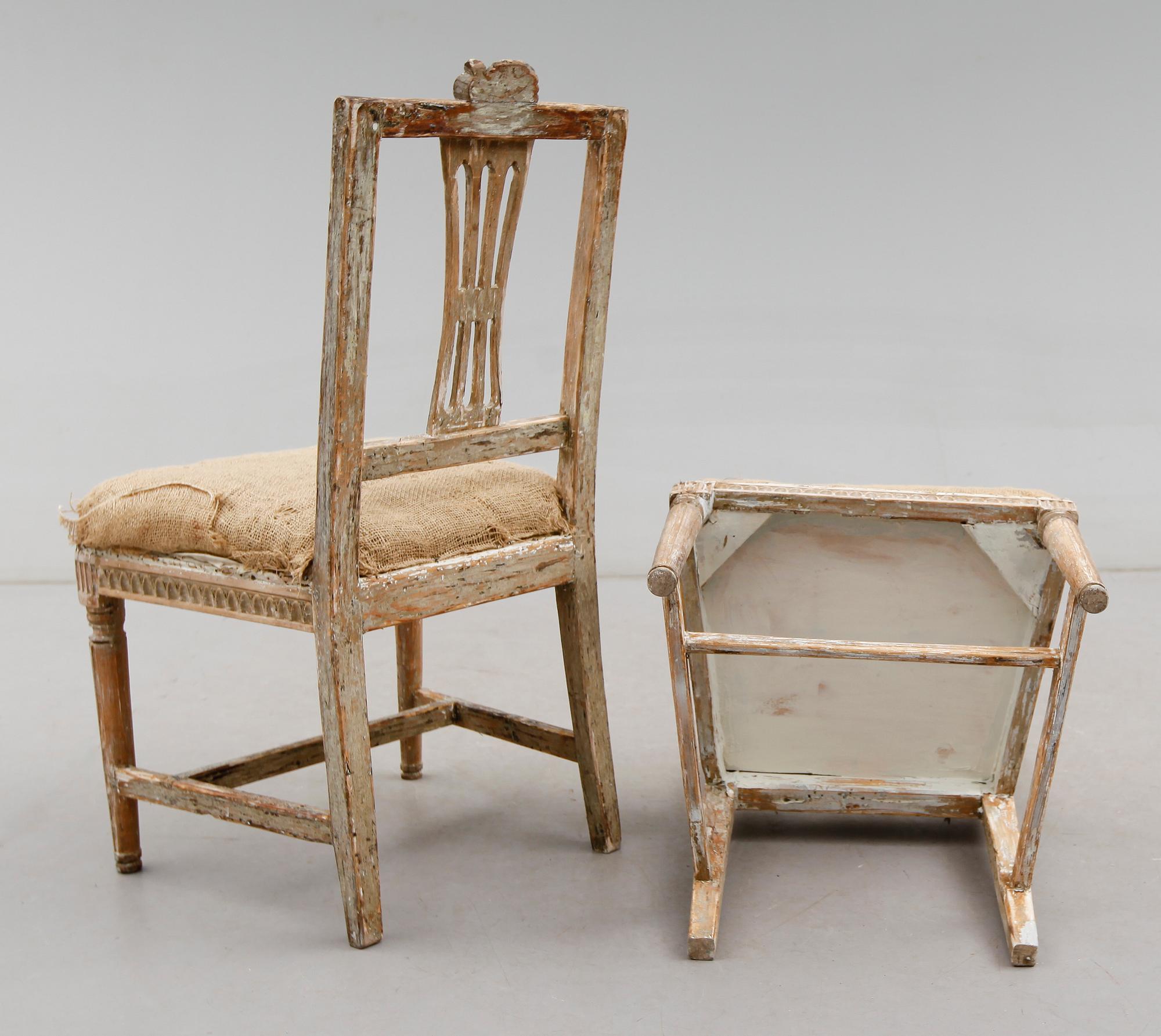
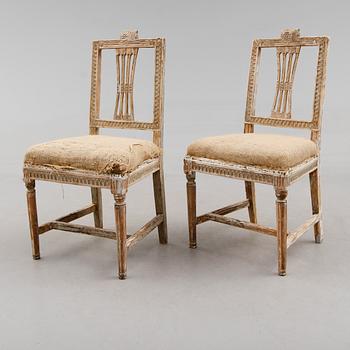
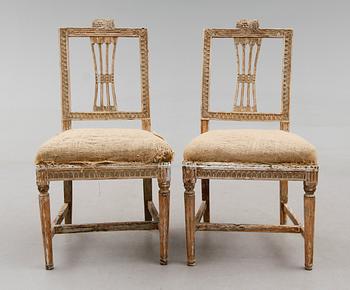
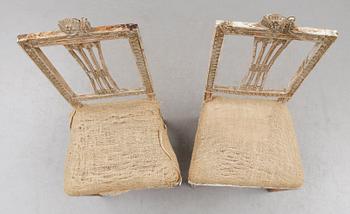
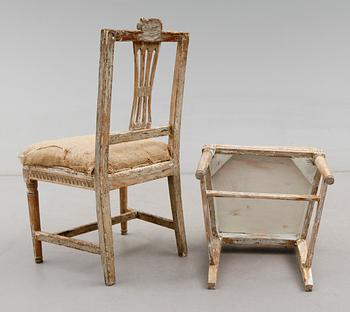
STOLAR, 1 par, sengustavianska, tidigt 1800-tal.
Rester av originalmålning. Genombruten rygg med spjälknippe, krön med skuren dekor av humlekvist. Fast stoppad sits. Kopplad benställning.
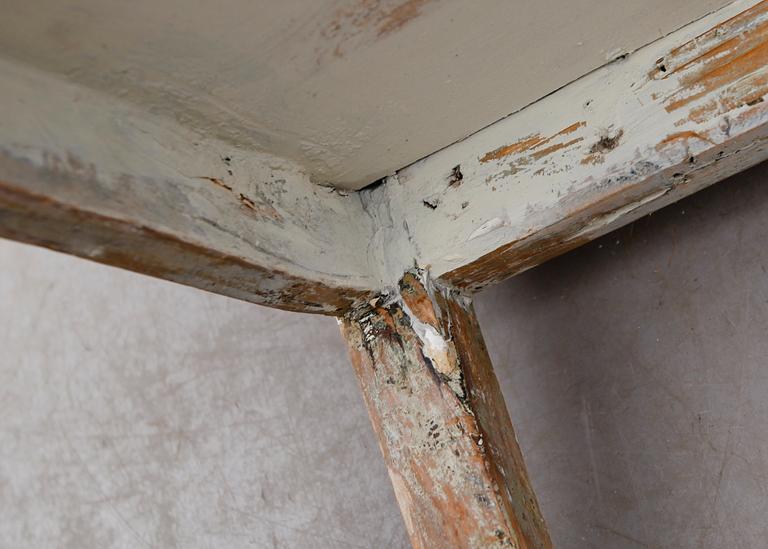
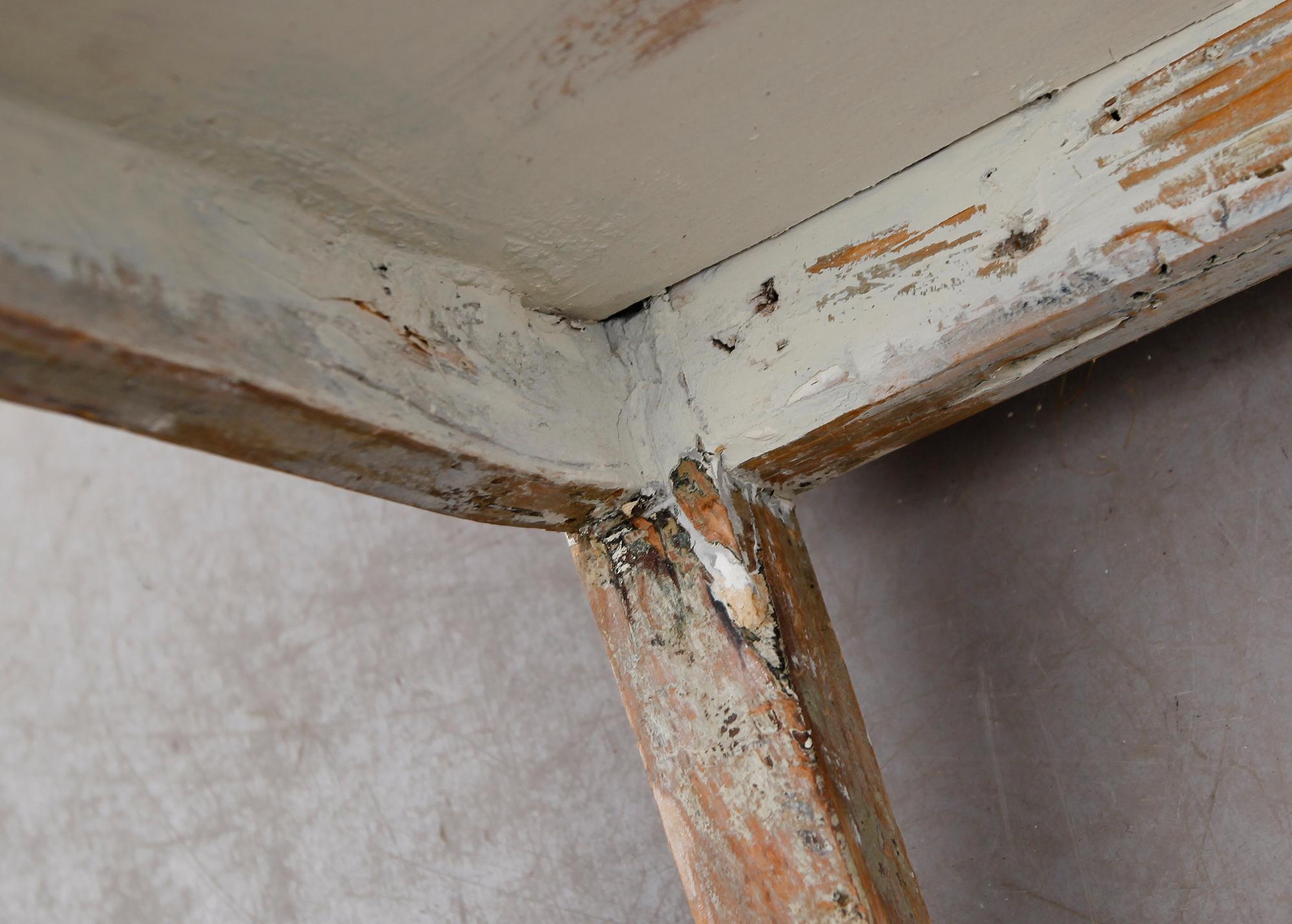
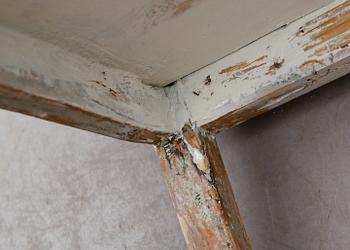
Slitage, repor och märken. Färstärkningar i sits. Klädsel saknas.
More about Gustaviansk
The Gustavian era fell between 1775 and 1810. The furniture then takes on, in contrast to Rococo, a more restrained contour. The legs become straighter and tapered, the colours become softer in mostly grey-green and grey-blue tones. Typical to the Gustavian time is intarsia, inlays with medallions and classical borders. The chairs backrests are often straight spindles or a curved bundle of spindles, with the finer chairs have a padded back with a rosebud decoration at the top. A significant detail is the flower, "fleuron", which is often found in corner ornaments, leaf scroll decoration, and festoons of leaves, flowers, or fruits. Between the years of 1785-1810 is commonly known as the late-gustavian era and is known for its rigid clacissism. Rich intarsia decoration was replaced by smooth, dark mahogany with elegant brass fittings and moldings.
Read more