Alexander Calder
Jeweller to the Modern Woman
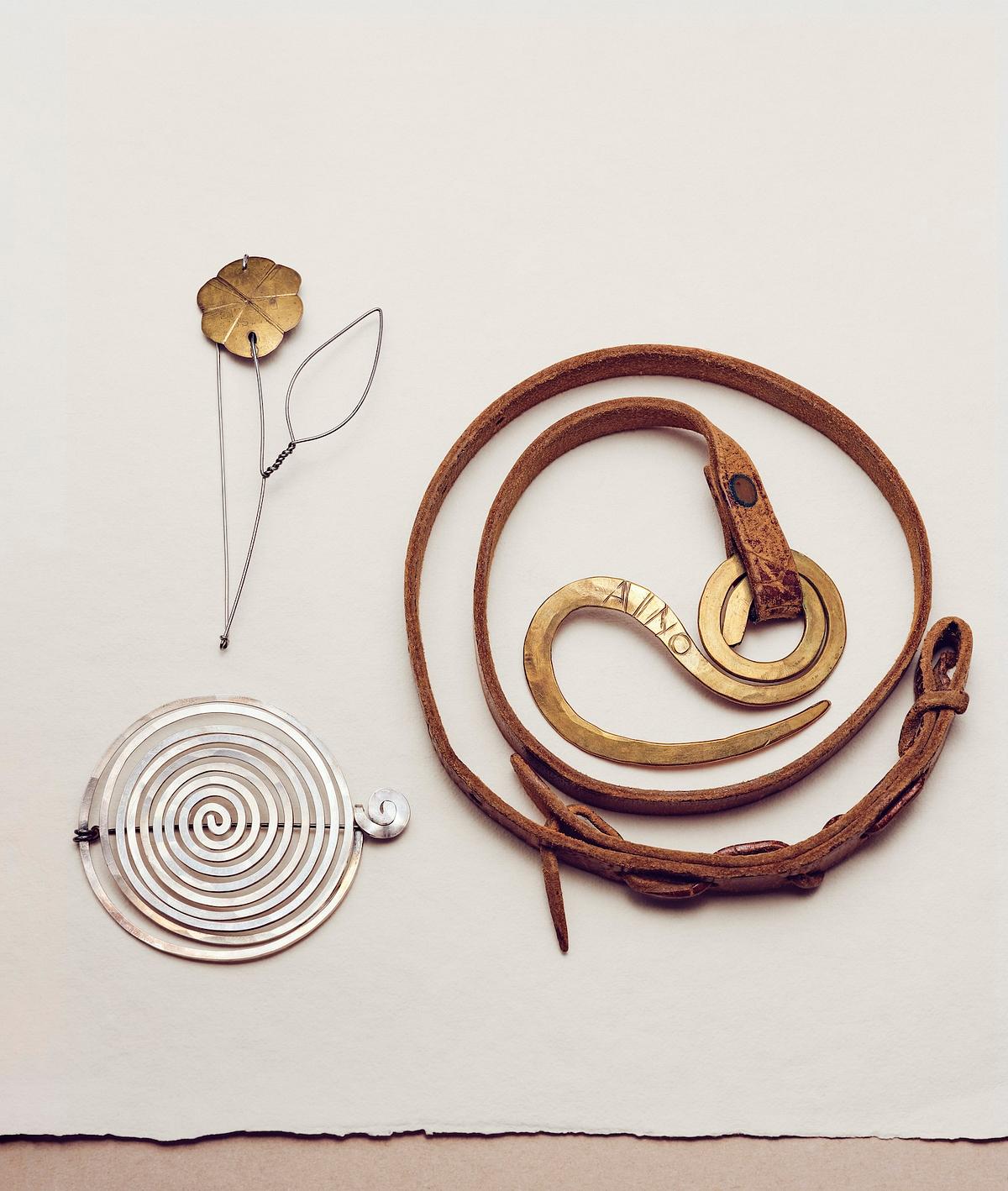
Bukowskis’ upcoming online auction, Helsinki Design Sale, will feature three unique jewels by Alexander Calder, from the collection of Aino Aalto and her family.

During the 1930s and 1940s, the American artist Alexander Calder (1898–1976) created jewellery for a new kind of woman: modern, independent, and instinctively attuned to form. His sculptural creations were worn by figures such as the gallerist Peggy Guggenheim, the writer and feminist Simone de Beauvoir, and the artist Georgia O’Keeffe – as well as the architect Aino Aalto.
In the 1930s, Calder redefined the tradition of jewellery-making and laid the foundations for a visual language whose influence on modern jewellery design remains unmistakable. Rejecting conventional precious materials, he created jewels whose value was determined not by gemstones, but by idea, line, and form. The artist who would later become celebrated for his mobiles approached jewellery as miniature sculpture – objects animated only when worn on the body.
Calder worked primarily in silver, brass, and copper. In place of precious stones, he chose fragments of sea-worn glass, shards of broken porcelain, pebbles, and even bone. In these modest materials one may discern an ambition to create beauty also for those beyond the most privileged circles – an effort to democratise jewellery as an art form. This aspect must surely have resonated with Aino Aalto, one of the founders of Artek, whose guiding vision was to bring beauty into everyday life across social classes.
In the 1930s, Calder redefined the tradition of jewellery-making and laid the foundations for a visual language whose influence on modern jewellery design remains unmistakable. Rejecting conventional precious materials, he created jewels whose value was determined not by gemstones, but by idea, line, and form.
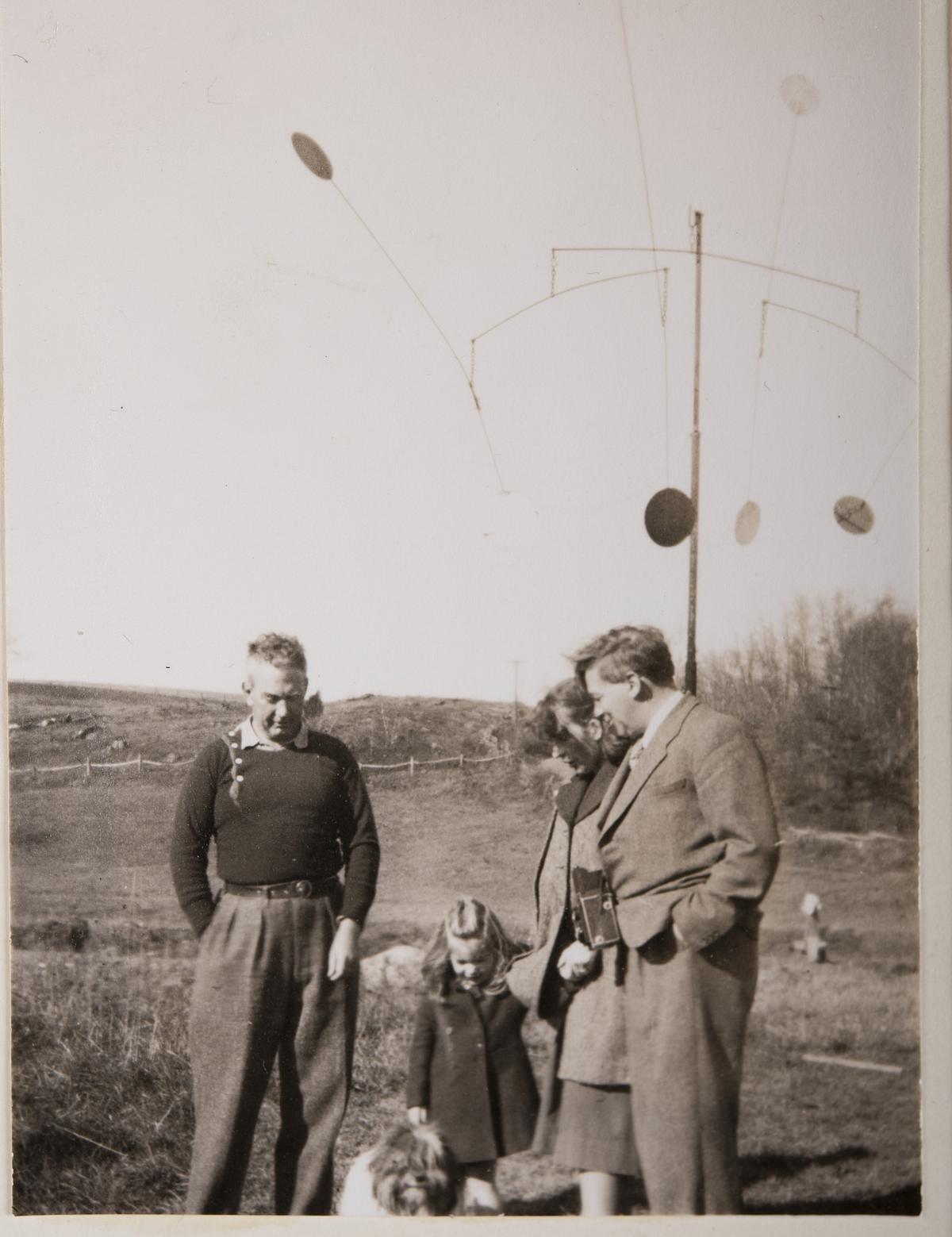
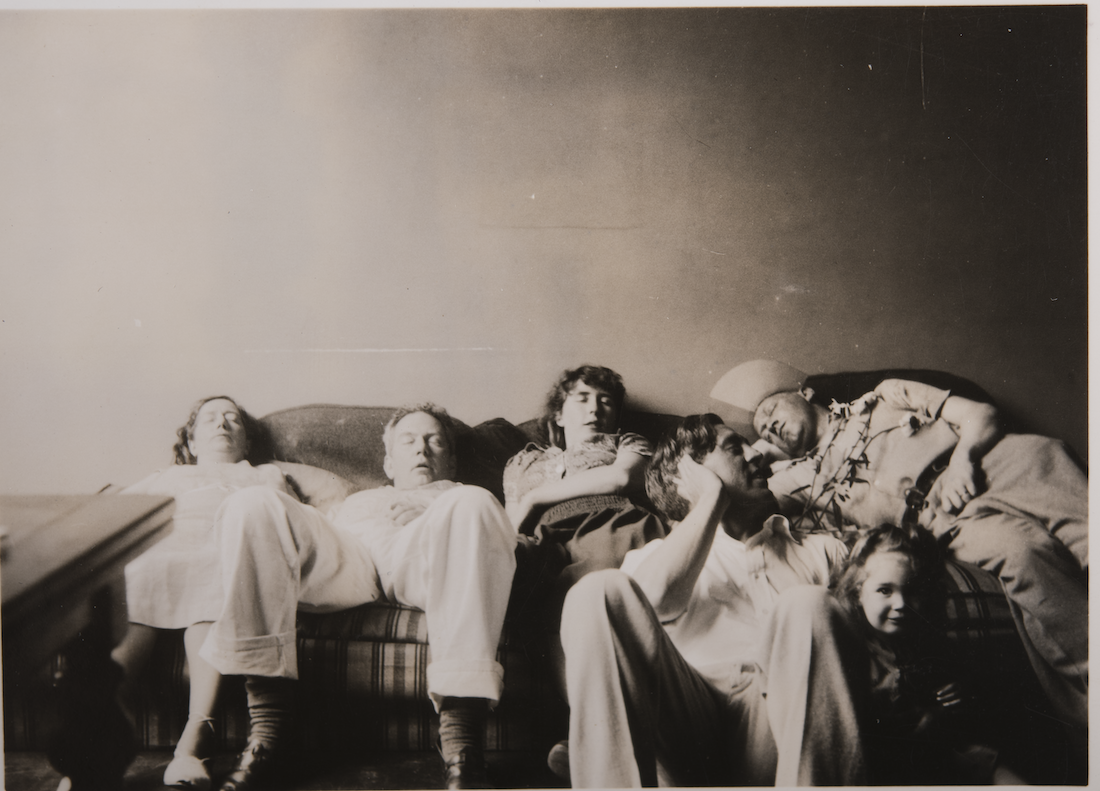
All of Calder’s jewels were made by hand as unique works, and he gave them chiefly to family and friends. By the 1930s, Calder jewellery had become a phenomenon within avant-garde and international modernist circles, and early in his career the artist also produced a small number of pieces for sale. He consistently refused, however, to allow his jewellery to be mass-produced, a decision that only heightened its desirability.
“At the opening of the Museum of Modern Art [in 1939], everyone wore Calder jewellery, which at the time was a sign that one belonged to the right circle,” Maire Gullichsen — one of the founders of Artek alongside Aino Aalto — later recalled.
Aino Aalto and Maire Gullichsen both belonged to this “right circle”, and over the years each received several jewels as gifts from Calder. The Aaltos’ long friendship with Calder began in Paris in the 1930s. In the lead-up to the 1937 Paris Exposition, Aino and Alvar Aalto visited Calder at his Paris home, and later that same year Artek Gallery presented a joint exhibition of works by Fernand Léger and Alexander Calder that caused a sensation in Finland. Among the works shown were five early mobiles by Calder.
In 1938, Artek Gallery mounted an exhibition of Calder’s jewellery, ranging from surreal, monumental necklaces to smaller, more commercially viable yet strikingly bold spiral rings. Contemporary reviews described the pieces as eccentric, primitive silver jewels.
Although the exhibition Alexander Calder: Korut was not a commercial success, the modest presentation in Helsinki holds an important place in the history of jewellery. It was the first exhibition devoted exclusively to the artist’s jewellery, and would remain one of very few of its kind. From the 1950s onwards, Calder increasingly turned his attention to his mobiles, thereafter creating jewellery almost exclusively as gifts for those close to him.
“At the opening of the Museum of Modern Art [in 1939], everyone wore Calder jewellery, which at the time was a sign that one belonged to the right circle,” Maire Gullichsen — one of the founders of Artek alongside Aino Aalto — later recalled.
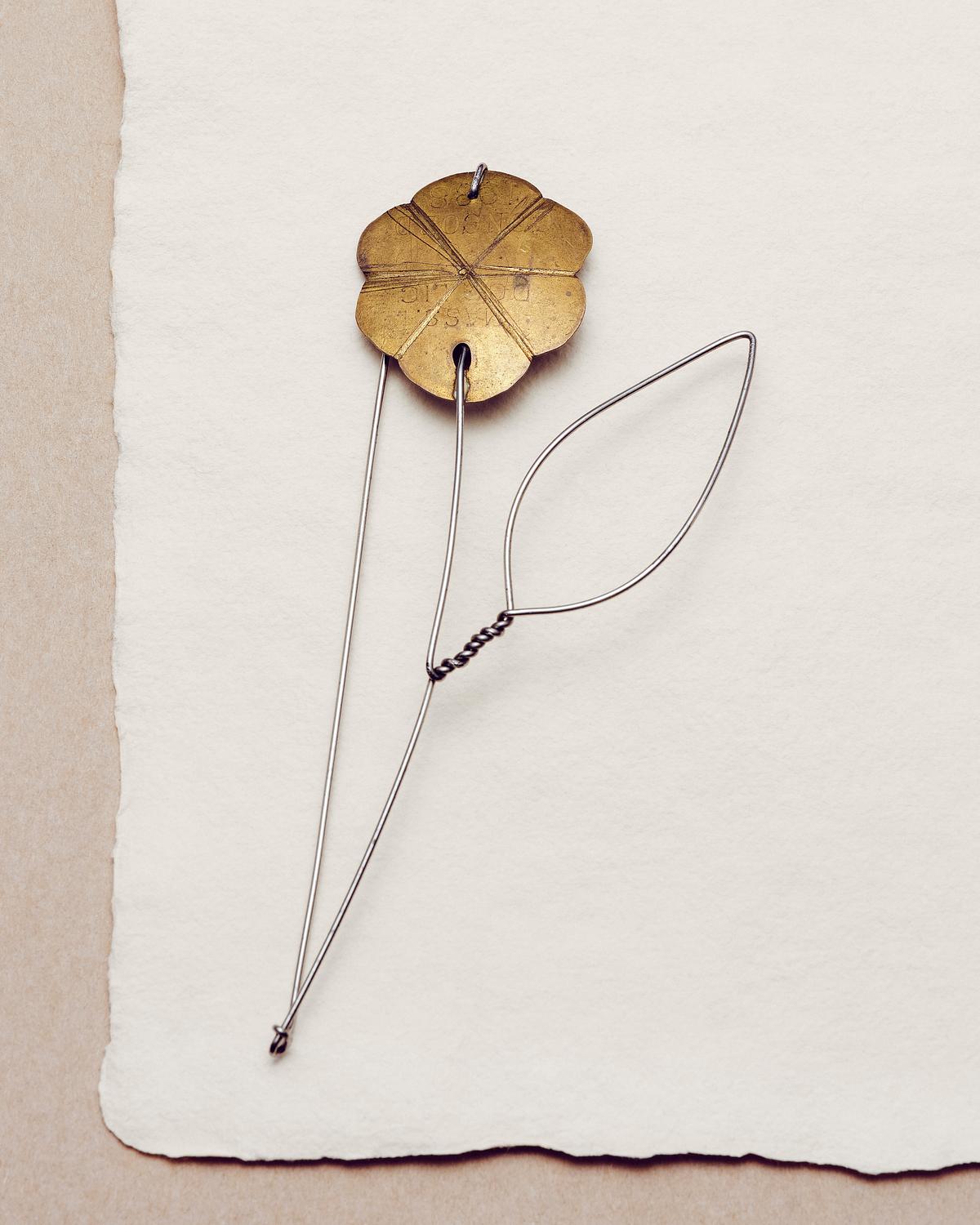
The friendship between the Aaltos and Calder lasted a lifetime, sustained by a shared vision of art and architecture. In 1940, during the war years, the Aalto family travelled to the United States for several months and spent time at Calder’s home and studio in Roxbury, Connecticut. It was during this trip that the delicately wrought floral brooch now offered at auction was given by Calder to the Aaltos’ daughter Johanna on the occasion of her fifteenth birthday.
Calder made his jewellery relatively quickly, often within a single day. He was known always to carry the pliers needed to bend wire into form, and he also hammered the metal by hand, leaving the finished pieces with a characteristically rough, unpolished surface. Their formal language reflects the currents of the avant-garde: Surrealism, Dada, the various strands of abstraction, and primitivism.
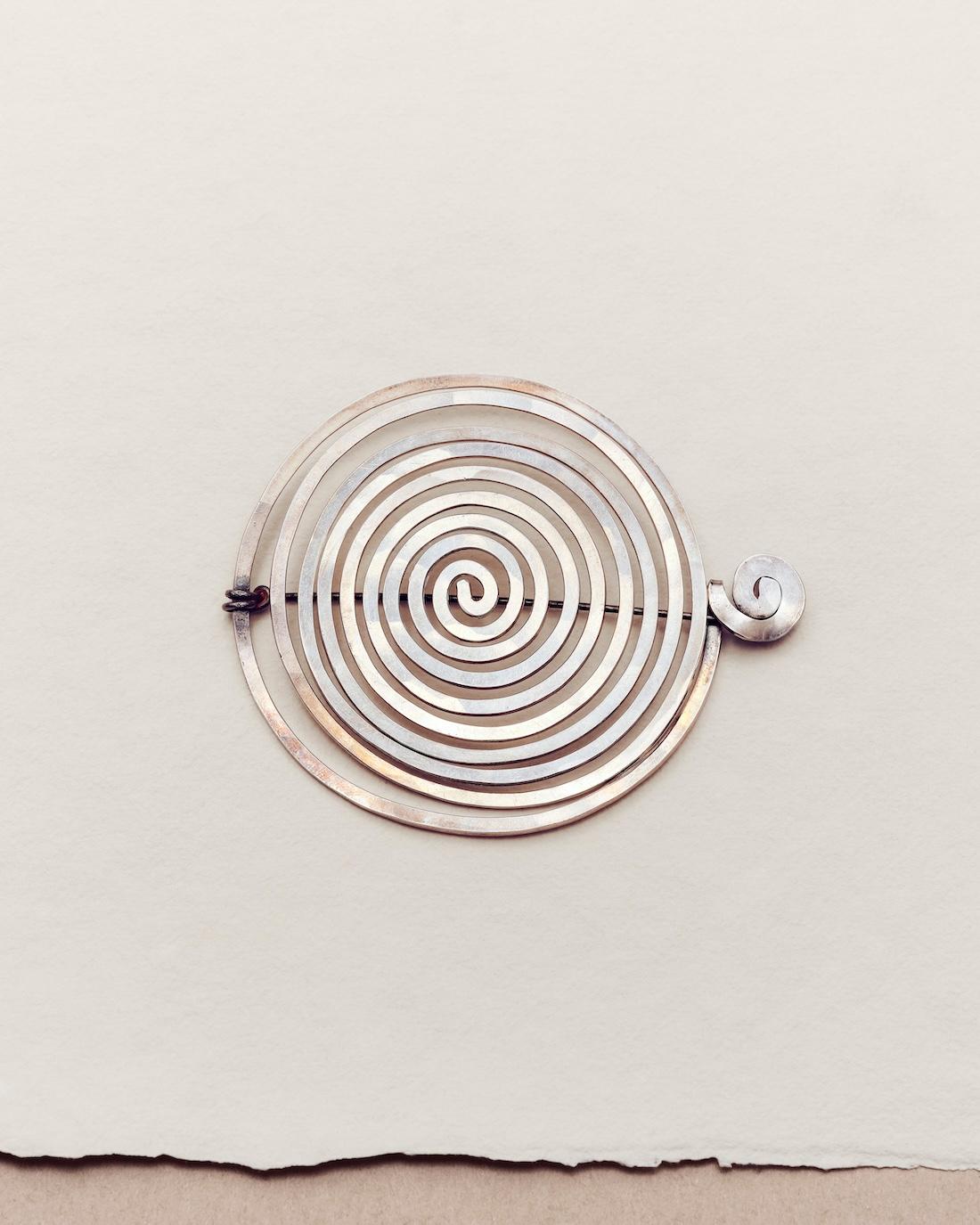
The spiral has fascinated makers of jewellery since the Bronze Age, and Calder, too, was deeply drawn to this motif, often associated with movement, infinity, and eternity. The spiral brooch he presented to Aino Aalto in the 1940s appears to have been a form he considered especially successful, as he created several closely related versions, including examples for Maire Gullichsen and Simone de Beauvoir.
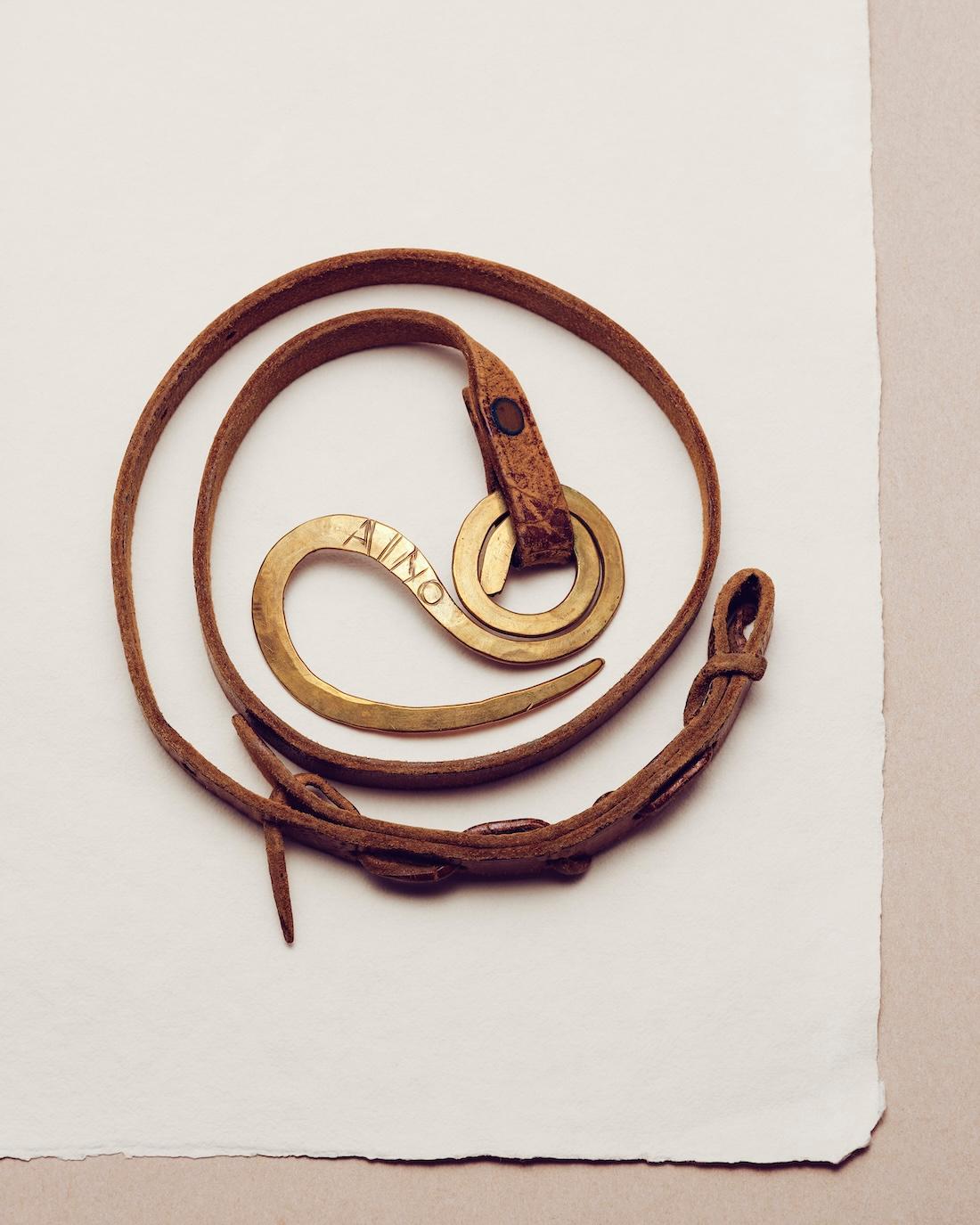
The belt buckle bearing the name “Aino” was given by Calder to Aino Aalto in 1938. Perhaps he chose a belt precisely because she rarely wore jewellery. Johanna Alanen later described her mother as dressing in “beautiful clothes made of fine materials, though she wore very little jewellery”.
Yet on several of the most significant artistic and social occasions of the late 1930s, Aino Aalto — architect and artistic director of Artek — chose to wear Calder jewellery. She is known to have worn a Calder brooch at the opening of the French Art exhibition at Helsinki Art Hall in 1939, and later that same year at the opening of MoMA’s new wing in New York. From the opening of the French Art exhibition, the following description of Aino Aalto’s and Maire Gullichsen’s attire survives in Svenska Pressen:
[Maire Gullichsen] was particularly elegant in her long black gown, with a pale chiffon scarf in her hand and a golden Calder jewel at her shoulder. The strongly decorative character of this original jewel could hardly have wished for a finer setting. Architect Aino Aalto, too, wore a Calder jewel against a black velvet ensemble, long-sleeved and perfectly suited to the evening. Beneath the black velvet skirt appeared open-toed sandals with gleaming red straps of wrapped silk.
The article also noted that Maire Gullichsen was the first woman ever to deliver the opening address at an exhibition at the Art Hall. For women such as these — women forging new paths — Calder’s unprecedented jewellery was an especially fitting choice.
The lots will be offered in Bukowskis’ online auction, Helsinki Design Sale, April 24 – May 03. For further information and condition reports, please contact our Design Specialist, Anna Rosenius.
Text: Mia Zambra
Archive images: Aalto Family Collection
For more information and condition reports, please contact: