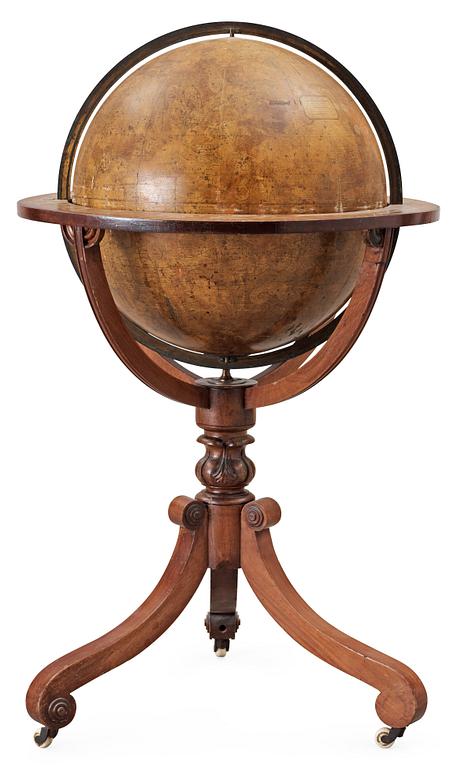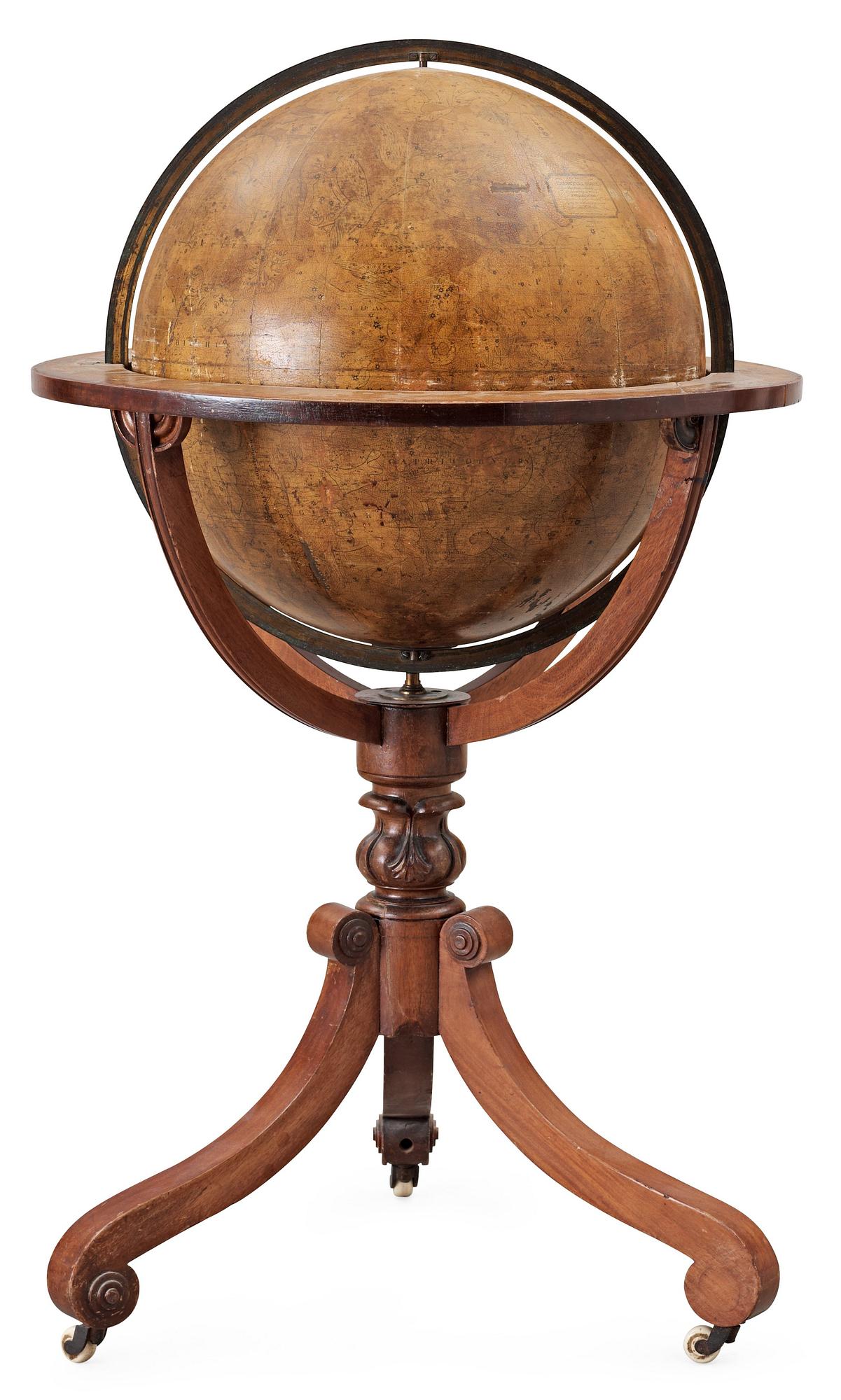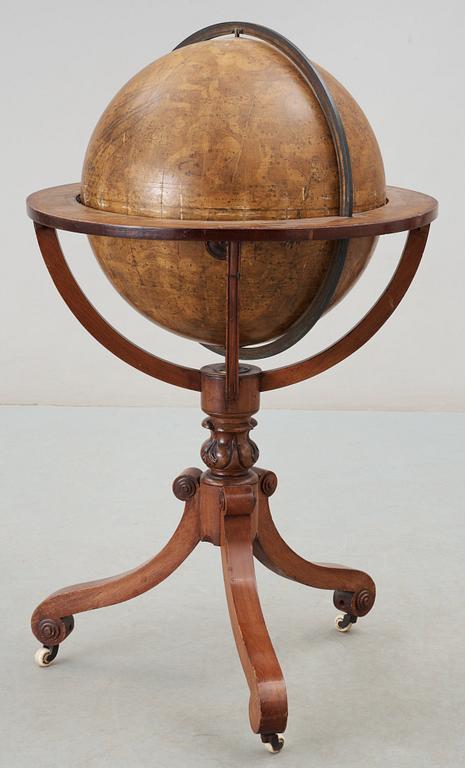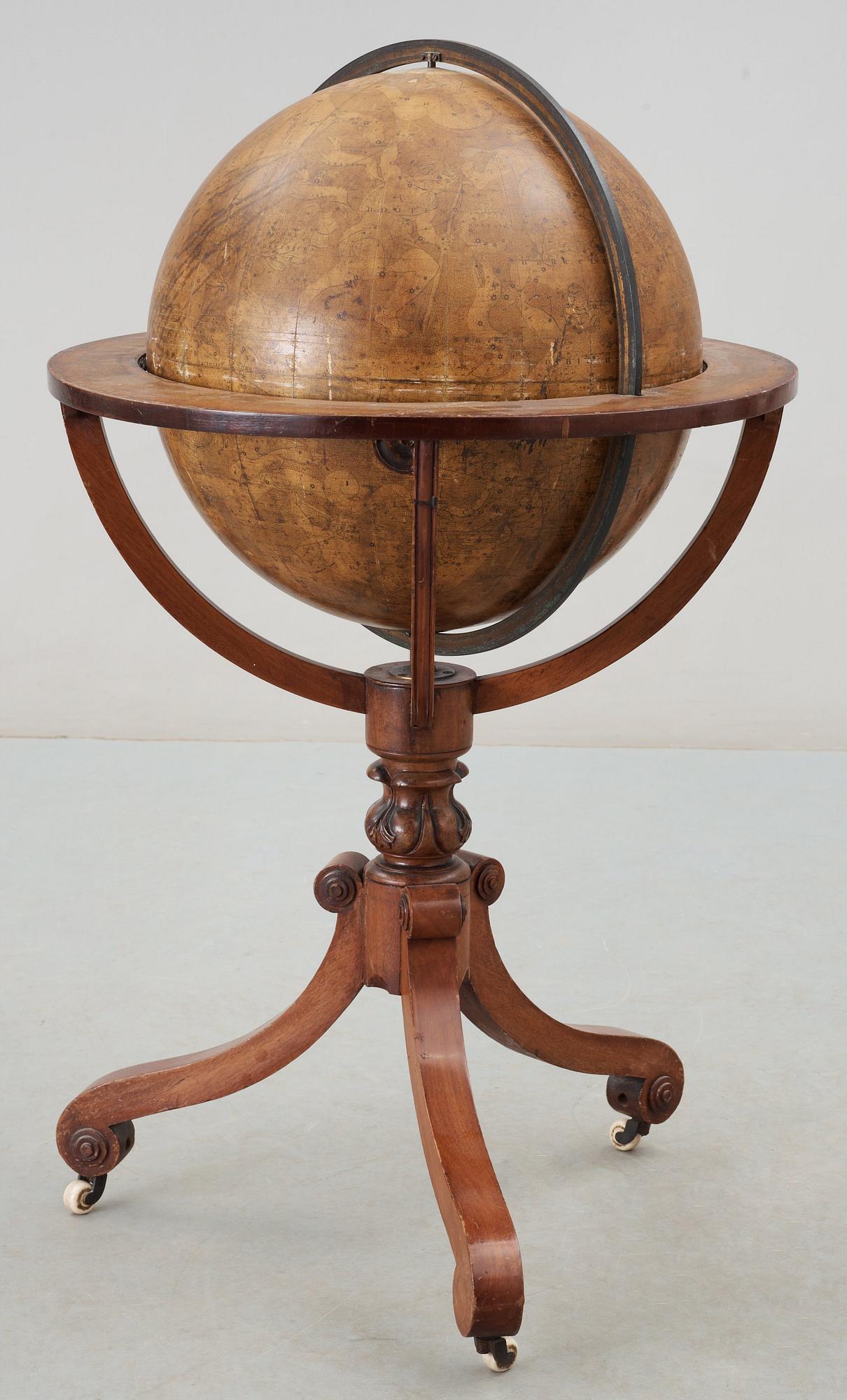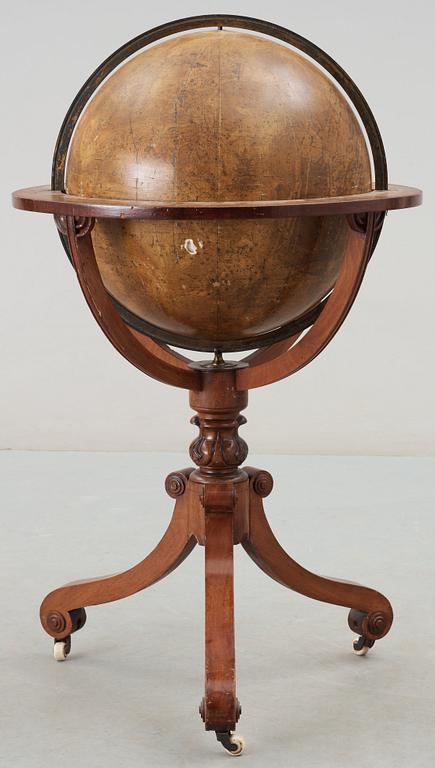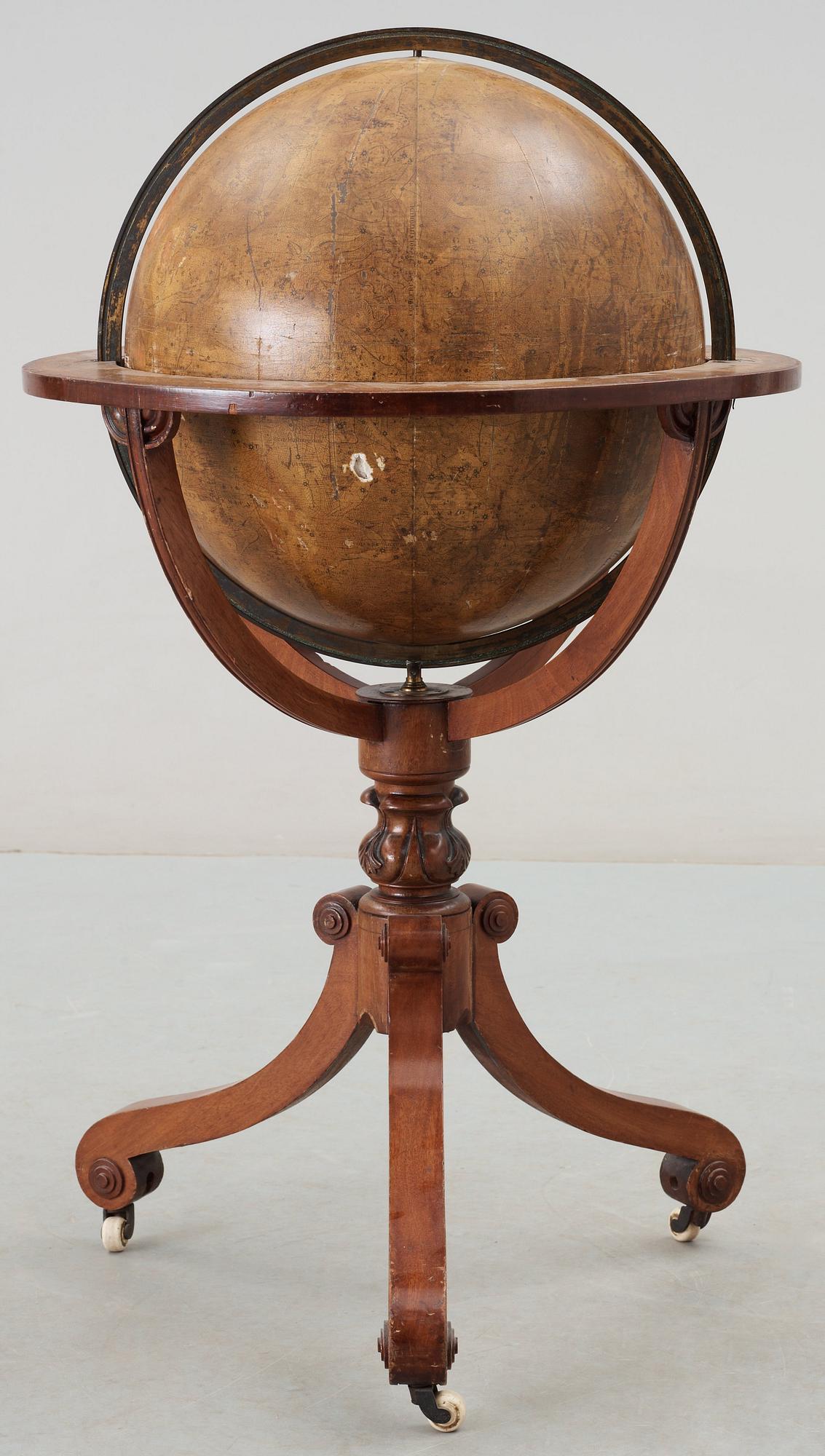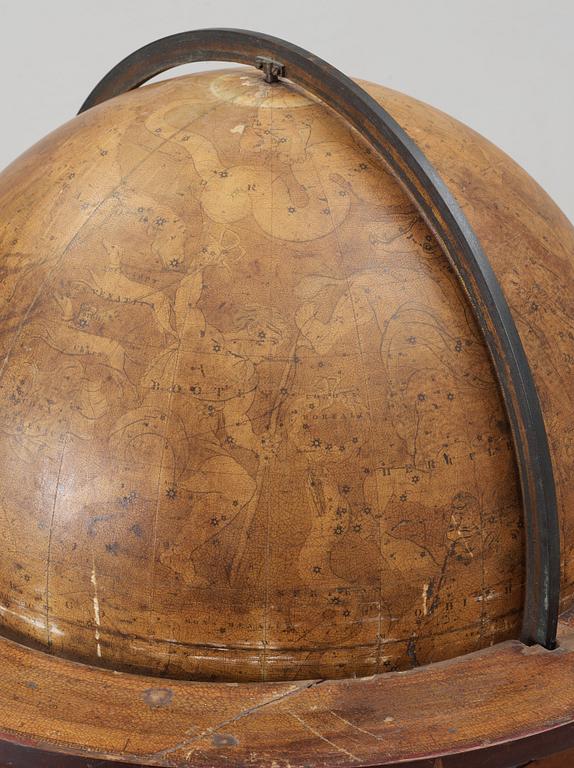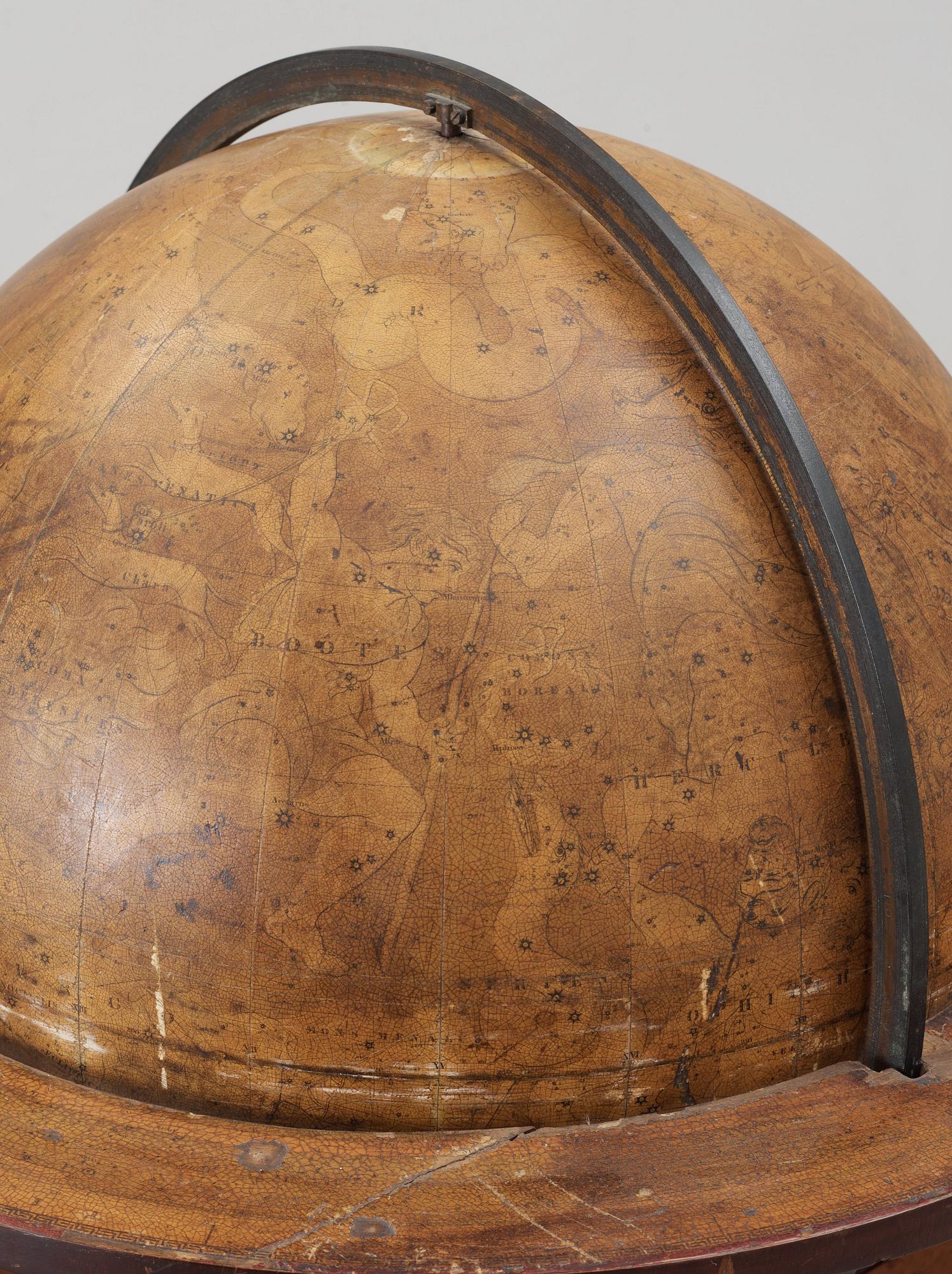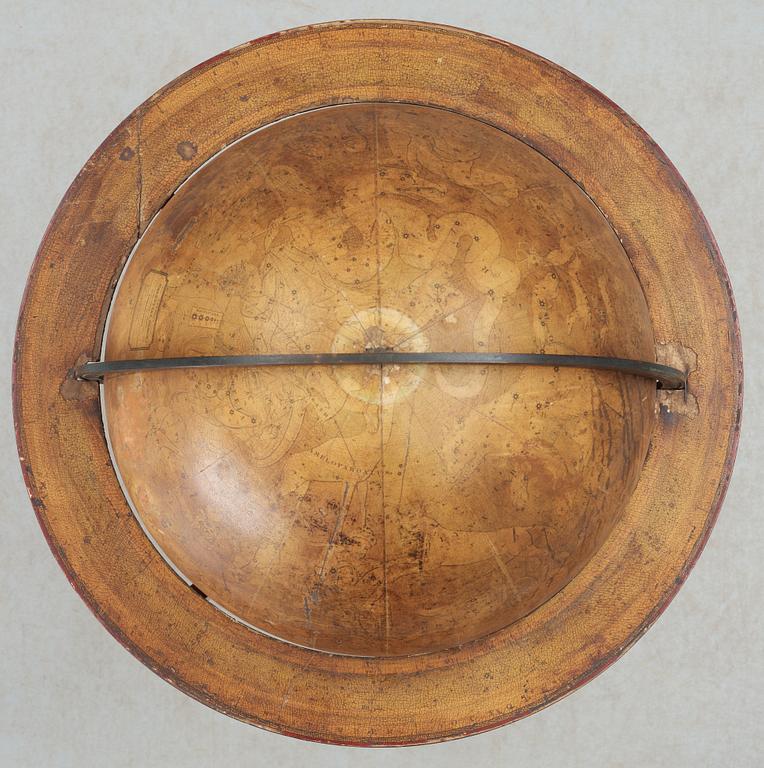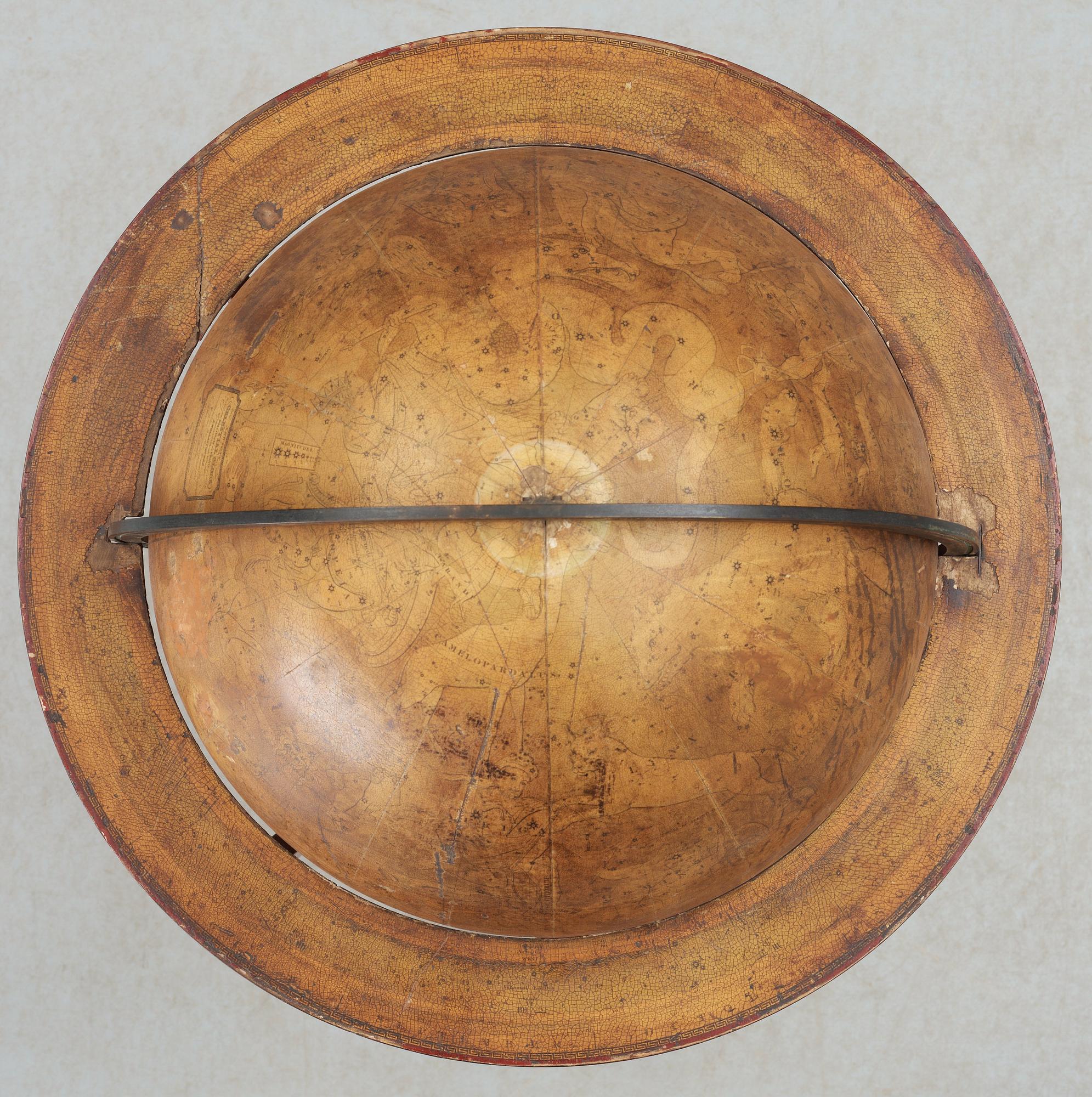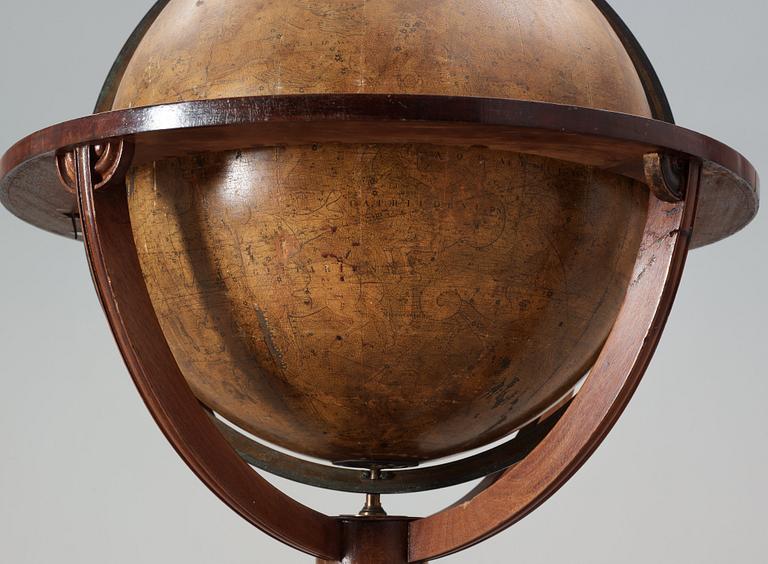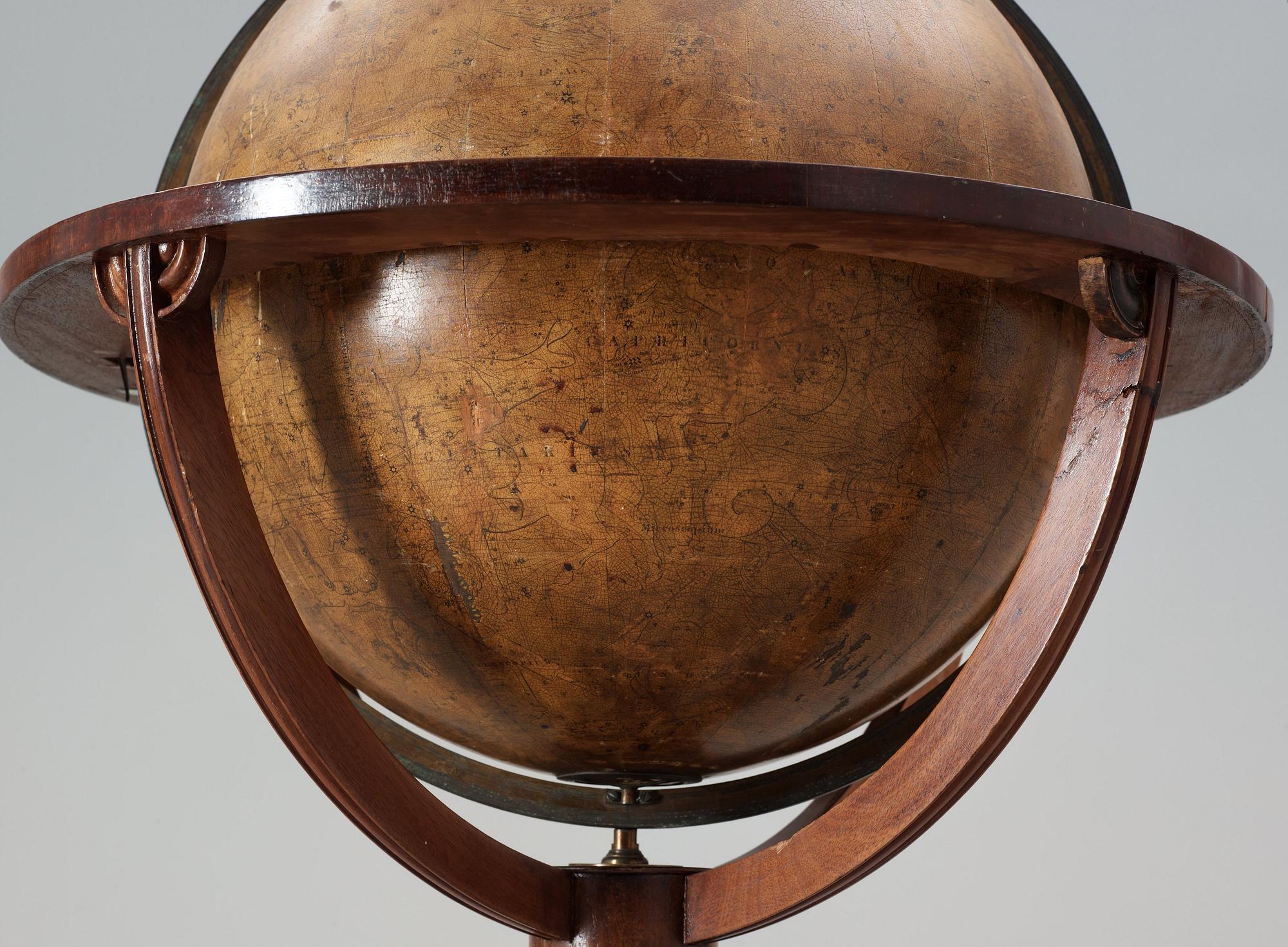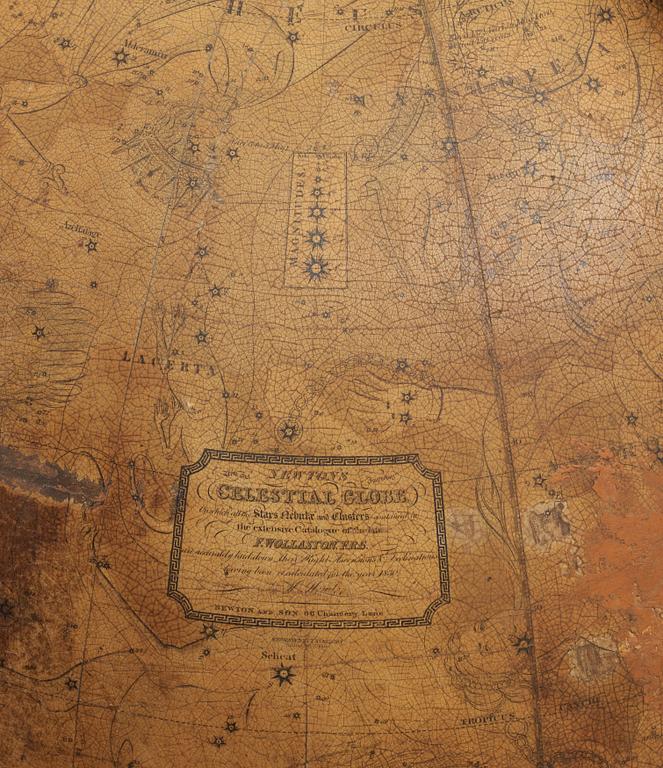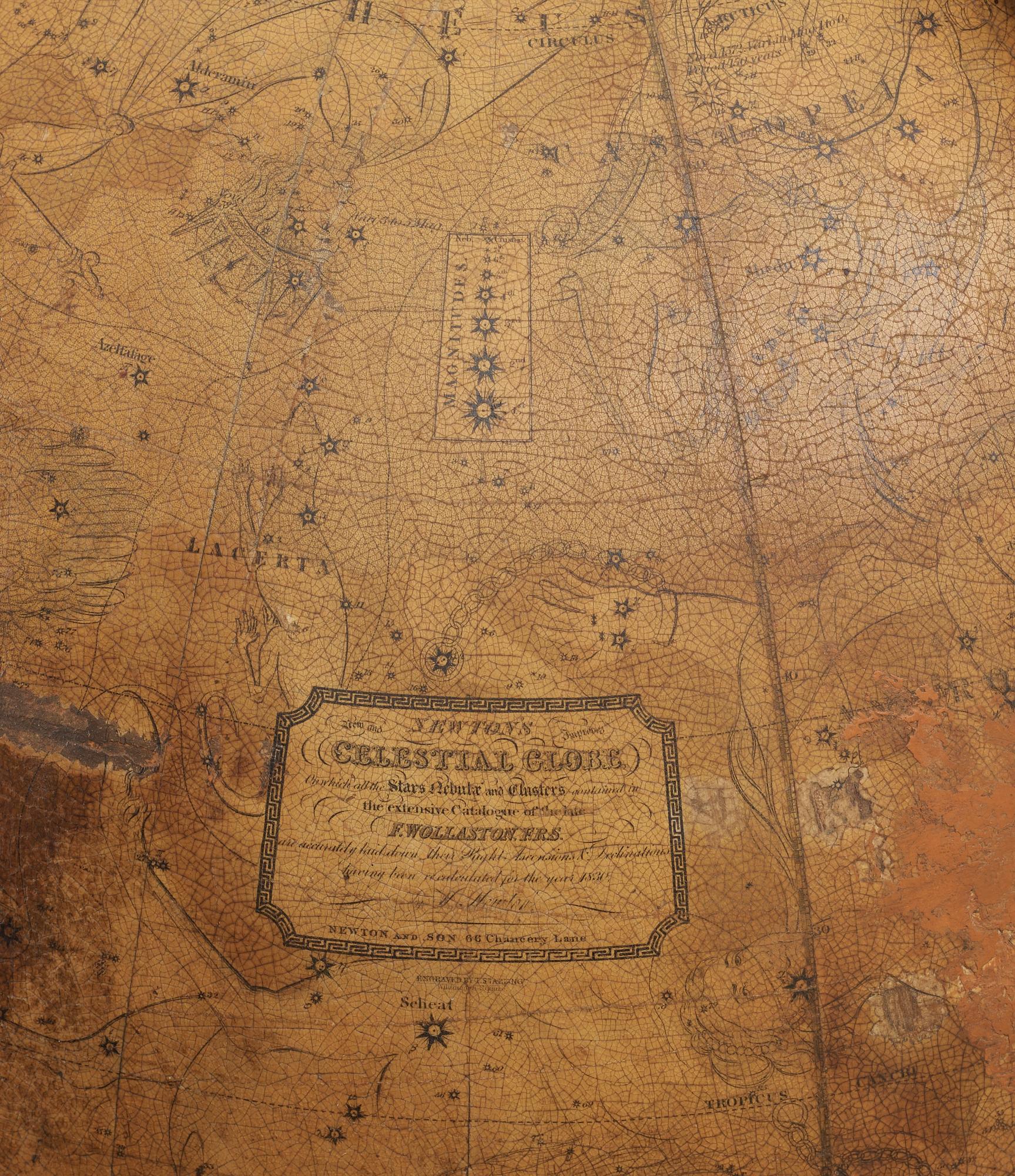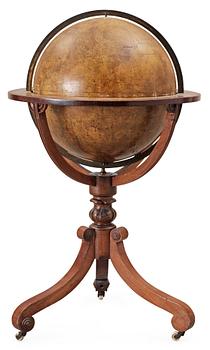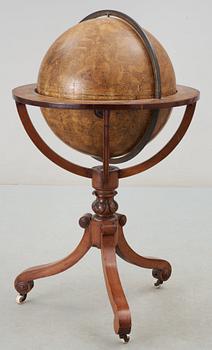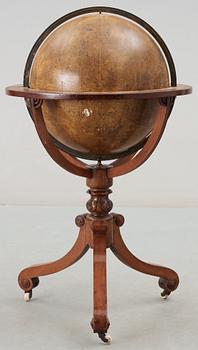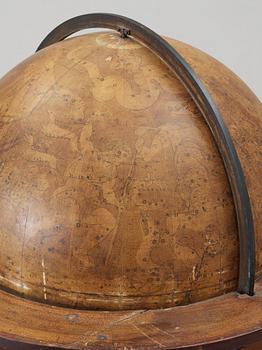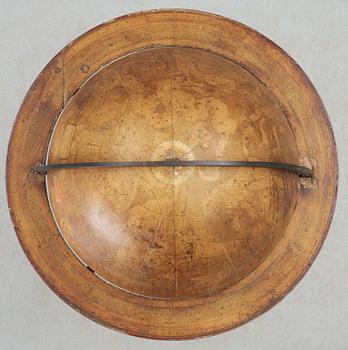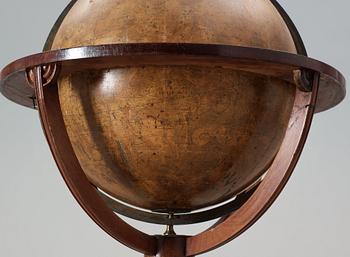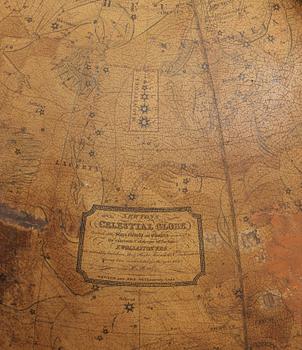
NEWTON'S NEW & IMPROVED CELESTIAL GLOBE... F. Wollaston... having been recalculated for the Year 1830...". Turned mahogany pedestal with three splayed legs on castors. Total height 112 cm, the globe's diam 50 cm.
The globe with damages, the stretcher's compass and one brass hour ring missing. The pedestal with repairs.
Muut tiedot
The Newton family of cartographers were among the leading English globe makers of the early 19th Century, producing floor standing, table, and pocket globes under various names. The firm's history dates back to Nathaniel Hill, who taught the art of globe making to Thomas Bateman (fl. 1754-1781), who then trained John Newton (1759-1844), the patriarch of the Newton firm.
John Newton began his firm in 1780, first publishing a reissue of a Nathaniel Hill pocket globe in partnership with William Palmer. At the turn of the 19th century, John Newton located at 97 Chancery Lane, and was soon joined in business by his second son William (1786-1861) under the name J.& W. Newton. From 1831 to 1841, Miles Berry, a civil engineer, was a member of the firm, known as Newton, Son & Berry. After 1841, ownership passed to William Newton's eldest son William Edward Newton (1818-79). Alfred Vincent (1821-1900) also became associated with the firm, and it remained in operation by subsequent generations until the early 20th Century.
Tietoa ostamisesta