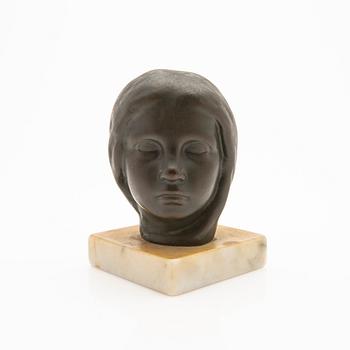
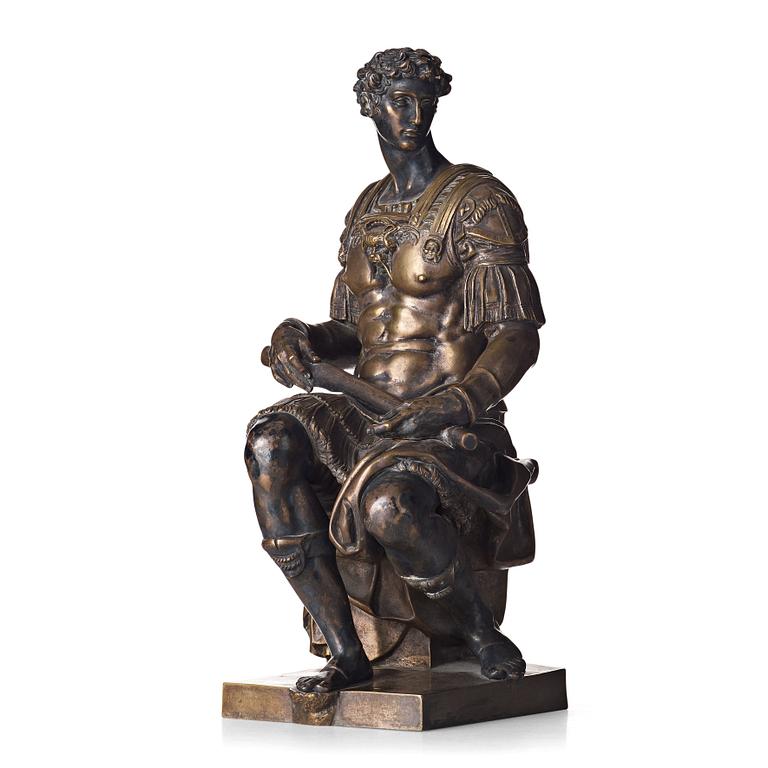
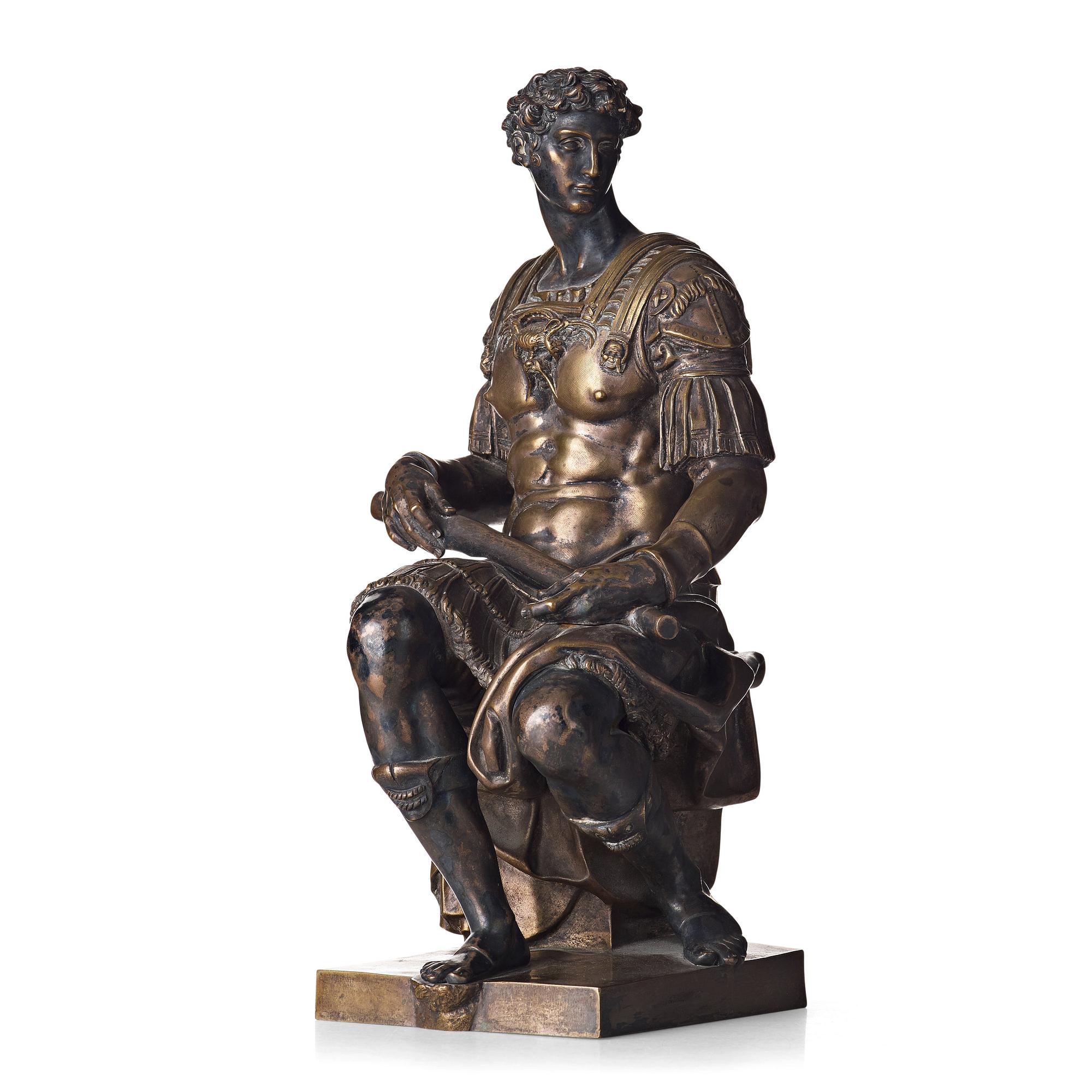
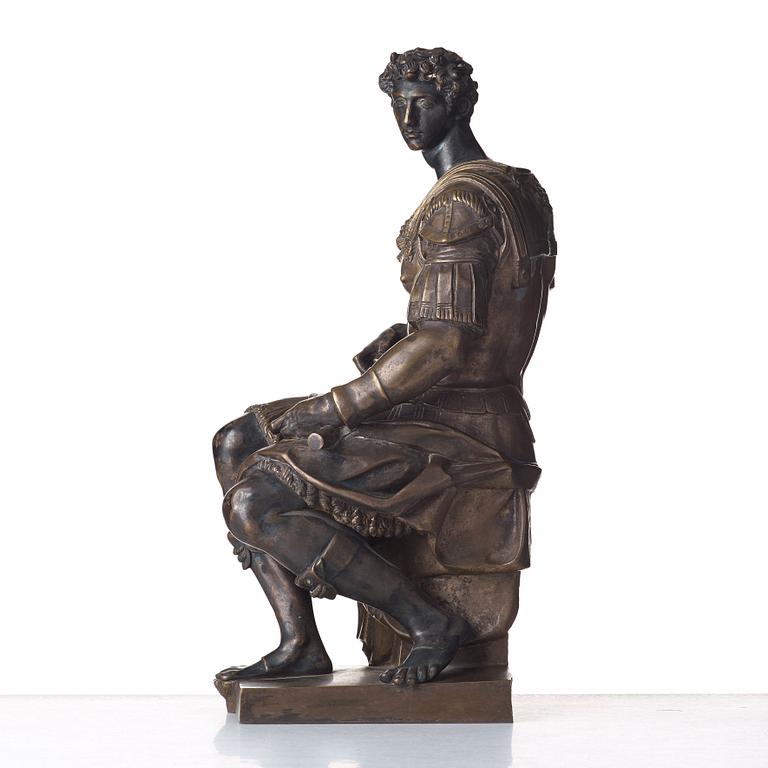
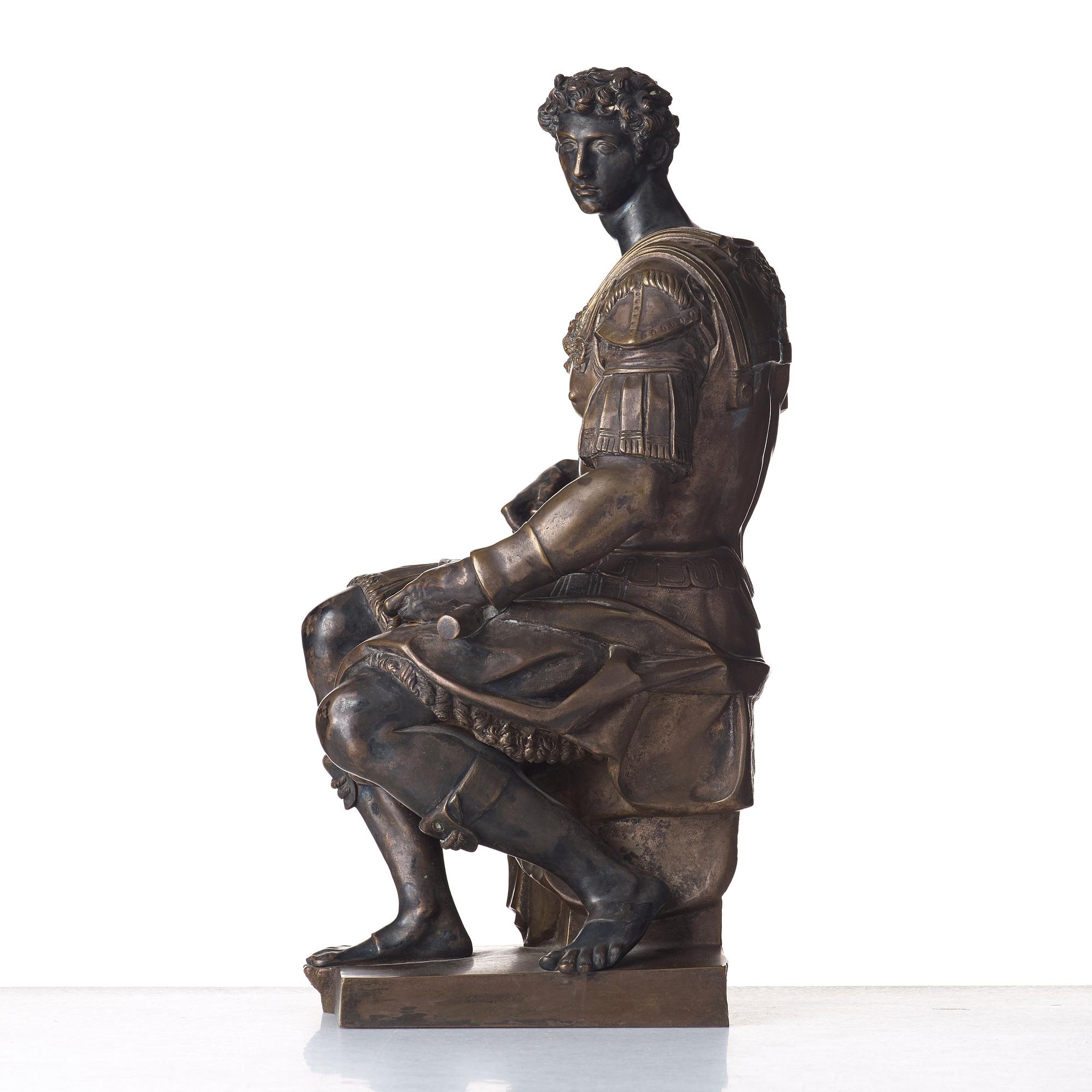
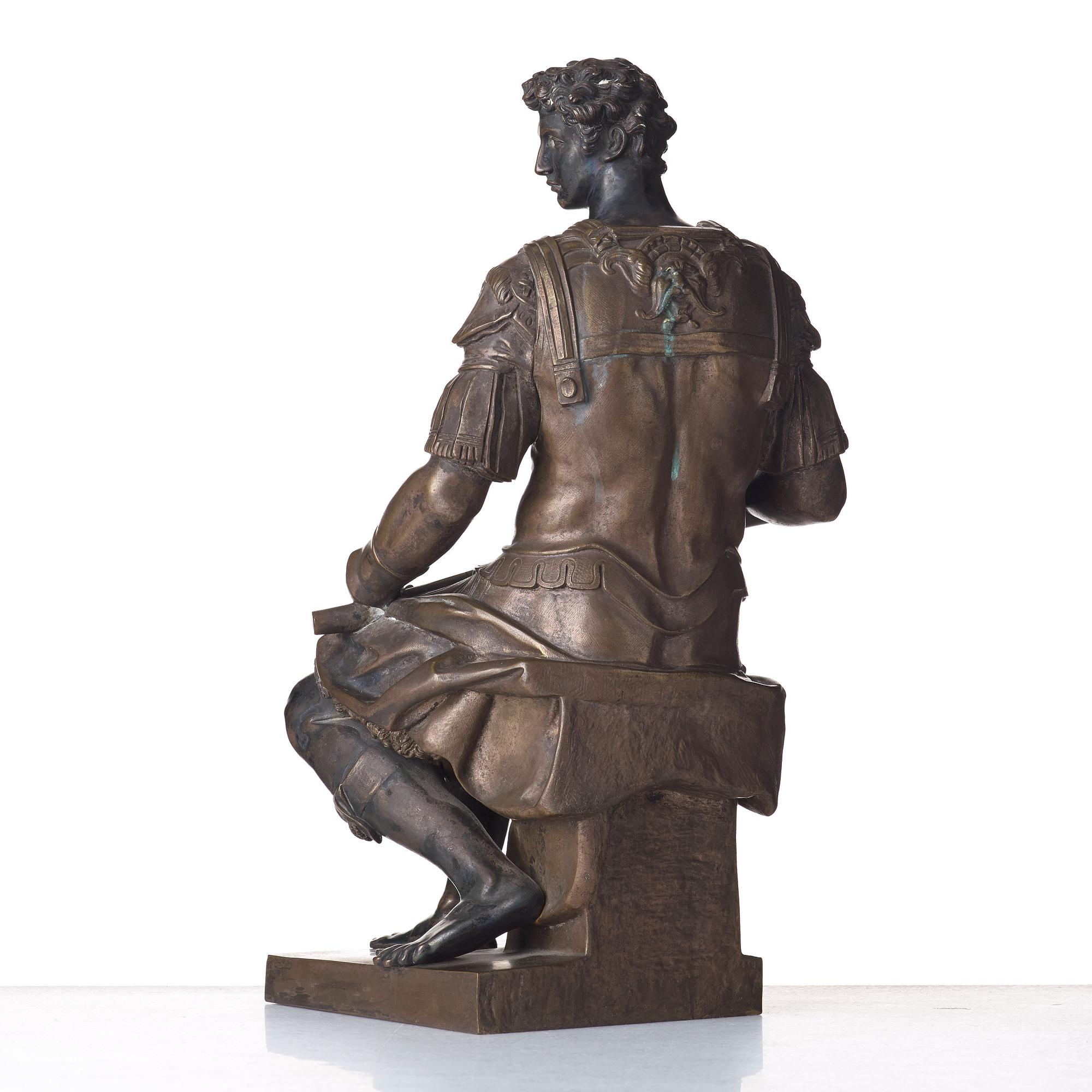
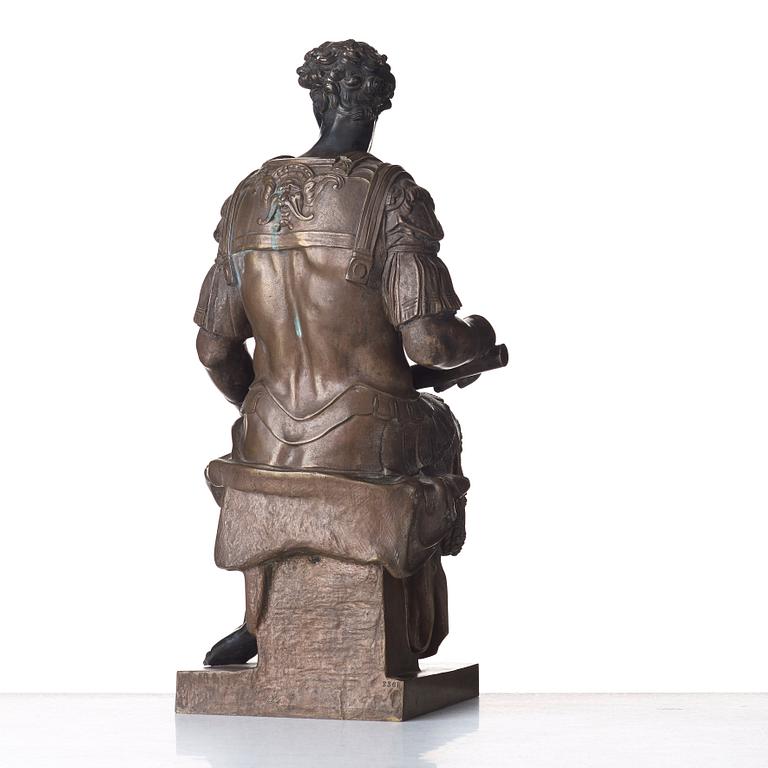
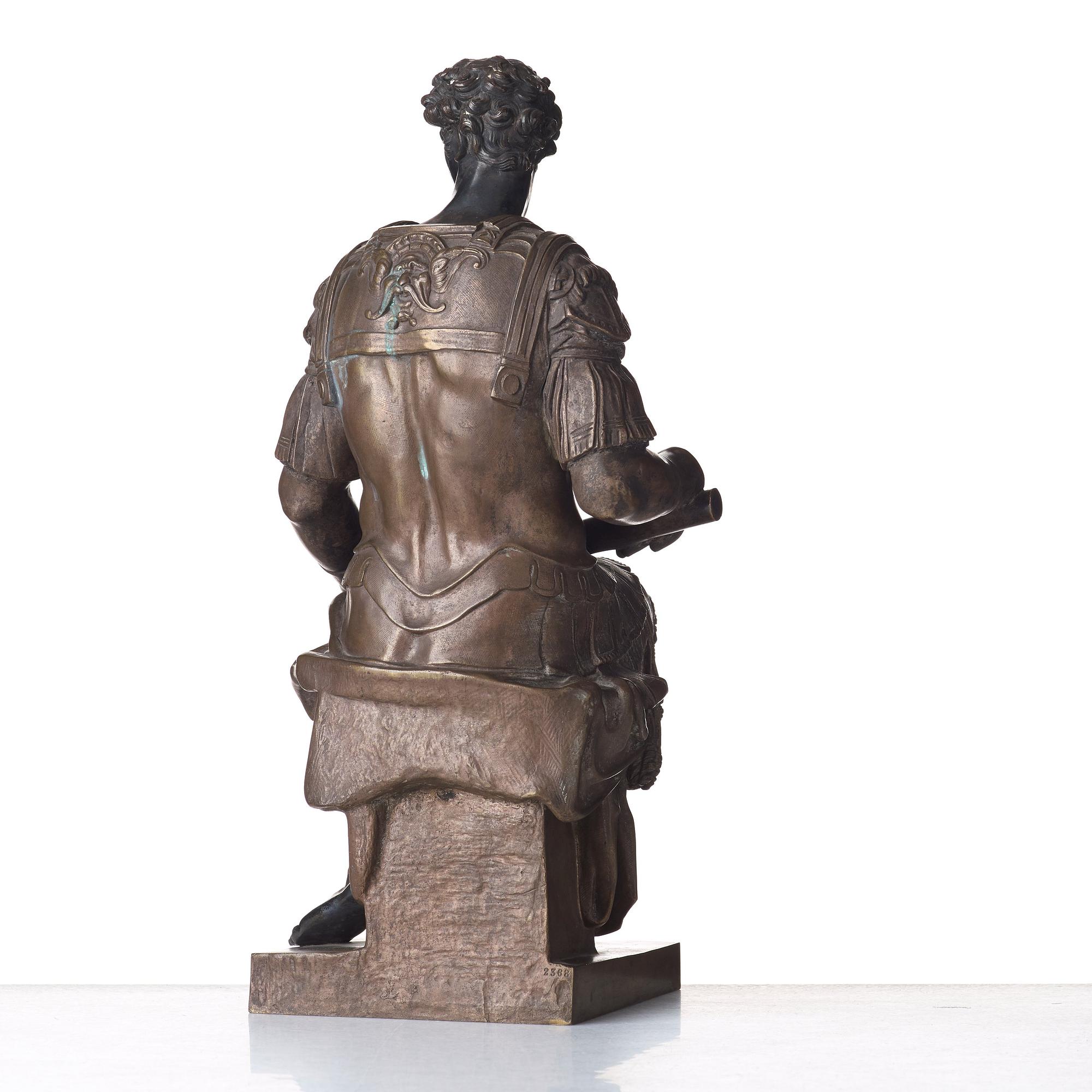
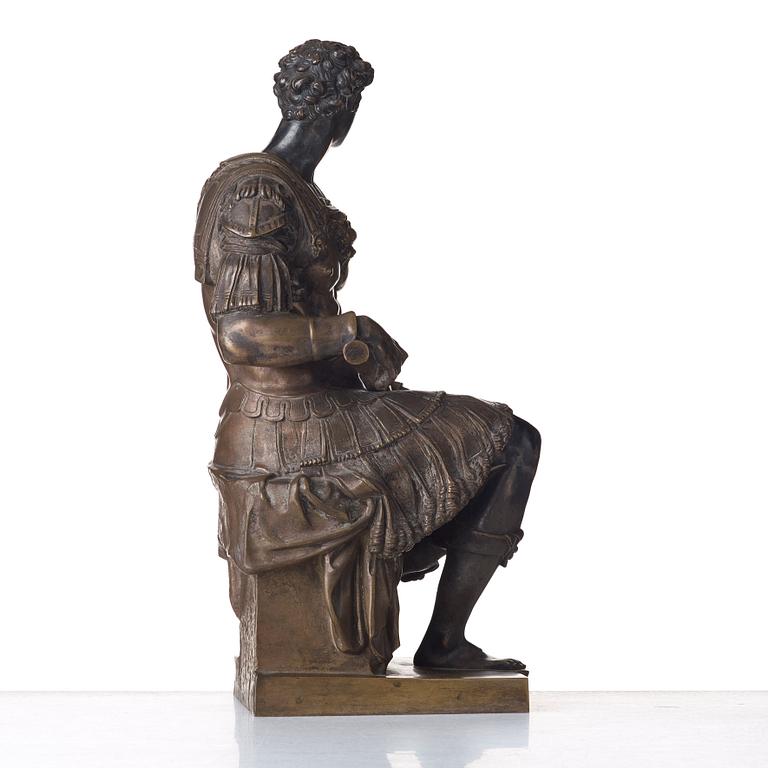
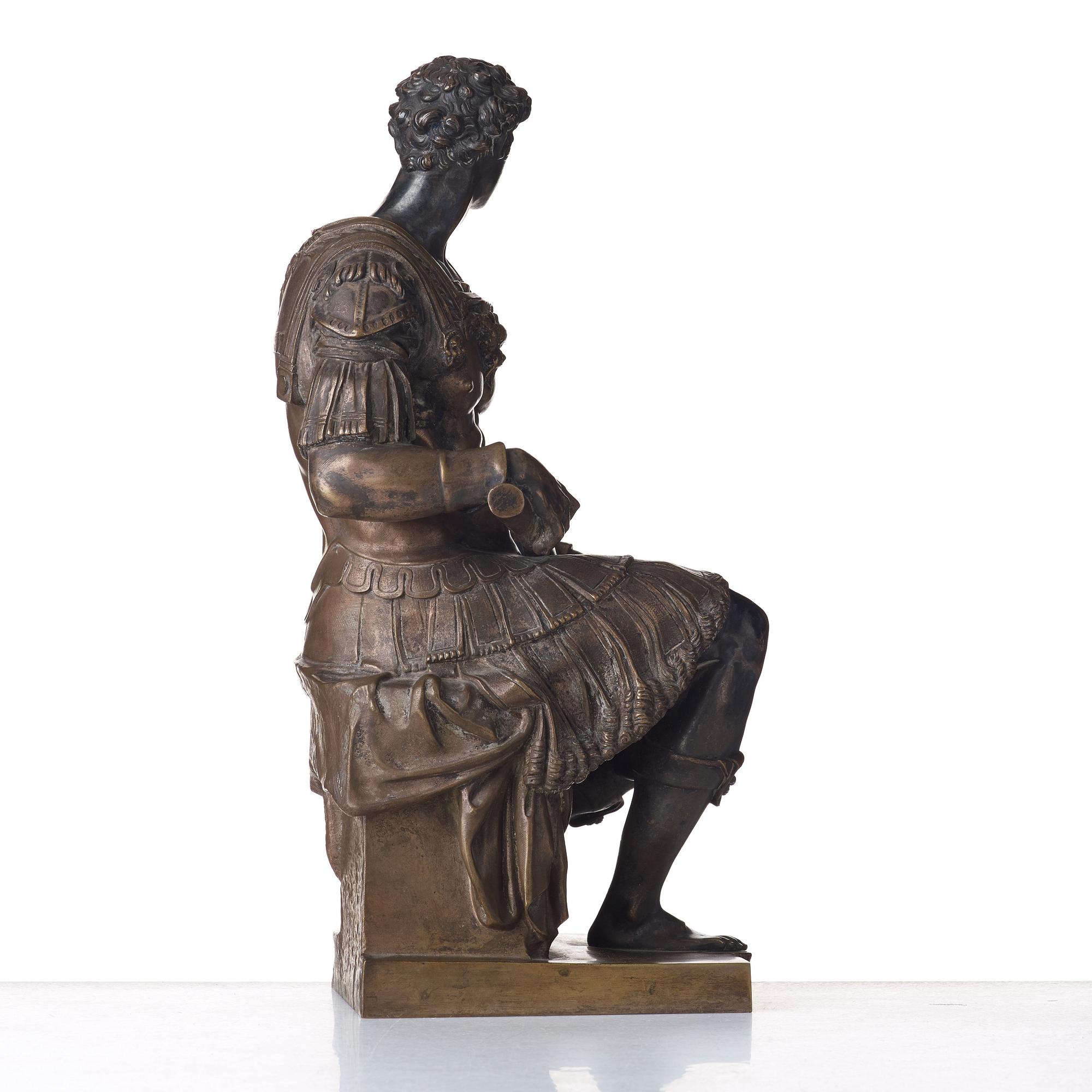
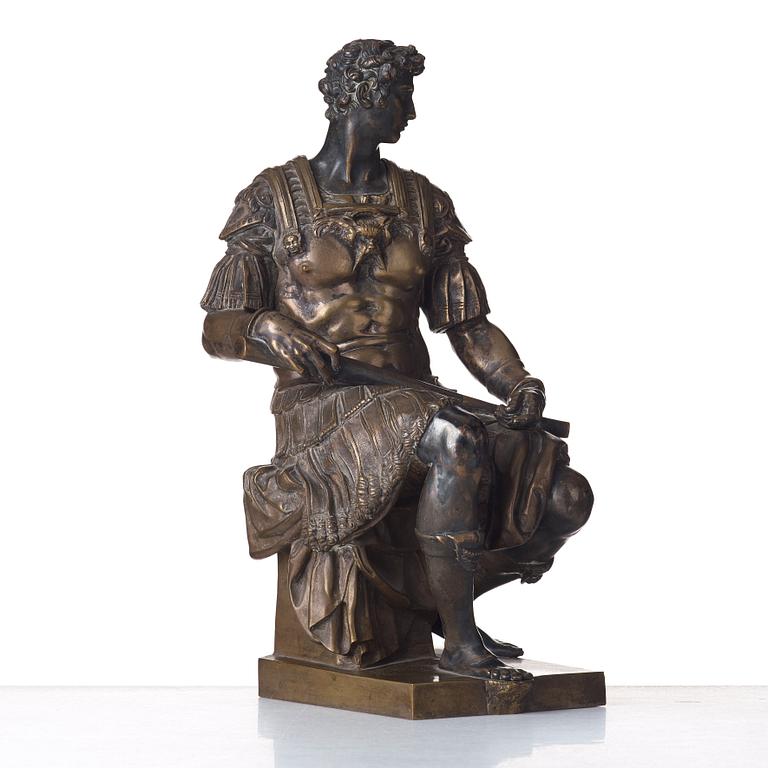
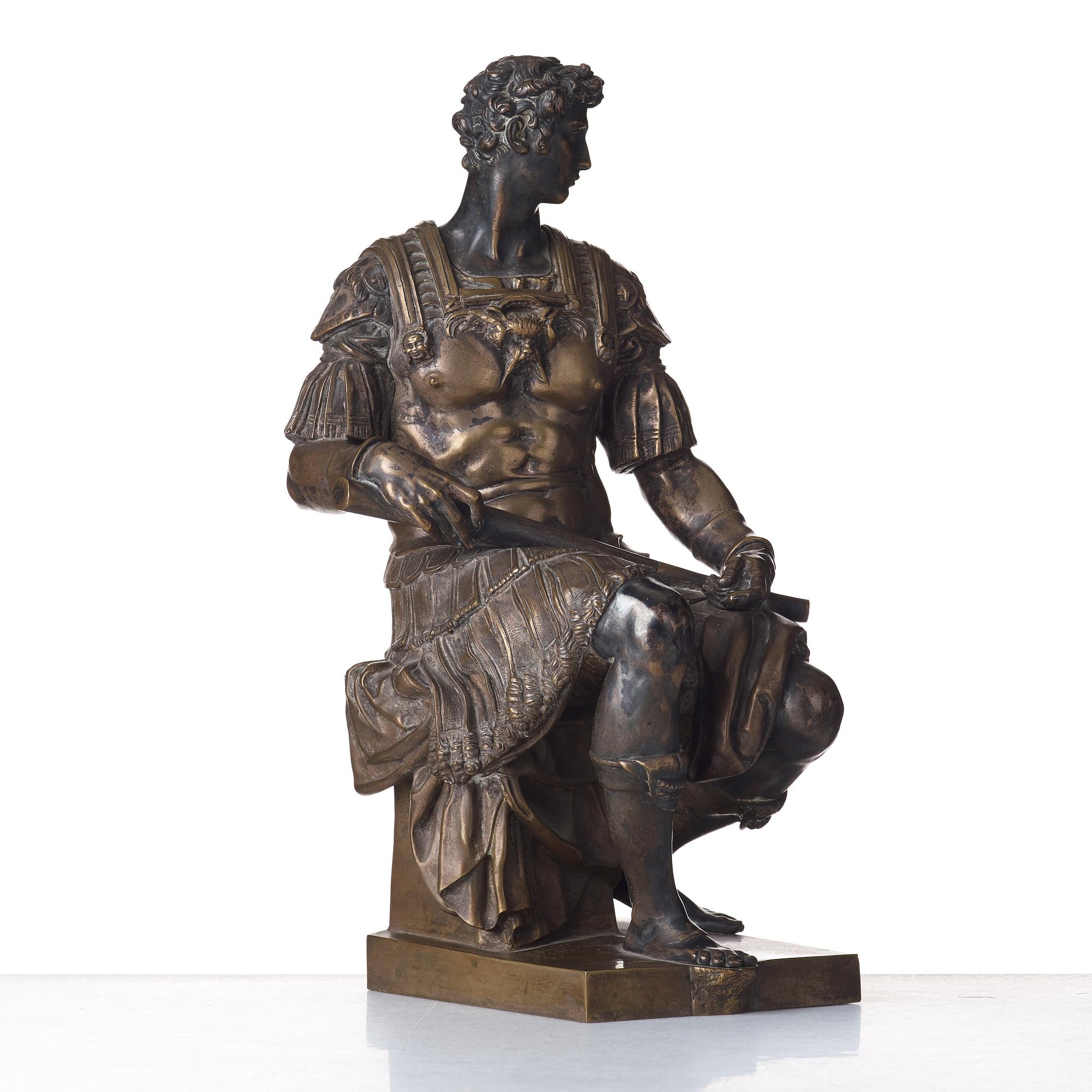
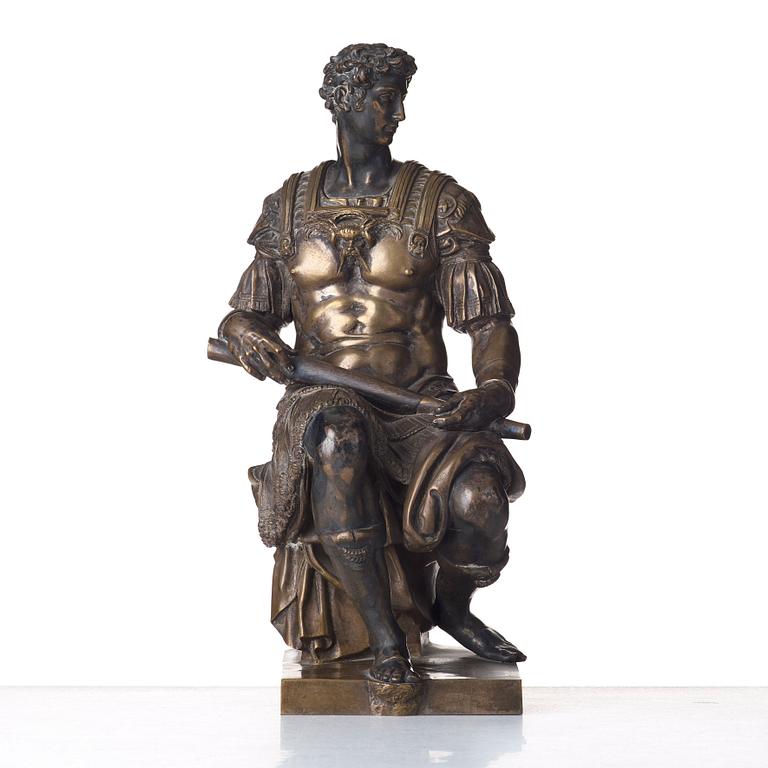
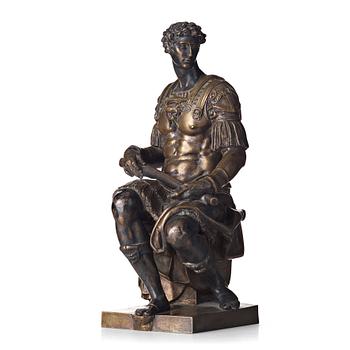
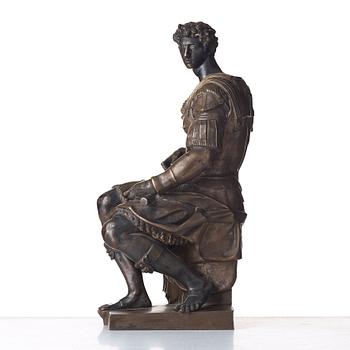
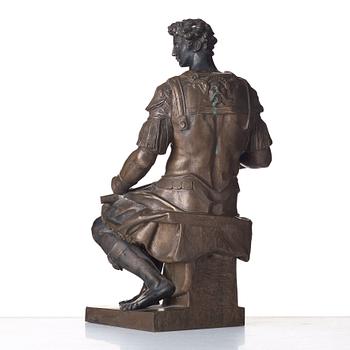
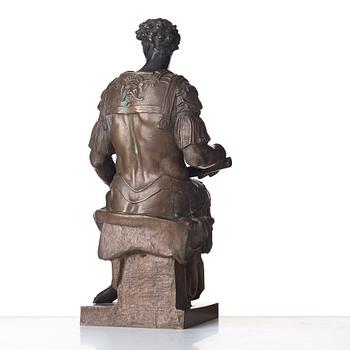
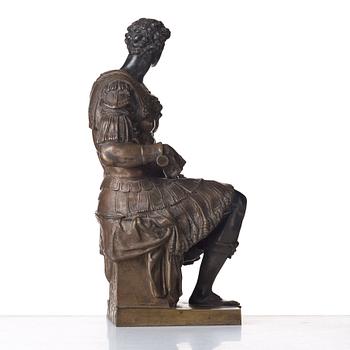
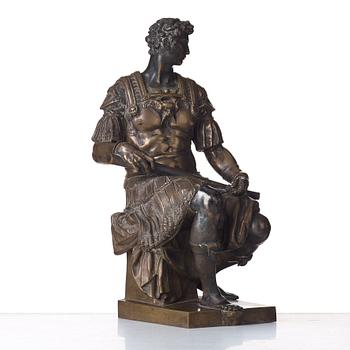
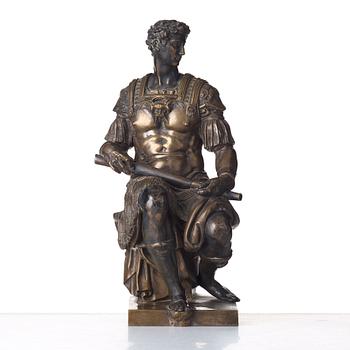
Giuliano de' Medici (1453-1478)
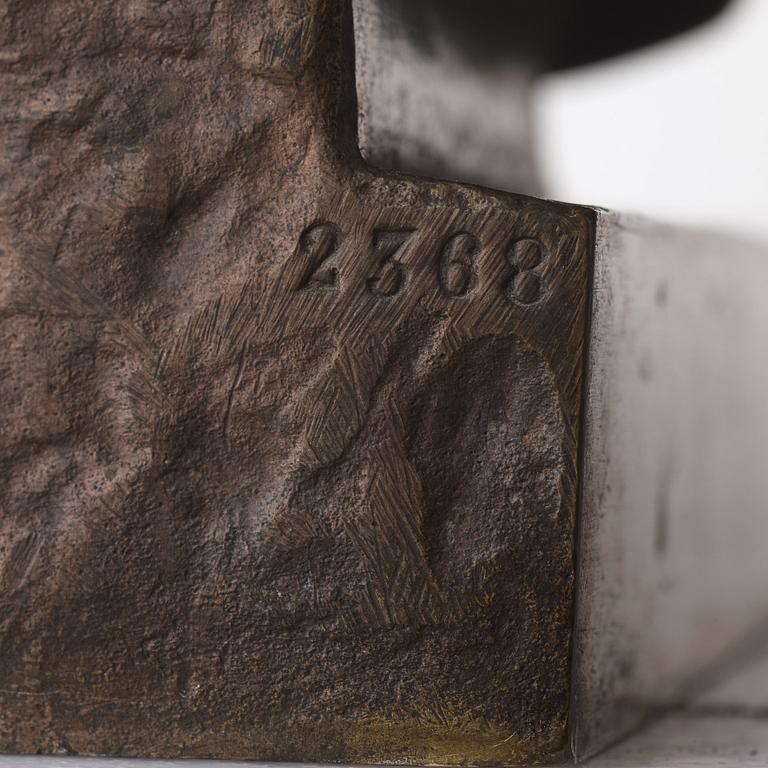
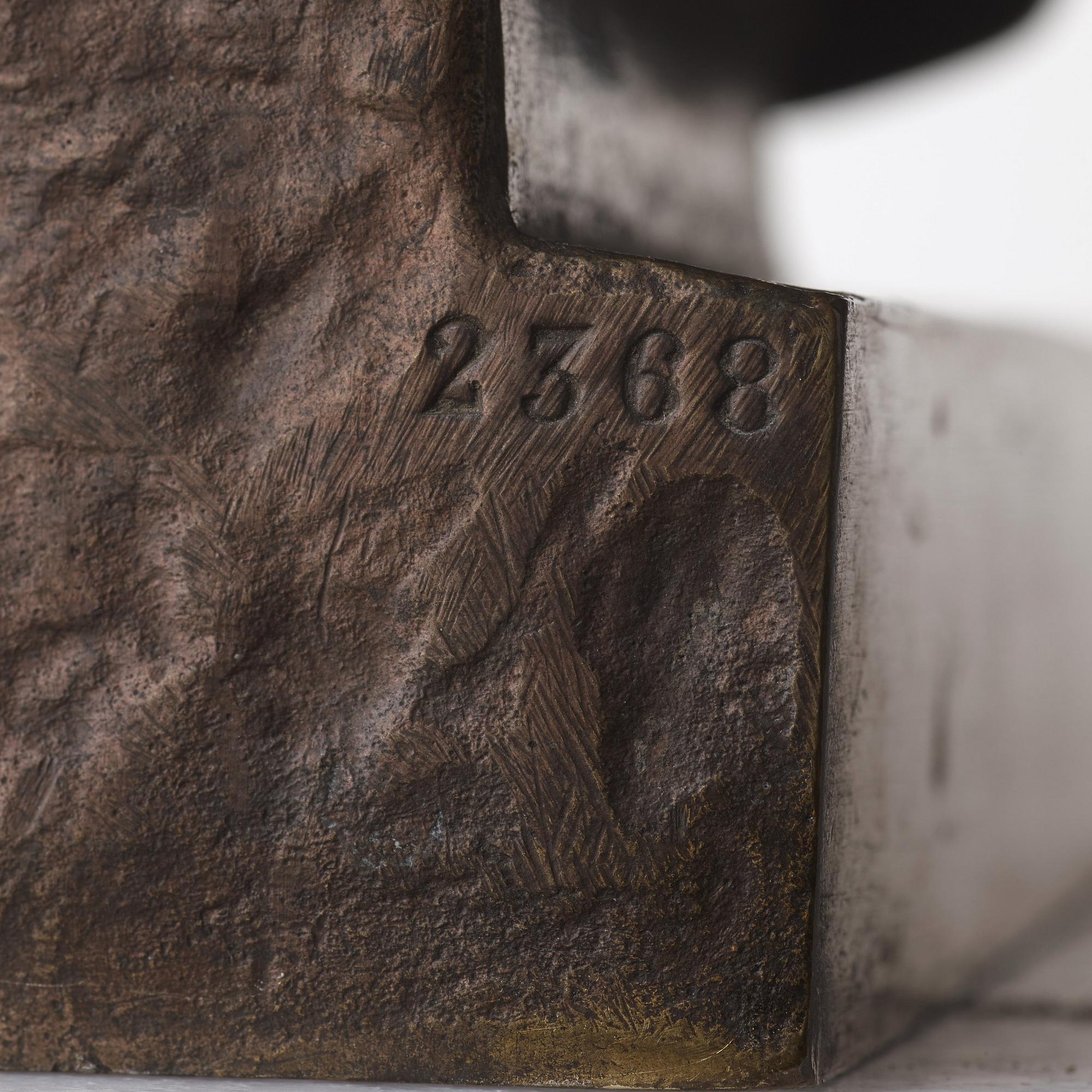
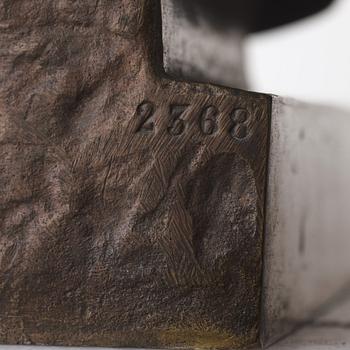
Bronze, brown patina. Height 47 cm. Marked 2368.
Kirjallisuus
Harold Berman, "Bronzes, sculptors and founders 1800-1930", 1980. See volume 4, p. 898, compare catalogue no 3429. According to the book there are seven sizes casted på the foundry Barbedienne.
Muut tiedot
Sculpture after the Tomb of Giuliano de' Medici by Michelangelo
Though never finished, the tomb of Giuliano de' Medici in the Medici Chapel is the only one of Michelangelo's great architectural-sculptural projects to be realized in a form approaching completion.
Michelangelo created the tomb of Giuliano de' Medici
for the Medici
Chapel of San Lorenzo in Florence.
Built between 1520 and 1534, it is widely held to be one of Michelangelo's most stunning achievements.
The pose of the central figure on the tomb of Giuliano de' Medici, arms resting at his sides and legs comfortably apart, and its open composition suggest a cheerful duke, generous in both mind and spirit. In fact, the figure holds in his hand several coins, as if an intended gift. Light plays freely on his face, yet the figure is lacking in energy and seems to wilt under the burden of the Roman armor. Michelangelo did not intend for this sculpture, nor that of Lorenzo, to be a recognizable portrait of the duke, but instead an ideological tribute through its enhanced beauty and dignity.
Lisätietoja ja kuntoraportit

Tietoa ostamisesta


Muiden katsomia kohteita