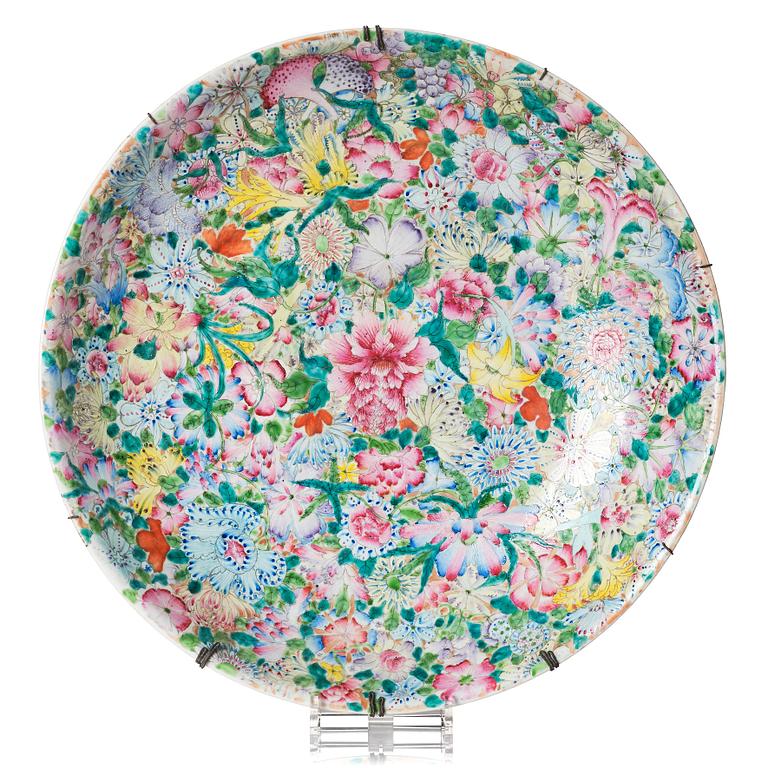
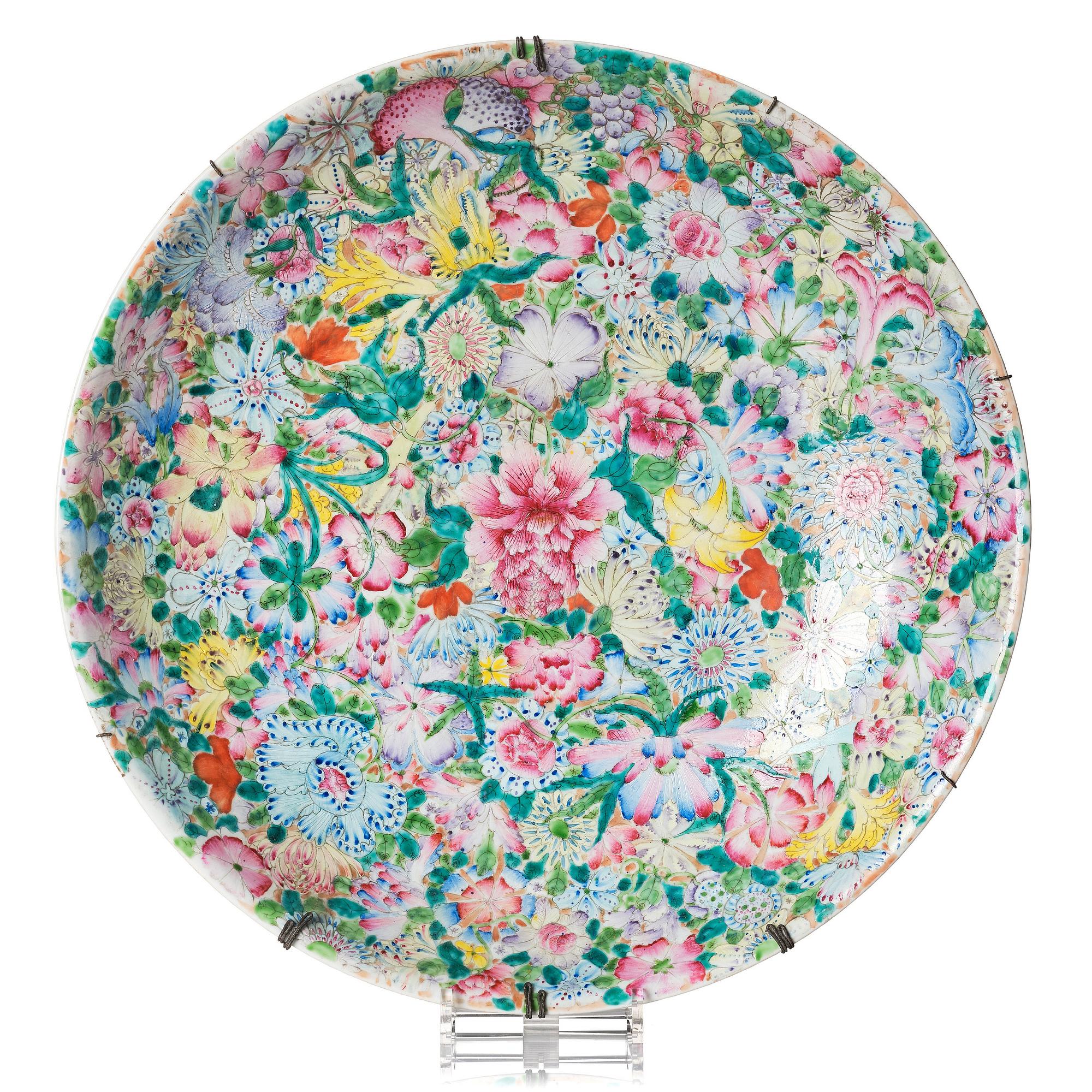
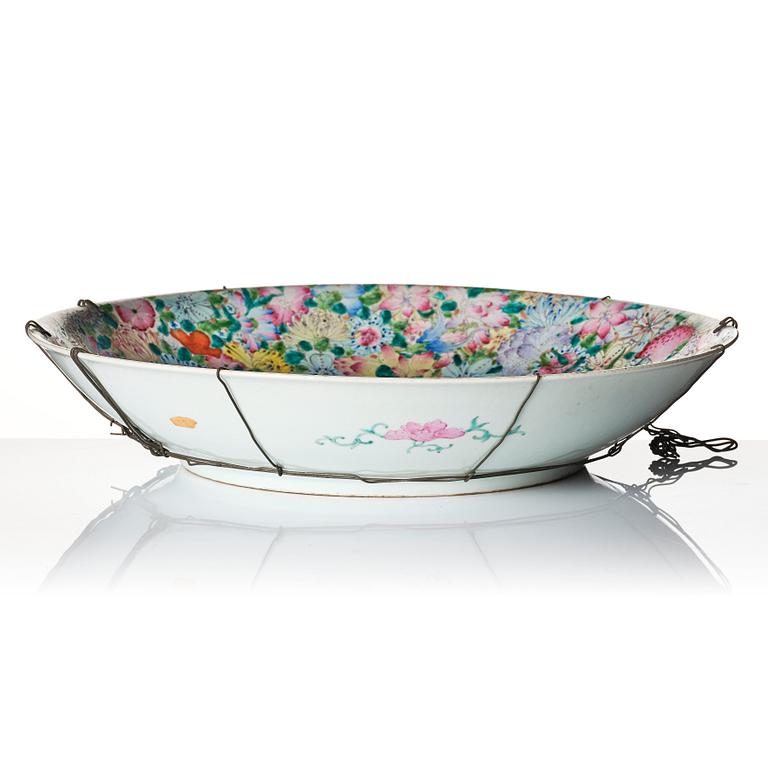
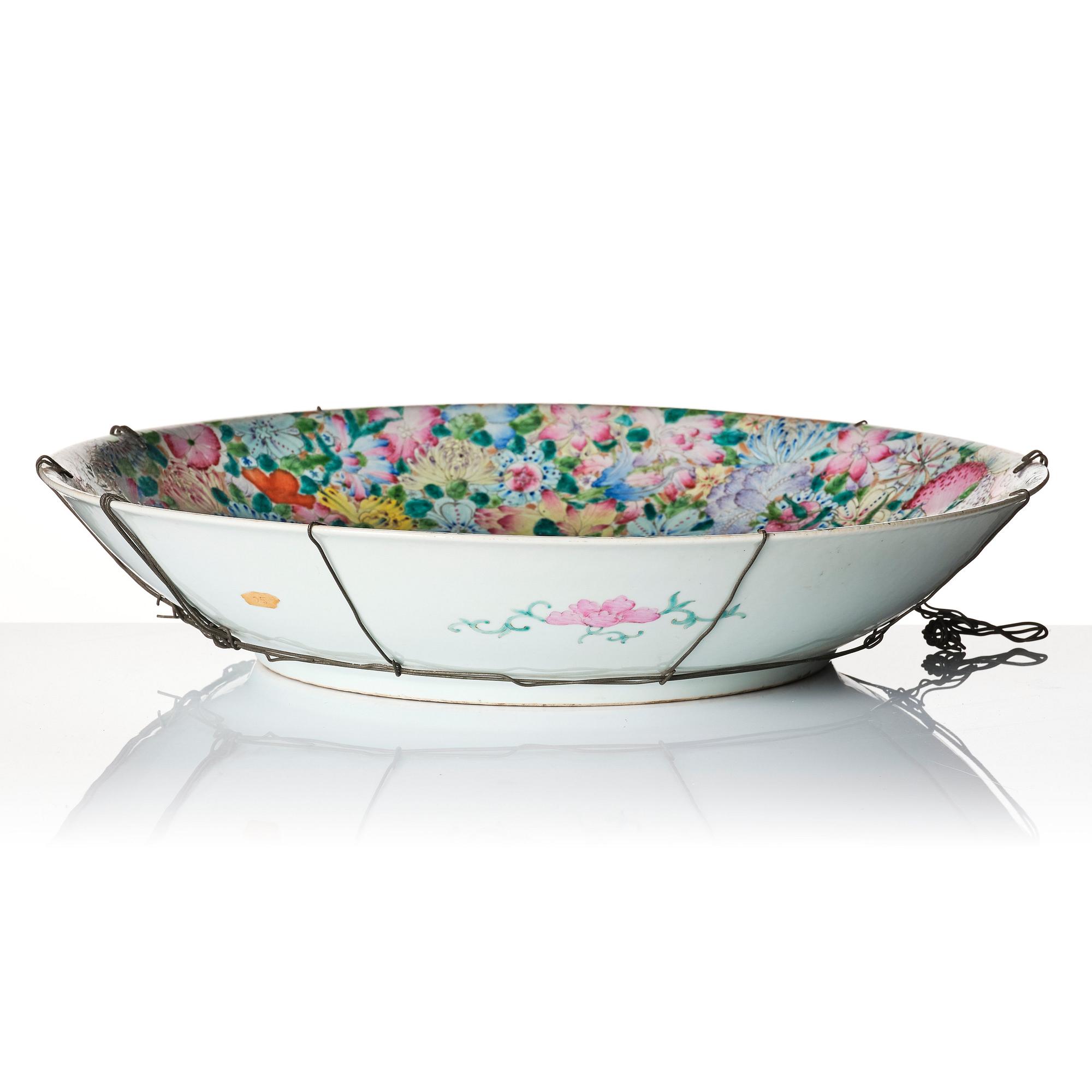
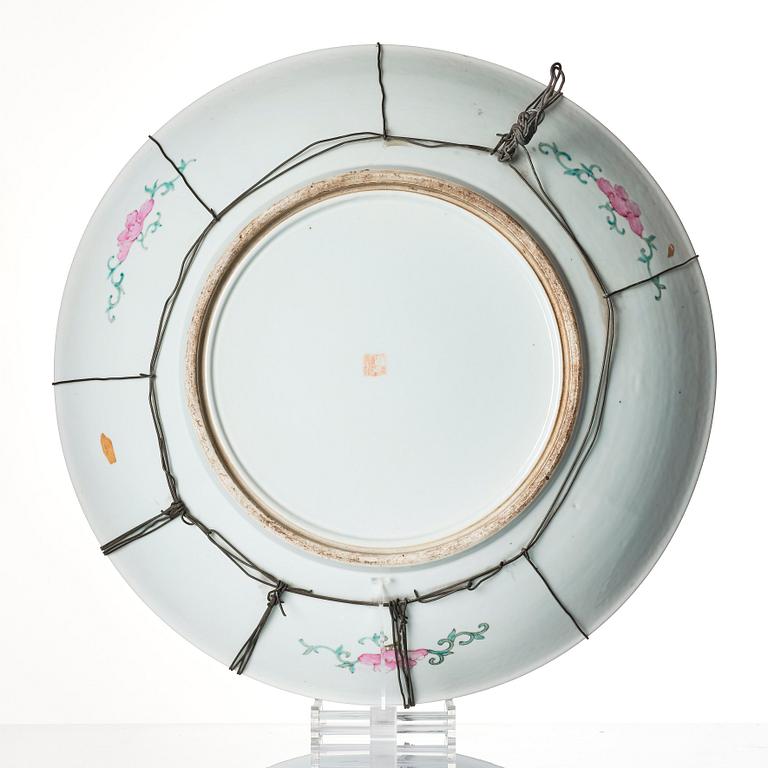
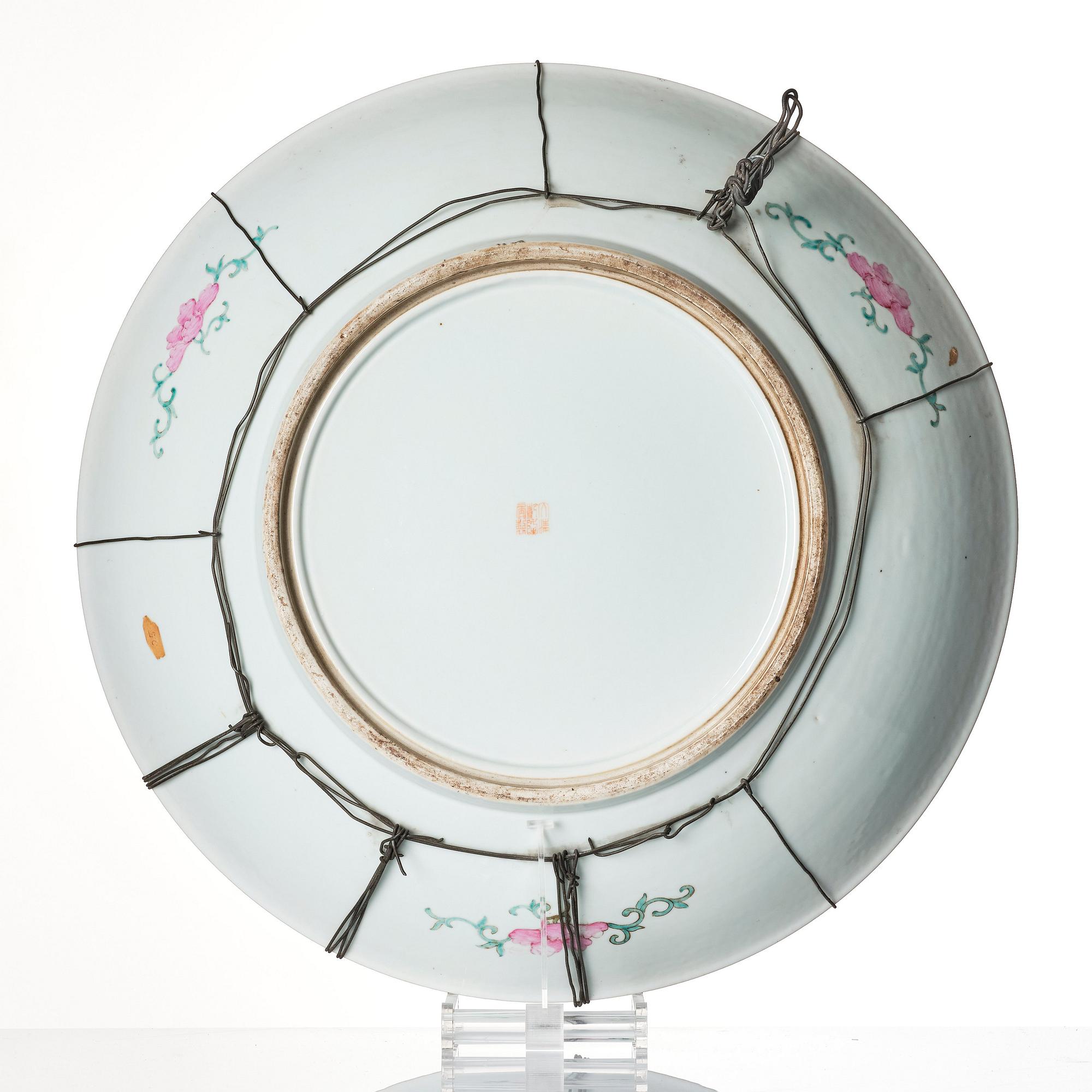
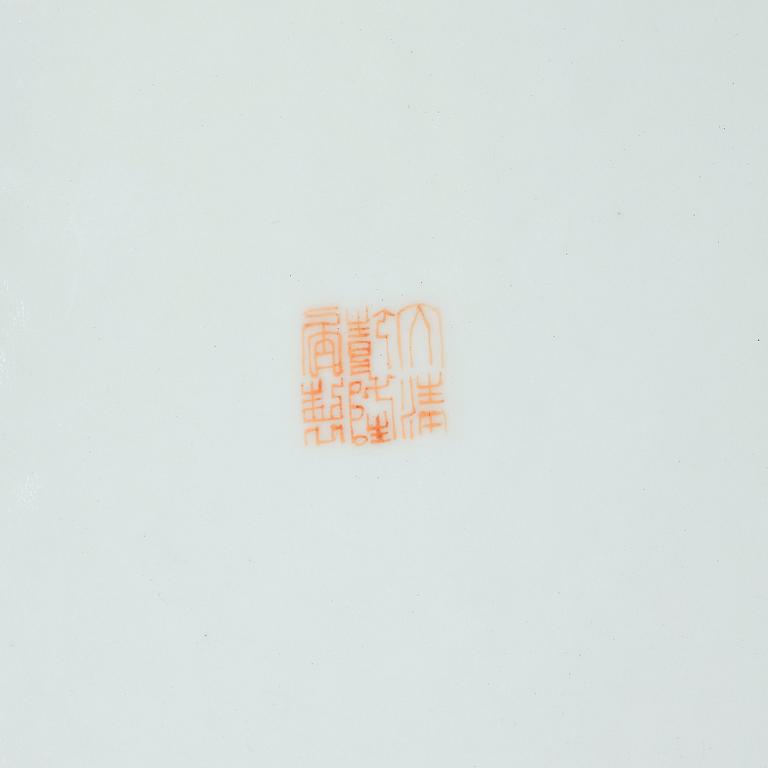
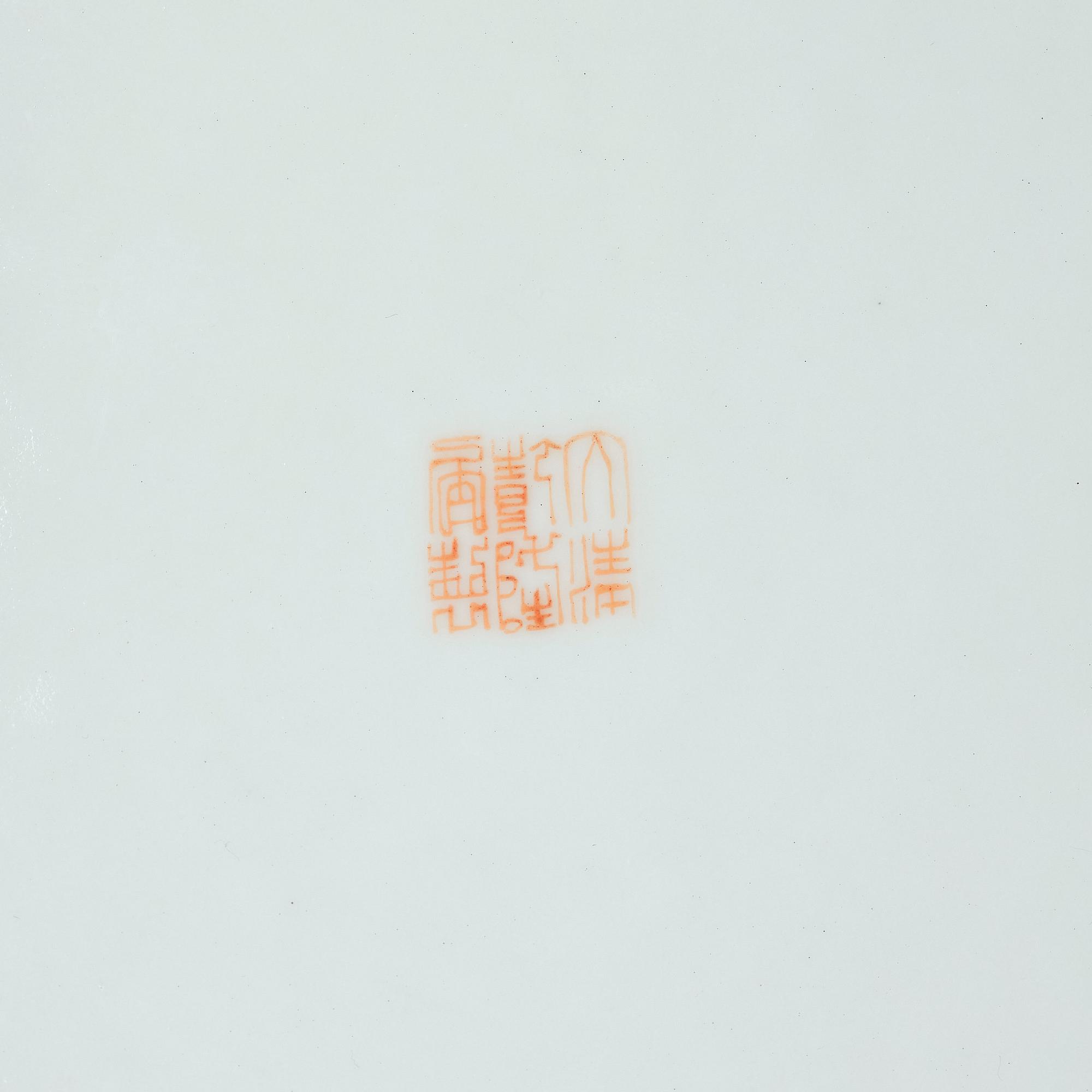
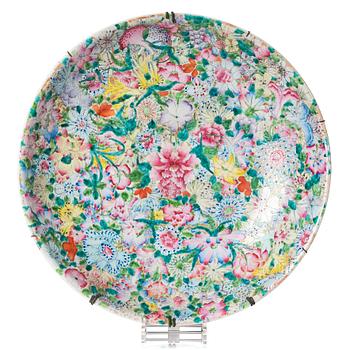
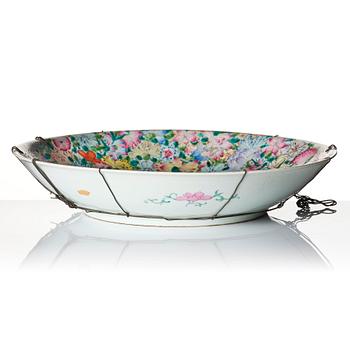
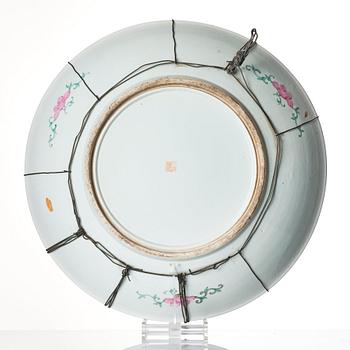
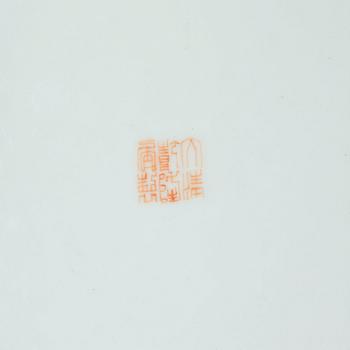
Decorated with flowers in brilliant enamels of yellow, green, lavender, and magenta with a dense bouquet of mixed flowers including chrysanthemum, hydrangea, pink, peony, magnolia, lotus, and lingzhi, all blooming against a ground of thick foliage in several tones of green. The reverse with floral sprigs and a seal mark in red. Diameter 52 cm.
Wear.
Kirjallisuus
The dense arrangement of various flowers decorating this vase is known as wanhuajin (myriad flower brocade), as well as baihuadi (ground of one hundred flowers), and, according to T. T. Bartholomew in Hidden Meanings in Chinese Art, Asian Art Museum of San Francisco, 2006, p. 146, during the Qing dynasty the design conveyed the hope that the Qing dynasty "would last as long as flowers continue to bloom."
Muut tiedot
The 'mille fleur' decoration, meaning the "thousand flowers design" first appears in the late Yongzheng period - and becoming extremely popular during the Qianlong era, and was carried on throughout the Qing dynasty and well in to the Republic period.
The design is thought to symbolize "all the flowers bestow their blessings".
Lisätietoja ja kuntoraportit

Tietoa ostamisesta
Muiden katsomia kohteita