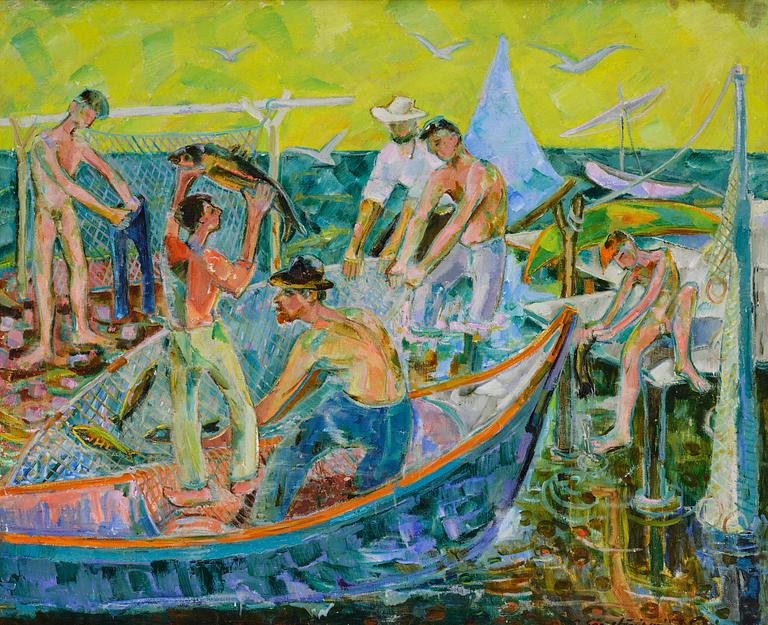
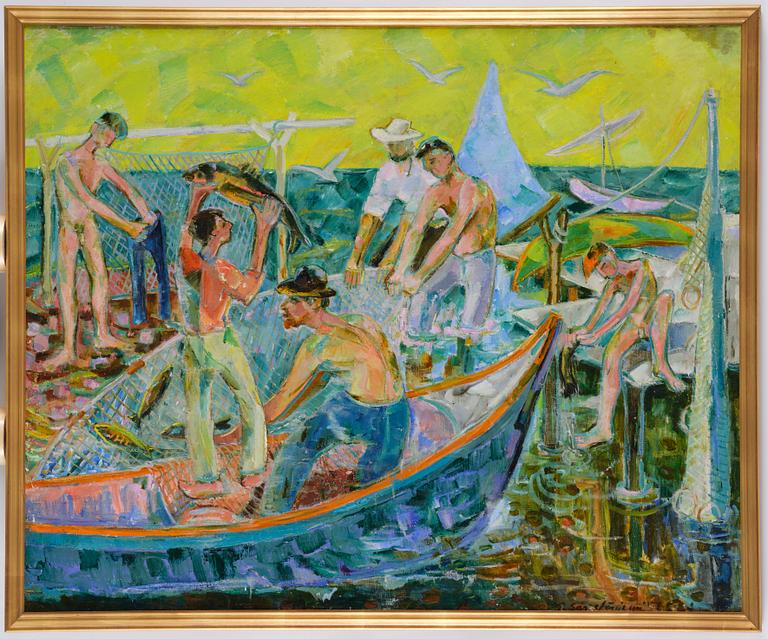
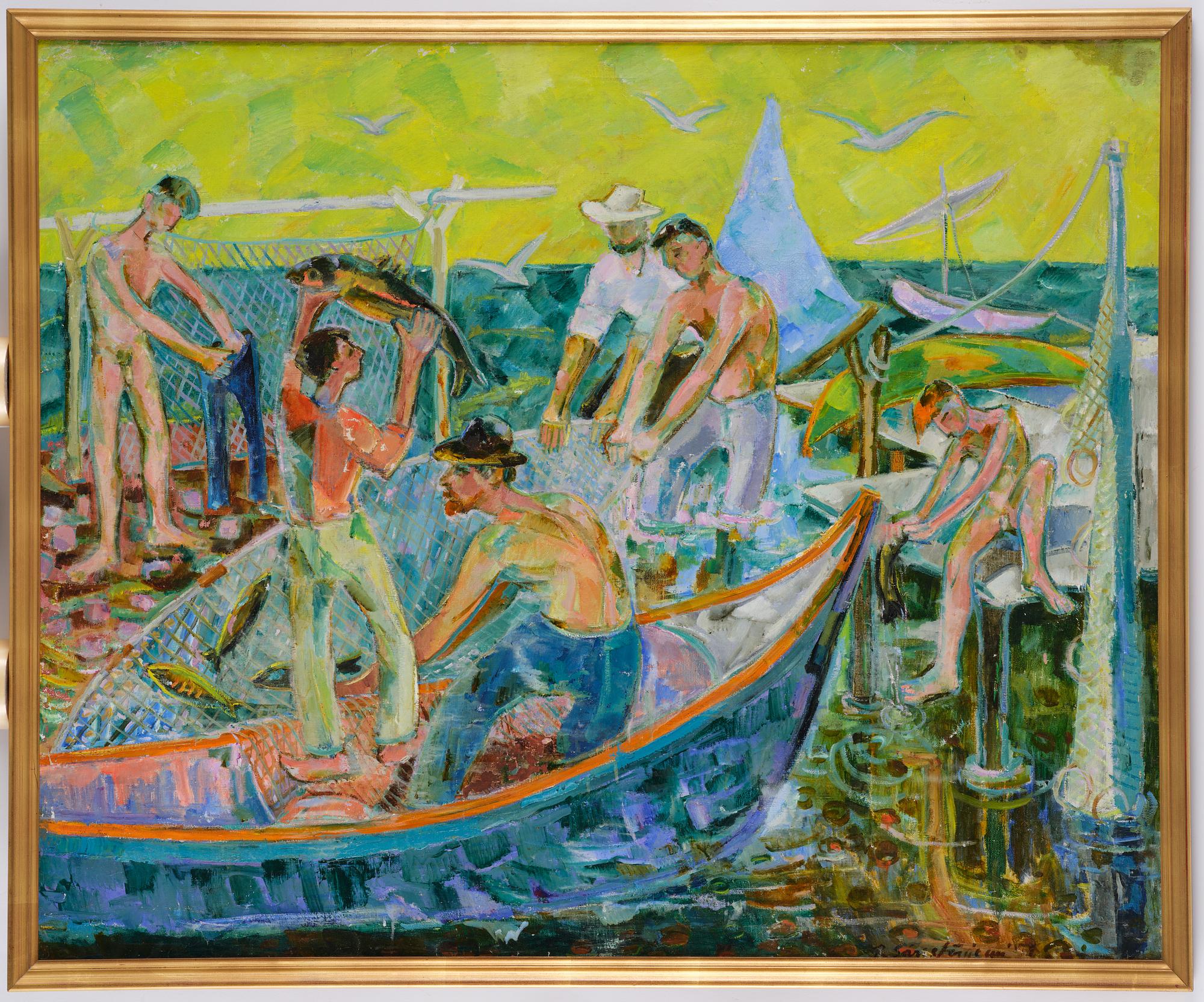
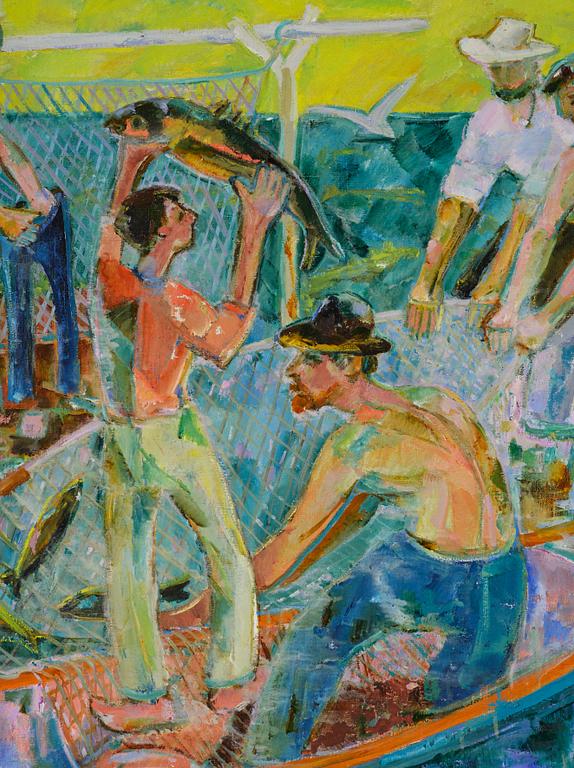
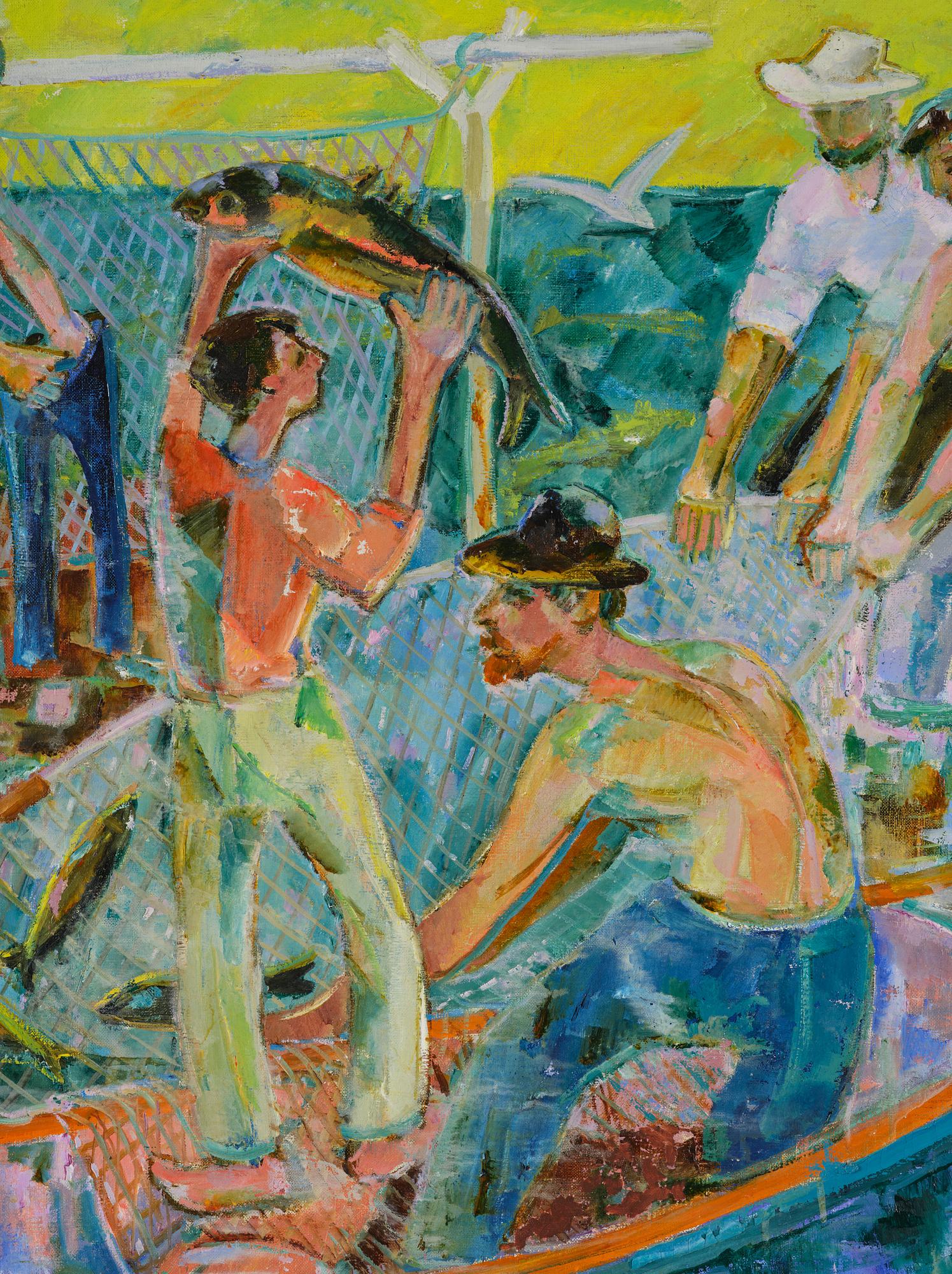
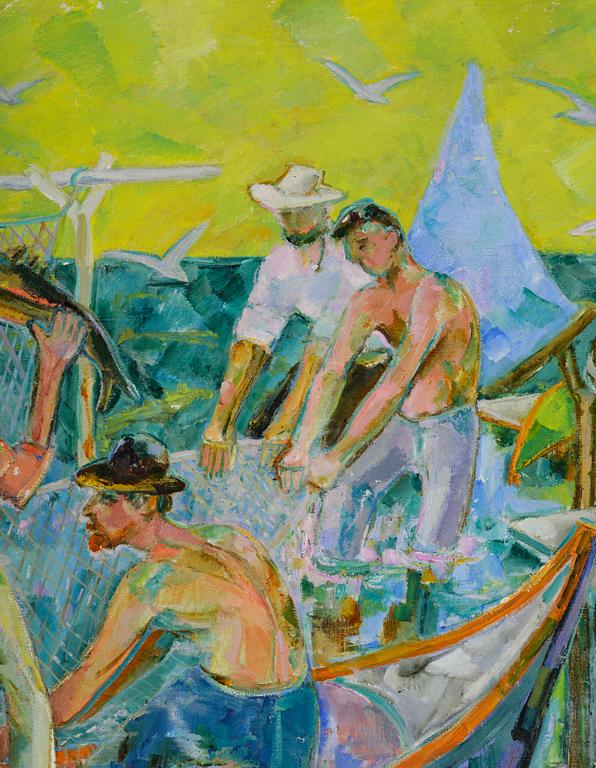
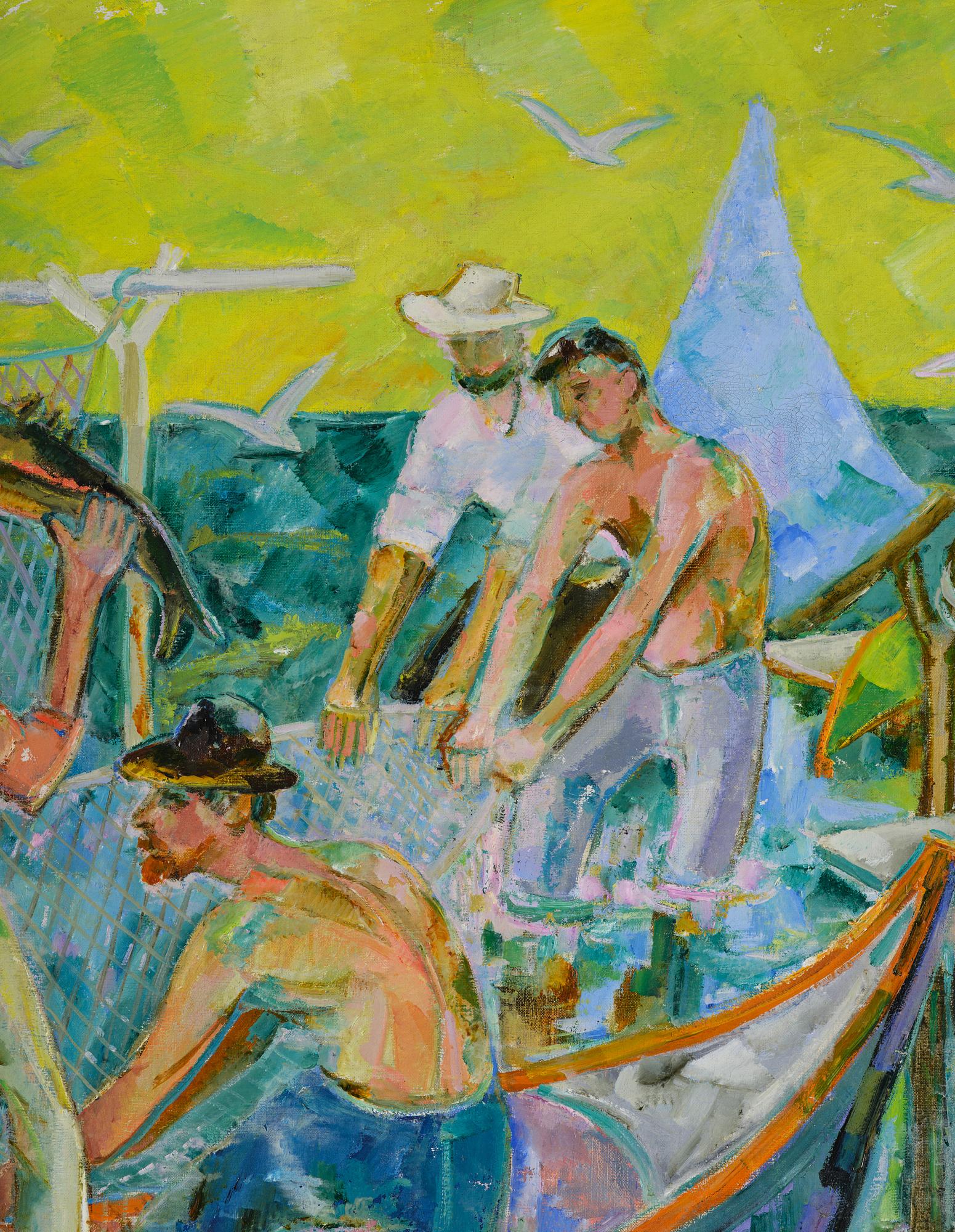
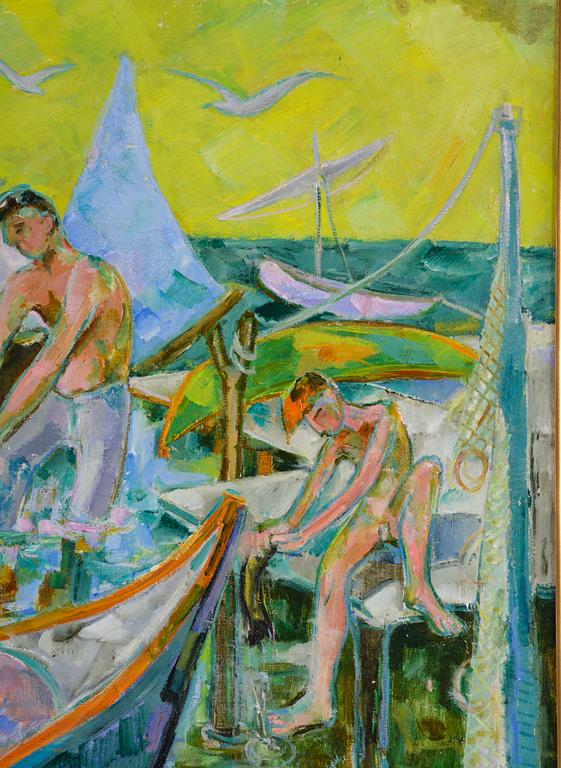
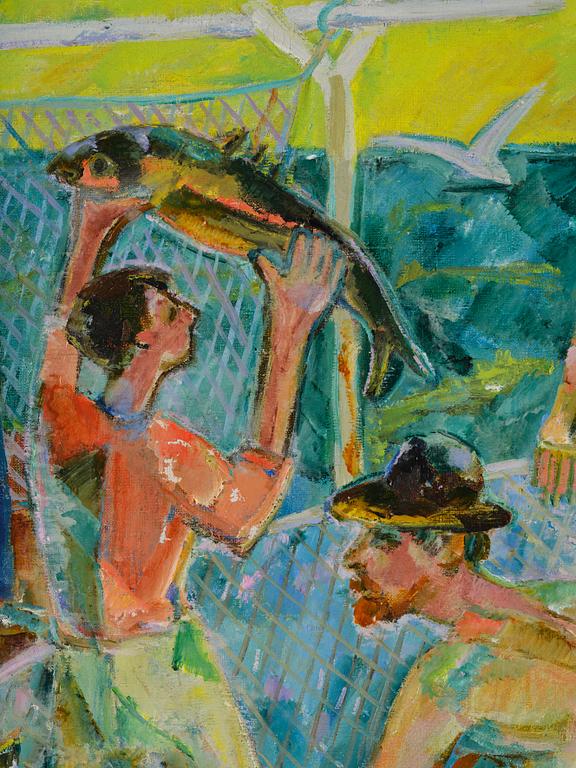
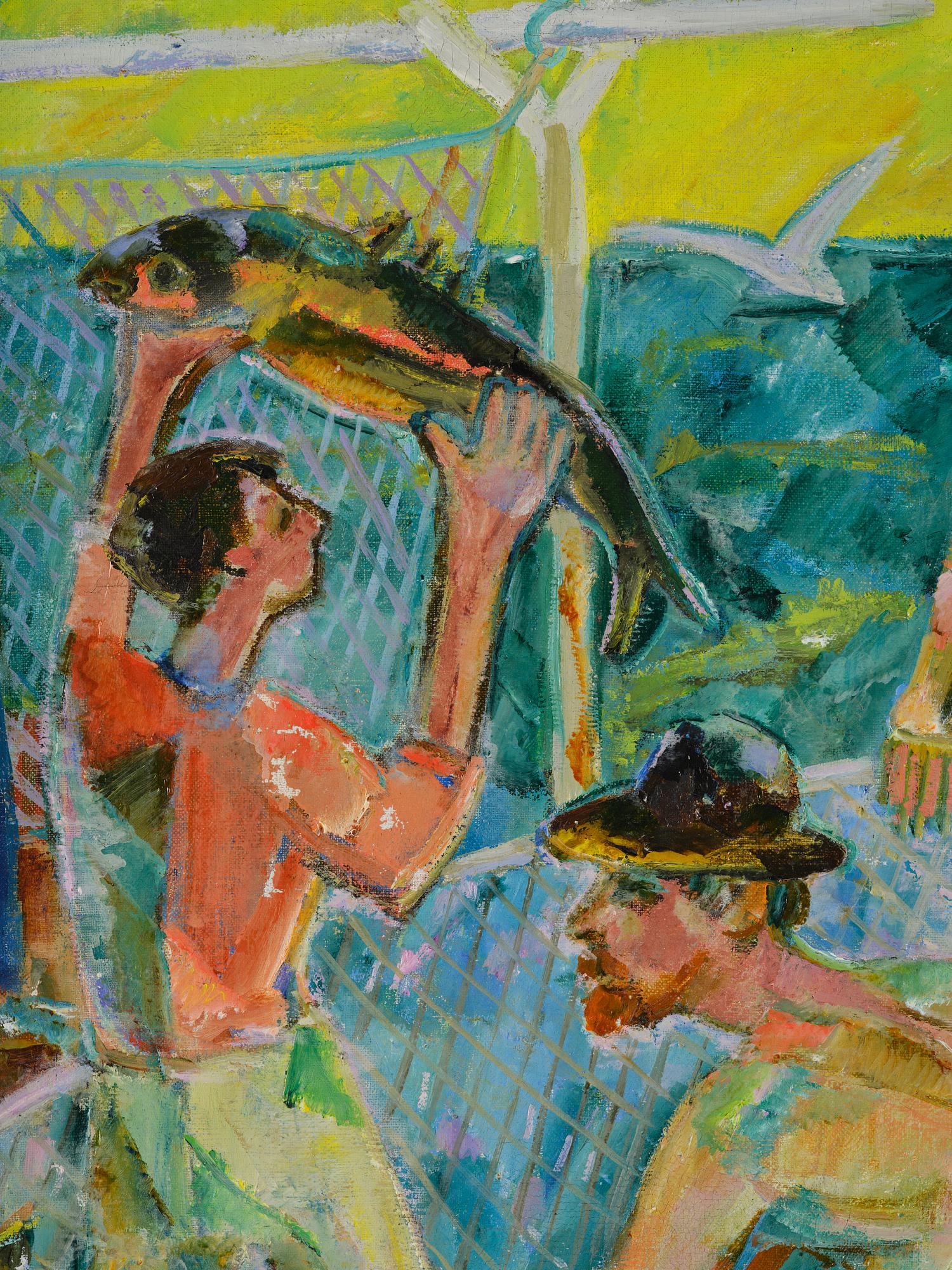
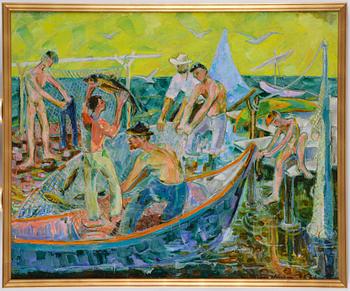
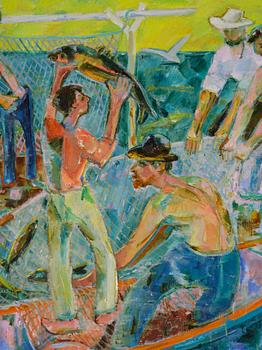
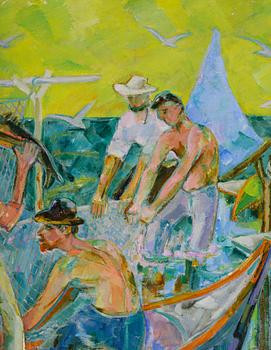
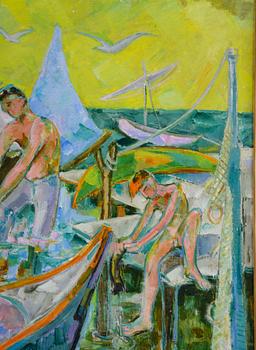
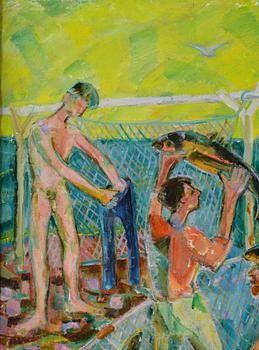
Fisherman with today's catch
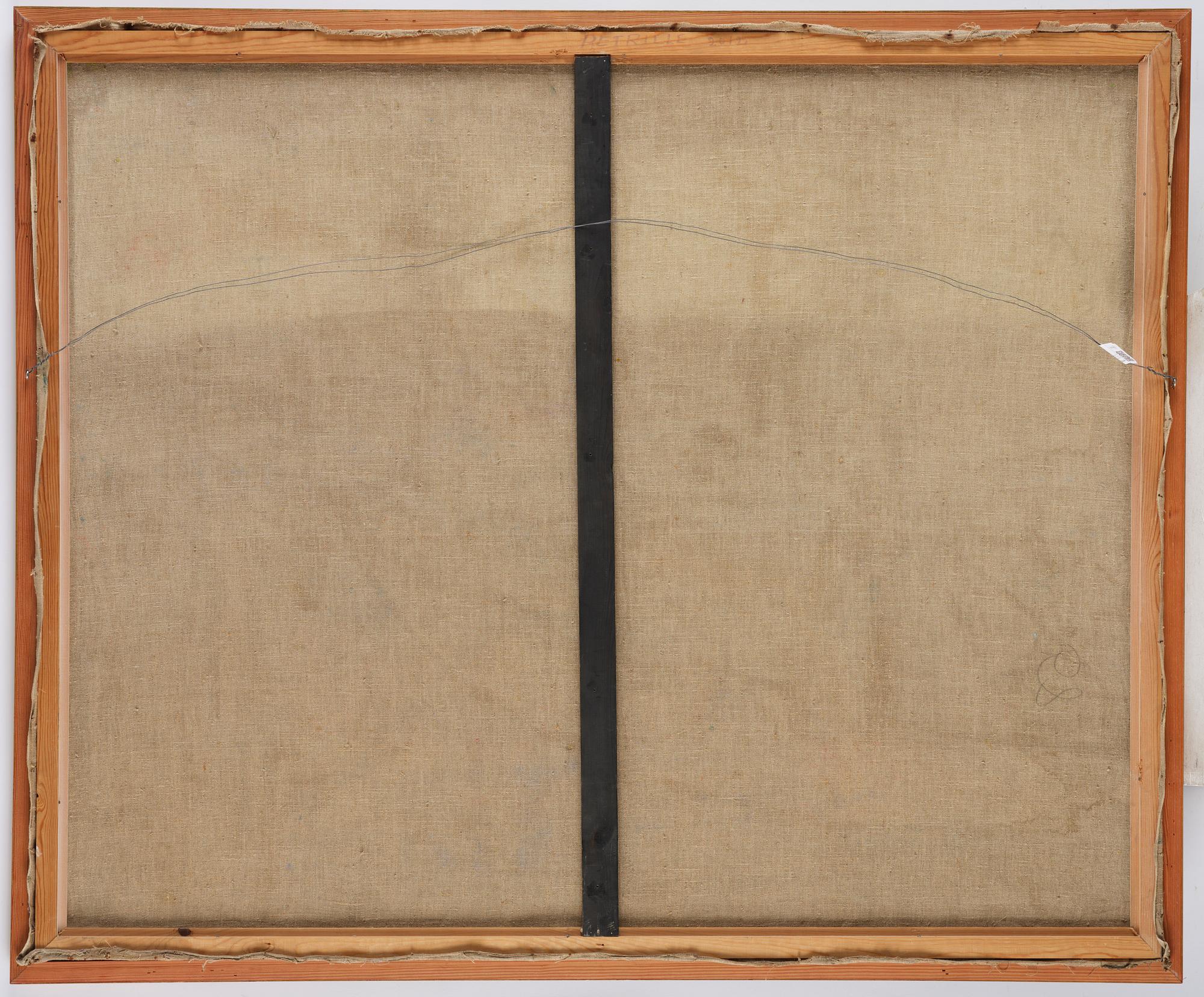
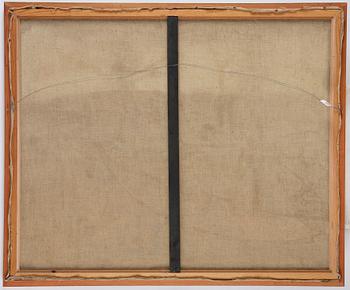
Signed R Särestöniemi and dated -58. Canvas 113.5 x 138.5 cm. Bukowskis thanks art historian Marju Rönkkö for information about the painting.
Alkuperä - Provenienssi
Acquired from an art gallery in Tampere around 1970.
Private collection Estonia.
Muut tiedot
The year 2025 marks the 100th anniversary of the birth of Reidar Särestöniemi, one of Finland’s most celebrated and pioneering artists. The painting offered in this auction, created in 1958 during his years in Leningrad, depicts fishermen with the day’s catch – a rare example from his early period.
Särestöniemi grew up in Lapland under modest circumstances, and his artistic talent was discovered early by his uncle, who helped him gain admission to the Academy of Fine Arts in Helsinki. After studying both in Finland and later in Leningrad at the Ilya Repin Institute of Painting, Sculpture and Architecture between 1956 and 1959, he developed his own expressive style that combines a profound connection to nature with a powerful personal vision.
The theme of people at work is closely intertwined with depictions of labor in Särestöniemi’s early works and during his years of study in Leningrad. The painting conveys a relaxed, unhurried atmosphere.
Särestöniemi frequently depicted fishing nets in his graphic works of the 1950s. The male figures in this painting reveal the influence of the Mexican artist Diego Rivera, whose art Särestöniemi greatly admired during that decade. The portrayal of water exhibits the same distinctive touch found in his later depictions of Lapland’s rapids.
Already in this work, Särestöniemi employs his palette knife in a manner characteristic of his later paintings of the Lappish landscape. The use of pink tones also appears here—a color that would become increasingly prominent in his works from the late 1950s onward. The strong contour lines reflect the influence of the French painter Paul Gauguin, whose works Särestöniemi studied both at the Hermitage Museum in Leningrad and earlier during his visit to France.
The masculine, muscular male figure—central to this painting—first emerged in Särestöniemi’s artistic practice during his years at the Helsinki Academy of Fine Arts in the late 1940s.
A study featuring the same motif as the auction painting is held in the collections of the Särestöniemi Museum in Kaukonen, Kittilä, Finland.
Lisätietoja ja kuntoraportit

Kuuluu jälleenmyyntikorvauksen piiriin
Tietoa ostamisesta
Kuvan käyttöoikeudet
Tämän tietokannan taideteokset ovat tekijänoikeudella suojattuja, eikä niitä saa kopioida ilman oikeudenhaltijoiden lupaa. Teokset kopioidaan tässä tietokannassa Bildupphovsrättin lisenssillä.










Muiden katsomia kohteita