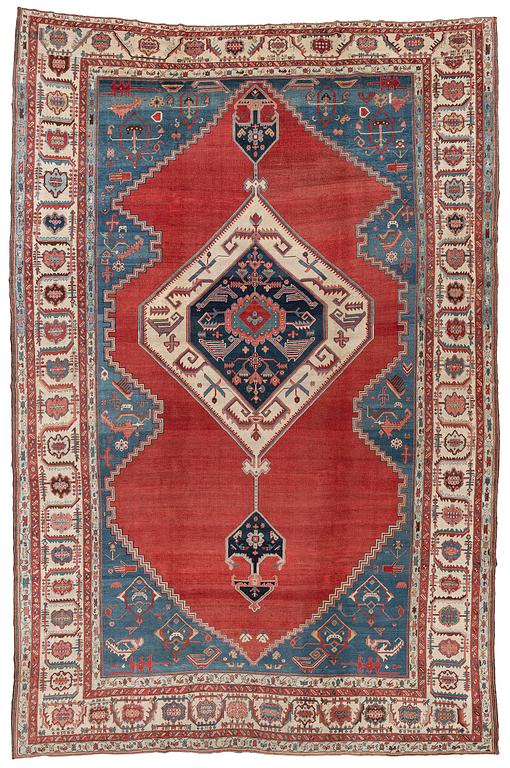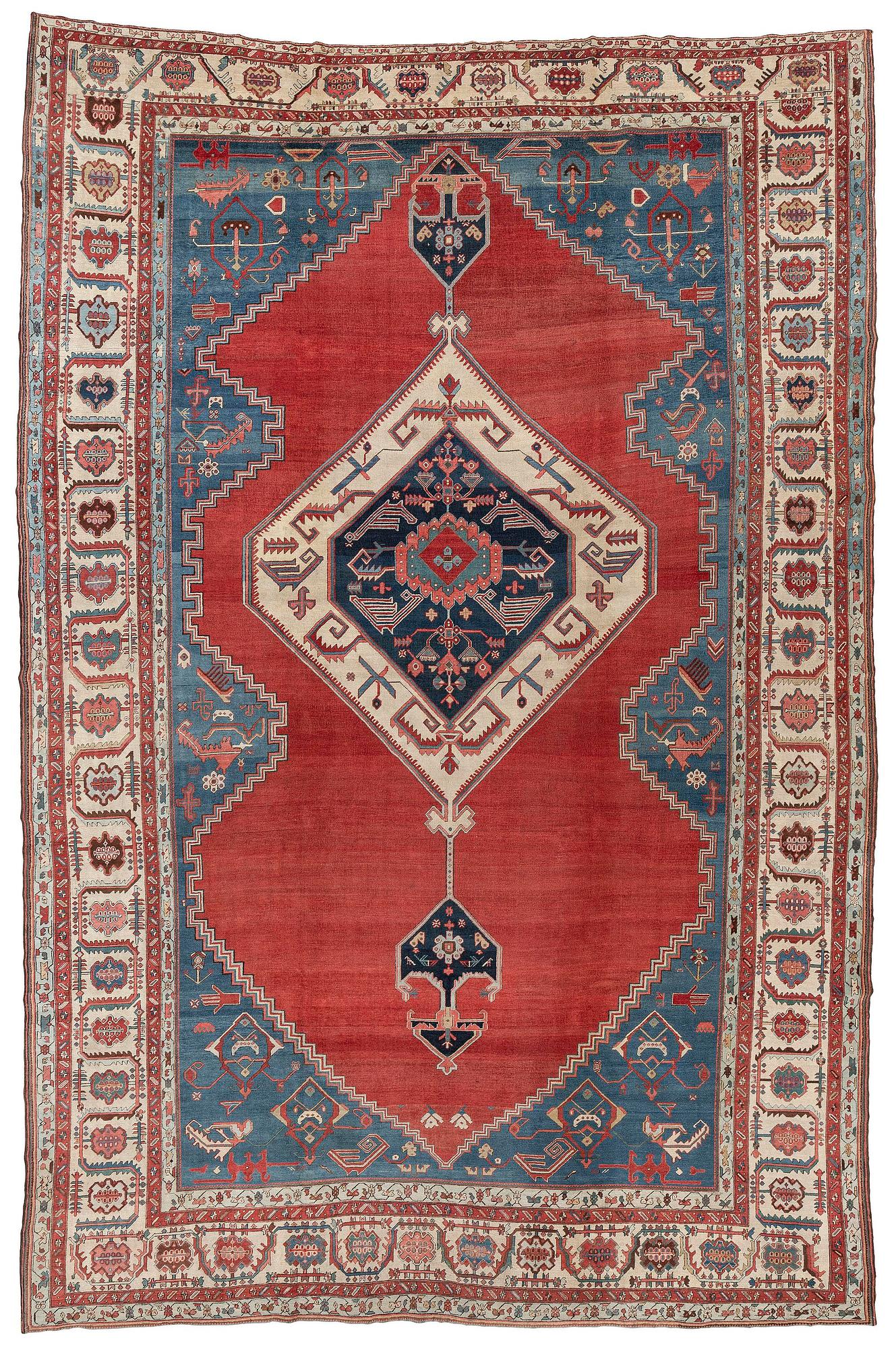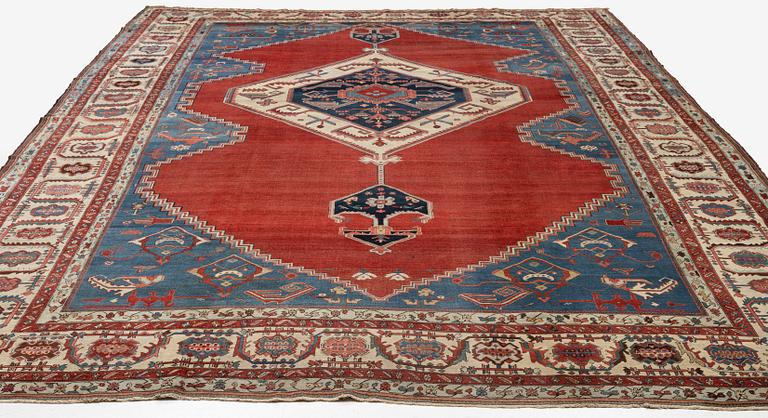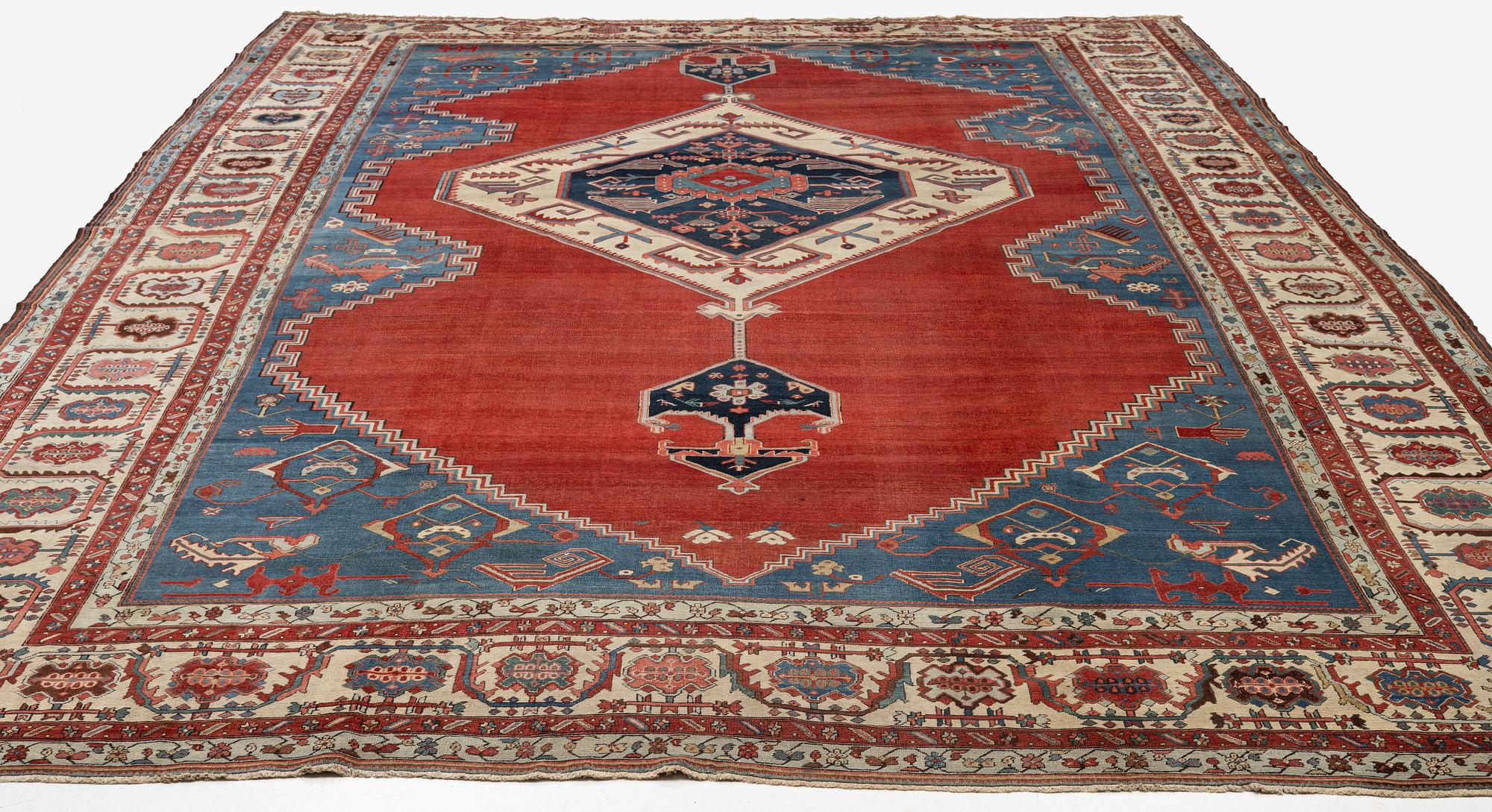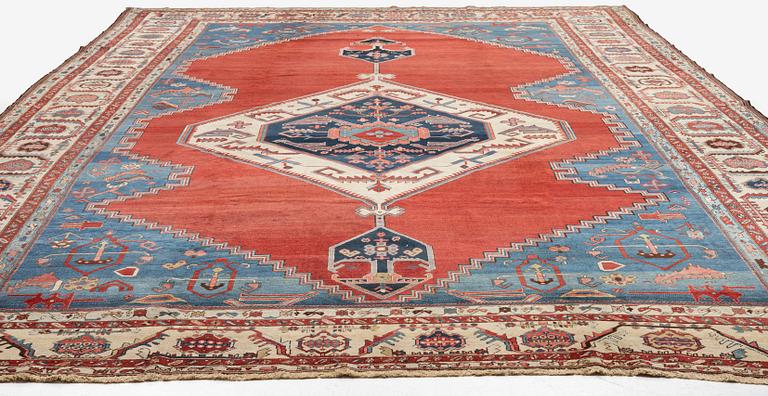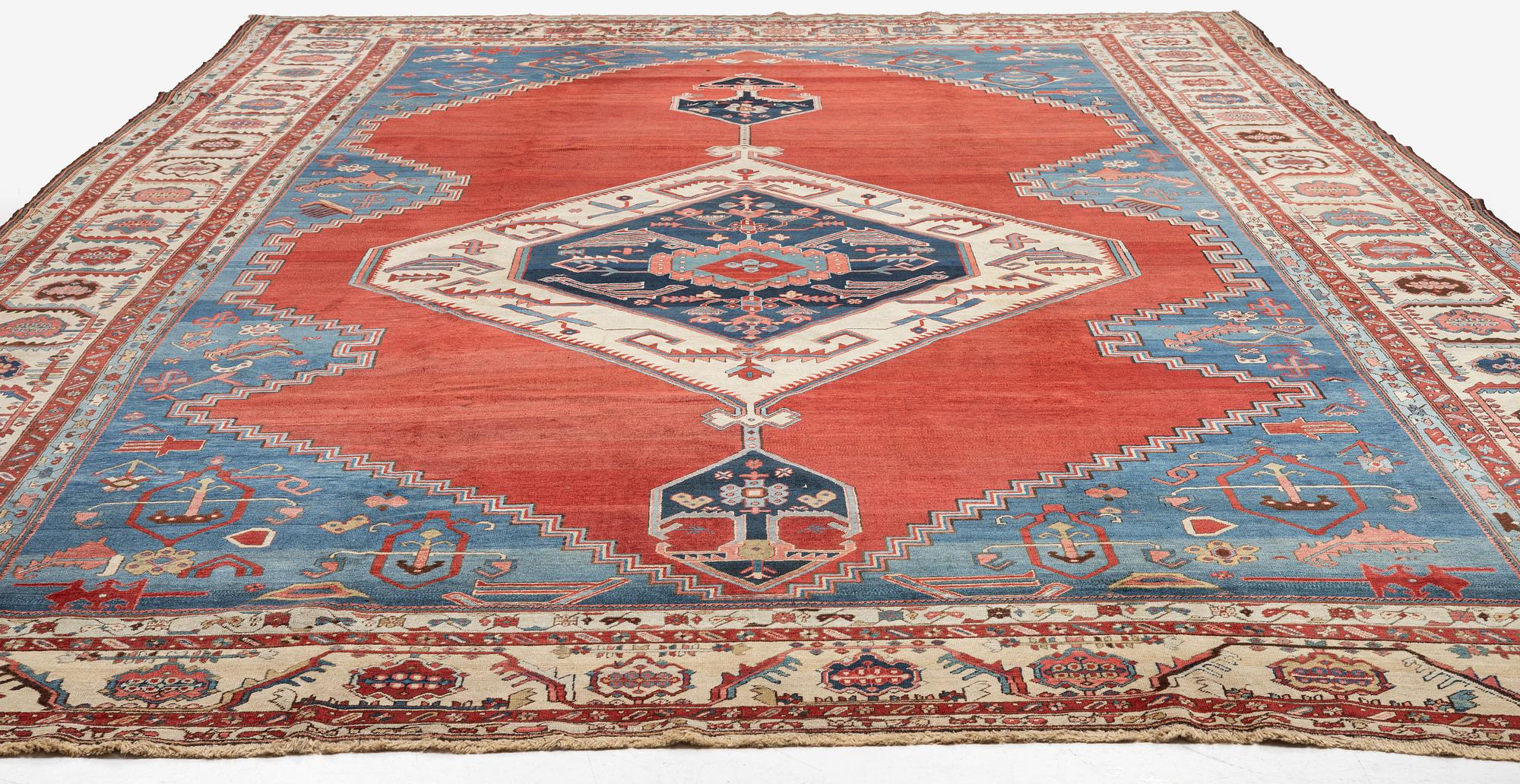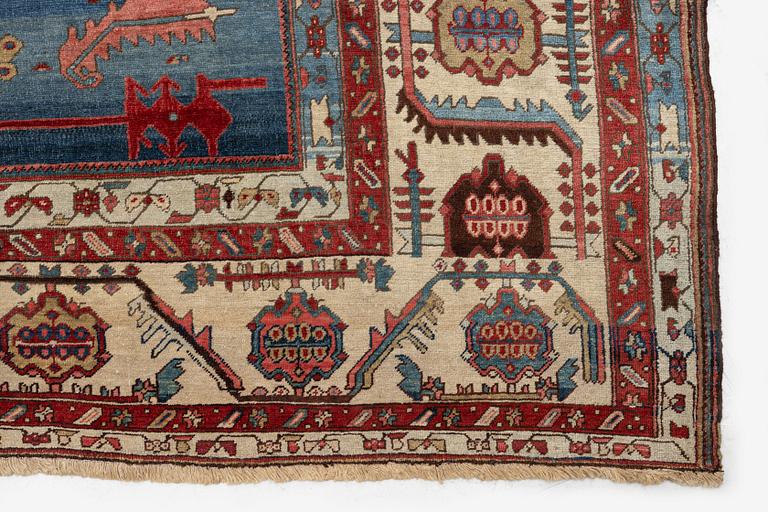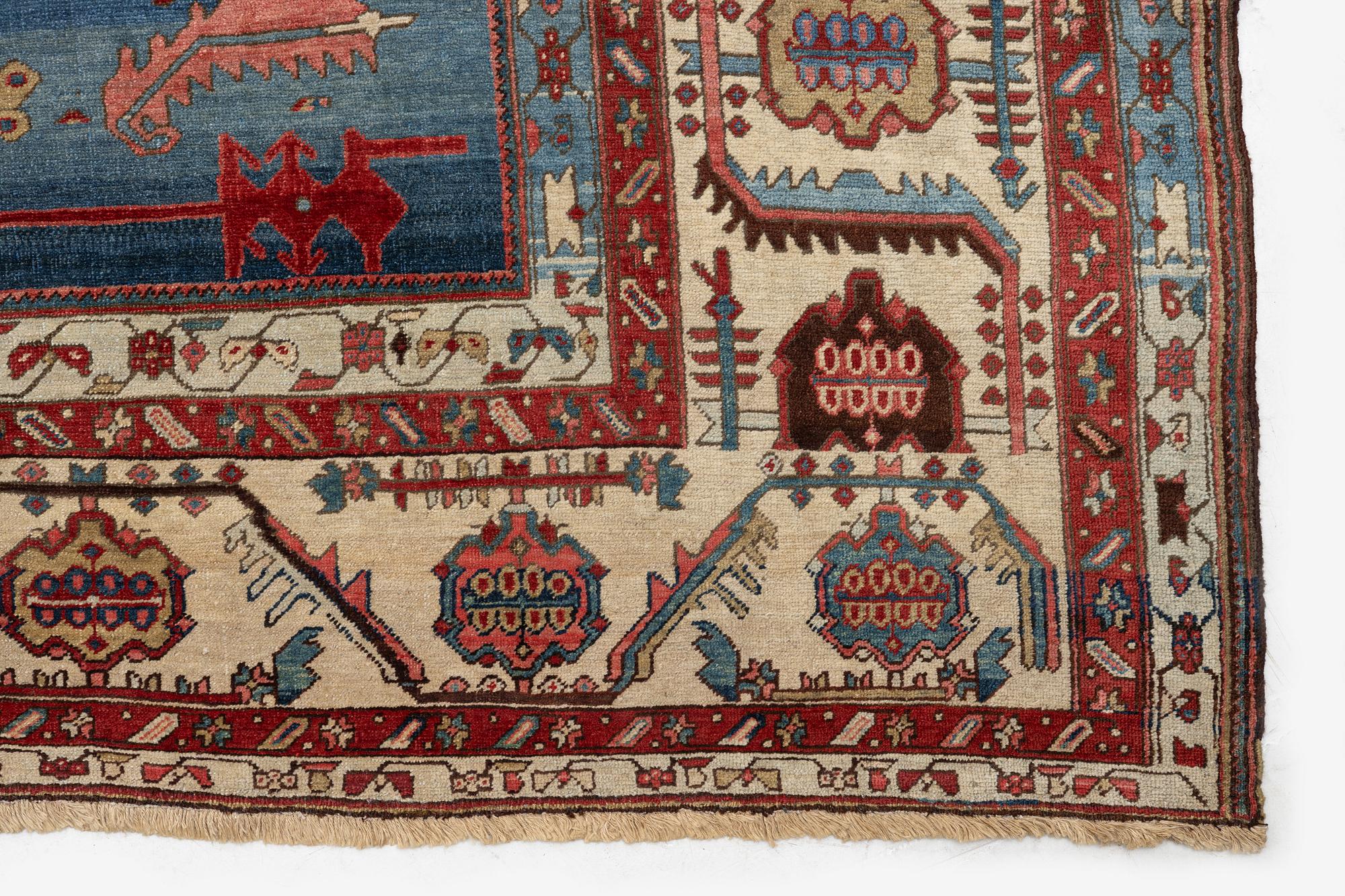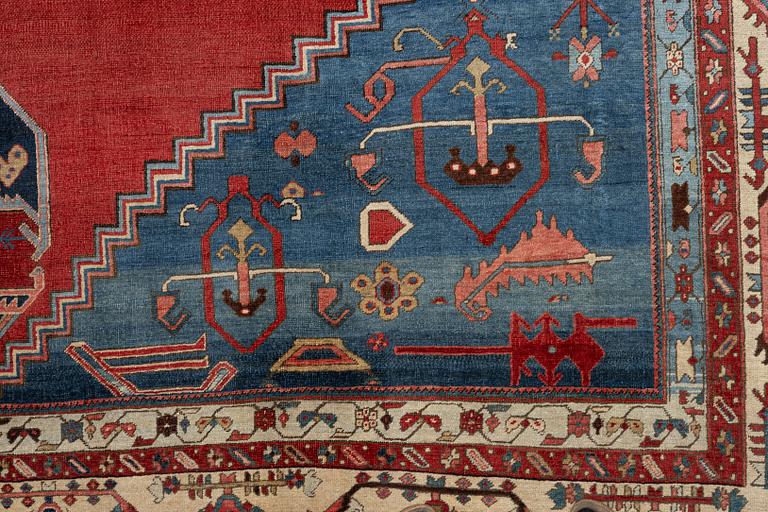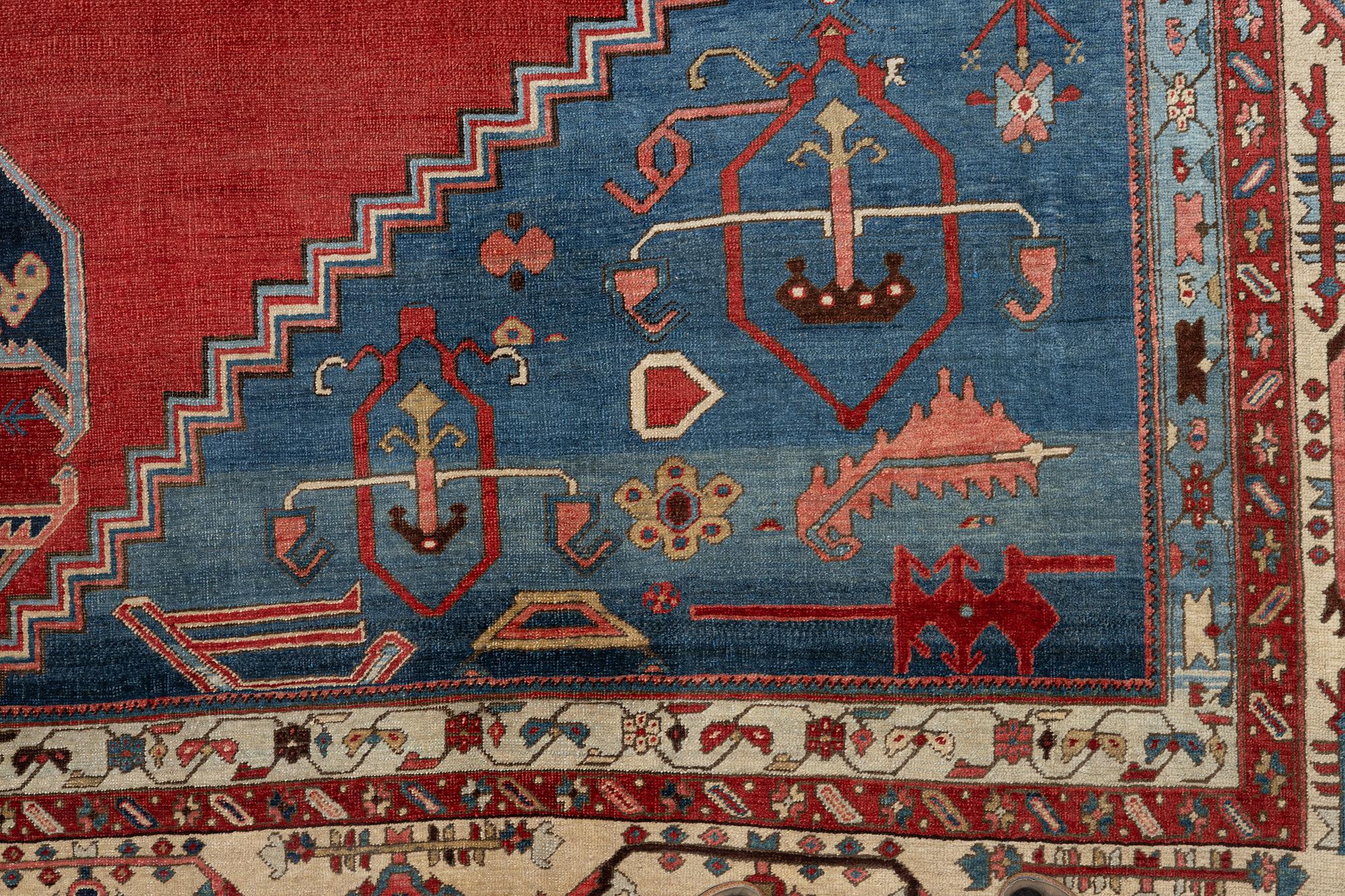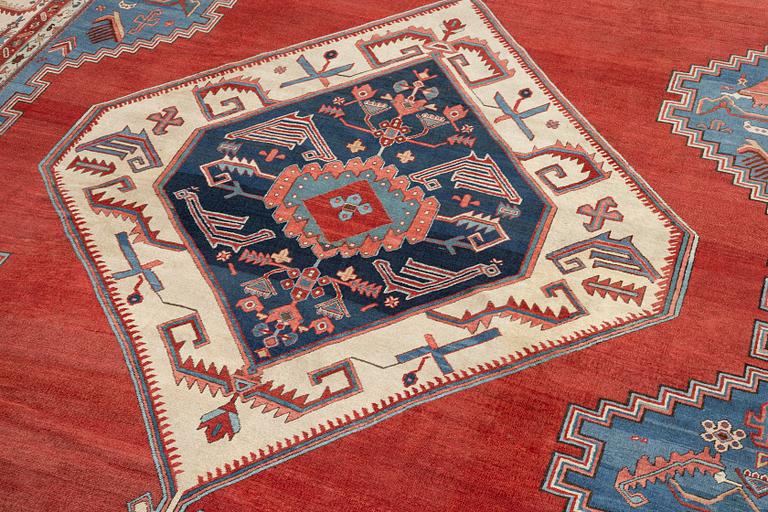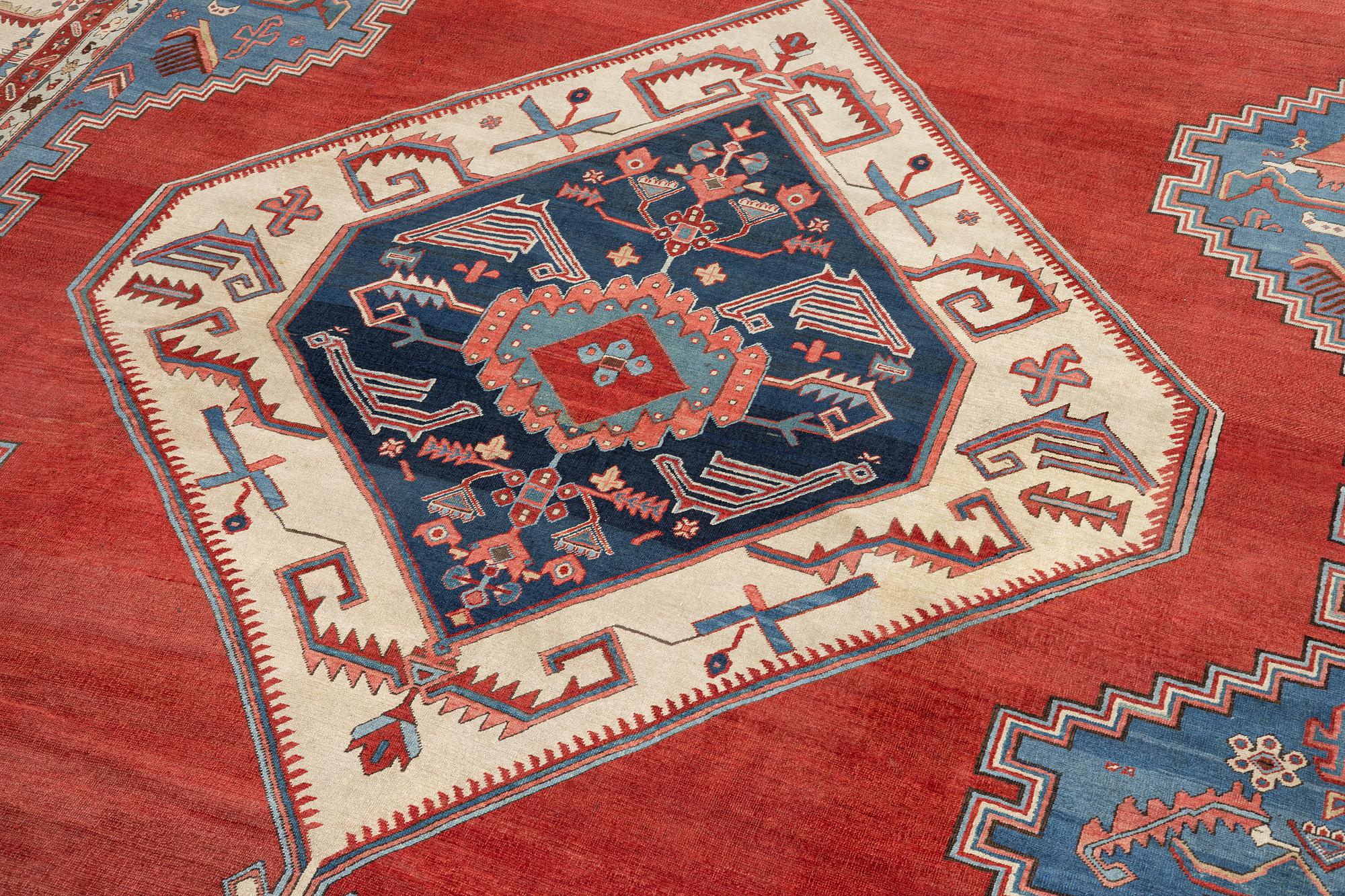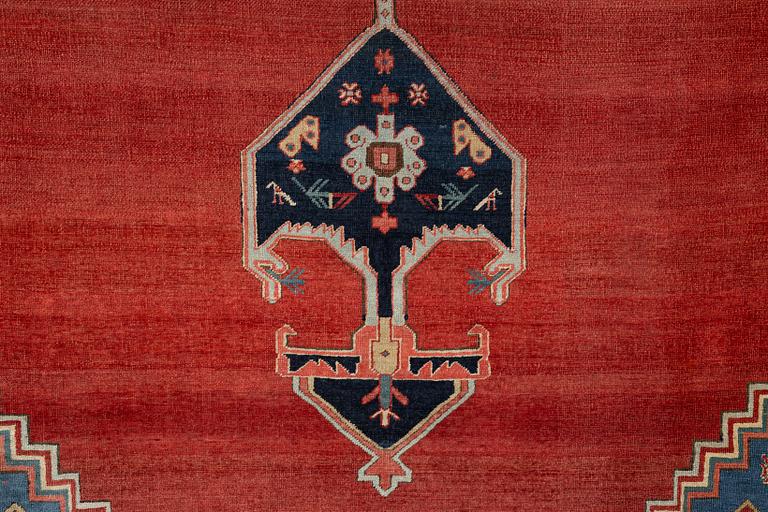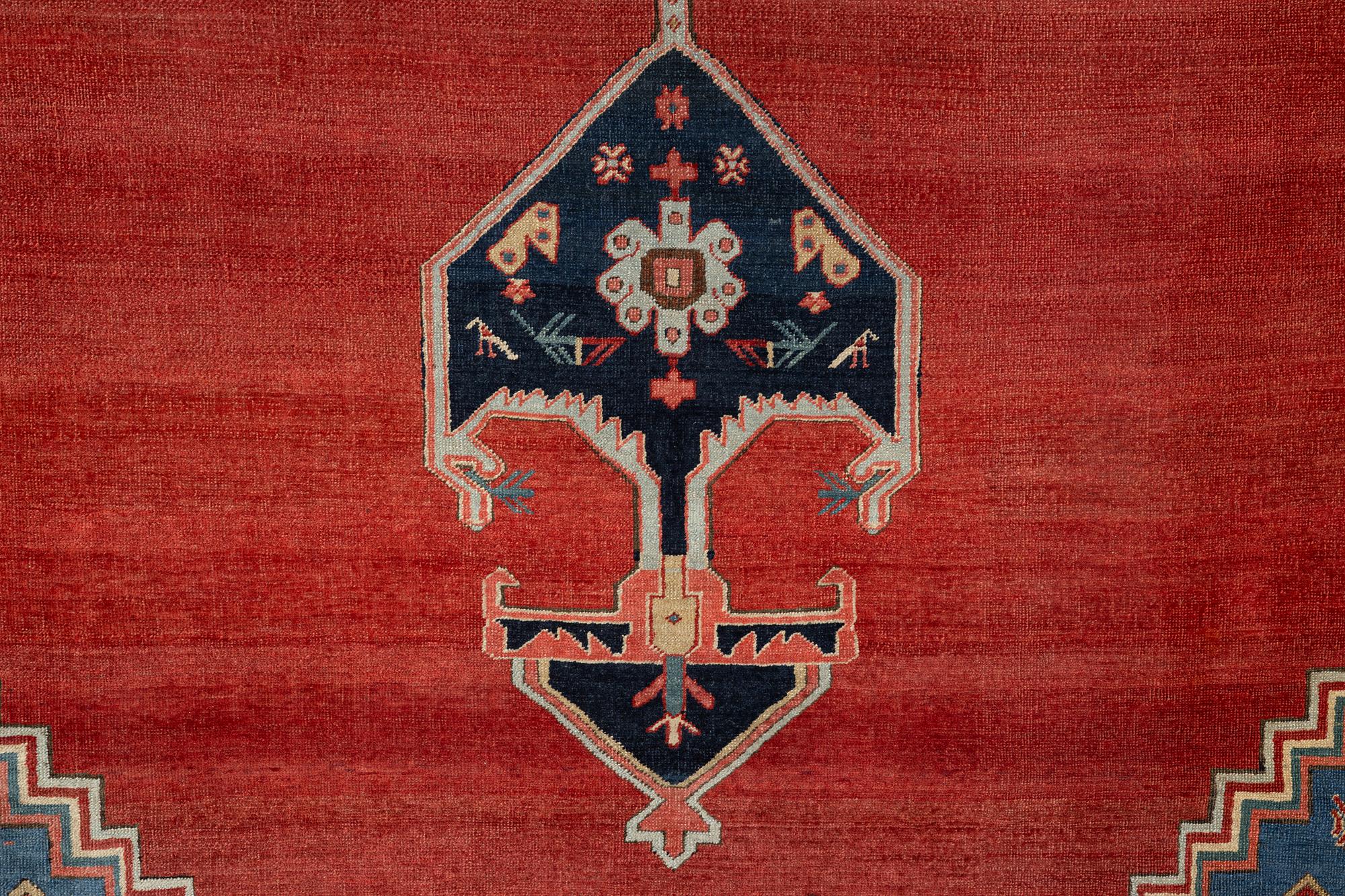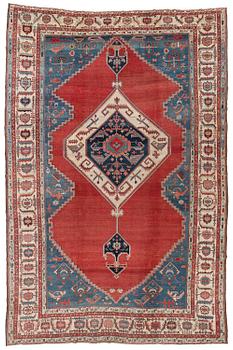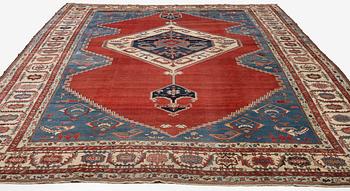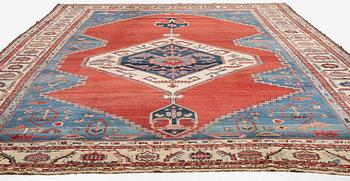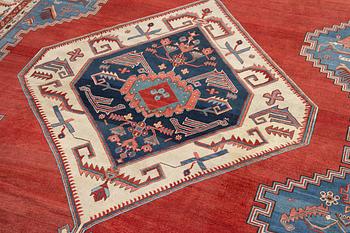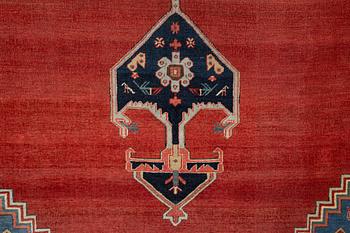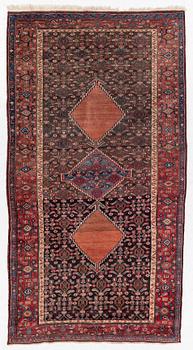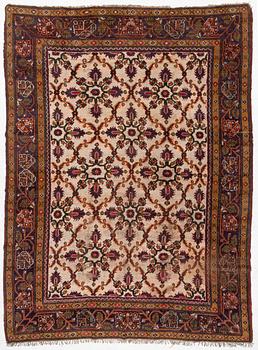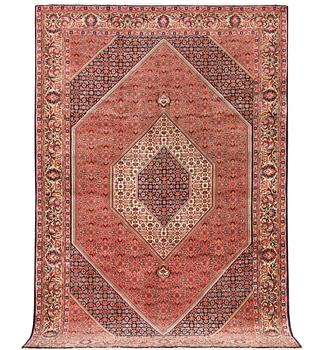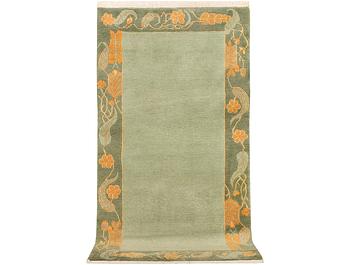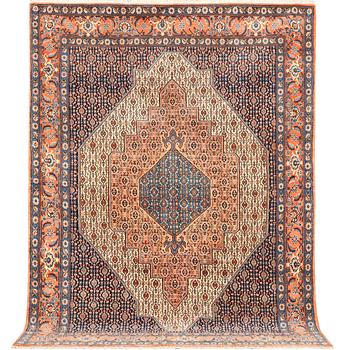
Around 1880-1900. A light blue ground with a red, ivory, and indigo blue medallion. An ivory main border with a stylised floral vine.
Tuontiarvonlisävero
Tuontiarvonlisävero (12%) tullaan veloittamaan tämän esineen vasarahinnasta. Lisätietoja saat soittamalla Ruotsin asiakaspalvelumme numeroon +46 8-614 08 00.
Muut tiedot
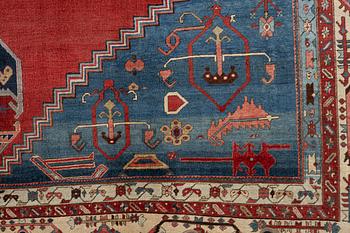
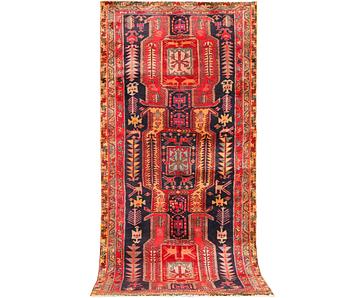
This large-format carpet was woven in Bakshaish, a town located near Tabriz in northwestern Persia, which is considered one of the region's earliest and most significant weaving centres. Despite the geographical proximity, the pattern traditions of the towns differ markedly. Most Bakshaish carpets were made in large formats, but their simple and powerful, two-dimensional compositions are executed in a geometric style with warmly harmonised colours. They carry a naivety and a freedom in execution that is reminiscent of smaller village weavings. The presence of small animals, amulets, stylised flowers, and sometimes even human figures gives them a rustic and almost tribal expression.
The dating of Bakshaish carpets has long been a subject of discussion among experts. Some scholars argue that production did not begin until the late 19th century, while others assert an earlier origin. In the absence of written sources, researchers have often had to rely on stylistic comparisons to establish
Lisätietoja ja kuntoraportit

Tietoa ostamisesta