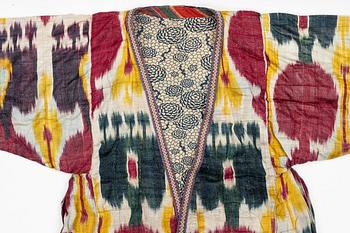
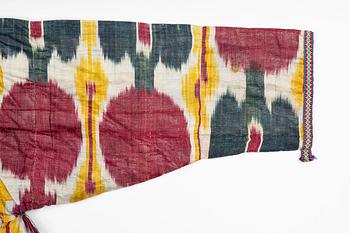
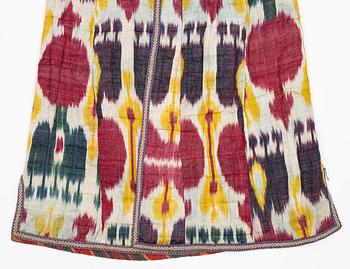
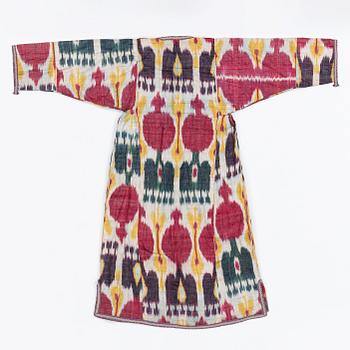
Length 123 cm.
Alkuperä - Provenienssi
From a private swedish collection
Muut tiedot
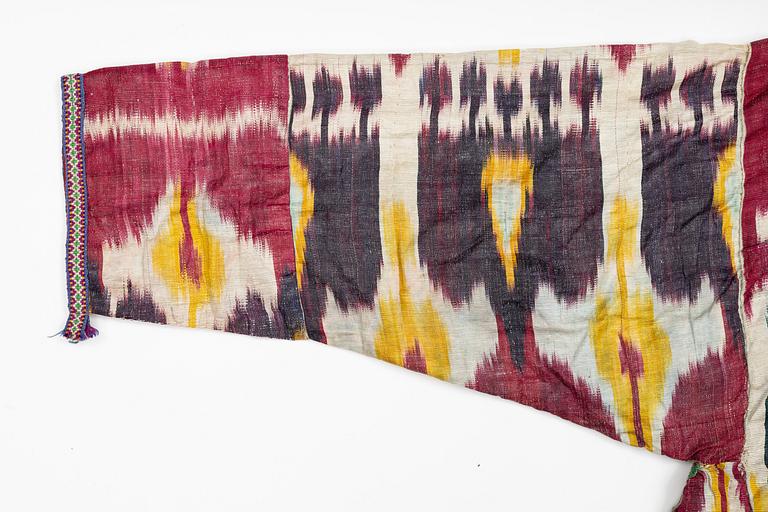
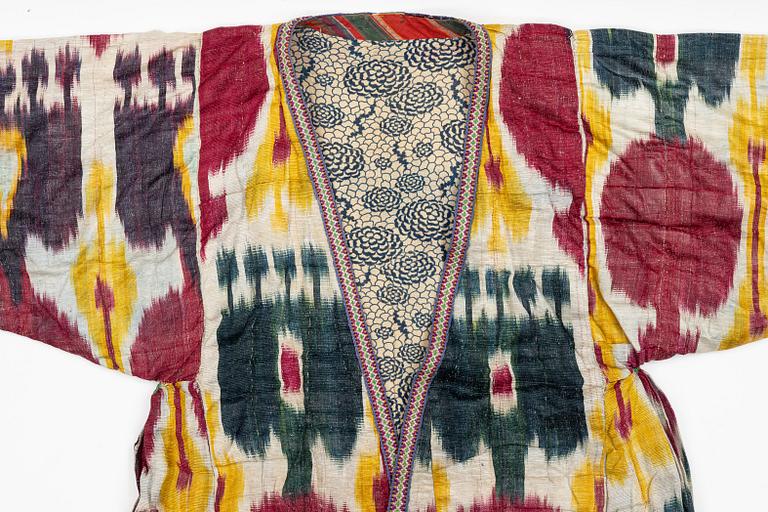
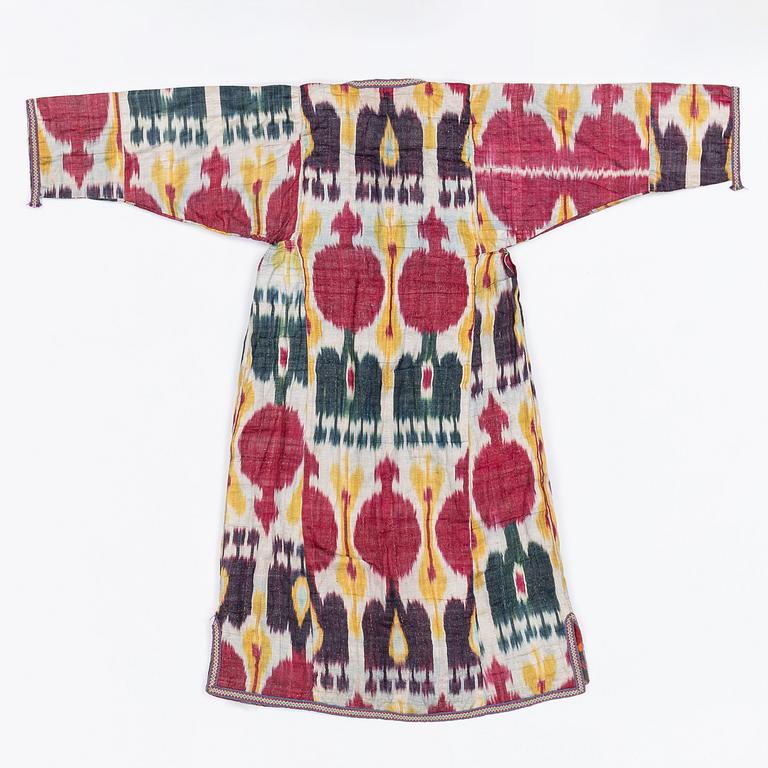
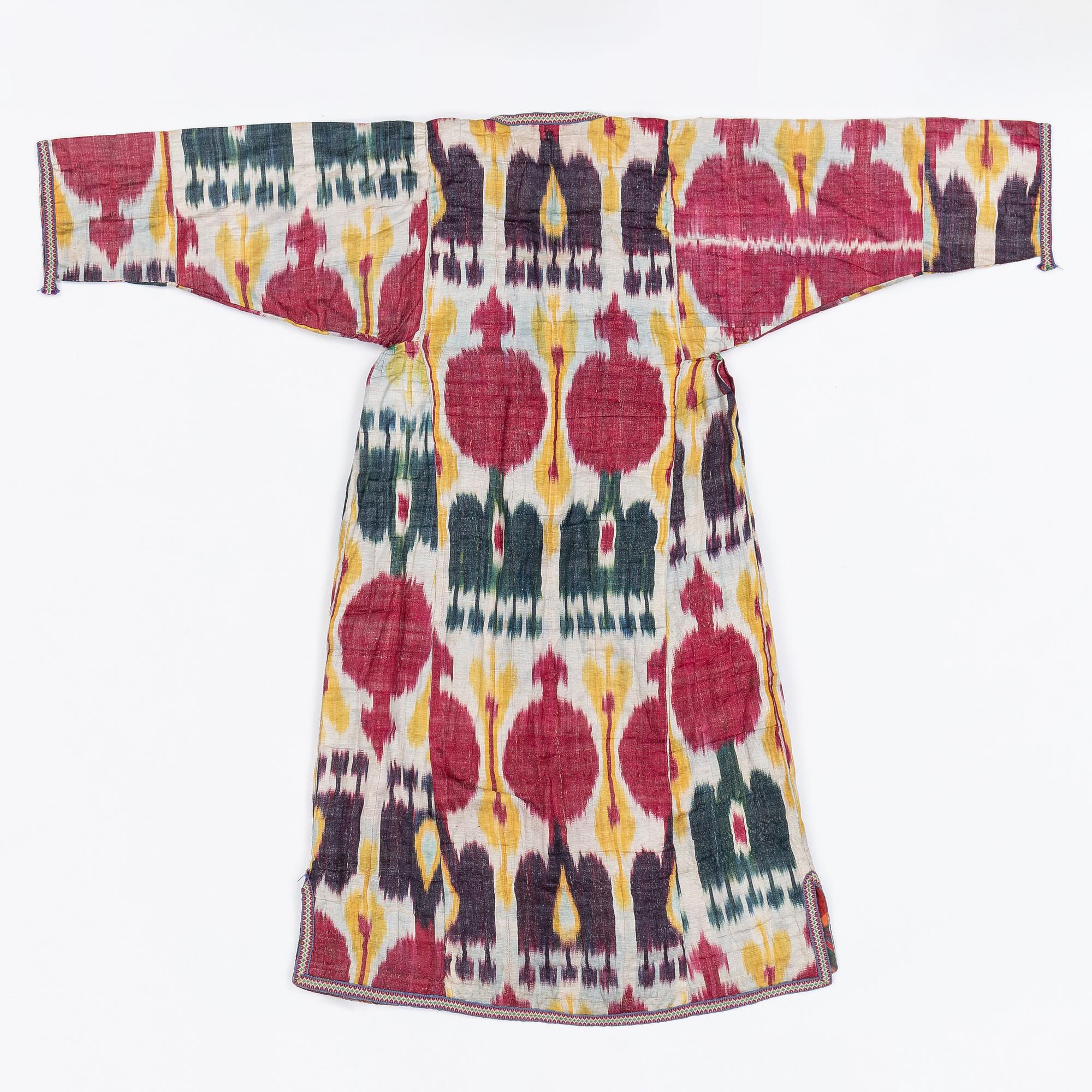
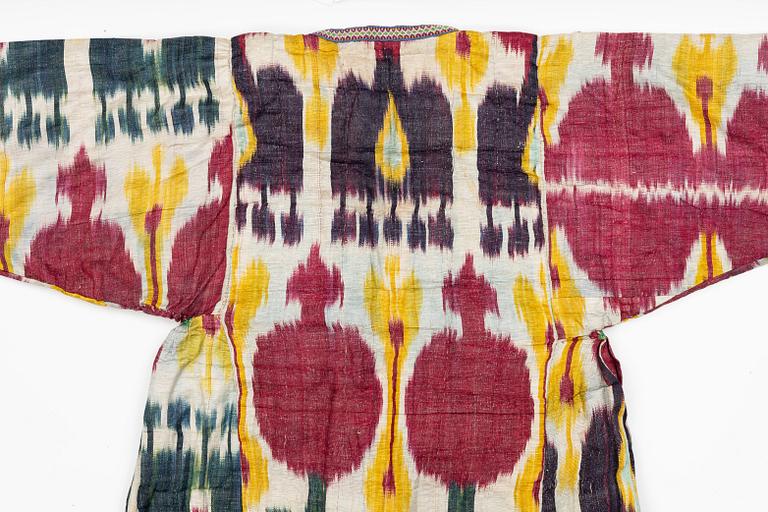
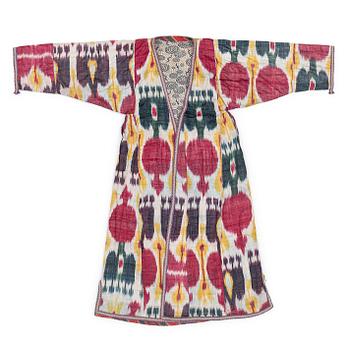
The chapan is a traditional outer robe worn across Central Asia, particularly in present-day Uzbekistan, Tajikistan, Turkmenistan and Afghanistan. It is usually made from handwoven silk or cotton cloth, quilted with a layer of cotton wadding, and cut in a loose, straight form with long sleeves. The overlapping front panels are typically fastened with a sash or belt.
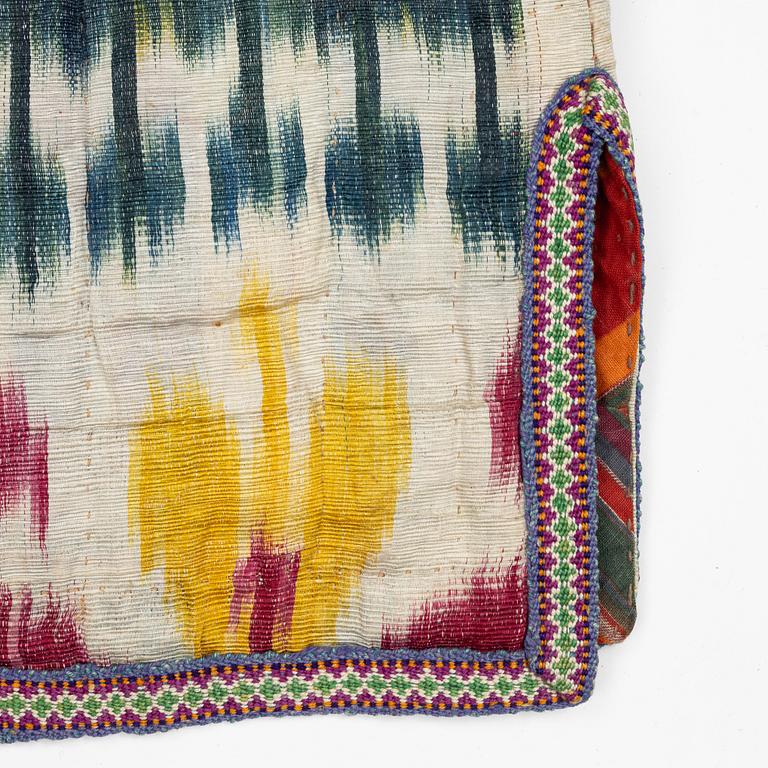
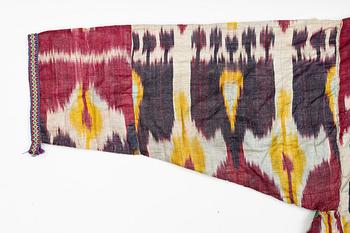
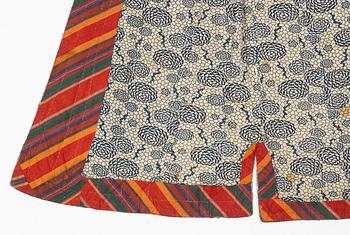
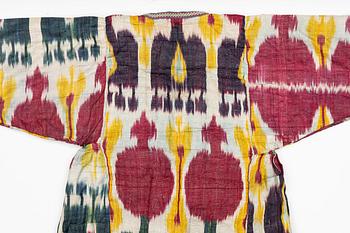
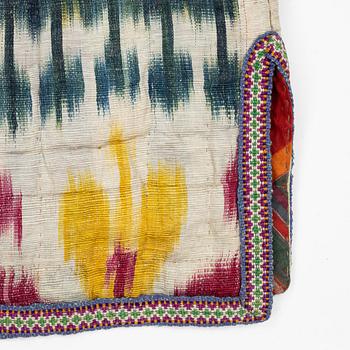
Chapans were produced in a wide range of materials and patterns – from plain cotton examples intended for everyday use to richly patterned silk robes worn on festive or ceremonial occasions. The distinctive designs were often created using the ikat technique, locally known as abrband, in which the warp threads were resist-dyed before weaving. This process produced the characteristic blurred patterns associated with the workshops of Bukhara and Samarkand. Linings were frequently made from printed Russian cottons, reflecting the region’s active trade links during the late nineteenth and early twentieth centuries.
The chapan was worn by both men and women, with variations in colour, fabric and decoration indicating social status, regional tradition and seasonal use. Heavier, more heavily padded robes were used in colder climates, while fine silk versions in the urban centres were often markers of prestige and hospitality.
Historic chapans today offer valuable insight into the textile history of Central Asia.
Bukowskis is honoured to have been entrusted with the sale of nine chapans of international calibre – a rare and cohesive group that reflects the technical skill, regional diversity and artistic refinement of Central Asian textile culture.
Lisätietoja ja kuntoraportit

Tietoa ostamisesta