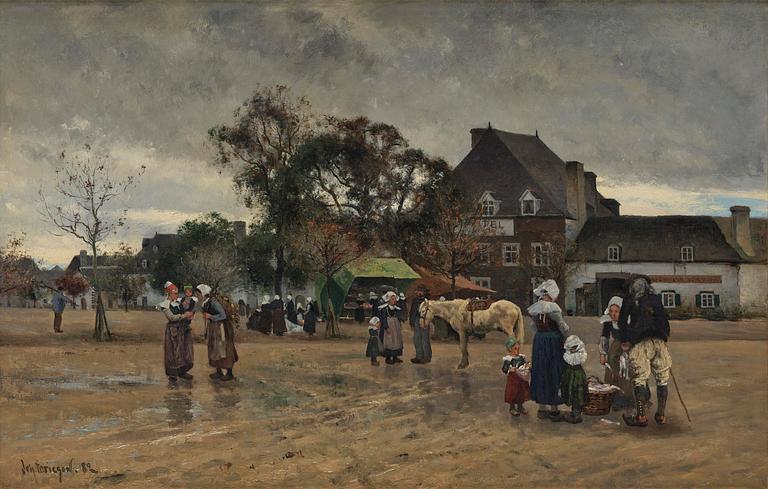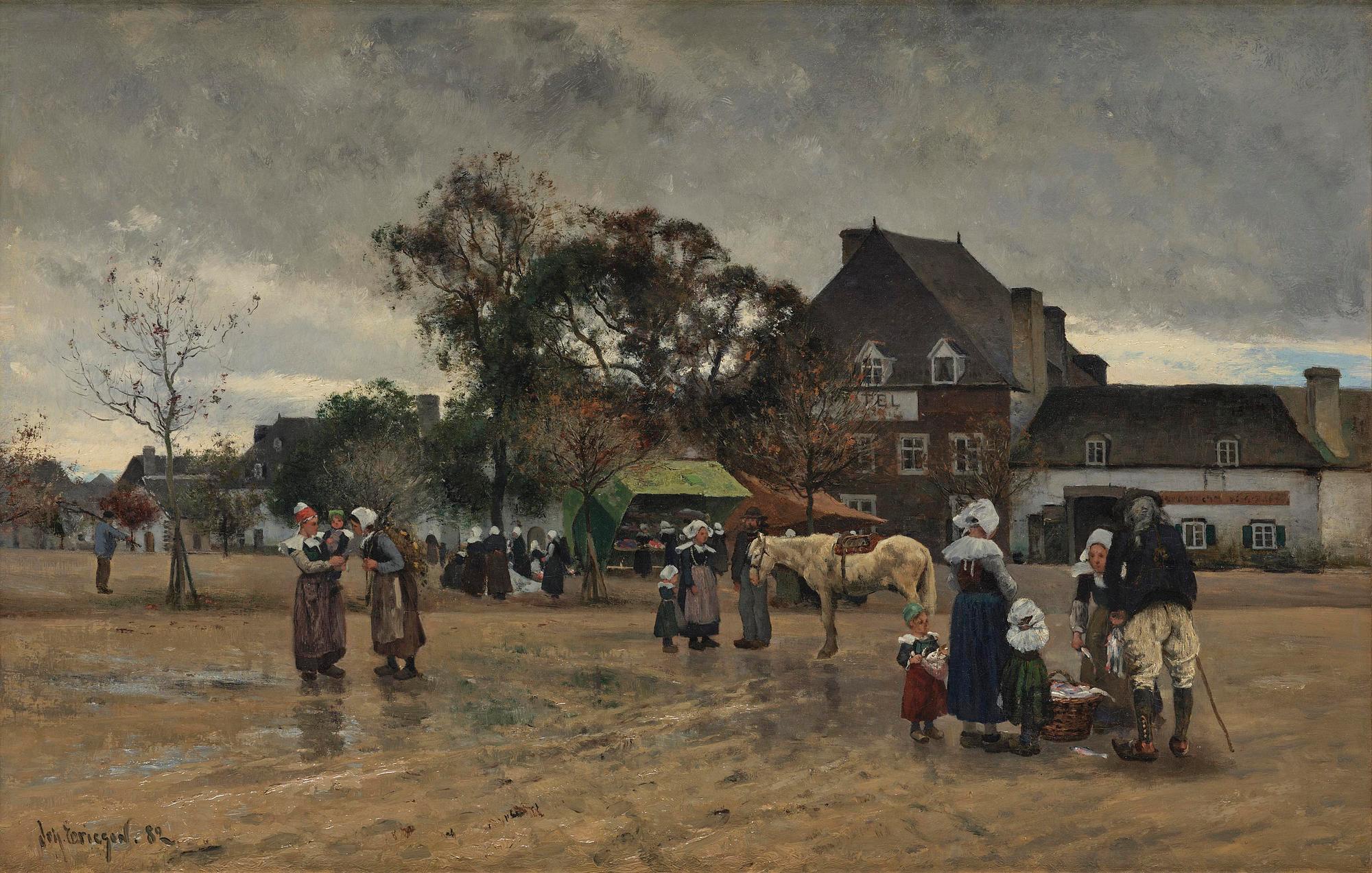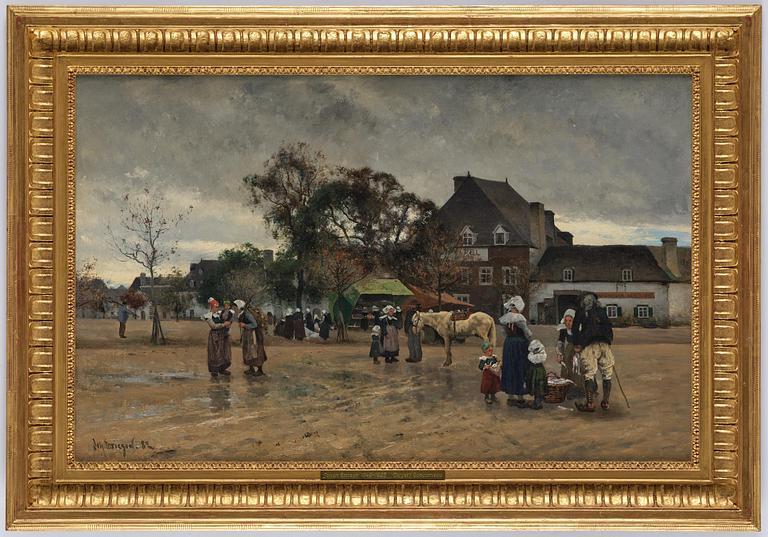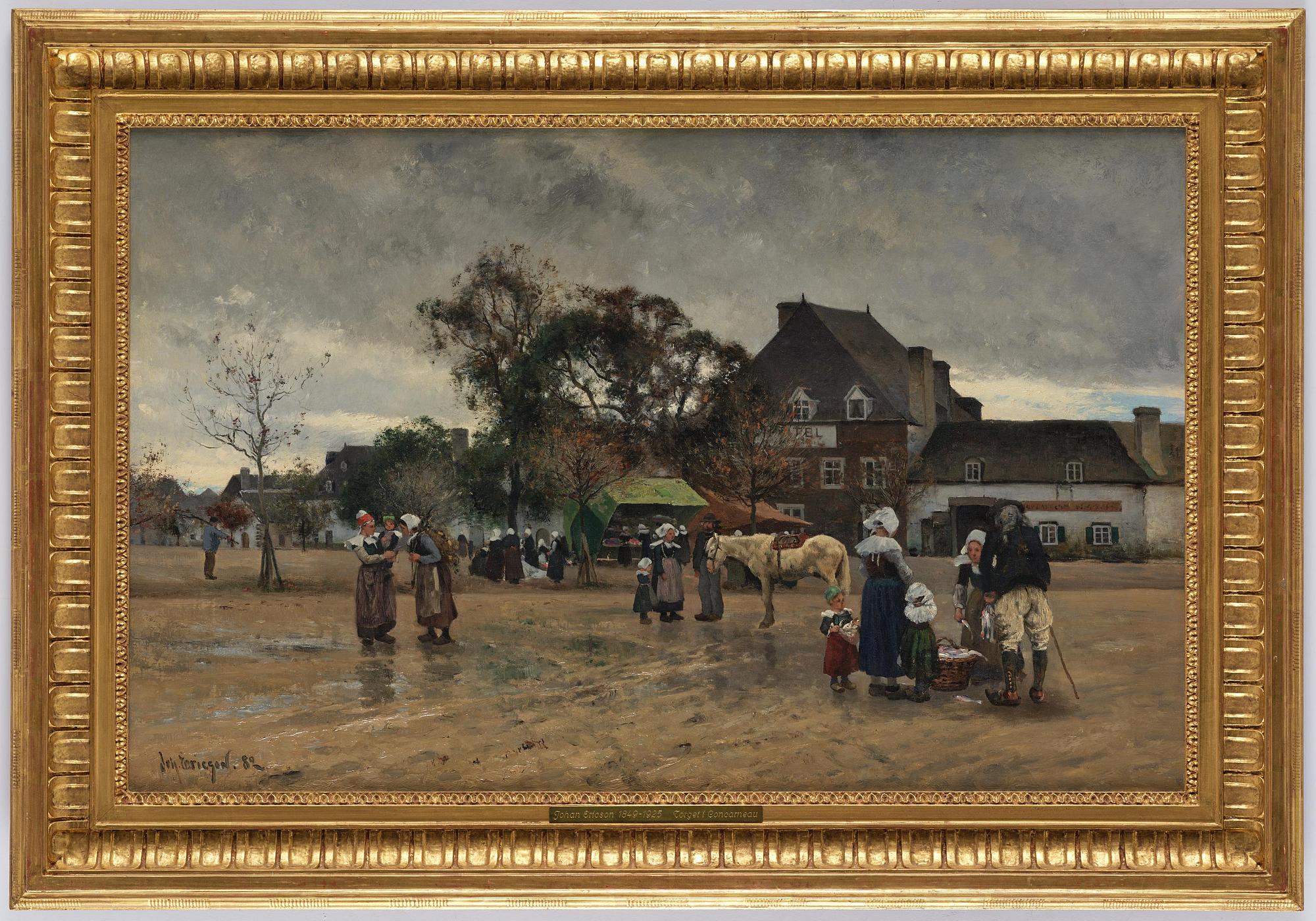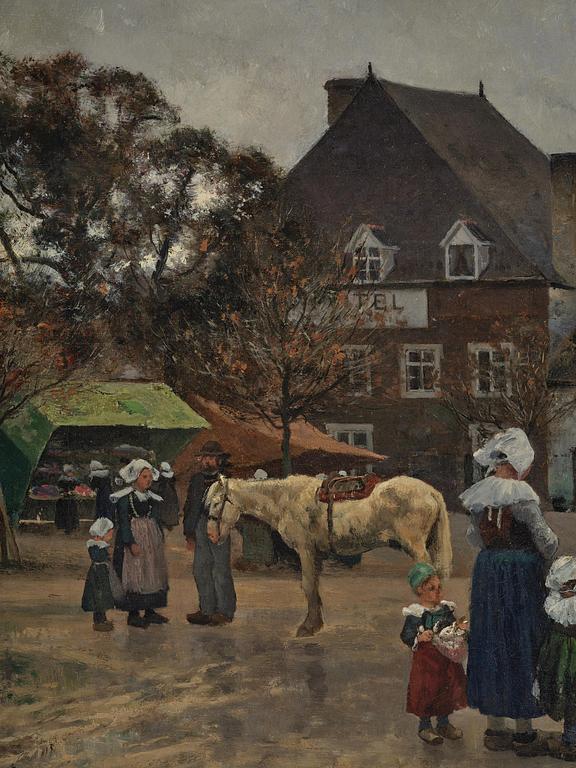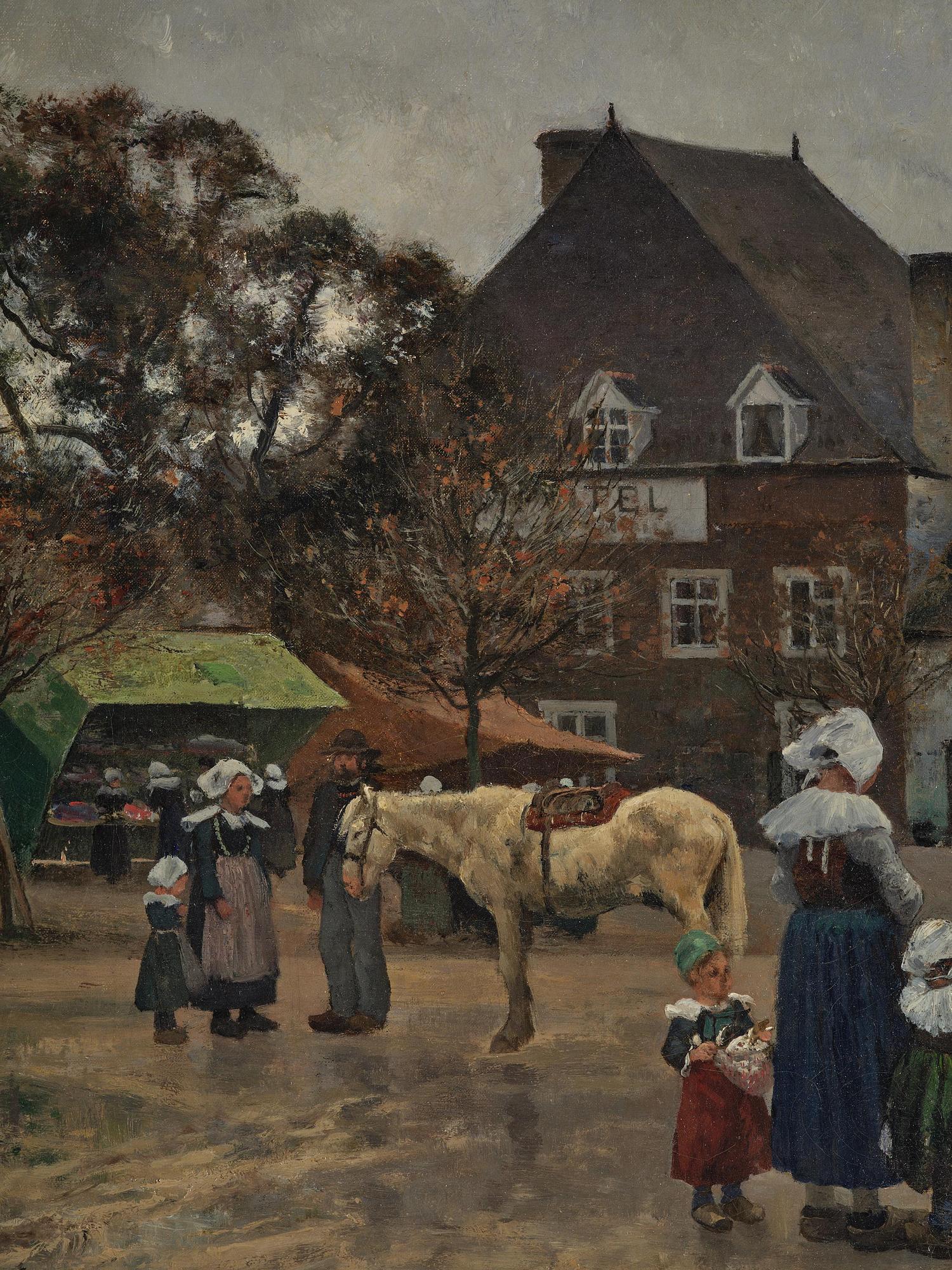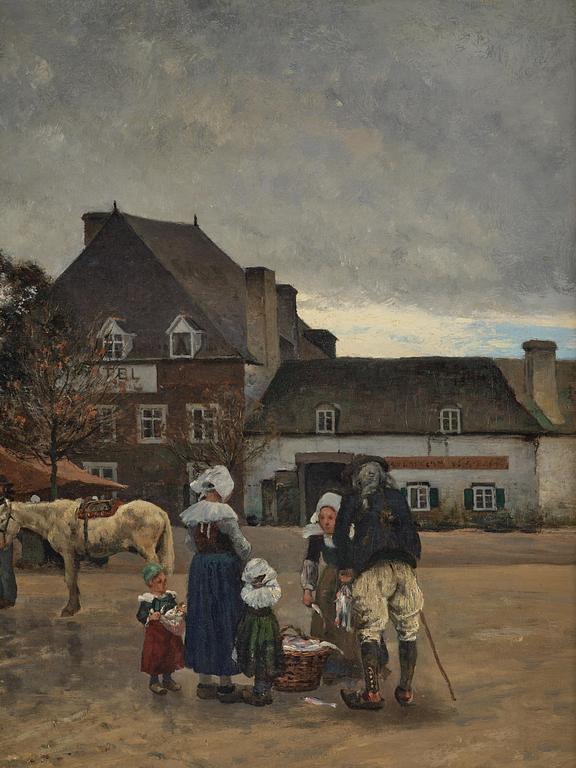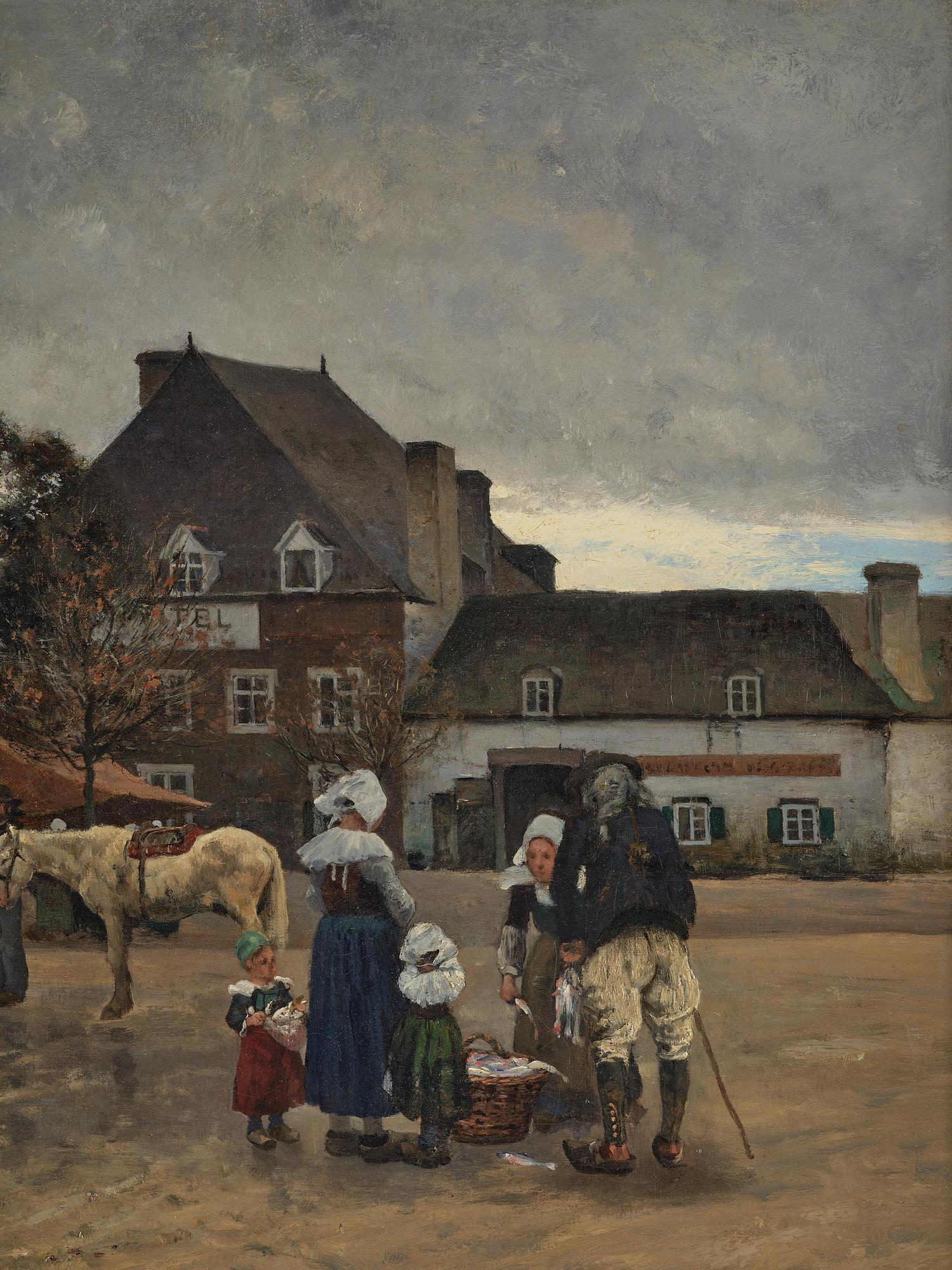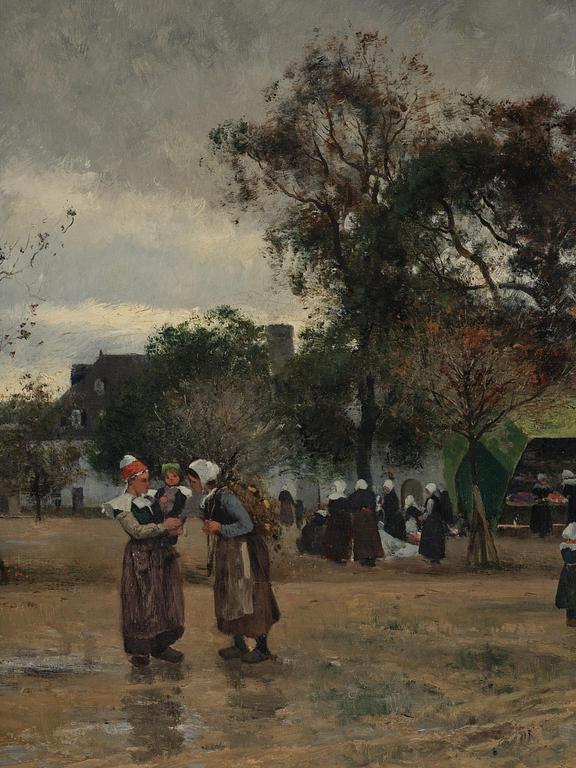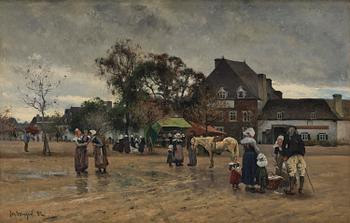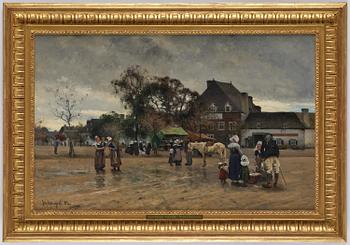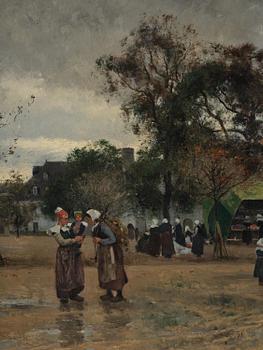
"Torget Concarneau"
Signed Joh. Ericson and dated 82. Oil on canvas 58 x 90 cm.
Kirjallisuus
Gösta Procopé, "The Artist Couple Anna Gardell-Ericson and Johan Ericson", 1982, compare with an earlier version of the motif ("Marketplace in Concarneau", 1880), in the collections of the National Museum, Stockholm NM 6705, illustrated full page, p. 42.
Muut tiedot
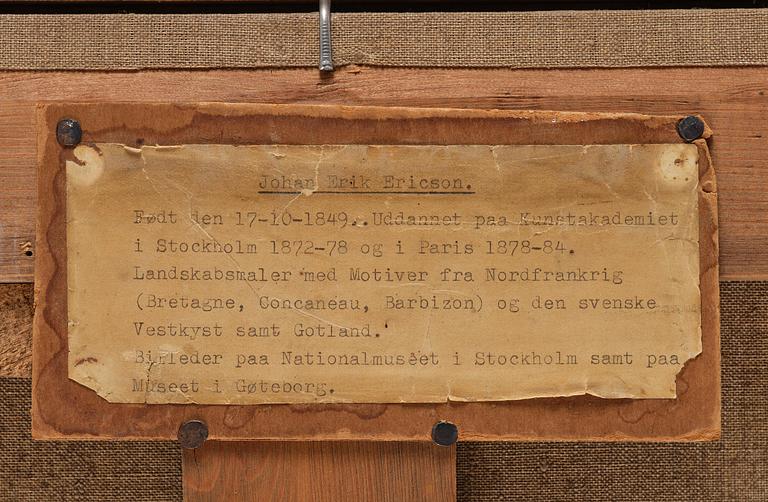
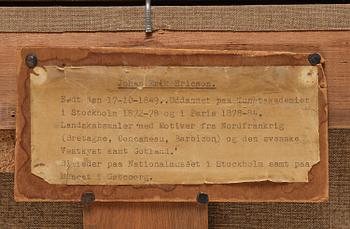
Johan Ericson embarked on his artistic career as a student of Professor Johan Boklund at the Royal Academy of Fine Arts in Stockholm. His studies at the Academy continued at the so-called Landscape School under the guidance of Per Daniel Holm.
In 1878, Ericson travelled to France on a scholarship. In Paris, he quickly became good friends with the fifteen years older Alfred Wahlberg, who had already achieved great success as a painter and had established himself as a successful artist. Ericson seems to have become very attached to Wahlberg, whom he admired greatly both as an artist and as a friend, and Wahlberg soon gained great respect for Ericson as well. Although Wahlberg never took on any students, he often entrusted Ericson to assist him with paintings in order to meet the numerous commissions he received, primarily from American clients.
In France, Ericson was able to immerse himself completely in plein air painting. Ericson's subjects from the early 1880s are characterised by the tangible influences of the Barbizon School, with its teachings from, for example, Corot and Daubigny.
He spent his summers in the oyster-fishing town of Concarneau in Brittany, where he created some of his most significant paintings. He depicted both the town and its inhabitants as well as the surrounding nature, achieving great success with his French motifs.
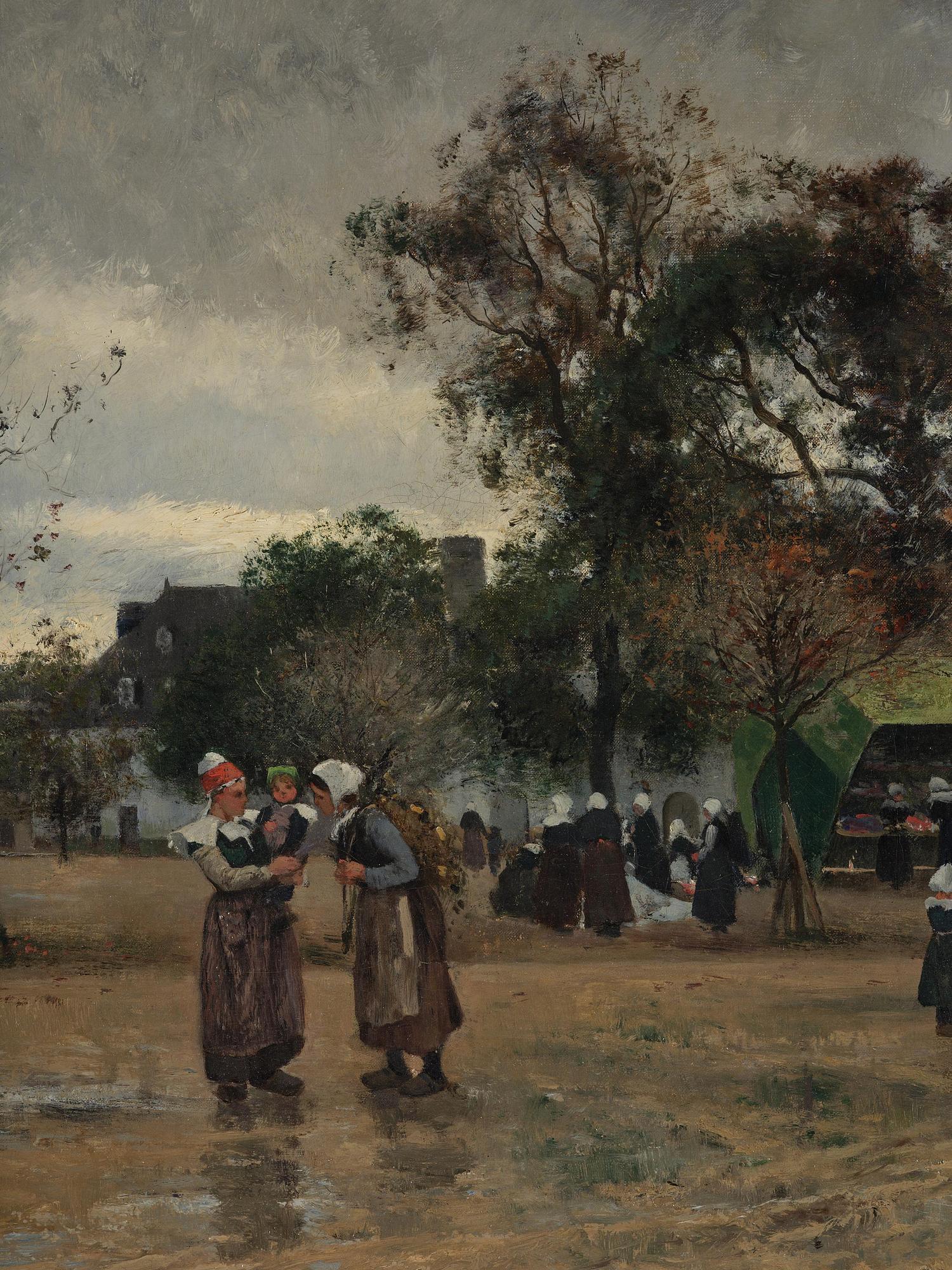
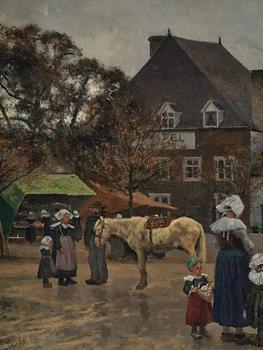
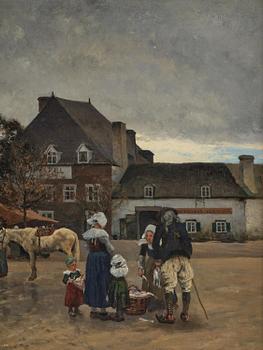
The painting in the auction shows the town's population "les concarnois" engaged in conversation in the square "La place du marché." In the collections of the Nationalmuseum, there is a smaller version of the current painting (NM 6705). A painting that is certainly a sketch executed a couple of years earlier.
Lisätietoja ja kuntoraportit

Tietoa ostamisesta