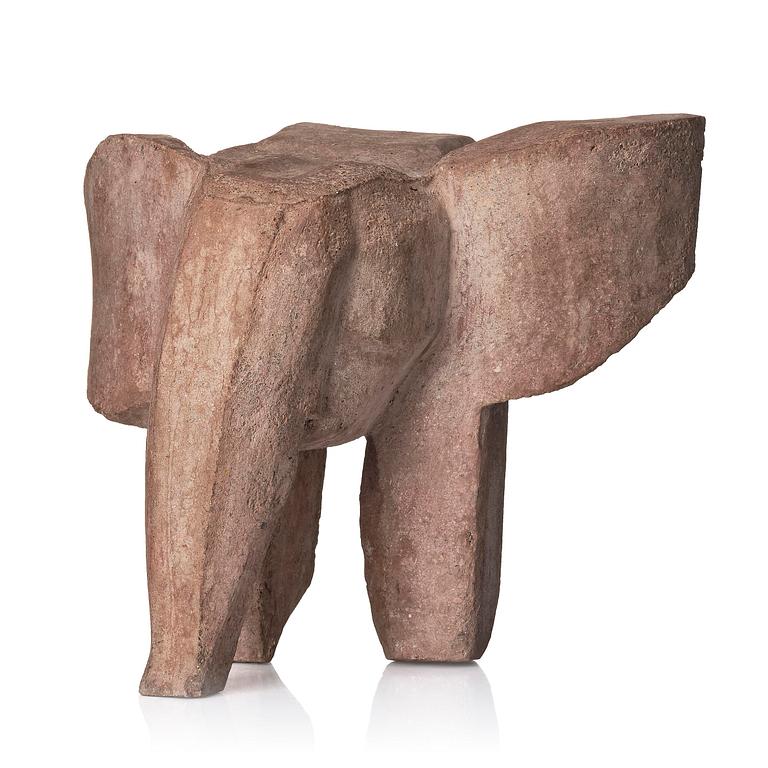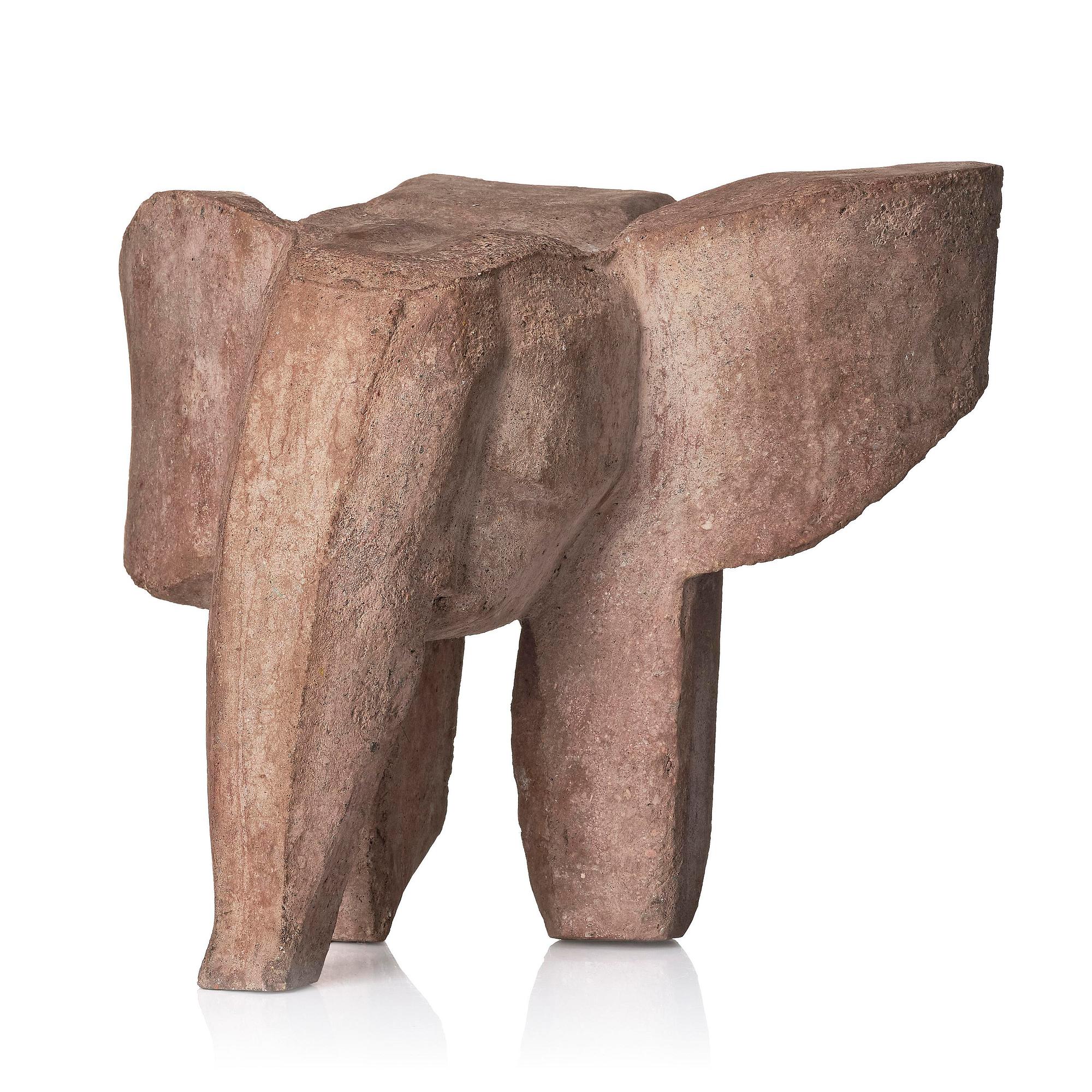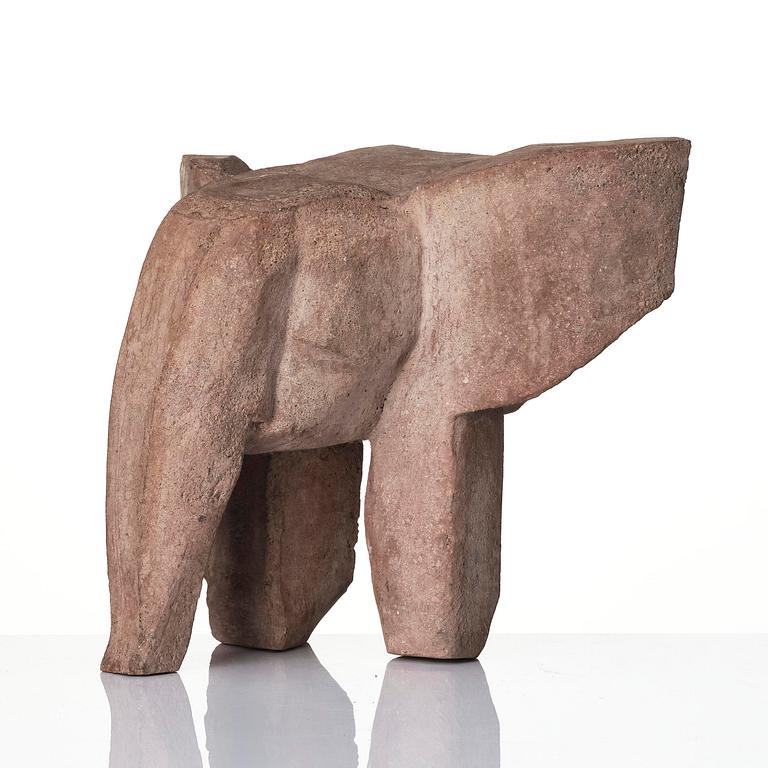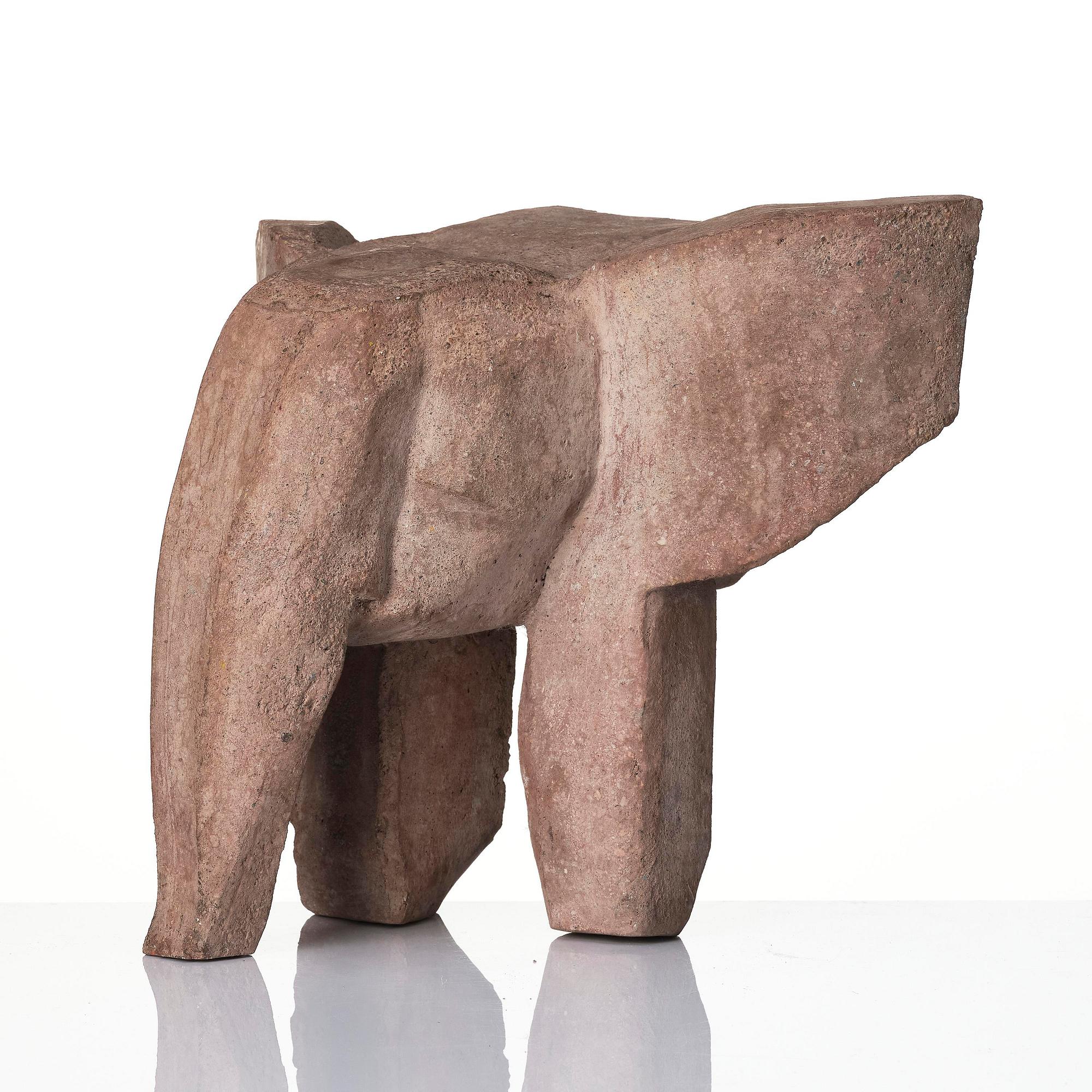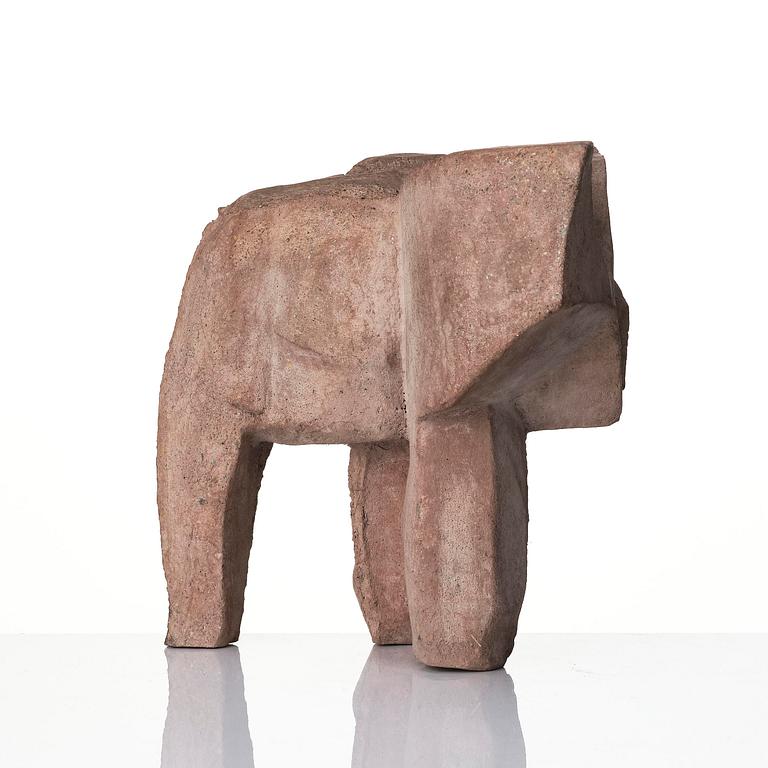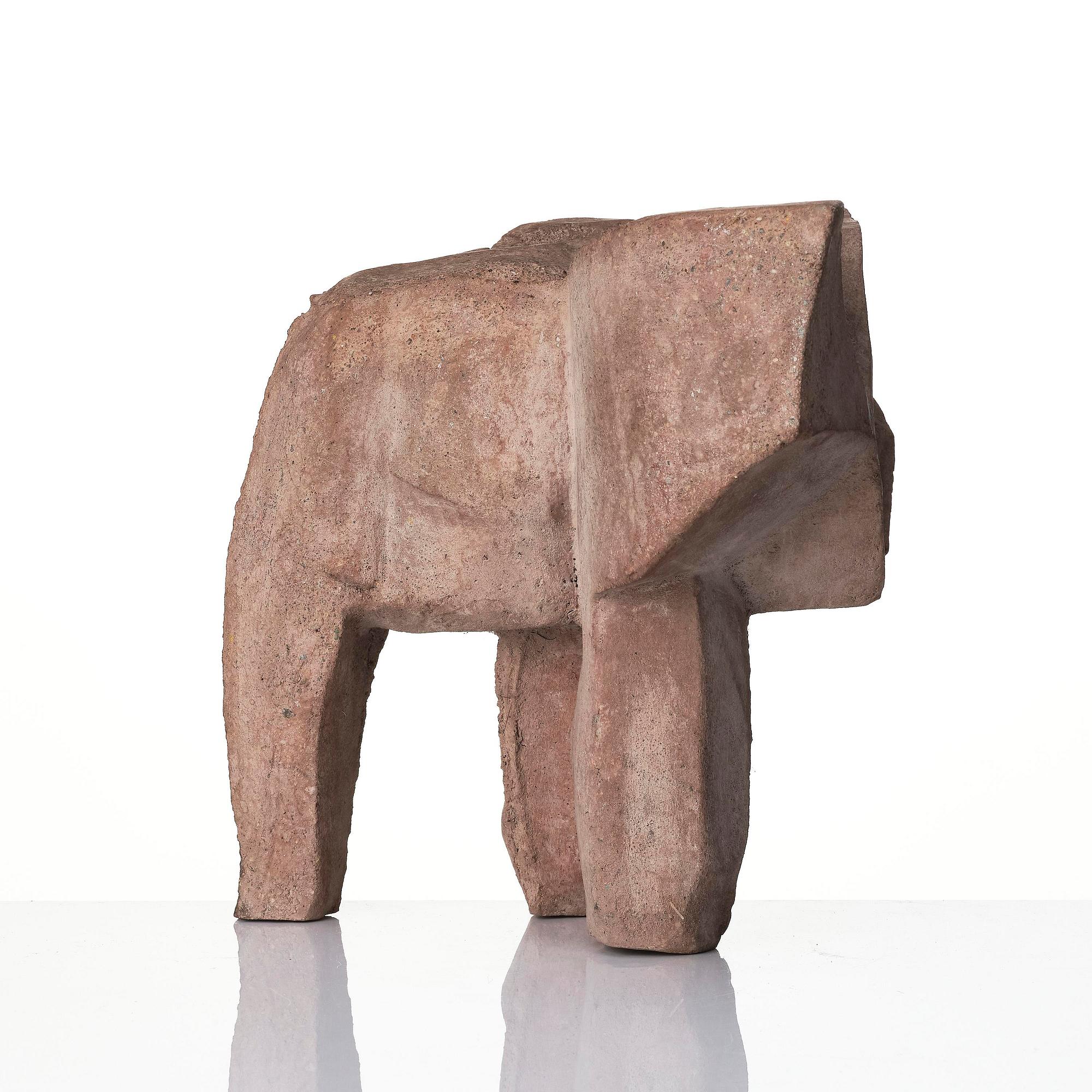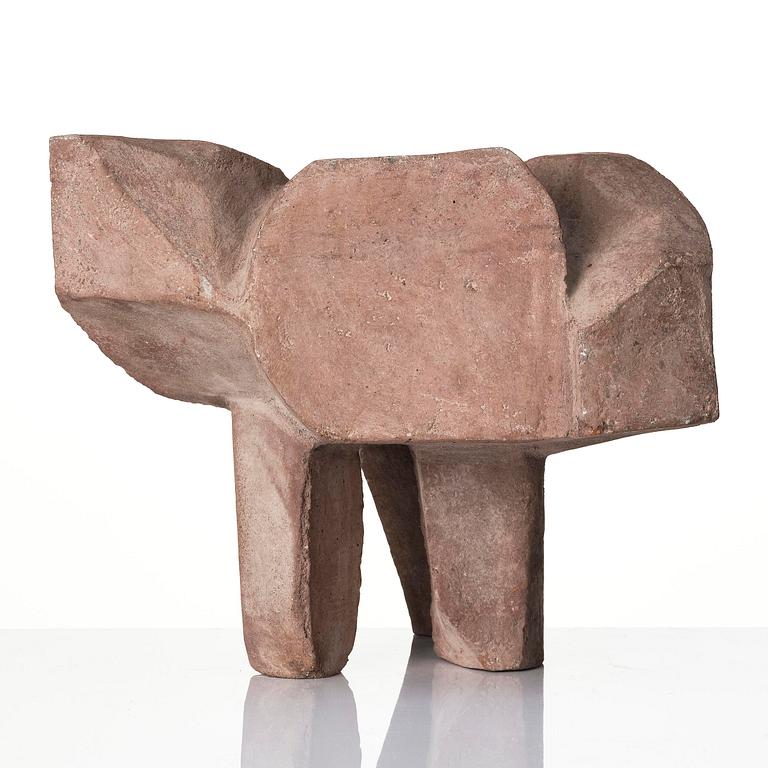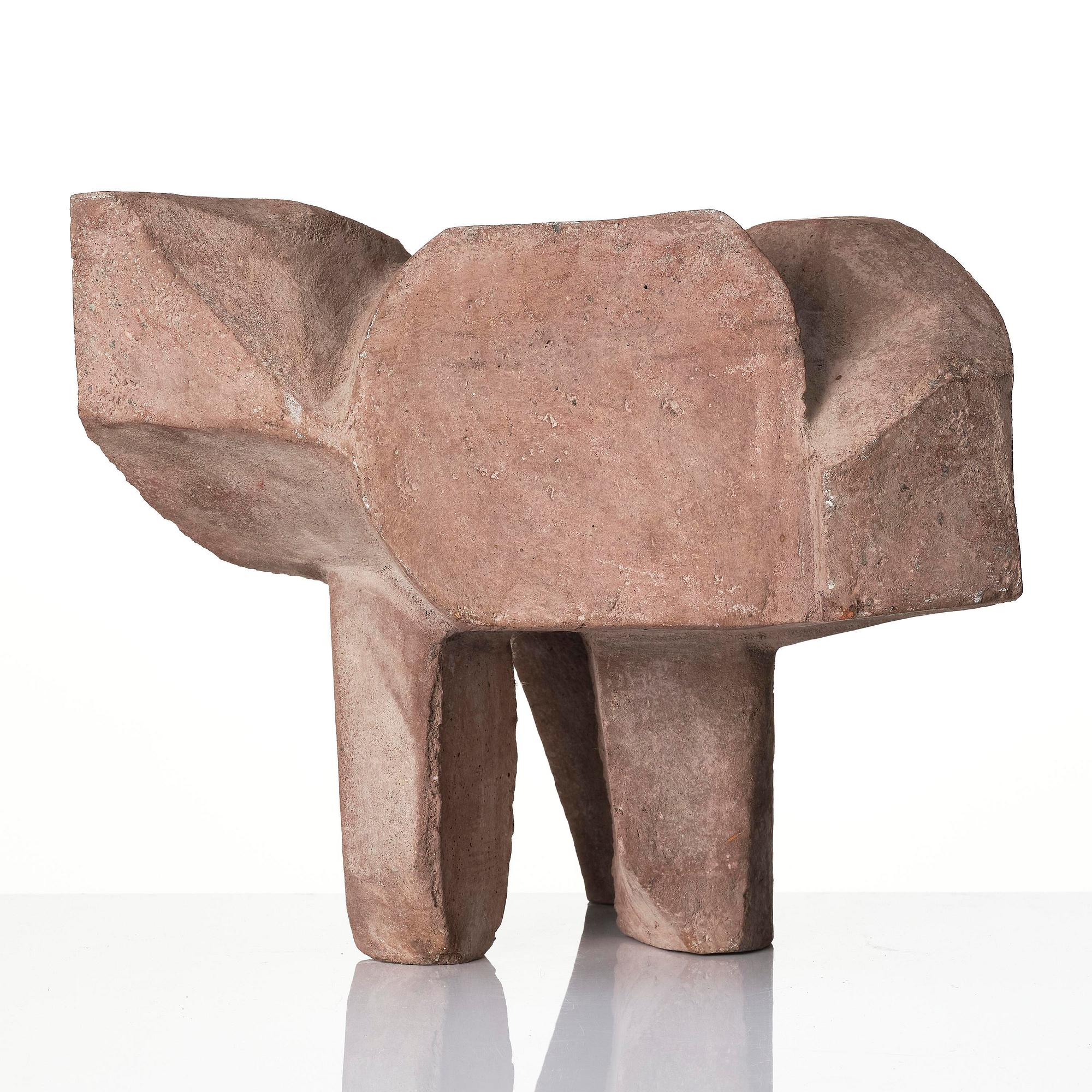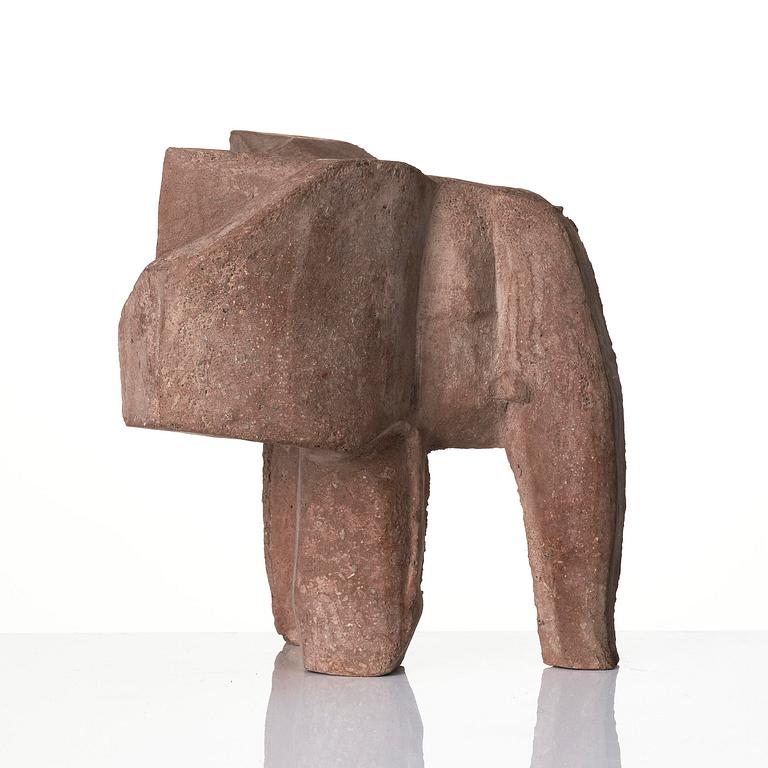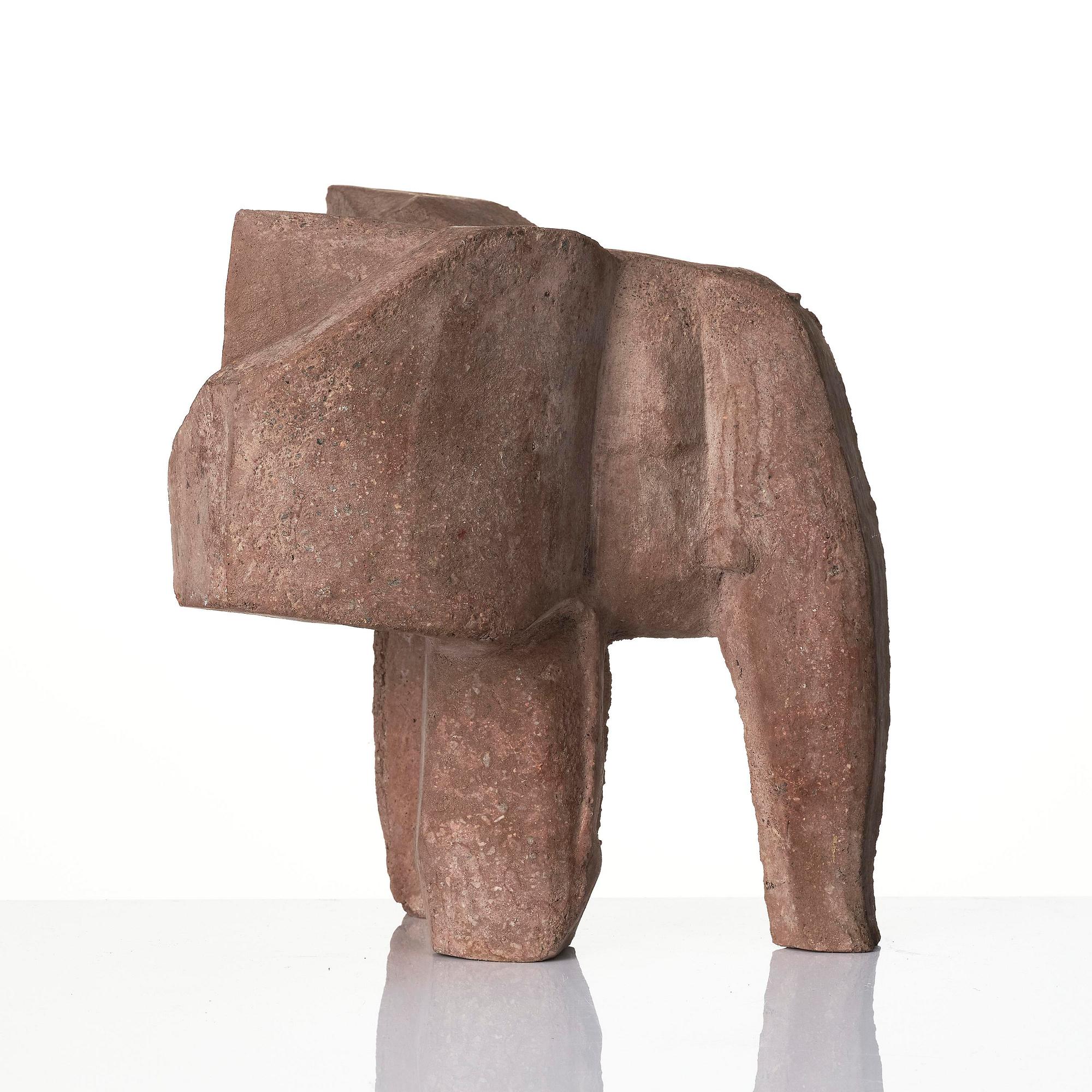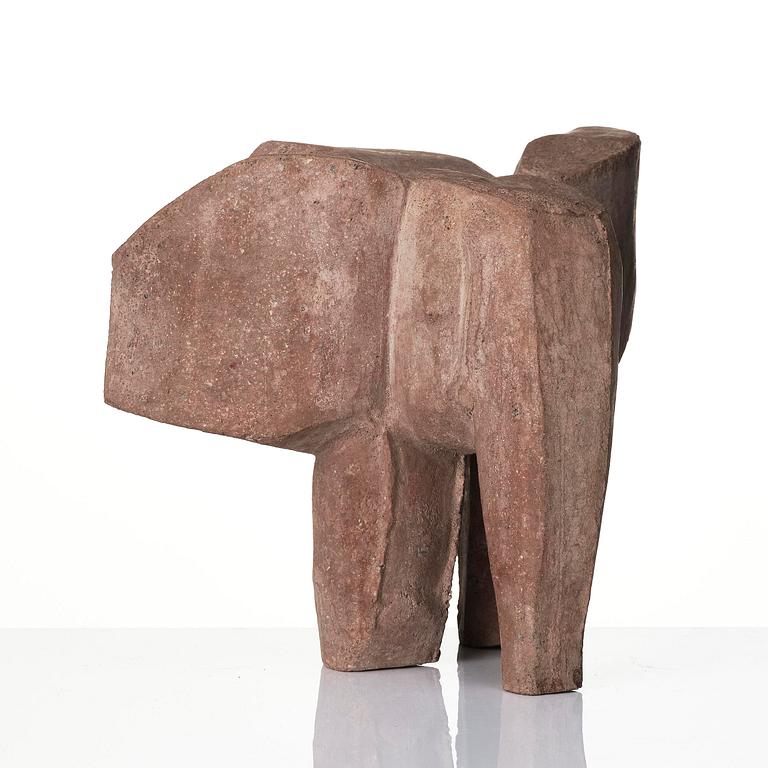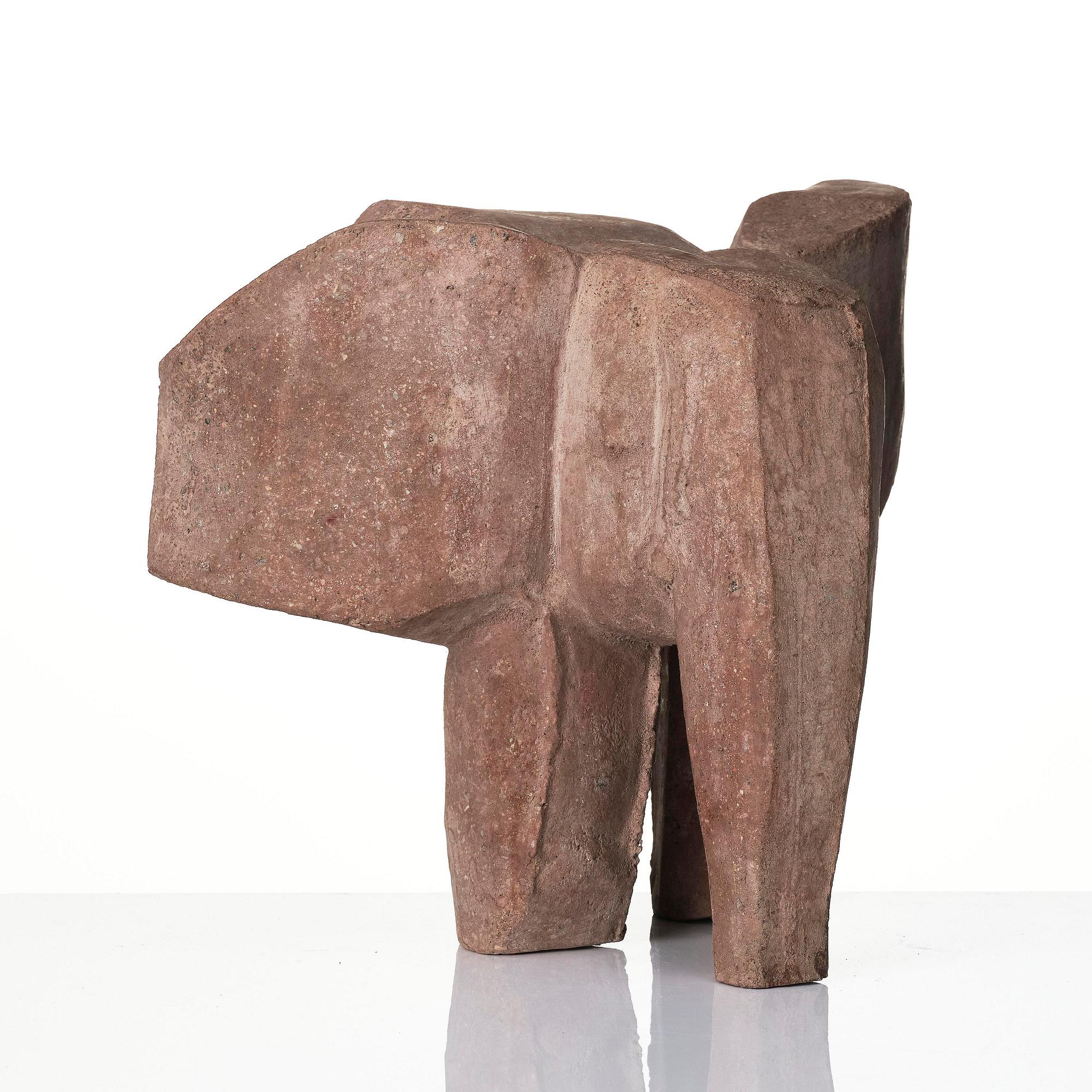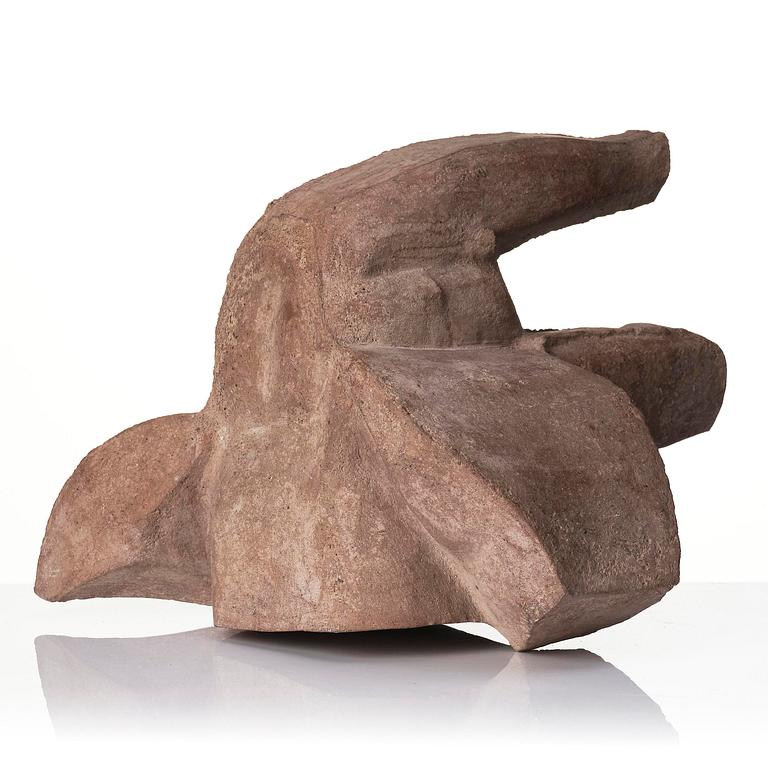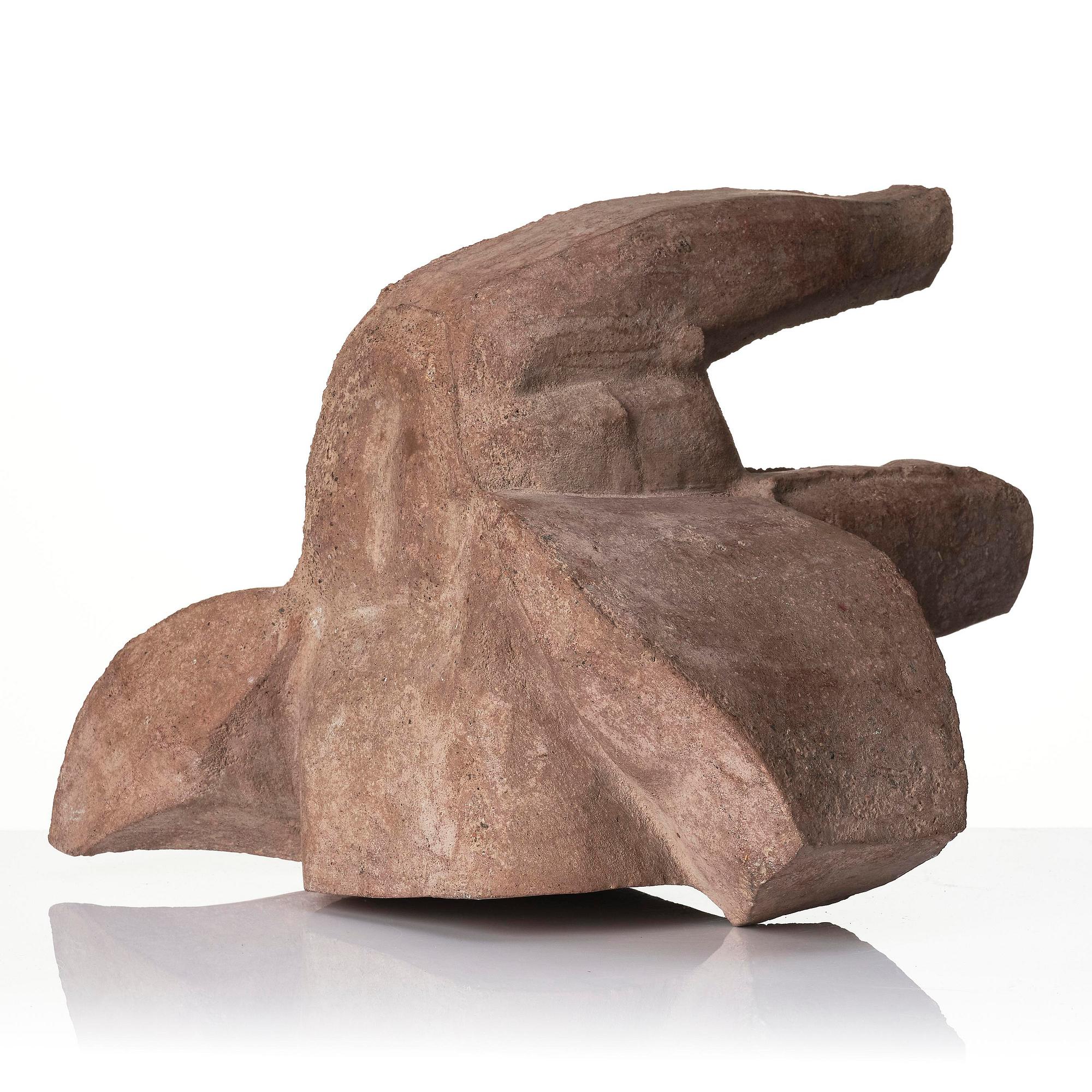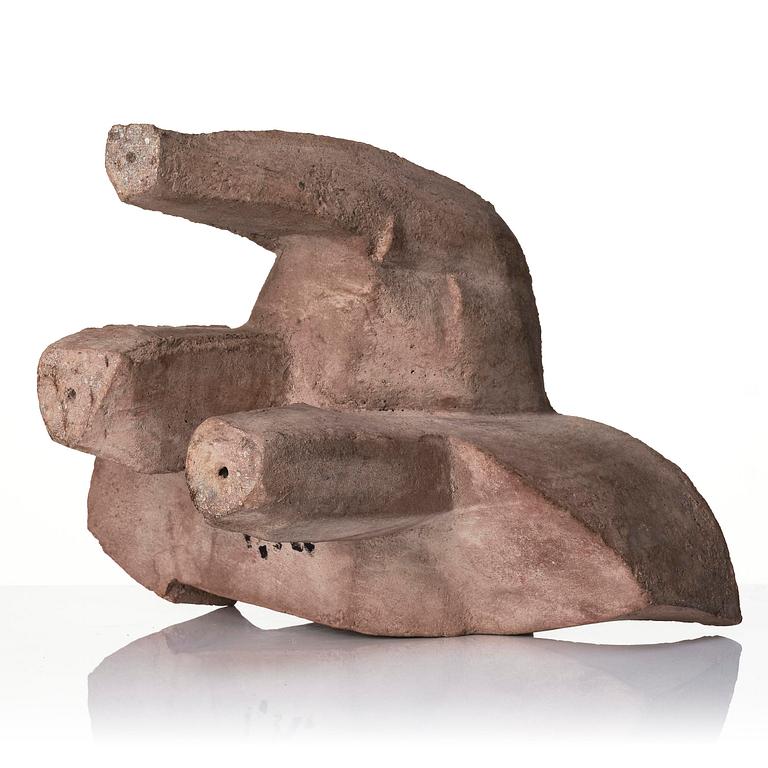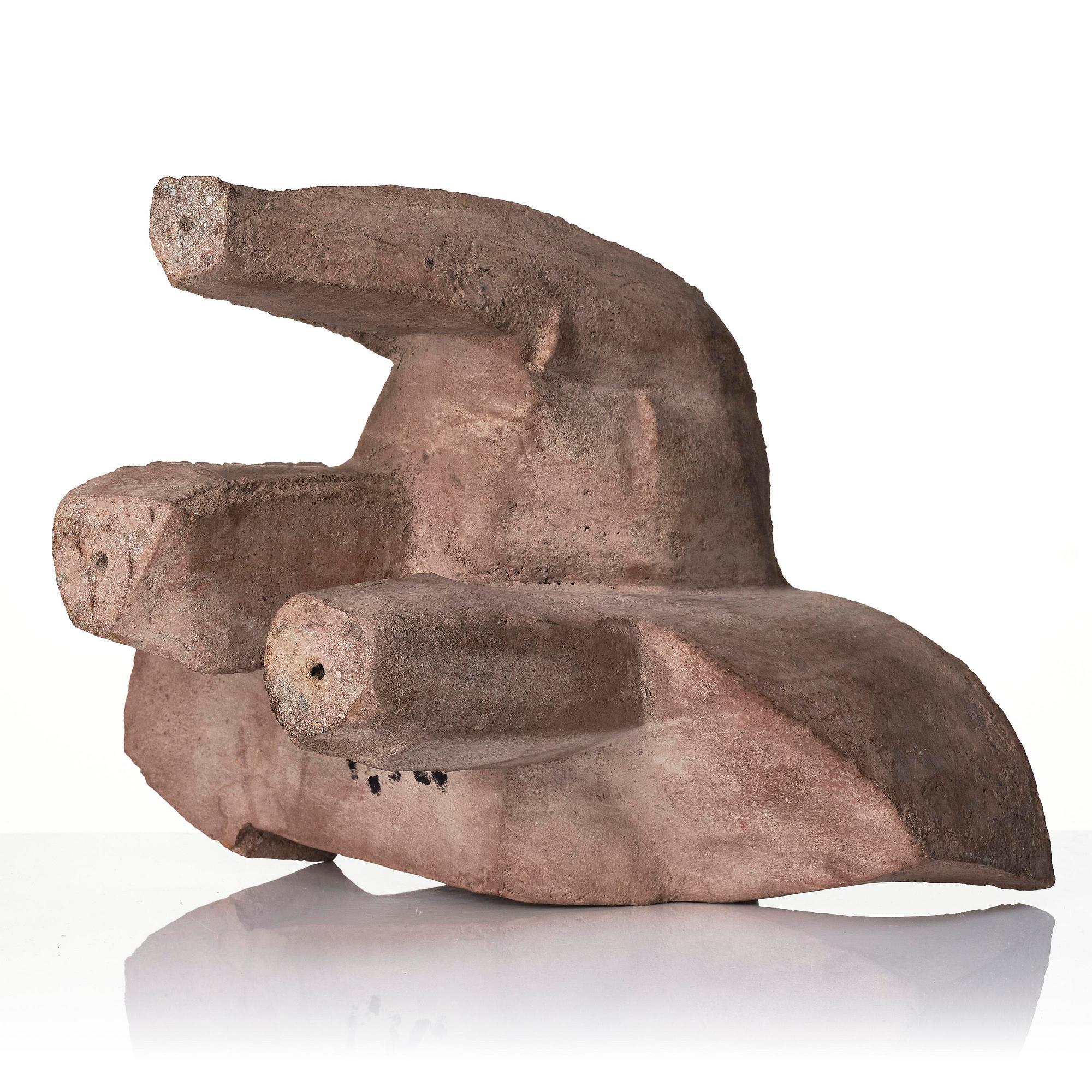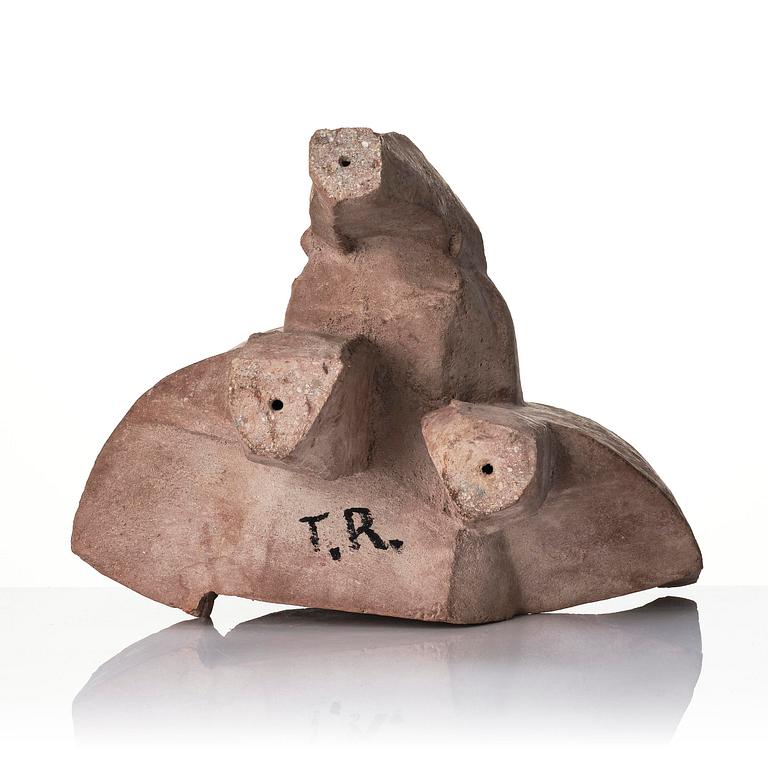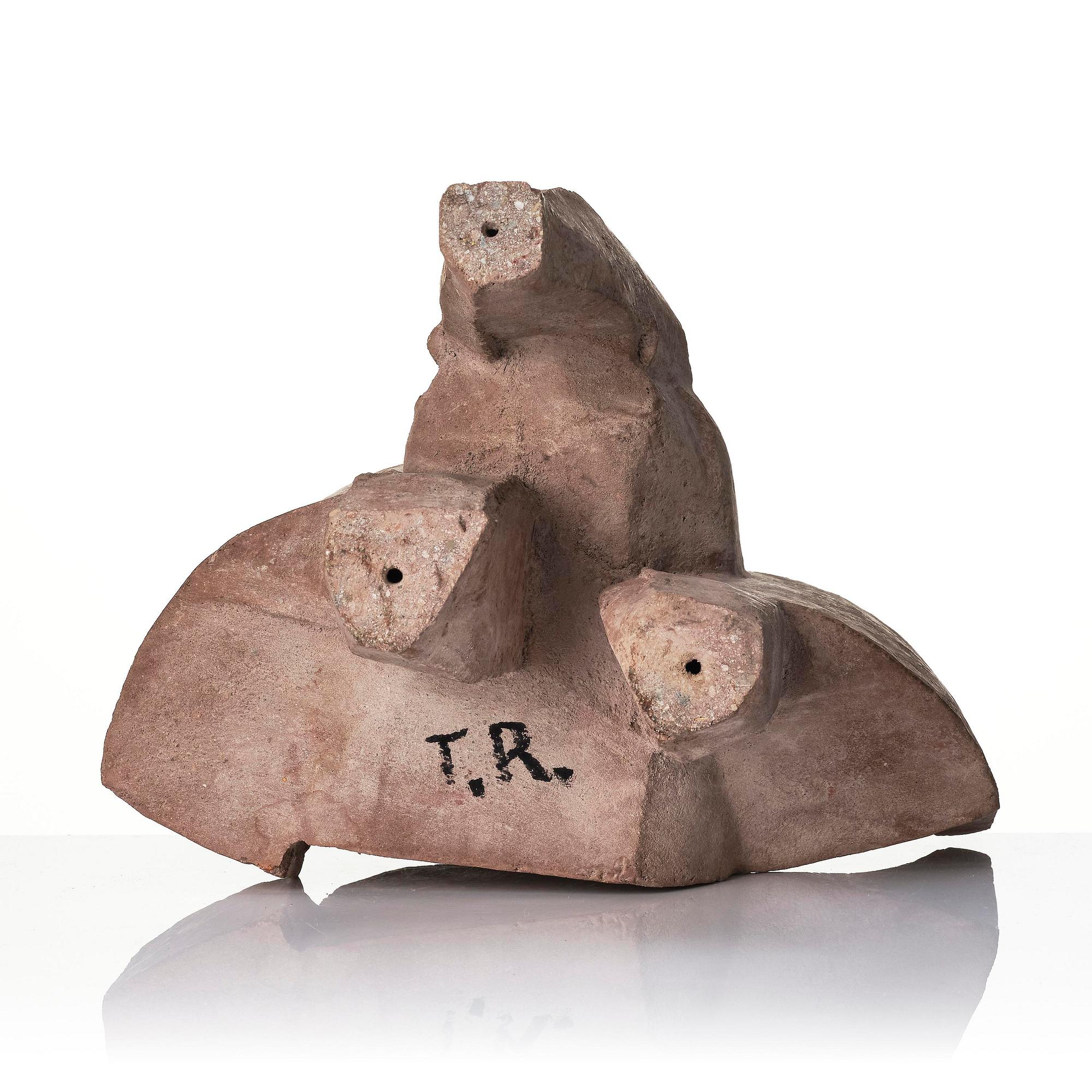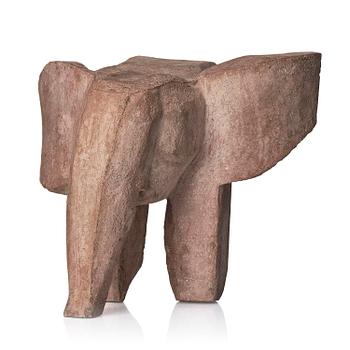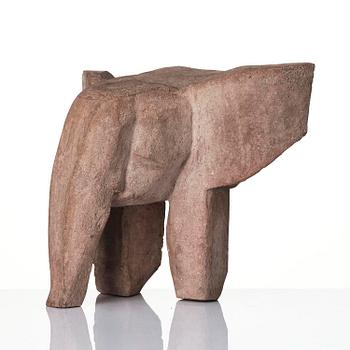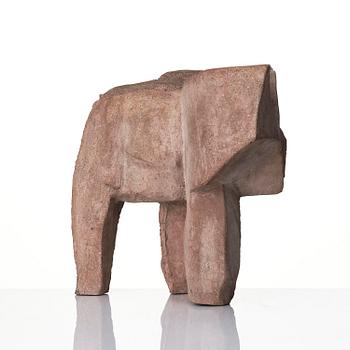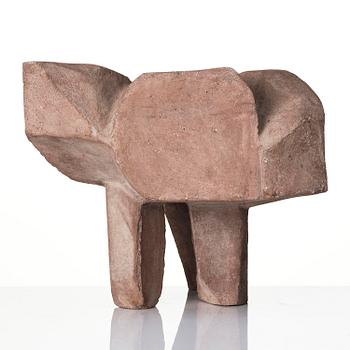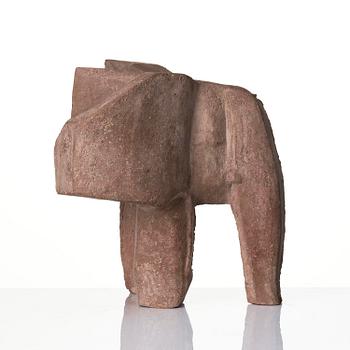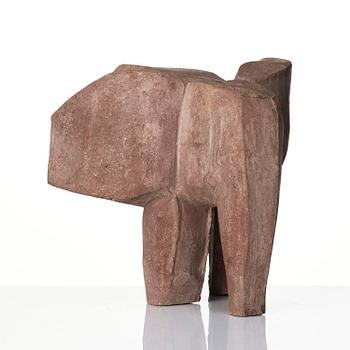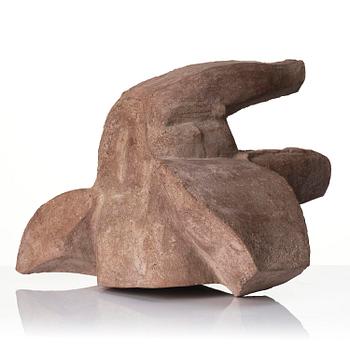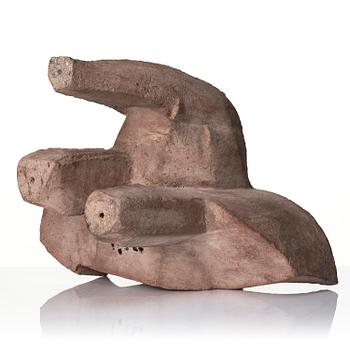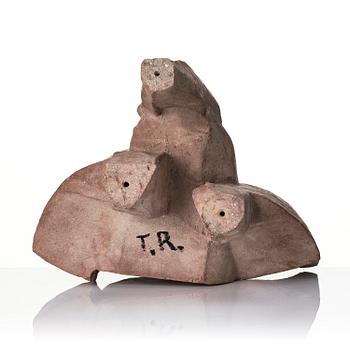
"Lilla elefanten drömmer"
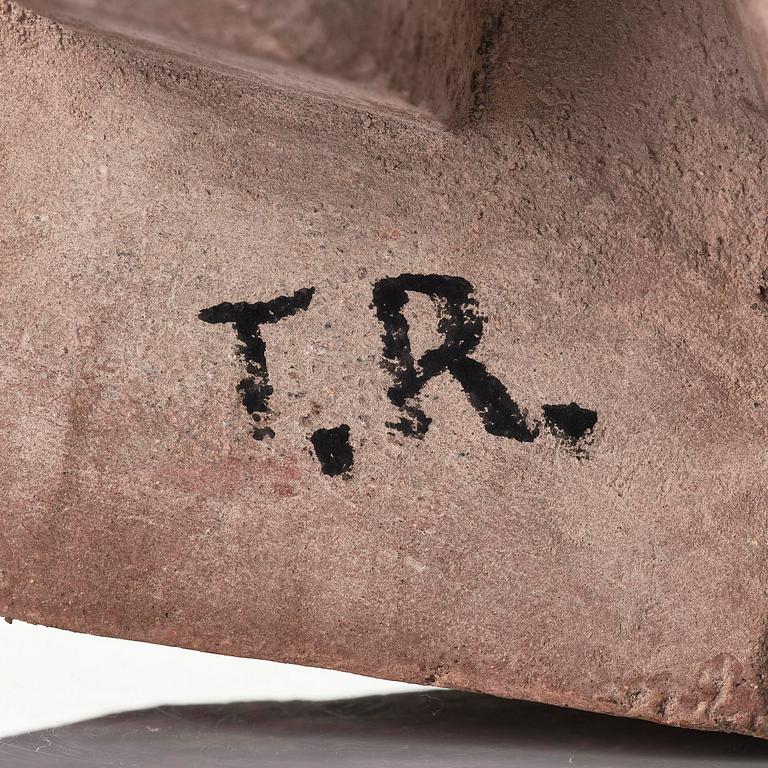
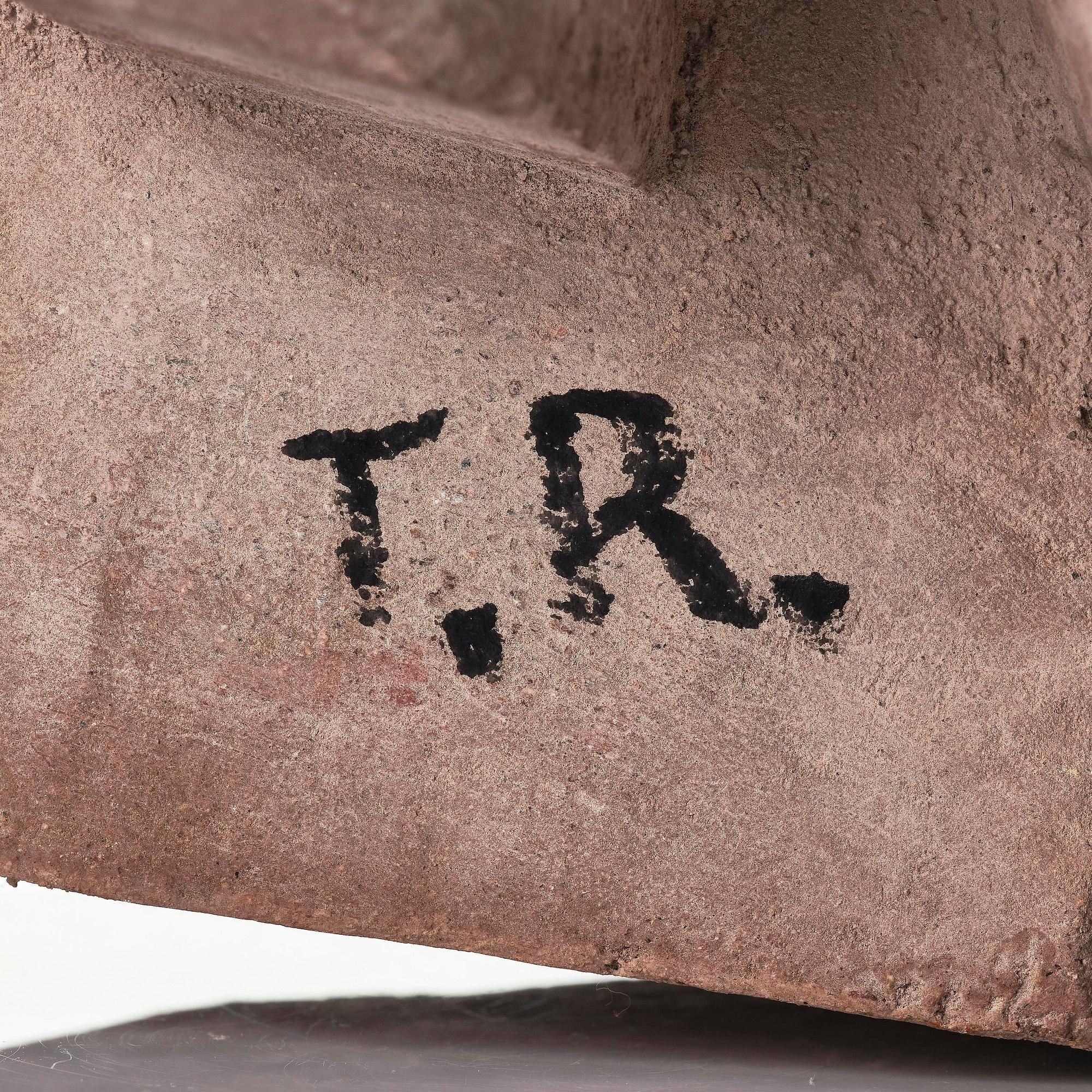
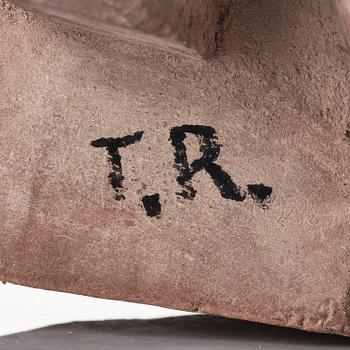
Signed with monogram T.R. Cast concrete. Height 32 cm.
Näyttelyt
"5 skolkamrater från Djursholm", H-form, Täby, 1 - 18 February 1992, cat. no 45.
Kirjallisuus
Mailis Stensman, "Torsten Renqvist", Lind & Co, 2002, compare to illustration p. 218.
Muut tiedot
In the exhibition catalogue from "5 schoolmates from Djursholm," Torsten Renqvist writes: "It is puzzling, I think, that so many in the generation born in the 1920s and who attended Djursholm Samskola in the 1930s and 1940s chose artistic professions. I hardly believe it has to do with the idealistic tradition from Viktor Rydberg, Alice Tegnér, and Erik Axel Karlfeldt. It was, for us, too distant and too determined by our parents. Could the reason be the insularity of the then almost classless Djursholm, as well as the fact that we were confined during the war years?
There was no modernist tradition at that time. Cubism belonged to the period before the First World War, roughly my father's youth, and was probably perceived as dusty. The first person to show me van Gogh was Tore Hultcrantz. It must have been some year into the 1940s. Tore was a few years older than I, he was early on intellectual excursions, and was probably the first among us who consciously pursued art. My father saw me leafing through a book about van Gogh and became enraged; he did not want lies in his house. Professor Romell, father of my friend Vigg, became furious when he saw me carrying around such a book.
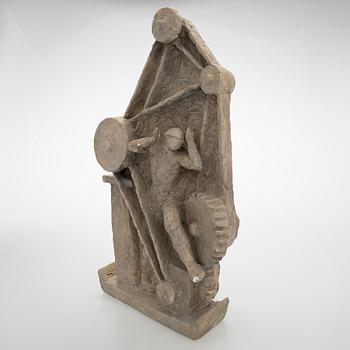
There was no question of any gang formation among us who later came to devote ourselves to visual art. For example, Per Olof Ultvedt (then called Hante and with whom I skied a lot) is careful to point out that he did not live in Djursholm but in Näsby Park. There he sat in a cellar making small strange objects that could move and rattle via strings and crank mechanisms. Later, he has executed such things on a larger scale, as is well known. Hante fascinated me primarily as a downhill skier. At a time when one was supposed to ski almost upright but with a strong forward lean, Hante curled up like an angry ball. He beat most.
I do not think any of us had an idea that we would come to devote ourselves to art later in life."
Since the early 1950s, Renqvist has depicted animals; about his animal sculptures, he writes: "My images of animals are not portraits of this or that cat or ostrich. They have come about in a conception that animal bodies and movements correspond to gestures and skin memories in our own psyche. They are a psychological ballet within the tradition known as fables."
The sculpture "Little Elephant Dreams" exists in a larger size along with two smaller elephants at Greta Garbo's square in Södermalm, Stockholm, and in Jarlaberg.
Lisätietoja ja kuntoraportit

Kuuluu jälleenmyyntikorvauksen piiriin
Tietoa ostamisesta
Kuvan käyttöoikeudet
Tämän tietokannan taideteokset ovat tekijänoikeudella suojattuja, eikä niitä saa kopioida ilman oikeudenhaltijoiden lupaa. Teokset kopioidaan tässä tietokannassa Bildupphovsrättin lisenssillä.