



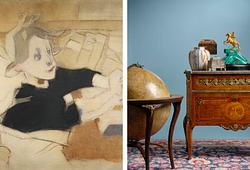




Gösta Werner
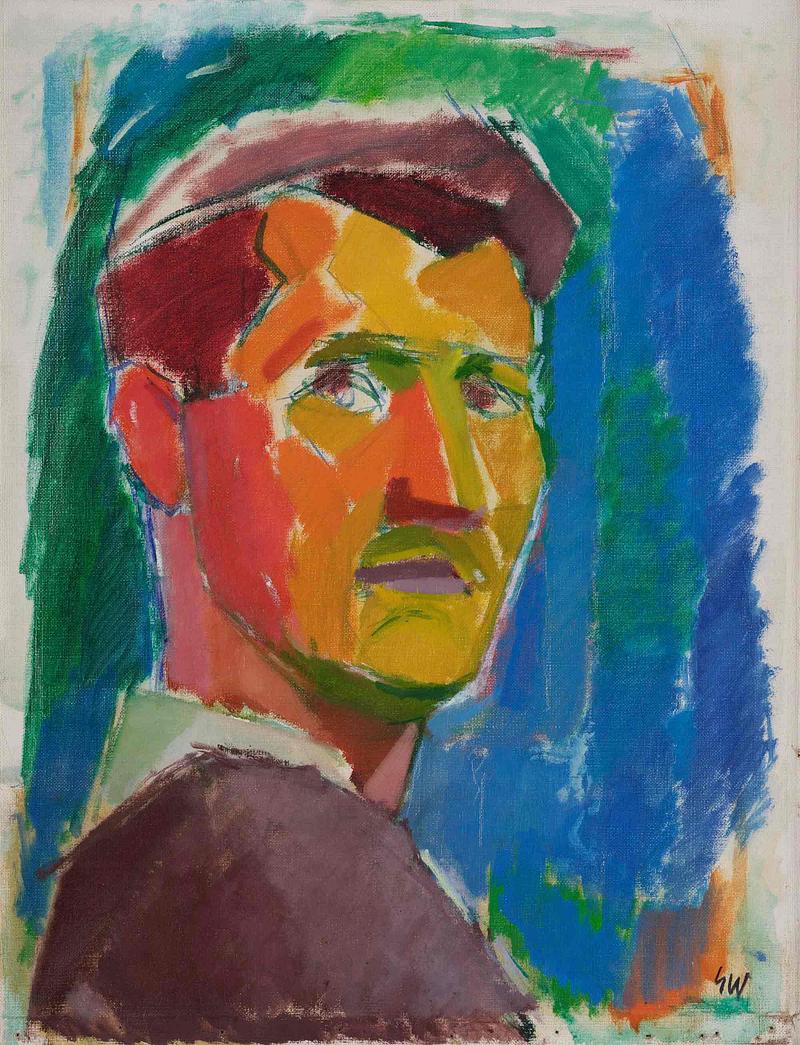
Gösta Werner showed early promise as a draughtsman, but chose a life at sea and later qualified as a ship’s captain. In the 1940s he trained as a meteorologist while also studying painting at Isaac Grünewald’s art school. In the late 1940s he studied Cubism in Paris, an experience that strongly influenced his early work. During the 1950s and early 1960s his painting evolved from Cubism to non-figurative art and subsequently to Abstract Expressionism. Meteorological weather charts also served as an important source of inspiration.
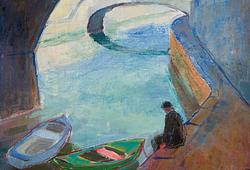
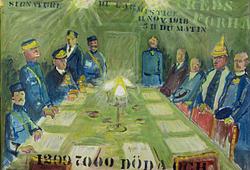
During the 1960s, Werner worked intermittently in Rome, in the same building as Cy Twombly. From the mid-1960s onwards he returned to a more figurative mode of expression, depicting motifs from maritime life, often incorporating text. He frequently painted on old sailcloth and tarpaulins, referring to these works as “rags”.
Werner participated in several maritime expeditions, including a North Atlantic expedition in 1971 and a voyage aboard the icebreaker Ymer in 1980, with the aim of documenting the maritime environment. Between 1973 and 1985 he also produced textile works for public spaces in collaboration with Handarbetets Vänner (Friends of Handicraft).
Gösta Werner is represented in the collections of institutions such as the Nationalmuseum and Moderna Museet. In 1978 he was awarded the Sjösalapriset by Evert Taube. His work is held in the Gösta Werner Museum in Simrishamn and at Örnsköldsvik Museum. He also contributed images to an SVT film, Oilers, Stokers and Coal Trimmers, by Lennart Rudström, alongside texts by Harry Martinson.
Read more about Gösta Werner here ›
Join us to see and experience the art during our viewing days:
Viewing: February 24–27, Open 11 AM–5 PM
Berzelii Park 1, Stockholm