20. helmi 2026
Gösta Werner
Text by Ulf Sörenson and Peder Werner
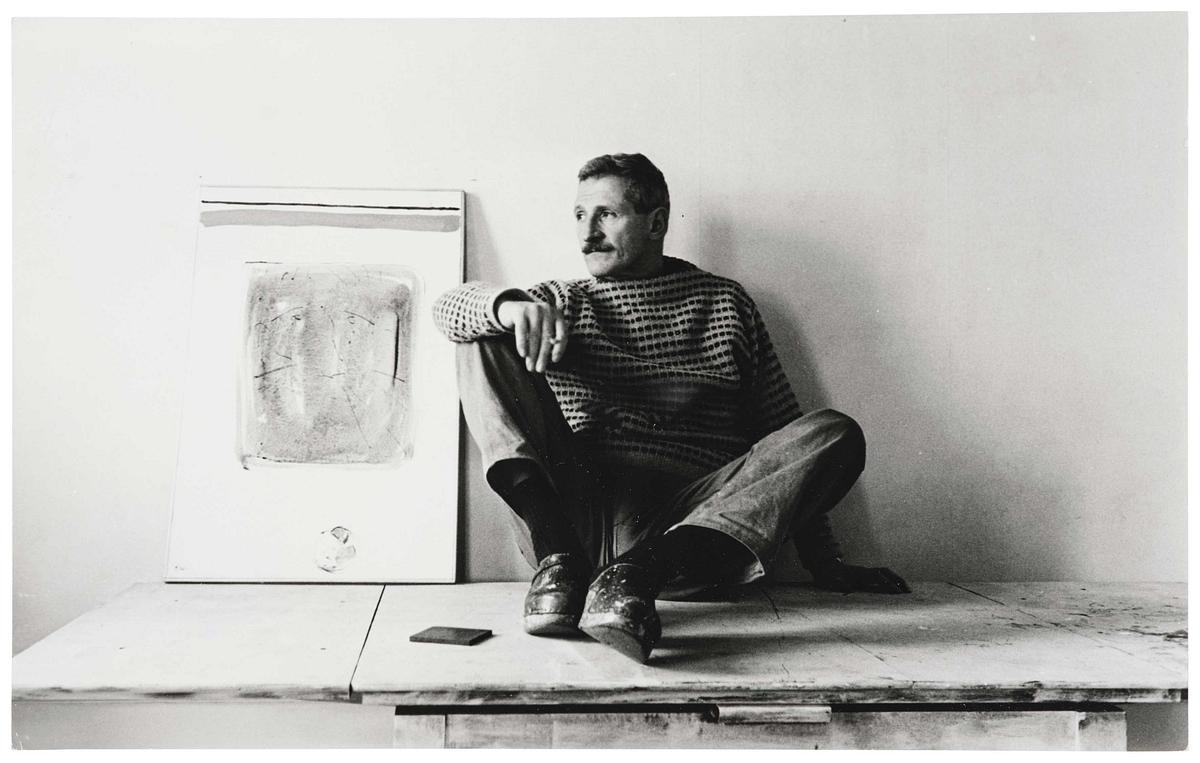
Gösta Werner was an artist with a global outlook. Even so, there were a few fixed points in his life. He was born in Stockholm in 1909 and died there in 1989. Yet between birth and death he experienced both permanent and “floating” addresses aboard various ships.
At the age of nine he moved with his parents and two siblings to his maternal grandparents in Örnsköldsvik, then a dynamic port town. He was considered talented at drawing, but lacked the means to pursue further studies. After a few short-term jobs he signed on as a ship’s boy. He would remain at sea for thirteen years, with brief stops in ports around the world. Longer, involuntary stays occurred in Depression-era New York, where he lived rough alongside other unemployed men – artistically, this period would later prove fertile.
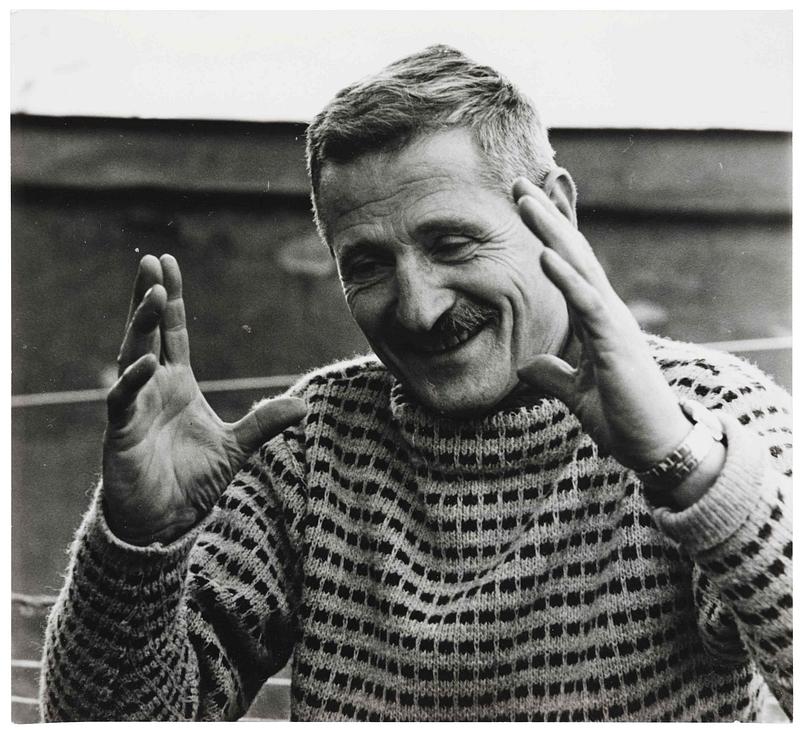
In the merchant navy he qualified as a ship’s captain, but opportunities to paint at sea were limited. During the Second World War he was called up for naval service, but after some time managed to transfer to the air force to train as a meteorologist in Stockholm. This gave him a fixed base for his family and the opportunity to develop as an artist. After a brief period at Konstfack, where he felt out of place, he was accepted in 1944 as a private pupil of Isaac Grünewald, whom his younger brother, the artist Nalle Werner, had already joined. He learned a great deal about colour, and among the students he became particularly close to Olle Bonniér. After Grünewald’s death, Werner studied at the Académie Libre in Stockholm.
In the summer of 1947 he travelled to Bornholm, where he worked alongside Danish artists. He also visited and painted Kullaberg, capturing it with a fresh palette under the influence of Cubism. Like so many other artists, he was drawn to Paris and travelled there in 1949. At André Lhote’s painting school he deepened his understanding of both the classical masters and Cubism. He took part in exhibitions in Paris and Stockholm for the first time in 1950. The following year he painted in Spain. He became acquainted with American Abstract Expressionism, and the influence of Concrete art can be sensed in his first solo exhibition in Stockholm in 1952. His exhibition at Gummeson Gallery in 1958 confirmed his position within modern painting; the art critic Ulf Linde likened his work to “delicate fragments of patchwork quilts”. From the mid-1950s he also worked sculpturally, creating “space drawings” in iron wire, while in his painting he drew inspiration from meteorological weather charts and moved towards Informal art. In the early 1960s he rented a studio in Rome in the same building as the American artist Cy Twombly, who probably influenced him considerably. In Stockholm he co-founded the group Aktiv färg in 1961 and took part in its exhibitions – the only artistic group with which he was ever involved.
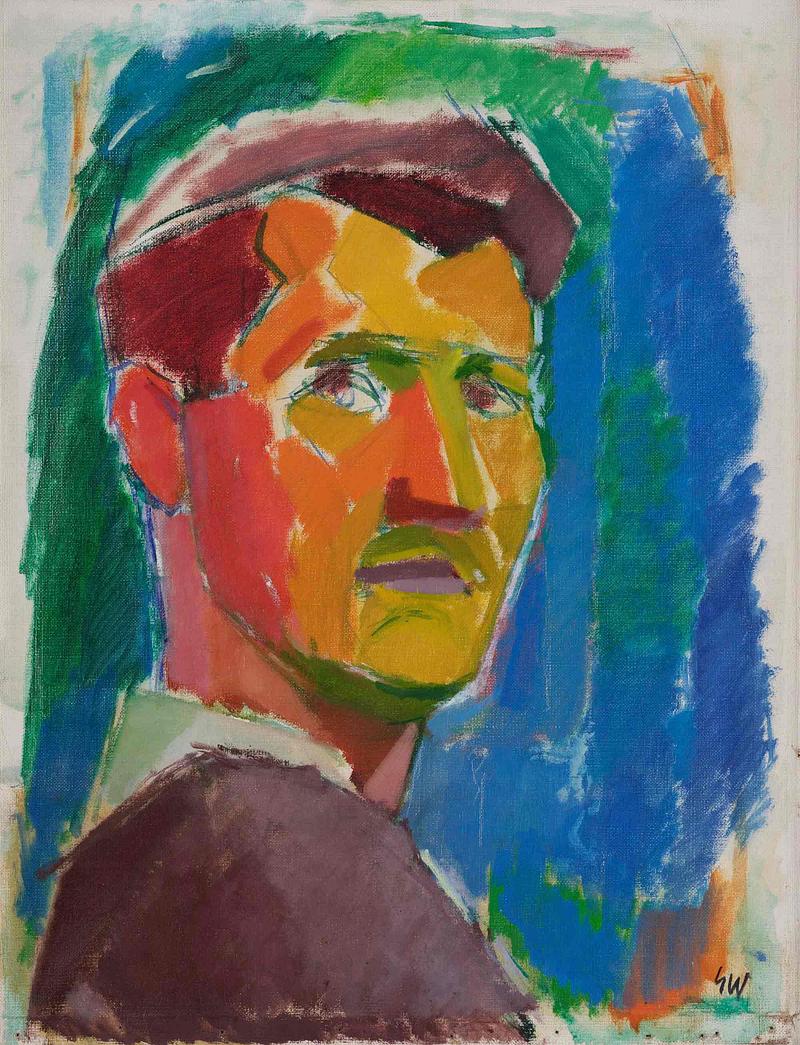
An inheritance from his father, the cab proprietor Anton, in 1959 enabled him to buy a house with a studio on Österlen. A friend told him about Örnahusen, which he found “so unbelievably beautiful” that he applied for – and found – a farm there. From the property he could see the shipping lane offshore and live close to fishing villages that had also been important during the era of sailing cargo vessels: Skillinge, Brantevik and Simrishamn.
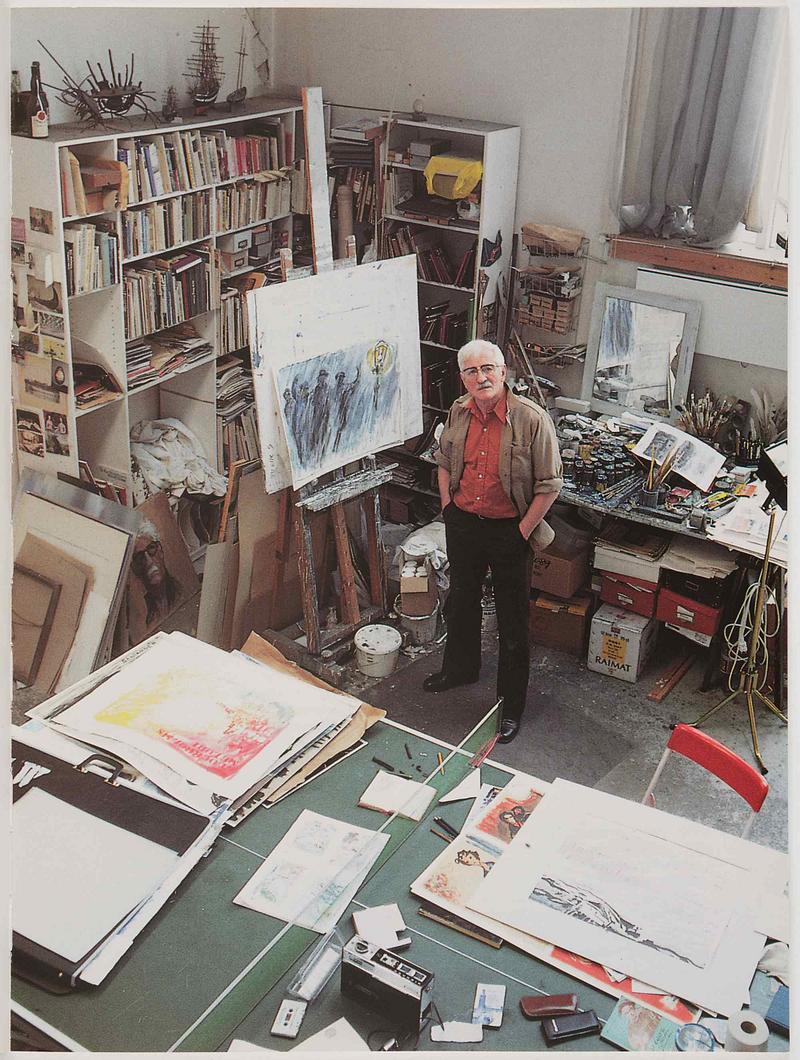
Gösta Werner was well versed in international artistic movements, and it is against this background that one should view how, in the mid-1960s, he opened himself up to memories from his years at sea. His own realistic recollections were combined with reworkings of maritime folklore in the form of tattoos, the naïve decorations of sailors’ sea chests, fragments of shanties and the stencilled lettering of packing crates. Werner conceived the idea of painting on sailcloth and tarpaulin, creating a distinctive style in which the picture surface was divided into panels, often separated by a line of text. He collaborated with Handarbetets Vänner on large tapestries made of spinnaker nylon. He was influenced by artists such as Larry Rivers and Willem de Kooning: “I like de Kooning and his attitude to art. Like Picasso once did, he seeks absolute freedom – the freedom to do whatever one wants. But of course form imposes limits. What I’m telling is a yarn in images, a kind of comic strip.”
Gösta Werner’s audience grew steadily. He enjoyed major exhibition successes at the Royal Academy of Fine Arts and Waldemarsudde, as well as throughout the country. The Gösta Werner Society was founded in Simrishamn in 1981, and eight years later the beautiful Gösta Werner and the Sea Art Museum opened there. In his final years he devoted himself primarily to interpreting Evert Taube in images and undertook extensive travels in Taube’s footsteps in Latin America. When the great Taube suite was completed and Gösta Werner had celebrated his 80th birthday, he embarked on his final major journey, to Australia – the only continent he had not previously visited. A stroke the day after his return sent him on his very last journey, into the unknown.
Online Auction: February 20 – March 1
Viewing: February 24–27, Berzelii Park 1, Stockholm
Open: 11 AM – 5 PM
Valitut kohokohdat
Ota yhteyttä asiantuntijoihimme Otamme vastaan esineitä tuleviin huutokauppoihin

Tukholma
Louise Wrede
Asiantuntija, nykytaide, Private Sales
+46 (0)739 40 08 19


Tukholma
Amanda Wahrgren
Asiantuntija, moderni taite ja grafiikka
+46 (0)702 53 14 89