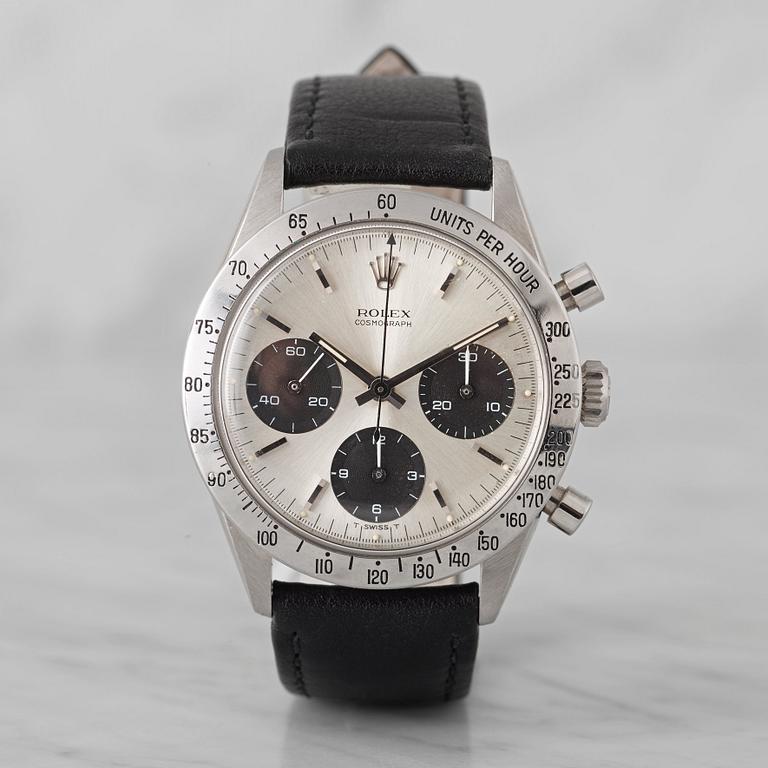
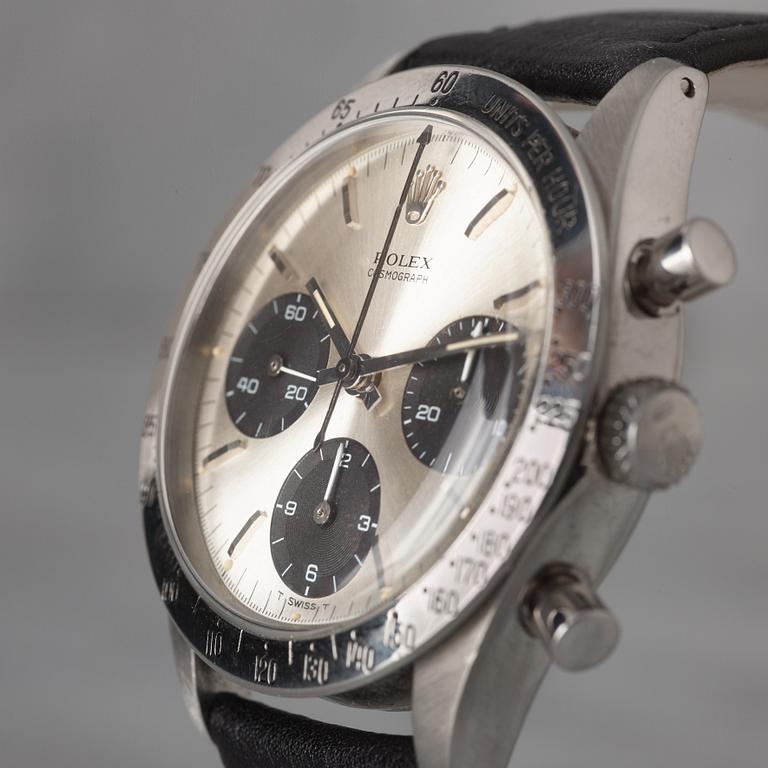
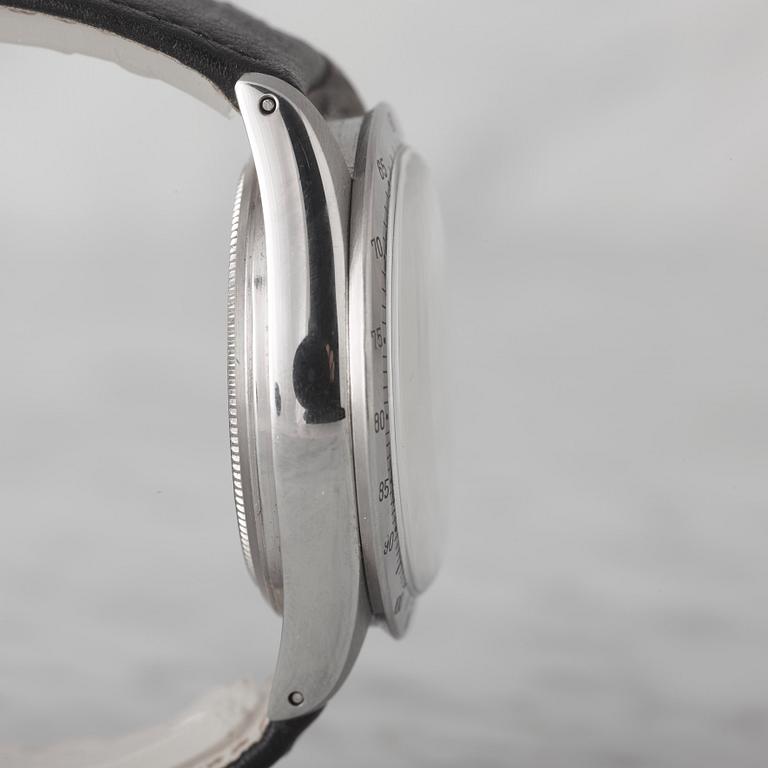
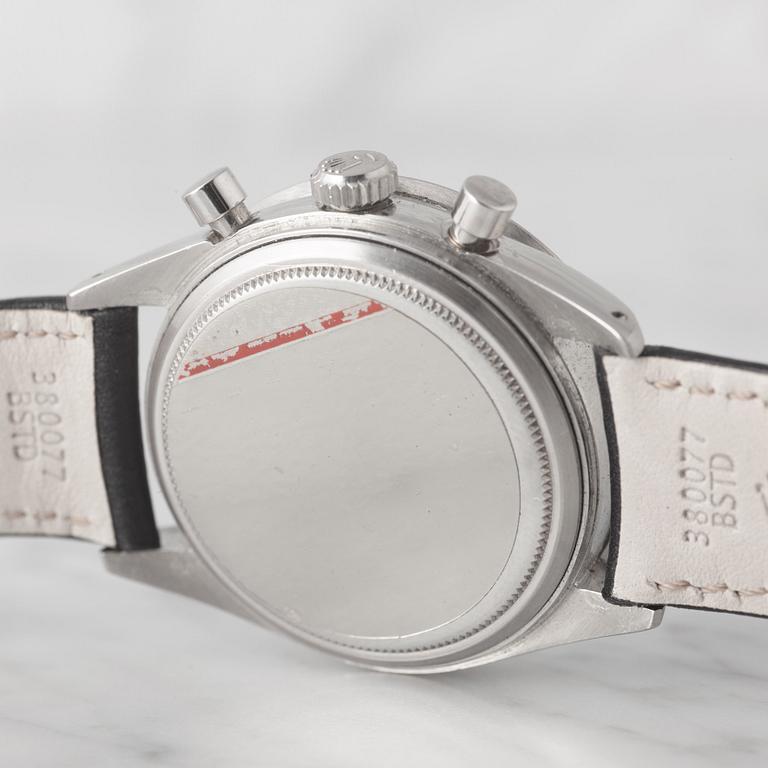
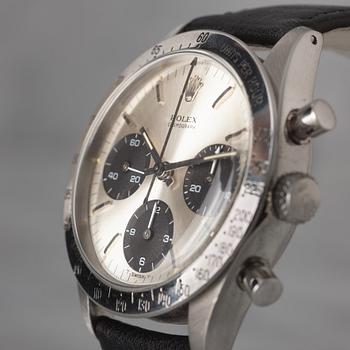
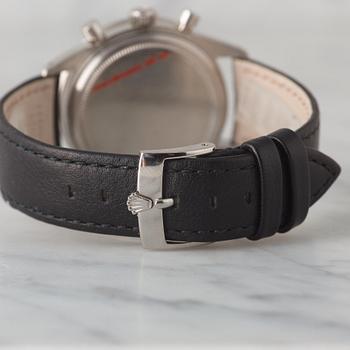
steel, manual wind, plastic glass, calibrated bezel "Units per hour, 60/300 2nd generation", leather strap, original buckle, ca 1964.
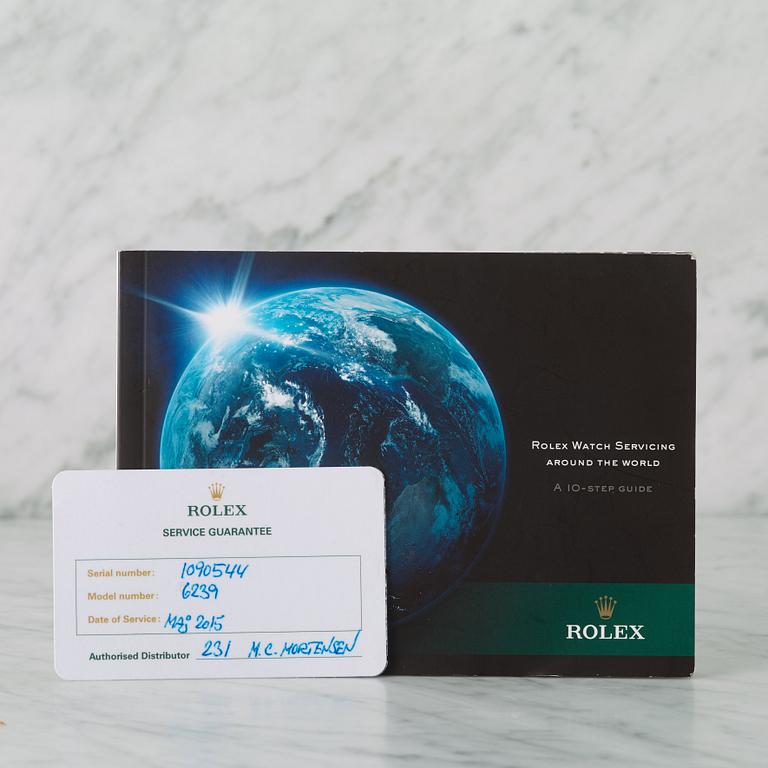
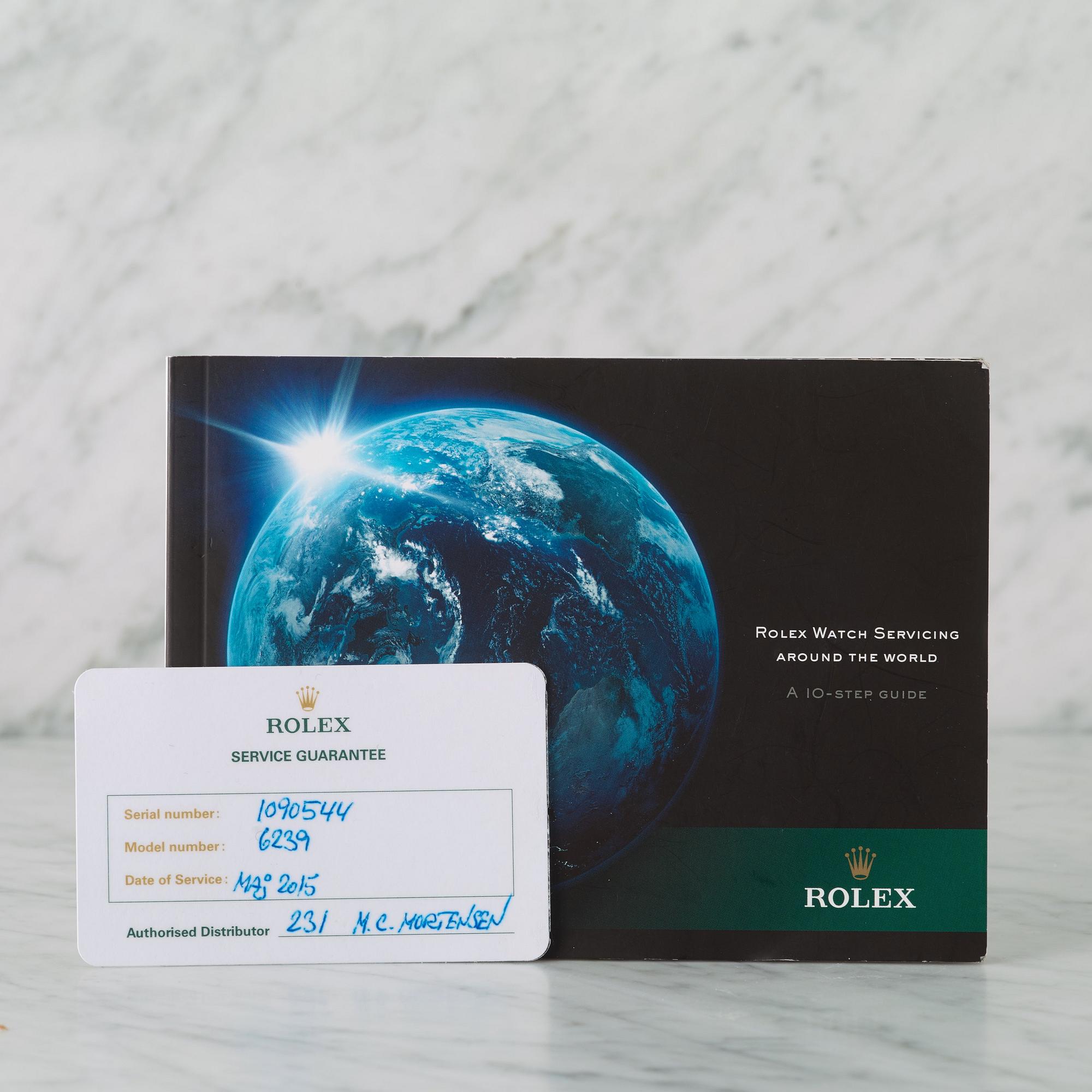
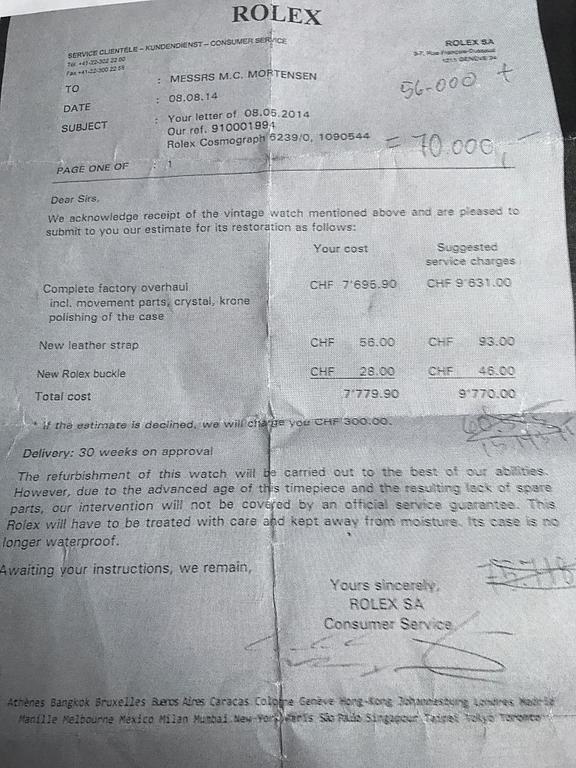
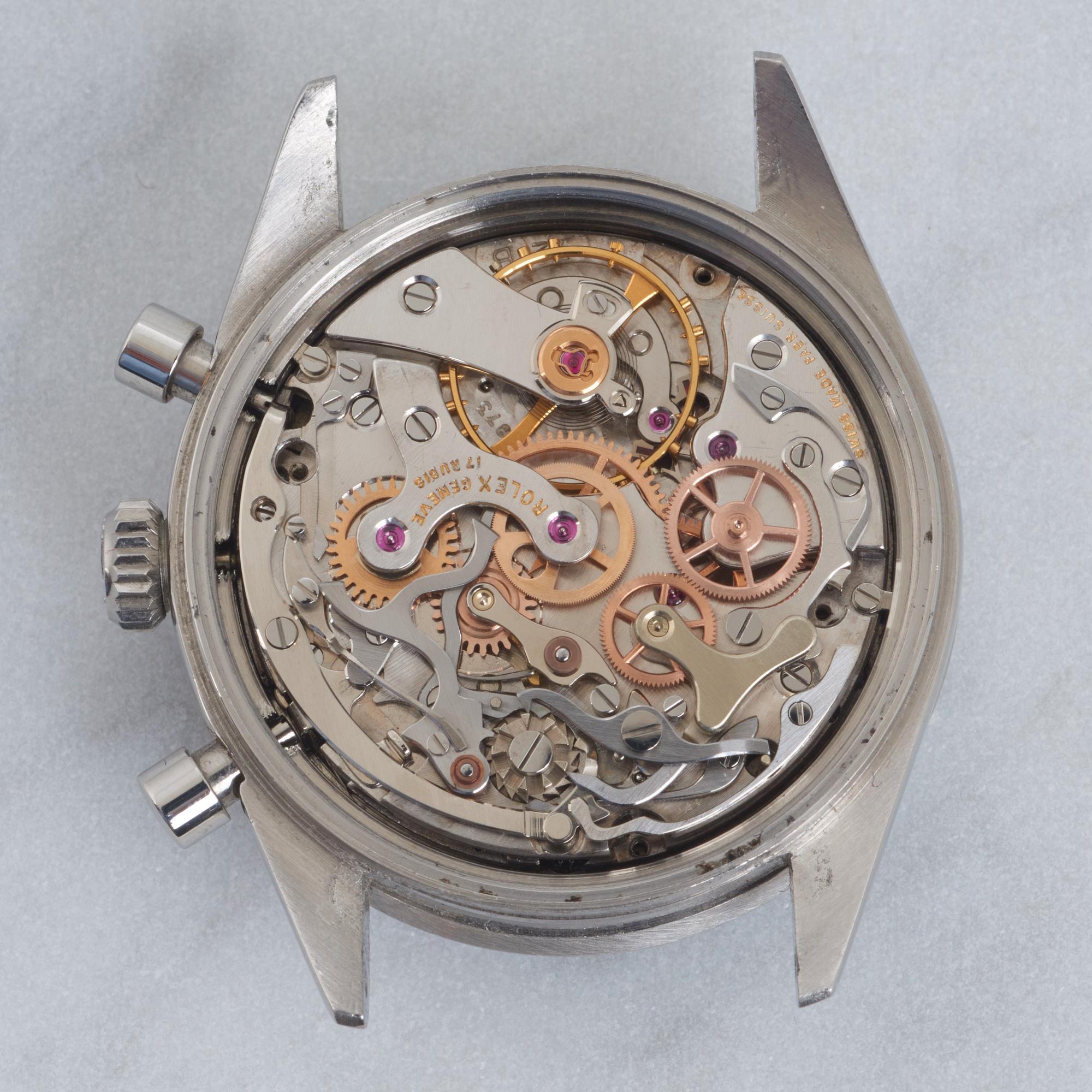
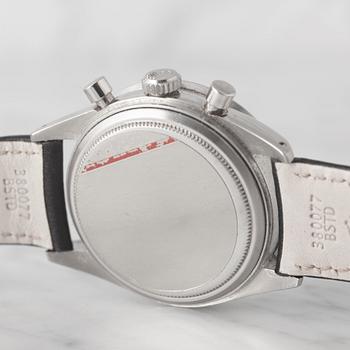
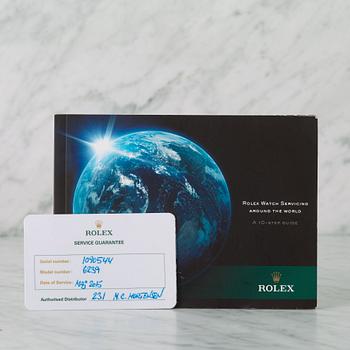
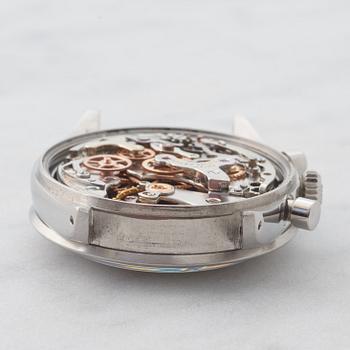
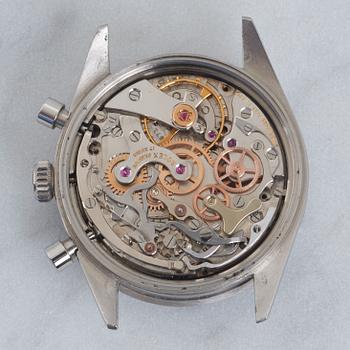
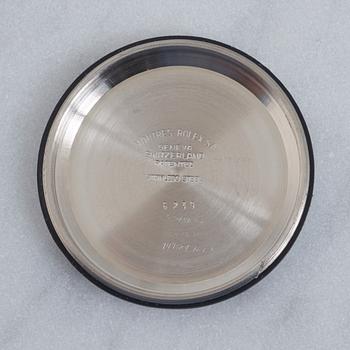
Caliber Valjoux 72B, Serial nr 1.090.544, Reference nr 6239, Case nr 6239
Movement (8/10)
Dial and hands (7/10)
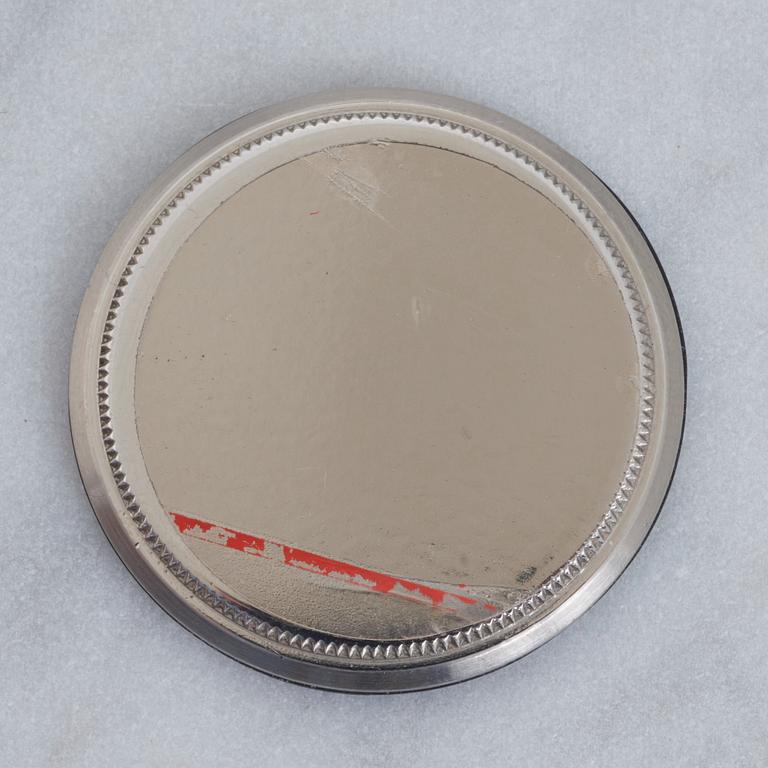
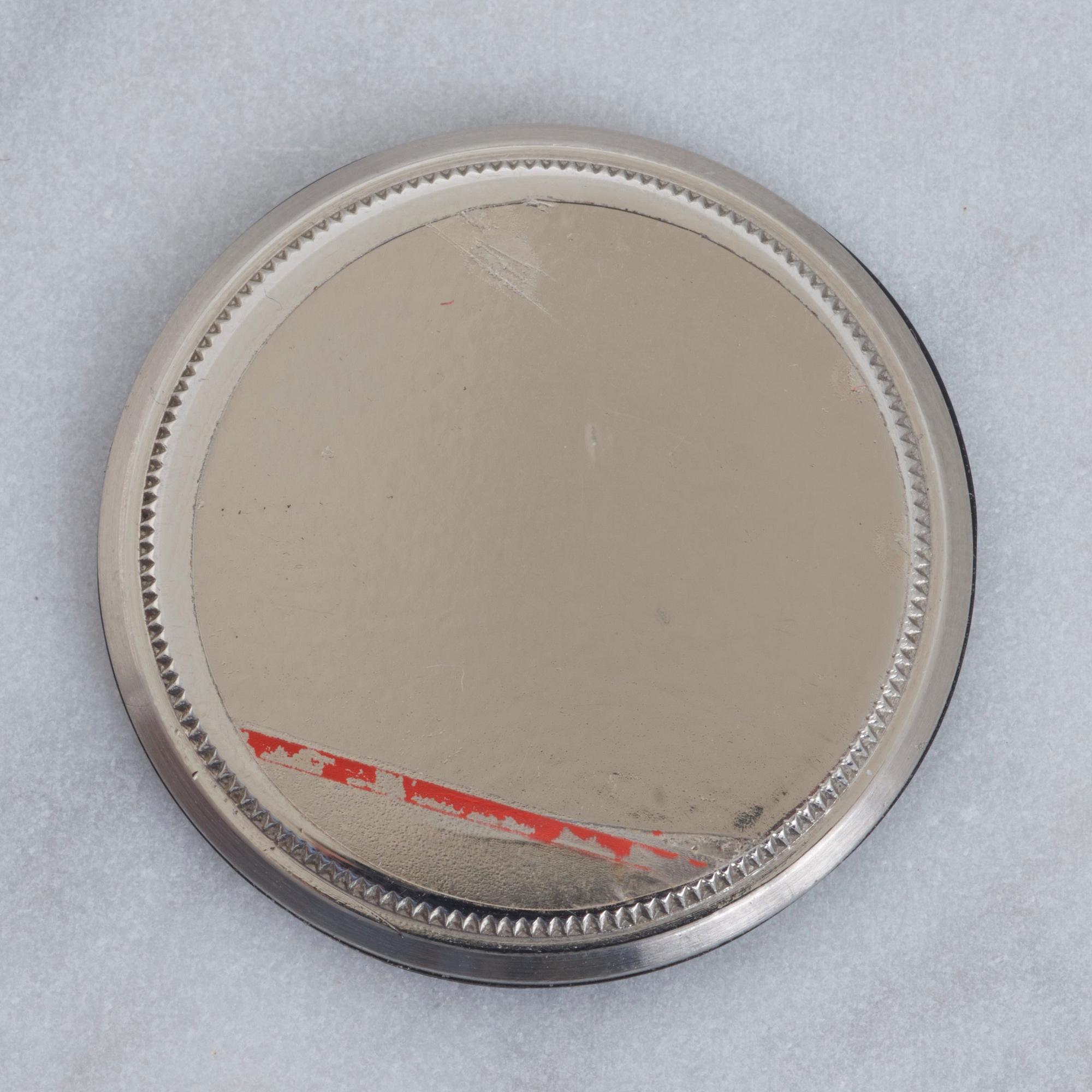
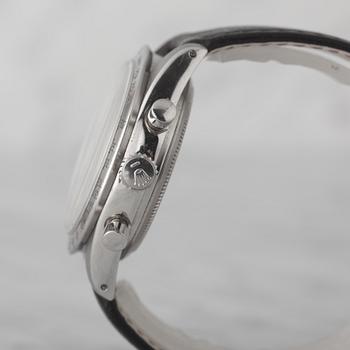
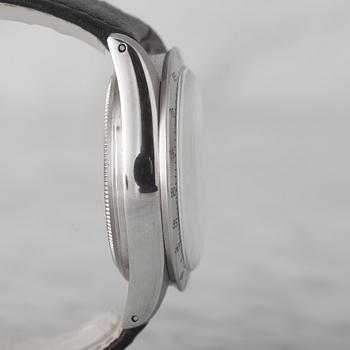
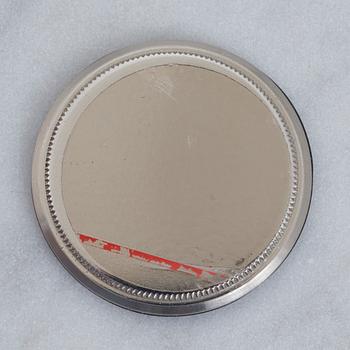
Case (8/10)
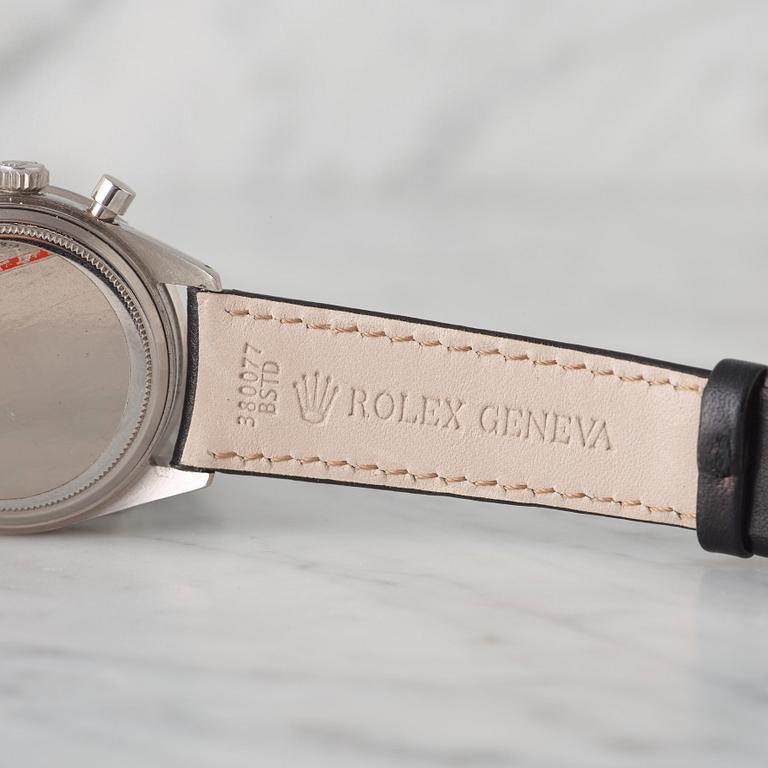
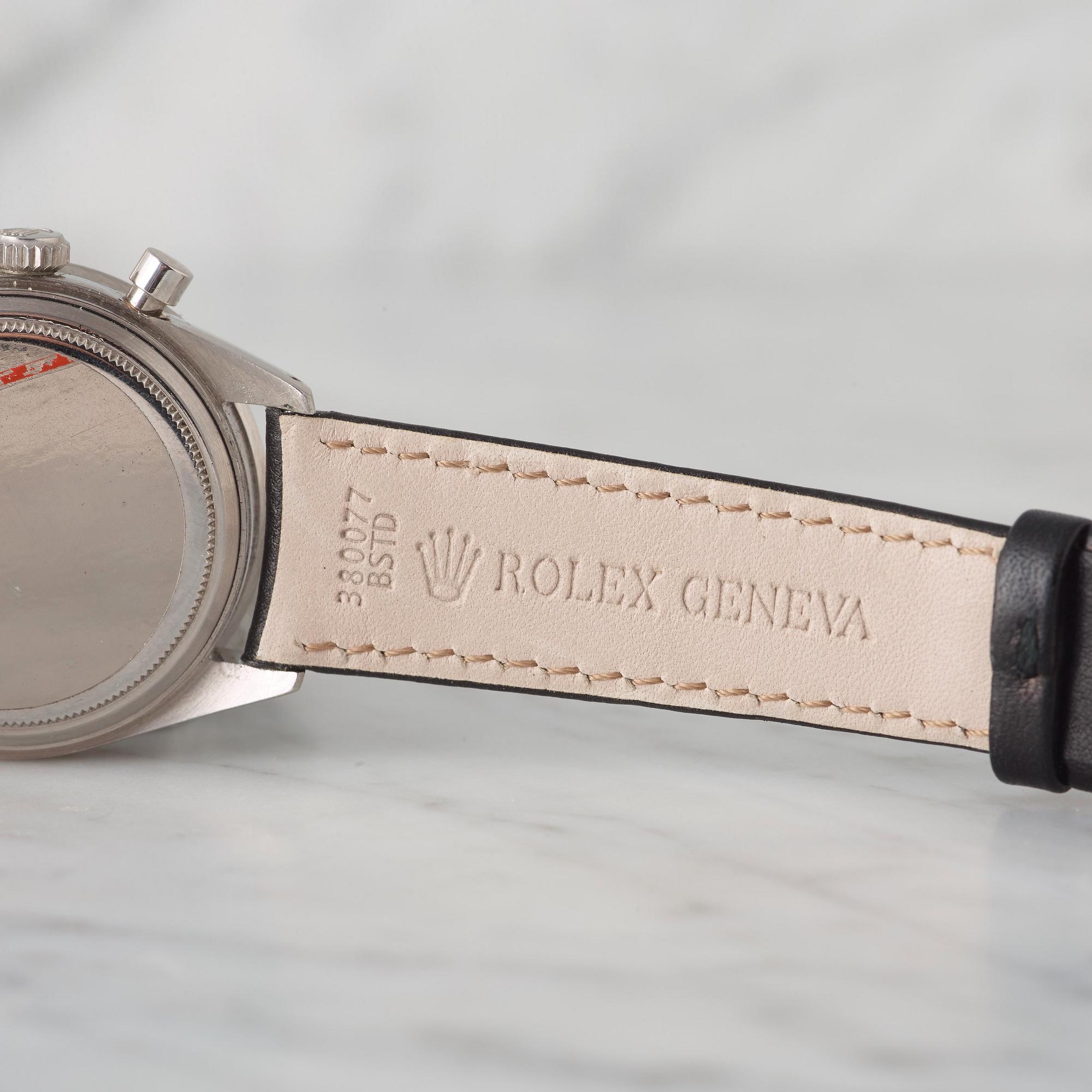
Leather strap
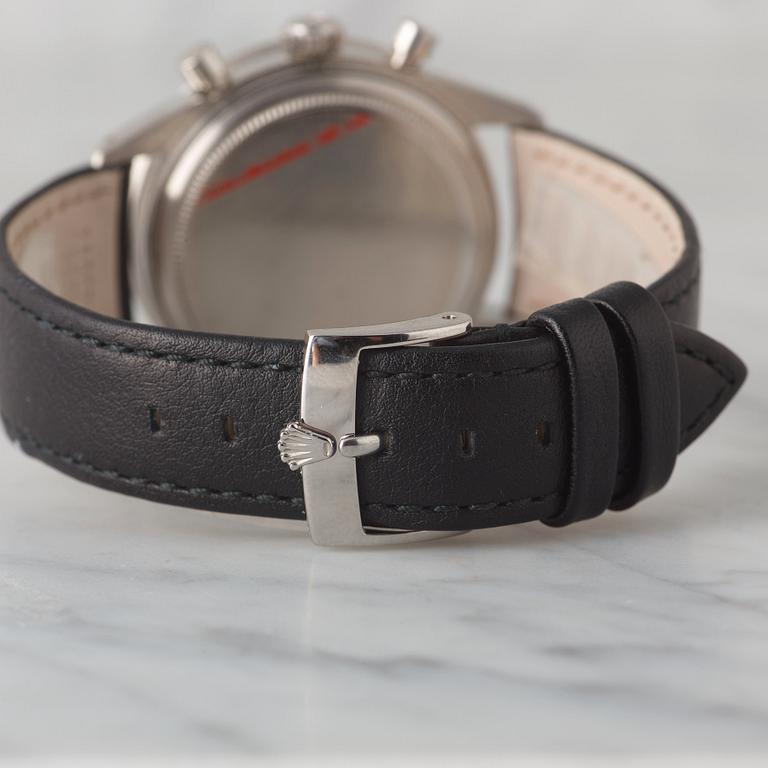
Buckle
Certificate (No)
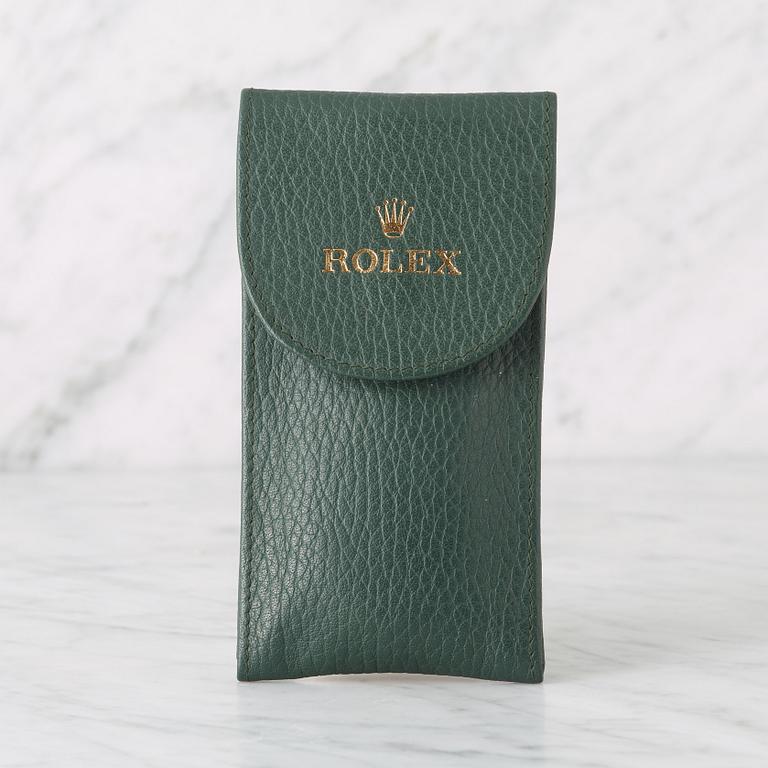
Box (No) Service pouch
Overall Opinion (8/10)
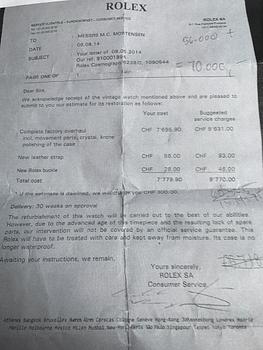
Factory overhaul May 2015.
More information
To many collectors, Rolex chronographs are grouped into two categories - Daytonas and "others". And while Rolex has been making chronographs since the 1930s, it wasn't until 1963 that the line of watches was categorized and named - and Daytona wasn't its first name. The original concept for this racing-inspired watch was The Rolex LeMans, and you can even find early advertising copy where the that the first "Daytonas" is called LeMans. The name didn't stick so when Rolex's push into the American market and go into official sponsorship of the 24 hour race at Daytona naturally that led to the naming of the reference 6239 Cosmograph as the Daytona. That didn't happen until 1964.
But what made the 6239 so different from the earlier chronographs? it was the first time Rolex used inverse colors for sub-dials - all previous Rolex chrono dials were completely monochromatic. Also, the tachymeter scale - used for measuring distance over time was moved from the dial to the bezel. May not seem like much, but it was a big deal, and these two traits made for a much more interesting, aggressive look when the 6239 hit the market. These are still traits of the Daytona today.














Others have also viewed