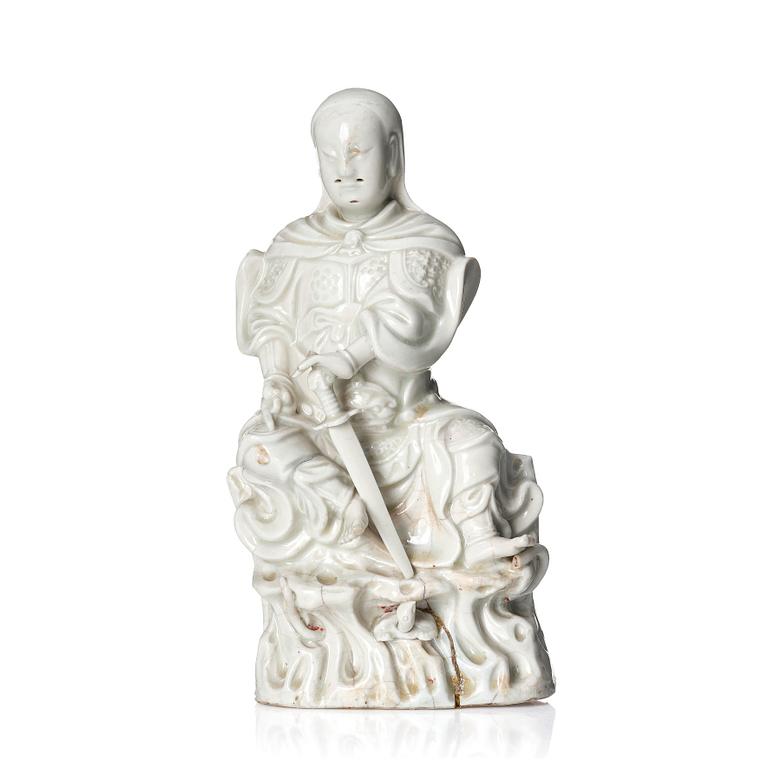
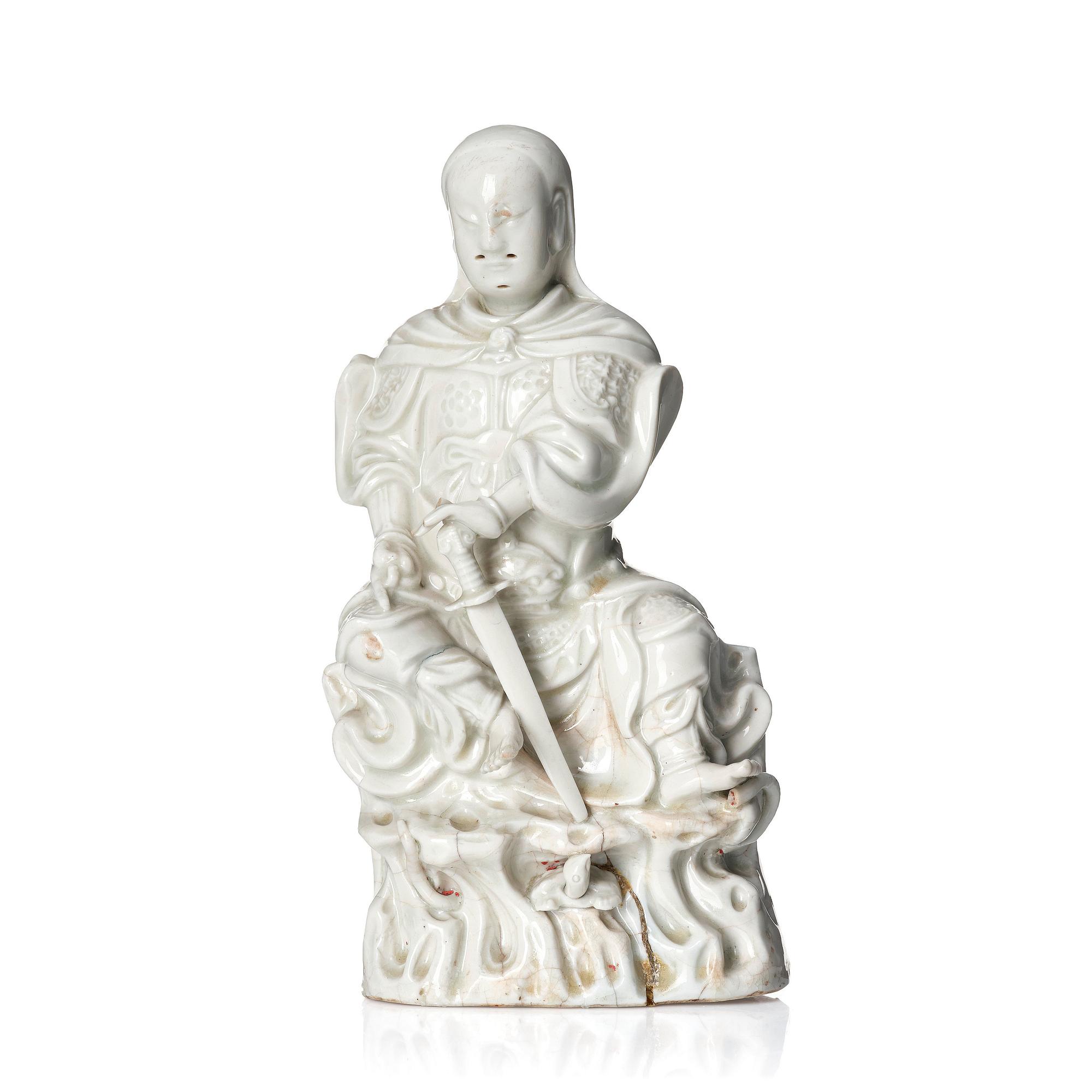
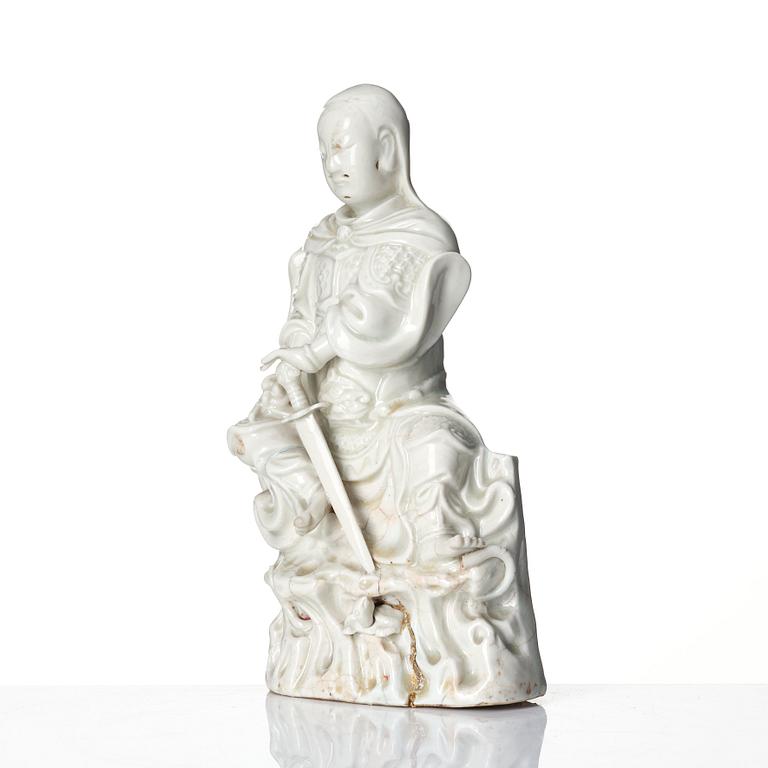
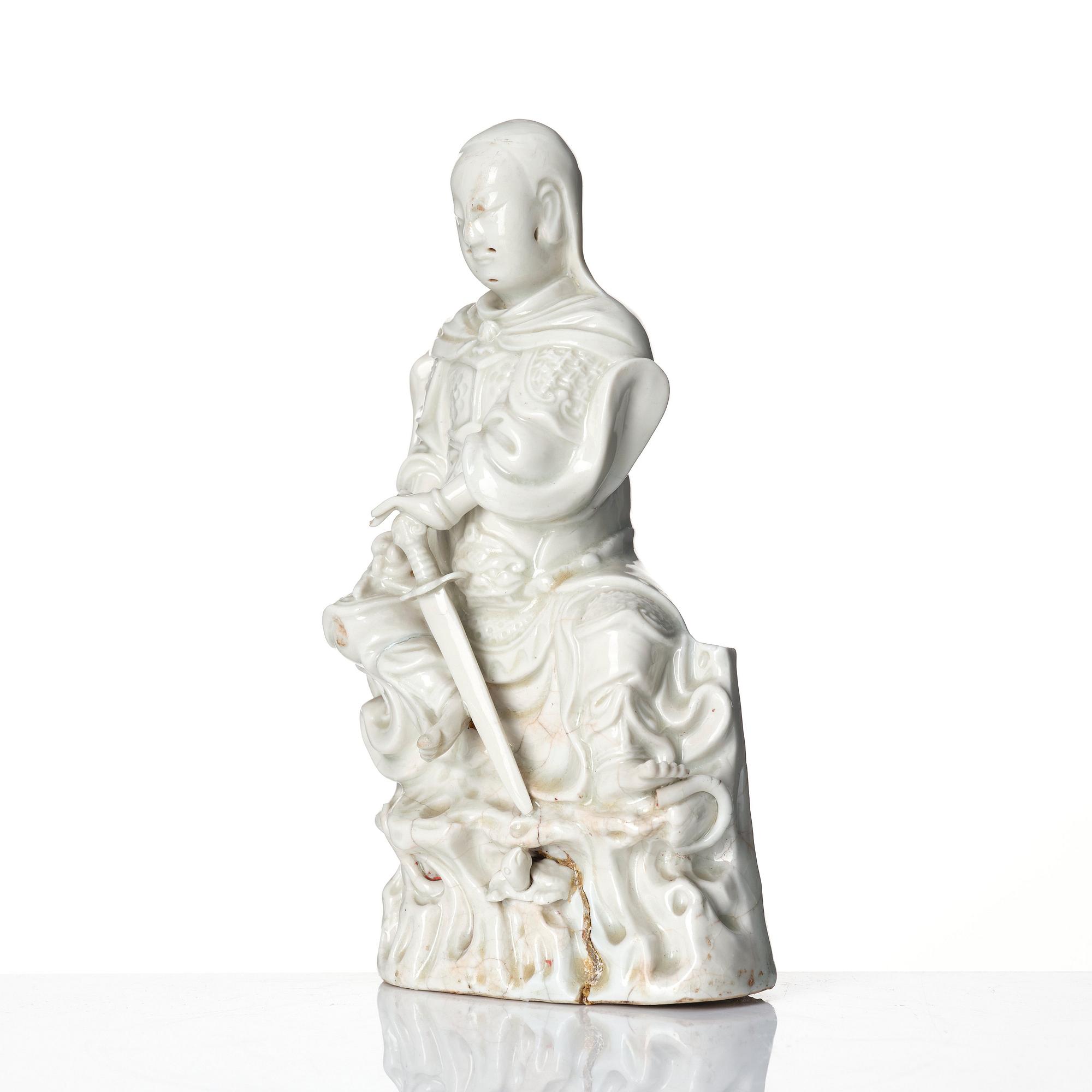
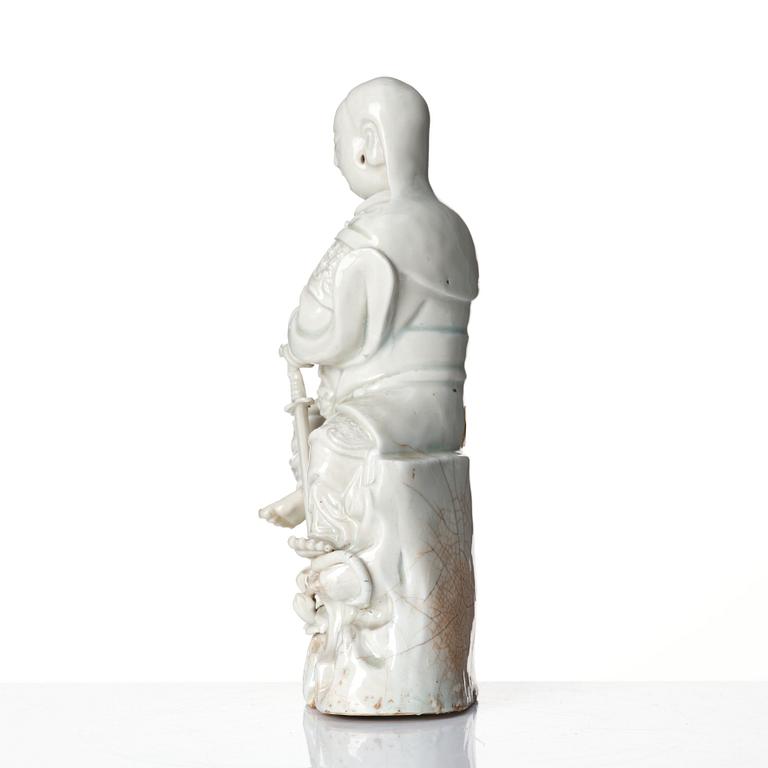
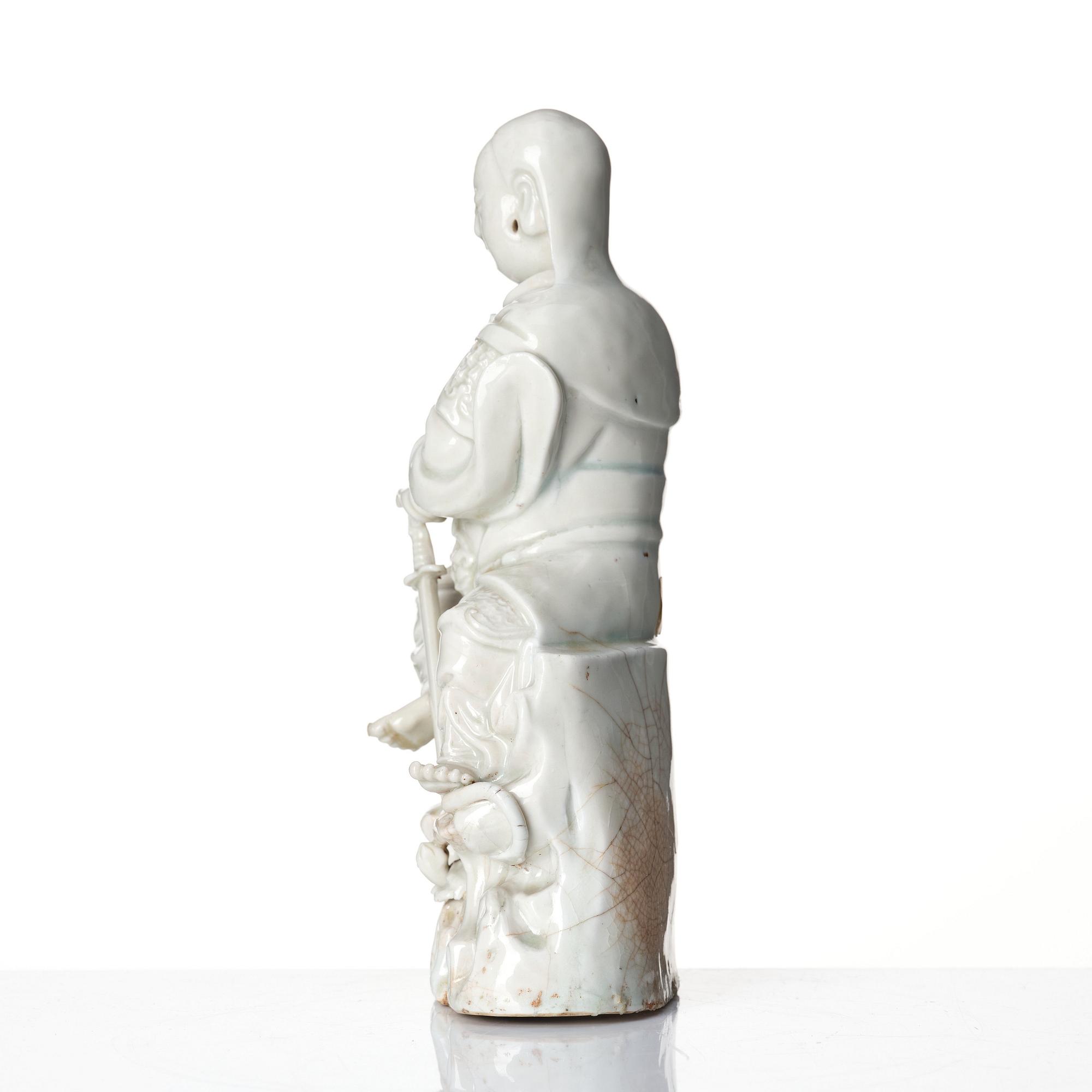
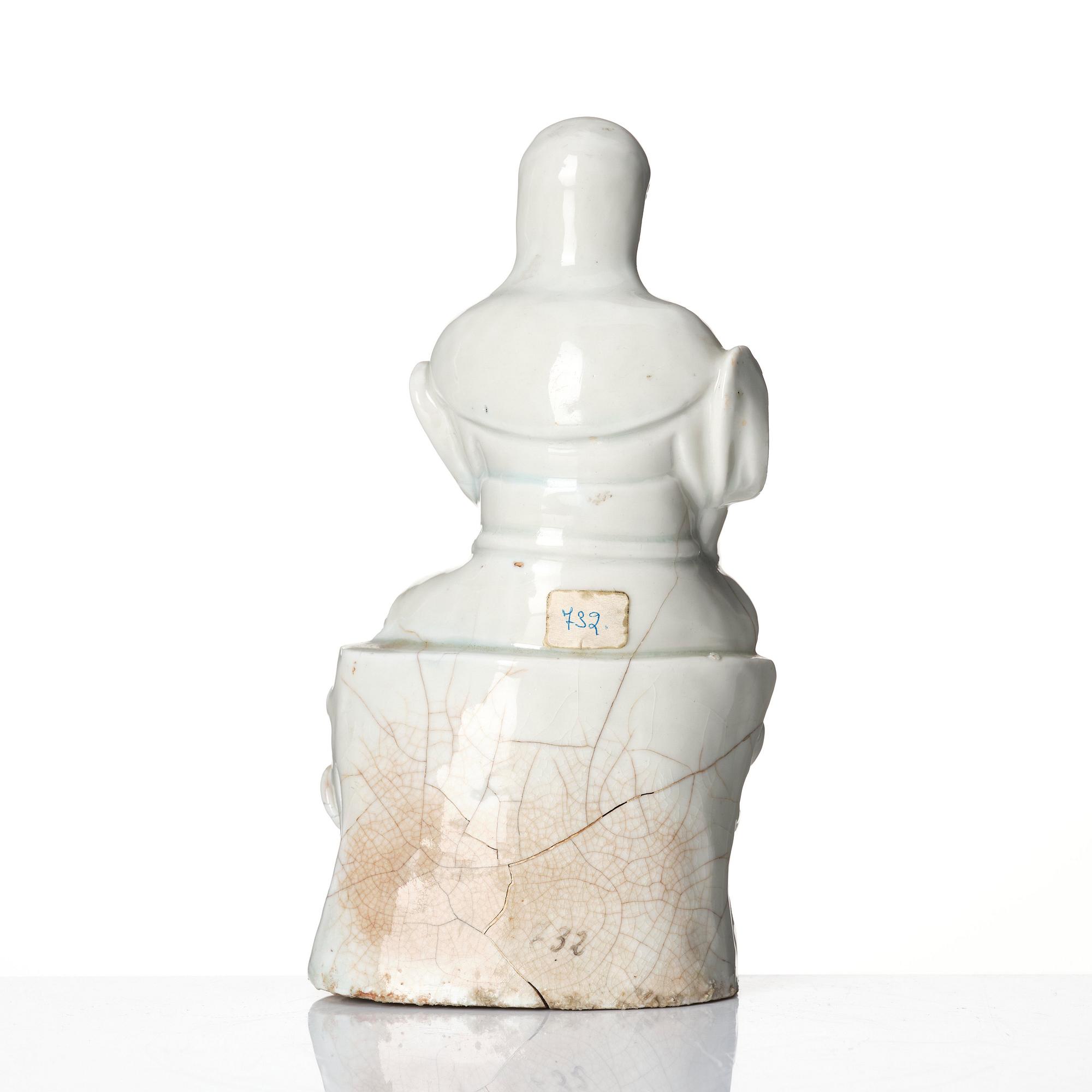
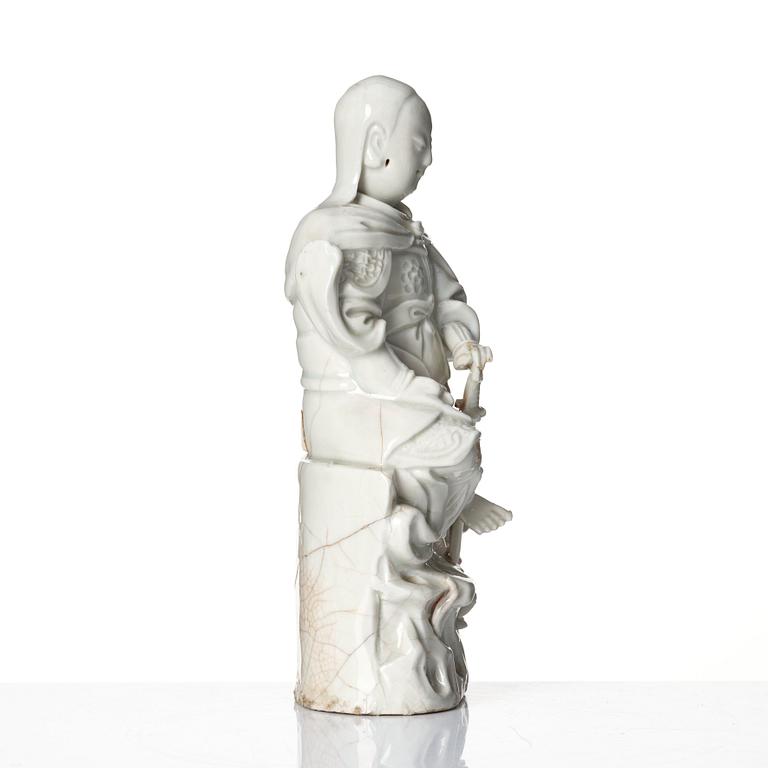
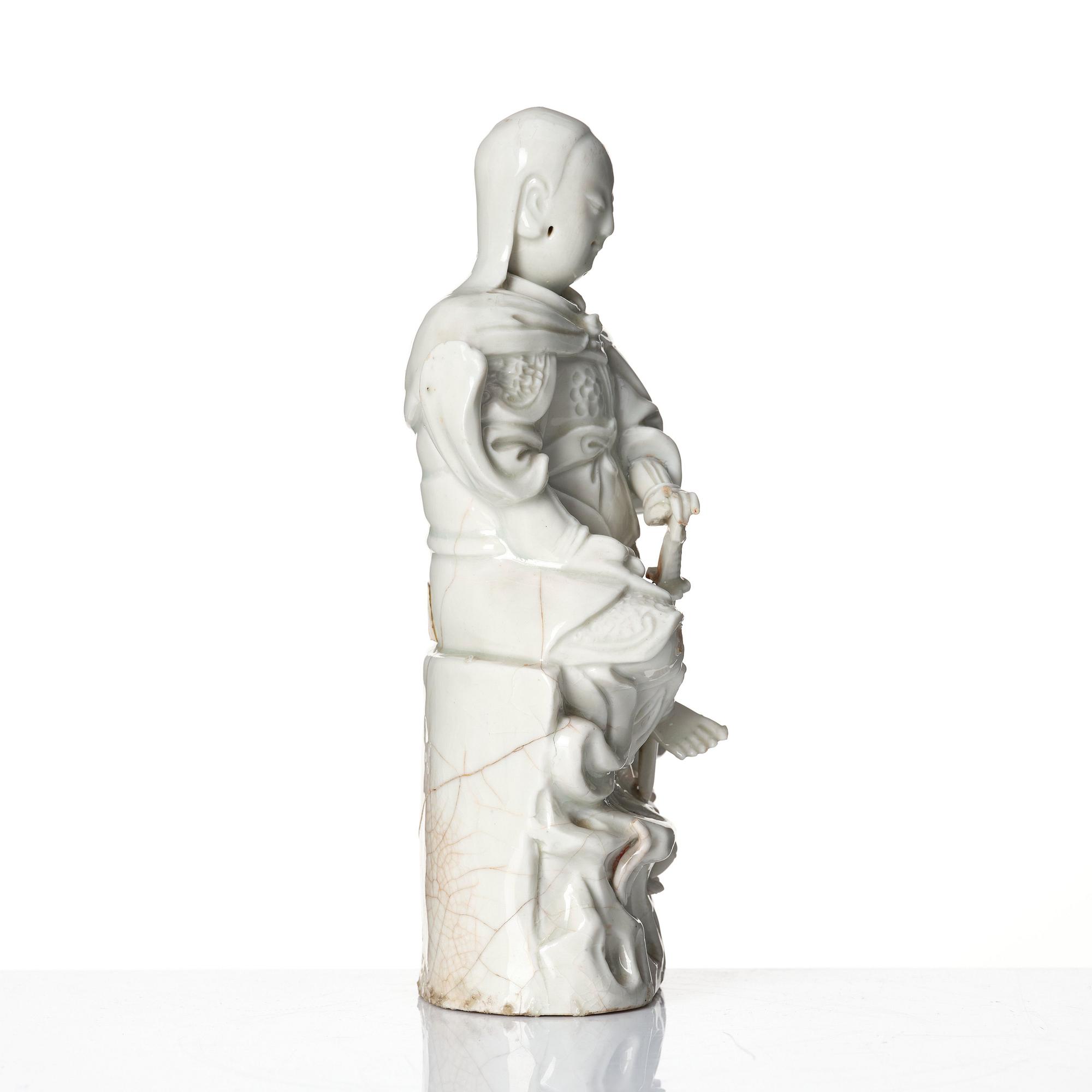
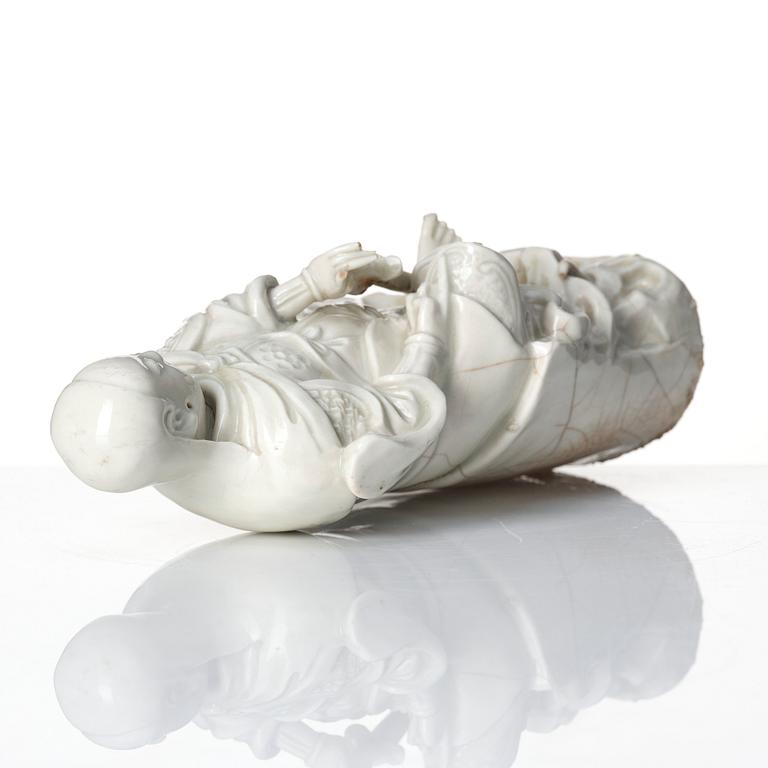
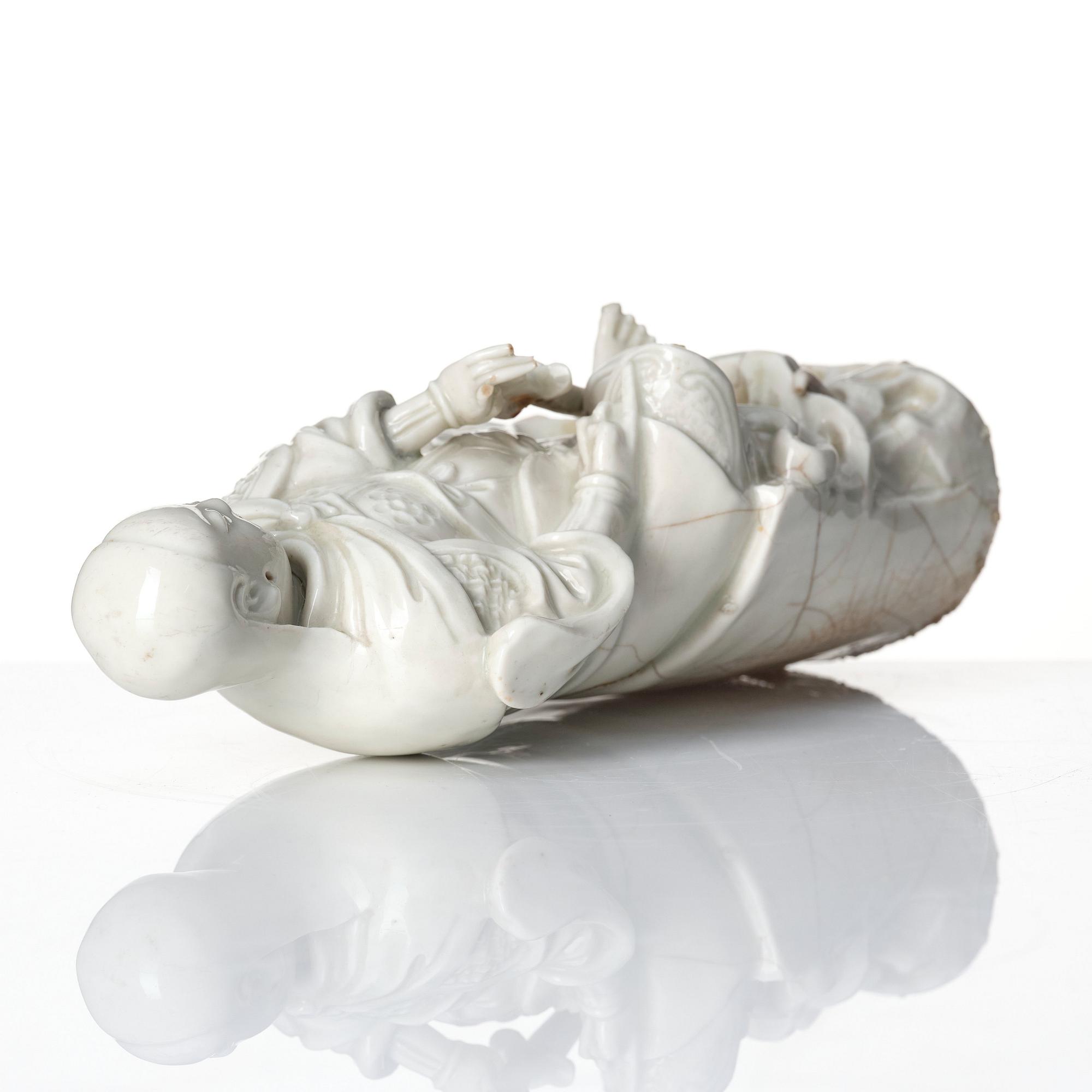
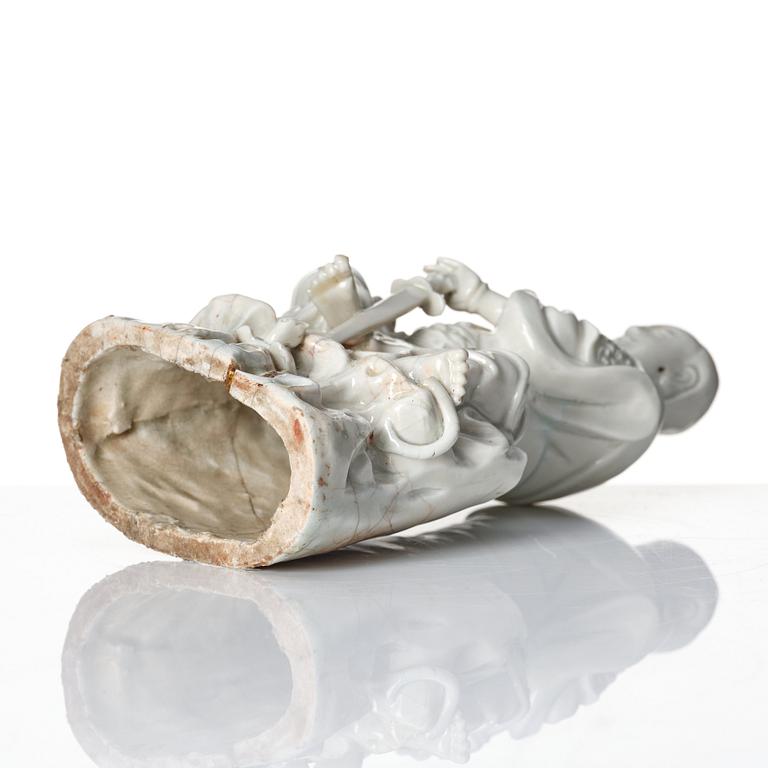
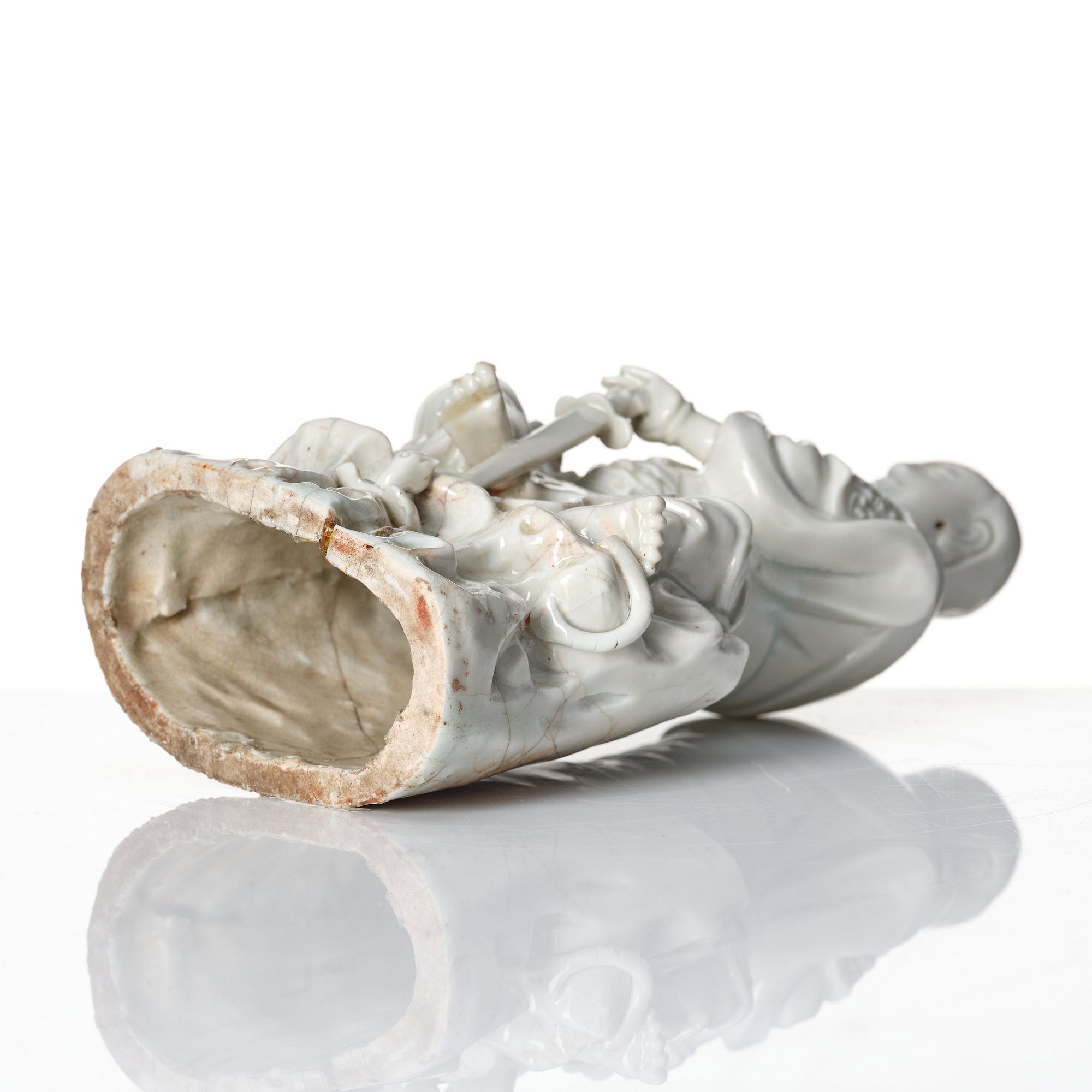
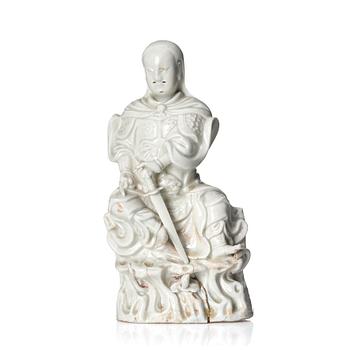
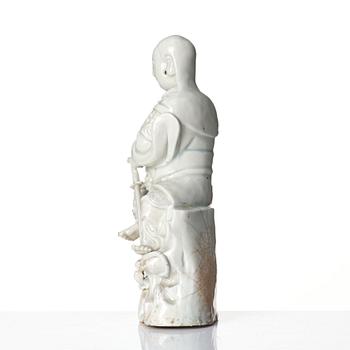
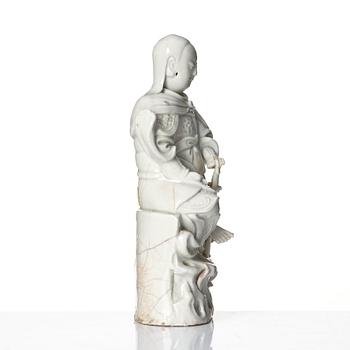
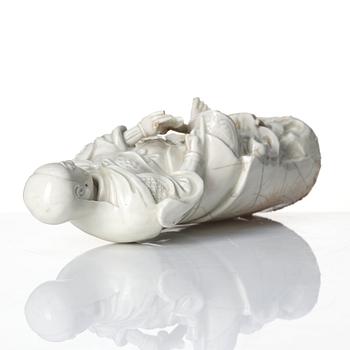
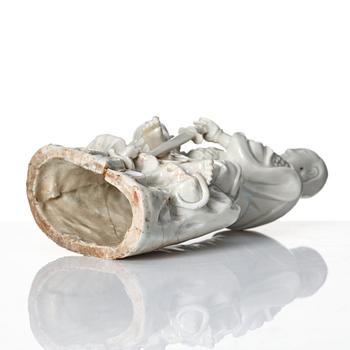
The figure is modelled with a downward gaze. The armour is detailed and the folds of the fabric are finely depicted. His right hand is making a downward sign and his left hand rests upon his sword. He is seated in a powerful stance on a rocky base above a turtle and snake nestled in a grotto. Height 24 cm.
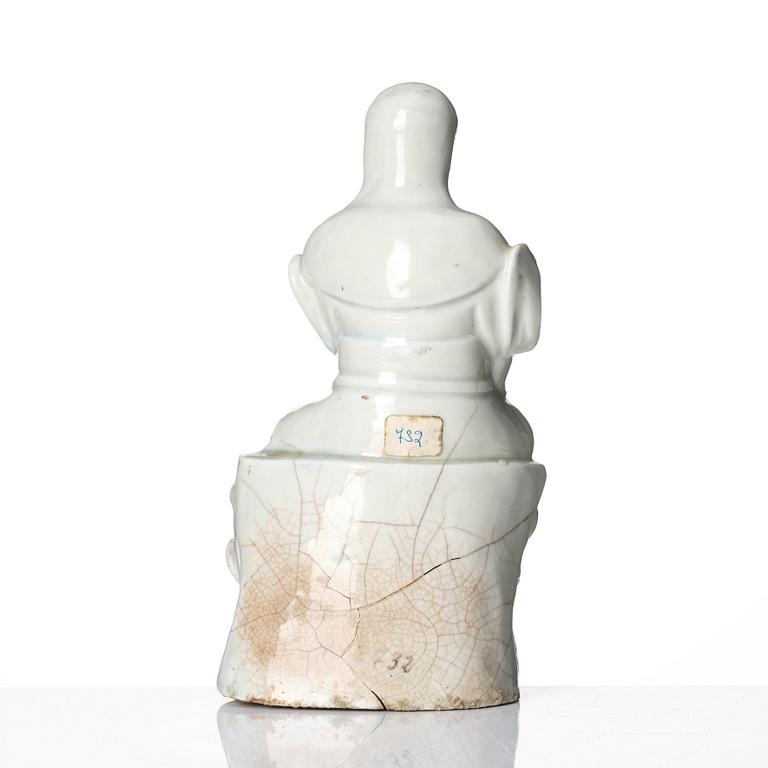
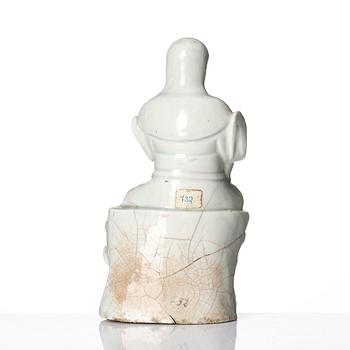
Cracks. Fingers and part of the snake missing. Firing defects.
Provenance
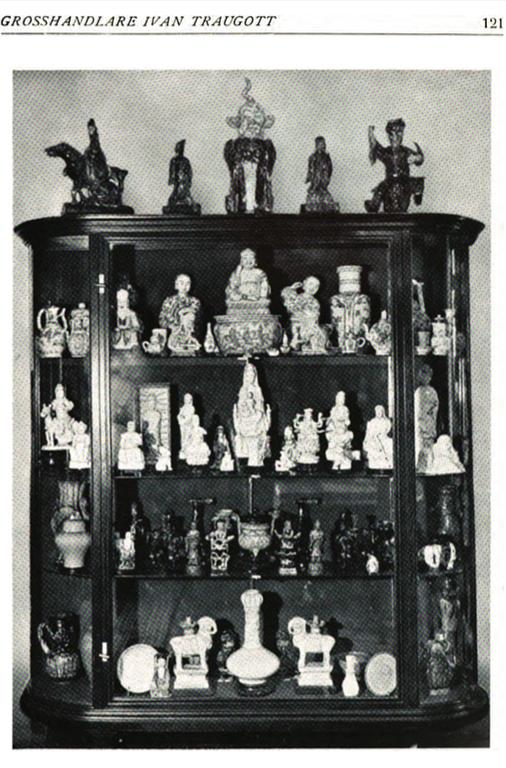
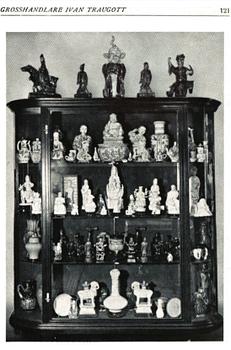
The Collection of Ivan Traugott (I.T. 732). Purchased at Pergamenter, Berlin 1917. Traugott was a Swedish businessman and important art collector. A large part of his collections can be seen today at Nationalmuseum and Östasiatiska museet, in
Exhibitions
Compare a similar figure in the Metropolitan Museum, New York, Accession Number: 79.2.481.
Literature
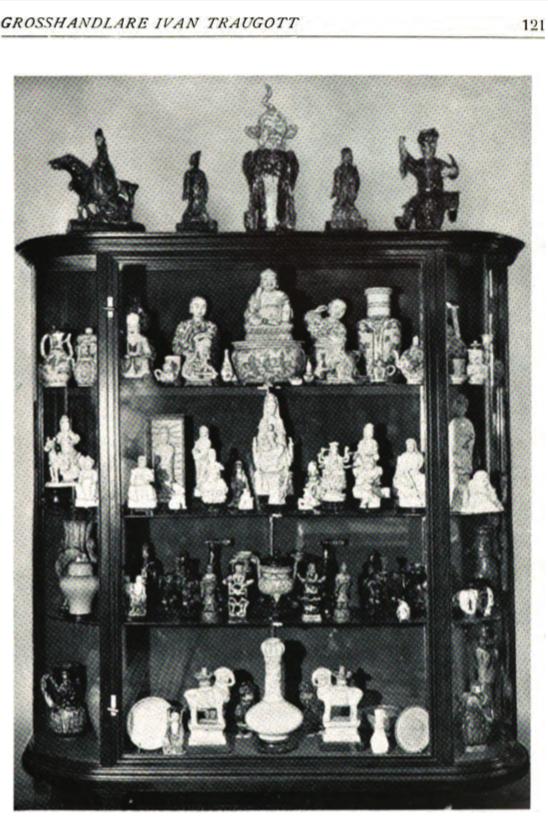
The figure is depicted on page 121 in Svenska Hem i ord och bild, from 1920.
The tortoise at the base of the sculpture identifies this figure as Zhenwu, an important Daoist deity who also was worshipped in Buddhist traditions. Zhenwu became particularly popular during the Ming dynasty (1368–1644), when he was revered as a protector of both the state and the imperial family. His role as a guardian reflects his association with the north, the direction from which China was constantly threatened by neighboring peoples from Central Asia.
For condition report contact specialist


Others have also viewed