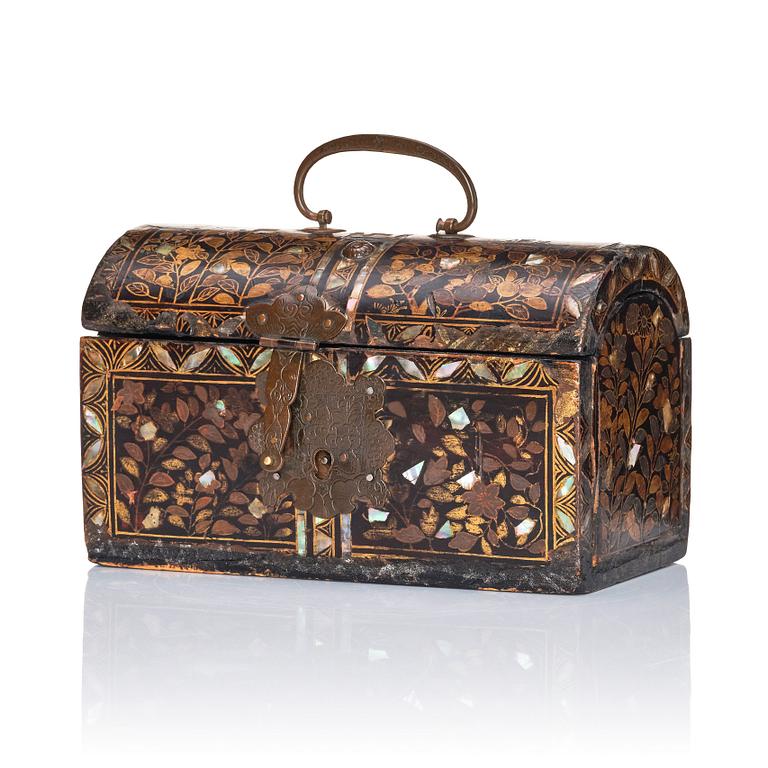
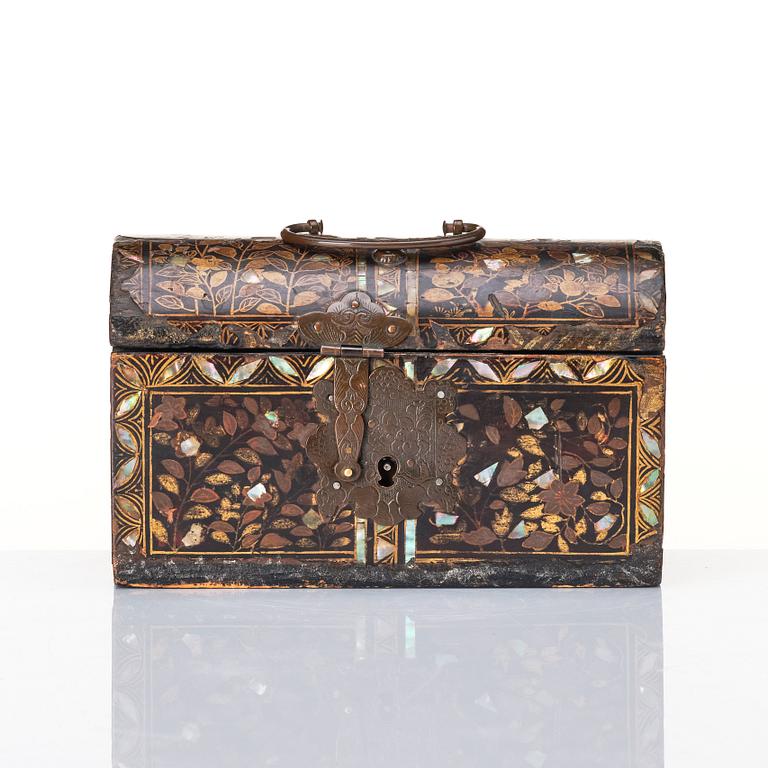
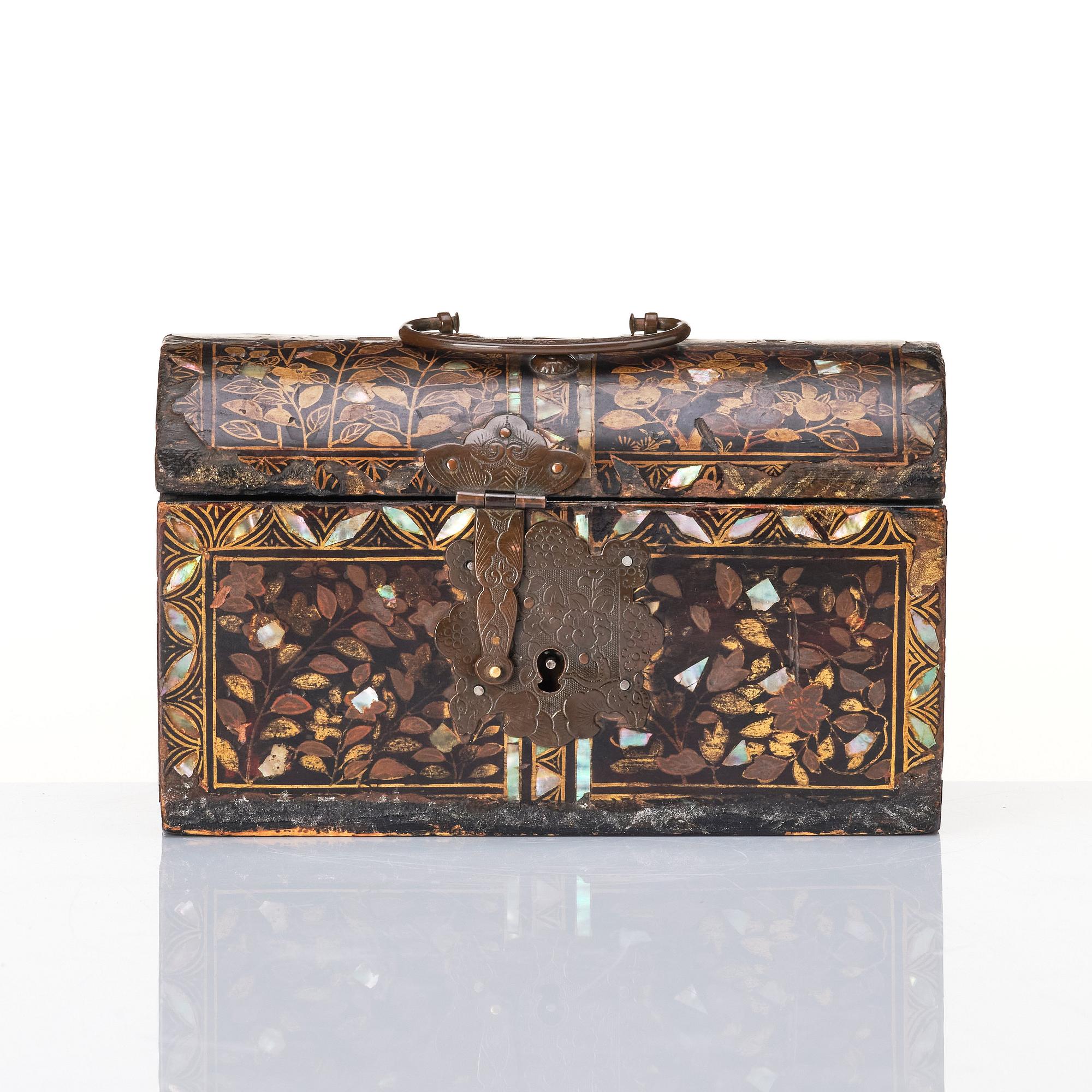
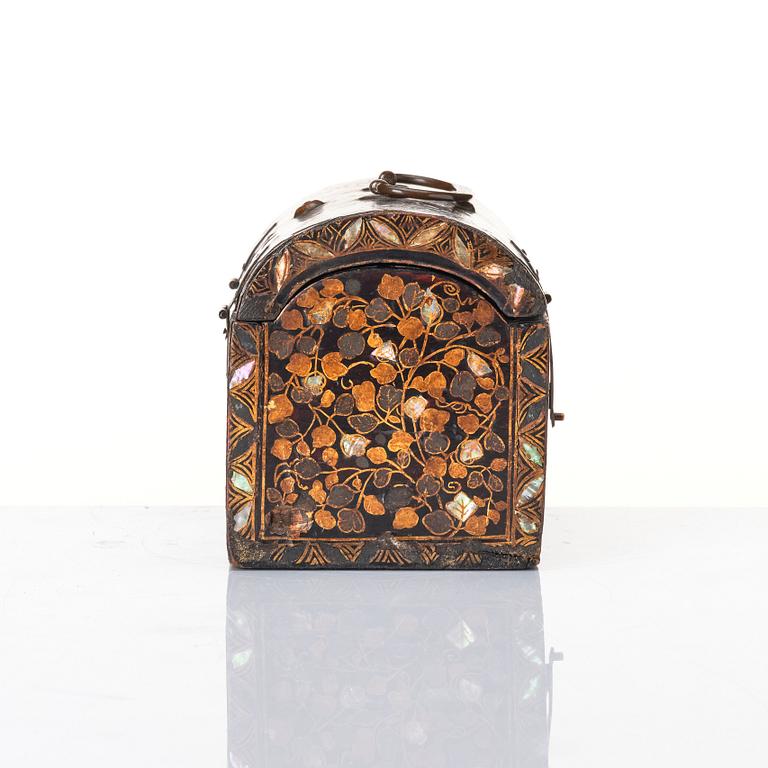
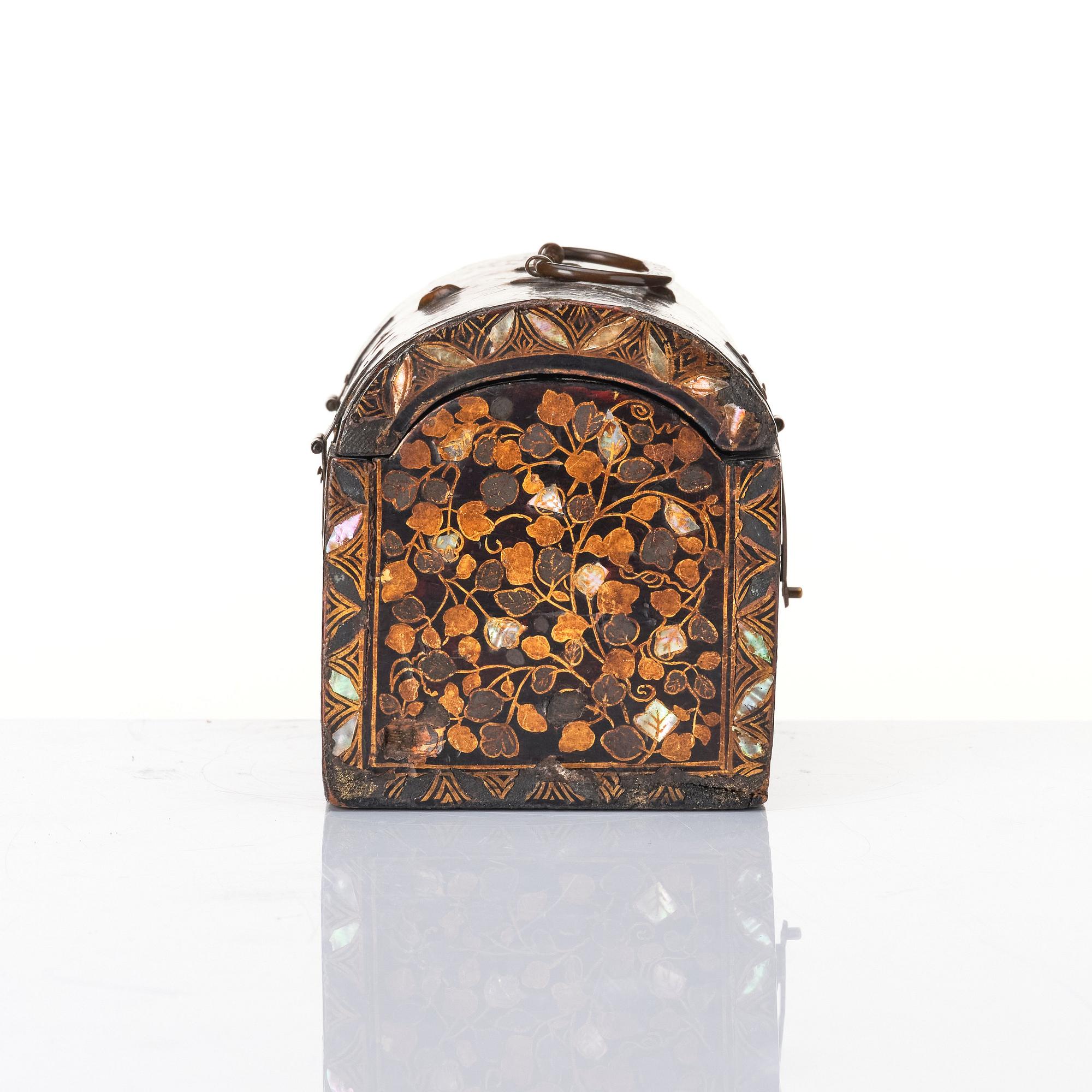
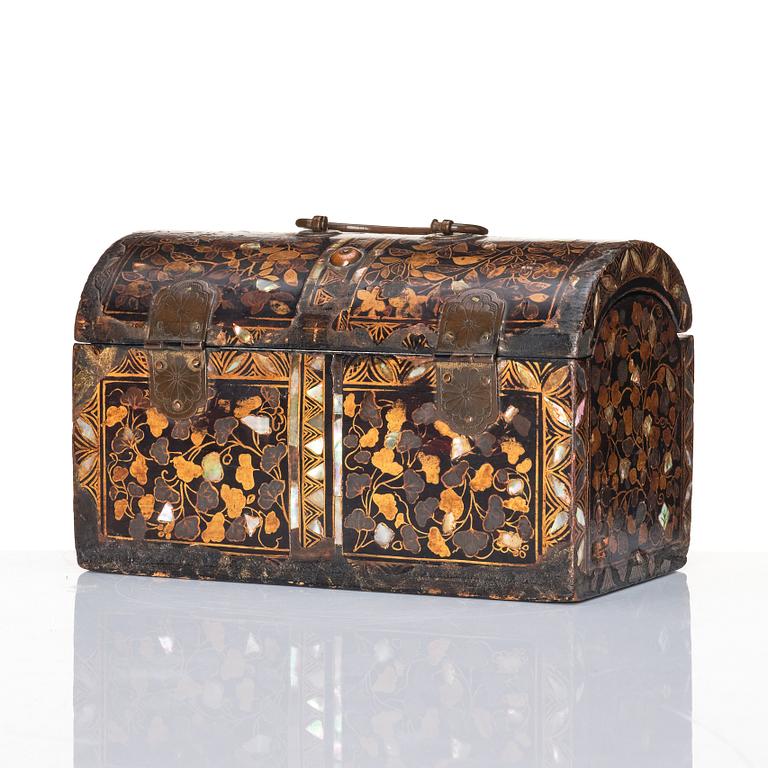
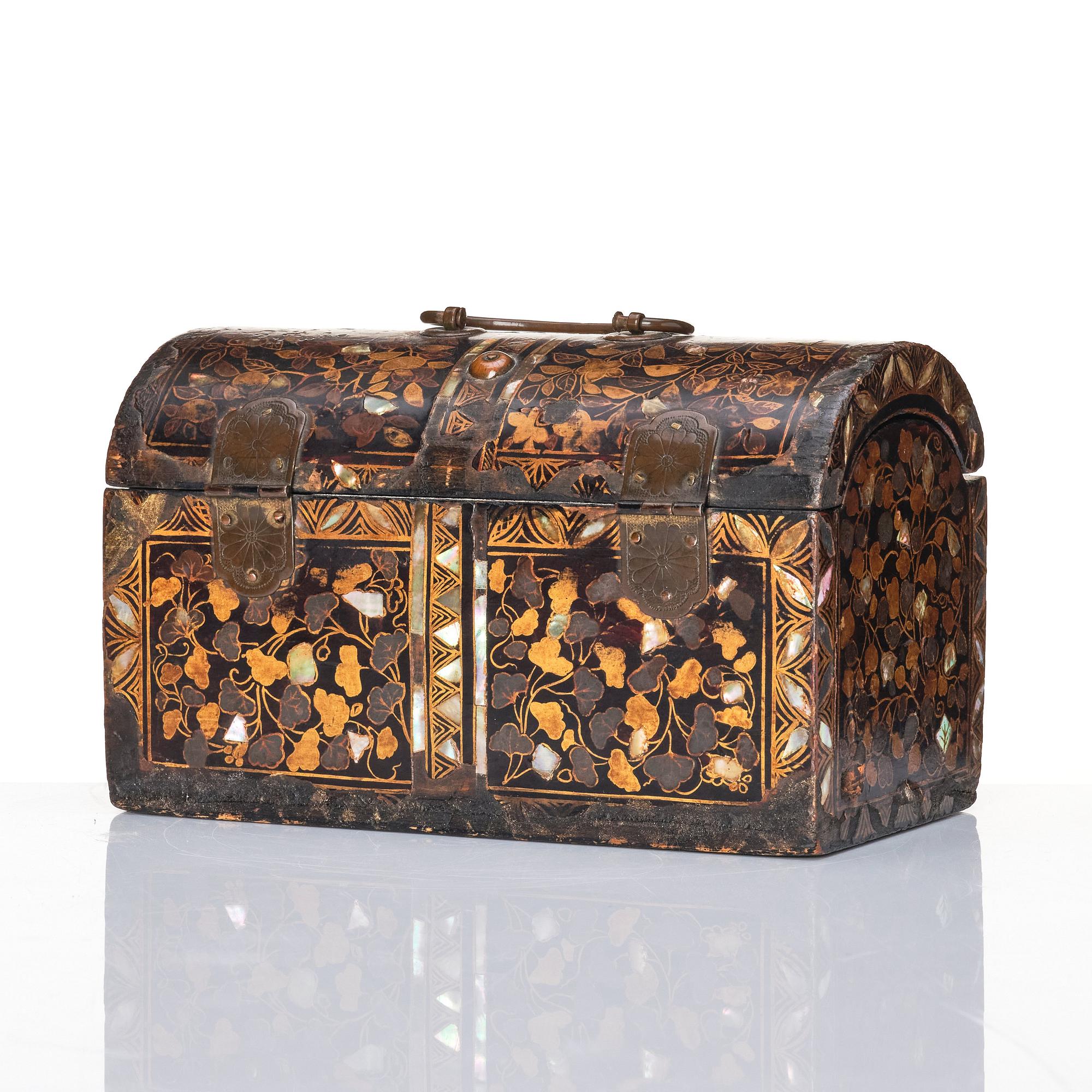
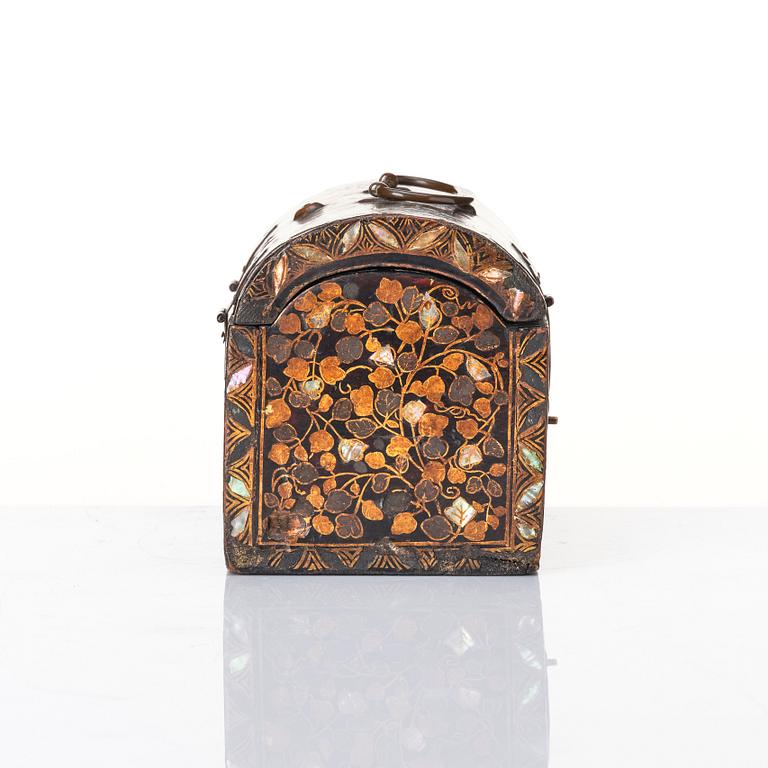
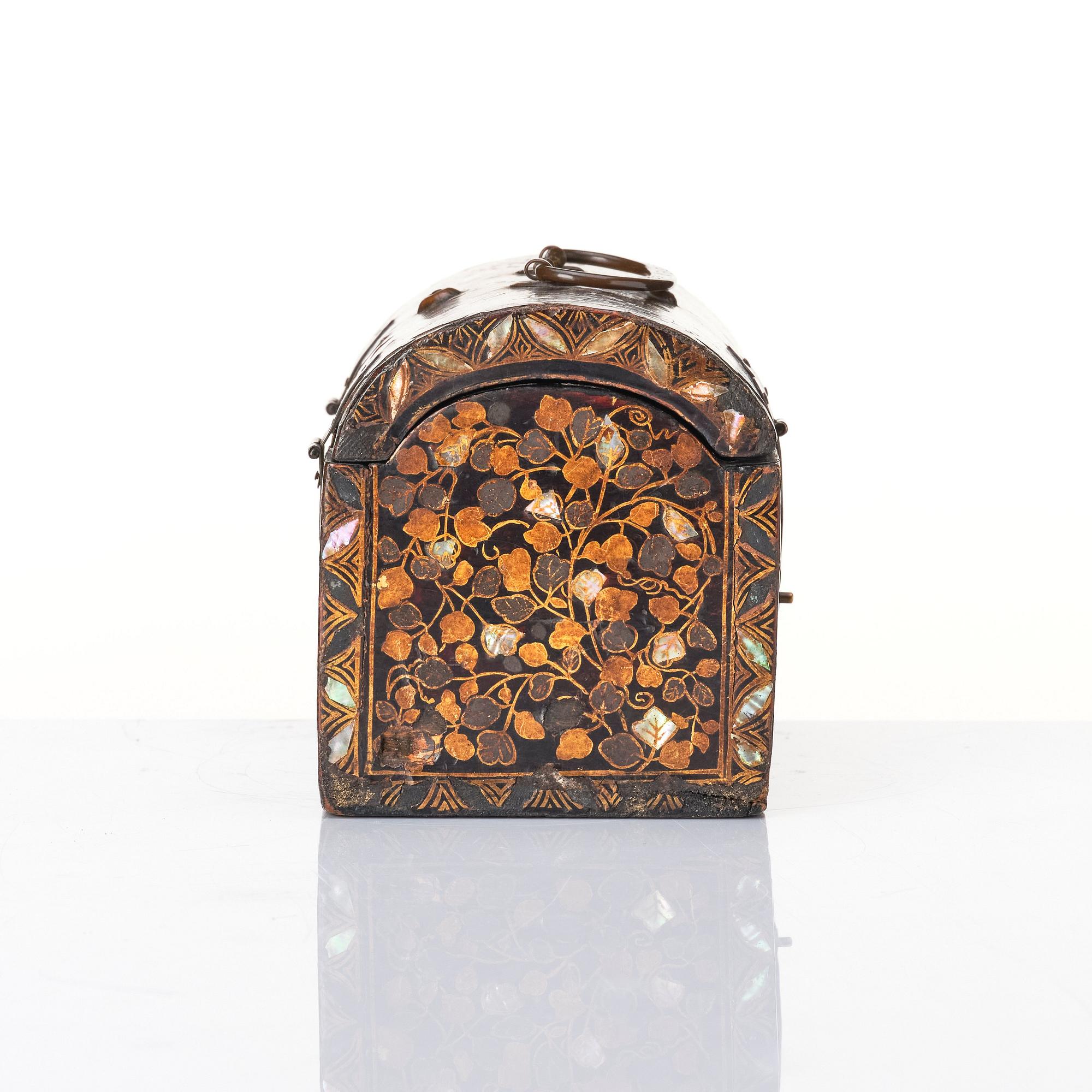
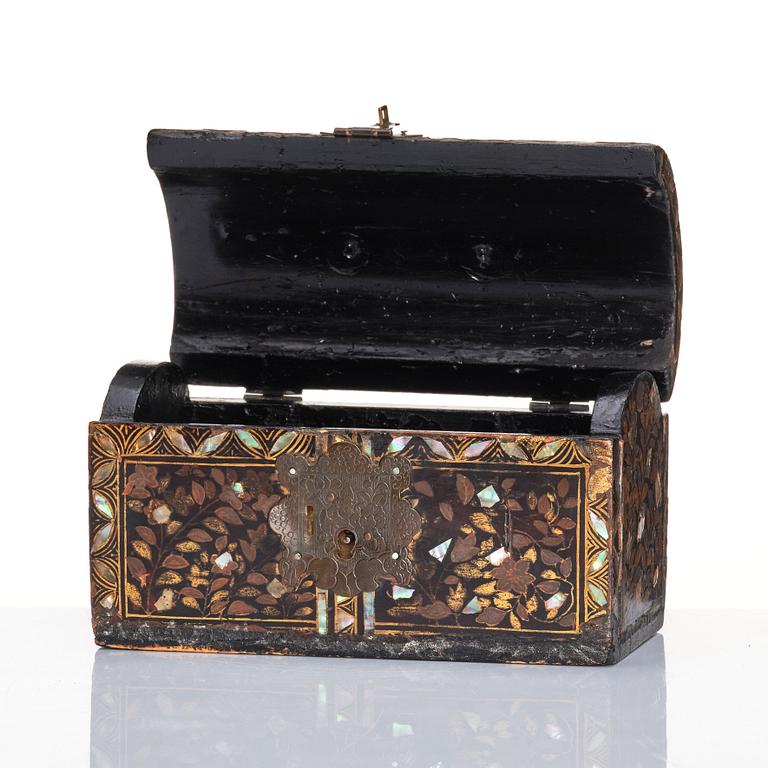
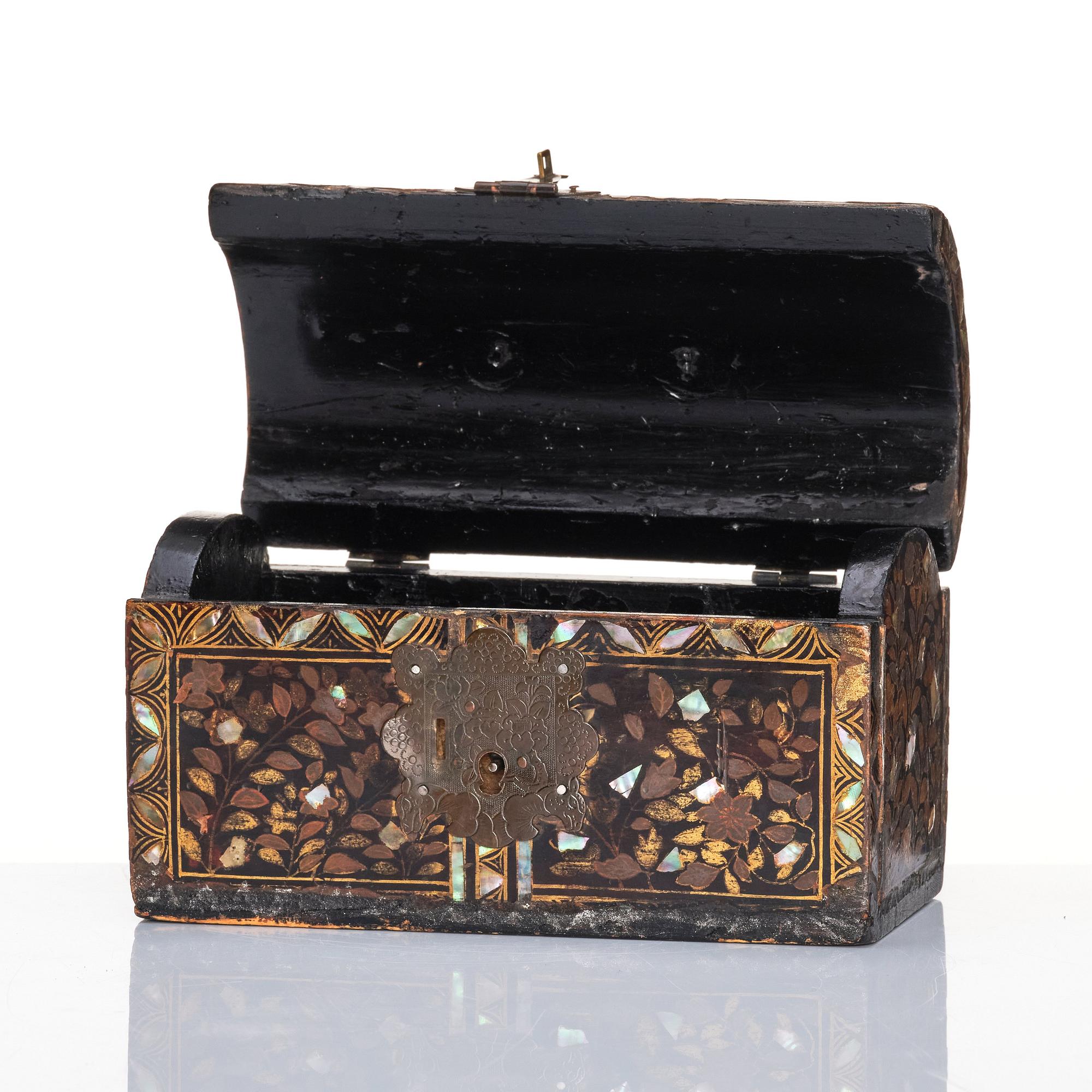
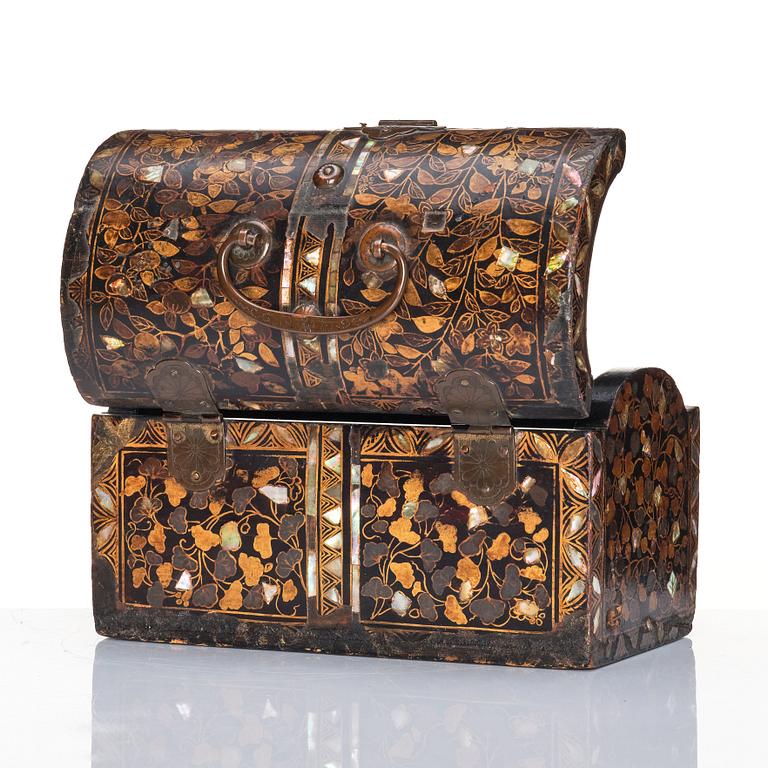
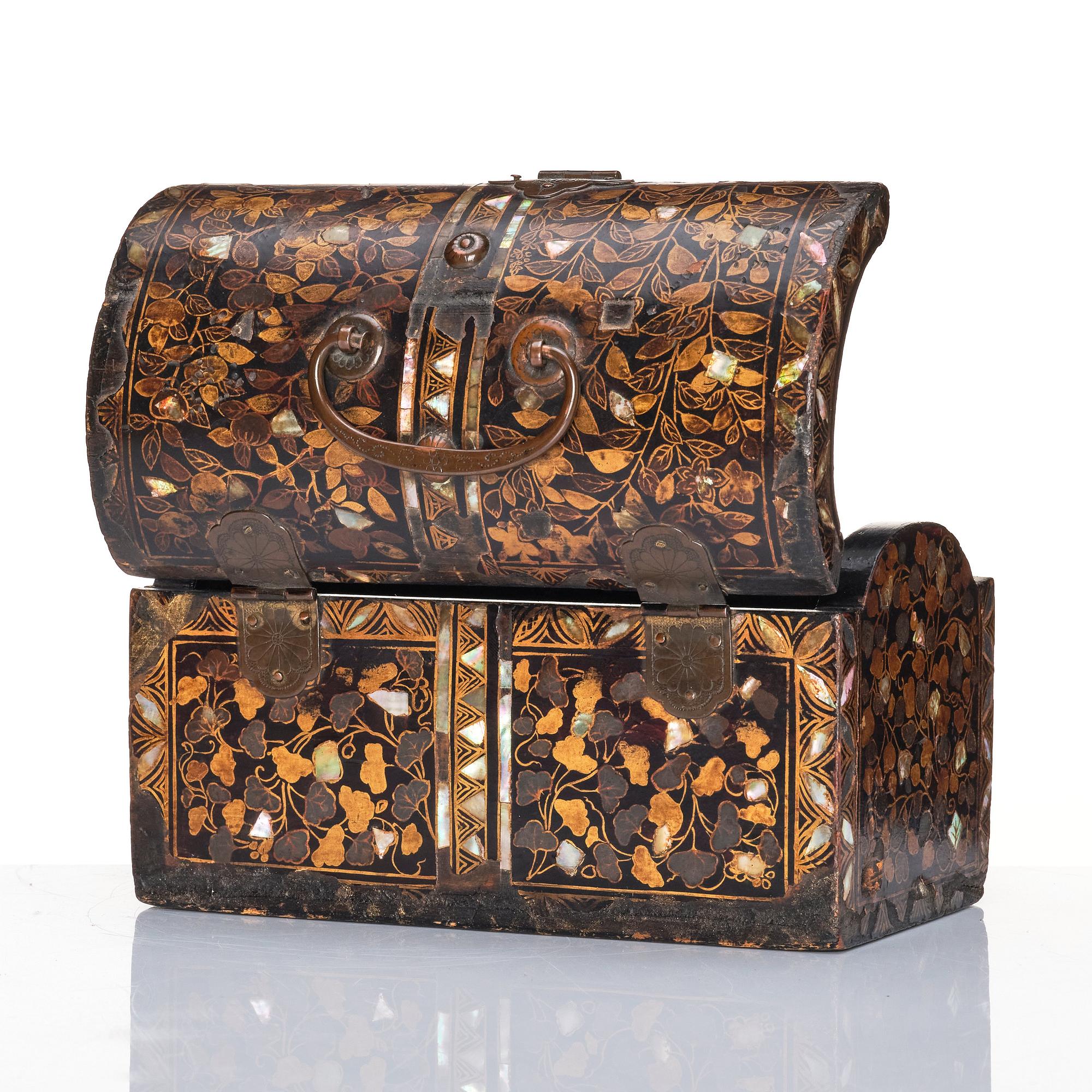
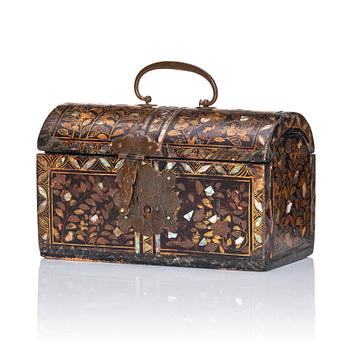
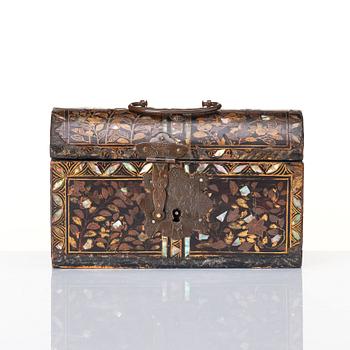
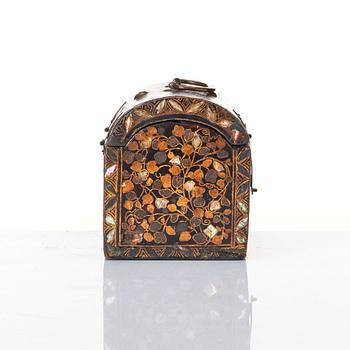
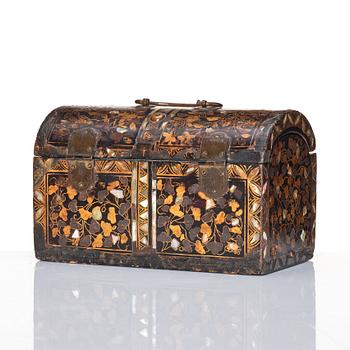
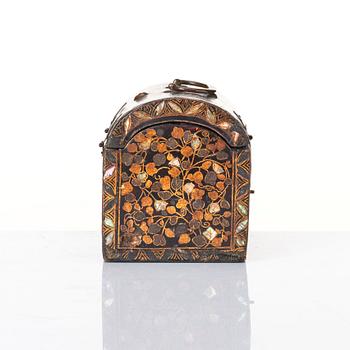
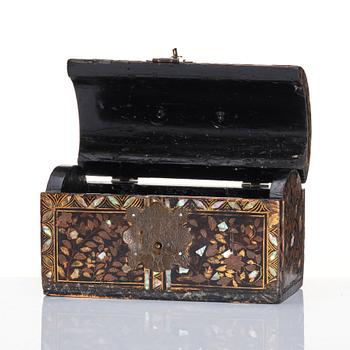
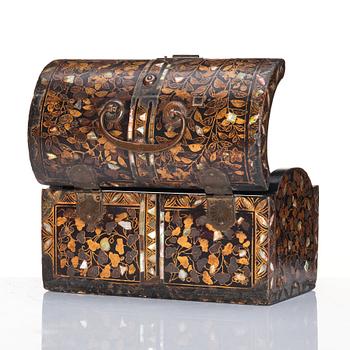
The rectangular casket with domed hinged cover, decorated in gold hiramaki-e and inlaid in mother-of-pearl on a black ground, the cover and the front with floral vine, all bordered with nanban tendril, the interior in black lacquer, copper fittings engraved with stylized flowers and scrolls, and lacquered on top. Measurement 17.5x11x10 cm.
Wear, loss of decoration.
Exhibitions
Compare a similar chest at Christies, May 11th 2015, European Courts encounter Japan, Auction 11671, lot no 1.
More information
The word Namban. In 1543, a Chinese boat carrying Portuguese sailors went aground off the Japanese coast — setting in motion what was to be a most lively, profitable, and prolonged cultural interchanges. Iberian Catholics began arriving to the island country in droves, in search of trade and converts.
Japanese-Western relations got off to a rocky start. The suspicion and contempt were mutual. Because they sailed from the south, the Japanese called these strange, unfathomable beings, ‘Southern Barbarians’ (namban).
For condition report contact specialist


Others have also viewed