"Den röda vallmon"
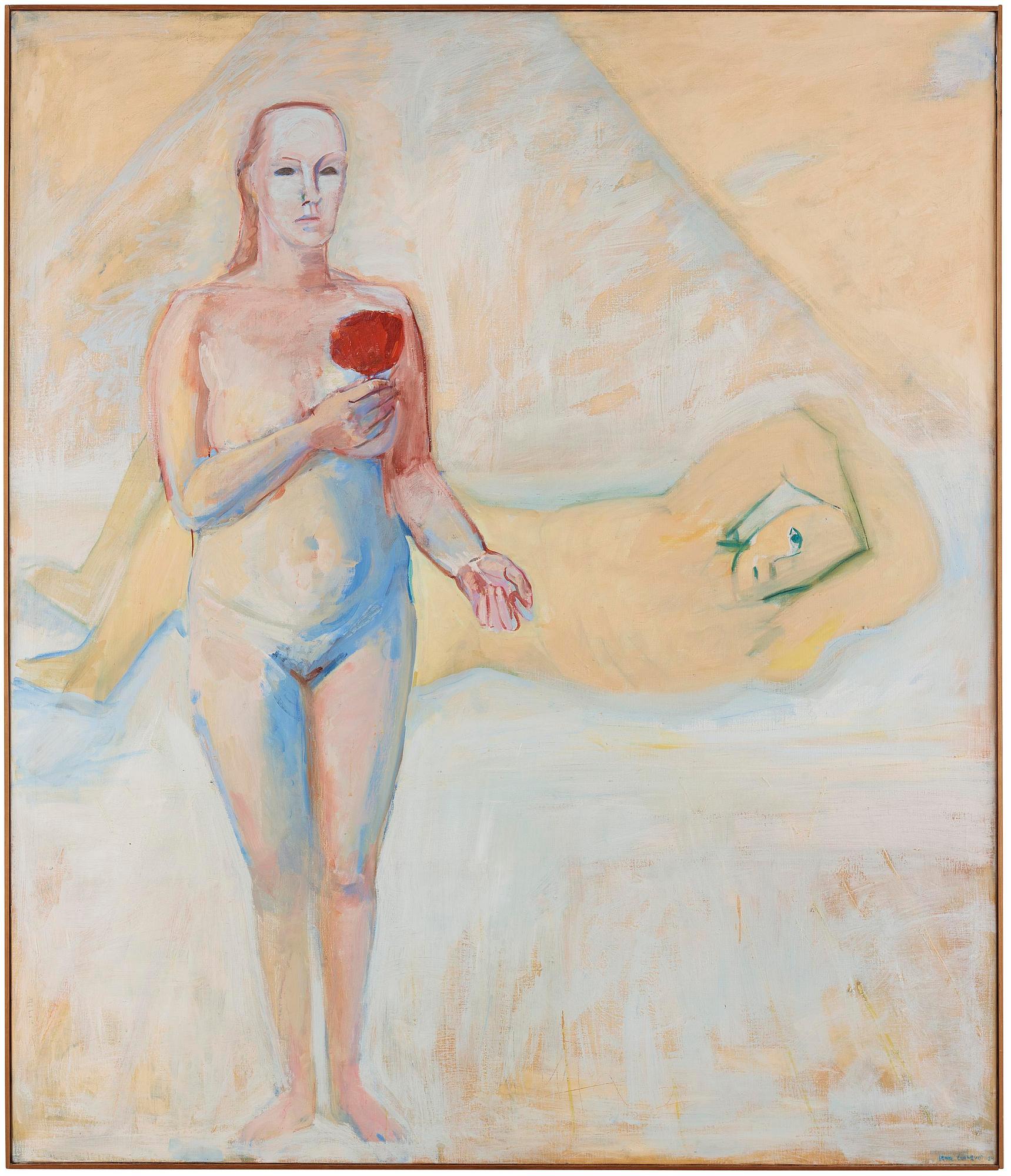
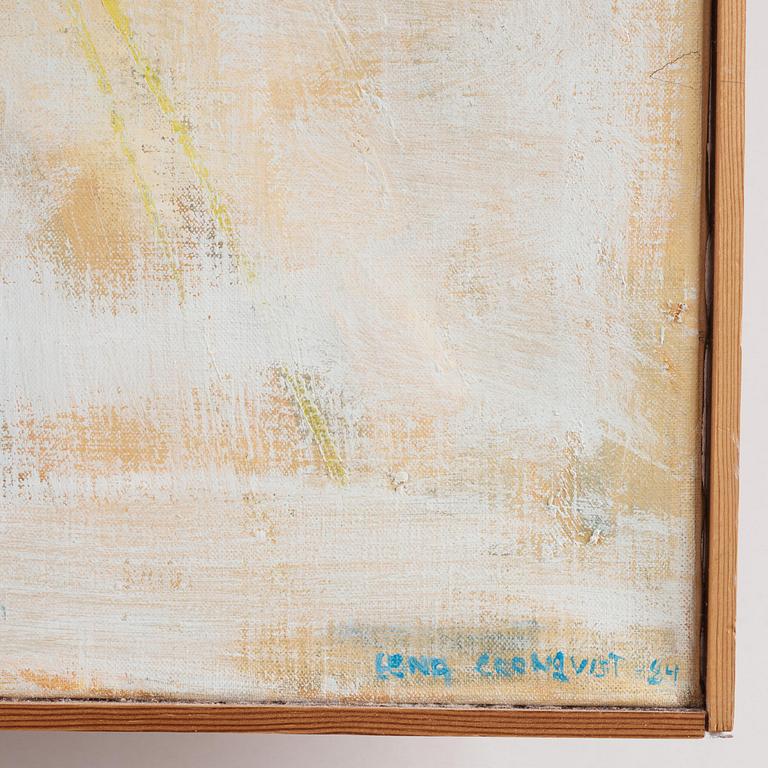
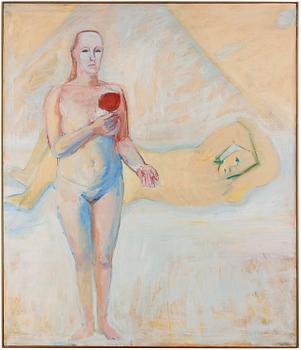
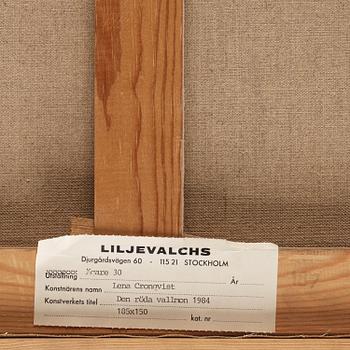
Signed Lena Cronqvist and dated 84. Oil and tempera on canvas 185 x 160 cm.
Provenance
Galerie Belle, Västerås.
Private Collection, Sweden.
Exhibitions
Galeri Belle, Carl-Johan Bolander, Västerås, exhibition no 297, 1987.
Liljevalchs konsthall, Stockholm, "Lena Cronqvist", 2 September - 16 October 1994, cat. no 33.
Literature
Prins Eugens Waldemarsudde, "Lena Cronqvist", exhibition catalog, 2020, cf "Den röda vallmon", 1984, cat. no 62.
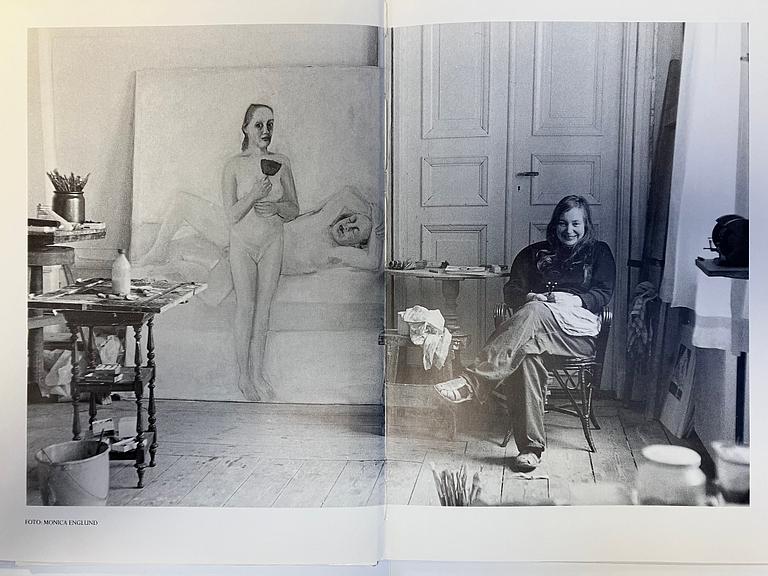
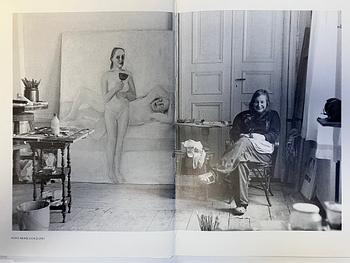
Photo Monica Englund, from the book "Lena Cronqvist" by Sune Nordgren - Monica Englund, Kalejdoskop, Åhus, 1990.
More information
Since her debut in 1965 at Galerie Pierre in Stockholm, Lena Cronqvist has fascinated and moved audiences with her powerful depictions of what it means to be human. Her paintings leave no one untouched. It is from her own experience and the private sphere that Lena Cronqvist draws her inexhaustible source of inspiration. As an artist, she has painted her way through the rollercoaster of life and, through her own experiences, has accessed something deeply human. We encounter our own dreams and fears in her works; we confront memories, hopes, and anxieties. At the same time, Cronqvist takes her place as part of a long artistic tradition, using her own impressions and experiences in dialogue with her artistic predecessors.
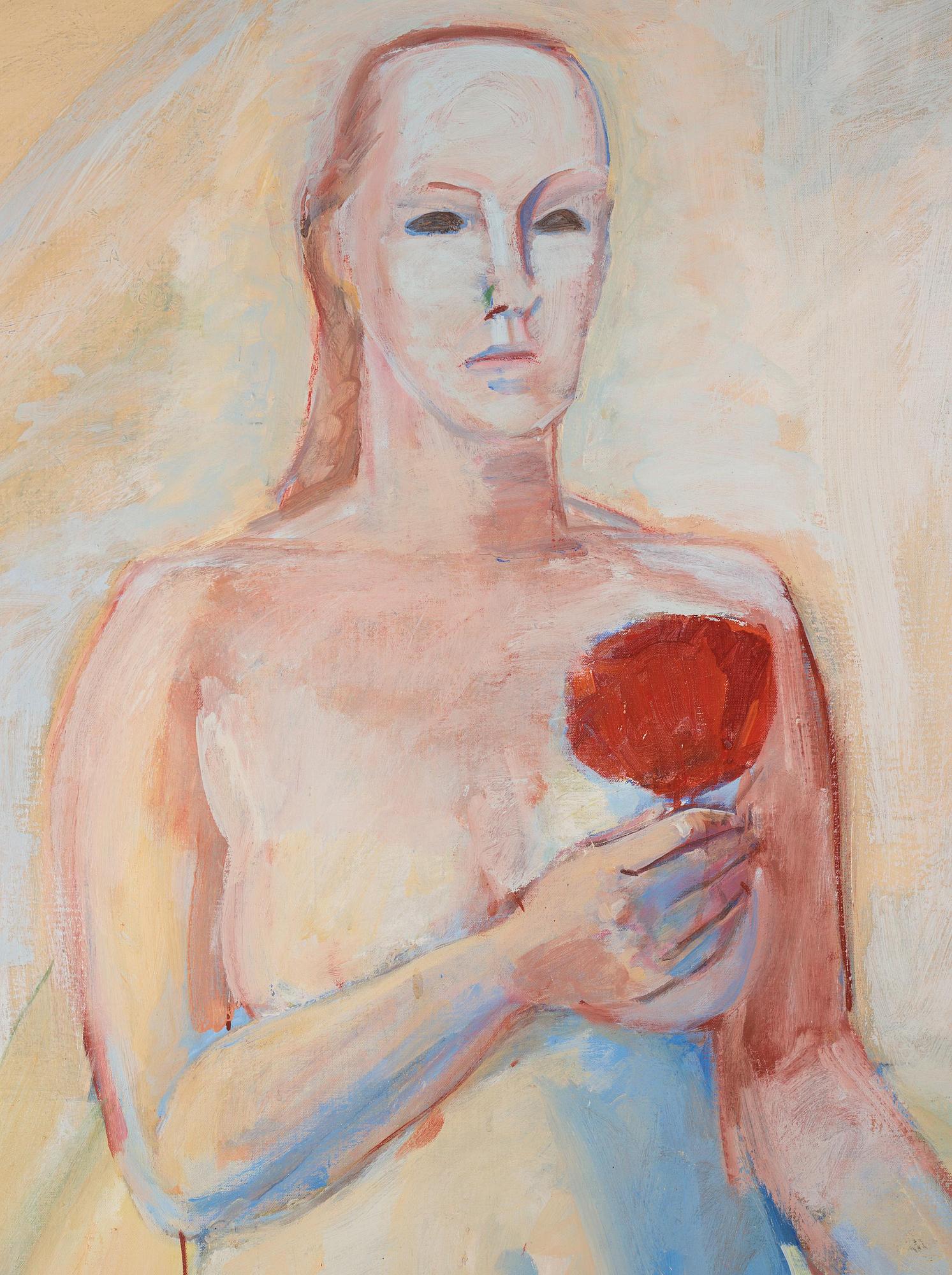
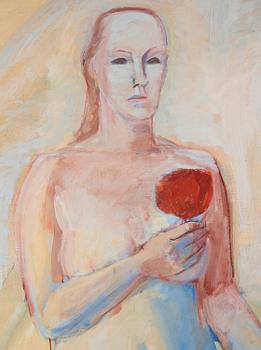
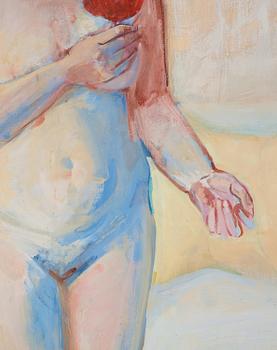
In "Den röda vallmon" (The Red Poppy), the couple's relationship and the complicated power dynamics that can unfold in the encounter between man and woman are depicted. A man lies stretched out on a bed, with one eye open, while in front of the bed stands a naked woman, seemingly completely unperturbed. Her pose is proud and rigid, and her expression inscrutable. The entire scene is bathed in a cold, winter-faded milky white light that blurs the outlines. As the only contrast, the petals of the giant poppy that the woman holds in her hand glow blood-red. The symbolism is clear. The poppy has, historically and in our time, been associated with the remembrance of loss, memories, comfort, and hope. Cronqvist invites the viewer to become a spectator to the silent chamber play that unfolds. The artist explores this theme time and again throughout the year of 1984.
In another version of the motif, with the same title, exhibited at the Royal Academy of Fine Arts and depicted in literature, the power balance between the couple has shifted. The man sleeps undisturbed with his hands behind his head. In front of him stands the woman, holding the fragile flower carefully in her hand. Her face is open, and her gaze is pleading and contemplative. A third composition, "Olympus," evokes thoughts of Édouard Manet's scandalous Olympia from 1864. The playing field has once again changed, and the drama is heightened by the fact that the artist has painted the scene on a checkered floor.
Sune Nordgren writes: “Lena Cronqvist sees herself as part of a long artistic tradition. She freely draws from her vast reservoir of visual impressions and establishes dialogues with her predecessors. Epochs and styles, movements and -isms do not exist for a pioneering artist. They are the tools of art historians to grapple with the chaos that is the primary inspiration for many artists, an inexhaustible source with constant inflows.”
More about Lena Cronqvist
Lena Cronqvist was one of Sweden’s most significant and influential artists, with a career spanning more than five decades. Born in Karlstad and educated at the Bristol School of Art in England as well as the Royal Institute of Art in Stockholm, she developed a style of painting where technical precision met intense emotional depth. Through her raw and emotionally charged imagery, she explored the paradoxes of motherhood, the shadows of childhood, and the relentless flow of time. Inspired by modernism and Edvard Munch, she transformed the personal into universal stories filled with deep psychological presence and power. As a painter, printmaker, and sculptor, she moved effortlessly between artistic forms, with each work marked by strong emotion and meticulous craftsmanship. Her interpretation of Jan van Eyck’s "The Arnolfini Portrait" in "Trolovningen"(1974/75) became a milestone when it sold at Bukowski's auction Vår Contemporary 2016 for over 11 million SEK - the highest amount ever paid for a work by a living Swedish artist at the time. Lena Cronqvist’s art is a bold and powerful voice that continues to move, challenge, and inspire. Her legacy lives on - boundless and timeless - reminding us of art’s ability to reach into the depths of the human experience.
Read moreFor condition report contact specialist

Covered by droit de suite
Image rights
The artworks in this database are protected by copyright and may not be reproduced without the permission of the rights holders. The artworks are reproduced in this database with a license from Bildupphovsrätt.











Others have also viewed