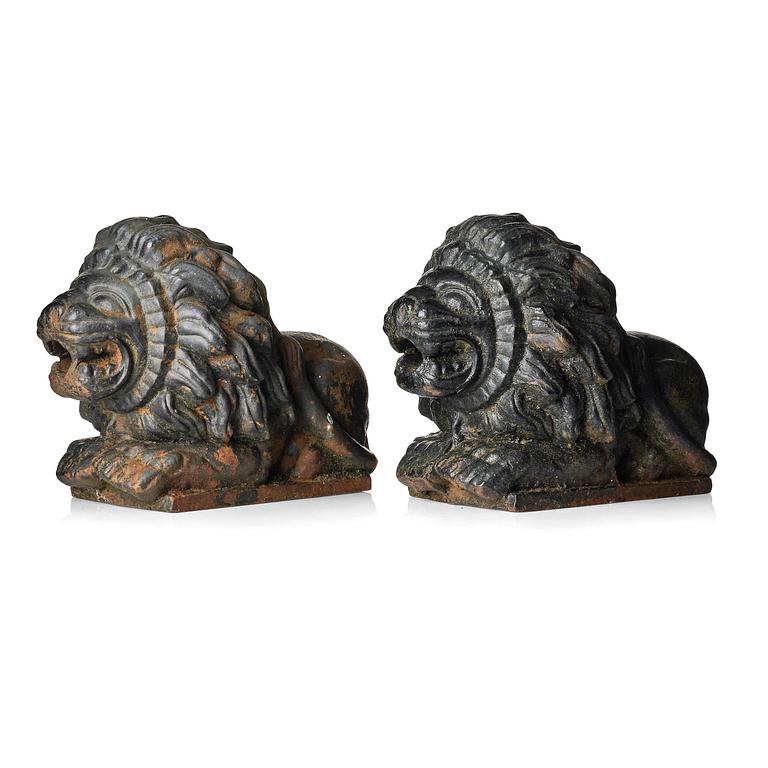
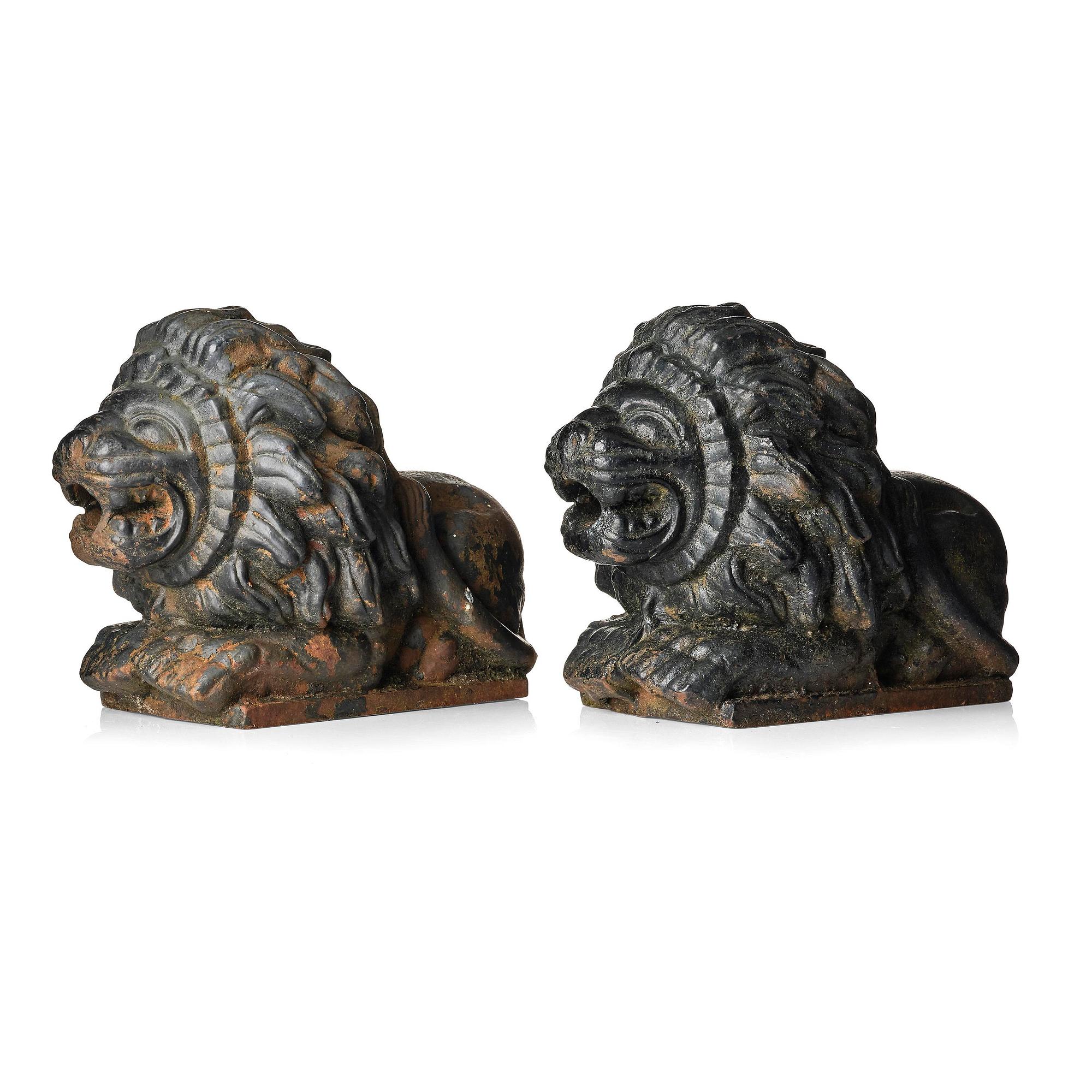
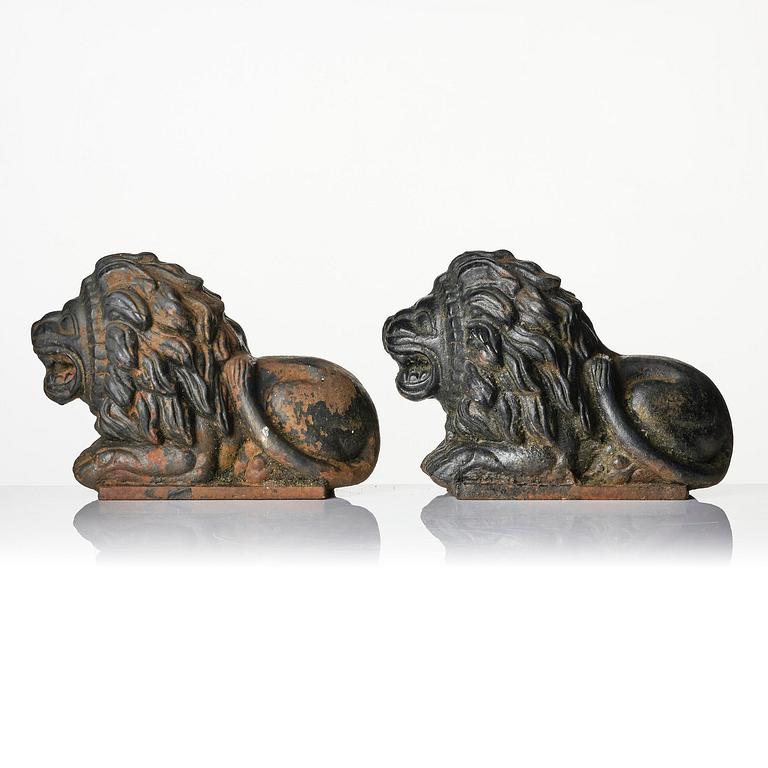
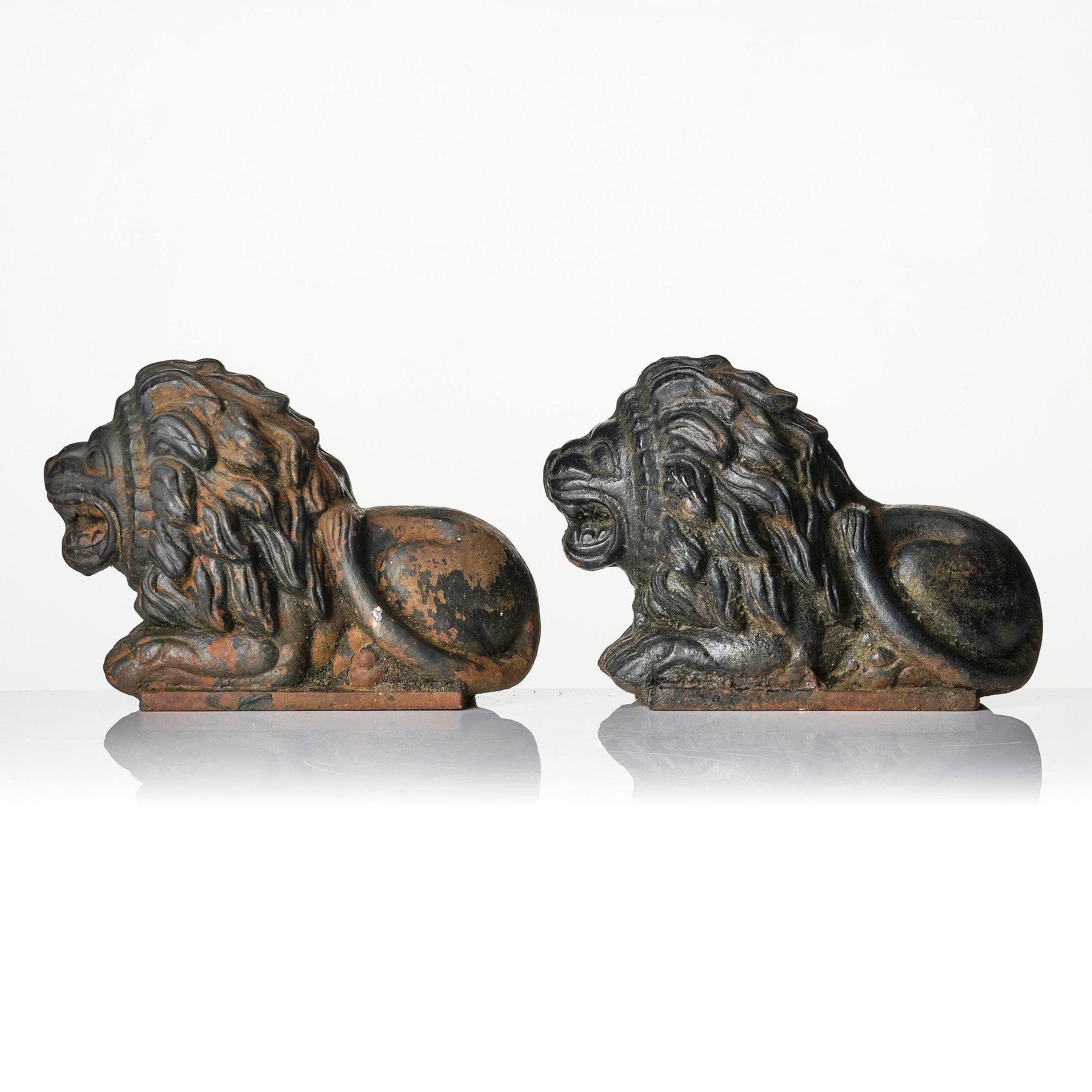
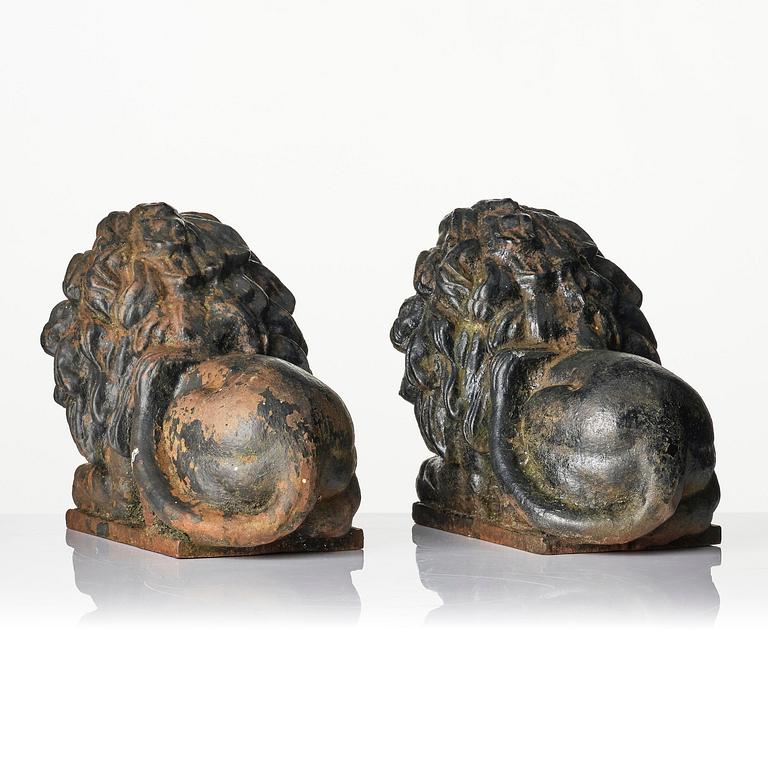
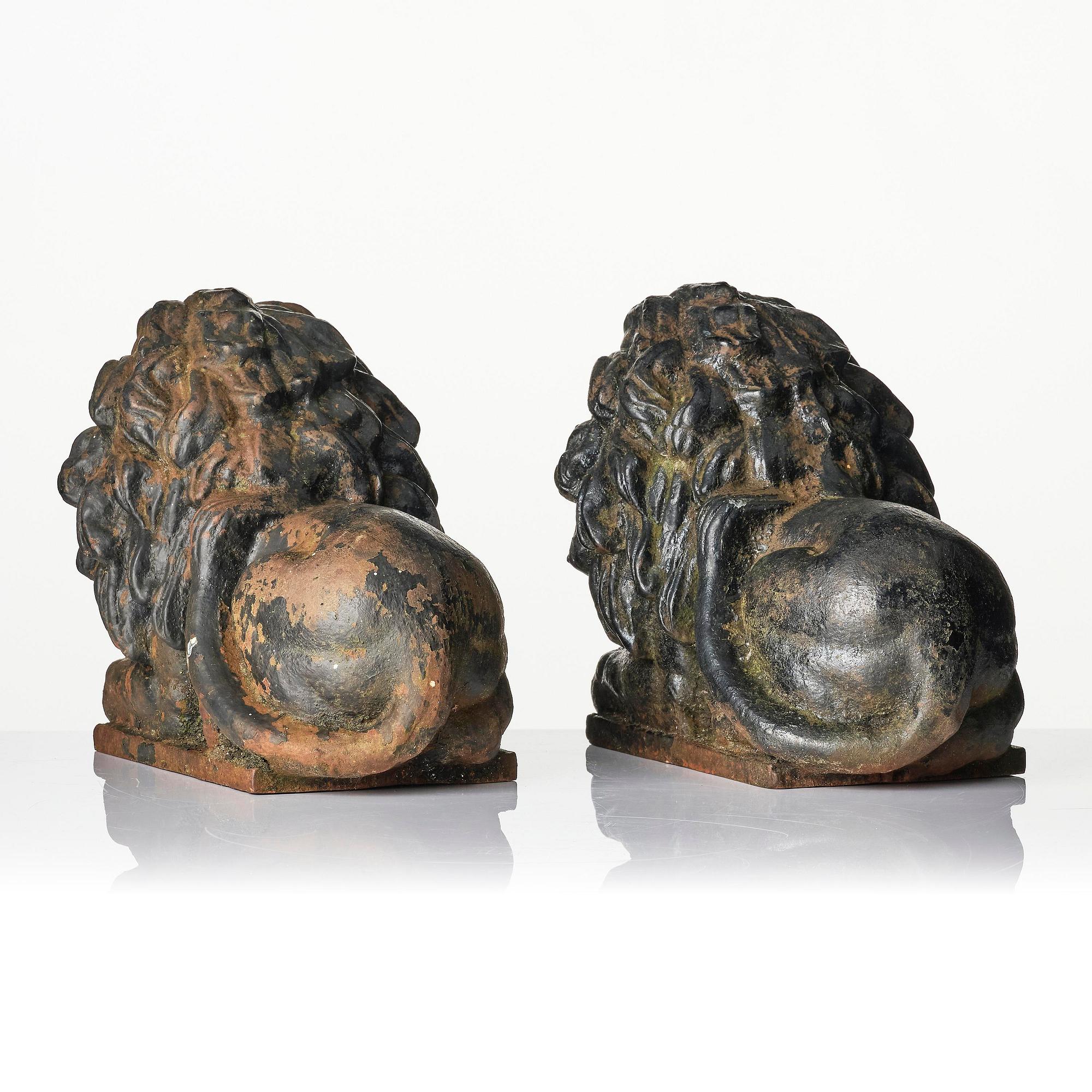
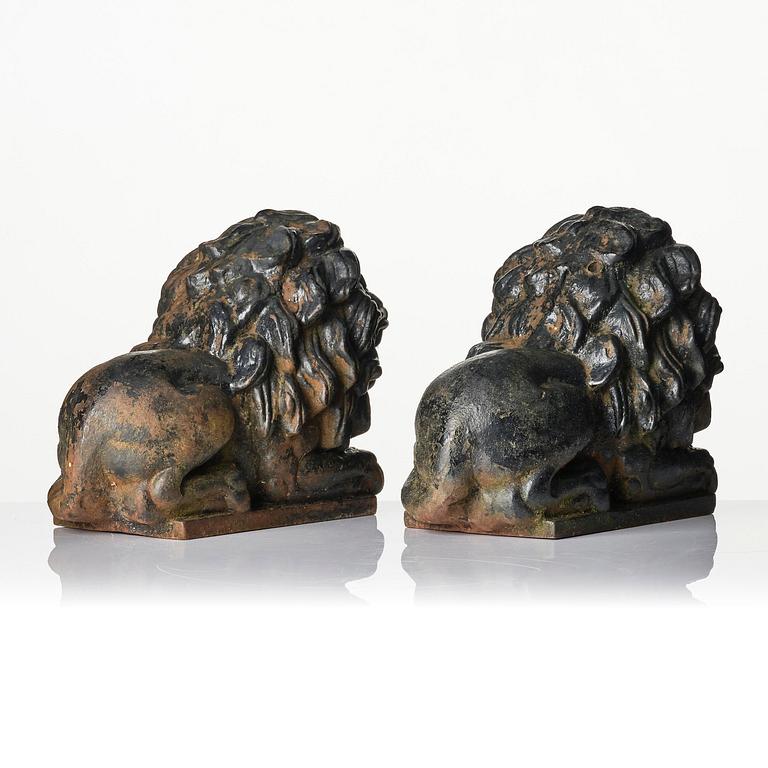
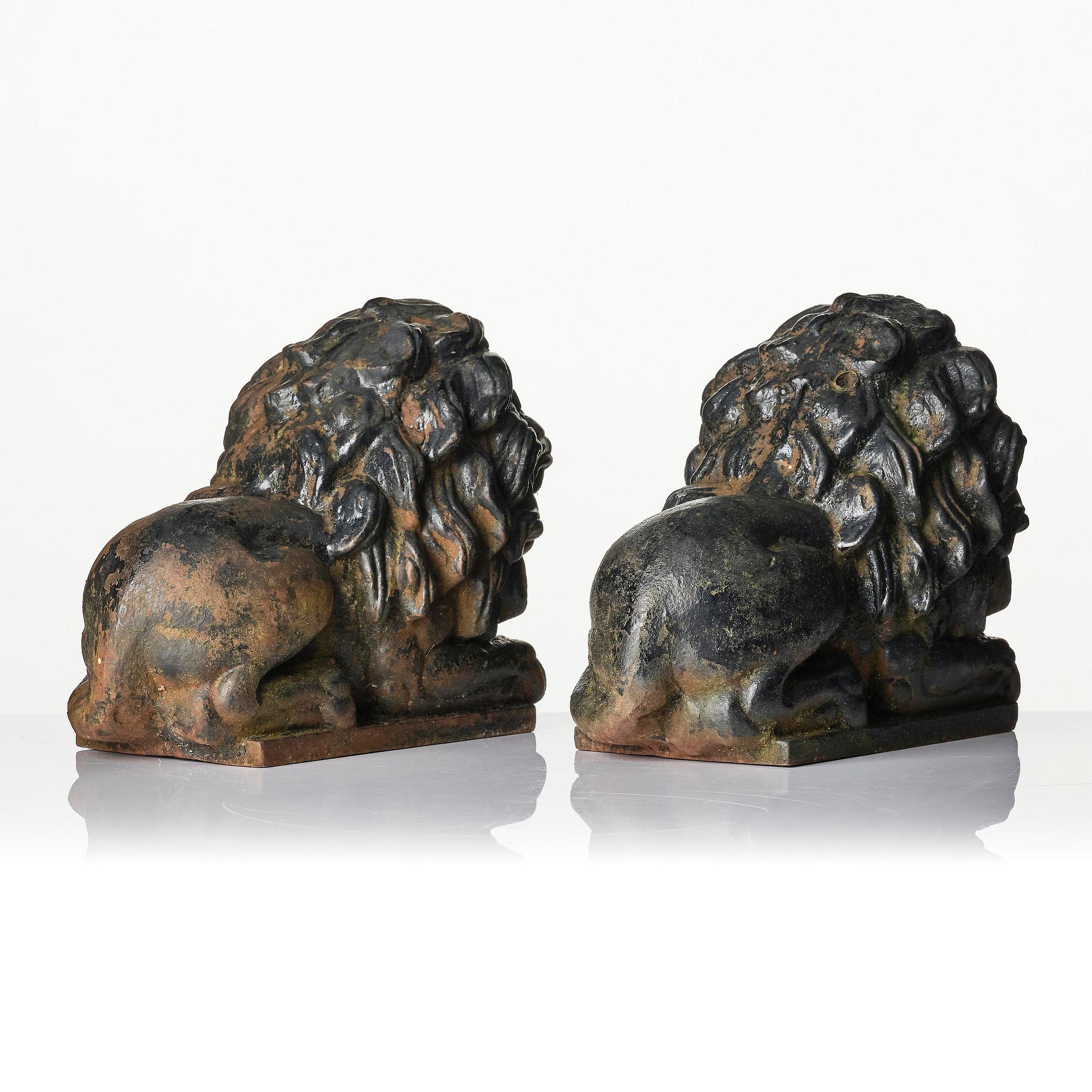
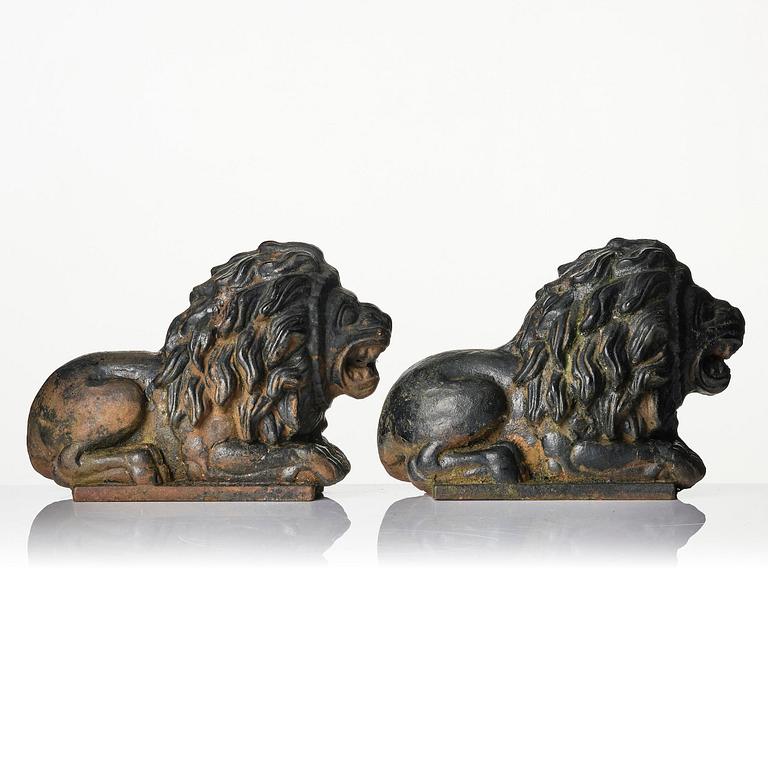
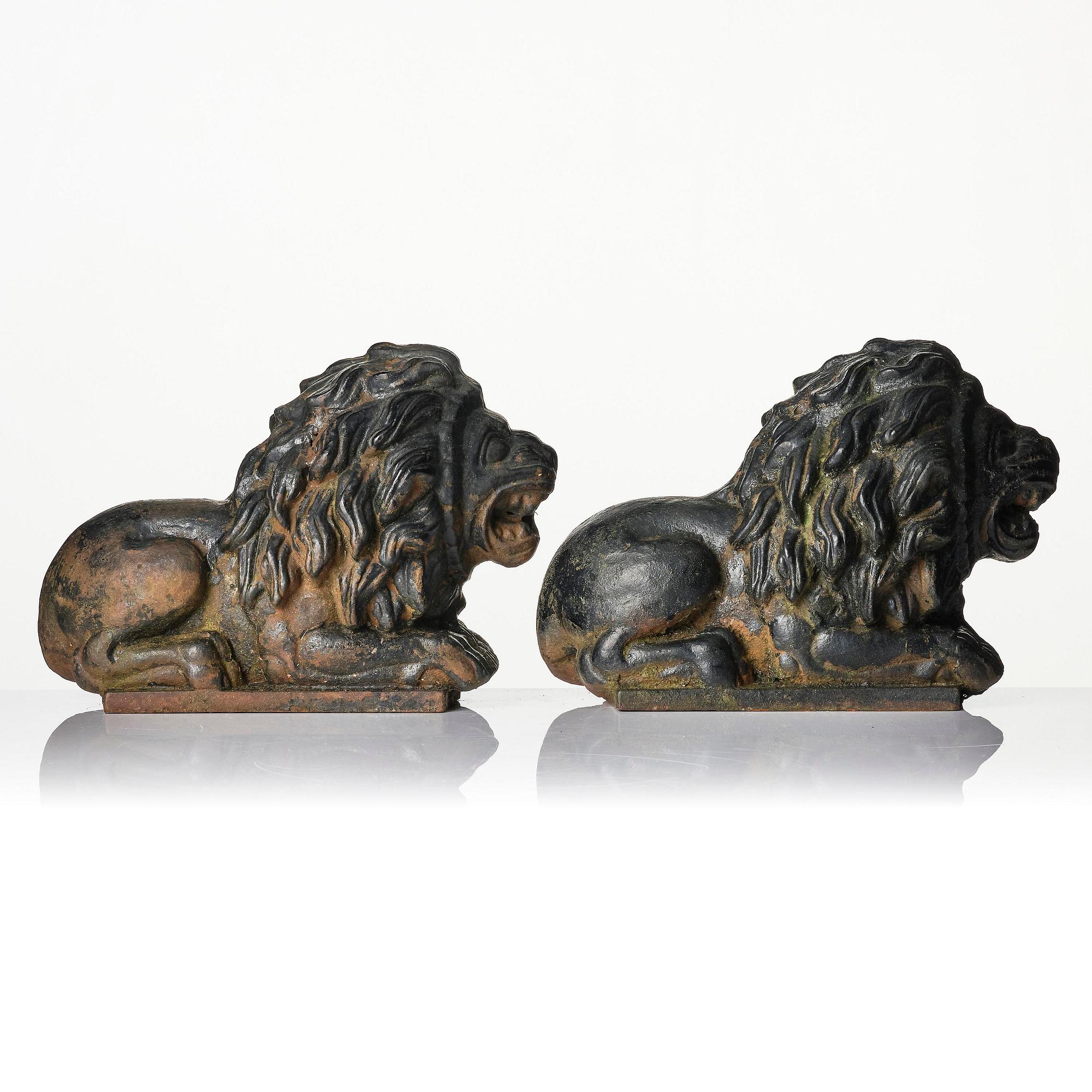
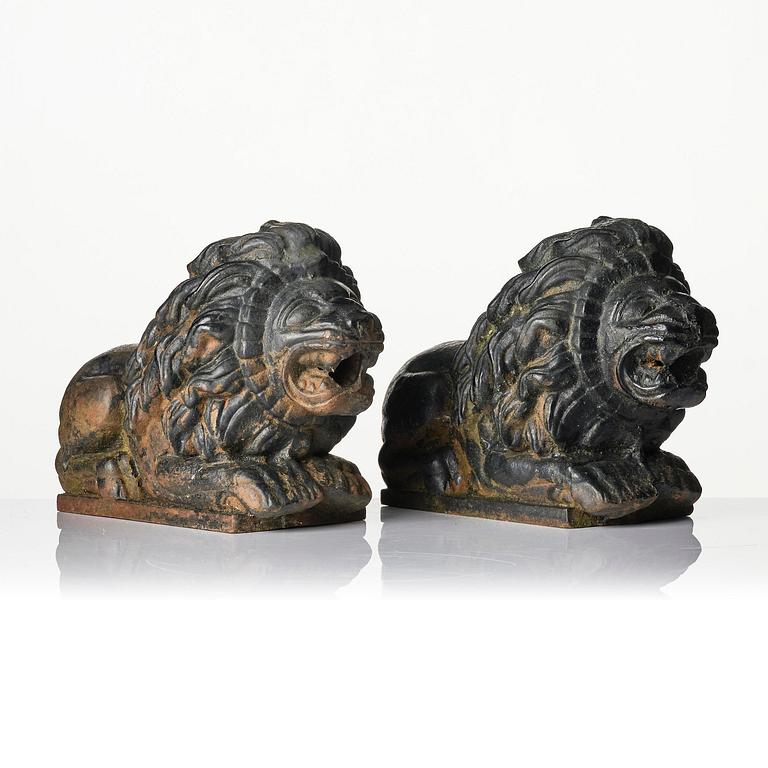
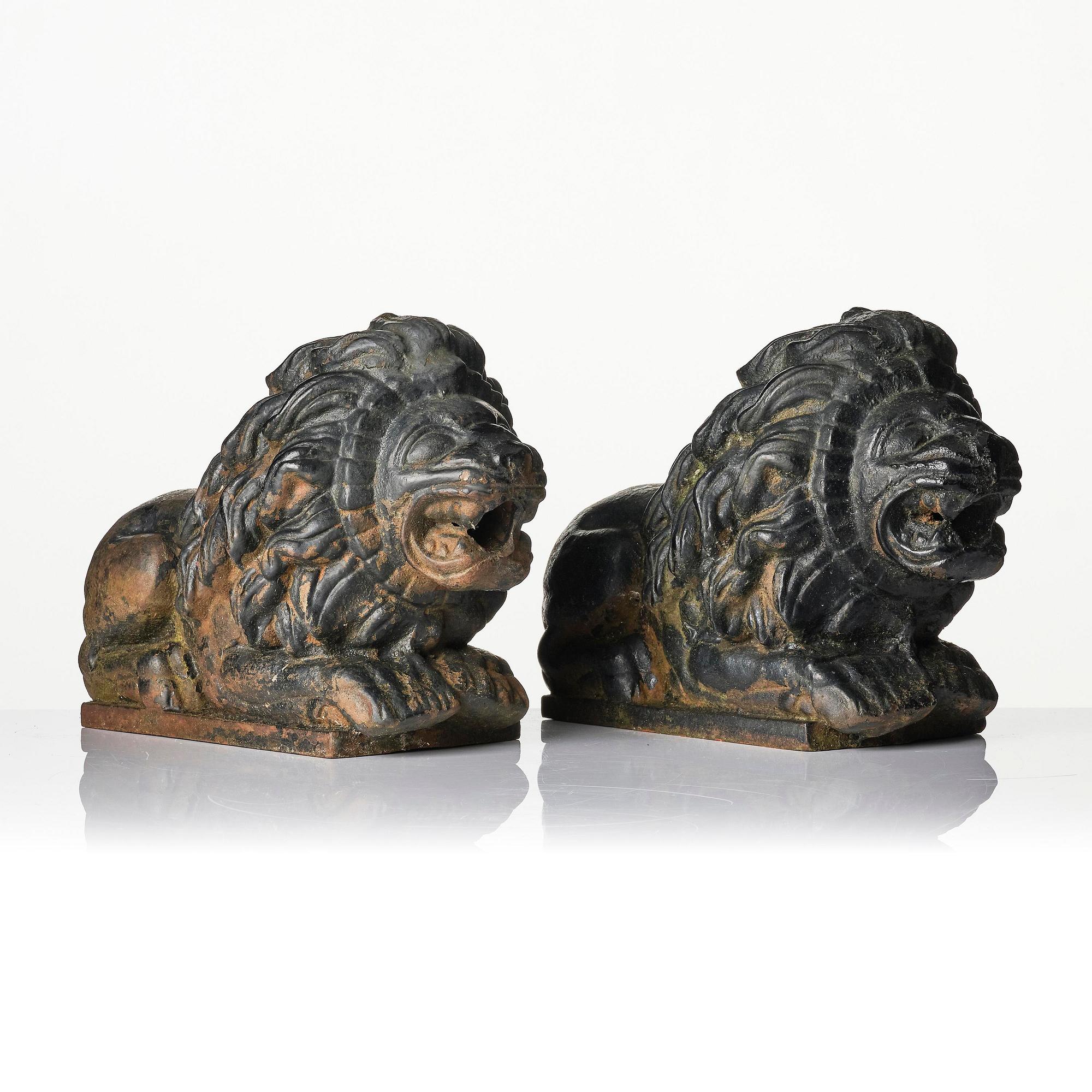
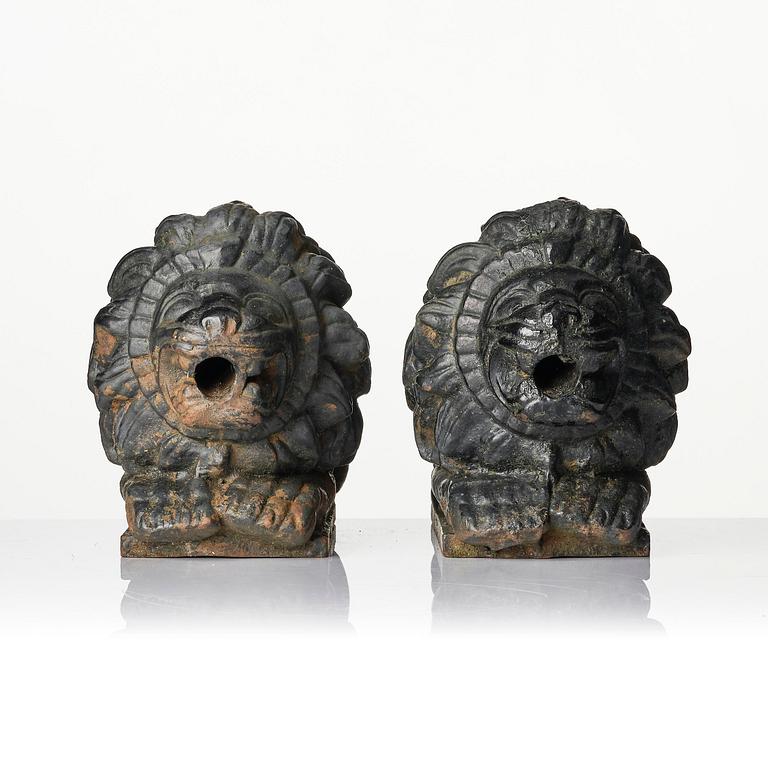
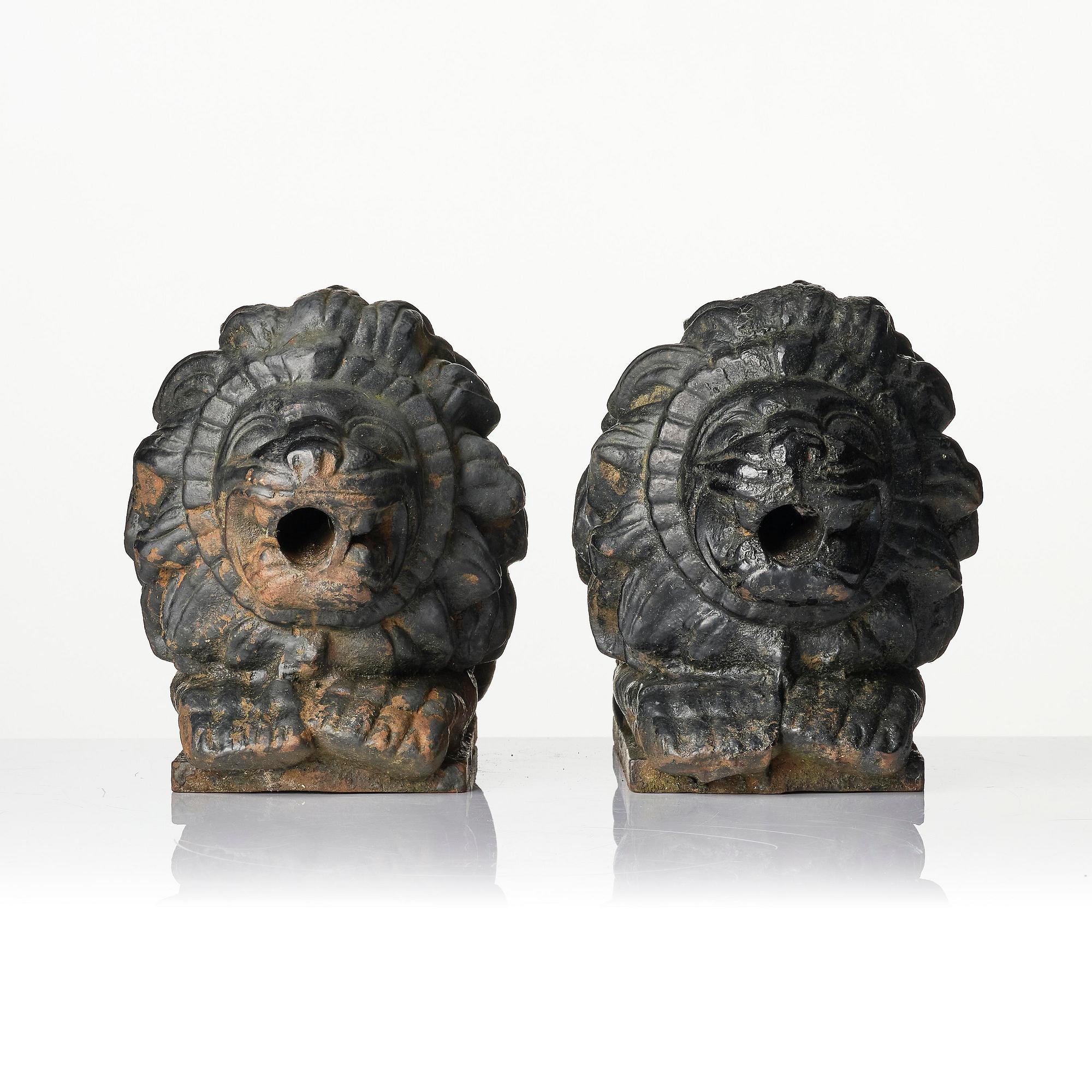
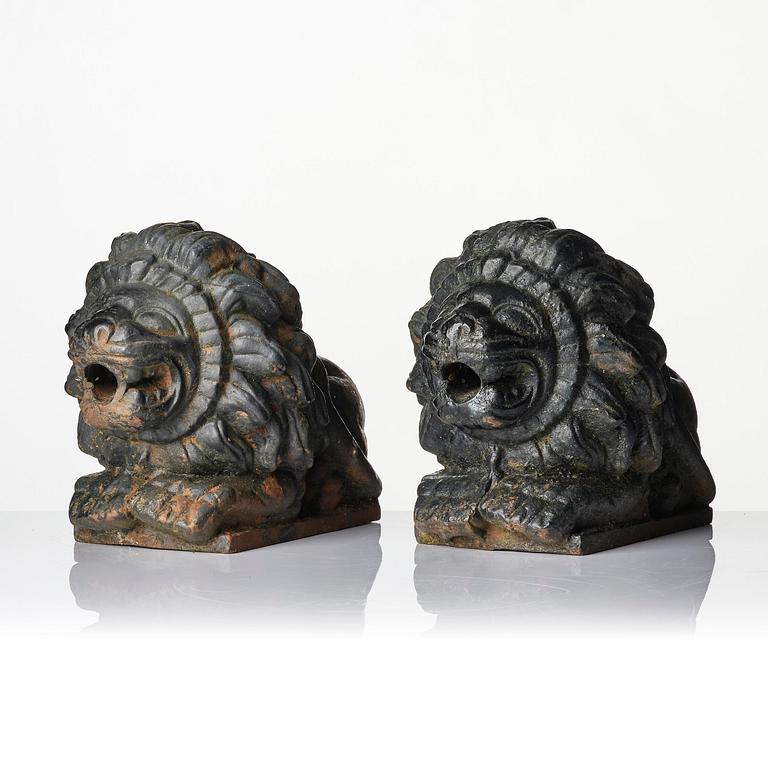
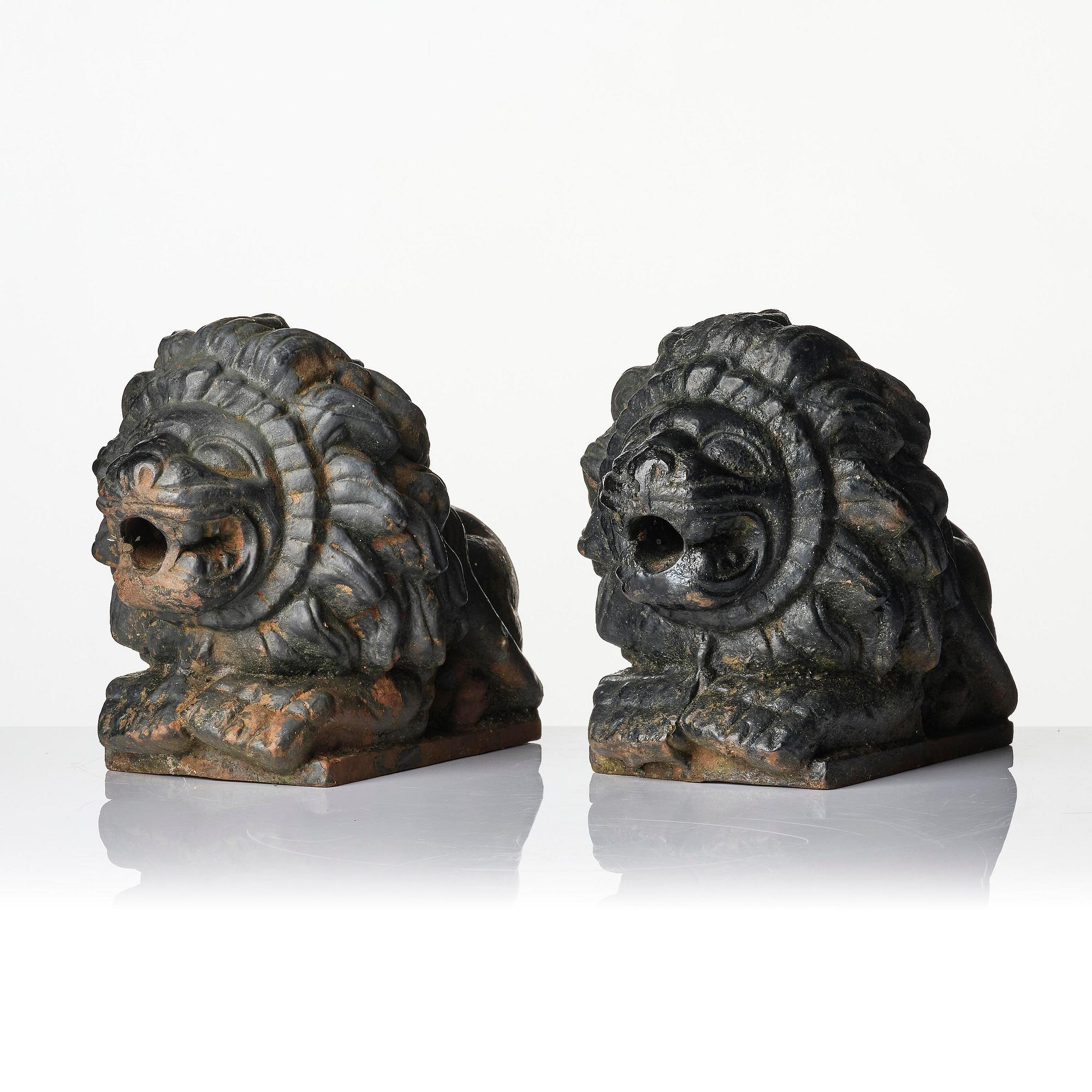
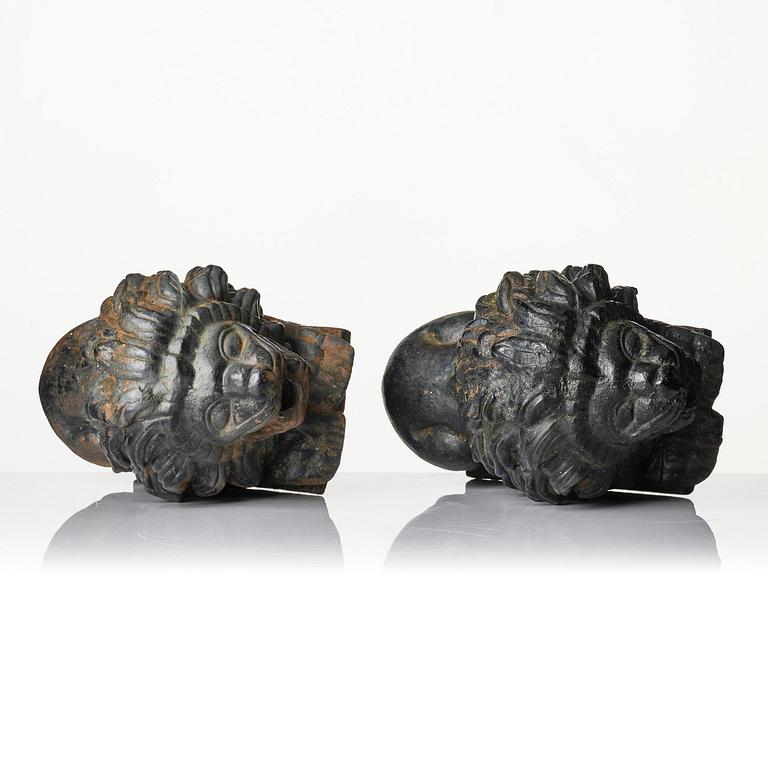
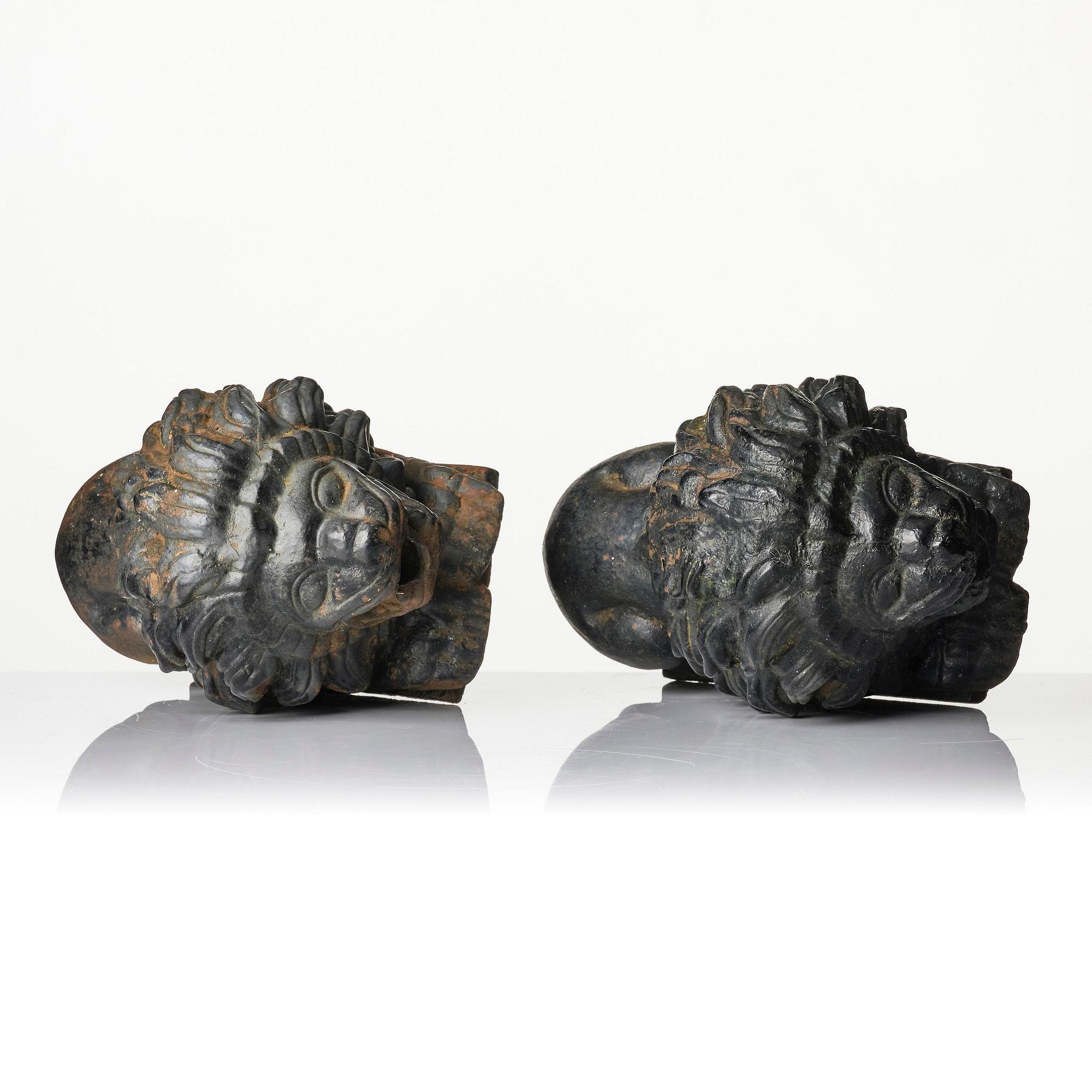
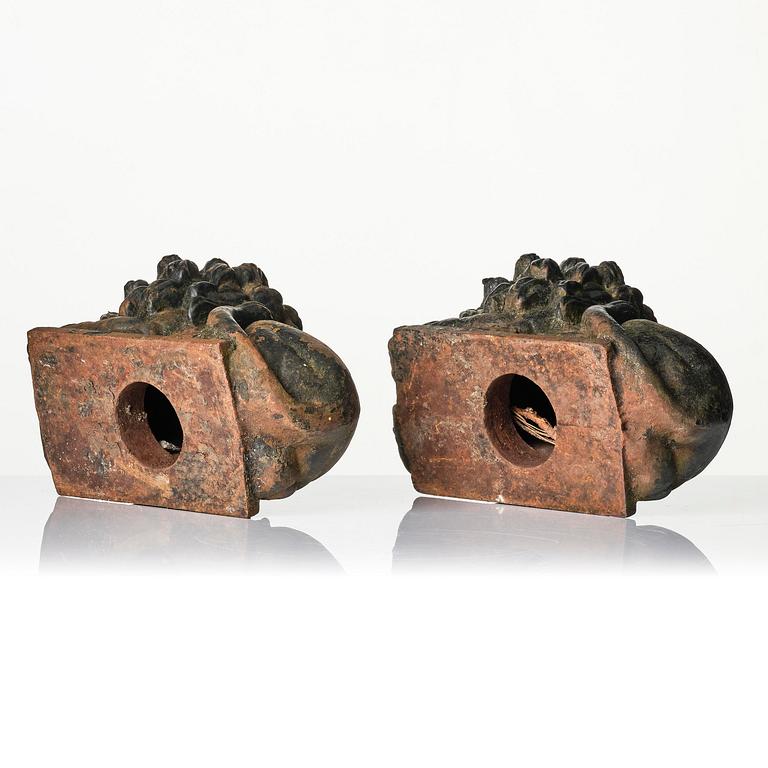
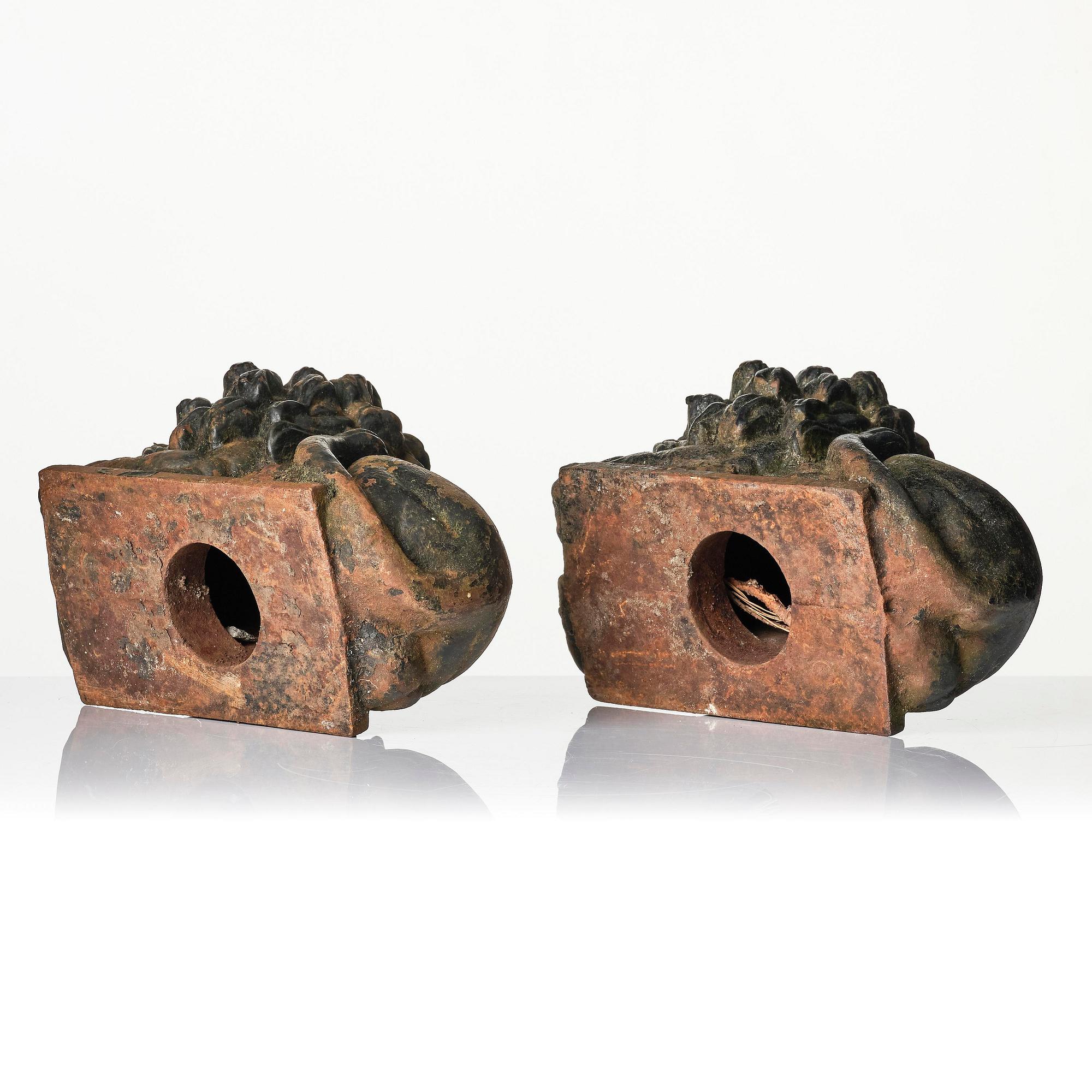
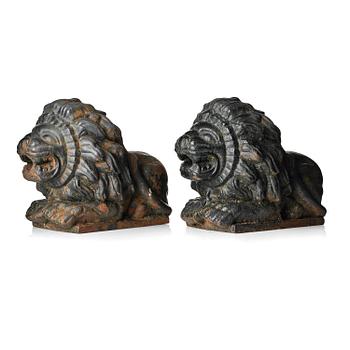
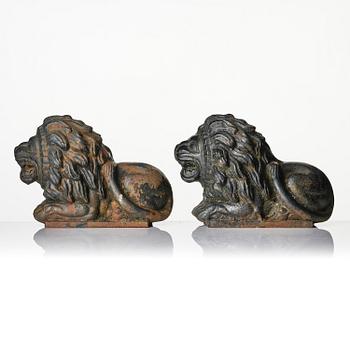
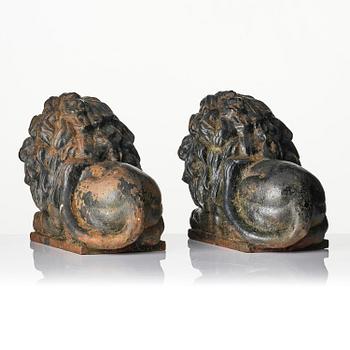
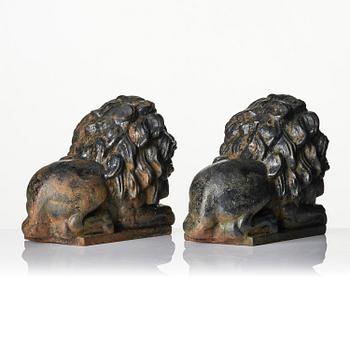
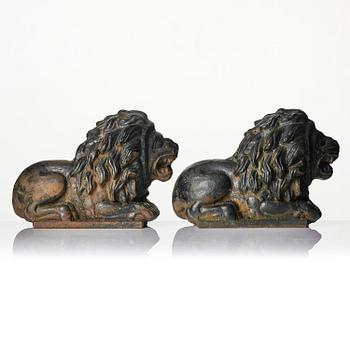
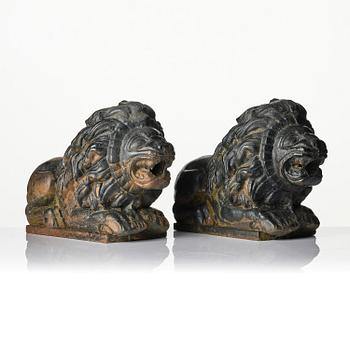
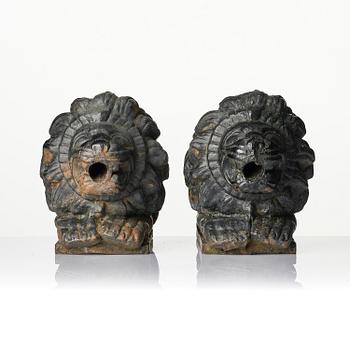
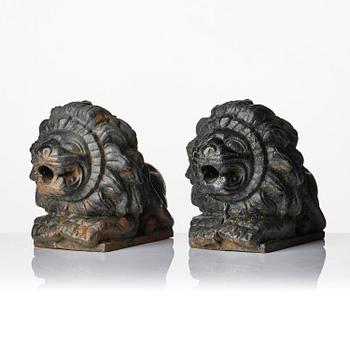
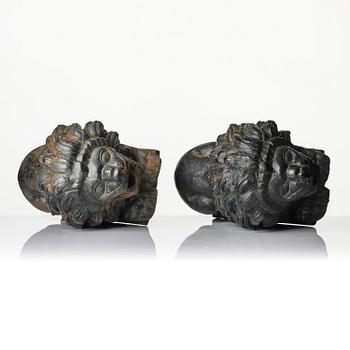
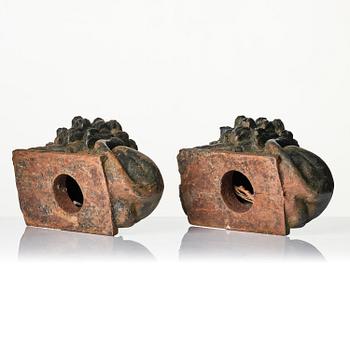
A pair of cast iron water spouts, Näfveqvarns bruk, Swedish Grace.
In the form of a reclining lion. L 30, W 17, H 22 cm.
Wear and weathered patina.
Provenance
Johan Fredrik (1891-1979) & Märta Beijer (1896-1997), Stockholm.
Bukowski Auktioner, Lilla Bukowskis S100, December 1998, cat. no. 638.
Acquired by the present owner family at the above sale.
Literature
Gösta Lilja, Bror Olsson & S. Arthur Svensson (eds.), "Svenskt Konstnärslexikon vol IV", 1961, the figures mentioned p. 410.
Marie Rehnberg, "Anna Petrus Skulptör och industrikonstnär", Arena 2009, see the water basin illustrated p. 90.
More information
During the work on Stockholm's Skogskyrkogården (The Woodland Cemetery), architects Gunnar Asplund and Sigurd Lewerentz had several artists join the project for the decoration. For Asplund's water basin, Anna Petrus designed a lion mask and a water spout shaped like a lion in her characteristic style.
More about Anna Petrus
Anna Petrus was a sculptor, industrial designer, and artist active in the early 20th century. She was born as Anna Petersson, the daughter of a professor of medicine and a countess, and adopted her surname while studying at the Royal Academy of Fine Arts. She inherited a modest fortune at the age of 11 when her mother passed away, which allowed her to pursue her education in London and travel to Italy and France.
Anna Petrus's major international breakthrough came with the Exposition Internationale des Arts Décoratifs et Industriels Modernes in Paris in 1925, where she showcased items in pewter and cast iron, in the Swedish Grace style. Pewter was considered an outdated material at the time, but its popularity grew as designers like Petrus recognised its advantages. In 1924, she began a collaboration with the then newly established Firma Svenskt Tenn. The lion became a recurring motif in Anna Petrus's work, both as sculptures and as stylised decorations.
Read moreFor condition report contact specialist

Others have also viewed