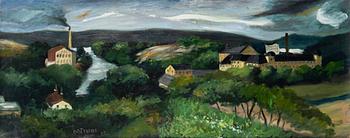
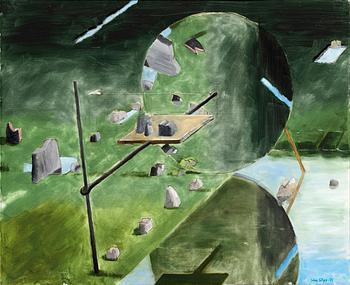
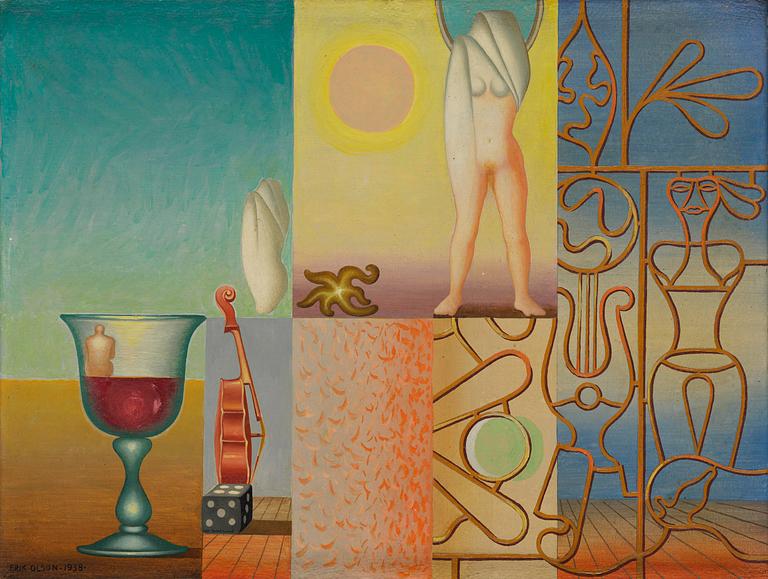
"Utblick-inblick"
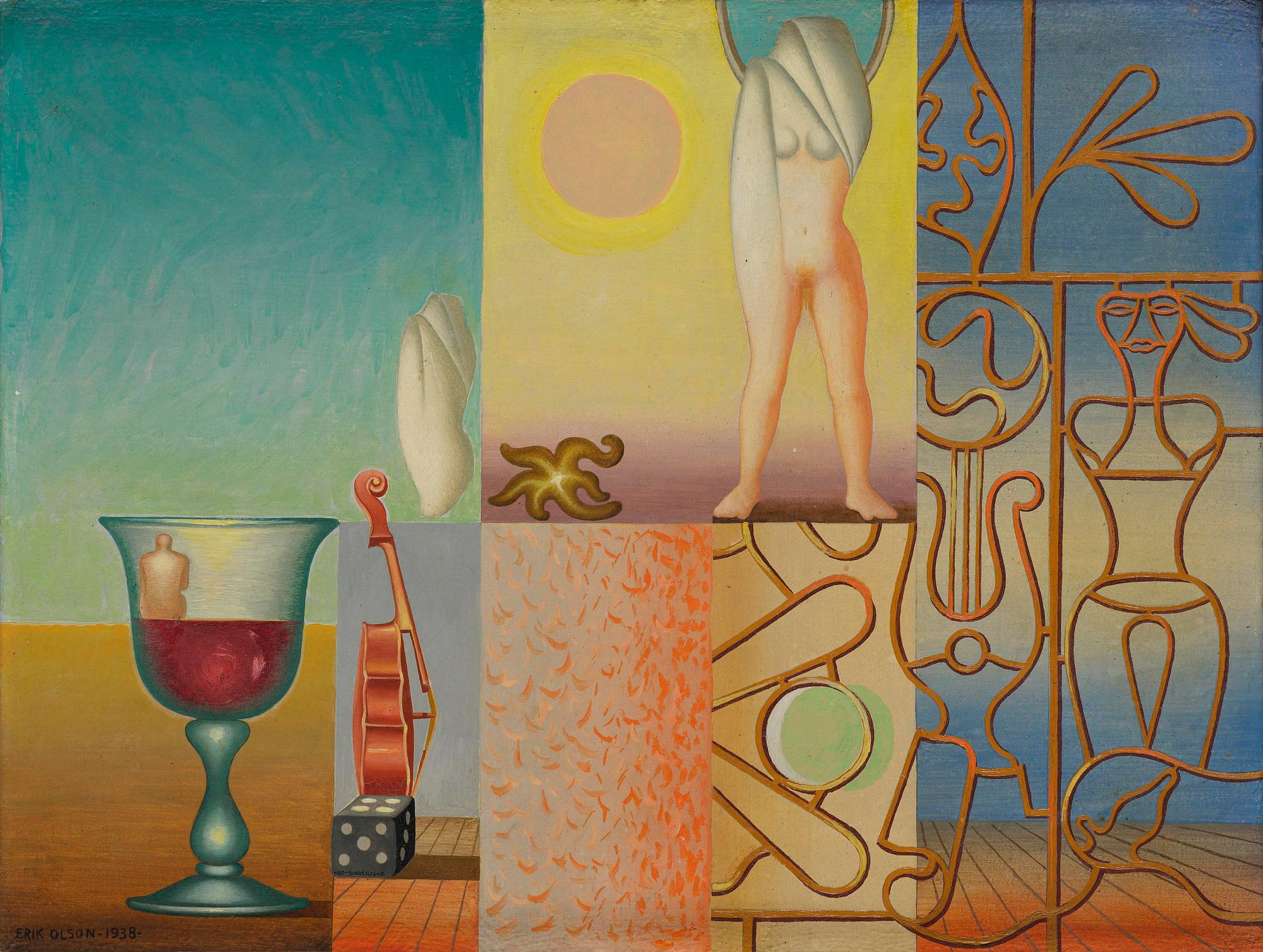
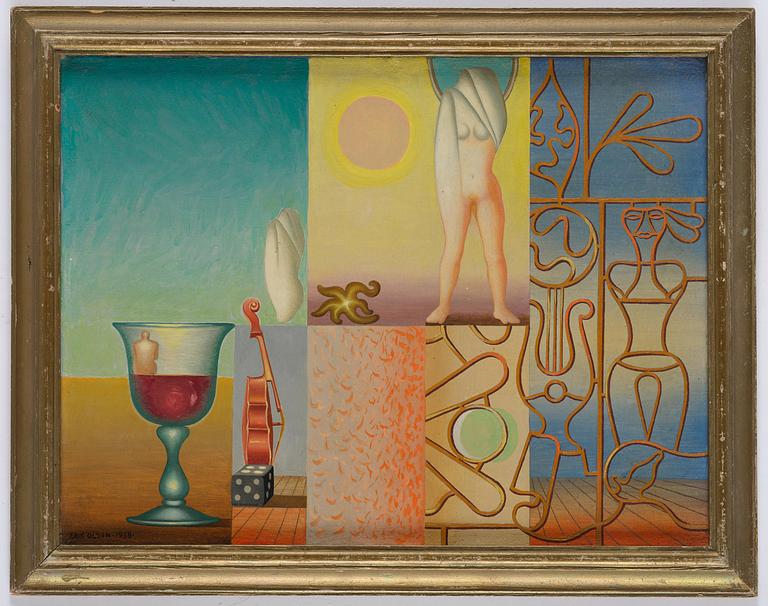
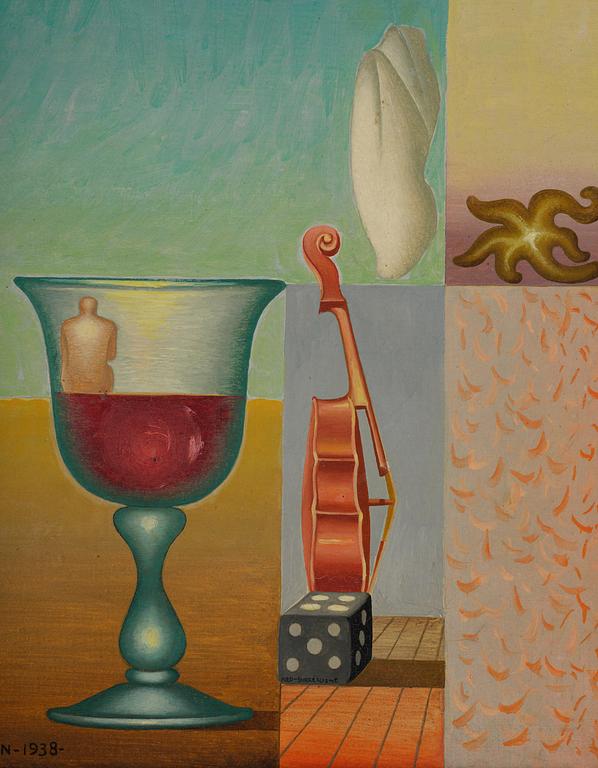
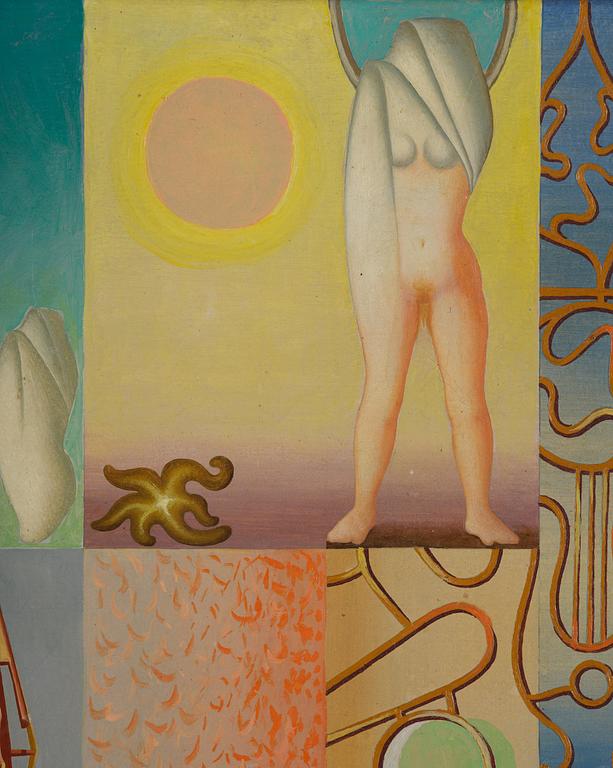
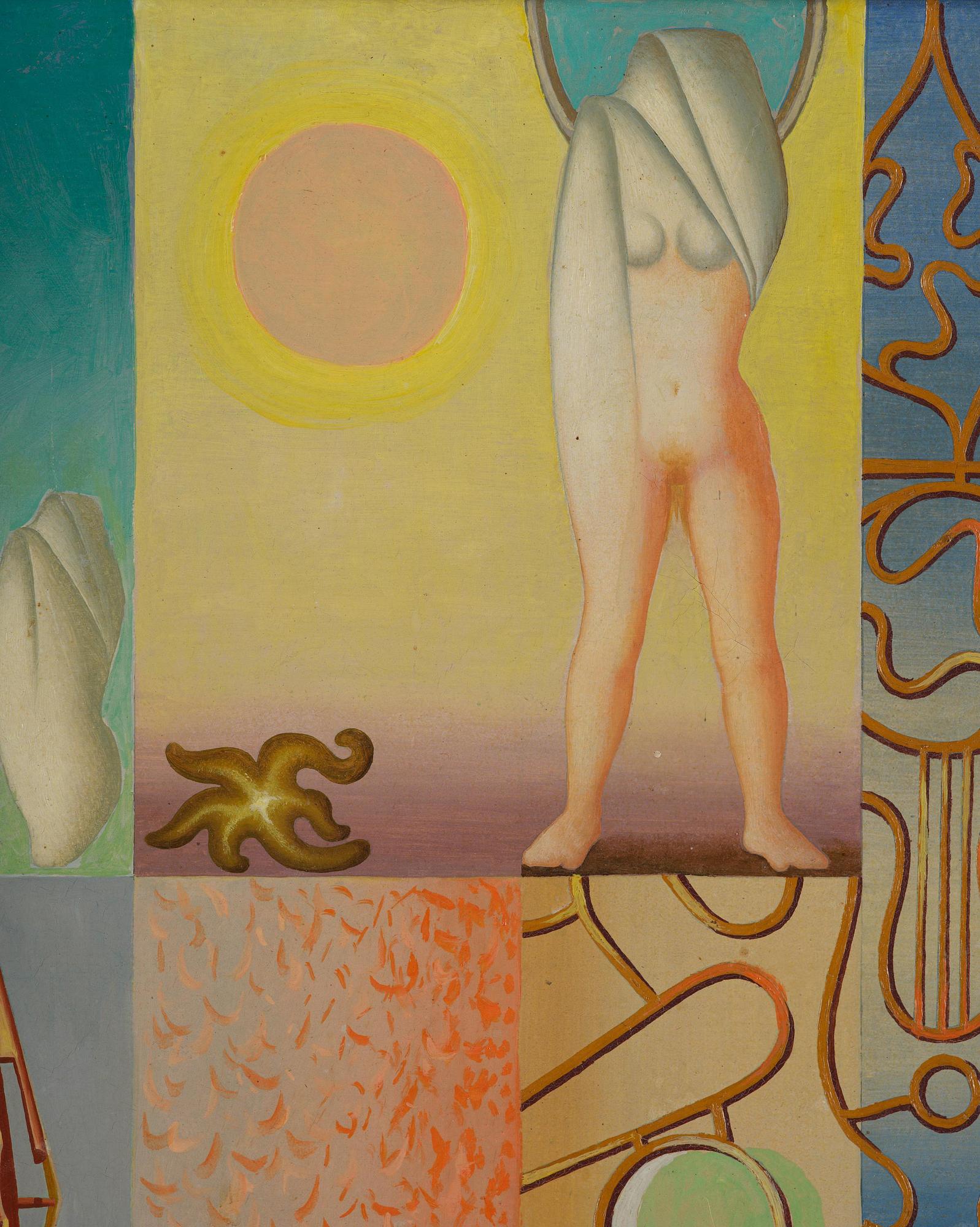
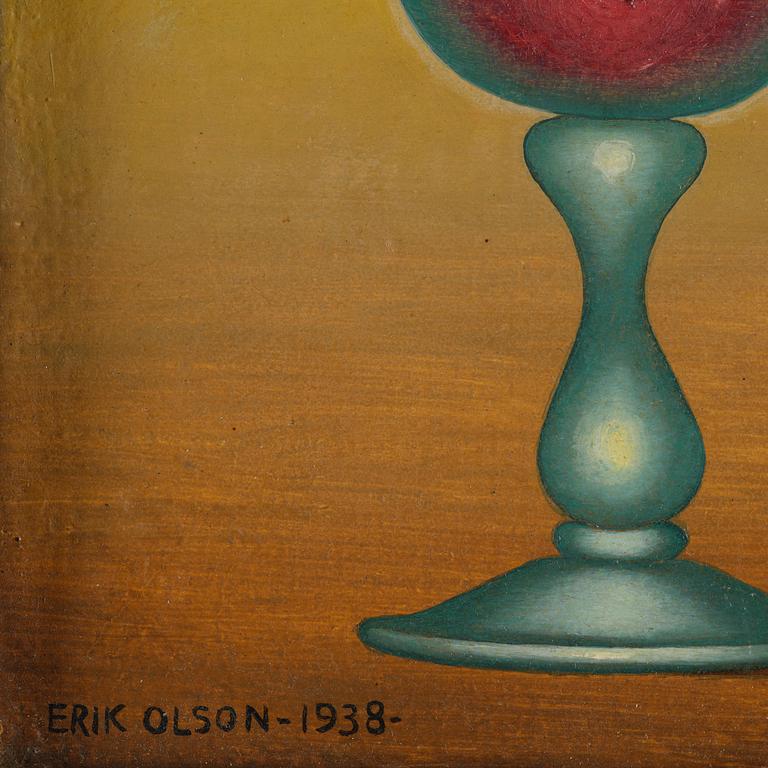
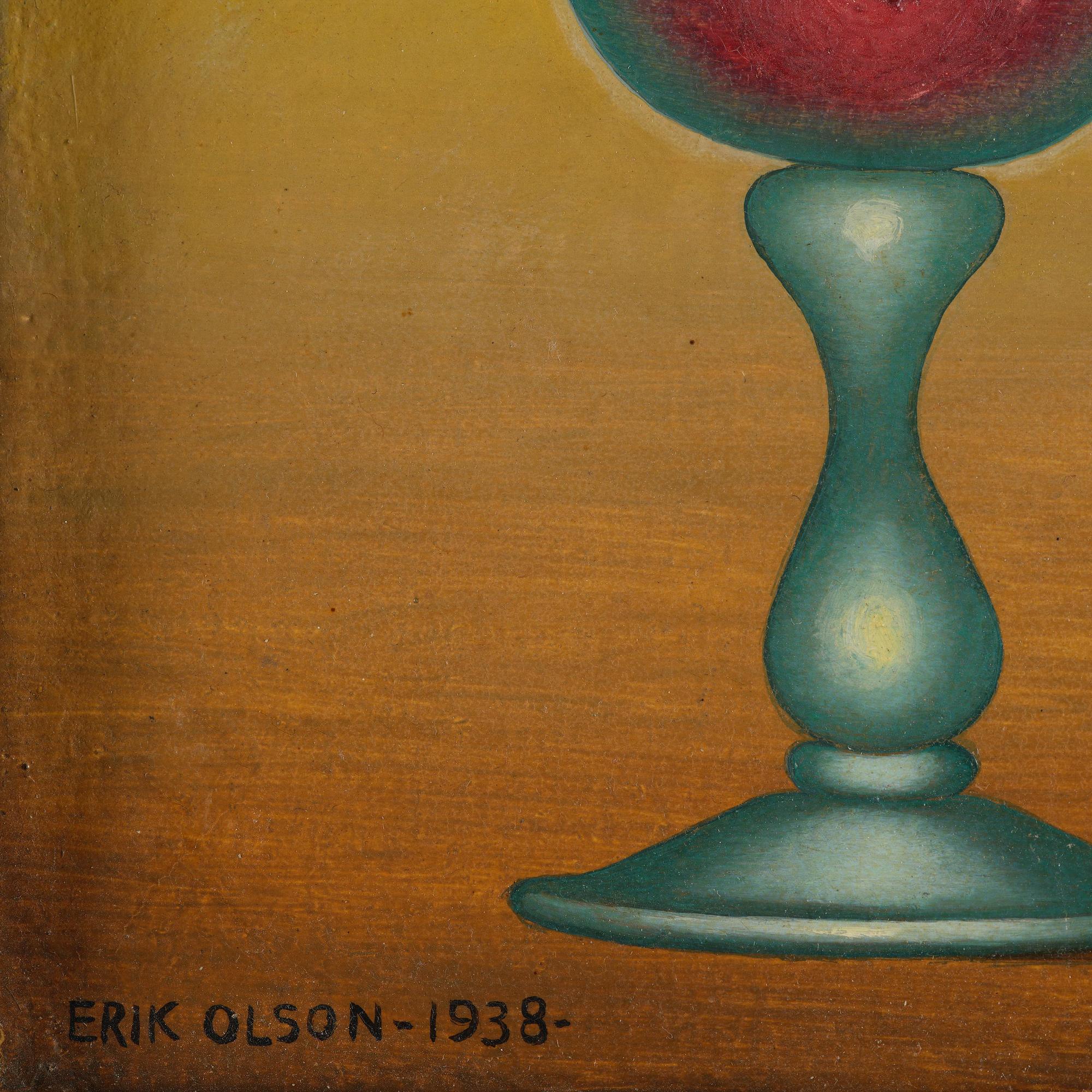
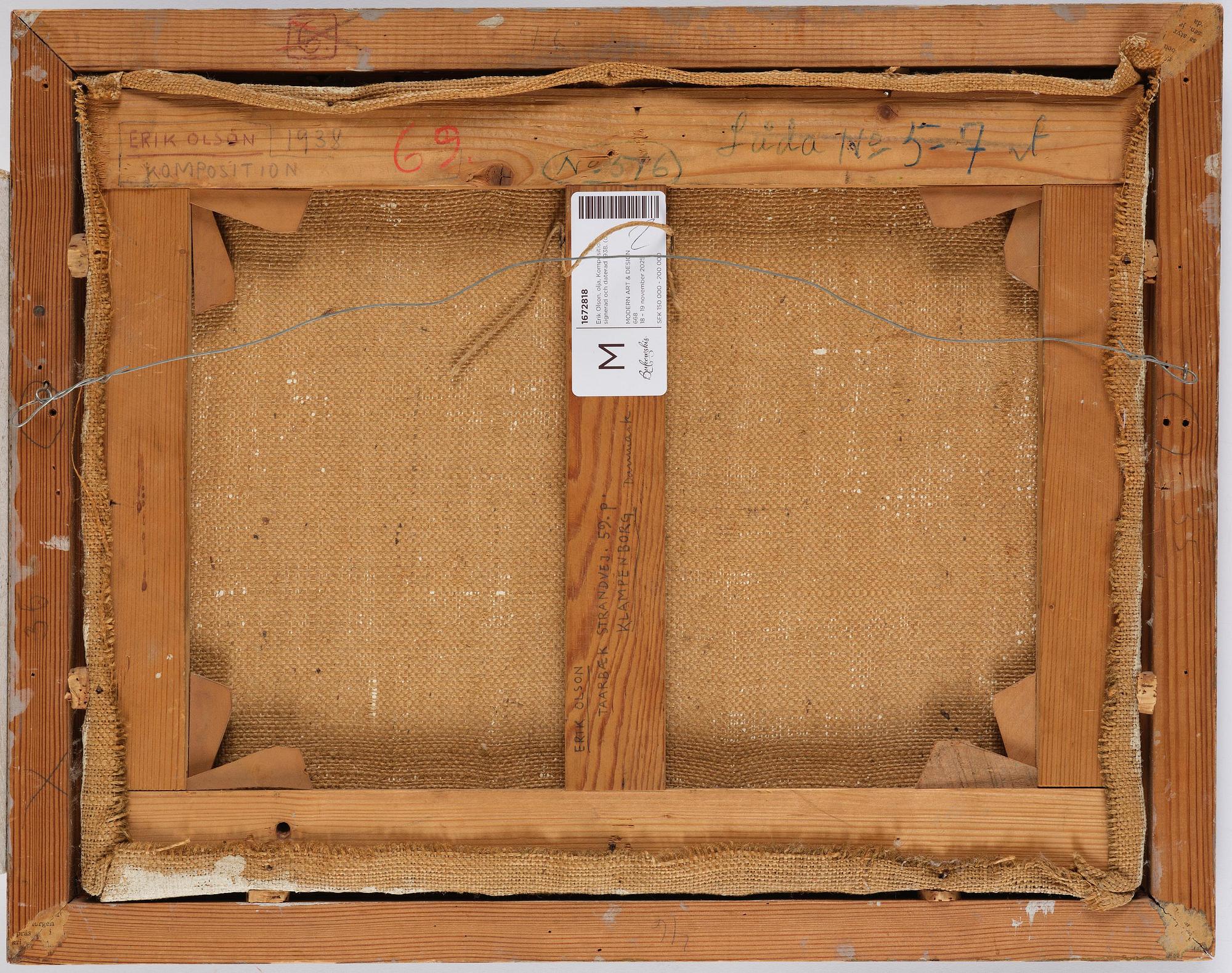
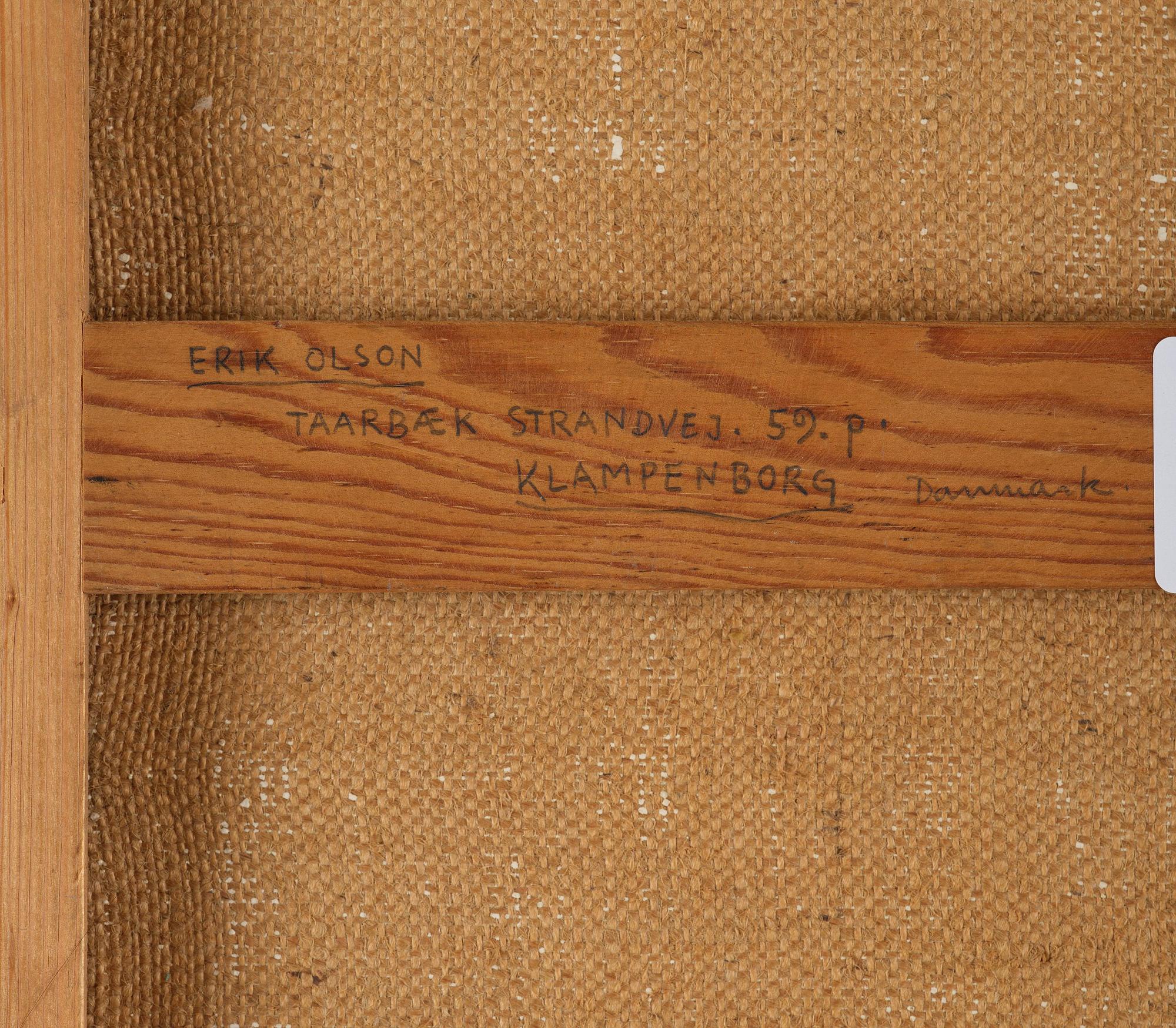
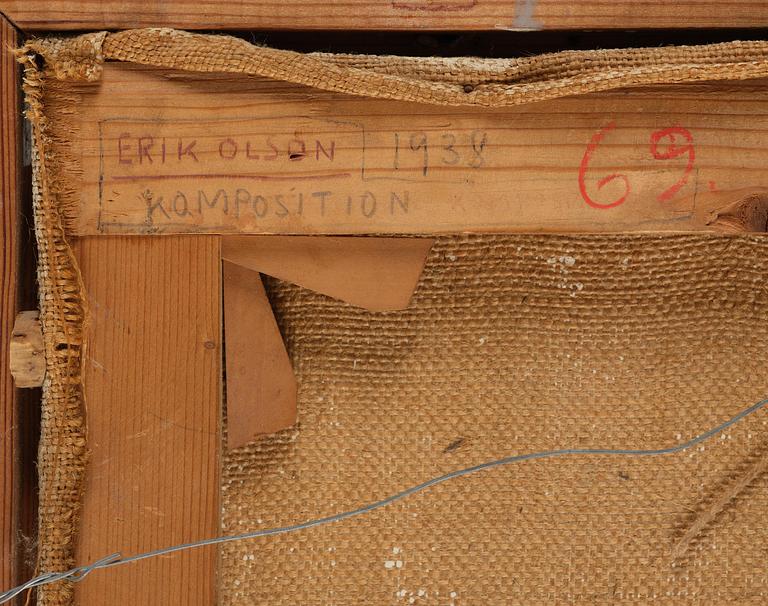
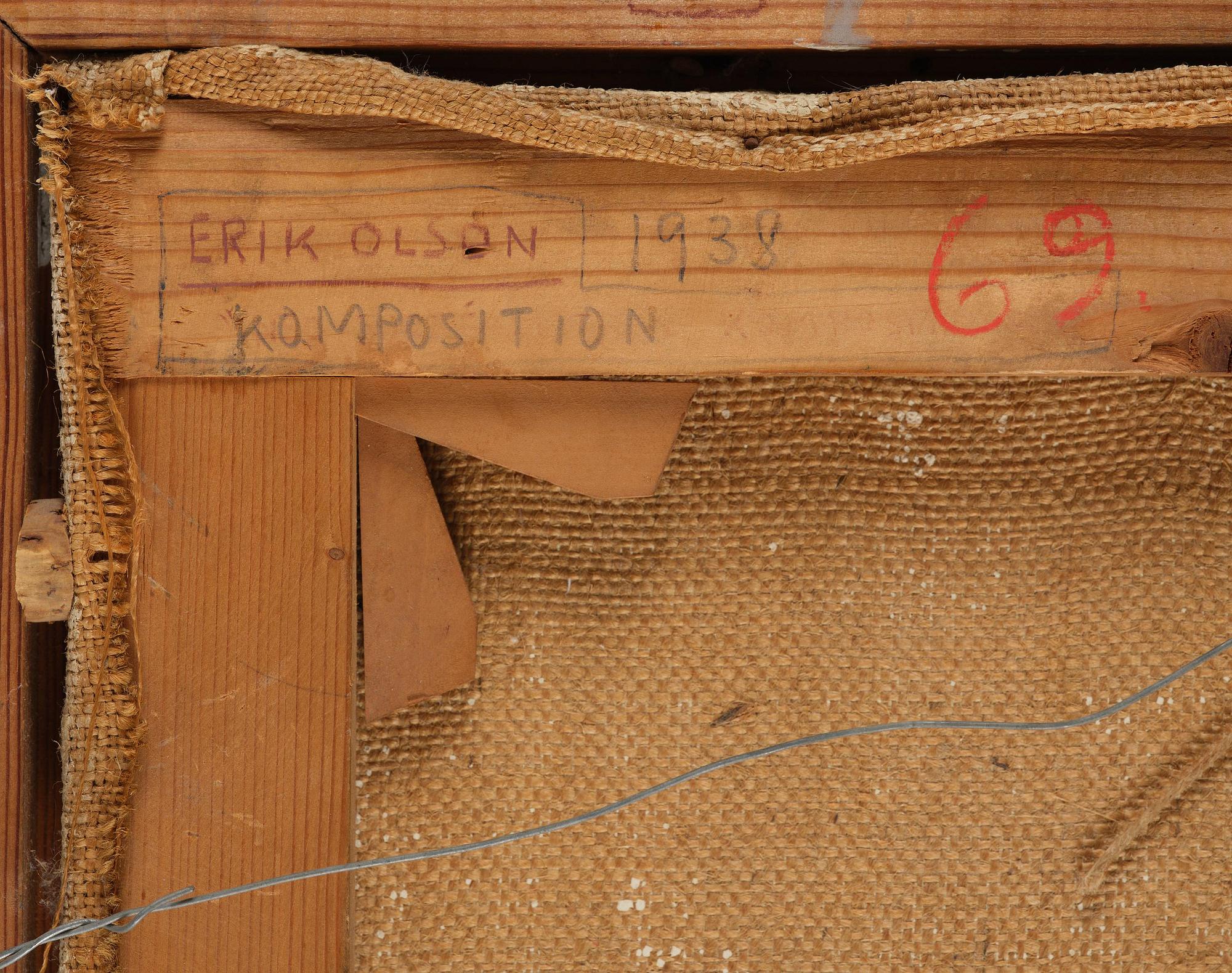
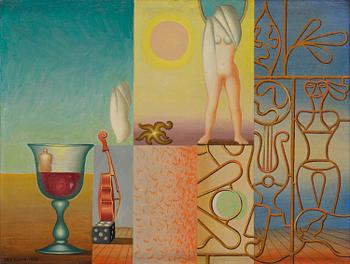
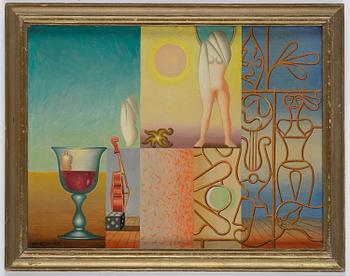
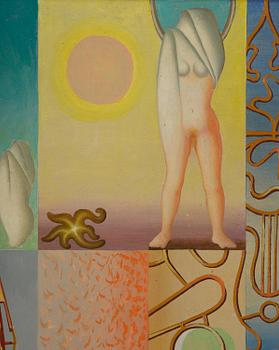
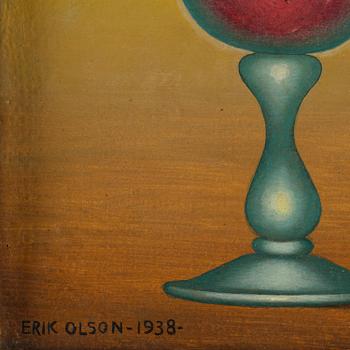
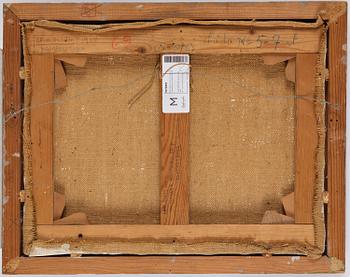
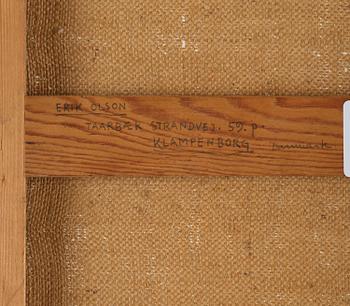
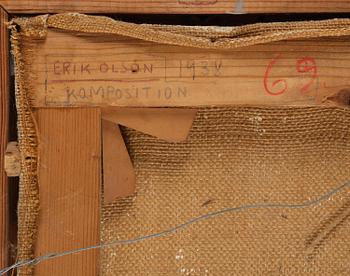
Signed Erik Olson and dated 1938. Canvas 35 x 46 cm.
Literature
Viveca Bosson, "Erik Olson - A Seeker's Journey", 2001, illustrated in black and white p. 221.
More information
During the 1930s, the political climate in Europe intensified. The rise of Nazism and Fascism cast long shadows over the continent. When Adolf Hitler came to power in Germany in 1933 and the Spanish Civil War broke out in 1936, all of Europe was marked by increasing unrest. Even in France, where the Swedish artist Erik Olson was active at the time, the atmosphere hardened following the violent far-right riots in Paris in 1934.
Like many artists, Olson seemed to sense the approaching conflict. The tense spirit of the times can often be discerned in the artistic expressions of the period, whether consciously or unconsciously. The growing war anxiety also became a decisive factor when Olson decided to leave Paris with his family. In the summer of 1935, they returned to the Nordic countries.
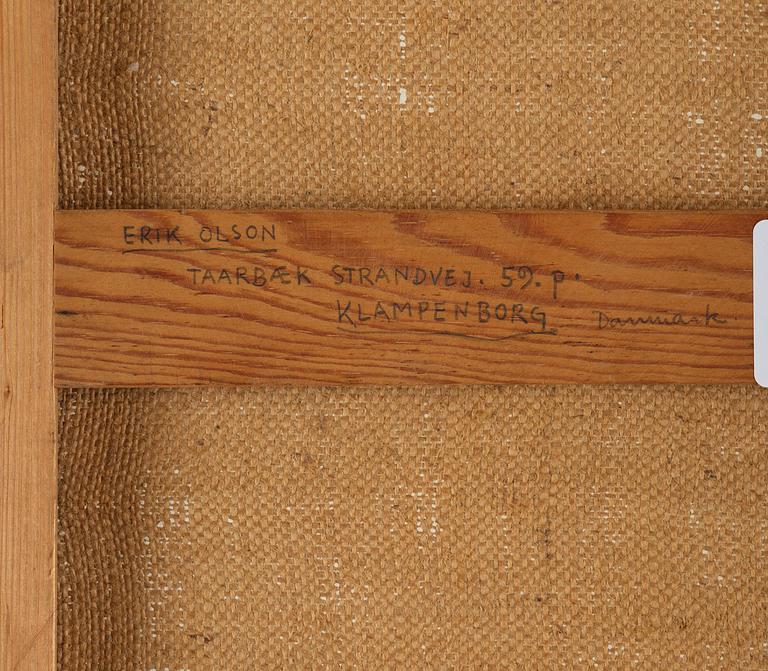
After a short time in Sweden, the family settled first in Vanløse outside Copenhagen and later in Taarbæk in Klampenborg, where they would remain. Here, Olson connected with the Danish surrealist circle while continuing to spend summers in Halland.
As early as 1930, Olson had painted the work The Glove is Cast, which is often regarded as the Halmstad Group's first surrealist painting. The group was then moving away from earlier influences such as concretism and cubism, as well as from inspiration from Fernand Léger, and instead turned their interest towards surrealism. During his time in Paris, Salvador Dalí made a strong impression on Olson, something that can partly be sensed in the painting Dead Horizon. At the same time, Olson developed his own visual language, where forms, colour palette, and treatment of light differ from the continental models.
The French poet and foremost theorist of surrealism, André Breton, took note of Olson's art as early as 1935 at the artist's solo exhibition at Galerie Gravitations in Paris, where a group of surrealists gathered. Breton then wrote about the particular "light of salt" in Olson's painting.
The proximity to the sea also came to characterise Nordic surrealism and distinguishes it from the continental tradition. Beach finds and coastal landscapes inspired the Halmstad Group and gave rise to a visual world filled with mythical figures and symbolic displacements.
In 1935, Erik Olson participated in the first Nordic international surrealist exhibition in Copenhagen, followed by involvement in an international surrealist exhibition at Burlington Gallery in London. In the spring of 1937, the Artists International Association (A.I.A.) organised a major surrealist exhibition in London – an exhibition that also served as a clear political manifestation for peace and against the rise of fascism in Europe. The organisation had been founded in 1933 and gathered several prominent names within the British art and cultural scene, including Henry Moore, Ben Nicholson, Paul Nash, and Alexander Calder.
In 1938, the same year that the auction painting was executed, Erik Olson again participated in a significant international surrealist exhibition in Paris, this time at the Académie des Beaux-Arts. The exhibition would play an important role in the breakthrough of surrealism in France. Shortly thereafter, the situation in Europe changed drastically as the Second World War approached, which meant that Olson's continued exhibition activities were mainly limited to the Nordic countries and his homeland.
For condition report contact specialist

Covered by droit de suite
Image rights
The artworks in this database are protected by copyright and may not be reproduced without the permission of the rights holders. The artworks are reproduced in this database with a license from Bildupphovsrätt.






Others have also viewed