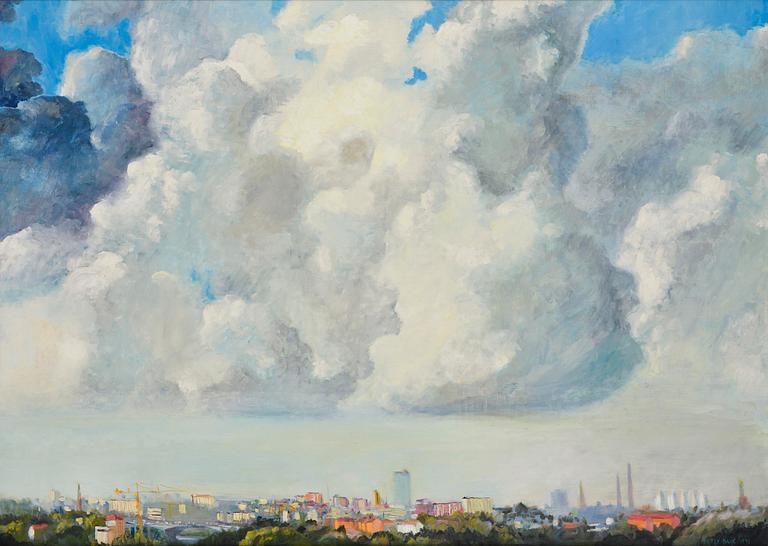
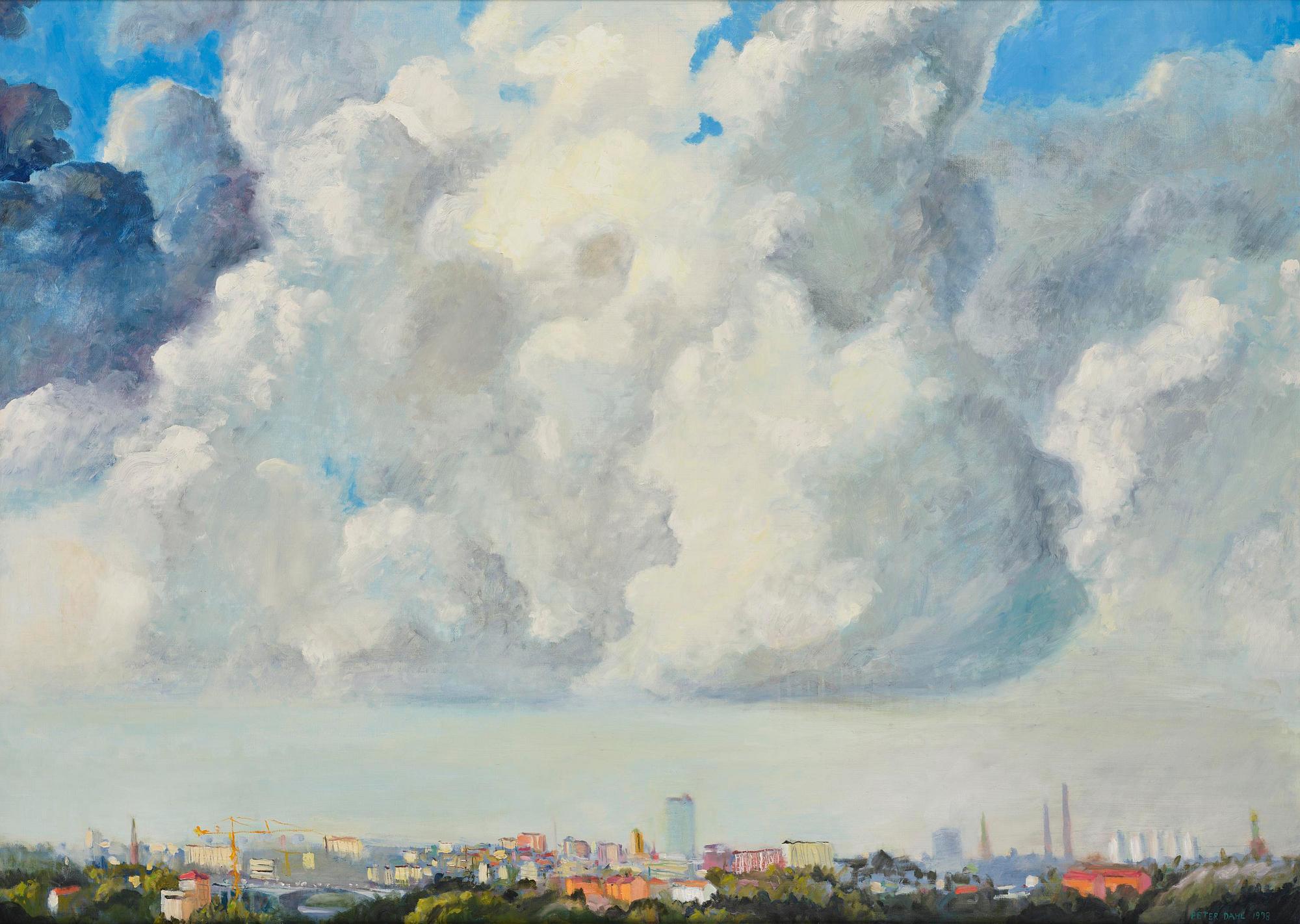
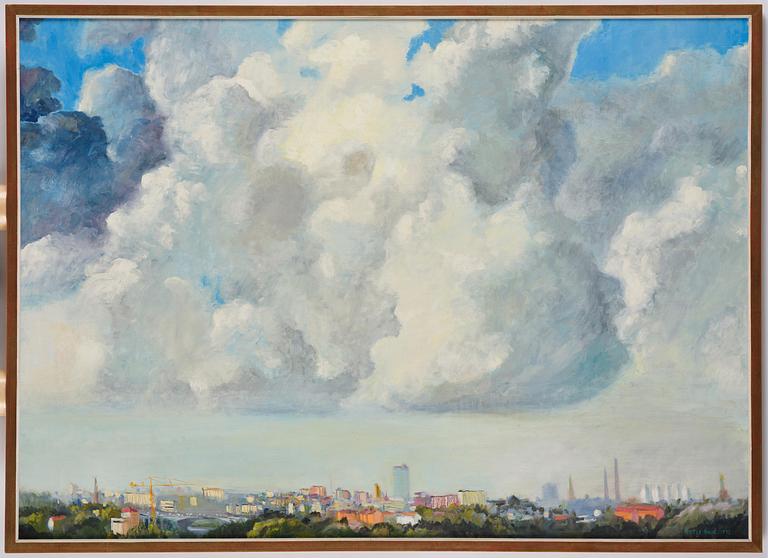
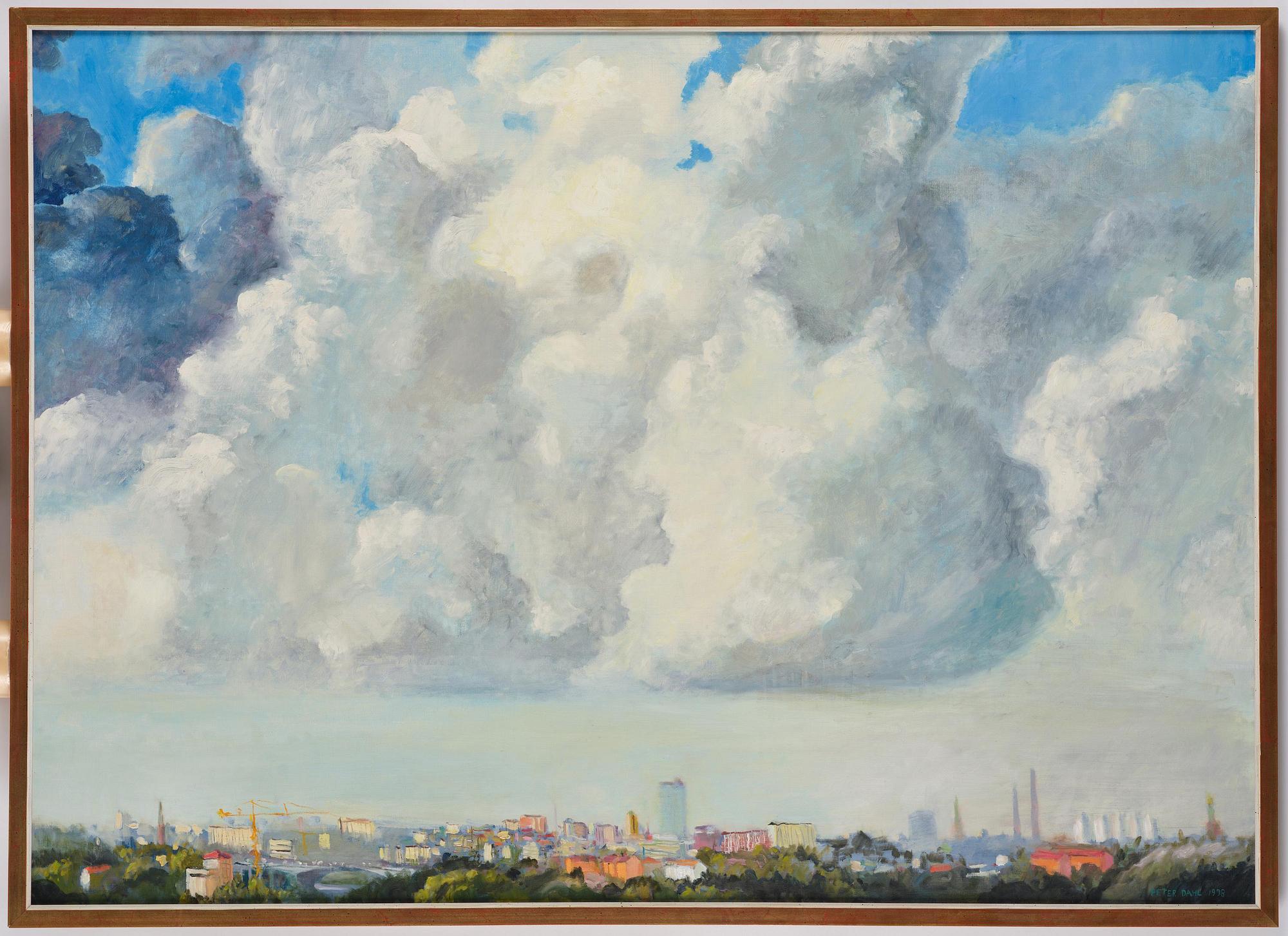
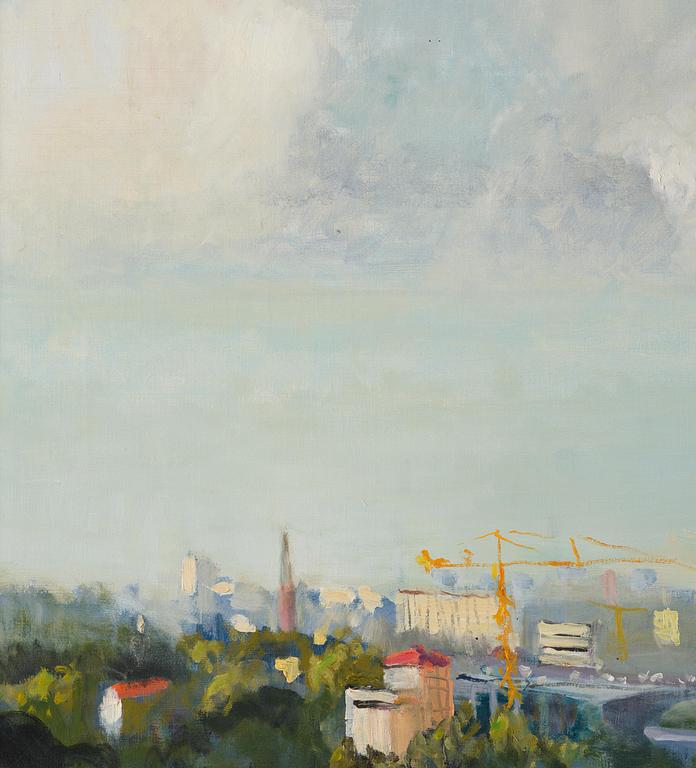
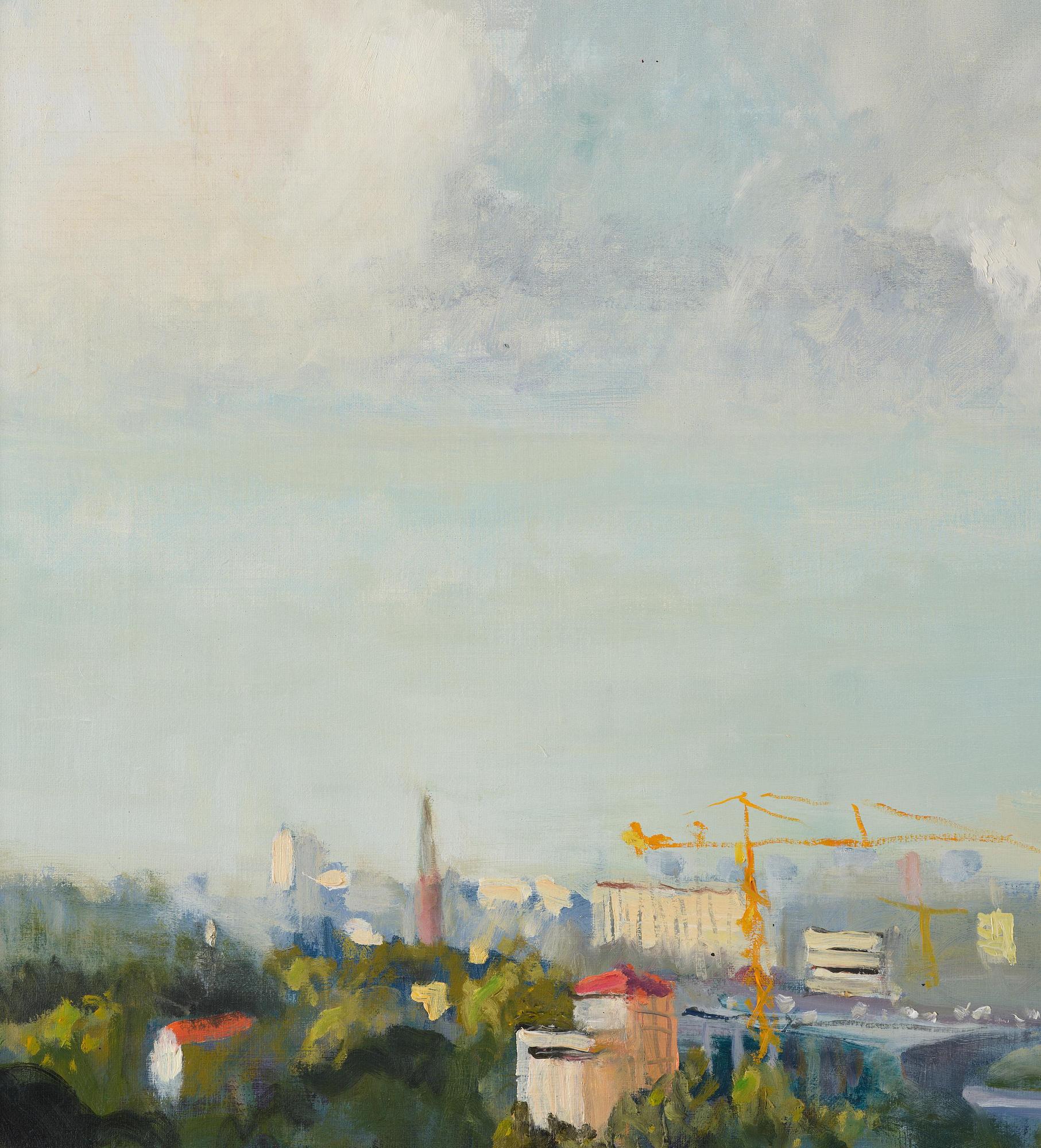
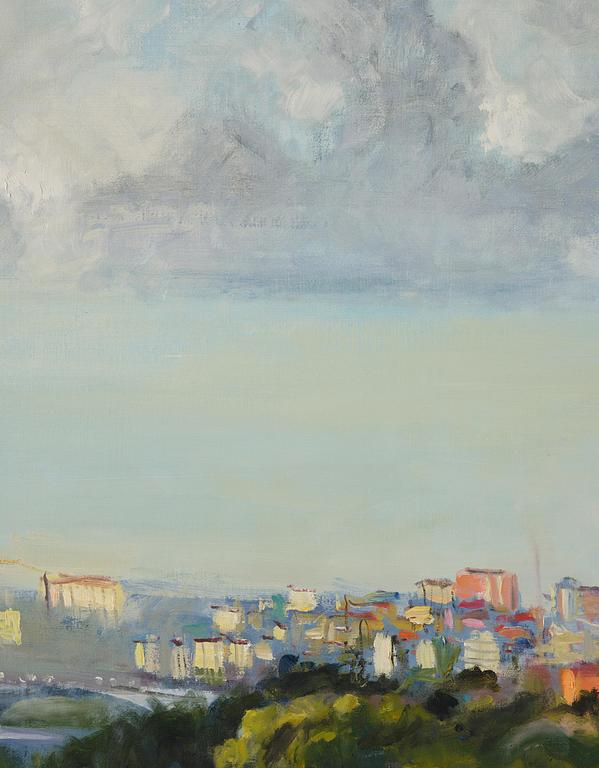
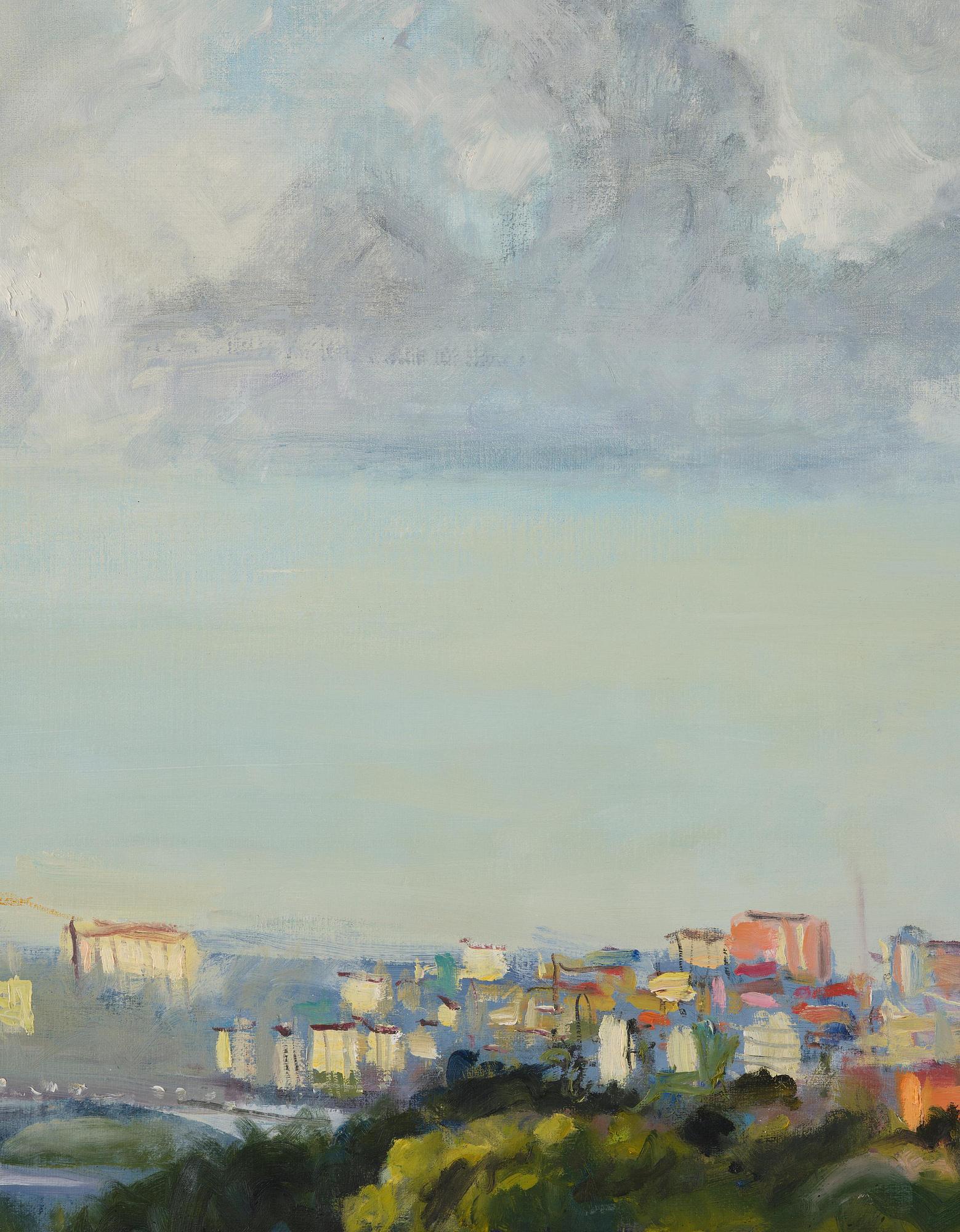
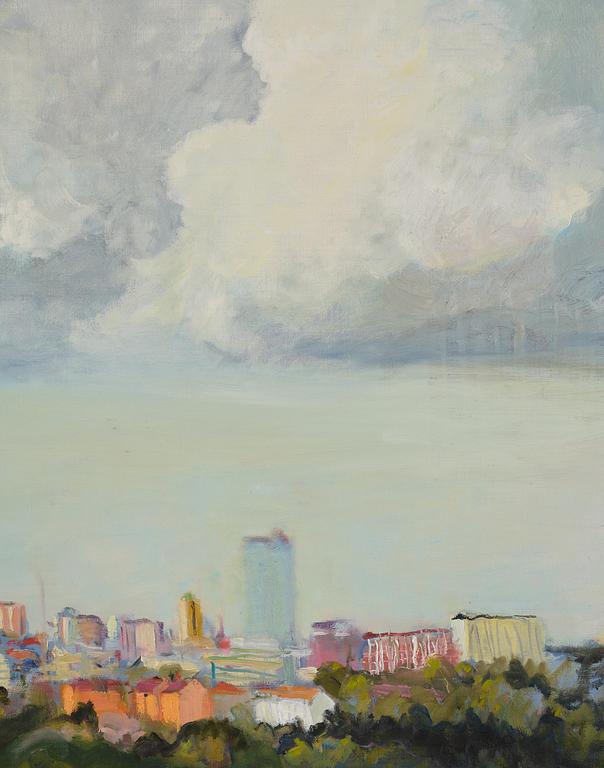
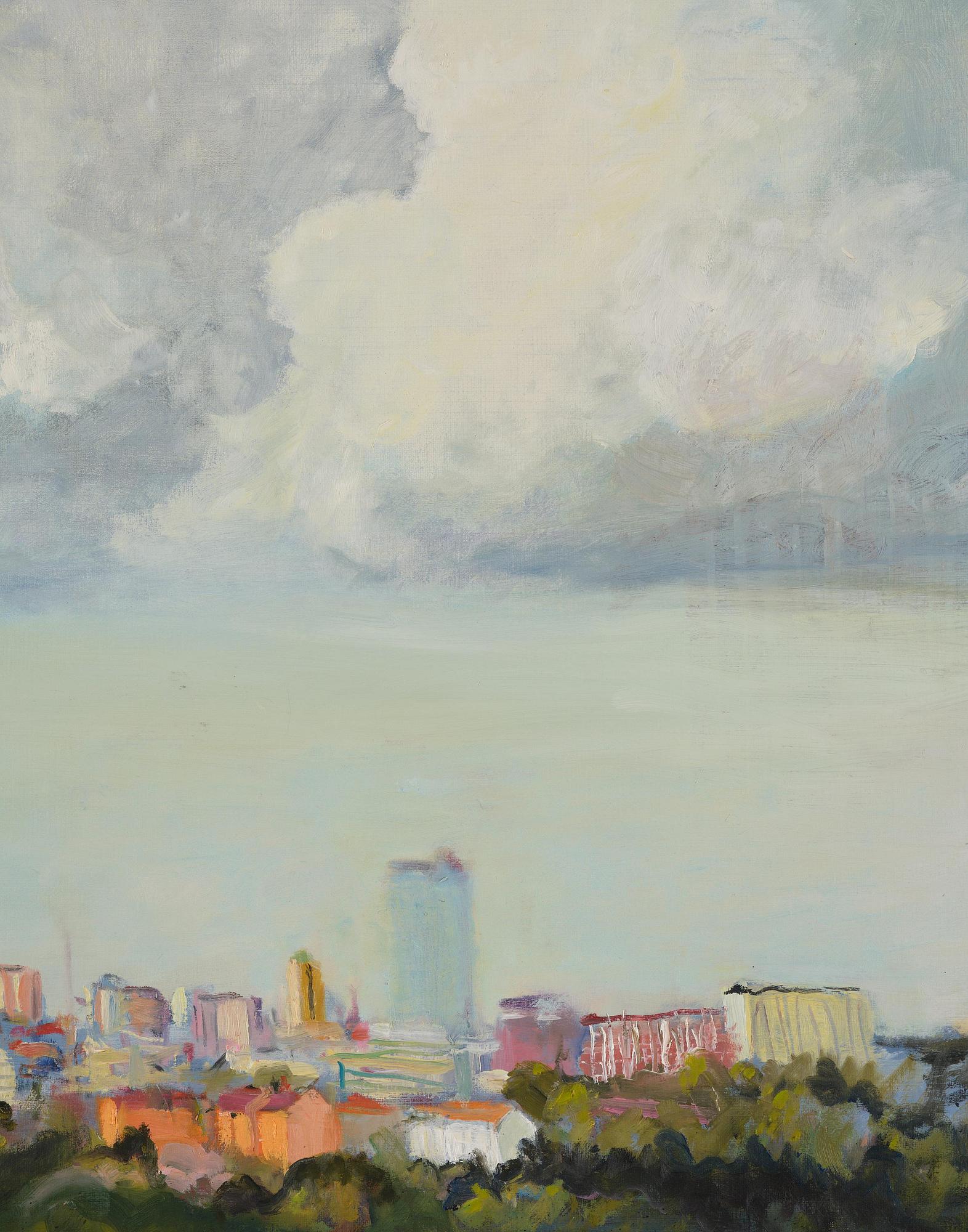
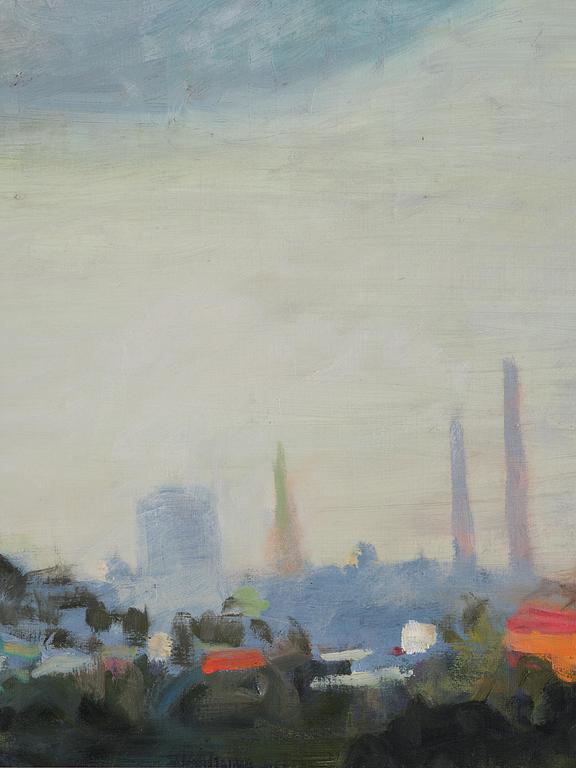
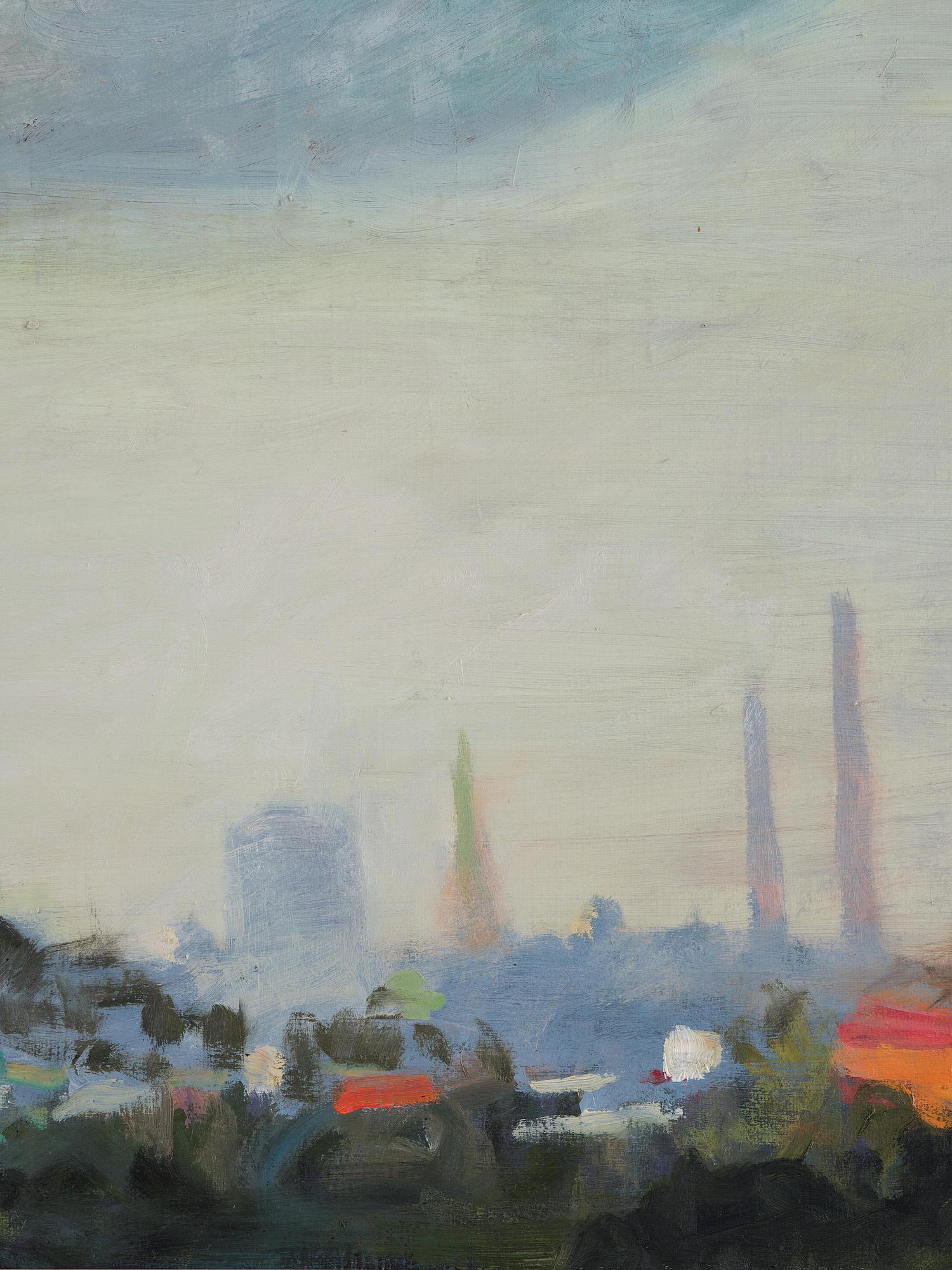
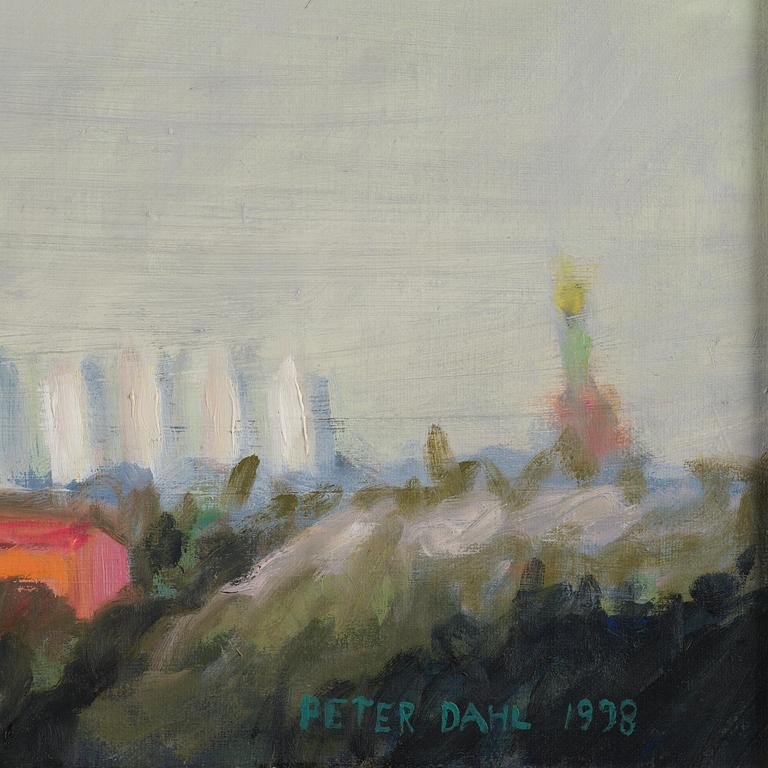
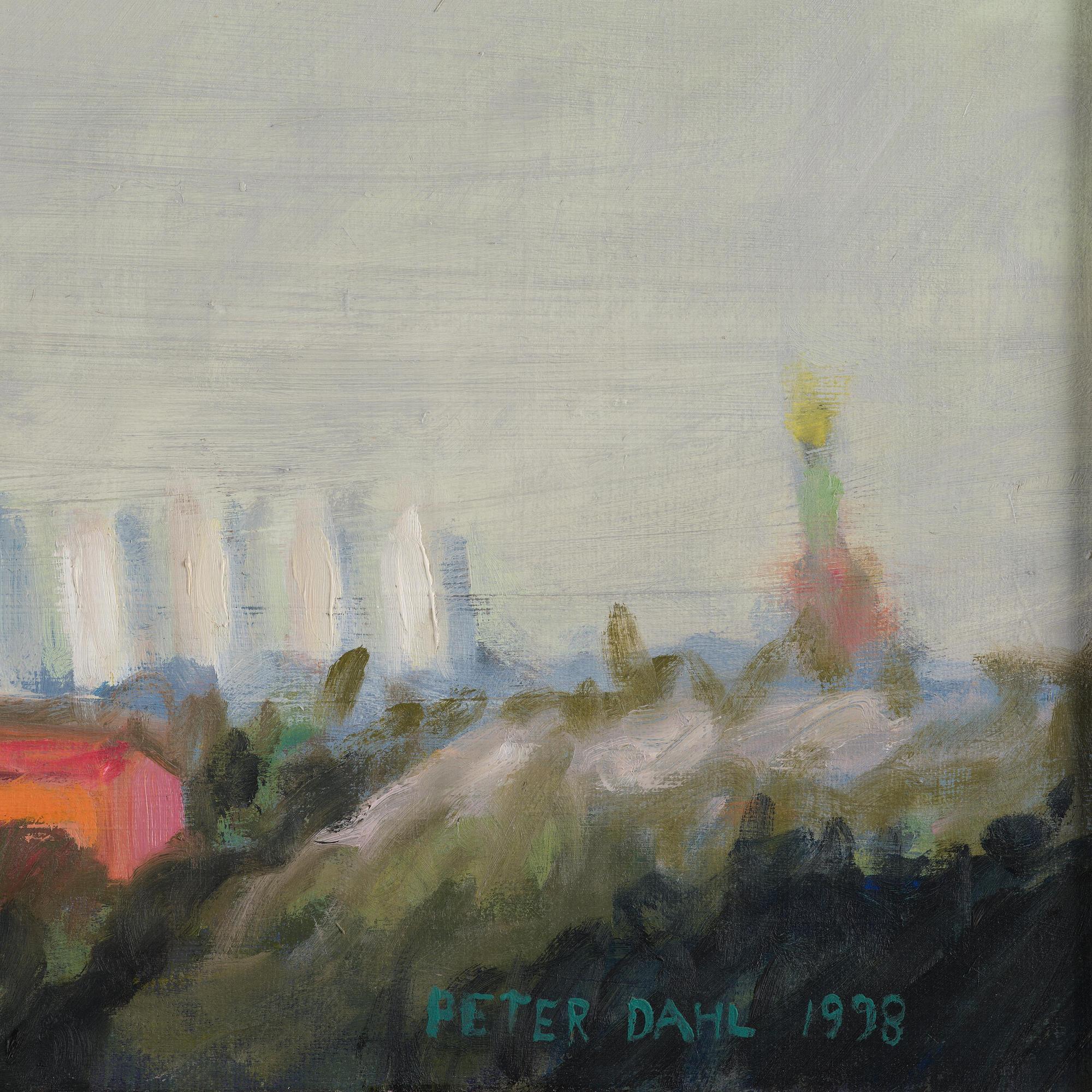
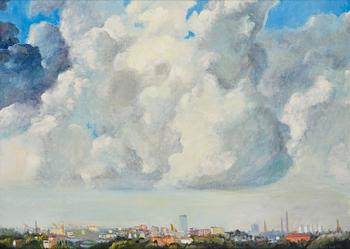
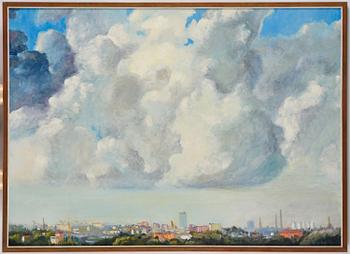
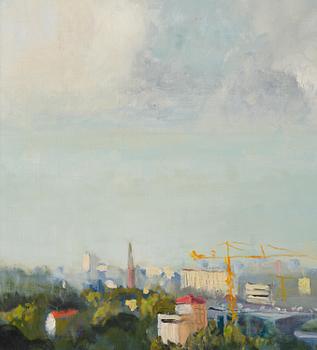
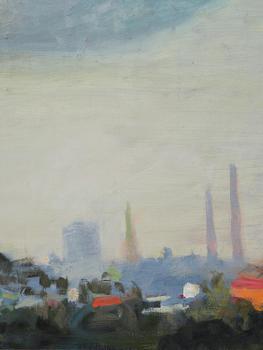
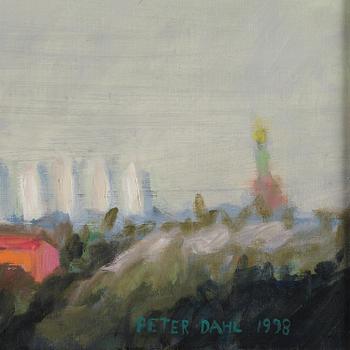
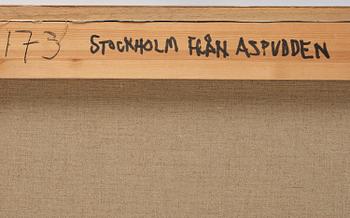
"Stockholm från Aspudden"
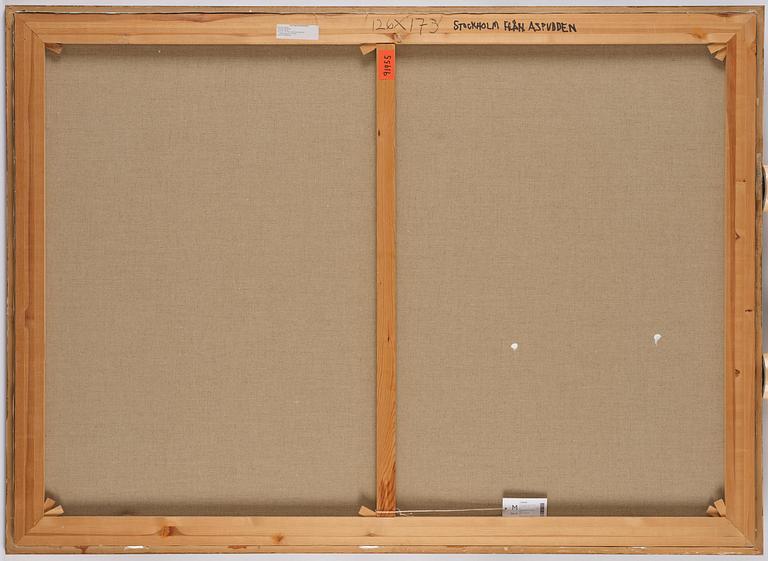
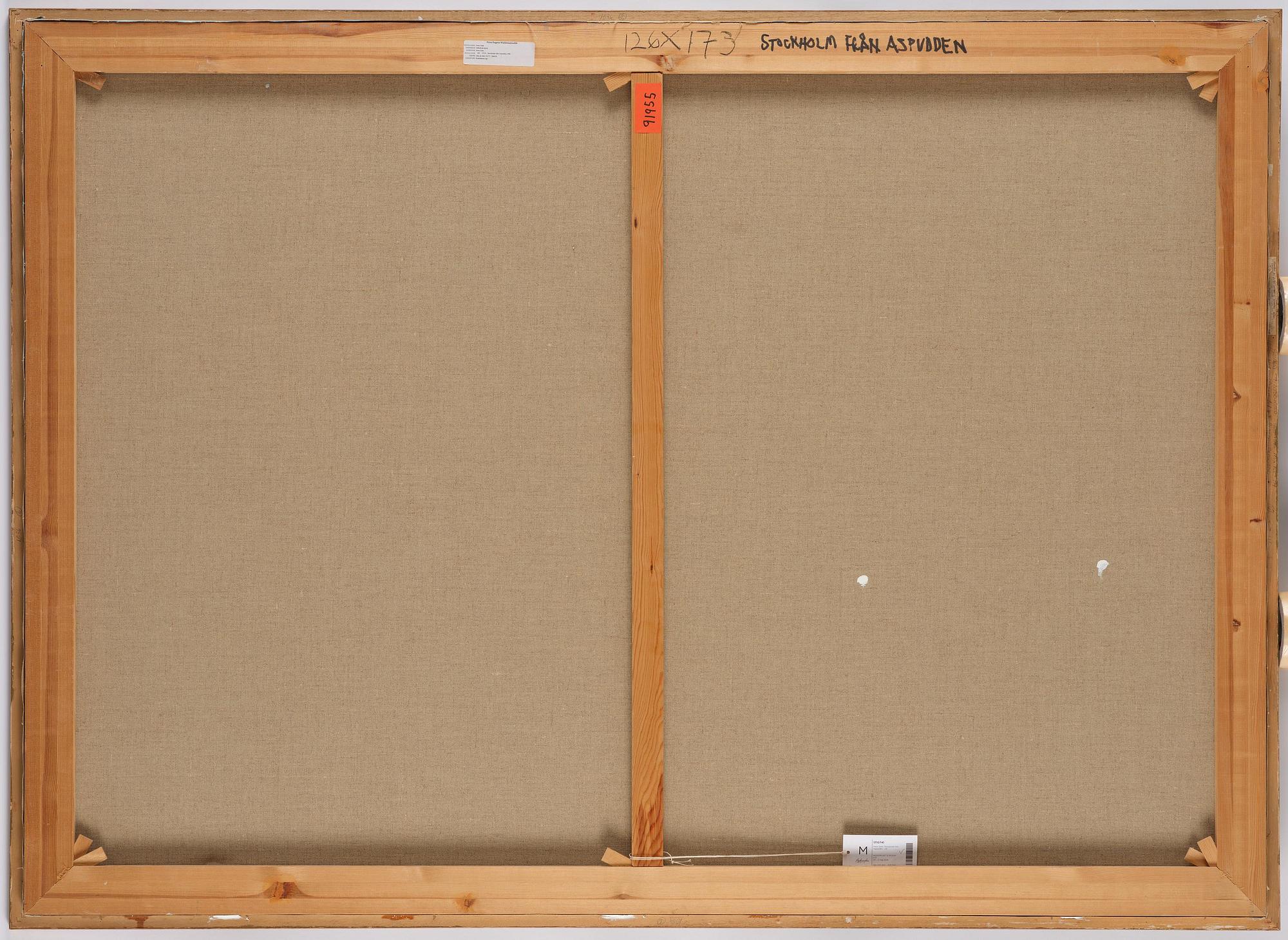
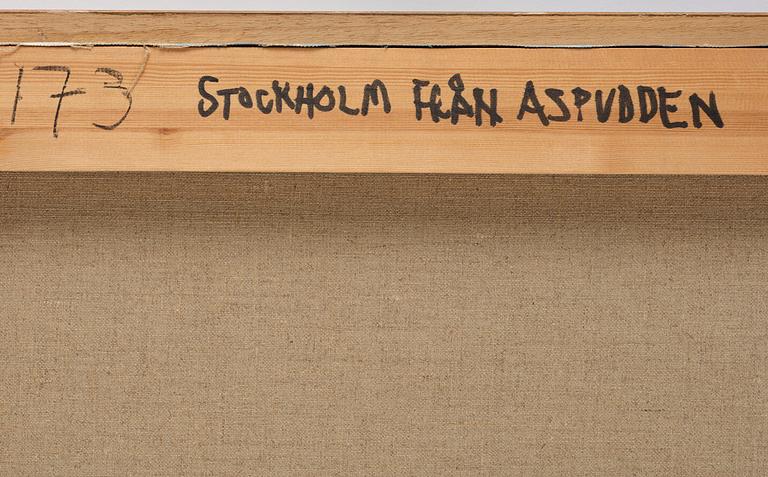
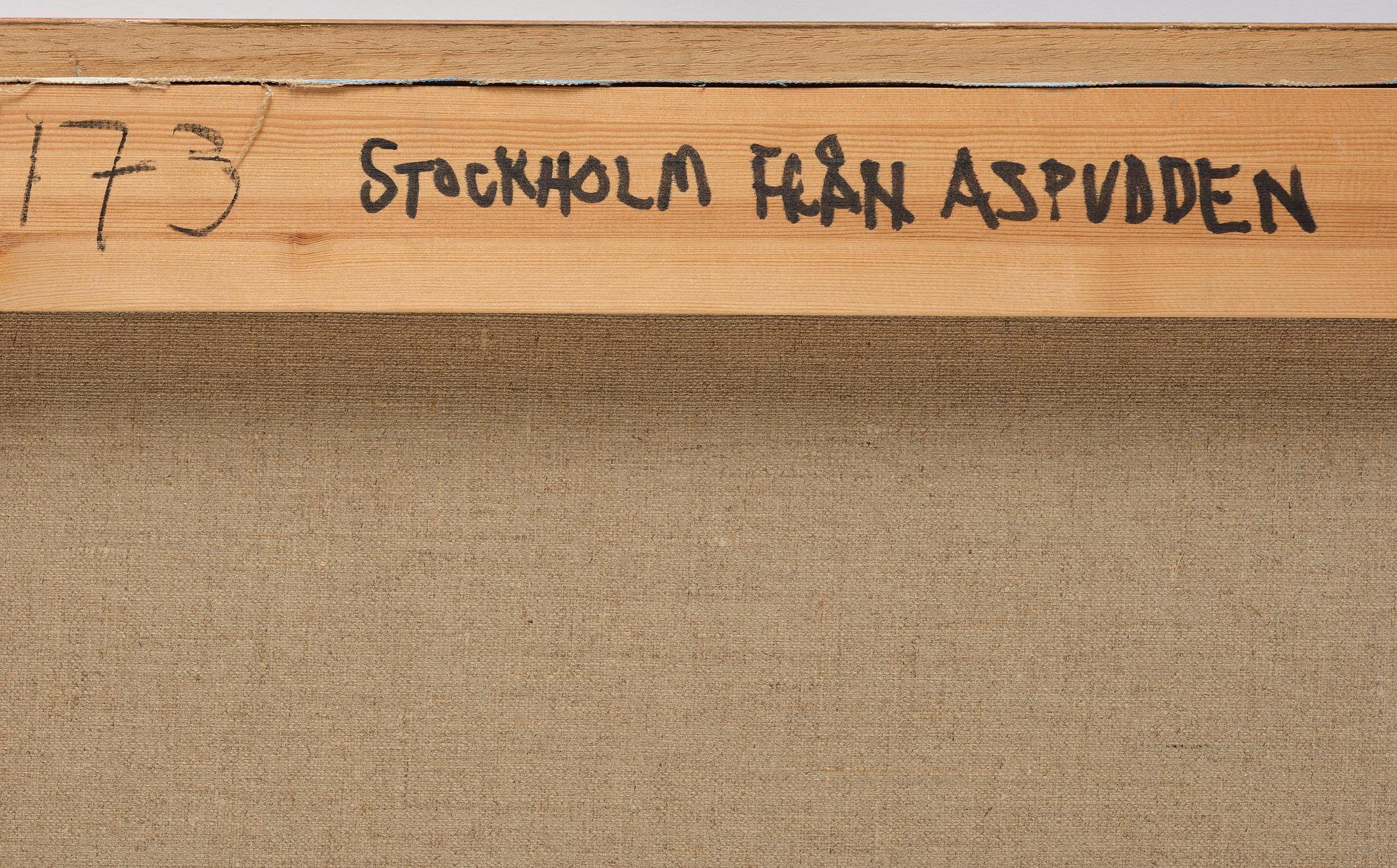
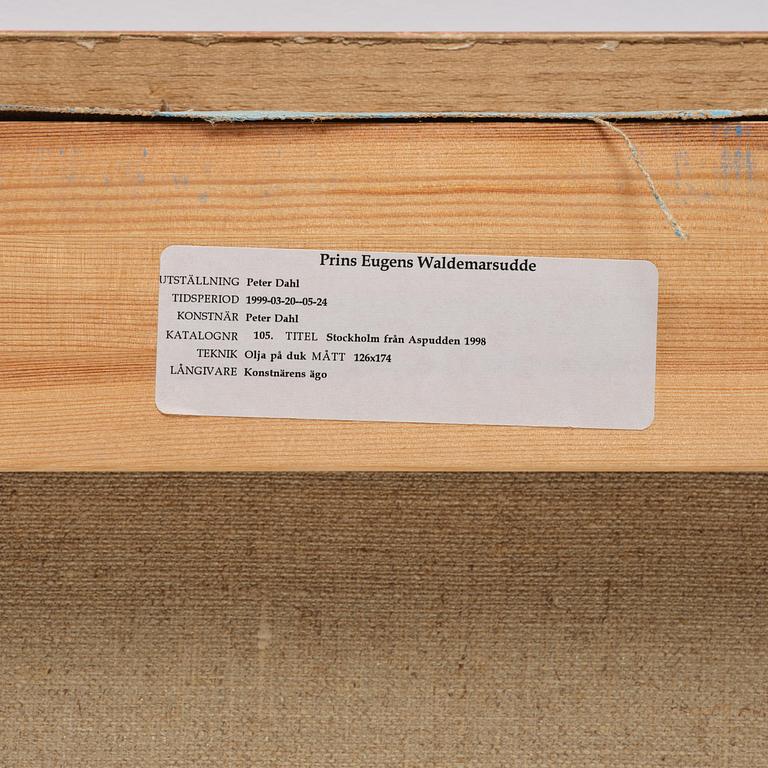
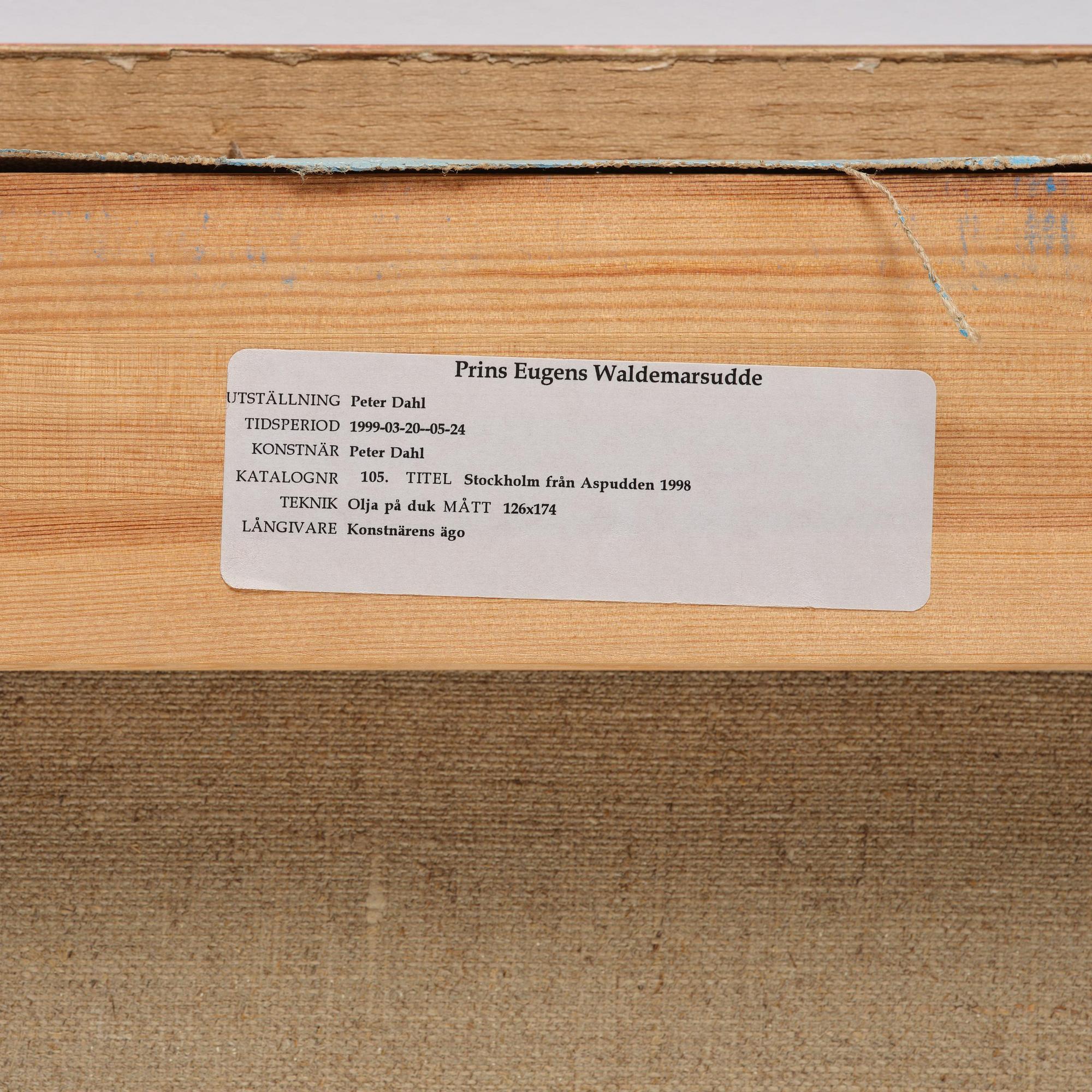
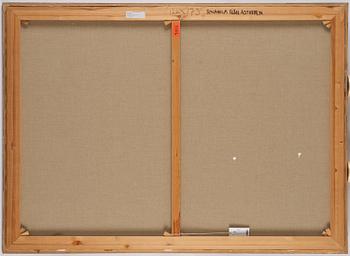
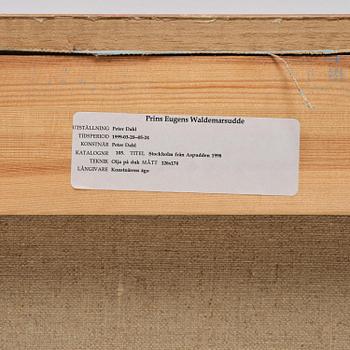
Signed Peter Dahl and dated 1998. Oil on canvas 126 x 174 cm.
Exhibitions
Prins Eugens Waldemarsudde, Stockholm, "Peter Dahl - Se tillbaka och blicka framåt", 20 March - 20 May 1999, cat. no 105.
Literature
Folke Edwards, "Peter Dahl", Stockholm, 1996, the Aspudden motif mentioned on p. 142 f., compare with illustrations.
Peter Dahl and Göran Söderlund, "Peter Dahl - Looking Back and Looking Forward", exhibition catalogue, Prince Eugen's Waldemarsudde, 1999, illustrated on the cover, pp. 108-109, and listed in the catalogue with no. 105.
More information
Folke Edwards, the Swedish art critic and writer, describes poetically Peter Dahl's paintings from Aspudden, south of Stockholm (pp. 141-143):
"Now he also paints the magnificent views from his studio overlooking Aspudden south of Söder. Even when he moved in 1976, he was drawn to the grand motif, but it is not until the early 1990s that he seriously engages with it and takes it on in large formats for full orchestra. His approach to the subject is now more akin to that of the Impressionist than the Expressionist. It is as if he wanted to train his eye and his ability to objectively register observations once again. The romantic imagination takes a back seat (the only romantic landscape I have seen by him is interestingly from Caribanien), now it is about sharpening the senses. Like a Monet, he patiently studies the same motif at different times of the year and day. The colour palette is Nordic and sharp, lacking a French bouquet, but the attitude towards the motif, the approach to the landscape, is similar. With the difference that Peter only really paints impressionistically when it snows or rains. When the air is still and clear, the landscape is more distinct and he takes on an almost classical stance. Occasionally—when the expression approaches the heroic or sublime—one thinks of national romantics like the painters Richard Bergh or Karl Nordström, but as a rule, Peter is more sober and cooler than the national romantics. He does not animate or mystify nature as we Nordics tend to do; he observes it with the objectively distant gaze of a Latin. Now it is not the temperament of women but that of air and light that interests him. Nature evokes no sentimental or mystical feelings. It is as it is. The landscape is not transformed into a symbol of the artist's or the nation's state of mind but serves as a model or study object. It is astonishing how confidently this corporeal, probing sensualist also masters the grand perspective, the wide vista, and the endless space with its constantly shifting temperament and expressions. A painting like Winter View from Aspudden towards the Northeast (1993) belongs to the truly significant landscape depictions in Swedish 20th-century art. But perhaps there is still a dimension in these clarifying views that connects to the moods of deluge and doom. What we see is a vast sky, a great nature, and a small town. Humanity is no longer at the centre, and her proud creations rising towards the sky appear fragile in this almost cosmic perspective, while the clouds loom ominously towards a fateful eruption. The humanistic or anthropocentric perspective that has been dominant in Peter's artistry has given way to a new one, which gives our own role in the world entirely different proportions. The emperor of Caribanien sees Tellus from the same perspective as Cellus."
More about Peter Dahl
Peter Dahl is painter, printmaker, sculptor, and author. He was born in Oslo and came to Stockholm during the war years of the 1940s, studying at cadémie Libre in 1957 and then attended the Royal Institute of Art from 1958 to 1963 under the guidance of Lennart Rhode. He worked as a teacher at Gelesborg’s school during the 60s and 70s, and was the head professor of painting at Valand Art Academy in Gothenburg from 1975-79. Dahl paints in an expressive, realistic style with bright colours, sensual figure compositions, his art a vessel for his criticism towards upper class luxury and petty bourgeois environments. Influenced by the expressionism of Francis Bacon, he depicted the sequence of events in Medelsvensson's daydreams about "the sweet life" in the upper social group in a series of images. Over the years, Peter Dahl continued with thematic painting. From 1981 to 1984, he illustrated Fredman's Epistles in 87 pictures.
He is outgoing and often depicts his own life with a touch of self-irony. His work is rooted in Swedish tradition, often revisiting and renewing old themes. In recent years, his style has become softer and more sensual, with his dance and bacchanalian motifs taking on a Rococo-like quality. As a printmaker, Dahl is particularly known for his congenial illustrations of Bellman's "Fredman's Epistles." Peter Dahl is considered one of the great artists of our time, immensely productive and consistently popular.
Read moreFor condition report contact specialist

Covered by droit de suite
Image rights
The artworks in this database are protected by copyright and may not be reproduced without the permission of the rights holders. The artworks are reproduced in this database with a license from Bildupphovsrätt.
Others have also viewed