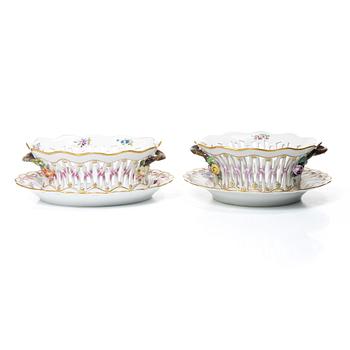
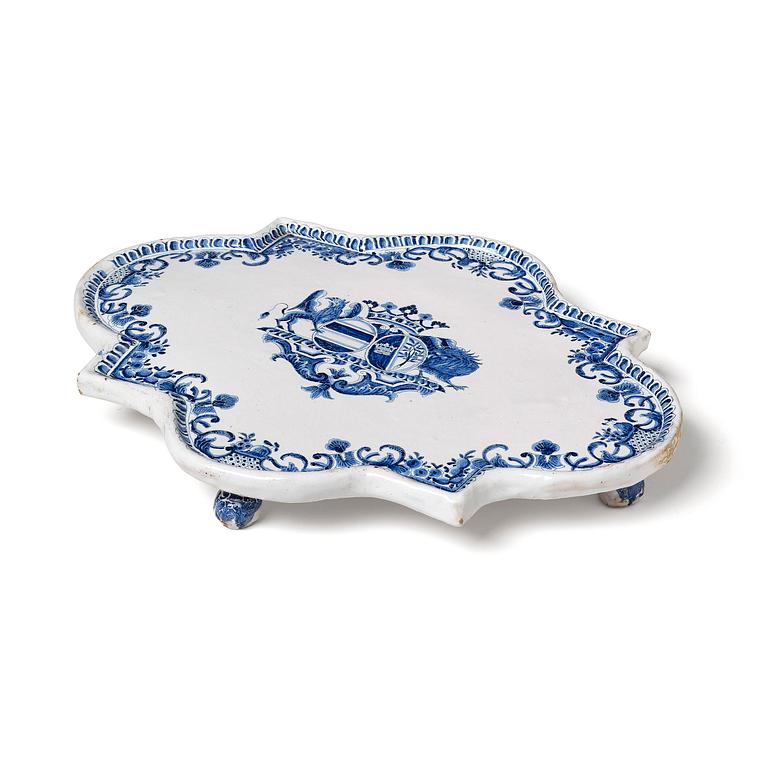
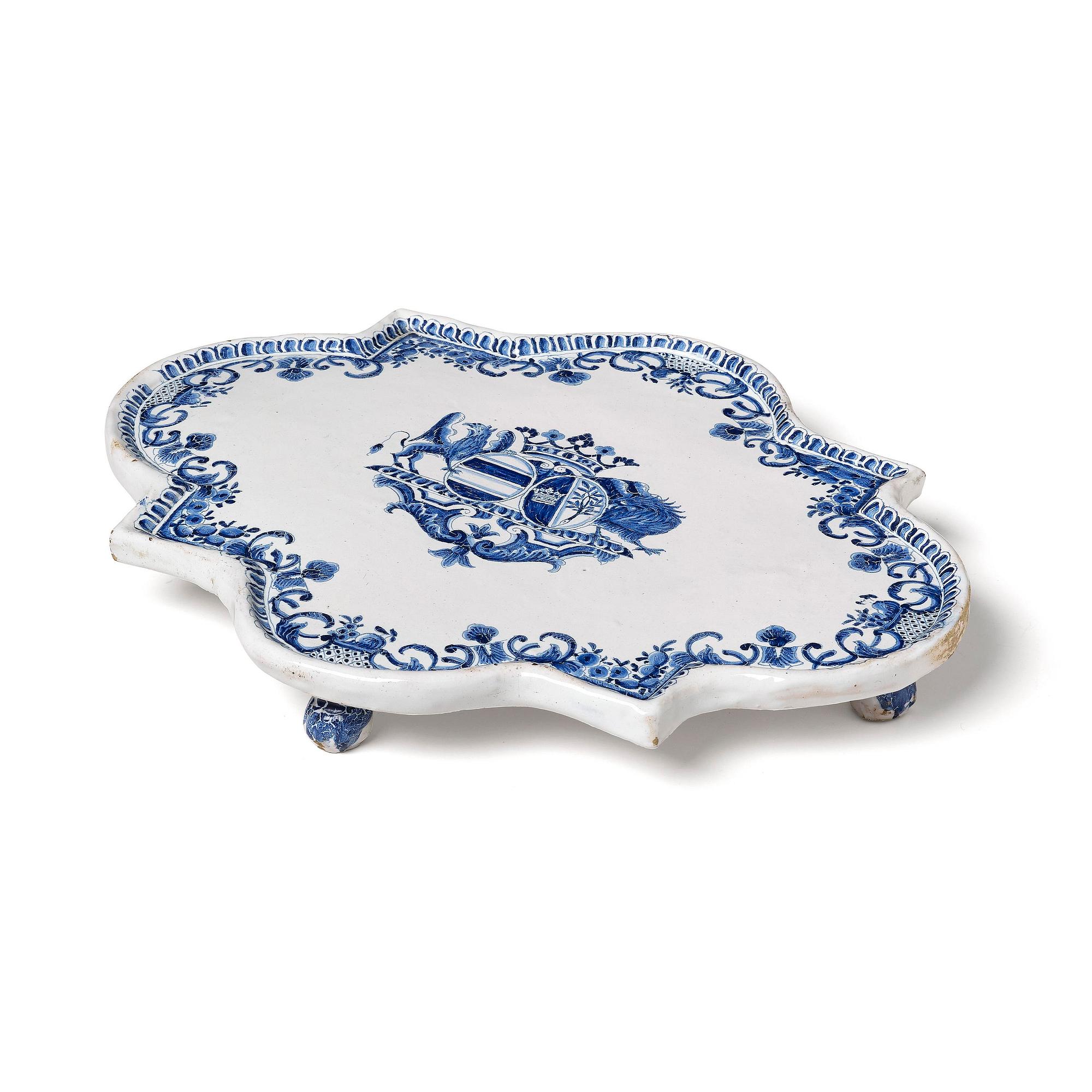
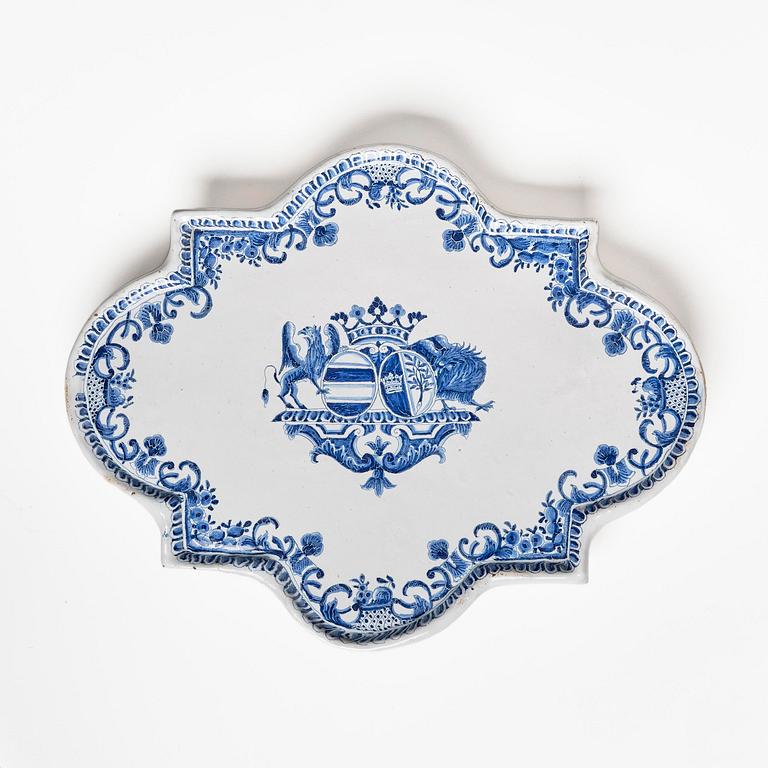
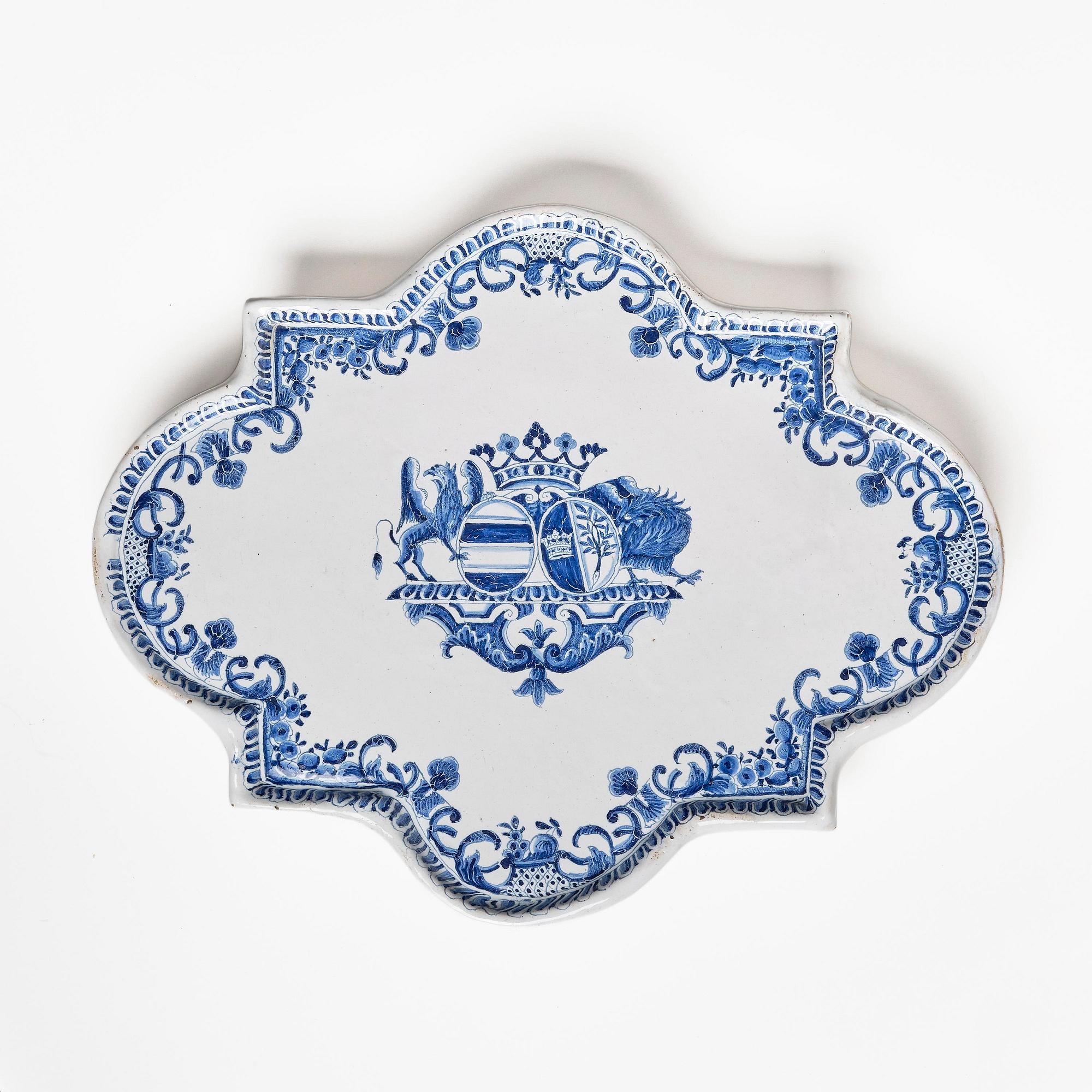
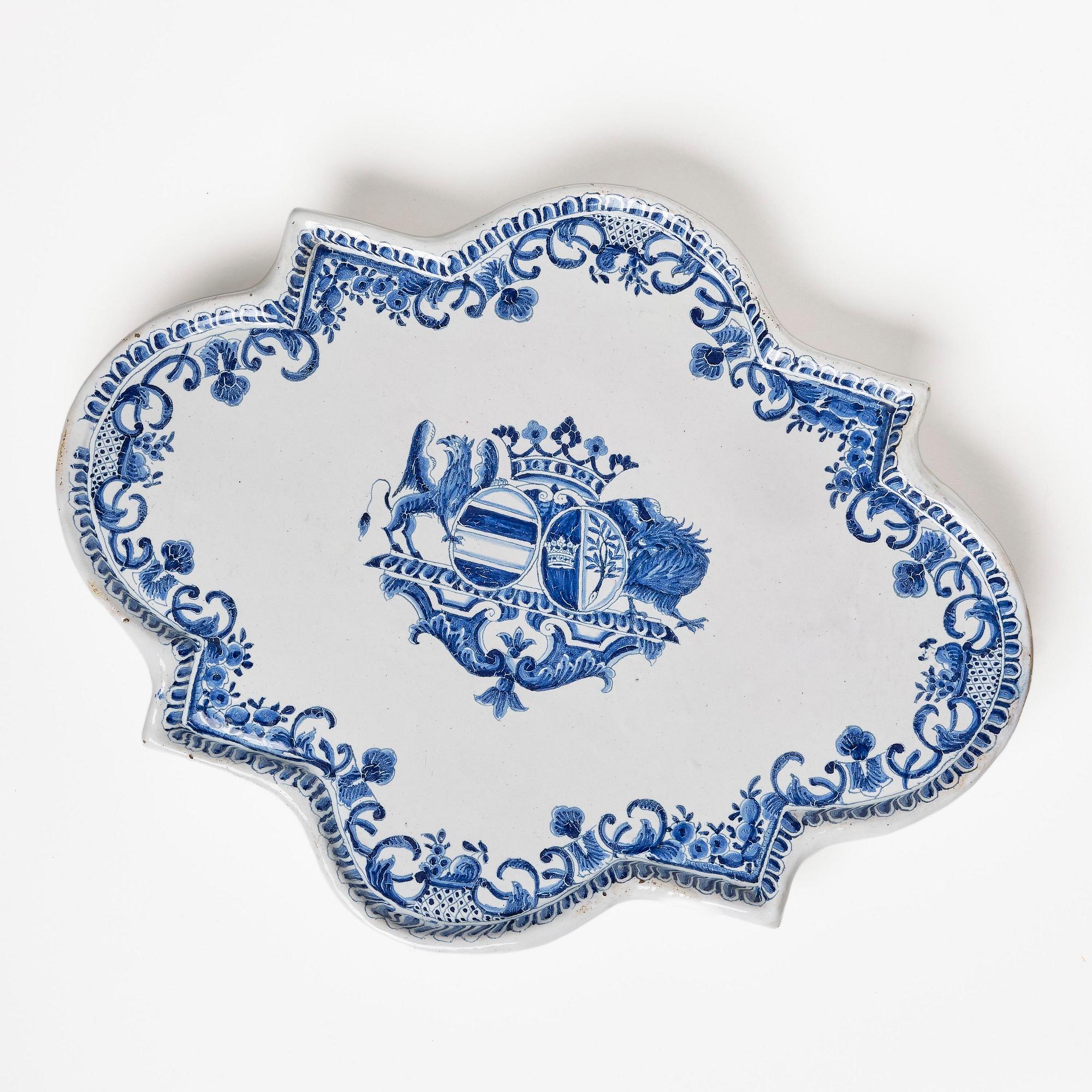
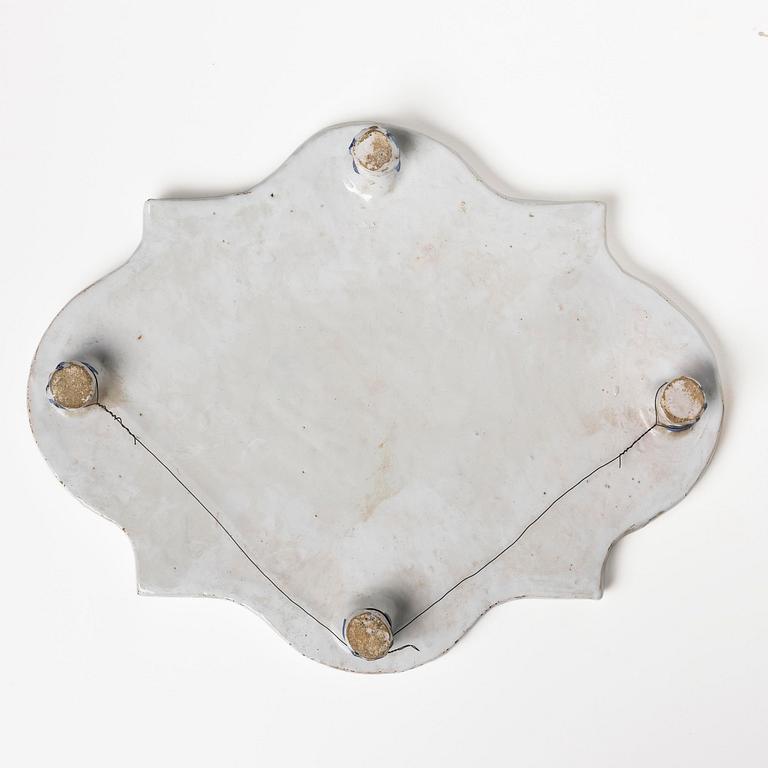
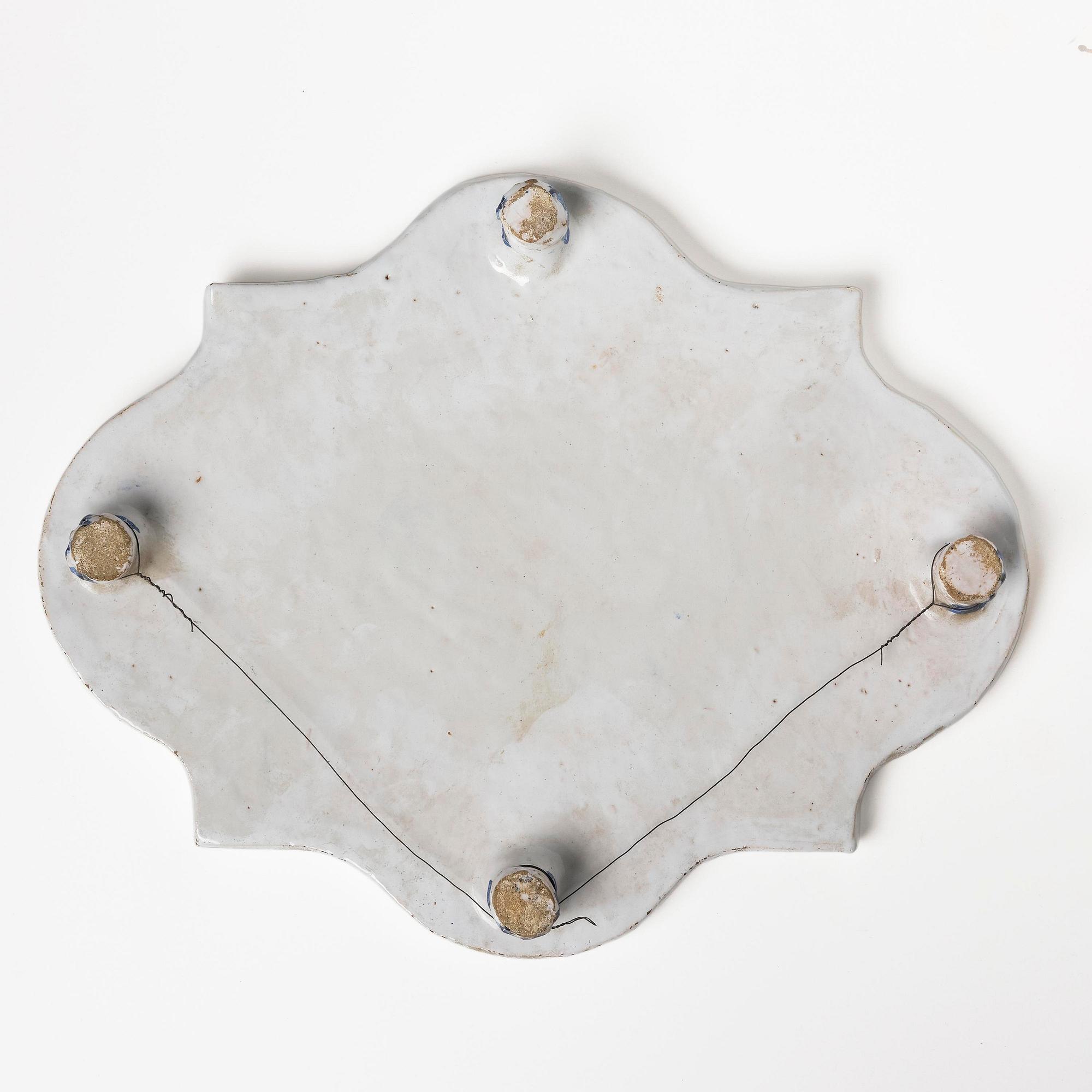
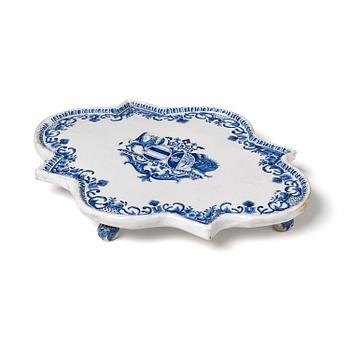
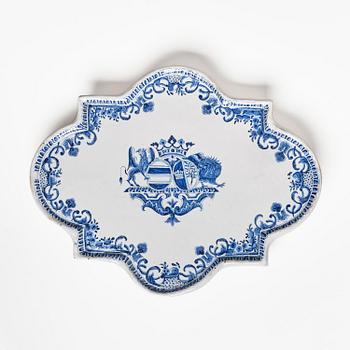
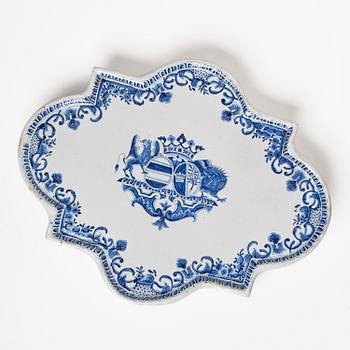
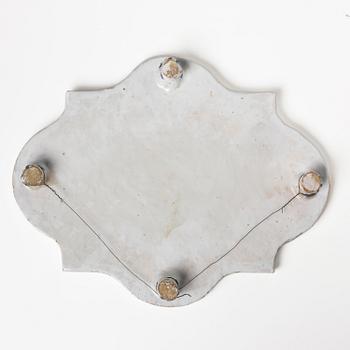
After a silver modell, on feet, decorated in blue with the Swedish coat of arms acolle of the Bielke family and the Piper family. Rouen, circa 1715. Measure 37x47 cm. Height 6 cm.
Provenance
From a dinner service made for count Thure Gabriel Bielke (1684-1763 and countess Charlotta Christina Piper (1693-1727), married 1715,
Exhibitions
Compare a matching center piece at the porcelain kitchen at Sturefors Castle, Östergötland, Sweden.
See also a center piece of this decoration and shape sold in these rooms. Internationella Höstauktionen 1993. Catalogue number0490:915.
Literature
Svenska Slott och Herresäten, Södermanland, page. 422 and Östegötland, page. 11. Slott och Herresäten i Sverige, Malmö 1971, Östergötland II, page. 245.
Dahlbeck-Lutterman, Helena, Svenskt 1700-talsporslin. page 61. See another centerpiece like this one and other pieces from this service.
More information
Porcelain in its broadest sense was a highly valued material and a status symbol that was displayed in interiors from the 16th century. In Europe around 1700, porcelain cabinets became the height of fashion — rooms entirely decorated with porcelain. In Sweden, this trend took the form of porcelain kitchens or porcelain chambers. These served both as a private retreat and as a status symbol where the owner could showcase their precious porcelain. Of the porcelain kitchens created in Sweden, the two that the Bielke family had furnished at Thureholm and Sturefors are today the most renowned and well-preserved.
The auction's plateau tray, referred to as “Thée bräde” in Nils Adam Bielke's estate inventory, comes from the famous service with the Bielke-Piper alliance coat of arms that was produced in Rouen for Count Thure Gabriel Bielke (1684 - 1763) and Countess Charlotta Christina Piper (1693 - 1727), married in 1715. Bielke was the lord of Thureholm in Södermanland, which was burned by the Russians in 1719, and which he had rebuilt according to designs by Carl Hårleman. Famous is the porcelain kitchen in two rooms that he had furnished and equipped in the 1740s. Interestingly, at Sturefors in Östergötland, which his son Nils Adam Bielke (1724–1792) inherited as a fideicommiss in 1752 from his grandmother Christina Piper, a lavish porcelain kitchen was also furnished around the same time.
There has been some uncertainty about where this service was first placed. According to one account, parts of the service were not brought to Thureholm from Sturefors until the 19th century.
The service is not listed in Thure Gabriel Bielke's Thureholm inventory of 1752, nor in his estate inventory of 1763. The first mention of the service is in his son Nils Adam Bielke's estate inventory of 1792. At that time, some pieces were located at Sturefors, but the majority seem to have been displayed in Thureholm's porcelain kitchen, in the so-called Milk Chamber. This can be interpreted as Nils Adam having inherited the service directly from his mother in 1727 and then distributed it between his two estates.
For condition report contact specialist
Others have also viewed