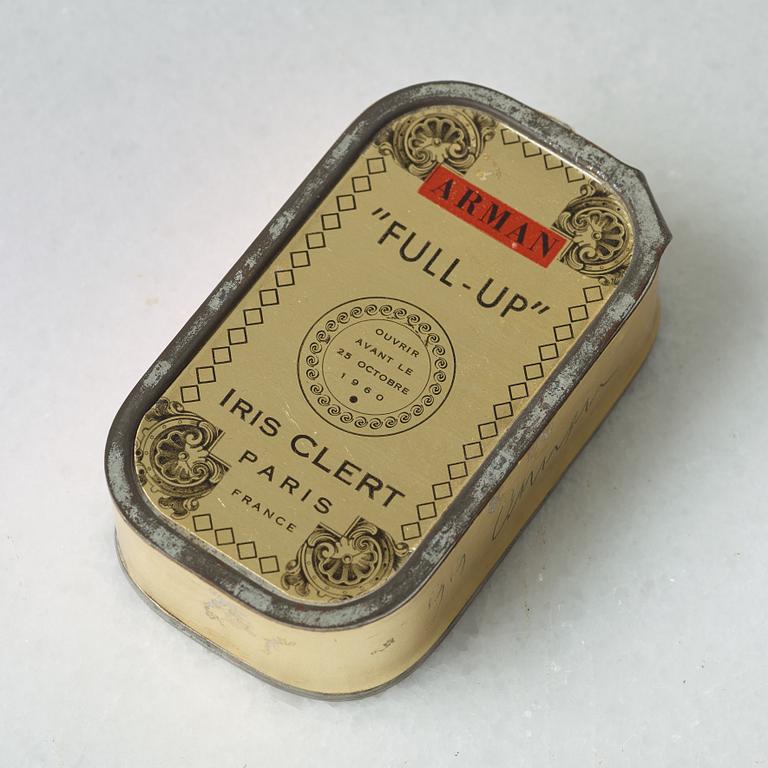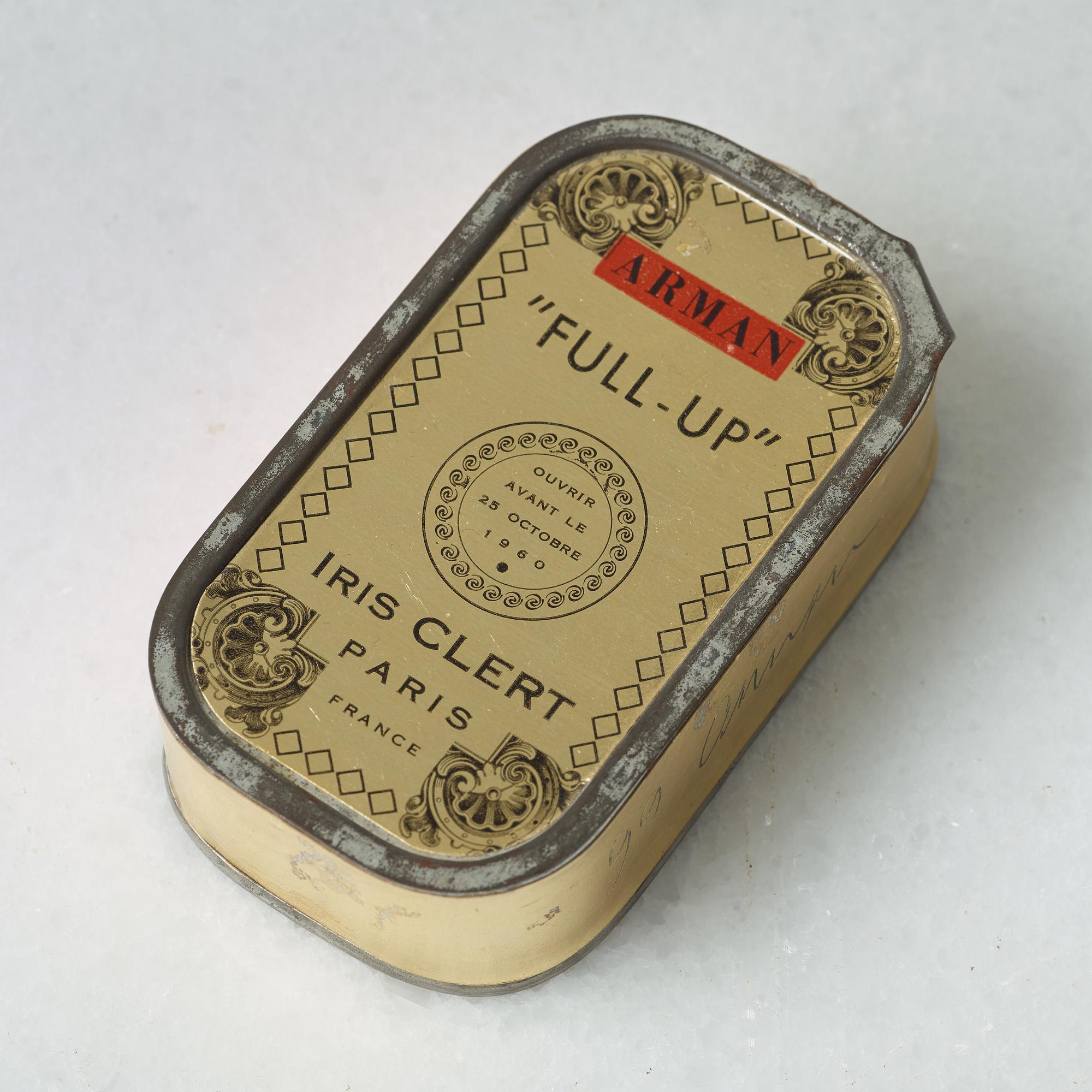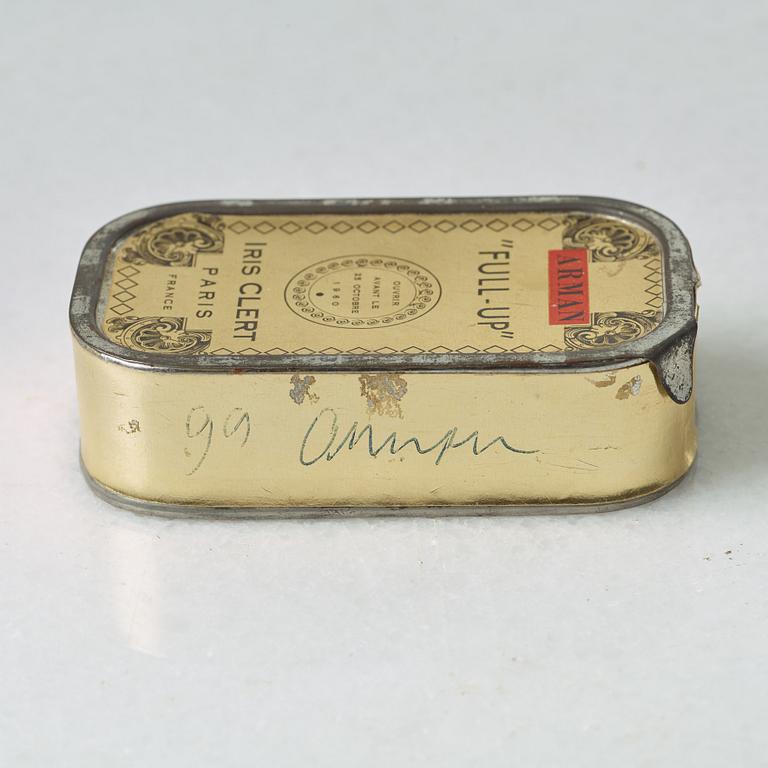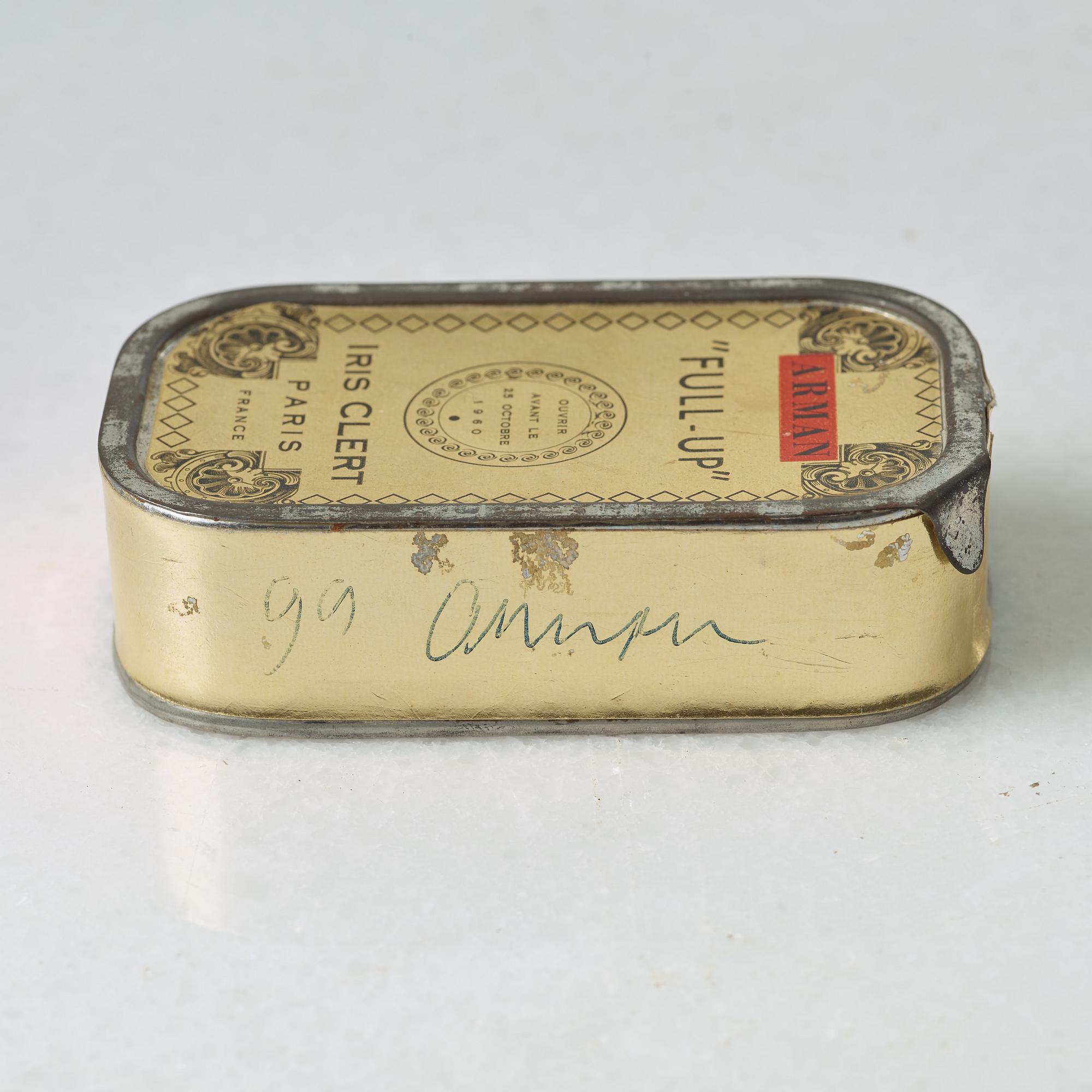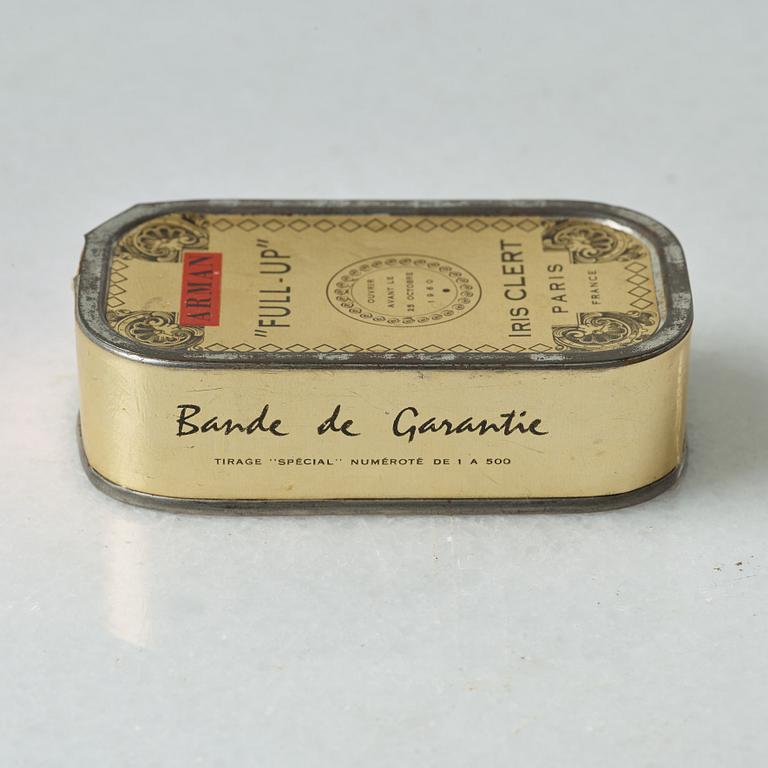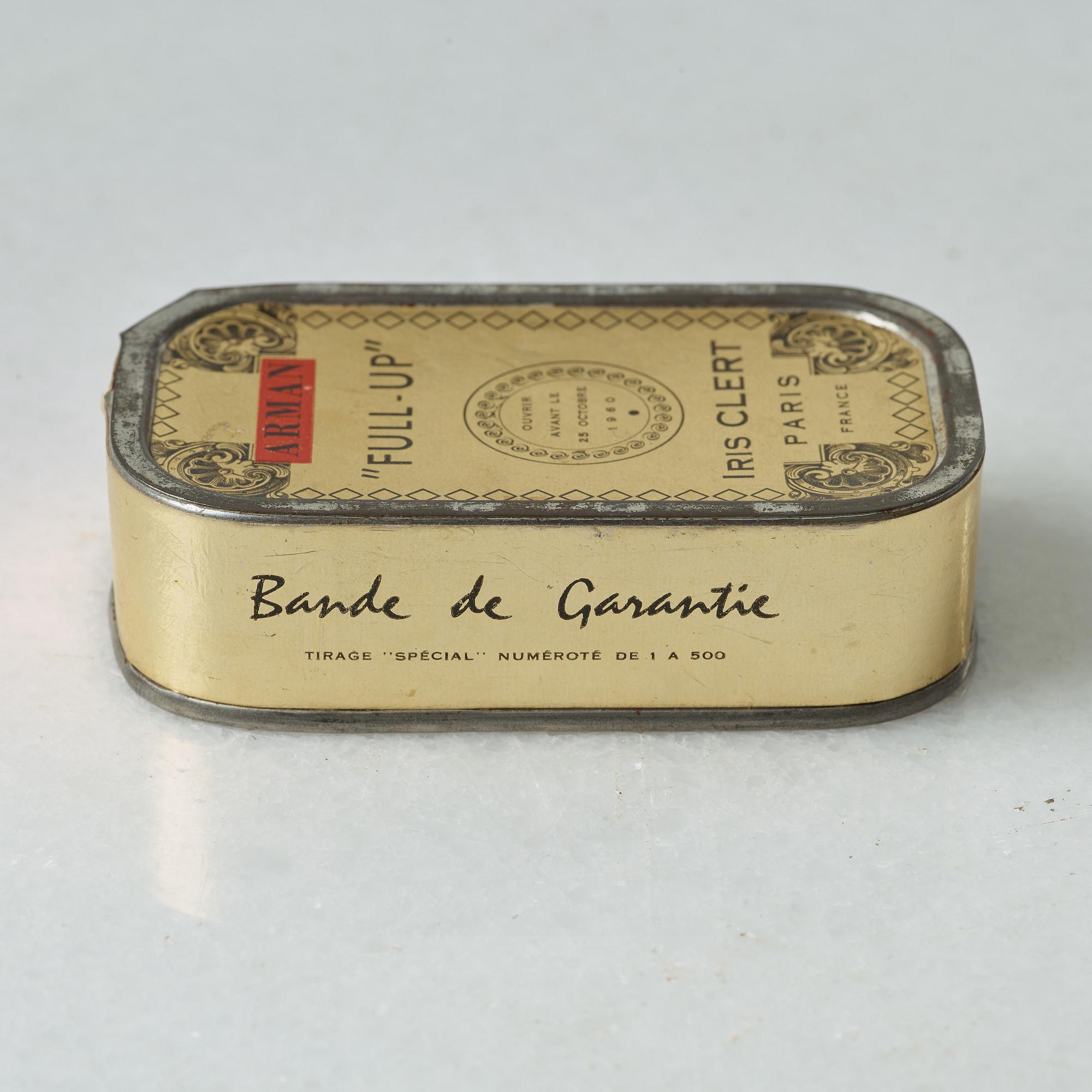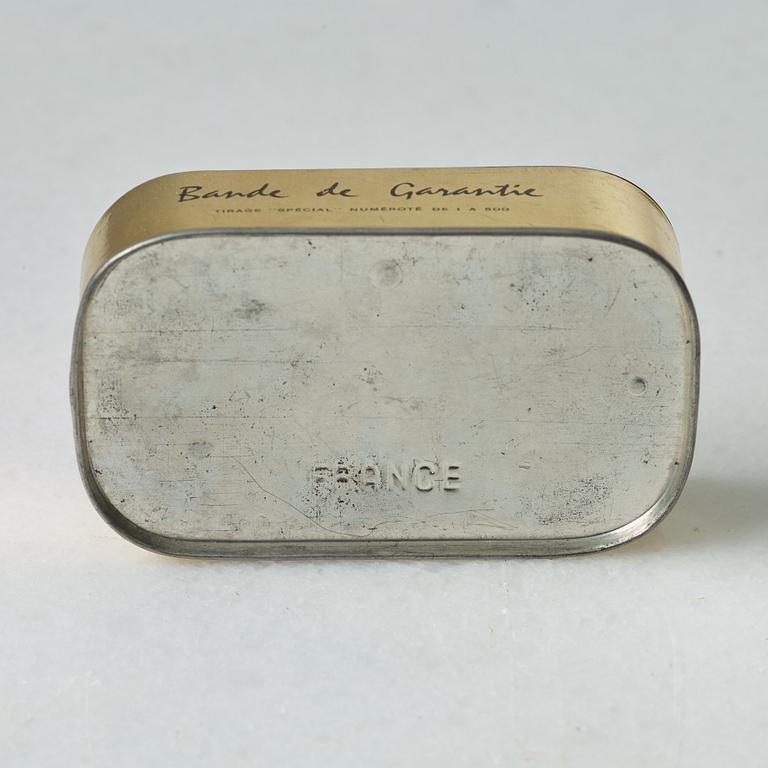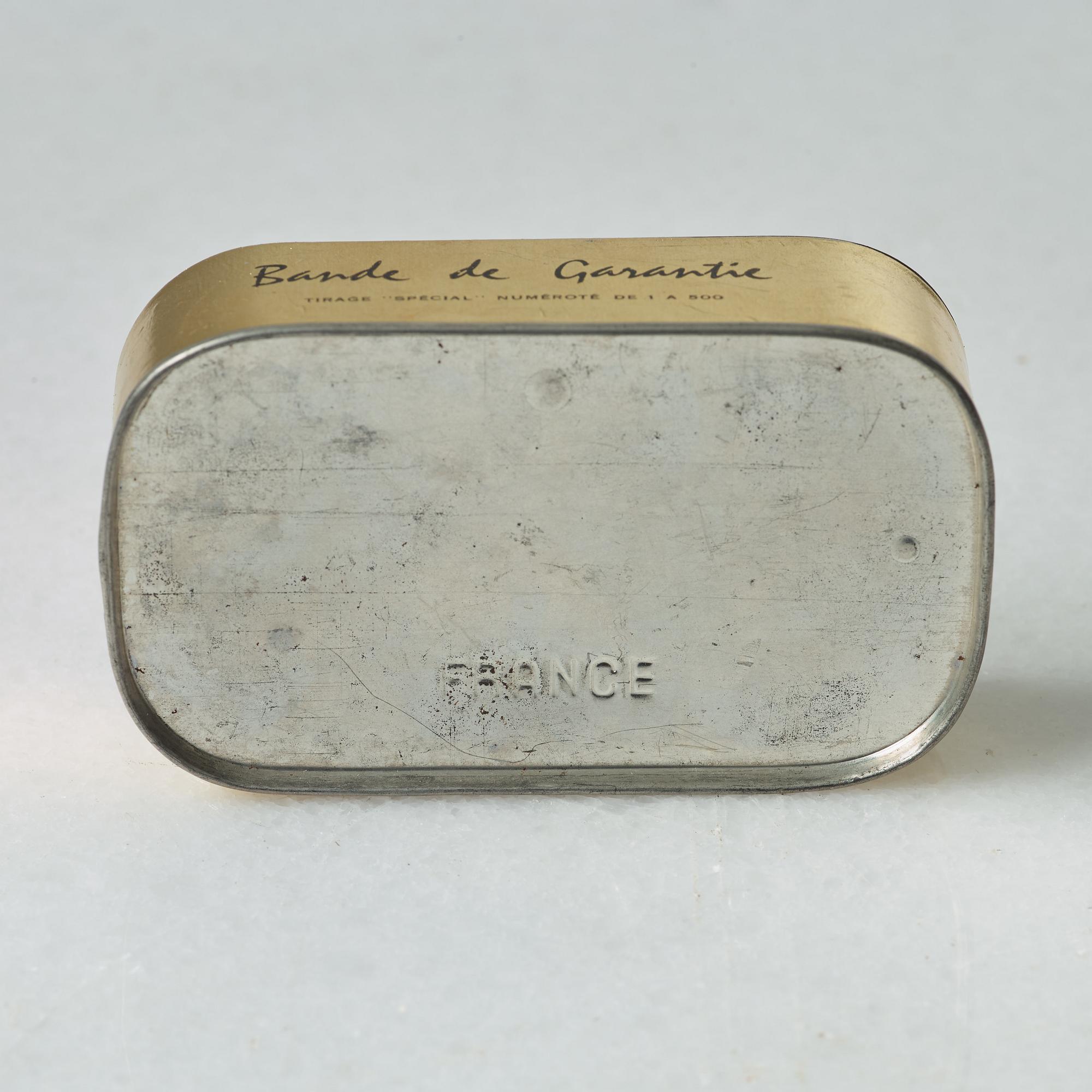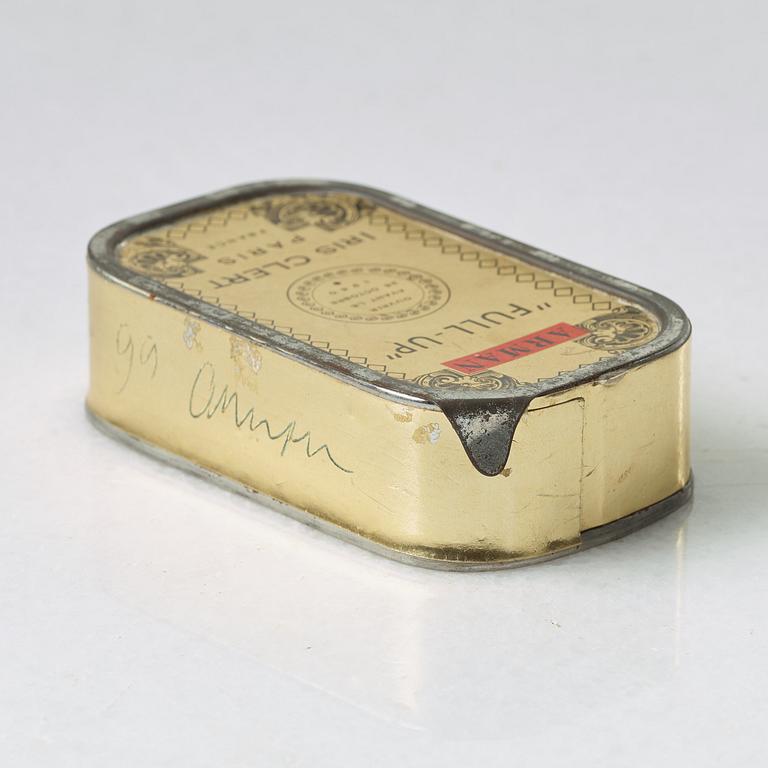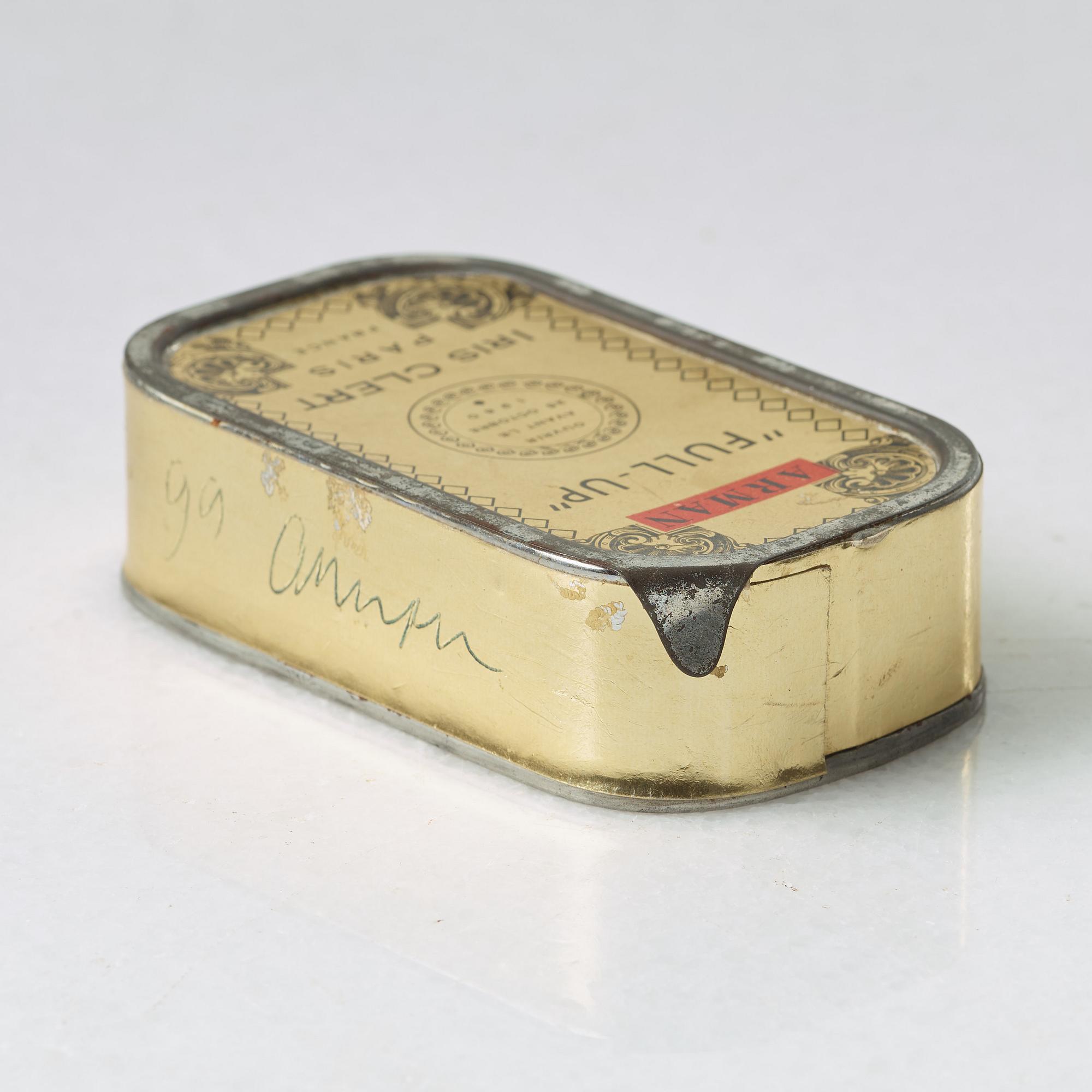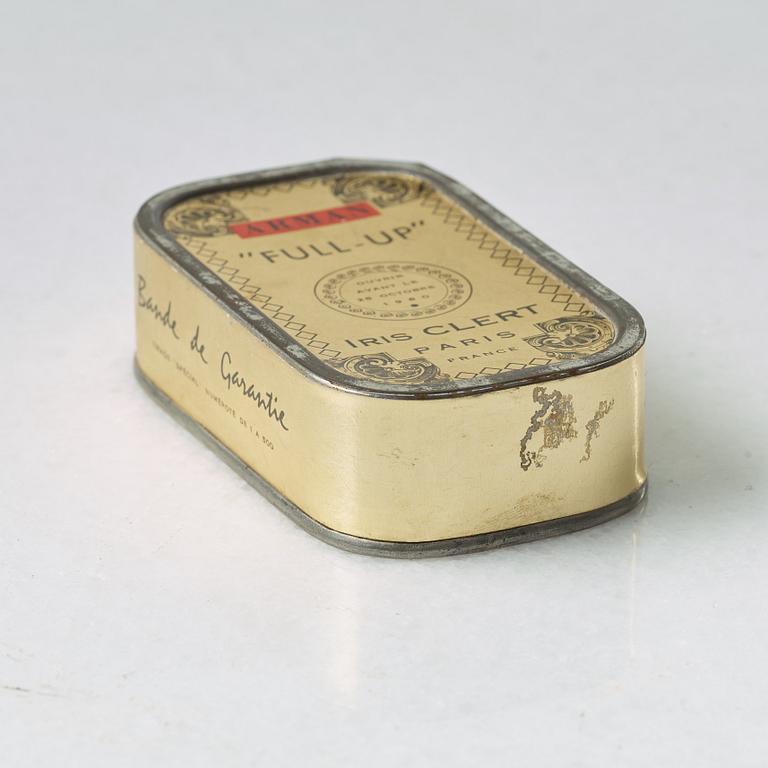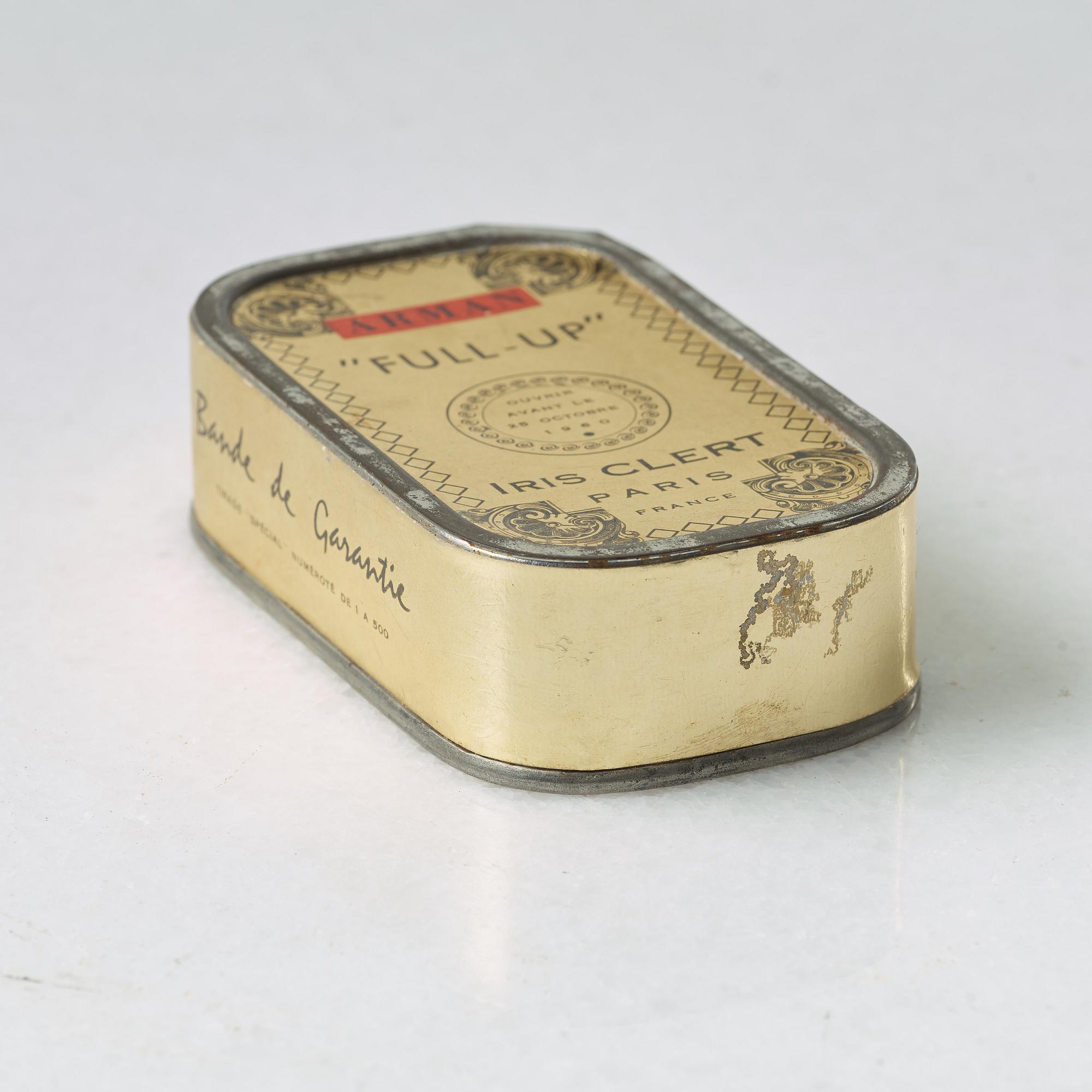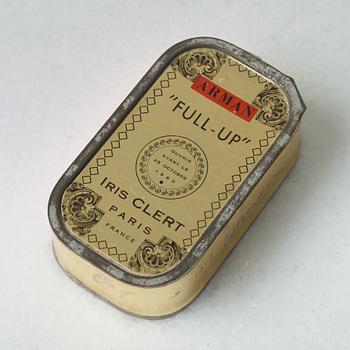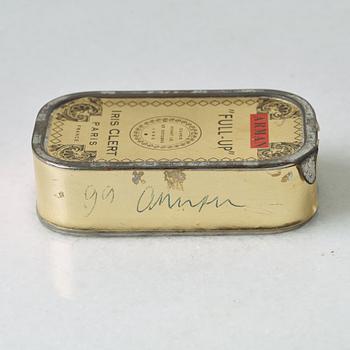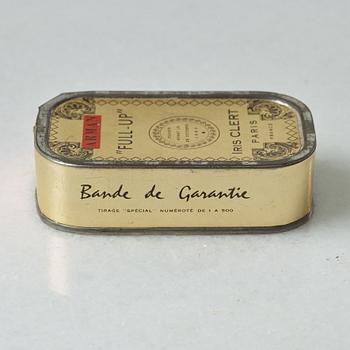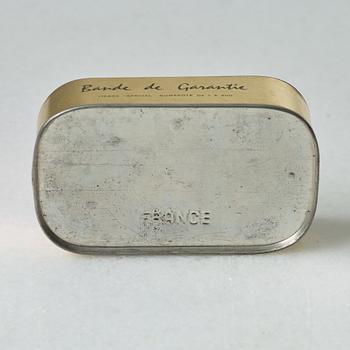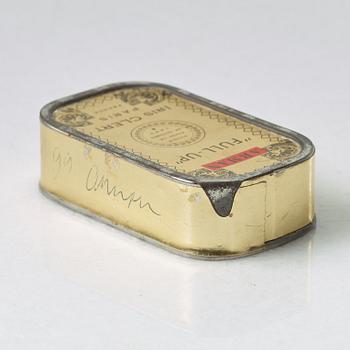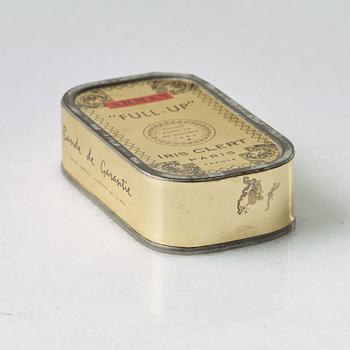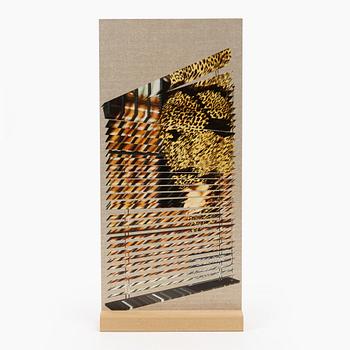
FERNANDEZ ARMAN, mixed media object signed Arman and numered 99. Multiple.
"Le Plein / Full up". Multiple of sardine can filled with trash and exhibition invitation. Published in 1960 by Arman and Galerie Iris Clert, Paris. It was created as an invitation to the exhibition “Le Plein” on the 25th of October, 1960 at the Iris Clert Gallery, Paris. Edition 1500. 10.5 x 6.1 x 3 cm.
Wear. Tarnished. Wear due to age.
Provenance
Galerie Iris Clert, Paris.
Literature
Durand-Ruel. 1991. Arman – Catalogue Raisonné II, 1960-1962. Turin: Editions de La Différence.
p. 48-49.
J-M. Bouhours, Centre Pompidou, “Arman”, Editions du Centre Pompidou, Paris, 2010, illustrated page 296 (another example).
More information
Another example from this edition is included in the collections of the Museum of Modern Art (MoMa NY).
The Galerie Iris Clert held two pioneering exhibitions. The first was Klein's, le Vide which opened on April 28, 1958. For this occasion Klein completely emptied the gallery except for a single bare display case, painted it a single shade of glossy white, and called it art.
Klein said: “My paintings are now invisible and I would like to show them in a clear and positive manner, in my next Parisian exhibition at Iris Clert’s”
In October 1960, Arman a close friend of Klein’s since childhood, exhibited in the Iris Clert Gallery. Arman’s exhibition was called Le Plein (The Full-Up). Le Plein was a direct contradiction of Klein’s Void: Arman filled the small gallery to the brim with. So much garbage, in fact, that the exhibition could only be viewed from the storefront window. Invitations to the exhibition were sent in small sardine cans, with the words "Arman – Le Plein – Iris Clert" printed simply on the pull-away top. Klein himself was supportive of his friend’s reversal, declaring "After my own emptiness comes Arman’s fullness. The universal memory of art was lacking his conclusive mummification of quantification."
More about Fernandez Arman
Arman (Pierre Fernandez, born in Nice in 1928) moved to Paris after graduation to study archaeology and oriental art. After returning to Nice in 1953, he devoted himself instead to abstract art and began collaborating with Yves Klein, which was to have a significant impact on his artistic development. After a typographical error in an exhibition catalogue at the legendary Galerie Iris Clert in Paris, in which the letter "d" had dropped from his name, Arman decided that henceforth he would sign his works only "Arman".
In the late 1950s, he began working with sculptures, first the series Accumulations with everyday objects and then Poubelles consisting of rubbish.
In 1960, Arman co-founded the Nouveau Réalisme group with Jean Tinguely and Daniel Spoerri, among others. Later César, Niki de Saint Phalle and Christo joined. The group opposed informal art and became the French equivalent of English and American pop art.
During the 1960s, Arman travelled to New York for the first time, where he exhibited at the Cordier-Warren Gallery and MoMA. He continued to work with sculptures through different series such as 'Coupes' (sawed and sliced objects), 'Colères' (disintegrated and broken objects), 'Combustions' (burnt objects) and 'Inclusioni' (assemblage of objects enclosed in polyester resin).
Arman's work was shown both at the Stedelijk Museum, Amsterdam (1964) and at the Venice Biennale (1968) in the following years. In the 1970s, he created assemblages with cement and car parts in collaboration with Renault. In 1973 he became an American citizen when he moved to New York.
During the last twenty years of his life, Arman continued to work with different materials and techniques. He has executed several monumental works such as the bronze work "A la République" (1984) in the Palais de l'Élysée, Paris and the work "Espoir de Paix" (1995) in Beirut, an assemblage of cement and tanks. It is still the world's largest sculpture.
Arman died in 2005 in New York. During his lifetime, he participated in almost 500 solo exhibitions. His works are today included in collections at MoMA, NY, The National Gallery of Art, Washington, Tate Modern, London and Musée d'Art Moderne et d'Art Contemporain, Nice.
Read moreCovered by droit de suite
Image rights
The artworks in this database are protected by copyright and may not be reproduced without the permission of the rights holders. The artworks are reproduced in this database with a license from Bildupphovsrätt.