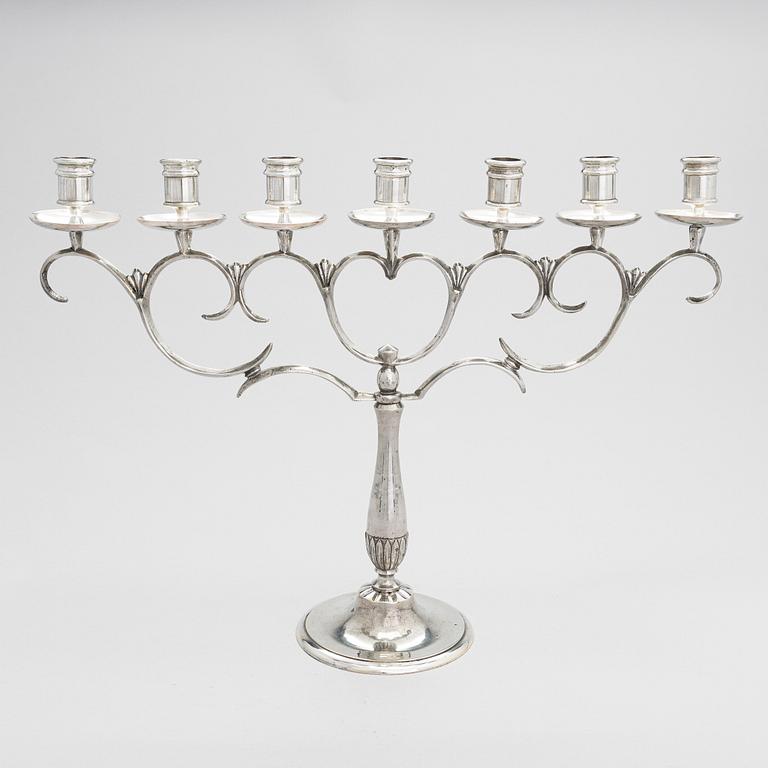
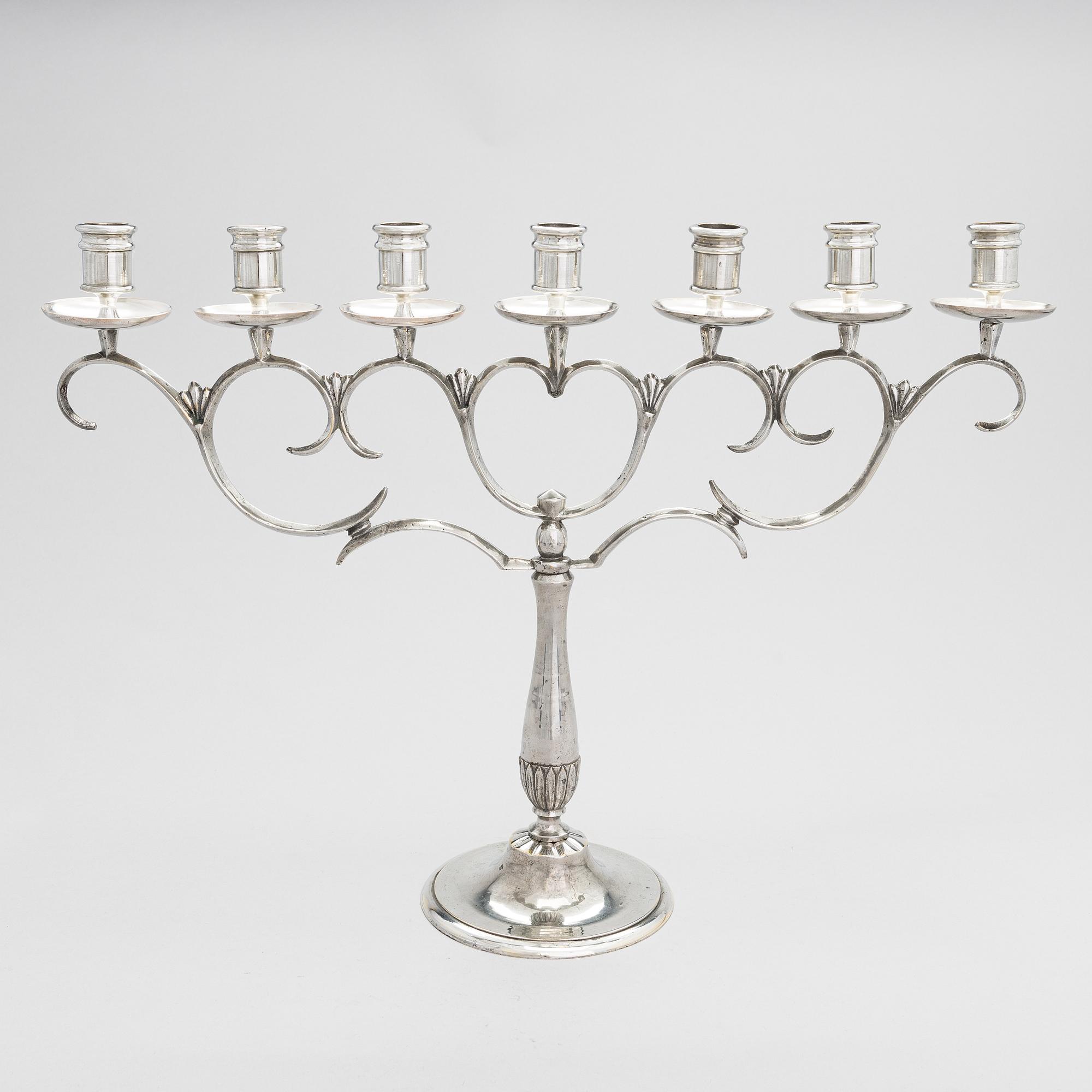
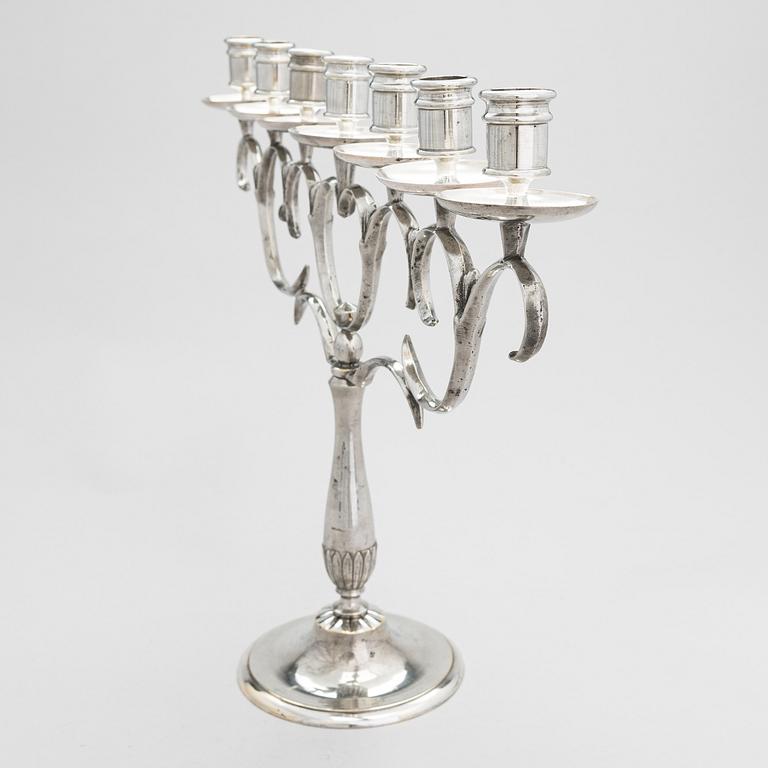
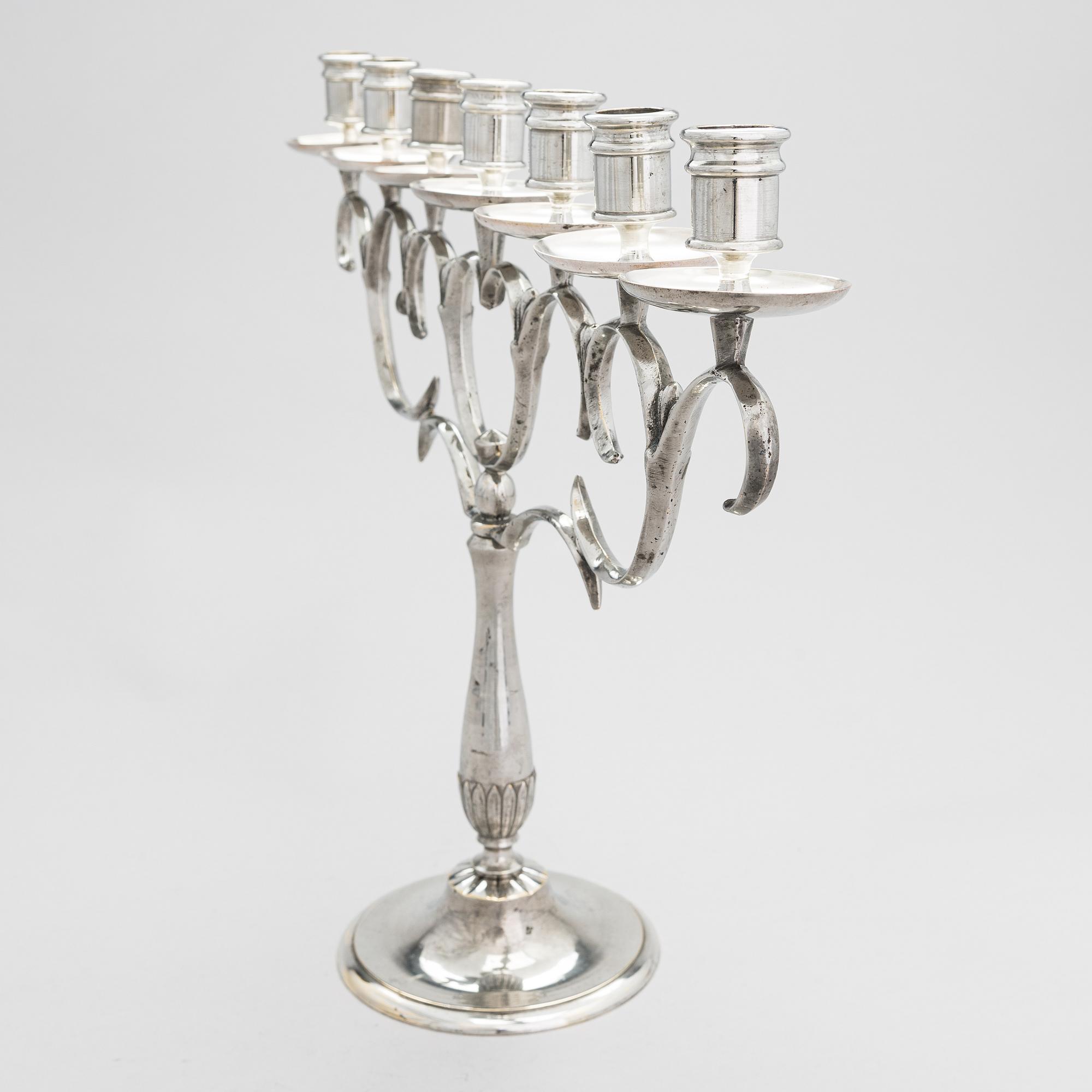
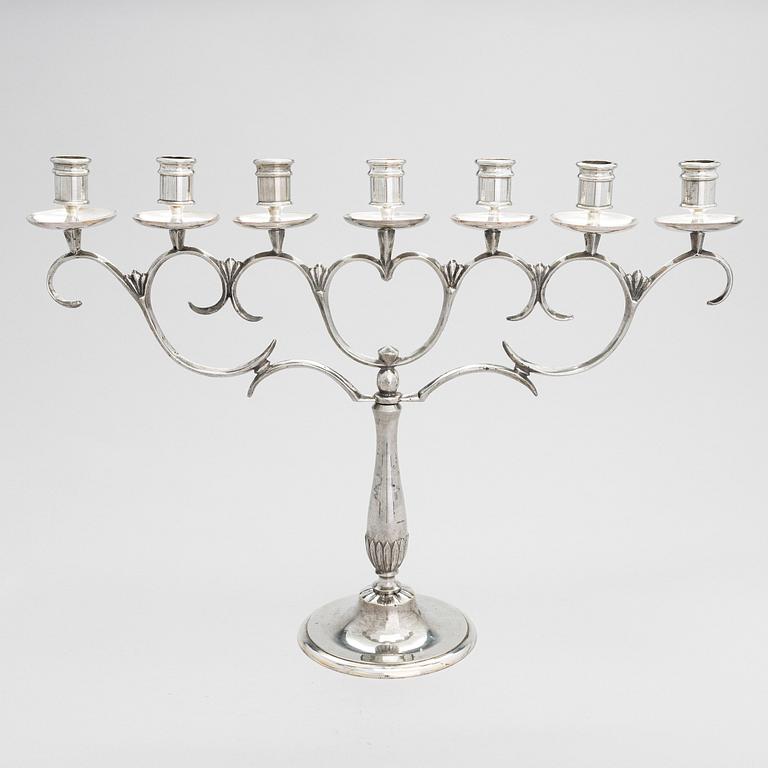
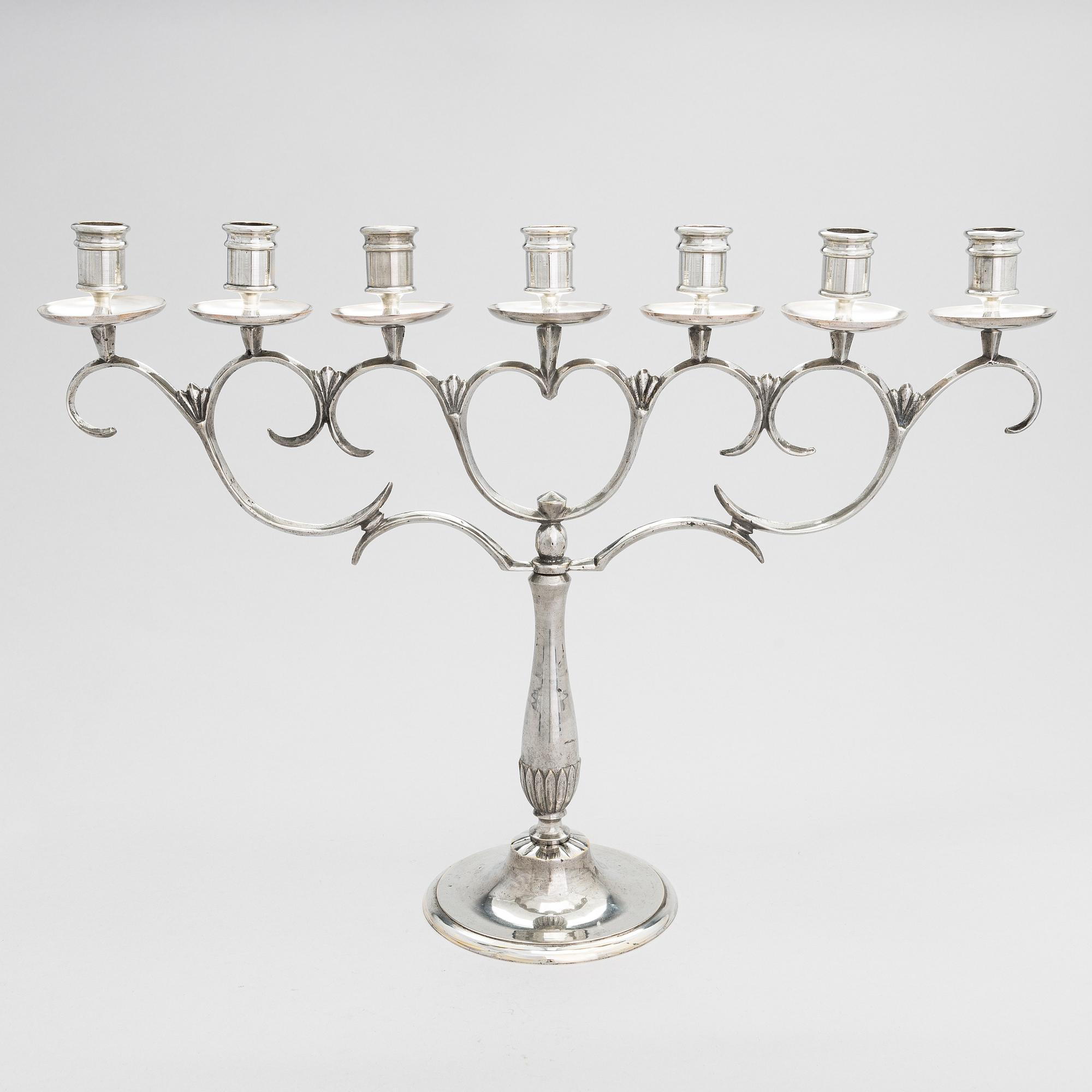
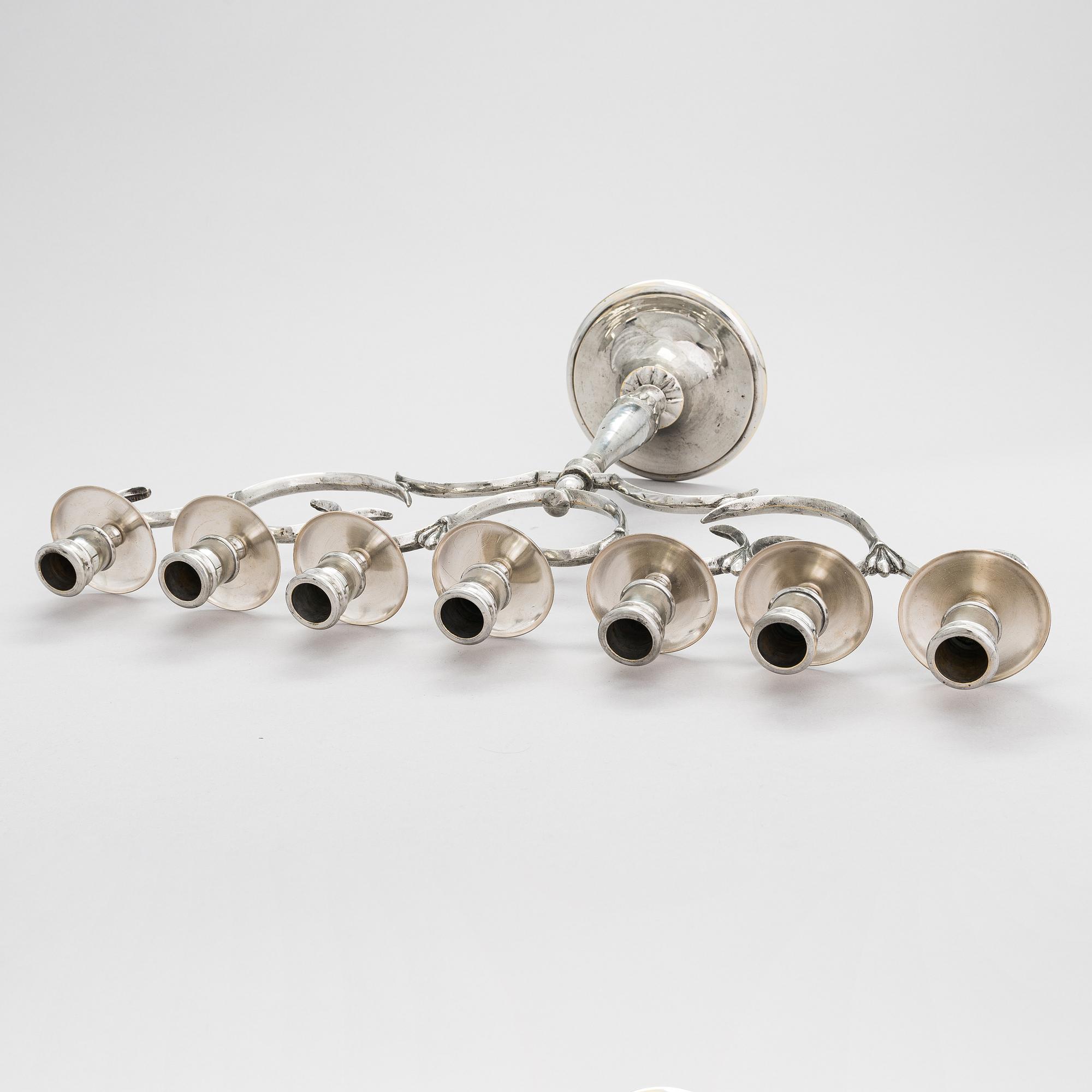
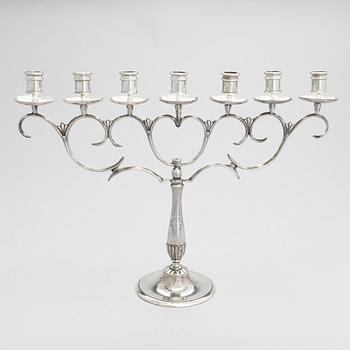
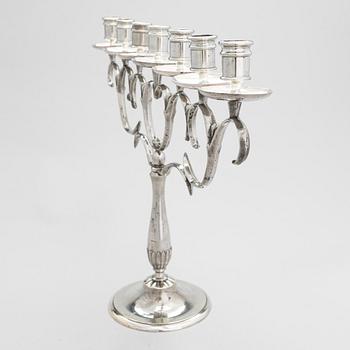
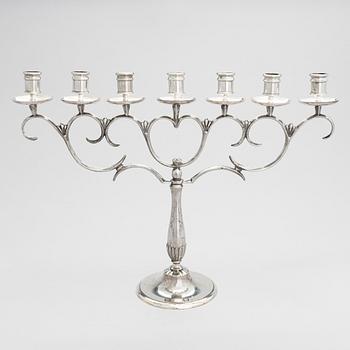
Paavo Tynell, a 1920/1930's candelabrum for Taito.
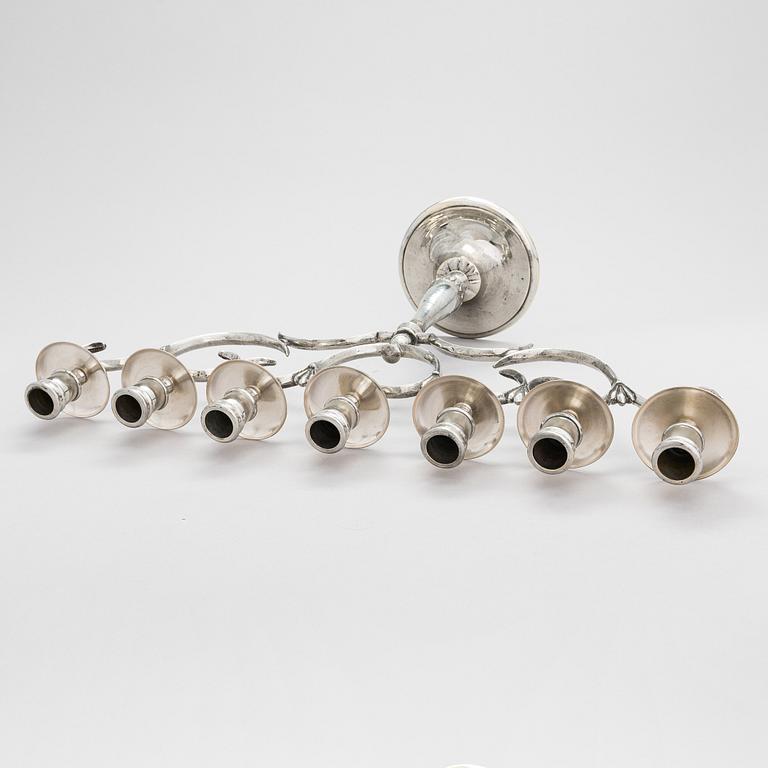
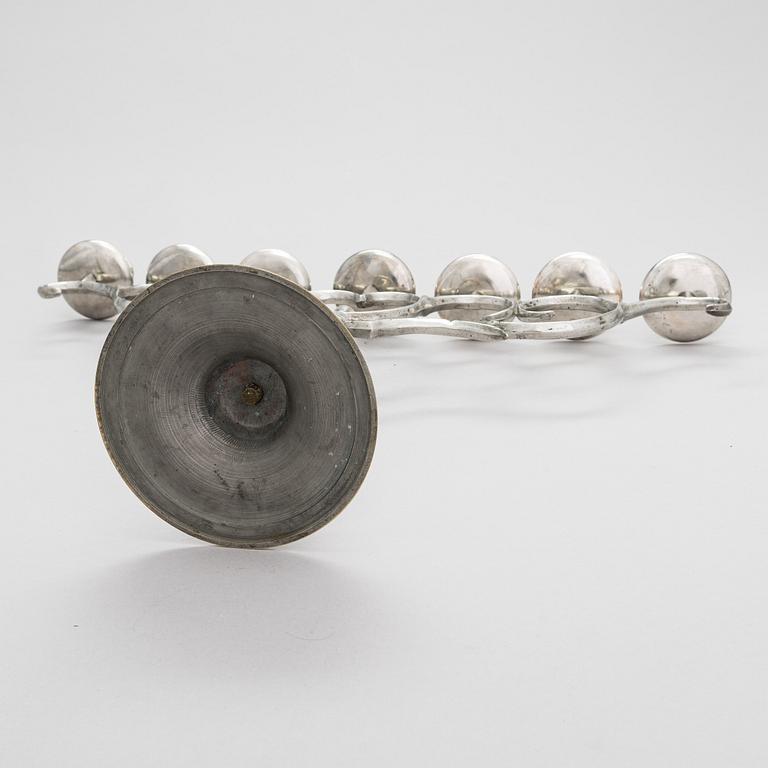
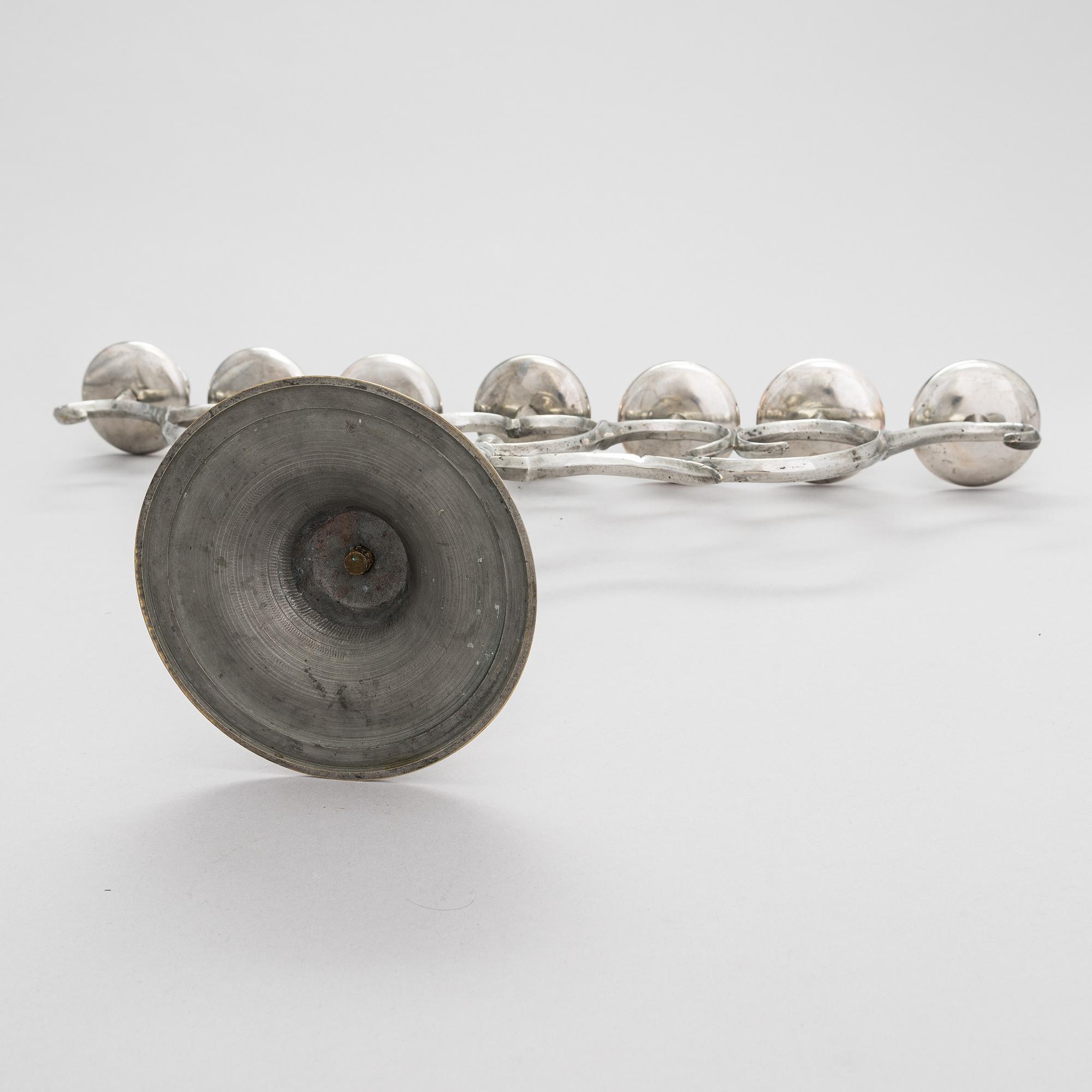
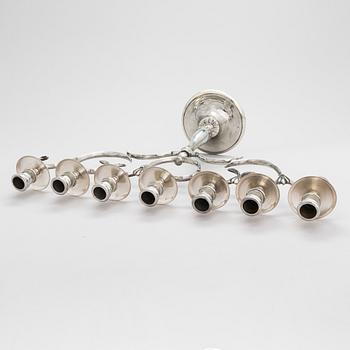
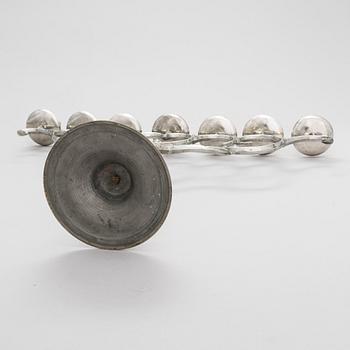
Silver-plated pewter. For seven candles. Height 39 cm. Width 54 cm.
A bit crooked sockets. Polished.
More information
Paavo Tynell (1890-1973) begun his career as a metalsmith apprentice but did at the same time study at the Central School of Arts and Crafts (today Aalto University) to receive a solid education in the field of metal art. In 1918 Tynell founded Oy Taito Ab, which became the Finnish lighting industry trendsetter during the interwar period. Taito's first years coincided with the growth of the electrification of society. This meant that the market form lamps grew and developed at a high rate and Taito's production, which had only been small-scale, quickly developed into factory production in the late 1920s.
Tynell's lamps have developed over time. His early lamps had a chandelier inspired design, during the 1920s, the use of glass became an increasingly important part of his lamps, and during the 1930s, fabric and cardboard lamp screens were added. During the interwar period, Tynell designed both art deco-style lamps and more functionalistic simple lamps. In his functionalistic inspired lamps, Tynell took into account how the lamp was to be used, the colour of the light, and the opal glass's nuances. As the post-war material rationing eased, Tynell began using brass as the main material in his lamps, and they became a great success, especially in the United States. The end of the 1940s was a productive period during which he polished his decorative style, and his lamps became more and more individual in their appearance. After the Winter and Continuation wars, Tynell's designs was permeated by a romantic spirit that expressed itself as neat and organic forms, such as flowers and leaves.
The most significant clientele of the luminaires designed by Tynell were architects, which made Paavo Tynell the leading lighting designer for public spaces.
More about Paavo Tynell
Paavo Tynell (1890–1973) began his career as an apprentice sheet-metal worker while simultaneously studying at the Central School of Applied Arts, where his skill was recognized early on. In 1918, he founded the company Taito Ltd in Helsinki together with several prominent artists and industrialists.
Taito Ltd’s operations initially included both a forge and a foundry, but after the foundry was closed, the company focused on handcrafted pewter objects during the 1920s and 1930s, as well as lighting fixtures, which became its main product. In 1953, Taito Ltd merged with Idman Ltd, which eventually led to the dissolution of Taito Ltd.
During the 1950s, the company expanded internationally and exported lighting fixtures to the United States, including commissions for Finland House in New York and the United Nations Headquarters.
Today, Paavo Tynell is regarded as one of Finland’s most significant industrial designers.
Image rights
The artworks in this database are protected by copyright and may not be reproduced without the permission of the rights holders. The artworks are reproduced in this database with a license from Bildupphovsrätt.
Others have also viewed