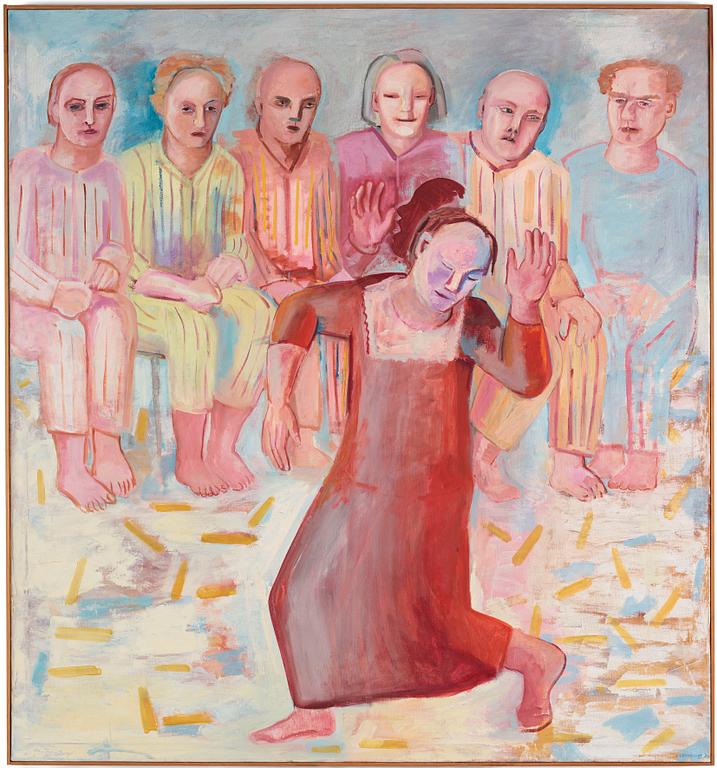
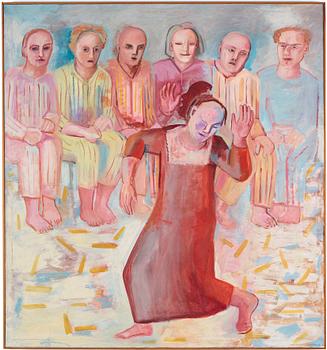
"Dansen"
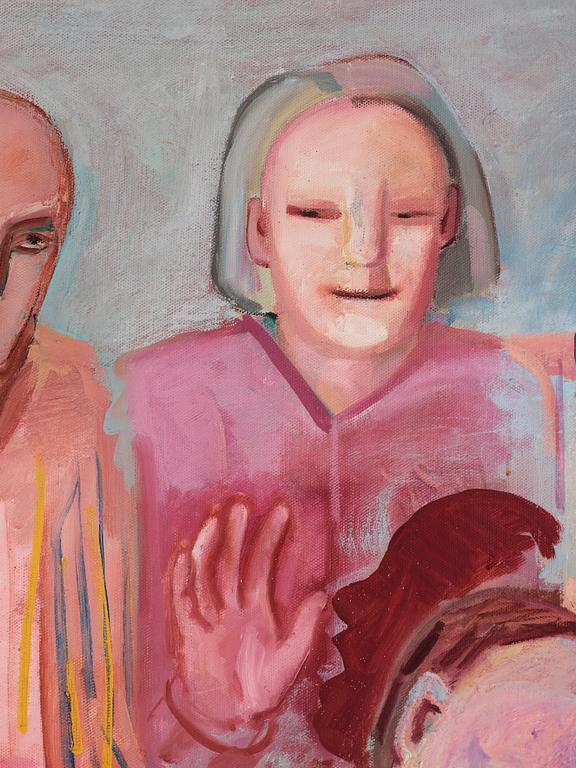
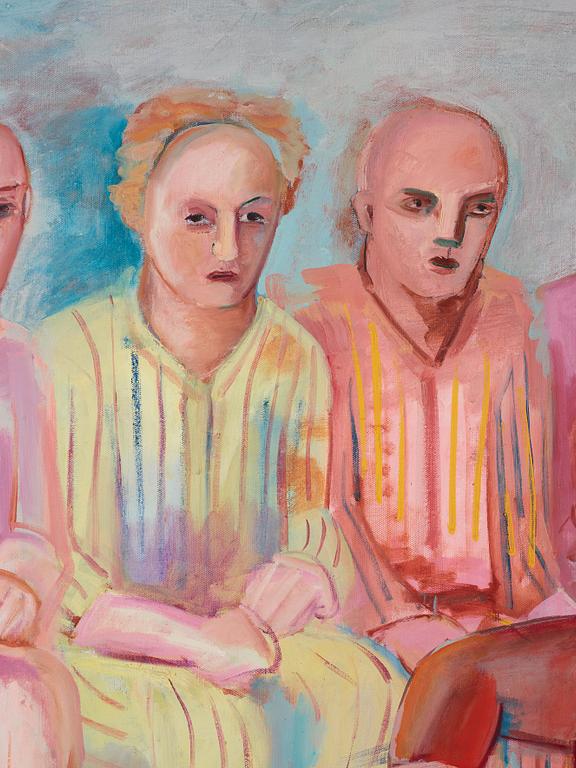
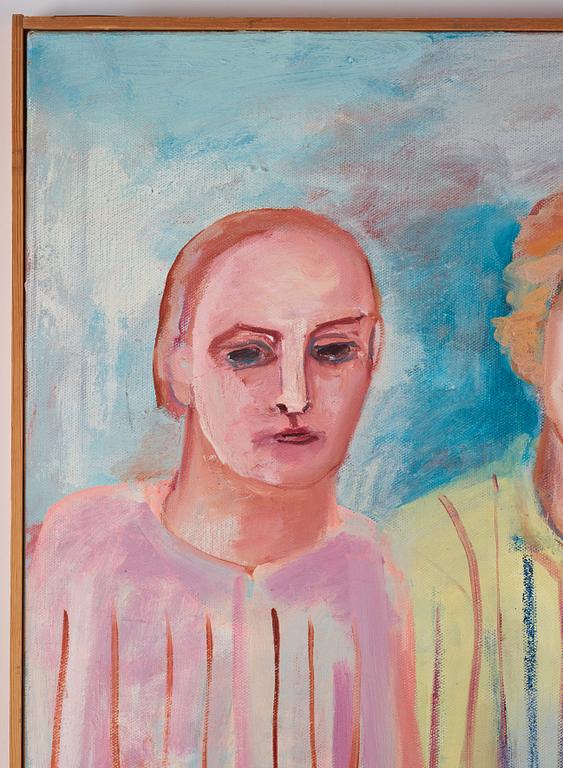
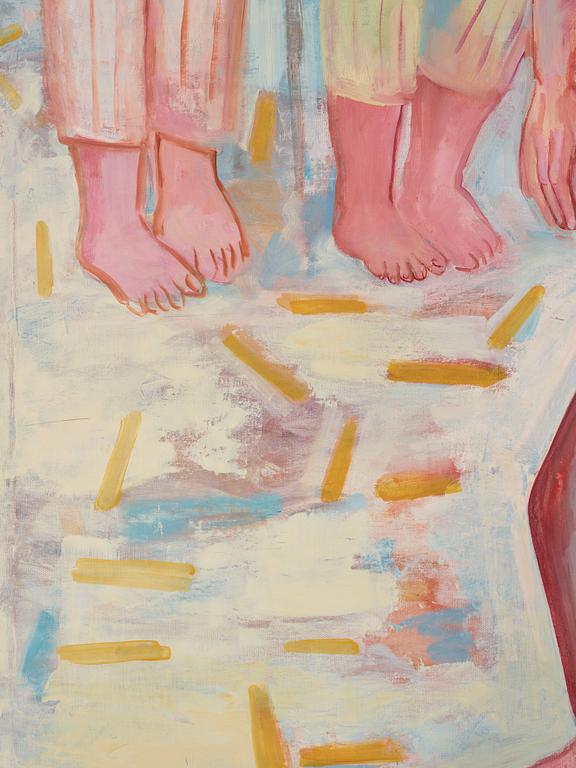
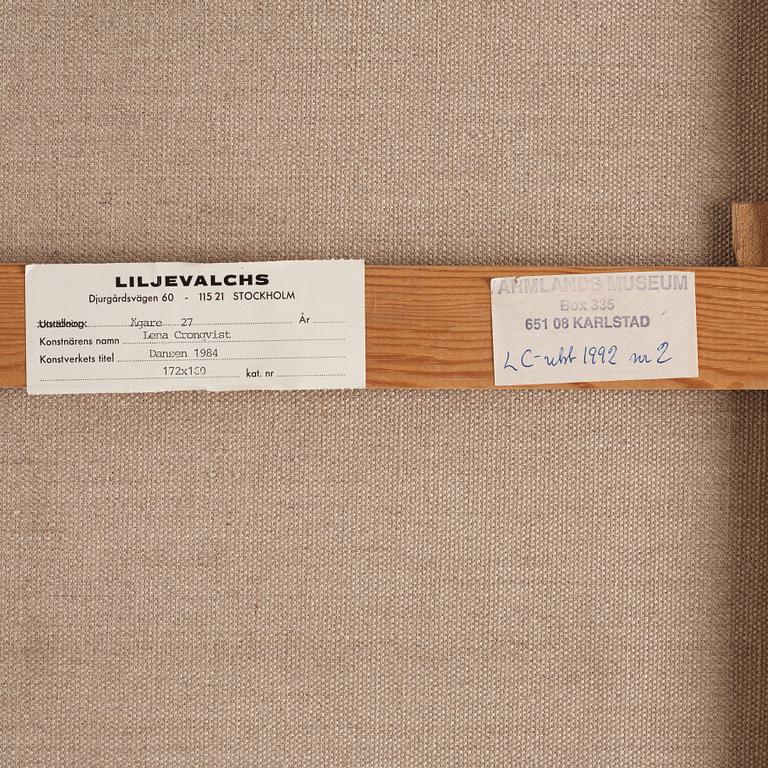
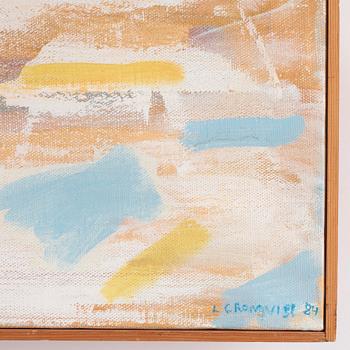
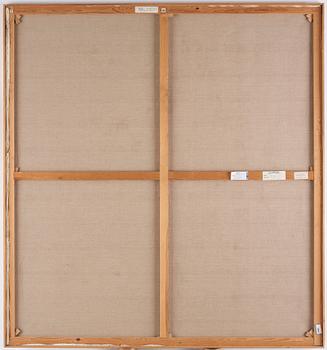
Signed L. Cronqvist and dated -84. Camvas 172 x 160 cm.
Saleroom notice
Correct date is -84.
Provenance
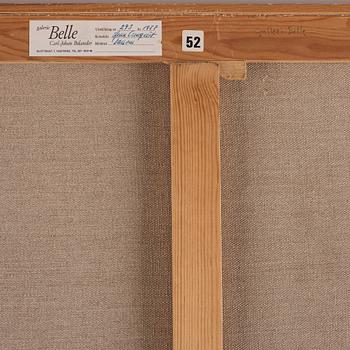
Galerie Belle, Västerås.
Sivert Oldenvi Collection
Exhibitions
Galleri F15, Moss, Norge, "Lena Cronqvist, January 1987.
"Lena Cronqvist retrospektivt och aktuellt", Konstakademien, Stockholm; Västerås Konstmuseum; Galerie Belle, Västerås; Länsmuseet Gävle; Skövde Konsthall; Västerbottens museum, Umeå; Sundsvalls museum.
Nordens hus, Reykjavik, "Lena Cronqvist", 18 June, 1988.
Värmlands museum, "Lena Cronqvist retrospektivt", 18 January, 1992.
Liljevalchs Konsthall, Stockholm, "Lena Cronqvist", 1994, cat. no. 135.
Literature
Sveriges Allmänna konstförening, "Lena Cronqvist", 1997, utställningskatalog, p. 45.
More information
Lena Cronqvist has consistently and curiously explored what it truly means to be human throughout her entire career as an artist. She has depicted humanity in its most vulnerable situations, from the defenseless newborn to the elderly man on his deathbed. In between, she has sculpted with color and painted the children's play, the clumsy attempts at tenderness by adults, and their longing for love. Using herself as a model, she has questioned the self and the individual's role in relation to the collective.
Cronqvist possesses a unique ability to blur and blend the boundaries between the inner space and the external reality, personal experience and general historical narratives, the highly personal and the universal. Over the years, there has also been an ironic tone in the artist's body of work, as if Cronqvist is keen to show that what she creates are ultimately just images and that reality exists beyond them.
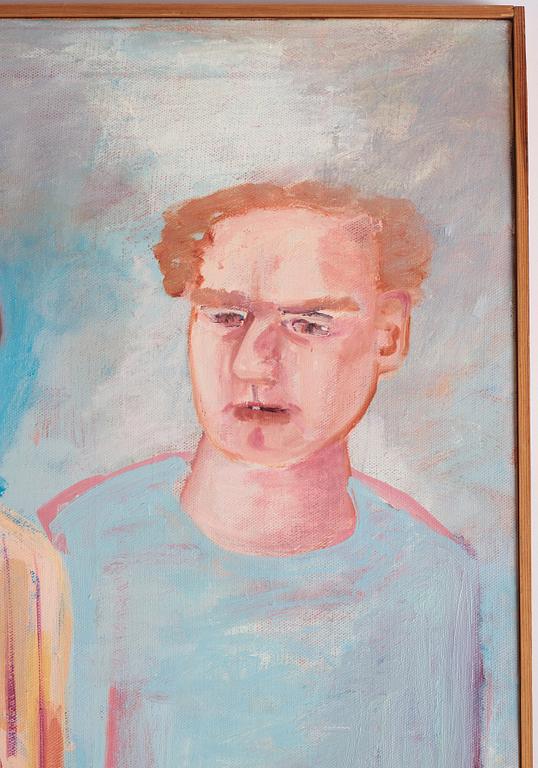
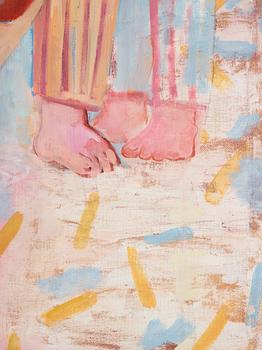
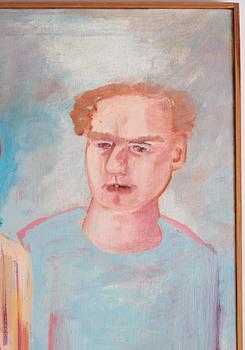
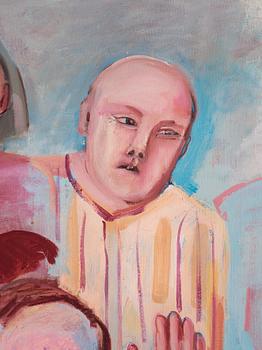
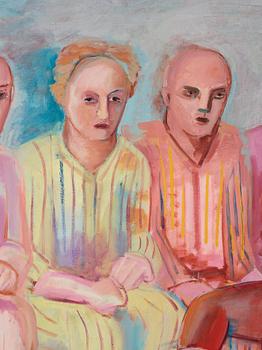
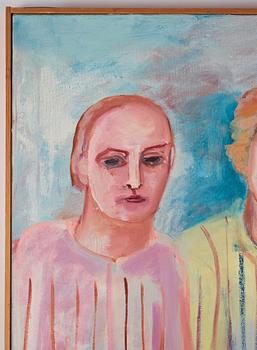
In 1984, Cronqvist saw two dance performances by the German choreographer Pina Bausch and her troupe Wuppertal Tanztheater when they visited Stockholm. The encounter with dance and the total experience it provided for Cronqvist was decisive for a series of new paintings. Moving from depicting isolation and individuality, these works involved an exploration of interaction, where figures draw closer to each other, touch each other, dance, and kiss. In the current painting, "The Dance," we meet a dancing woman with six onlookers who respond to the woman's movement in various ways.
Since her debut in 1965 at Galerie Pierre in Stockholm, Lena Cronqvist has uncompromisingly and consistently continued to approach the human mystery, both in painting and, later, in sculpture.
More about Lena Cronqvist
Lena Cronqvist was one of Sweden’s most significant and influential artists, with a career spanning more than five decades. Born in Karlstad and educated at the Bristol School of Art in England as well as the Royal Institute of Art in Stockholm, she developed a style of painting where technical precision met intense emotional depth. Through her raw and emotionally charged imagery, she explored the paradoxes of motherhood, the shadows of childhood, and the relentless flow of time. Inspired by modernism and Edvard Munch, she transformed the personal into universal stories filled with deep psychological presence and power. As a painter, printmaker, and sculptor, she moved effortlessly between artistic forms, with each work marked by strong emotion and meticulous craftsmanship. Her interpretation of Jan van Eyck’s "The Arnolfini Portrait" in "Trolovningen"(1974/75) became a milestone when it sold at Bukowski's auction Vår Contemporary 2016 for over 11 million SEK - the highest amount ever paid for a work by a living Swedish artist at the time. Lena Cronqvist’s art is a bold and powerful voice that continues to move, challenge, and inspire. Her legacy lives on - boundless and timeless - reminding us of art’s ability to reach into the depths of the human experience.
Read moreCovered by droit de suite
Image rights
The artworks in this database are protected by copyright and may not be reproduced without the permission of the rights holders. The artworks are reproduced in this database with a license from Bildupphovsrätt.
















Others have also viewed